
Darris McNeely
This transcript was generated by AI and may contain errors. It is provided to assist those who may not be able to listen to the message.
Afternoon, everyone, and thank you, Amanda. Appreciate the special music. Today, I hope you're having a wonderful Sabbath day. First of all, I want to give my hearty welcome to the Class of 2013.
I've seen your pictures, I've read your biographies, your comments that you say about yourself, and everything to be able to come to ABC, and I'm very thrilled to have you here. We are, as an institution, delighted to have our 14th year with the Class of 2013, so welcome here.
I also want to say that we probably will have 37. We could have 40. There are three that could go either way, so we could end up with 40 or 37. I know 37 is a pretty firm number. Average class size of all the years, if you add them all together, is 37. So we're right at that average number who come to ABC. I also want to give thanks to the alumni, the ABC alumni, who worked tediously last Sunday to completely refurbish the outside here, to trim trees, to pick weeds, to paint the outside furniture. I know they worked very diligently for practically all day, so I want to offer our thanks to the ABC alumni.
Of course, tomorrow, the ABC alumni will be sponsoring the welcome picnic for all the Ambassador students. Any ABC alumni who did not get the message, you could come at 1 o'clock. Certainly, all the ABC Class of 2013 have been already notified, but just as a recap, they're welcome to come, too, from about 1 to 4 or 5 o'clock. We'll have a really nice lunch and dinner for you, and luncheon or dinner for you that day, as well as a lot of games that get the know-you type thing and more casual atmosphere before Monday, when we have our orientation day kicking off at 9 o'clock in the morning, where we have a whole staff, Ambassador faculty, as well as the administration orient you, plus a really nice lunch and an opportunity to meet the staff for dessert that day, and then the chorale to get a chance to talk about being a part of the chorale and exciting part.
So, anyway, we welcome you here for this Sabbath that many of you have arrived. Last Sabbath evening, we added another person to the congregation. This was a spiritual adding, not a physical adding. We had Zach Williams was baptized at our home with a few friends and all of his family there to congratulate him. So, congratulations to Zach and welcome to the family. Summer Olympics were thrilling. Oh, by the way, before I start, I was, I really was toying between giving something on knowledge and love. And, you know, I weighed, you know, Olympics only come around once every four years in Big Sandy, Texas in 1992.
I gave a sermon on Go for the Gold, which is different than this sermon, because it was a different approach. But it was, the Olympics only come every four years. So, here I'm the speaker after the Olympics end last Sunday. Do I carry this or do I go with, you know, knowledge? Students are going back to school. ABC is starting. I was really torn. Do I give it on knowledge and grace?
Or do I give it on this? You know, back and forth. I had notes on both of them, working on both of them, and I thought, you know what? I'll go with the Go for the Gold. And that's the title of the sermon. And Ray Kloor gets up and gives the other part of the message. So, thank you. God, I just said, you know, you give the best. I'll try to do the best I can, and I focused on this one. So, Summer Olympics were really thrilling.
Michael Phelps, 22 medals, 18 golds in three separate Olympics. Usain Bolt, first man ever to run the 100 and 200 meter dashes in two consecutive Olympics and win. Very exciting for that to take place. You had Ashton Eaton from up in the University of Oregon, who became the decathlon gold winner for the USA. And Usain Bolt wants to say he's the greatest athlete, but no way. You can do ten events like the decathlon requires. And you come in with gold. You are called the world's greatest athlete. And he won. And we had so many thrills. We had young Katie Ledecky, 15 years old, getting in the pool with a previous gold medal winner from England with the royal family, many of the royal family, sitting there rooting her on.
And you get this little 15 year old, not little, but she's strong, 15 year old girl, getting into that pool and swimming her, the swim of her life, the race of her life. And she's standing there at the finish line waiting, I mean at the end of the pool, waiting for the others to come in.
And when Rebecca Adlington, the previous Olympic gold winner in the 800 meter swim, when she arrived, she went over and hugged her and she said, Amazing! Amazing! You had Missy Franklin, who soon became the poster girl for the whole tournament, or the whole Olympic event, 17 years old, from out in Colorado, winning four golds and setting a couple of world records in her swim. So we had some pretty exciting events, the U.S. women's basketball, five consecutive golds. You had Oscar Pistorius from South Africa, the first person without legs, I mean real legs, he had artificial ones, to compete. And he did a very good job of running on those, because he's been a double amputee since birth. He was born without fibulus in each leg. And so they determined, when he was a baby, to amputate his legs below the knee. So all he's ever known, all his life, is to be without legs. That is, real art, human legs. And so he ran in the 400, and they didn't win, but he won the hearts of a lot of people by his zeal and his diligence. You had Gabby Douglas, the little 16-year-old Olympic gymnast from the USA, who won the overall all-around gold medal, which is a very coveted medal. So it was a really exciting Olympics. I could go on and on. In our local area here, we had several from the Cincinnati area, according to the Cincinnati Inquirer. I talked about Kayla Harrison in judo, and she became the first US female to win a gold medal in judo, winning the 172-pound women's division. When you date her, you've got to be very careful. Watch your moves.
Heather Mitts on the soccer team competing at her last Olympics from this area. St. Ursula Grad and veteran defender was part of the US women's gold medal winning squad. You had another boxer from the area. You had another rower from the area. You had another shooter from the area. You had a swimmer from the area, Nick Toman, who came in on the silver for the US swim team. So it was an exciting time, a very exciting time to watch. And overall, the women this year outshined the men. The women won 29 of the 46 gold medals for the USA. And in fact, they won 66% of all the gold medals for the USA, and they won 56% of all the medals. So the women's gymnasts, the women's teams were really out there. We loved watching all the games. They were very exciting. But I would like to share with you one that I think you'll find touching as I did. Let's see if I can find it here. Yes. It's from the Wall Street Journal article. I'll just quote it. Quote, He wanted to sleep because Sunday was going to hurt. Adrian Nianciuti had traveled so far. Rwanda was thousands of miles away, but this wasn't a matter of distance. Six years ago, he had won a mountain bike race on a borrowed bike. Now there was a shiny new one fitted to his body. The first time Adrian flew overseas, he carried his possessions in a grocery bag. But now there was luggage with rollers. Inside was a spotless uniform in blue, green, and yellow of the Rwandan flag. He was not going to win. This he knew. Sunday's men's mountain bike race would be 34 grueling kilometers, up and down and up again, threading over steep gravel and minefields of rock. He'd be among the best riders in the world, as he was one of 50 to qualify for this. And he had a modest goal. His goal? He just wanted to finish.
Still, there was weight upon Adrian's lean shoulders. On his bike, he carried his home. He'd emerged from a nation torn by genocide, and his personal anguish had been unimaginable. Six of his siblings had been killed, and dozens more of his family members had been killed when he was seven years old.
He practiced on wooden bicycles. He practiced with carrying loads up and down hills, and finally received some training from someone in the U.S. who was able to work with him and give him some training. And he qualified for the Olympics. Quite a story. These athletes from nations around the globe came to London in hopes of achieving their goals.
Some of them may not have said, hey, I'm going to get the gold. Some of them may have said, I just want to finish. Some of them said, maybe I'll just get a bronze. Some of them said, maybe I'll get a silver. They all came with a goal. Their goal was to achieve their goals, their aim to achieve their goals, to do their best, to inspire others, and to go for the gold. Some of them. Many said, I'm not here just to compete. I'm here to go for the gold. While the Olympics are still fresh from the hours of coverage on TV, newspapers, and Internet, let's use them as a model for us as we seek to, quote, go for the gold physically or spiritually in our lives.
Our young people are going to be going back to school pretty soon. ABC students have come to begin another nine-month year of training and learning, and the rest of us have life to face every day. It is good that we take a look at these seven connecting points, and we may use them physically or spiritually as the athletes had to do physically to go for the gold.
The first point, we must have a goal. We must have a goal. What's your goal? What's your goal in coming to ABC? What's your goal in going to school? Just to make it through grade three, make it through grade four. I used to count eight more years to go when I was in grade four. Seven more years to go, grade five.
Six more years to go, grade six. And yet I'm told those are the happiest years of my life. It's like being assigned to whatever I figured it out to be, like seven-plus years in prison. I don't mean that bad. It's like you're given seven years. You're assigned to seven years. When you take three months off each year, whatever it ends up being, you're given a seven-year sentence. Now, you learn a lot, and if you don't go there with a goal, I want to do the best I can.
I want to learn as much as I can. I want to become the best I can. I want to contribute as much as I can under the circumstances I want to be the best I can be. If you don't go there with a goal, you'll just kind of float through.
And like I was thinking in my early years, seven more years, six more years in grade six, five more years in grade seven, and three more years in grade nine, you know, because I reached grade 10 after that. So really, we really want to make sure we set goals for ourselves. ABC, same way. It is amazing when I look at some of what the ABC students write when they want to come to ABC. And one year, I took just different quotes from them and read them back to them.
Didn't say who wrote them. I just took different quotes from what they wrote on their application. Amazing what they wrote. But again, what were they striving for? You have to have your goal fixed. To qualify for an athlete, they had to have their goal fixed.
They had to, first of all, qualify for the Olympics. Some who did really great last time didn't make it. You imagine four years of practice, and you come to the qualifying trials and they say, sorry, sorry, you're too slow. Natalie Coughlin got to swim in one race. She was a great Olympic swimmer the last time out. But she was beaten out by somebody else.
Katie Ledecky, 15, beat her. And so she got to swim in one preliminary race. That was it. Her Olympics were over after she did that. You must have a goal. Then, just to qualify and then to go for the gold or to finish. Do you realize the gold medal that they win? You know how much it's worth?
$644. Do you know how much the silver's worth? $300. Do you know how much the bronze is worth? $5. They practice for four years, and if they get bronze, they get a medal worth $5. That's just the medal. Many countries then reward their participants with money, usually from Olympic committees in their countries, some of them directly from their country.
We share with you. Countries pay. In the U.S., they pay $25,000. That is the Olympic committee, not the government itself, for every gold medal. $25,000, $15,000 for silver, and $10,000 for bronze. In Italy, they pay $182,000 for gold, plus a $64,000-a-year salary for winning. Russia pays $135,000 for gold, $81,000 for silver, and $54,000 for bronze.
And if you saw the one girl who lost out on the all-around gold, and she cried in the gymnastics, now I know why. She just lost $135,000, went down the drain. Can you imagine all the work you put into it? I mean, that's four years of doing that. And I figured out the number of gold medals that Michael Phelps has won. $450,000. Now, he makes millions. Usain Bolt got, what, three golds this year? Three the last time, or whatever. Do you know that Usain Bolt makes millions of dollars just by showing up at races and from advertisements?
Millions. If you win gold, it isn't the value of the medal that counts. It's really all the endorsements that they'll be after you for that you make millions of dollars on that. So when somebody gets gold, they're almost set for life financially. That's when you go there and you win that. Now, that's an incentive, certainly just to win. Canada pays $20,000 for gold. Australia pays $18,000. Thailand pays the most. $314,000.
Of course, they don't have any gold medal winners that I know of this year, but they pay $314,000, and Philippines pays $220,000 per gold. So that's a great incentive in addition to being considered the best athlete in that event, in the world. What about our focus? What about our focus? They have to focus. They have to make sure they have their sights set.
They have to make sure they know what they're going for. I'm going for the gold. Man, $81,000 or $135,000 or $181,000. I'm going for the gold. Or, I'm just glad to be here and compete, and I want to finish my race. We must, too, have a goal. We must focus on that goal. Whether it's physical health, whether it's school, whether it's college, whether it's work, or the kingdom of God, as was brought out in our sermonette.
We need to have our goal fixed. It needs to be before us, and we need to have that focus in mind. Colossians 3, verse 2 tells us to set our sights on things above, not on things on the earth. I think of these poor athletes, some of them go there and they work really hard, and they work hard for years, and to miss one dive, or to make one mistake, or as one of them did, they were rowing. And this one scholar from Ohio and the other fella's ore, either he dropped it into the water, he lost his ore.
Forget it. Race is over. Or, as one runner got knocked down, I think it was one of the female runners in the 1500, and somebody tripped her. Accidentally, she went down. That was it. You trained for four long years. You run, and you run, and you run. And by the way, we'll talk about that in training, they train a lot. I'll share that with you in a moment. Colossians 3, verse 2, set your affections on things above, not on things on the earth.
As Christians, we have the opportunity to set our goals for the kingdom of God. We have the opportunity to set our goal high. If you go to the Ambassador Bible Center, what is your goal? I want to accumulate as much knowledge as I have so that I can learn and grow. I want to grow in godliness, which is what we teach. Growing in godly character. I want to be the best I can be. I want to know my Bibles. I've told one basketball player who came here who was really good with basketball.
I said, I hope you can learn your Bible, know your Bible as well as you know your basketball. I hope you will know your way around the Bible as well as you know your way around a basketball court. That's what you should be able to do. We have had students who've done amazing here in learning the Scriptures and knowing what they mean and being able to find them and being able to explain them. It's been awesome. Set your affections on things above. Philippians 3, 14, I won't turn there. You can write it. He calls it a high calling.
Paul said, I press for the high calling of God. It's a high calling. Set your affection on those things. Matthew 6, 33, was brought out already and expounded very thoroughly. He says, seek first. Seeking it first makes it a priority. Makes it a priority in life for us. And we as individuals, whatever we, whether an athlete or whatever, we have to, or a scholar, we must set our sights high. We must aim high. And we must pursue that and keep it our main focus. So keep your goal to go for the gold. That is being in God's kingdom. That is being successful in school.
That is being successful at ABC. And I think to myself, what would an athlete give if at the end he wouldn't just get a medal, but he would receive eternal life? What kind of a goal is that? That I have now, I'm able to live forever. Not that we can work to earn that. God gives that as a gift. But what if at the end of his race, God says, I'm going to give you eternal life?
What a great thing that we all have that we can look forward to in God's very family. Number two, so have a goal. Number two, the rules of the event. You have to know what the rules are. You have to know what it's okay to do. Do you know that the British, in the four by one hundred meter race, that as they were approaching the final leg, they did the exchange of the baton outside of the area?
You have a certain area in which you have to exchange the baton. And I've been a clerk of the course, and I've been a timer of these races. And if the guy who's coming in, who's run full out, he's about ready to be exhausted, he's trying to give this to you. And if the other guy starts taking off too fast, the other guy keeps trying to catch up with him, and the fresh runner's trying to run too fast, and he's reaching his hand back, the other guy's trying to reach it to him.
They went beyond the line. And I guess it's the third or fourth time in as many Olympics that they did this. So Great Britain was disqualified from that race. Why? They didn't play according to the rules. Do you know that eight badminton athletes from China, from Thailand, and from South Korea, I think China, sorry, China, Indonesia, and the other one, Philippines, not Philippines, the other one, I have it down here.
But anyway, four, eight of them were two from South Korea, two teams from South Korea, which is four, two from China, and one team from Indonesia. Eight players were disqualified because they weren't playing the game. Each one was hitting it into the net, hitting it out here.
These are professional players, I mean relatively professional. They played all the time, and they're hitting it over here, and they're hitting it into the net, and they're hitting it over here. And they figured out the crowd started to boo them because they were not playing.
Each one was trying to lose so that they would be in a different bracket, which would help them ultimately to win. And so when that was spotted, they were all disqualified, thrown out of the Olympics. Doping, or enhanced substances to try to make you run faster, make you stronger, if that's detected in your system, you're thrown out. You have to play according to the rules. You can't run off course. You can't come there with a large oar. You've got this big paddle on the end of your oar. You can't do that. That's against the rules if you're going to be rowing. It's against the rules.
You can't step out of the lane. You must play according to the rules. And in order to play according to the rules, you must know the rules. We must know the rules. You must know the rules. We've got to play according to the rules, because the Bible says the wages of sin, which is stepping out of the lines in Christianity, is death.
You don't just get disqualified. You get disqualified from life. You don't just get disqualified if you don't repent and change. We, too, must play according to the rules. ABC has a code of conduct. Each school has rules that must be followed. At work, you have rules that you must follow. At home, you have rules that you must follow. There are laws of the land that we must follow. You've got to follow the rules.
And we apply it to ourselves spiritually. You must know the rules. 2 Timothy 2.5. 2 Timothy 2.5 on this second point. If you're going to play the game, and you're going to head for your goal, you must know the rules. What do the rules say about this game? I was amazed when I watched some of the synchronized swimmers. You talk about, you know, they can't touch the bottom ever. You know, some of them can hold their breath for three minutes underwater.
Do you know that they can't ever, and you see them bounce out of the water? They can't ever touch the bottom. If they touch the bottom, it's a foul. They lose two points. And that's crucial in trying to win in synchronized swimming. The Russians usually win it all the time because they're very good at that. But it was really interesting to see and to know some of the rules that they have.
We too, 2 Timothy 2, verse 5. You're probably there already, and I'm talking. 2 Timothy 2, verse 5. And if a man also strive, Paul says, for the masteries, yet he is not crowned, except he strive lawfully. You can't cheat. Well, you might. What was it? The lady Jones, Mary Ann Jones. Remember that? I think in Australia she won. I don't know how many races, but they found out she was using substances, illegal substances. She had to give those all up, surrender.
Baseball players, one year they're relatively built, and next year they're bulked up. Even their heads are bigger. I guess steroids do that, too. You are enhanced substances. And they make all these records only to have everything they did questioned. It's not fair to try to win by cheating. That's not fair. And, of course, if you're going to play the game, you must do it lawfully.
We, too, must do it lawfully. 2 Timothy 2, 15, talks about, in the same chapter, study to show yourself approved to God, or do your diligence, a workman that needs not be ashamed, rightly dividing the word of truth. He knows what's in the word of truth. He knows what he has to live up to. He knows what it's all about. This is his guidebook for life. These are the rules that we Christians play by.
It's good to know them so that you don't exchange the baton out of the lane. Revelation 14, 12, I won't go there either for saving some time. Revelation 14, 12 tells us the hallmark of Christians. It says, here are the saints. Here are the patients of the saints. Here are the people that keep the commandments of God. God's people want to play according to the rules. God's people want to stay within the lane.
God's people don't want to throw the game to get an advantage. God's people don't want to use a larger ore. God's people don't want to take doping substances. God's people want to live according to the way of God, the Word of God. Revelation 14, 12, God's people play according to the rules. Number three, training. Training. Having a goal and knowing the rules, you need to be trained. It's one thing to know the game. There are a lot of people with great wishbones, but there are not very many people who have good backbones.
You've got to add the backbone to the wishbone if you want to be a success. Having a goal and knowing the rules, we all need to have training. It's interesting, there's mental preparation that needs to be done. I think it's really interesting the mental preparation that it takes. Here's a quote here. I'll make sure I put my other notes over here.
This is from the Association for Applied Sports Psychology. It says, The mental game will be key during the summer Olympics. Mental preparation and work in sports psychology have been identified as the most important factor in Olympic success and failure by hundreds of Olympic athletes and coaches.
They said, What's the biggest factor? Whether I can mentally handle this? And if I can't mentally handle this, I lose. The jitters talk about Michaela Moroni, this girl who could fly so high that it amazed the judges. They dropped their jaws when they saw her high. She got off the vault of the America's gymnastic team, the women's gymnastic team.
She flew so high, and she hit it and landed. All the commentators kept saying, It's the best girl in the world for the vault. The best girl in the world. So when she came to do it for individual gold, she flew all right, but she did not land properly.
Just that one time, she was psyched out or whatever happened to her.
On the other hand, you had Gabby Douglas, trying to go for the knowing. They said, Well, she's not real sure on this apparatus, and she did great. And it sounds not real good on this apparatus. She did great.
It really is mental. A number of the Russians, they were doing great. They were looked really statuesque, and they were doing wonderfully. And all of a sudden, they missed.
Mental preparation. There's a former Ambassador College student who's no longer with us, who lives in Canada.
And he was the sports psychologist, one of the sports psychologists for Team Canada.
He was over in London. He wrote on his Facebook, I'm over in London, I'm with the team over here.
As a sports psychologist, to try to get them psyched up, very important, the mental aspect of the game.
And interestingly enough, the last five minutes before competition are most important.
As an Olympic athlete prepares to enter the competition of a lifetime, it is often the last five minutes that determine whether or not they will stand on the podium from the same source.
The last five minutes prior to performing can be critical for athletes in focusing their thoughts, emotions, and behaviors.
While some may use the time to pump themselves up, others use it to calm themselves down.
More importantly, athletes need to be productive and do what it takes to get the correct mindset prior to their performance.
It also mentions an athlete's focus in those final moments needs to be on powerful and useful ideas.
Examples of possible pre-performance routines include physically walking through the program in his or her mind and focusing on keywords such as strong or smooth, mental preparation.
Not only physical preparation, by the way, the average Olympic athlete trains five to seven hours a day.
Five to seven hours a day. Katie Ledecky, the 15-year-old who won the gold in the 800 meter, does five to seven hours a day in the pool and in weight training.
Michael Phelps does five hours a day in the pool and he spends time in the weight room.
U.S. archers, archery team. They spend three hours on the course, six days a week, and two hours in doing weights and cardio training.
Olympic gymnasts, five to six hours a day. In the synchronized swimming, they say they're thought to practice the most.
They do six hours a day, up to eight hours of practice. Six days a week. Six in the pool, two in fitness.
All for one event. All with the possibilities as you come back with nothing but an experience.
That takes training, very rigorous training, to prepare. What about us? What are we trained at?
We train in prayer. We train in Bible study. We train in fasting. We train in meditation.
We train by exercising good judgment. We train in bearing the fruits of the Holy Spirit.
We train in many ways by resisting that which is wrong and doing that which is good. We'll see that in a moment, too.
For those who are going to ABC or those in school, sleep is very important. Proper diet is very important.
To make sure you get your practice in, get your preparation, get your training in.
Preparing for tests. Preparing for various ways by studying, by looking over the notes.
I remember every day when I was in Old Testament survey class in England, we covered like 10 chapters a day, which we didn't go through every chapter.
In Old Testament survey, we had 10 chapters every day to be ready for. We had to read it and be ready, and we were given a quiz every day on those 10 chapters.
I remember those five minutes preparation. We'd stand outside the door. There were like seven or eight of us in that senior class in England.
We'd be going over there, and we'd be going, Who was this? Who was the oldest one? What happened here?
We'd be throwing out questions to each other to make sure we knew. Then we went in, and we faced the test.
Prepare. Prepare. 1 Corinthians 9.24. 1 Corinthians 9.24. Are we ready? Are we training? Are we getting ready for the greatest goal that anybody could ever receive when you talk spiritually?
Verse 24 of 1 Corinthians 9. He says, Don't you know that they which run erase run all, but one receives the prize?
So run that you may obtain. So you've got to practice. I mean, the marathon was grueling.
One of the fellas was leading for a while, and then he dropped way behind.
He's leading out there, sometimes in the 10,000 meter race.
Some of them are running out ahead of time, and then they end up fizzling out.
You have to have training, and no matter what, there's always going to be somebody. I always look at people and say, Why can he run faster than someone else?
They both have legs. They both have arms. How come he runs faster?
The way they're built, the way their bodies are, the way they motivate their legs, the way their hips are, whatever it takes. They're just faster.
But it takes training to do your best.
Paul goes on to say, In every man that strives for the mastery is tempered in all things.
The Ismian games were held in Corinth, and they were sort of like the Olympic games.
So Paul was quite familiar with that when he was writing.
He said, Now they do it to obtain a corruptible crown, but we an incorruptible.
Do you train? Do you get ready? Do you make sure you are doing your knee drills, as Salvation Army calls it when you pray?
You're doing your knee drills. Are you making sure you do your studies? Are you making sure you're meditating on God's way?
He says, I therefore so run, not as uncertainly. I'm not out there just fooling around, distracting.
I have a purpose. I really like Logan Tom on the volleyball team, the U.S. women's volleyball team.
She's been on for about the last three times.
And when you see her, she's part Hawaiian and part, I think, Oriental, part Hawaiian.
But when you see her play, she's all business. Once in a while, you'll see her break a smile. She's on that court. She's all business.
She's in 10. They said that nobody plays the game better than she does. They said she's the greatest mind, one of the greatest minds, for volleyball.
Hardly ever would take her out. She serves well, she bumps well, she sets well, and she spikes well.
At only 6 feet, 6 feet 1. Some of the others are 6'7 on the other teams.
But she plays with intensity. She practices and plays. Paul said, I run, not as uncertainly, so I fight, not as one that beats the air.
So what about us?
Are we just out there floundering around? This will just come to me. I guess I'll just flounder around. I'll just be distracting. Or do we have a purpose? Do we have a purpose? Do we see the purpose in being ready? Acts 13, 22 tells us there will be trials that come along.
Acts 13 and verse 22, in our preparation, there are trials and tests that we have.
Acts 14, 22 is what I want. Not 13, 22. 14, 22. 13, 22 is a man after God's own heart. 13, 14, 22. Confirming the souls and disciples and exhorting them to continue in the faith to keep on going. That we must, through much tribulation, many trials, many difficulties, enter into the kingdom of God. Many tests. Many tests. Mary Ann Miller Bates, now.
She was training for the marathon in Germany.
And her fiancé, to be, was in California, Matthew Bates. And so he talked often, and he talked to her, What did you do today? And she would tell him. And he would go out and do the same thing she did there. She didn't know this.
I ran four miles today, but I'm going to run six tomorrow.
He was doing all this there, and then he flew over there to Germany.
And she was surprised to see him. She thought, Well, isn't that nice of him to come to root me on?
And then, just the night before, he and Paul Kiefer, the regional director, who was also in that marathon, they went down and got their numbers on. He had it underneath his sweatshirt. And so when she came to run, she was, Well, that's really nice of you to be here to cheer me on. And she was surprised to see him, first of all. And then she was distracted for a minute talking to Mr. Kiefer. And he took off his top, and he came out in his shorts. He had his shorts on to get his top shoulders. You're going to run with me? And they ran together the whole race and crossed the finish line.
And he carried her engagement ring in his pocket the whole time. And after they passed, after they ended the race, and he gave, I'm sure they had to get their strength back, they ended the race together. He kneeled down on one knee in front of all the people at the end there and asked her if she would marry him. Showed her his ring. That's how he engaged her. But he prepared everything she did. He found out what she did.
He did the same thing. So he could be ready to run 26 miles. That's no small amount. And I'm told that about mile 16 you hit the wall, and all your legs are moving, your mind is somewhere, you're just...
Your legs are moving. And that's the way it is. But they prepare. The big thing is, we've got to train two. We've got to train two. James 1, verses 5 and 6. And we've got to have the mental preparation. Certainly the Bible talks about, let this mind be you and you, which was also in Christ Jesus. We've got to have that appropriate plan, that appropriate mindset. Philippians 2.5 tells us that. But notice over here in James 1, verses 5 and 6, there are trials that we will have. There are difficulties. He says, if any of you lack wisdom, let him ask of God. Let's go back to verse 2 and 3 first.
Verse 2 and 3. My brethren, count it all joy when you fall into diverse temptations, when different difficulties come. Hey, you know what? This is going to help me to prepare for the Olympics. This is going to help me to prepare for life. Verse 3. Knowing this, that the trying of your faith works patience. It's going to benefit you in the long run. But let patience have her perfect work, that you may be perfect and entire lacking nothing. But he says, if you lack, ask God. Take God as your partner. Ask him for the help that we all need to keep our eyes on the right goal, to keep going, despite whatever comes in our training.
And that training has to be rigorous. How many miles a day do they run? How many times do they go? The gymnast's the same way. Practice the same routine again and again and again in order to qualify for a gold medal worth $644, but worth thousands and thousands after. But that's physical. All that will dissipate.
Our goal as Christians is eternal life. At M.A.B.C., one man who came—he's deceased now— late Len Nijmeir in the first class of 2000. You know what he said? Everything I've ever learned in construction— he was in construction, he was from Holland.
And he went to school over there, and he took training. Everything I ever learned in school is all obsolete. But what I find in God's Word and study and know will never be obsolete. God's words are spirit, and God's words are life. And as you exercise yourself in that, and the practice thereof, as was brought out by Mr.
Clore, as you practice, so you will also be ready. Number four, fourth point, so the third one is training. We need to be training—in training as Christians, in training for A.B.C., in training for school.
You go out and you buy all your clothes, you get all your pencils, you get all your—you all wonder. Don't you all wonder what the people are going to look like, especially when they're still growing? I go back to school, grade four, five, or six. What are these people going to look like? You know, you miss them for three months, and they shoot up and grow. Some of them get taller. One guy was tall always.
He was tall. Tallest one in our class. Boney Blaney, we called him. He was a—had bone. He was tall. His last name was Blaney. Red hair. I still can picture him. Glasses. Everybody wanted him on their basketball team. We picked up because he was taller than the rest of us got. But for some reason, he stopped growing, and now I'm actually taller than he is. He never did grow that much more. He was much taller than the rest of us. But we, as individuals, as we go to school, as you get prepared, you think, what are they going to look like?
What are they going to be like? What am I going to wear the first day? What about my pen? What about this? What am I going to take? What about my notebook? What about my computer? Whatever you're going to do, you think about it, and you prepare. And especially if you're a junior or senior in school or freshman going to college, you have new experiences ahead of you.
If you're coming to ABC, you have new experiences ahead of you. ABC is not like any institution you've ever attended. For our students, it's the first time in your life that you've attended an educational institution that is for you. Not that you have to, I can't do that, I can't do this, or I can't do that one, or I can't do that event, or I can't do this. First time in your life, you'll be at an educational institution that is for you. And we want you to make it. We don't want you to fail. We don't try to set you up for failing, but we do expect you to perform.
So as you prepare, think about those things mentally and physically. Number four is avoid distractions. Avoid distractions. Distractions are so easy to have trouble with. In fact, I have one here if I can find it. On distractions. I'll probably put it over here. Here it is. It's entitled, Why Athletes Choke Under Pressure. One, they get too aroused physically or emotionally, leading up to anxiety and fear. They get too self-conscious. They think too much while performing their skill. They lack confidence and they feel inferior to the other opponent. They are not prepared enough, especially to meet the pressure.
They are not motivated enough. Other distractions that they can have are opening night, where they have to stand around for four or five hours. And if they have an event coming up the next day or within 48 hours, some of their strength is already set. That's why some of the people skip the opening night. They have villages where they stay, the Olympic Village.
And there may be people who get through their events early and they're able to celebrate and party all during the day. And they are events that don't come until near the end. There's that temptation to go out and party and get off your routine and so on. They also can be living in the same village where they have some of the key winners. And that could be discouraging, too. So they have to avoid distraction, partying, not focusing, opening ceremonies. They can all sap the strength. Not focusing on. And, of course, why they choke. They have to be careful not to lose sight of their performance coming up.
They, too, must not be distracted. You, too, must not say, I can stay up all hours of the night and lose my sleep and expect to be able to perform. If you're like me, when you lose a lot of sleep, your mind doesn't work as well.
You don't absorb as much. You don't absorb it easily. And you're not able to think and keep control of attitude in mind. How many times the little kids wake up and the mother says, Oh, they're just sleepy because they're crying and they're cranky. They just didn't get enough sleep. Well, you don't get enough sleep and take care of yourself. You also will be. So why do they... Why? Because they get distracted. Get distracted. We, too, can be distracted. 2 Corinthians.
Who's the master distractor? 2 Corinthians 2 and verse 11. You know who it is? Satan the devil. Lest Satan should get an advantage of us. For we are not ignorant of his devices. Satan the devil will try to get you to be interested in his things, his way, his attitudes.
He'll try to get you to be interested in his world. The world holds out a lot of glamour and glitter. Be like us. Do like us. And, of course, ourself, ourselves. We also can be distracted by ourselves. So avoid distraction. Satan's wiles. Luke 14. Jesus Christ said he has to be first. He said, he, the love's father, mother, more than me, is not worthy of me. He talked about, if you're not willing to bear your cross and follow me, you can't be my disciple.
He said, which of you intending to build a tower doesn't sit on first and count the cost? Don't be distracted. Don't be distracted from God's way of life. Don't be distracted from your goal to go to be at school, to be the best you could be, to be at ABC, to do the best you can do to grow in godly character. 2 Peter 2, verses 20 and 21. We usually read this when we talk about baptism. 2 Peter 2, verse 20, it says, For if, after they have escaped the pollutions of the world, through the knowledge of the Lord and Savior Jesus Christ, they are again entangled therein, and overcome, by the pollutions of the world the latter end is worse with them than the beginning.
What will happen to this athlete who practiced and practiced and practiced and comes there and has distractions at the Olympics, to cause him not to do his best, and he ends up being washed out, being disqualified, not doing his best or her best, have to avoid the distractions where you can. Some athletes have not able to. Some of them have two events scheduled in the same day.
Two major events. That's really hard. Because on to say in verse 21, it had been better for them not to have known the way of righteousness than after they have known it to turn from the Holy Commandment delivered to them. Better to not even start than to start and not do your best. Avoid the distractions that can pull you away in life. 1 Peter 4, verses 2 to 4. 1 Peter 4, verses 2 to 4. We read this. He says that he should no longer live the rest of his life in the flesh to the lusts of men, but to the will of God.
We can't go along with the lusts that there are out there. For the time past of our life may suffice us to have worked the will of the Gentiles. We walked in lasciviousness. Anything goes. Lusts, excess of wine, revelings, banqueting, abominable idolatries. Wherein they think it's strange that we run naught with them to the same excess of riot speaking evil of you. When you say, you know what, I've got a race tomorrow. I can't go out and party tonight. You know what, I've got this swim tomorrow. I can't go do that. You know what, I'm going to be rowing and I need all the strength I can get.
What do you say? It's very important for us all to not let distractions take us away. Let not let distractions pull us away. Let's talk about number five. Number five is endurance.
Victory could be right at your grasp and you fail because you quit or you didn't quite have enough energy to make it. I can use my example when I played basketball in high school. We used to have to run around, run around, run around, do laps around the gym, laps around the gym.
Once we finished the laps around the gym, we had to immediately go on the basketball court and make layups.
I saw many a player get the ball and just bounce it off the backboard. It went flying every which way. What I tried to do when I ran, I always saved a little bit to the end. When I came there, I had that little extra. I was no way not... I banged it off. I didn't say I was perfect at making the layup, but I tried. It was a good effort when I got there. I saved that strength for the end. When I used to run the mile at the ambassador, not for any competition, just for exercise.
I always would save my last lap would be my fastest. I always liked it when somebody had a kick at the end because that really scares you when you're running the race and you're out there.
And somebody comes speeding up past you. I'd always keep my kick to the end. And it's important for us to endure. Listen to this one. The U.S. made it to the 4x400-meter relay finals with the help of a runner who deserves a gold medal for pain. Mateo Mitchell was 200 meters into the race's first leg when a bone in his leg snapped. He managed to finish the rest of the lap in excruciating pain and keep the U.S.
in the competition. CNN reports. They said after he limped off, an X-ray confirmed that the 25-year-old athlete had broken his left fibula and the smaller of the two-leg bones. It is possible to run with a broken fibula, but most people would find pain unbearable. He originally hurt himself by missing a step as he was going up the stairs and banged his leg earlier in the week, but he says after treatment he felt fine.
He said after he took his first step past the 200-meter mark, he said, I felt it break. I heard it, he says. I even put out a war cry, but the crowd was so loud you couldn't hear me. I just wanted to lie down. It felt like somebody literally just snapped my leg in half. The U.S., which is one gold and eight Olympic 4x400 relays, it entered now advances to tonight's final, although the team has not yet announced its replacement for Theo Mitchell.
So he ran in spite of that. He endured all that pain just to be able to do it. Several of them did two sprints. I think it was Ryan Lochte who had to do two races, two swimming races in the same day. And others have had to do two sprints. I believe the one fella had to do with the 10,000, the 5,000 either in the same day or 5,000, 1,000.
They still had to endure. Endurance is so necessary. When the going gets tough, they say, the tough get going. You're familiar with the tortoise and the hare. The story of the tortoise and the hare. Right? The hare, the rabbit, goes running out, races the two of them. He runs so far ahead, can take it easy now. He sleeps and relaxes, parties or whatever. And then the little tortoise keeps on coming along, little by little by little. It is crucial that we endure whatever it is, whether it's ABC, whether it's school, as I said, seven more years, six more years, five, whatever, that you endure.
Endurance to the end. The Apostle Paul had something to say about this in Romans chapter 8. We talk on the spiritual level. It's important that we learn to endure the many trials, difficulties that may come our way. That once we are ready, once we have trained, we have to be able to endure. And many people, when victory was just in their grasp, failed to endure and lost.
When they could have just held on a little longer, they lost. Romans 8. In verse 37, Paul writes this, Nay, in all these things we are more than conquerors through him that loved us. We can win. We can do it. For I am persuaded that neither death nor life, nor angels, nor principalities, nor powers, nor things present, nor things to come, nor height, nor depth, nor any other creature, shall be able to separate us from the love of God, which is in Christ Jesus our Lord.
The Apostle Paul said the same thing in 1 Corinthians in a different way. He said, I have to keep myself in check. Lest after I have preached to others, I myself become a castaway. I've got to keep going. I've got to hang in there. Matthew 24, 12, Jesus Christ said, He that endures to the end, the same shall be saved. Enduring. Endurance. It takes that. If you're going to make it through ABC. ABC gets tiring. I mean, 8.30 in the morning till 4.20 in the afternoon.
With ten-minute breaks in between and a lunch hour, it's a busy life. School is a busy life. Going to school is work. Is effort. I commend all of our young people. I hope you have a wonderful year. But it's not easy. Now, maybe you're just brilliant and it is easy for you, but it's not easy. It takes work. It takes effort. It takes preparation. But in Galatians 6 and verse 9, we read what Paul said.
Galatians 6 verse 9, let us not be weary and well-doing. Keep on keeping on. For in due season we shall reap. You'll reach your goal if we don't faint. If you don't quit. If you don't falter. If you don't give up. How many people give up when the going gets tough? Instead of being spurred on to do more. So number five is endures. Number six is go for it. Go for it. You have your goal. You know the rules. You've had your training. You've avoided the distractions. And you're ready to endure to the end. Go for it. You can't just think about it. Well, that would be really nice to be in that race. You've got to get in the race. You've got to get in there and do it. You've got to get your feet in the starting blocks. You've got to get yourself in the pool. Or you've got to be ready to dive in. You've got to get out there on that vault. Or you've got to get on that balance beam. Or get ready for the vault. You've got to get into that floor exercise. You've got to be ready. You've got to go for it. Do it with all your might. Missy Franklin, 17 years old. First Olympics, four gold medals. What a wonderful swimmer she was. Four gold medals. A couple world records in that. Katie Ledecky, who said before, 15 years old. Amazing, they said about her. Do the best you can do, like the Adrian Nian-Shute said from Rwanda. I just want to finish. Because he knew he wasn't top caliber, but he was top enough for the world, one out of the best 50, to qualify. He wanted to finish. Go for it. There's an attitude involved. Ecclesiastes 9 and verse 10. Whatever your hand finds to do, do it with your might. Whatever your hand finds to do. That's what I like about Logan Tom. He was a volleyball player, I see in her someone who plays with heart, someone who plays with intensity, someone who plays the game, is in there. Ecclesiastes 9 and verse 10. Whatever your hand finds to do, do it with your might. It may only be this way one time. For some of them, it's the only Olympics they'll ever be in. Some of them will never be back again. Some of them can't afford to do four more years of their lives to try again. Four years, five to seven hours a day. Practice is commitment for sure. Is training for sure. But you have to go for it. You have to do it. James 1 verse 22 says, don't just be a hearer. You can't just hear about the rules. You've got to do them. Be a doer of the word, not hearers only, deceiving your own selves. You've got to get in there and do it. Can he be a hearer of the word, not a doer? He's like a man beholding his natural face in glass. Same way with us at church. We can't just hear knowledge. Well, that's good knowledge. We've got to do it. We've got to practice it. We've got to be ready. We've got to put it into practice. For he that beholds himself, it's like a person looking into the mirror, he beholds himself and goes his way straight away, forgets what manner of man he is.
Verse 25, And whosoever looks into the perfect law of liberty, and continues in it, being not a forget-for-hearer, but a doer of the work, this man will be blessed in his deed. The person who gets in and goes for it. Just do it, as they say. Just do it. Get in there and do it. We have to do that as well. Apply what you've trained for. Apply what you've trained for. We have to develop what's called an I-can-do attitude. Philippians 4, 13. I love this verse. The Apostle Paul's in prison. And he says, I can do all things through Christ, which strengthens me. No matter what our status, no matter where we are, no matter what we're about, we can do it with God's help. But it's an I-can-do attitude. Jesus Christ couldn't do anything substantial or significant, little significant, in his hometown, because he said there's unbelief here. Because of their unbelief, you and I have got to say, I can do it through Christ, which strengthens me. I can do it. So go for it. And the final one, number seven, point number seven, is victory. Victory. Do you know that when you watch the winners of the gold, silver, and bronze get on the stand at the end, and particularly the ones who won the gold, and you see them standing there, and you see them looking at their flag, representing their country, it brings a tear to our eyes. I know my wife cried many times when we watched them winning, watched them getting that, and you see them standing there, knowing they're representing their country, even singing the words. It's very touching. Do you realize that 16% of gold medal winners cry when they receive it? 25% of the 16%, 25% of that number are women. Only 8% of the men cry or have tears in their eyes.
The 25% of the women who receive the gold medal cry. They're so thrilled to do it. Now, see, we're not competing against each other for eternal life. It's not a matter if I get eternal life, you can't have it. We're not competing against each other. But we are in competition. There's a world out there who wants you to be like it. There's Satan out there who wants you to be like him. And there's your old self that wants you to go back to being the way you used to be. We are in competition with them. And you must win. You must win. You're against the world Satan himself. And when you do win, 2 Timothy 4 and verse 8, as the Apostle Paul said, 2 Timothy 4 and verse 8, Henceforth there is laid up for me a crown of righteousness, which the Lord, the righteous judge, shall give me at that day. In Revelation chapter 3, he says, don't let anybody take your crown. God has a crown for you and me in Revelation by that symbolism. You don't let somebody else take it. It's waiting there for you. You want God to have something. Angels, take that crown that used to belong, that was going to be made for Gary Antion. Take it and take the name off and put somebody else's name in. Do you want somebody to take your crown? I don't want somebody to take my crown. You want somebody to take yours? Victory is yours through God, through Jesus Christ, but you have to do your part through keeping focused on your goal, through knowing the rules. You have to be able to, as an individual, have the proper training, avoid the distractions, endure to the end, and go for it. And with God on your side, you will make it. 1 Corinthians 15, verse 57. And our crown is not a corruptible one. It's incorruptible. It's eternal life in the kingdom of God. For high school students, or for students in school, it's forming a foundation for your life, the education you receive, forming a foundation for your life. For those in college, it's adding to that foundation in life to help you be able to cope in a world that needs you to be properly trained. For those at ABC, it's helping you become pillars in the Church of God, respected and honored by all of us. Because I know what it's like, folks, to spend all day long, only one day a week, in school. And that was hard when I was going for my Master's. I know what it's like. These students are going to be sitting five days a week, like I sat one. It is not easy. And I commend you, and I praise you, and I know that God will be pleased with you. But make it. The victory can be yours. 1 Corinthians 15, 57. As we read what the Apostle Paul wrote, But thanks be to God, which gives us the victory through our Lord Jesus Christ. We can make it. We can do it. The victory is ours. So as you go back to school, as you attend ABC, as you work through life, as you go to your job, as you live life as a Christian, be sure to keep your coach in mind and listen to him, Jesus Christ. And you'll be sure to get the gold.
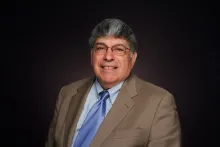
Gary Antion is a long-time minister, having served as a pastor in both the United States and Canada. He is also a certified counselor. Before his retirement in 2015, he was an instructor at Ambassador Bible College, where he had most recently also served as Coordinator.
