
John Elliott
This transcript was generated by AI and may contain errors. It is provided to assist those who may not be able to listen to the message.
Man has always faced perils from animals, from robbers, from thieves, from invaders. Going back to the earliest times, humans were exposed to these types of challenges, and one of the solutions that was developed, probably by Nimrod, was walled cities. The advantage of a city that had a wall was that agriculture and other things could be done out during the daytime, and yet when the peril became the greatest, everyone could come and live inside the city, close the gates and lock them, and be safe overnight. And so consequently, high walls, thick walls, and cities that were fortified, gated with locks, and then manned with guards, and then the walls manned with armies, became the standard protection for cities around the developing world. The only way in and out of a city with a big wall and a gate is through the gate. There's no other entrance. There's no convenient way to come and go, other than this entry point for any and everything that went into the city. Nothing could come into the city that was wider or taller than the gate. And so consequently, the city gates tended to be large, heavy, well fortified. An example of cities in the Bible range from Genesis to Revelation. But if you go to Judges 16 and verses 2 and 3, we see an example here of a city that got embarrassed. In Judges 16 and verse 2, this was the time of the Judges when there was no leader, following the death of Joshua. The city-state region that the Israelites had moved into was not dominated by a king, per se, but rather several kings of the Philistines, loosely associated with one another, and then other groups as well with their walled cities in various alliances. During this time, one of the Judges was named Samson. And we see that God gave him incredible strength. And beginning in verse 2 of Judges 16, we see, when the Gazites were told, Samson has come here. Samson, an Israelite, is now in a foreign city, and he has come down there for less than good reasons. And they said they surrounded the place, and they lay and wait for him all night at the gate of the city, because they knew he was in there. And he could only come out one way, and that was by the gate. So they waited all night. We can see here that that city is walled. It's gated. The gates are locked until morning. Well, they were quiet all night, saying, in the morning, when it's daylight, of course, then they're going to open the gates. He'll come out and we'll kill him. Then Samson, verse 3, lay low until midnight. And then he arose at midnight, took hold of the doors of the gate of the city and the two gateposts, pulled them up, bar and all, the cross beam, the doors, the entire operation there that protected that city.
And he carried them away and put them on his shoulders, carried them to the top of the hill that faces Hebron. So with this incredible strength that God gave him, he took the city's only defense and took it to a neighboring mountain to where a neighboring city could see, these guys have no defense. There's their gate on top of the mountain. They woke up to be, I'm sure, very embarrassed and also very vulnerable. Another example we see in the Bible that's very familiar is the city of Jericho. The first thing that happened when the Israelites crossed the Jordan River that comes to mind is that they were told to go around the city of Jericho seven times and blow the trumpets and the walls fell down. Jericho is the oldest inhabited city in the world. It's up on a very defendable point. It had an impenetrable wall. And to get through that, God simply made the walls fall flat and they had no defense left.
There's a dream situation when it comes to walls and gates and cities. Imagine that you are in an area and you're trying to defend your area and other city states have their walls and gates. What we find, for instance, in Genesis 24.60 and other places, you'll see this phrase used.
In this case, it's a prayer, kind of a hopeful prayer, a blessing sort of. May your life be blessed. And may you inhabit the gates of your enemies. Or may you possess the gates of your enemies. What that means is may you control the doors. May you control the gates of your enemies.
Those defendable defenses were very, very difficult to get through. The one who had control of the entry and exit into a city through the walls was ultimately the leader or the ruler of that city or that land. An example would be Nehemiah during the rebuilding of Jerusalem under Cyrus the Great of Persia. A group of Jews were allowed to return to the homeland to rebuild Jerusalem. Nehemiah found that the walls and certain sections were in disrepair and all the gates had been torn down. So let's pick up the story in Nehemiah 7, verse 1.
What we're looking for here is just to really get a feeling for walls and gates.
Nehemiah, chapter 7, and verse 1.
As this rebuilding went on, Nehemiah is describing, then it was when the wall was built, when all the sections of the wall were finished around Jerusalem. And I had hung the doors, talking about the gates and each of the twelve gates, when the gatekeepers, the singers, and the Levites had been appointed.
Verse 2, chapter 7.
This is a defensive term against sandbladder and some of the others that were outside wanting to see Jerusalem fail.
So wait till the sun is up and it's gotten hot.
If you go over to chapter 13, verse 19, this is before Nehemiah had to leave and go back to Babylon for his other duties.
It says, Nehemiah, chapter 13 and verse 19. And so it was at the gates of Jerusalem, each of these sections of the wall that had a gate, as it was as it began to be dark before the Sabbath, that I commanded the gates to be shut. So we can see here that Nehemiah is in charge of those gates. He's not doing the opening and closing himself, but he is the ultimate one that's in charge.
And I charged that they must not be open until after the Sabbath. And then I posted some of my servants at the gates so that the burdens would not be brought in on the Sabbath day.
Cities and gates and walls and entrance and keys to those gates.
That's what we want to talk about today. There's a phrase from medieval times that we're familiar with.
It's called receiving the key to the city.
You've probably heard of that. What is that thing? Sometimes the mayor will give somebody the key to the city.
It's kind of a funny thing, really. What would you do with this big old key? The mayor takes it back, by the way, so you don't get to keep it. Besides, what would it fit? It's kind of an odd thing. But actually, the gates of medieval Europe were very, not only fortified, but they were scrutinized, as gates have been down through time. They just opened the gates in the morning, and oh, sunlight, so everybody can come in and out. No. You scrutinized who went in and out. It became so tedious to go in and out of a city that the paperwork or the legal work or the requirements for a foreigner to visit a city were so great that it just became almost insurmountable or time-consuming for a diplomat, especially, to go visit another city. So they came up with the concept of the key to the city. And it speeded entry for visiting dignitaries. To have been given a key to the city, it sped them right through, and they were able to do so without any real restrictions. So it was quite an honor to be given a key to the city, to be able to pass in to that city and out without restrictions.
Jesus uses examples of a past denial system that He has in place for entry into the city of New Jerusalem, the kingdom of God. The person who has the key is the one who makes the crucial decision. The one who has the power or the authority over the gates or the doors is the one who gives access or denial to everyone who wants to enter.
Now, you and I are coming up to a festival called the Feast of Pentecost. Forget that name for a minute. I don't really like the Feast of Pentecost. It's a name that was not given to the feast. It was one that was sort of adopted many hundreds of years later. It's the Feast of First Fruits. It's the harvest of the first fruits.
The Feast of the Harvest of the First Fruits is yours as my feast. This is the most really important festival as far as the plan of salvation to you and me because it is about those who are granted access, permanent access to the kingdom of God, about those who are resurrected and finally can die no more. Blessed and holy is he who has a part in the first resurrection over which the second death has no power. That is what this festival really is about for you and me. It's celebrating those who are victorious as first fruits to reign with Christ in the kingdom. So let's take a look today at the importance of being able to understand Christ's concern and have that same concern every day of our life about being ready to meet the gatekeeper and being ready to receive the acceptance or the denial that we will receive because Jesus Christ holds the key that permits or denies every human being who will or who has ever lived whether they will have eternal life or whether they will be dead for eternity.
It's to him that your eternal life is approved or denied. And that approval is very important when it comes to who is considered to be the first fruit. I'd like to begin by quoting John 10 and verse 9. Jesus said, I am the door. I am the door. He didn't say I am a door.
I'm just one of many. Come to me if you like me or go to somebody else if you like somebody better. No, I am the door. If anyone enters by me, he shall be saved and go in and out. He presents himself many times in the Bible as the sole decider of those who will enter the kingdom of God. And he raises within us a core question. Will I or will I be not offered an open door to the kingdom?
Now, please don't just think, I'm in the church. I'm good to go. I know the truth. I'm good to go. Because Jesus' ministry here on earth and His teachings, not all the way through the Gospel, all the way through the book of Revelation, continually warned from His perspective as the judge, as the decider, look, not everybody is going to get through the gate.
So therefore, live your personal life in such a way that I will let you in. He builds this curiosity or question in us through the many teachings that he gave. Let's look at a couple. Matthew 25 and the first twelve verses, for instance. Matthew 25, beginning in verse 1.
The kingdom of heaven shall be likened to ten virgins who took their lamps and went out to meet the bridegroom. Story doesn't seem to have much in common with us or much in common with the feast of the harvest of the firstfruits. Until you think about it, the bridegroom is coming to marry the bride, isn't he? The bride is going to be a virgin. Ten virgins representing probably the church. What happens to them? Well, here we see they go out to meet the bridegroom, dropping down to verse 10, the last part of verse 10, and those who were ready went in with Him to the wedding, and the door was shut.
There's the door, there's the gate, some are invited, and then the door is shut. Verse 11, afterward the other virgins came also saying, Lord, Lord, open to us. But He answered and said, assuredly I say to you, I do not know you. I do not know you. That's a tough thing to find out for the one that you or I refer to as Lord, our Master, our Savior.
And we find, I never knew you. In Luke chapter 13 and verse 24, Luke 13 verse 24, He says, Strive to enter through the narrow gate. You have this big wall, it's huge, and there's a gap in the wall with a gate in it. Strive. Do all you can do to get through the gate. Not because it's narrow. It's not that you're too big to get through the gate. It's just that it has limited access, and there are gatekeepers there, and there are restrictions there.
And you have to strive. You have to do what you can possibly do to be prepared to go through that gate. Because you can't get in any other way. And He's just presented Himself in Matthew 25, as the gate. I am the door. For many, I say to you, will seek to enter and will not be able. Verse 25, when once the master of the house has risen up and shut the door, and you begin to stand outside and knock at the door, saying, Lord, Lord, open the door for us, He will answer and say to you, I do not know you.
Where are you from? That's the dilemma that Jesus Christ is going to find Himself in, and He doesn't like that. You can see from His writings, He's trying to warn us. Don't fall into this situation. Make it so that I can let you in. Pay attention. Be alert to your spiritual condition so that you will be allowed in. Now, let's stop and ask another question. Is there another way into the Kingdom, except through that gate?
Well, maybe. Think about religion for a minute. Think how many backdoors there are to get it to heaven, or wherever people assume that they're going to go. In Matthew 16 and verse 19, let's take a look at a potential, what we might call a backdoor, another way in. Matthew 16, 19. He's talking to Peter, and he says in verse 19, I will give you the keys of the Kingdom.
Whatever you bind on earth will be bound on heaven. Whatever you loose on earth shall be loosed in heaven. So, maybe we just need to see St. Peter at the gates. Maybe He'll let us in. Whatever you bind on earth will be bound in heaven. What does religion say today? If you can't get through the mean old Father, go through Jesus. He's real compassionate. But if you can't get to heaven through Jesus, who do you appeal to?
Mary. So, this compassionate concept of the Queen Mother of Heaven, she's the backdoor. She's the one that you can get in through. There's got to be some other way. She won't let you in. Go to the priest.
Pay him off. He'll let you in. After all, it's said right there. I give you the keys of the Kingdom. So, the priests figure they can do that. Let's take a look here just to see if there's any hope of a backdoor or some other entrance, what's being talked about. From a commentary by Martin, it says, When the Jews made a man a doctor of the law, they put into his hand the key of the closet in the temple.
That's where the sacred books were kept. I'll give you an example. If I were made a rabbi here in this room, they might put a key in my hand that would open those two doors. Behind those two doors are the scrolls of the Old Testament. Then, by those, I would have the keys of the Kingdom in the sense that God's Word could be taught. That's what was being referred to. They gave him authority to teach and explain the Scriptures to the people. Adam Clark of this passage explains, This prophetic declaration was literally fulfilled to Peter as he was made the first to open or preach the doctrines of the Kingdom of God to the Jews and later on to the Gentiles.
He taught the Jews and the Gentiles before even Paul taught the Jews and the Gentiles. So he was given the keys of the Kingdom. It was a symbolic term in that time. He was given the writings and the understanding of the truth to be able to preach it. Sorry, he doesn't have a key to let us in a back door in a new Jerusalem, rather that the preaching began with the apostles and continues on down to this day.
Going on in verse 19, an accurate translation would translate it this way, And whatever you bind on earth shall have been bound in heaven, and whatever you loose on earth shall have been loosed in heaven. See, we in the ministry don't bind anything here, and then God approves of it up there. No. See, we have the keys. In other words, we have God's Word. He opens it to our understanding so that we can teach the keys by which a person should live.
And then we also look in this Word and we find out what God has bound and what God has loosed. The terms binding and loosing aren't very well understood. But these were terms that were in frequent use by the Jews in Christ's days. Binding and loosing meant bidding and forbidding, or granting and refusing, declaring lawful or unlawful.
To bind something meant it was unlawful. To loose something meant it was lawful, according to God's Word. So the ministry has no power. The ministry doesn't do something here on the earth that somehow God is rubber-stamping or he's doing. In fact, it's quite the reverse. We are trying to determine what God has said and what God disallows and what he looses. So again, what we find is there's a big difference between the one who has the key versus the assistants who are helping spread the Word.
There is no back door. No back door whatsoever. Jesus never gives up his role as king, as savior, as the word, the logos, the teacher, nor does he give up being the great judge. As it says in Isaiah 33, verse 22, God is our judge, God is our lawgiver, God is our king, and he will save us. This is about Jesus the Christ, and he is the one who retains the ultimate authority.
So as we go forward, let's recognize very clearly he is the one to whom we must give account. He is the one who is judging us and deciding whether we will be in his kingdom. Wherever God lives, anciently, that was in the temple, symbolically, in the future, it will be in New Jerusalem, there is restricted access, very restricted access. Only the family of God, or those becoming the family of God, have open access.
Outsiders don't. We find that when Jerusalem was the physical location, residence, had the temple in it, the temple itself had walls. Not just Jerusalem had walls, but when you came up to where the temple was, you couldn't get close to the temple. Some of the slides that we saw today during the Bible study from Jerusalem show the great high walls that surrounded the temple. And there were four gates, one on the north, one on the east, one on the south, and one on the west. That allowed access to that temple. And those doors were shut and locked, and you could not pass unless you were authorized.
You couldn't even get up to see the temple unless you were authorized. We find, you can read back in 1 Chronicles the 26th chapter in the first 19 verses, that the temple mount and those four gates were controlled by 4,000 gatekeepers. 4,000 gatekeepers. They're sole duty to screen any and everybody who wanted access to that temple mount.
And if you didn't pass their scrutiny, you were not allowed. The screening process involved a judging approach. You had to analyze the person, you had to consider the person. You had to make a decision, a judgment on whether they were allowed, he or she would be allowed, to go up there. In the future, when New Jerusalem becomes the home of the God family, there will also be a control as to who will go there. Of course, you can't go there unless you're a spirit being, but there is one who controls life. Jesus Christ is the one who has the power of the resurrection.
He is the one who has the decision as to who to resurrect. And he is the way, the truth, and the life. Who's going to be allowed to enter New Jerusalem? Well, the ultimate controller begins to be identified to us back in the Old Testament in the book of Isaiah, chapter 22, and verse 22. Isaiah, chapter 22, and verse 22. For to get into New Jerusalem, you have to be of the spiritual house of David. You have to be a descendant of spiritual Israel. All nations, all peoples, can become that because we're not talking of physical lineage, but rather spiritual lineage.
And here in Isaiah, chapter 22, and verse 22, it says, Notice that phrase, house of David, not just the key of David, but it's really the key of the house of David. Who will be in the divine family of God? I will lay on his shoulder. Jesus came and replaced David as king. He became the great king. According to the lineage of David, he becomes the great king.
David's house now, in a sense, then becomes God's house in the full sense. So he shall open, and no one shall shut, and he shall shut, and no one shall open. So this key to the house of David, and who is able to become part of the family of God? That's decided by this one. It refers to Jesus Christ as the ultimate one who decides who enters or who has shut out. I'd like to read a commentary here, Adam Clark, regarding this key of David.
It says, Jesus' faithfulness is described in relationship to possessing the key of David. The key in David's time had been given to Eliakim. It was a symbol of authority over the house of David. Christ, the heir of the throne of David, will replace all, and he will reign over Israel forever. It says in Luke chapter 1 and verse 33, The authority to open or close the door to the kingdom rests with Christ, and he decides who is and who is not to be admitted.
Christ, the true David, has the key of the supreme government upon him, and he has the authority to open or close the door to the kingdom, and no one can counter mind him. Throughout the New Testament, Jesus Christ and the Apostle warn of the need to receive passage into God's kingdom. They use different terminologies, different allegories. An example of this is very clear in Revelation 1 and verse 17. Revelation 1, beginning at the end of verse 17, is Jesus himself talking. You'll find it's in red letters if you have a red-letter version.
He's establishing here at the end of verse 17 that, I am the first and the last. And verse 18, and the living one, and I became dead, and behold, I am alive for ever and ever. Amen. And I have the keys of Hades and of death. What is Hades? Hades is a word that means grave. He has the keys of the grave and also of death. Now, it's given unto all men once to die, so we all die, but he has the key, really, of life, because it's what happens to those in the grave.
If you're going to come up, if you're going to live eternally, he has the key to that, to whether you're going to get to come out of your grave. He also has the key of death, as to those who will go into the lake of fire, the second death. Again, he addresses himself and shows that he is the decider. He is the one with the key, the gatekeeper, if you want to say that.
In the next two chapters, he assesses the church. Six-sevenths of the church, as he addresses them, are in poor spiritual condition, and it's questionable whether they will get to come through the gate into the kingdom. Now, it would be, I think, foolish for anybody to look at chapter 2 or chapter 3 of Revelation and say, oh, that doesn't apply to me, or, oh, that was historical, or, oh, those were church eras that existed down through time, but I'm in Philadelphia, therefore I'm good to go, because it says, Philadelphia is a bunch of good people.
This is Jesus Christ, after his resurrection, assessing the church in three ways. First is in a historical way. These are seven churches on a mail route in Asia Minor. However, there are seven very minor churches, only one of which is even mentioned in Scripture.
Missing are the churches at Corinth, Ephesus, Rome, Jerusalem, you know, Philippi. Some of the bigger churches aren't even mentioned there. And yet, he uses these because he can teach about the church and teach about those of us in the church and warn us that our spiritual condition is going to be challenging, maybe problematic for us to be allowed into the kingdom through him, through that door, through that gate. And so, six-seventh of the church here have problems, really big problems, and he's concerned as to whether they'll meet it. Historically, there may have been church eras down through time. The Bible doesn't say there were, though I don't think there's any way to prove it. But one thing is for sure. All seven of these churches that are mentioned here exist in you and me. All seven. All these tendencies are within us at one time or another or all the time. And what he's encouraging us to do is, as he says at the end of each one, like in chapter 3 and verse 6, he who has an ear to hear, let him hear what the Spirit says to the churches. Do we have an ear? Are we listening? I wonder if we even know what those things are talking about. Let's remember, we just read about the ten virgins. Five-tenths of the virgins go into the lake of fire. He is very concerned here. There are sheep, there are goats, there are wheat, there's tares, there's the wives, there's the foolish. So when we celebrate the Feast of the Harvest of the First Fruits, are we celebrating our entrance into the kingdom or are being shut out? From Jesus Christ's perspective, this is the important question. This is what he raised so many, many times during his ministry. Let's take a look at some of what is said. We see here in verse 7 of chapter 3 that the Philadelphians will be welcomed through the gate. I don't know if their name, Brotherly Love, has anything to do with it, because Brotherly Love isn't what we're commanded to have. We're commanded to have Agape Love. But it says in verse 7, These things say, He who is holy, He who is true, He who has the key of the house of David, He who opens and no one shuts and shuts and no one opens, says these things. Let's notice what he's just said. First of all, he identifies himself, and he adds what makes him worthy to be the decider, that he is the one who is holy and the one who is true. And therefore, he gets to have the key. And I'm saying these things. Next he establishes authority as the one with the key of the house of David, as we read back in Isaiah 22 and verse 22. Next he establishes himself as the sole decider of who the gate or the door opens for and who it doesn't open for. He says, who opens and no one shuts. In other words, if the door of the kingdom is open, and Satan the devil himself comes and condemns you and criticizes you, the gate stays open. Or, on the other hand, who shuts and no one opens. No amount of whining, no amount of excuses, no amount of this or that is going to open that gate. Now, he says, I'm going to say these things. It's not about just verse 7. It goes on all the way through verse 11.
He lays down the rules now for entry or denial by the phrase, he says these things. I know your works. In other words, I'm judging you. I've been watching. I've been assessing you in your life and your performance. See, I have set before you an open door and no one can shut it. Come on in. He's very excited about that. Down in, as we go on, what follows in the next verse is a list of the criteria that he will use to decide your fate. Notice the word for. For you have a little strength. Because is what the word for means. Because. I have decided this. I've set before you an open door. You come on into the kingdom. Because. You have a little strength. You have kept my word. Now, don't get too confident being in the United Church of God and thinking you're going to be in the kingdom because we have the truth here. We do. You know, the Radio Church of God had the truth. The Worldwide Church of God renamed Radio Church of God had the truth. The United Church of God renamed Worldwide Church of God has the truth. You can be very confident that the truth exists here. In fact, we have very good publications and it's full of literature. You can read it and just feel good that we have the truth.
We also have not only doctrine, which we're very strong and good in doctrine and knowing what the doctrine is, but we also understand prophecy pretty well. As well as anybody can understand it. Because it just hasn't been revealed, which I guess what I'm saying is we don't really know what's going to happen that much, but we have an idea that we think we do. So be careful with that one because Jesus said, No man knows the day or the hour. And He says, All the virgins were asleep when I showed up.
So... All right? Don't get too complacent there. But notice something about this group. It didn't say because you knew the Word or had the Word. It says, You kept the Word of My Perseverance. There's the difference. Many will come to Me in that day. He says, Lord, Lord, we've done wonderful things. We've done the work. We got the Word out. We preached the truth.
We preached the gospel. We even told people... We cried aloud and spared not and told them their sins. But did you do? Did you keep the Word? And what was the Word? Love God with all your heart, soul and might, and love your neighbor with everything you've got.
Did you keep the Word? Or did you just know it? So what is very important here is that they have persevered, kept the Word of My Perseverance. It doesn't mean patience. Don't get in the idea that God wants you to be a patient person. I don't think that patience is some wonderful virtue.
Sitting around waiting. I'm waiting patiently. I'm not getting too excited here. No, but you persevere in loving God and loving your neighbor, no matter what. You see, what happens when trials and troubles come upon people? It's just as He warned in Matthew 24. He says, when the end times come, perilous times will come. Guess what happens? Well, the love of many grows cold because it's like, oh no, I'm having problems.
Oh no, my world's falling about. Oh no, I better fix it. I better take care of myself. Here we find out, here are some people who persevered in His Word. No matter what. And therefore, He has kept them from the hour of trial and trouble that comes upon the world because He already knows what they would do. He already knows they would continue to love and be faithful and serve, no matter what.
So an open door for them is qualified with, for you have kept my Word. You have not denied my name. The result is that Jesus uses the key to grant her entry into the family of God. We see at the end of verse 9 how He feels about these individuals.
He says, I have loved you. I have loved you, and I want others to know that. I've appreciated what you've done through your lifetime, and I have loved you. Verse 10, He continues on the basis of this open door judgment. He says, because you have kept the Word of my perseverance. This has been done. I'm going to give you another gift. I'm going to let you miss the tribulation, He'll go on and say.
Verse 11, He encourages them to keep doing what they're doing. He says, hold fast to that which you have. It's important for us to grasp who is going to be let through and why they're going to be let through. It's not because they had some special set of rules, or they had the right leader, or the right apostle, or knew the right prophetical date, or anything else. It's that they followed God, and they developed His nature. They were developing His nature. After the thousand-year millennium, there's a white throne judgment period. We assume by one scripture in the Old Testament that it may be a hundred years long.
We sometimes in the church call it the hundred-year period. That's when everybody is resurrected that's never had a chance to live with God's Spirit, and they get to live here on the earth. After that, New Jerusalem comes down. Now let's think about something for a minute. I was reading an article yesterday in National Geographic. It was about an old woolly mammoth baby that was encased in mud and water and ice up in Siberia somewhere for a long, long, long time.
It came floating out not too long ago, and they found it. It's just a really perfect specimen. There's been a lot of excitement about this little woolly mammoth. Well, they've carbon dated it back 40,000 years. 40,000 years? That's pretty cool. Woolly mammoths lived until 3,400 years ago by their dating techniques.
The last one died off 3,400 years ago. That's pretty close, isn't it? That's not so far back. Well, just think about this as far as time goes. In about 1,100 years, nothing physical will exist. There won't be a molecule of anything physical. Everything will be spirit with new heavens and new earth. In just 1,100 years, maybe just a little bit more than that.
That's not very far from now, is it? That's not much time. This whole world is dramatically going to change. And at that point in time, a new Jerusalem will come down to a brand new earth. And that new Jerusalem is where you and I want to be. That is where life will be for the family of God.
Remember here in Revelation chapter 3, just go to one more verse, verse 12. And let's see where the key fits for these people. What is the open door for them? Where do they get to go in? What's associated with what he's saying here? Verse 12 says, The one who is successful, and I will write upon him the name of my God, and the name of the city of my God.
Because these individuals are coming, you're going through an open door, and you're getting a name written on you, the city of my God, the new Jerusalem which comes down out of heaven from my God. That's where we want to be. New Jerusalem, interestingly, is secured by walls and gates of the likes we've never seen or even imagined. Let's go to Revelation 21, verse 10. Revelation 21, verse 10. John is taken here by vision, so he writes, And he carried me away in the spirit to a great and high mountain. This is something really big, great and high mountain.
And he showed me the great city, the holy Jerusalem, descending out of heaven from God. Verse 12, And she also had a great and high wall. Now, when you say a great wall, that would be like the great wall of China, maybe. But if you say a great and a high wall, that's really going to be maybe a really, really high wall, and really, really a wide wall. It's a big wall. John was impressed by it. He just called it a really great and a really high wall.
In other words, it's an impenetrable barrier. You're going to need to get in that through something else. You can't go through the wall going on. And the wall had 12 gates. Now, these gates on this big wall are going to be pretty formidable in themselves. And if you think the gates are tough, go on. And 12 angels at the gates. There's no entry into New Jerusalem unless a person is considered or granted access, let's say. To show how these walls and gates and the angels limit access, let's drop down to verse 27.
But there shall by no means enter it. No means. You can't go over, you can't go under, you can't go through. You cannot enter it by any means. Anything that defiles or causes an abomination or a lie. But only those who are written in the Lamb's book of life. There we come back to Jesus, the Lamb. He has a book. He has names in the book. The only ones who can get in there are the ones whom He approves. So, as we contemplate our life, let's not get carried away with materialism.
Let's not get carried away with cares of this life. Let's certainly not get selfish or self-centered with economic or other crises that come up. Let's remember that our eternal life boils down to one question. What will the gatekeeper do with the key? For me. Will he open the door or will he lock the door? And that's the question that will certainly be answered by Jesus Christ Himself.
Every human being will ultimately face that question. The Bible itself ends with a proclamation about walls, gates, and access. Let's notice Revelation 22, verse 14. We saw something similar at the very beginning of the Bible, where the Garden of Eden, where God was, had a gate.
And Adam and Eve were chucked out of the gate, and an angel, or angels, were there at the gate and did not allow entrance. Let's go to Revelation 22, verse 14. Blessed are those who do His commandments, that they may have the right to the tree of life and may enter through the gates into the city.
But outside is everything else. Dogs and sorcerers, sexually immoral, murderers and adulterers, and whoever loves and practices the light. And outside of New Jerusalem, human beings will still be living and sort of mulling around out there. But outside the Kingdom of God will be anything that was not developing God's nature. Brethren, He who has an ear, let Him hear what Christ says to His church, that He's concerned as the gatekeeper, as the one with the key. He's concerned that you and I are serious about our lives, about our calling, and ultimately about our future.
Beware the gatekeeper, and so live your life properly, so that Jesus will say to you the words He says in Matthew 25, verse 21. This is what it's all about. This is what He wants to say. He really wants to be able to say to you, Well done, good and faithful servant, enter into the joy of your Lord.
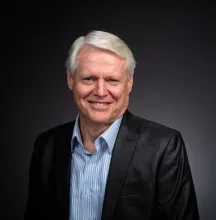
John Elliott serves in the role of President of the United Church of God, an International Association.

