
John Elliott
This transcript was generated by AI and may contain errors. It is provided to assist those who may not be able to listen to the message.
Throughout most of history, a city was a defined area that was walled and protected for the local citizenry. Outside those walls, during the daytime, farmers, herdsmen, various traders, people who traveled, could go out of the city and feel a relative safety in working where they could see. They could see some of the bandits, they could see approaching armies, they could see people who wanted to harm them in some way, steal their flocks and all. But at night, oftentimes, there were exposures to all sorts of trouble, all sorts of evil out there.
And so people like to come in at night, come into the city, often bring in the animals, to close the gates, lock them against outsiders. They didn't open those gates again until it was safe. And I'm sure there are many games that went on. You've heard of the Trojan Horse, which is one attempt to get the gates of the city to open up by giving a gift.
So you'd open the gates and an army could secretly come in. There were probably other things where a leading citizen perhaps might even be caught outside, or maybe he was taken captive and then forced to sort of knock on the door and say, let me in while people might hide. You know human nature. I'm not trying to give you a historical perspective in that, but human nature is very devious.
And so the cities were not only walled, but they were fortified. Quite often, the cities that we would see down through time would be fortified with a gate and a lock and a wall that looked something like this. If you take a look at the city, you'll notice there's a double wall. There's one, the main outside, that would provide even an armed force to be on top of that wall to protect its gate or gates, to shoot down, to drop things. On the inside, we see another wall that would protect its elite or its religious center, or perhaps both, even from the citizens.
Again, human nature being what it is, there are a lot of problems. This is an actual walled city called Carcassonne. It is located in southern France, very close to the border with Spain and the Pyrenees. And what you have here is a double walled protection against invasion. The city of Carcassonne, I'm going to just tell you what my wife and I and our friends heard when we toured there a few years ago. The city of Carcassonne is said to have never fallen, never been taken captive.
You can see how well protected these little turrets come out, and they can even shoot down and protect anybody that's trying to get to the wall, let alone trying to come over the wall. Here you can see a gate to the city, and around it, individuals, warriors would be able to not only provide defense there, but the first wall could even attack those who got through into that center section.
It may well have been filled with water as well. One thing about the main gates along the side up here, the top wall extended out over the gate, and there was great work, metal grating, so that anybody approaching that gate could have hot boiling oil dropped on them, could have big stones dropped on them.
Working to try to get a heavily locked gate open would be almost impossible. There's an old story that goes with this, that this city was once laid under siege by a large army for two years, and siege just means you starve out the inhabitants until they open the gates. That just shows how impregnable a walled city is, that sieges were common to try to get in because you couldn't get in, so you would cut off all food supply.
This city didn't even fall during that siege. It came close. It came so close that the soldiers out here, two years, tenting, camping in the cold and the rain and underfed and the misery, were finally told that the city is going to fall anytime because they have to be out of food.
And then someone up on the wall said, Hey, you guys out there, you look pretty hungry. Here, let's give you some food. And with a catapult, they shot a pig over the wall. And it so discouraged and demoralized the army, it left and went home.
What the army didn't know was that was the last piece of food inside the city. But that's just the way that human nature kind of goes. The point I'm going to make with these slides is, and with the first part of the sermon is, when you come up to a walled city, a gated, locked walled city, you don't get in.
Nobody gets in. You might think, well, I'm very special. So I'll just knock. I'll just climb the wall. If huge armies have to lay siege, an individual has no chance of getting in. Here's an actual photograph. It's probably a daguerreotype, but it's one of the early photographs that was taken. And you can see a real wall with opportunities to harm anybody who come up against it.
And there's a large gate that would close. And these are some people coming and going during the daytime in trade. This is a wall and a gate that my family visited right after the Feast of Tabernacles this year. And this is in Spain. And you can see once again, the turret and also over the gate have extensions to where things can be dropped, let alone all the many slits and slots and opportunities to shoot at anybody coming close to that gate. Simply not going to get in there. There's another view of it. Families here, you can see how small the people are. You can see again, up in here, all the opportunities that exist to defend that wall, including archers from here and here, dropping things here, dropping things here, throwing things down from here, shooting from up here.
You're not going to get in that wall. This is the wall, one of the walls of Jerusalem. Once again, it's a very impregnable, very fortified wall. Again, the point is, if you want to go into a city with all the opportunities of defending it, look at all these defense positions everywhere, pushing out, dropping, shooting, falling, people on the roof, a gate coming down. This is called the Damascus Gate in Jerusalem.
Walls and gates keep people out. Here's an artist's rendition of a Roman garrison. This garrison is entering their own wall. They are entitled to go in there. And so the gates are rising for them. The iron gates are rising for them to go in. Let's look in Genesis 19 and verse 1, way back at the start of the biblical story after the flood. It says, It states in the Bible that the people of that area were just horribly evil and wicked.
So to put Lot in Sodom doesn't just mean that he liked that kind of culture, but rather that's what one did in an evil society. You went inside a walled city for your own protection. In Judges 16 and verse 3, we find perhaps one of the more interesting things involving walled cities. Judges 16 and verse 3, you'll remember Samson.
Samson, of course, with God's miraculous power, could do very interesting things. In Judges 16 and verse 3, what happened here was Samson went into a harlot. And the term harlot doesn't just mean what you think it does. It does mean that, but it also often speaks of a hotel. It's where people traveling would go. You remember the spies who went to search out Jerusalem, ended up at Rahab's house, Rahab the harlot? She was an innkeeper, and the term is synonymous with an innkeeper. Rahab was an innkeeper.
This person goes into an inn where he rests. And at an inn, there were other services offered at times. And so the term harlot kind of has a dual reference from what I've been able to tell. Anyway, he went in, and he shouldn't have been doing what he was doing there. In verse 2, when the Gazites were told, Samson has come here, they surrounded the place. And they laid wait for him all night at the gate of the city. They may have been, actually they were, from a different city, and they were outside. They couldn't come and get him, which tells you something. That was a secure city. A very secure city. He was, I'm sorry, he went to Gaza. He saw the harlot there, and the Gazites were told, I'm sorry. So they were probably waiting for him at the gate on the inside. My mistake. They were waiting for him at the gate on the inside, because there's only one way out of there. No one's going to go out at night. So, they wait, and in the morning they say, when it is daylight, we will kill him. Why? Gate opens, people leave. He'll probably be going out. So verse 3, Samson lay low until midnight, and then he arose at midnight, and he took hold of the doors of the gate. So he got the two doors, he grabs them, and the two gateposts, he pulled them up with the bar and all, he picked them up. And from what I've been able to tell, he carried them 20 miles to the next city at Hebron, and he stuck them on the hill that faces their gate. So that when Hebron opened their gate in the morning, there's the gate from Gaza, saying Gaza is unprotected. I don't know how that went, but it must have been very, very embarrassing to wake up in the morning and find you don't have a gate, and then your neighboring city-state knows that you are totally undefended.
Gated cities and fortresses were common until recent times. We tend to think of these things as being very old, but the name Fort is just a shortened version of a fortress, and there are some 600 forts in the United States that are registered. Consider that 18 U.S. cities have the word Fort as part of their name.
It wasn't that long ago that people went into forts and were protected there at night, and then they went back out during the day, and the military gave them protection. Of course, there are also military garrisons under forts and various defensive and protective things that went on like that. But the point is that when the gates are shut, everything is kept in or out.
Jesus Christ has been giving us the opportunity to be part of a city, a city that's defined as being walled, a city that's defined as having a gate or gates and a door or doors.
You and I have this opportunity, and as the world around us gets worse and worse, we want to come in. We want to get out of what we're seeing taking place. We want to see ourselves protected and away from and or transferred into a divine kingdom of God and a new Jerusalem. Well, Jesus Christ has been given the key or the responsibility over the gate to the great walled city. He regulates, He approves, or He denies who may enter through it. Today in this sermon, I'd like to take a look at the responsibility that Jesus Christ has in selecting for the family of God, for determining for God the Father, for the family of God, for the future of their kingdom, if His key will turn for you and me.
The title of the sermon today is The Key to the Kingdom. And really, we come as a body to God. We come as brothers and sisters before our Father, but individually, God will speak to us about a key and about a door. And it's up to you and me individually as to what that key will do for us. In Nehemiah 2 and verse 8, we read that Jerusalem under Nebuchadnezzar had been burned. I'd just like to read Nehemiah's statement here.
Nehemiah chapter 2 and verse 8.
Nehemiah sent to rebuild the Jerusalem area, the temple. And he says here in verse 7, If it pleases the king, let letters be given to me. Verse 8, Big timbers. I'm going to start building and re-fortifying.
There were menaces like Sanballat and others who were trying to slow down the rebuilding of the temple in Jerusalem. And that area. There were menaces and detractors. And what they really needed was a walled city with gates they could lock and keep people out, especially at night. And so in chapter 2 and verse 13, notice the progress here.
He went out to survey this situation when he got there. I went out by night through the valley gate to the serpent well and the refuse gate. And I viewed the walls of Jerusalem which were broken down and its gates which were burned with fire. So the gates were made of wood. And that's why he requested letters for Asaph to give him wood to make new gates. And the walls were broken down. So anybody could come and go.
So then I went on to the fountain gate in the king's pool. And he went to verse 15. By night up the valley, viewed the wall, turned back, went to the valley gate. If we go on down through time, we see that construction began. Chapter 3 verse 1. Eliasheb, the high priest, rose up with his brethren and priests and built the sheep gate. And they hung its doors.
Verse 3. The sons of Hasinah built the fish gate. They laid its beams, hung its doors with its bolts and bars. Begin to get the feeling here. Wow, these things, boom, bolted, barred. Walls are going up. Down in verse 6. Jehoidah, they repaired the old gate. They laid its beams, hung its doors with its bolts and bars. Verse 13. These individuals repaired the valley gate. They built it, hung its doors, bolts, bards, and they repaired a thousand cubits of the wall as far as the refuge gate.
So this thing is beginning now to take shape. And it's beginning to become a defensible city where they can keep people out. In verse 15. Shaolin rebuilt the fountain gate, covered it with something. Probably covered it with some bronze. Something to make that thing difficult to break down or to burn.
It hung its doors with its bolts and bars and repaired the wall. And so on and so forth. The point I'm trying to make here is that when the doors of a walled city get shut, nobody comes in. Nobody's going to be coming in. Again, the term siege was for that very reason that you couldn't get in. Even the Roman armies often couldn't get in. When Nebuchadnezzar came to destroy Jerusalem, he couldn't just get in.
Seages show the lack of one's ability to even wiggle in to a walled city. There's a statement in the Bible where God says that, I will give you the gates of your enemies. See what that's talking about? You can't get through the gates of your enemies. You can't get into the town, but God says, I will give them to you. I will give you their gates. I will make them open for you. Or you will rule over them. You'll have the key to those gates. Or they will be paying tribute to you, and you will be a conqueror.
You'll tear down those gates. But you will have the gates of your enemies. It means that those walled cities will be open unto you. I'll give you an example of how it really requires God to get one in to a walled city with closed gates. Let me give you two examples. The verse is in Isaiah 45, verses 1-3. Cyrus, who was the one giving the direction under God's inspiration to have that temple rebuilt under Nebuchadnezzar, I'm sorry, under Nehemiah, that Nebuchadnezzar had burned and tore down. Cyrus here is referred to glowingly, thus says the Lord to his anointed to Cyrus, whose right hand I have held.
This is happening because of God, as far as what Cyrus is doing. To subdue nations before him, to loose the armor of kings, to open before him the double doors. Those are the walled doors of gates, so that the gates will not be shut. Behold, I will go before you and make the crooked places straight.
I will break in pieces the gates of bronze and cut the bars of iron. This is an interesting statement from God showing humans couldn't do that. But God says, this is what I'm going to do, Cyrus, for you. When your army rolls in, this is what's going to happen. I'm going to open those gates up for you.
The other one is in Acts 12, verses 7-11. Remember, sometimes the apostles would go boldly preaching, and then somebody would want to kill them or incarcerate them. Here's an example of what happened with Peter. Acts 12 will begin in verse 7. Here's Peter. He's bound with chains between two soldiers. Verse 8, they were keeping him in prison. Verse 7, behold, an angel of the Lord stood by Peter in a light shown in the prison, and he struck Peter on the side.
Wake up! He raised him up and said, arise quickly, and his chains fell off his hands. You can see here, God is very involved. An angel comes and is releasing him from prison. Let's notice something a little more. Verse 10. When they were past the first and second guard posts, they came to the iron gate that leads to the city. Here's an iron gate going into Jerusalem, which opened to them of its own accord. Wow. See, normally no one would be going in.
You saw the pictures. We've reinforced the fact that these gates and walls keep people out. And yet when God gets involved, things can just open. And that's important for us to remember. That is the only way that you and I can gain entry to the city that we so desire to enter. Having a key to the city has been a big deal down through time. Having a key to the city today probably means some big old plastic or cardboard key, and you give it to somebody who's done something for the community.
And it's sort of symbolic. Symbolic because there's no gate. There's no lock. There's no wall. We live in open societies mostly today. But there was a time when having a key to the city was a really big deal. And you were responsible, or you were one who was so influential that you were given a spare key, and you could come and go at will.
David was an individual who had a key to a city. Here is the modern south exposure of the Temple Mount and a set of staircases that I was blessed to help excavate back in the early 1970s, leading up to the Temple Mount. This is probably the original staircase that existed in Christ time. At least portions of it are. Though the wall, of course, is not. All the wall from Christ time, everything that Herod built was thrown down. And what they called the Western Wall today merely is the foundation stones for that outer wall of Herod.
But somewhere around here, you could see there was an entry that one could come up probably into what was called the Gate Beautiful. It's referred to in Acts. Nevertheless, there was a gate. There were gates. Nine different gates around Jerusalem have been recorded. One did not just enter without being allowed through that gate.
There was a time when David had 4,000 individuals guarding the Temple Mount. Let's look in 1 Chronicles 23, verses 4 and 5. This is sort of a summation of some of the things at the end of David's life. When he first brought the Ark of the Covenant back from the Philistines, I believe he established 69 guards to guard the doors, to guard the gates, to make sure that that was protected.
But now, if we look here in 1 Chronicles 23, beginning in verse 4, it says some of the people that he had assigned to various stations, 24,000 were to look after the work of the house of the Lord, 6,000 were officers and judges, 4,000 were gatekeepers. This was serious about him locking down and having the key to Jerusalem. People and enemies and others were heavily screened by these 4,000 who obviously served in rotations.
One could not just, say, go anywhere that they wanted to go. Let's look in Acts chapter 3, verses 1 and 2. Acts chapter 3, beginning in verse 1. This is right after the day of Pentecost, right after the baptism of 3,000 people. And now Peter and John went up together to the temple at the hour of prayer, the ninth hour, and a certain man, lame from his mother's womb, was carried, whom they lay daily at the gate of the temple, which is called beautiful.
So it could very well be that that individual was right here. Could very well be that if that's where the beautiful gate was, and these are the steps, indeed. I can't say that for sure. But that individual was right here. But the important thing I want to note is this person was brought there, laid daily at the gate. He never went in. Not everybody could go in. People with issues couldn't go in. People with various bodily and personal circumstances couldn't go in. You can read through the covenant that God made at Sinai, and afterward, the book of Leviticus and Numbers in Deuteronomy, you can read the specifics of what people could and could not do.
Again, the whole thing is that no one could go in there unless the door was open for them. Here we see a fortified view of that period of time. This is a model. But you can see that even if you were a citizen of Jerusalem, it didn't mean you were going into that second layer. You may have been able to come through the gate into the city of Jerusalem, but it didn't mean you were going to the temple.
It didn't mean you were going to go where God was. That had a series of gates that were restricted entries for only those who were authorized. And as you can see, if you were not authorized, you would not be going in. Let's go to Revelation 21, verse 21. Moving from Old Jerusalem, now let's look at New Jerusalem. This New Jerusalem is said in chapter 21, verse 21, to have 12 gates. The 12 gates were 12 pearls. Each individual gate was of one pearl. It's hard for us to imagine exactly what's being said here.
But New Jerusalem with 12 gates. That's different, isn't it? We tend to think that, oh, New Jerusalem, Kingdom of God, Kingdom of Heaven, that's my place. That's where I'm heading for. That's what I'm looking for. That's the future. And it has 12 locked gates.
That's not something often that you and I have in mind. We tend to think, oh, I'm in the church, I know God, or I've done something, and therefore, there's no walls or no gates, I'm just there I am going to be, and that's it. Some of this may have actual, factual, this is how it will be. Others of it might be a little more descriptive. And yet, this is how it's described.
Let's take a look at some locked gates. If you were wanting to, say, go into that fortification, once again, you might feel privileged, but once again, you see every gate has the opportunity, the ability to defend, to keep people out. And without having the door open, there won't be an entrance. We might, once again, assume, and we'll hear the words of Jesus Christ in a minute, saying, you presume that you're going to go through there, but if you come and the door is shut, what are you going to do?
You're going to pound on it? What exactly would you and I do? So let's now ask some questions. How can I get in? I'd like to give five points about getting into New Jerusalem. We'll take a look at Scriptures with each of these points. First of all, realize that the kingdom of God and New Jerusalem within it is impregnable. It is totally impregnable, and one has a key to its gate.
We find this in Revelation 3, verse 7. Revelation 3, verse 7 is one of the lessons that Christ gave to the church. Some 60 years after his death, he came back, he assessed the church, he gave us six lessons. This is the sixth. And he says to the angel of the church of Philadelphia, these things he says, who is holy, who is true. He is true. Remember, he said in the final prayer to God at the Garden of Gethsemane, he said, Your Word is truth? He was speaking of himself. Your Logos is truth. And he says, this is the one who is holy.
This is the one who is true, who has the key of David. David had the key to Old Jerusalem, to physical Jerusalem. Jesus Christ has the key to New Jerusalem. And here's what he says with that key. The one with the key is the one who opens and no one shuts. Now that's an interesting thing because, see, if he sees you as worthy to have the gate open, it will not be shut. No one else will shut it. No one can convince him to shut it. Satan the devil himself can't show up and say, Oh, but this person did this and this and this and this. So you have to close the gate.
No? His blood has cleansed the sins of those who he has forgiven, he and the Father. The same thing applies in reverse. He says, who shuts and no one opens. If the gate is shut for me, if the gate is shut for you, there's nobody's going to be opening it. There's no friends, there's no excuses, there's nothing that's going to open that door.
And so from God's perspective, you see, this is a heavy responsibility and he shares this with us many times. In the Gospels, here in Revelation, he's saying, Please, watch out for your state. Watch out. Be careful. Be growing. Pay attention. Devote everything to doing what I've commanded you so that the door will be open for you.
He says, I know your works. See, I have set before you an open door. Wow! How exciting that will be for those who have an open door and no one can shut it. Why? There's always a why. He goes on, for or because, you have a little strength, but you have kept my word.
You have done what I said. You know, the real mission of the ministry that he gave in Matthew 28 is to have individuals who obey everything he commanded. That's the point. You go out and find and preach the Gospel, ring them in, baptize them, disciple them, and then get them to the point where they observe everything I command. That's what he's looking for. And these individuals have kept my word and have not denied my name. Verse 10, because you have kept my command to persevere, he will also keep them from the hour of trial.
Those who are alive, we take that during the tribulation, will be given a place of safety. It's very important that we understand that he has a key and the entry is conditional. In chapter 22, verse 18, of Revelation, right at the very end of the Bible, is an interesting statement that's made. Verse 18 says, Before I testify to everyone who hears the words of this prophecy or the teachings of this book, the English Standard Version renders this, for I warn everyone who reads this book.
It's a warning to us. Why? So we fear, no! God the Father and Jesus Christ have to make this decision about you and me. Are we really going to do the things that enable them to open the door or not? In verse 19, he warns, he says, if anyone takes away from the words of the book of this teaching, God will take away his part from the book of life, the name will be withdrawn, they will take away his part from the holy city, will not be allowed in, and from the things which are written in the book.
Behold, I am coming quickly, Jesus said. It's surely. So point number one is, it's impregnable. God has the responsibility of determining who it will open to. Point two is, entry is conditional. We just saw that. Entry is conditional. He says in John 10, verse 9, I am the door. You've got to get through me. You come through me, but you also have to come in by me. If anyone enters by me, he will be saved and will go in and out and find pasture. He will have an open door and he'll be able to come and go, metaphorically.
In Matthew 7, verse 21, let's look at another statement that he made, encouragement that he made, to try to really get us to pay attention. Matthew 7, 21, Not everyone who says to me, Lord, Lord, shall enter. They won't come into the kingdom of heaven, but he who does the will of my Father in heaven will enter the kingdom of heaven. What's the will of my Father? You can collapse it all the way down to love God with all your heart, soul, and might love your neighbor as yourself. We need to be repenting as we find ourselves daily, minute by minute, not doing that perfectly.
We have to work on that and never give up on that. Even as society breaks down the rules, lowers the bar, just gets rid of everything, makes it all personal choice, and in the background is trying to launch a controlled and forced world order that will control the wealth, the money, the food, and life itself. The ignorant people who are getting rid of God and who thought of God are going to fall into a trap that you and I need to be fully aware of and moving away from, not being part of this mindset.
So he says, verse 22, Many will say to me in that day, Not a few, not five, not twelve, many. Hey, the door is closed here.
Many will say to me in that day, Hey, we've got a way to get the door open here. We've got a reason with you. Haven't we prophesied in your name? Didn't we go out teaching in your name? Didn't we cast out demons in your name? Haven't we done wonders in your name? And then I will declare to them, I never knew you. Oh, he who says he knows God and keeps not his commandments is a liar.
It's not really part of God. Depart from me you who practice lawlessness. Let's look over in Matthew 25, verse 10. Matthew chapter 25 contains three teachings on the same theme, where he's saying, Look, I want you to really pay attention. You've been given this life. I've given you life. I've given you the Holy Spirit. I've been giving you these things from the Father. I shouldn't say just him, Jesus Christ. But God the Father has done these things. What are you doing with them?
Are you wrapping them in a napkin? Or are you actually producing five and tenfold with them? Matthew 25, verse 10. When the first five wise virgins went in, the others went to buy oil. The bridegroom came. Those who were ready went in with him to the wedding. And the door was shut.
The door was shut. And when that door gets shut, it doesn't open. And afterward, the other virgins came. Lord, Lord, open to us. And he said, Surely, I say to you, I don't know you. It wasn't just about oil. It wasn't just about not having oil for lambs.
They were not part of the entire process. They weren't part of the process of conversion. It's a process. Not a little thing here or a little thing there, a little technicality or a little special deed. It's a process of conversion. He says, Watch spiritually alert, preparing. Watch for you know neither the day or the hour in which the Son of Man is coming. In Luke chapter 13, verse 23, he says, Strive to enter through the narrow gate. There's a gate there, and it's narrow. For many, I say, will seek to enter and will not be able.
When once the master of the house has risen up and shut the door, and you begin to stand outside and knock at the door, saying, Lord, Lord, open to us. He will answer and say to you, I do not know you, where you are from. And you'll begin to say, But we ate and drank in your presence and kept the feast. We taught in the streets. We preach the gospel. I'll say, I do not know you, where you are from.
Depart from me all you workers of iniquity. There will be weeping and gnashing of teeth when you see Abraham and Isaac and Jacob and all the prophets in the kingdom, and you yourselves thrust out. He's not saying this for any other reason except to get us going and say, Wow, yeah, I need to be serious. I really need to be a member of God's family and right now a physical child of God, converting, going through a process of conversion, of mental transformation. Point number three. God equips his ministry with keys to help people enter the kingdom. Point here is, don't discount the role of the ministry that God the Father established through Jesus Christ and the system by which God works.
If we do that, like it seems so common, people feel they can get what they need through some other source instead of getting it through the way Jesus Christ from God the Father processes things in the family as one body. People who do that to their own detriment tend to shut themselves out. And I'll show you why. Let's look in verse 19 of...
Let's see here... Matthew 25... Matthew 16? Thank you. Make a note. Matthew 16.25. There it is. Hmm... 16.19. So Jesus is saying here to Peter in verse 18, You are Peter and on this rock himself I will build my church and the gates of Hades shall not prevail against it. That's an interesting statement. The gates of Hades or the gates of the grave will not prevail against it. What does that mean? Think for a minute. Don't just jump and say, oh, that means the church will never die out. We've talked about gates. You can't go through gates. Gates are shut. If they're shut, they're shut. And what he says here, I will build my church and the gates of the grave shall not prevail against it. Sounds like the gates of the grave are closed. In other words, when we die, we can't do anything about it. We're dead. We go back to dirt. But he's saying here, I will build my church and it appears that the gates of the grave, when we die, are in the grave, shall not prevail against his church. What happens? What exactly happens? Well, resurrection. He says, I will come and open the graves and you will hear my voice. Now let's go to the next verse in verse 19. And I will give you the keys of the kingdom of heaven. Whoa! He's not speaking to Peter. He's speaking to all 12 of the disciples, as you notice in verse 20.
I'm going to give the ministry, those whom the Father has given me, I'm going to give you the keys of the kingdom of heaven. Now notice carefully what it says. Whatever you bind on earth will be bound in heaven. Whatever you loose on earth will be loosed in heaven. Some have taken this to mean, oh, the ministry can just make up anything as they want. You know, there's a popular religion out there that does that. But in fact, what we find right after this, in John chapter 20, in verse 22 and 23, he also says, if you forgive the sins of any, they will be forgiven in heaven. And if you don't forgive them, they will not be forgiven. Let's be careful about what this means. Let's skip right now. The timing of those words was right before Pentecost. Let's now go and see what happened right at Pentecost. In Acts chapter 2 and verse 1, just checking the timing here, Jesus had just said this to them. After he was resurrected, he was with the disciples, and he said to them, Whatever sins you forgive, they will be forgiven in heaven, which you keep, they will be kept in heaven. And what's one of the first things that they do? Acts 2 verse 38, Peter said to them, Repent and let every one of you be baptized. Who baptizes you and me? The ministry does. And what happens at baptism? Be baptized for the remission of sins. The ministry has a very important responsibility of helping an individual come to the point of baptism, which must be preceded by repentance. It must have the faith of God working with that individual. And then the ministry will put that person in the water, symbolic of their sins, being washed away. And that is a very heavy responsibility that the ministry has, is initiating that new covenant as led by Jesus Christ. Don't discount the ministry's role in baptism counseling and decisions. And then you will receive the Holy Spirit. How did the Holy Spirit come? Acts chapter 8, The Holy Spirit came through the laying on of the ministry's hands. That is just the beginning. There are other statements regarding shepherding. Let's look in Ephesians chapter 4. Ephesians chapter 4. This is one reason, you know, it says to give the elders double honor who rule well. It says we are to submit to those with authority over us, those who watch for our souls, giving double honor in my own life. I mean, I may serve in various ways, but I refer to those above me as Mr. I give them the double honor. I need the ministry and the direction from God the Father through Jesus Christ that comes down. We all need that. And my point to you is don't discount that wherever you are within the body, wherever God the Father and Jesus Christ has placed us within the body. Don't discount that the body is fed from the head and it comes down through various ways. If we take ourselves out of that, then we set ourselves up for failure. In Ephesians chapter 4 and verse 11, it says, For he himself gave some to be apostles, some to be prophets, some evangelists, some pastors and teachers. We don't take that. We don't say, oh, I think I'll do this or I'll do that. Somebody inspired by God has to assess and watch and mentor, review and pray and fast and see that God has shown signs and evidence that that is there. And we're all like that. He places us wherever in the body that he wants to. Now, once that is done, in verse 12, for the equipping of the saints.
You know, I might just think that we get it all by ourselves because we have God's Holy Spirit. That's not the way it works in the body. For the work of service, for the edifying, for the building up of the body of Christ. Till we all come to the unity of the faith and the knowledge of the Son of Man, to a perfect man, to the measure of the stature of the fullness of Christ. And this begins with the Father through Jesus Christ, through the ministry, and throughout the body and the way that they choose to do it. That we should no longer be children, tossed to and fro, carried about with every wind of doctrine or teaching. That's another thing that the ministry is entrusted with. And nobody else, though we must do that very carefully and understand that the doctrines were established by Jesus Christ, they were defined by the apostles, and those things have been set long ago. We just need to be very, very careful to understand them and protect them, and above all, to do them. In verse 15, the whole object of this is, Speaking the truth in love may grow up in all things into him who is the head, Christ. Point 4. Entering New Jerusalem comes by invitation only. It's not something we can demand. It comes by invitation. You know, our calling comes by invitation. Jesus said, No one can come to me unless the Father draw him. Wow! Even the beginning is by invitation.
Salvation. We see when it comes to our being immortalized, the grave has gates, as we read before. They won't prevail against the church because he said, All that are in the graves will hear his voice and come forth, some to the resurrection of life, some to the resurrection of judgment.
Job 14, 14, and 15. Remember, he asked the question, If a man die, will he live again? It's nothing you and I can do about it. Will we live again? He says, You shall call. You shall call. It's by invitation to live again. It's very interesting. In Revelation 4 and verse 1, we can see this invitation, as it were, to have interaction with the spirit world. It's not something, as we know in 1 Corinthians 15, flesh and blood cannot inherit in corruption, can inherit the kingdom of God. It comes by invitation. Revelation 4 and verse 1, after these things, here's John now. He's in a vision. He's just a human man.
He's about 90 years old, maybe. He says, I looked and behold a door standing open in heaven. Wow! Well, there's not much you can do about that if you're on earth. The first voice, which I heard, was like a trumpet speaking to me, saying, Come up here!
And I will show you things which must come to pass after this. Wow! Come up here!
This is just an interesting thing, where a door is open in heaven and come up here.
You and I want to see our graves open, and we want to be told, Come up here and join Christ in the clouds. We want to be resurrected, and that is by invitation, because there's nothing that you and I can do unless we are changed.
And the fifth point is that it's God's good pleasure to open the gate, the door to His kingdom, to New Jerusalem, for those who are counted righteous in His eyes.
It's not about you. It's not about me. It's about righteousness. It's about the mindset, the agape mindset of the family of God.
It's about individuals who are of that mindset. The thing I like about this gate of the city is that it says, You are welcome. And it's wide open. You are welcome. You and I want to be welcomed.
It's God's good pleasure, Jesus said, to give you the kingdom.
If, in God's eyes, you are considered righteous, because the kingdom of God is where righteousness dwells.
You and I can't be righteous. We can't earn our way in. But we can show that we really want to be righteous.
We can abandon those ways, those lifestyles, those attitudes, those mindsets. We can be washed clean of that on a daily basis, even more often than that. And we can walk in a newness of life. We can walk according to the mind of God the Father and Jesus Christ.
And that's what I want to encourage you to remember.
As David explains in Psalm 118 and verse 20, this is the gate of the Lord. Think about those words. This is the gate of the Lord. The righteous shall enter through it.
So what about you? What about me?
As individuals and as a family here, are we moving forward towards the kingdom? Are we doing what the Days of Unleavened Bread, following the Passover, speak to us about? To be released from our slavery and to march and to make progress towards the kingdom of God?
Narrow is the way. Narrow is the gate. Will I, will you, be one that finds it?
Well, that's up to God. It's up to Jesus Christ. This is what is often called the Golden Gate in the wall of Jerusalem currently.
It's interesting. In the foreground are graves. The dead are outside. There's no way they can go in.
The gates won't even open. Not to you, to me, to anybody. Those are just gone. And up there is where, during the Sinai Covenant, God used to live.
You and I look forward to a new Jerusalem. We look forward to one that God dwells in. Let's read about this in Revelation 22, verse 10-17. Revelation 22, verse 10, last chapter of the Bible, says, Do not seal the words of this prophecy or the teaching of this book, for the time is at hand.
Now, from God's perspective, here's what He wants from you and me. He who is unjust, let him be unjust still. He who is filthy, let him be filthy still, because those aren't going in the city. Those aren't going in the kingdom. And I have to be able to make a decision, God says. I want to know who you really are. He who is righteous, let him be righteous still. He who is holy, let him be holy still. And behold, I am coming quickly, and my reward is with me to give to everyone according to his work. You and I need to be busy doing the will of the Father, which is to work on overcoming and growing in righteousness, with their help and with their inspiration. I am the Alpha and the Omega, the beginning and the end, the first and the last. Blessed are those who do His commandments, that they may have the right to the tree of life and may enter through the gates into the city. You and I have been given an invitation to proceed down a path that's challenging and difficult. Towards a kingdom, towards a city, at His gates. It's a wonderful calling. It's an exciting calling. It's an exciting opportunity. But we need to be focused on it. We need to follow that model prayer outline constantly, putting God in His kingdom and His righteousness right at the forefront of our purpose for being. Endeavor to live every day in the manner that God prescribes in His Word. Be found righteous in His eyes and you will find the gate of the Lord open for you.
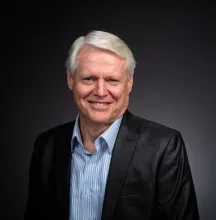
John Elliott serves in the role of President of the United Church of God, an International Association.

