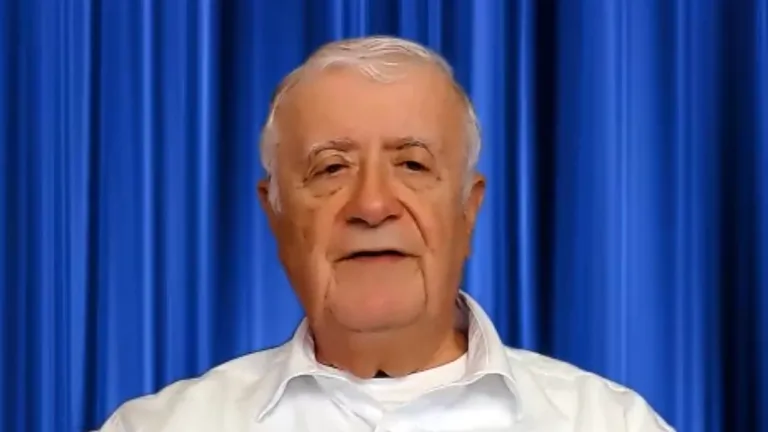


Roy Holladay
The physical creation was not created by lesser deities, but by Jesus Christ. He is the Creator, He has preeminence, AND the fact that He came to earth, was a human being, died and was resurrected, destroys the Gnostic concepts of emanations and Docetism.
This transcript was generated by AI and may contain errors. It is provided to assist those who may not be able to listen to the message.
As explained in a previous study, brethren, during that era of the Colossians, there was a dangerous pagan heresy affecting the world, the Christian world, which is today referred to as Gnosticism.
The first two chapters of this epistle are directed at this heresy. Gnosticism is basically a teaching that spirit was entirely good and matter is entirely evil. And one of the common teachings about Gnosticism was Gnosticism, which is the teaching that Jesus and the Christ are not the same person. And a lot of the Gnostic beliefs was around that Christ was a spiritual being that entered into the man Jesus, probably at baptism, and withdrew just before the crucifixion. And it was only the man Jesus who died on the cross.
The belief then is further expounded by the concept that they believed in various spiritual emanations that descended from God. And when it embraced Christianity, it stated that Christ was one of such emanations, being less than God, God the Father, and that one therefore required some special secret higher knowledge above Scripture, therefore the term Gnosticism, to be quote-unquote enlightened and to receive salvation. Another Gnostic interpretation was the belief that the human body was considered evil and it should be treated harshly. This has been termed as asceticism and leads to practices such as the Catholic belief of penance as self-sacrifice or self-punishment. So Paul's letter to the Colossians is addressing this heresy of Gnosticism that was affecting the Church.
So it starts at the beginning with his usual introduction and he mentions that he does not cease to pray for them to be completely filled with the knowledge of God's will. And that is a direct hit against Gnosticism, which is that special knowledge that they understood that it was required. And we see that in chapter 1 verse 9 that it says in Colossians chapter 1 verse 9 says that you may be filled with knowledge of his will in all wisdom and spiritual understanding.
Then in the last study we made mention of six action words that we read in verses 10, 11 and 12, or six specific actions that they needed, but we all need to be doing to fight whatever weaknesses or erases we may have. It's basically six good Christian principles for us.
In verse 10 he mentions four. First is to walk worthy of the Lord. That ties in with to Ephesians 4 verse 1, that we are to walk worthy of our calling. Secondly, action is for us to be fully pleasing God in whatever we do. The third is for us to become fruitful in every good work. And fourthly, still in verse 10, is for us to increase in God's knowledge, in Godly knowledge, that again is tied to the understanding of Gnosticism.
But it ties into 2 Peter chapter 3 at the end of the second epistle of Peter, where it says we are to grow in the grace and knowledge of our Lord and Savior Jesus Christ. So we to grow in the knowledge of Christ, and therefore also to apply and put in practice his kind graciousness that we have, that we need to have. Then in verse 11, brings to the first action, Ian, that is important for us to have, and that is for us to be strengthened by God's power, by God's glorious power, which is God's Holy Spirit.
And it says then, verse 11, that it says, for all patient and long suffering with joy. And so patient, I made emphasis that that is patience, basically endurance against trials and tests and difficult circumstances. And long suffering is more related to enduring against difficult people or dealing with difficult people. And we ought to do it with joy. Joy being an internal joy, an internal peace of mind that we ought to do.
And then in verse 12, it comes to the sixth action word, which is gratefulness, which is thanksgiving with, as it says, with, in verse 12, it says, with giving thanks, in other words, with full gratitude, with thanksgiving. Why? Because God has qualified us to receive the inheritance of the saints. It's interesting to our light here, as I mentioned previously, God has qualified us. It's not we that qualify ourselves. God has qualified us. How? And that's how we see now as we start in verse 13. He says, He has delivered us from the power of darkness and conveyed us into the kingdom of the son of his love.
So we have we have been delivered. That says He has delivered us. The Greek word is rescue. It's equivalent to a word that says rescued. We've been rescued from the power of Satan, the power of darkness. So before conversion, as people, people in the world, before conversion, we are we're held under the sway or the domination or the power of Satan.
We read, for instance, in Ephesians 2 verse 2, Ephesians 2 verse 2, that he says that he is the prince of the power of the air. So we see that's the power that Satan has, is the prince of the power of the air.
Also in Ephesians chapter 6 verse 12, it's talking about that we are not wrestling against flesh and blood, but against principalities, against powers, against the rulers of the darkness of this age. In other words, spiritual rulers. So Satan and his host of demons, as it says, spiritual hosts of wickedness in the heavenly places. And then, interestingly enough, Christ in Luke chapter 22, as they were going to imprison him, or question him and beat him and all that, we are in Luke chapter 22 verse 53.
Verse 53 it says, you know, well, let's read the context starting in verse 52. Then Jesus said to the chief priests, captains of the temple, and the elders would come to him, have you come out as against a robber with swords and clubs? And 53, when I was with you daily in the temple, you do not try to seize me, but this is your hour and the hour of the power of darkness in the words of Satan. So God, but going back to verse 13 of Colossians chapter 1, he says, God has delivered us from the power of darkness.
God has delivered us or rescued us from Satan's power. And the people in the society, Satan is holding under that dominion, but we are delivered. We have been rescued. Now, who delivers us? Now, considering the context here, the the Gnostic believers would say, well, it was special knowledge, but Paul is here addressing this heresy of Gnosticism and is clearly saying no, it's not any special knowledge.
God is the one that delivers us from darkness, not the Gnostic teachings. You and I have been rescued, and God has, therefore, conveyed us. Let's continue reading then. He has delivered us or rescued us from the power of darkness and conveyed us in the margin, may in your margin, may say, transferred us. The Greek word basically means transferred us into the kingdom of God. It was the kingdom of the sun, as it says, yeah, the kingdom of the sun of his love. So, we were in the kingdom of Satan in darkness.
It's like being in a dark cave without any light, not seeing anything. And then God rescues us from this quote-unquote cave of darkness and has transferred us into his kingdom, into the light, into the truth, into the way. And by being converted, as when we get converted, we are transferred into the kingdom of God, but not yet born again.
The church has quite an in-depth paper. I'm just looking now about 32 pages called Born Again Study Paper, which I recommend you to go into the members section on the website, on the members section, and then you will find study papers, and you can download and read this paper very, very detailed. And it's really, I really recommend you to do a careful Bible study the various Bible structures about that this paper uses.
It goes into quite a lot of explanation about the word canal and also how some of the words can be applicable both to the begettle stage, as well as the birth stage. And the meaning may vary depending on when it applies to the father or when it applies to the mother. So it is a very, very worthwhile paper for you to to read and study. So when we converted, we are transferred into the dominion of God's kingdom, but we're not yet born.
That's why it says we conveyed us into the kingdom of the son of his love, but we're not yet born. We are therefore now members of that kingdom, but not yet glorified, not yet born into the kingdom of God. And the eye is a warning for all of us, is that we can lose out. We have to continue. We have to remain faithful till the end. Yes, in verse 12, it says, God has qualified us. Yes, but now we have to remain and overcome and grow, and we have to continue obeying. And therefore, we are rescued from that power of darkness. And the question therefore is how?
And how is basically described in verse 14. And it says, in whom we have redemption through his blood. Because it says we've been transferred into the kingdom of the son of his love. In other words, the kingdom of God, which is Christ's kingdom as well. And it says, in whom, that's in Christ, we have redemption through his blood, the forgiveness of sins. So how are we rescued? We rescued by redemption, by being bought out through Jesus Christ's blood.
That is, Christ's sacrifice. And so we have here the forgiveness of sins. Forgiveness of sins implies basically two things. The pardon, the forgiveness, but also the remission of the penalty, of the death penalty. So it implies both. So this is an important fact in the context of Gnosticism, because the Gnostics thought that this salvation would come through, quote unquote, special knowledge.
And Paul, therefore, is now beginning to show how Christ plays a key section or a key role in this action of our redemption and of conveying us into the kingdom. So I'm going to read now verse 15 through 18 as a whole, and then we're going to address it step by step, these few verses. So let's read verse 15. He is the image of the invisible God, the firstborn over all creation, for by him all things were created that are in heaven and that are on earth, visible and invisible, whether thrones or dominions or presbyalities or powers.
All things were created through him and for him. And he is before all things, and in him all things consist. And he is the head of the body, the church, who is the beginning, the firstborn from the dead, that in all things he may have preeminence.
Now, when we, as we study these verses, these four verses, we will, and as we understand the depth of the meaning of these verses, we will see that Paul through this absolutely destroys Gnosticism. Absolutely. It's a death knell, let's call it that, on Gnosticism. He just kills it. So, once again, a part of the Colossian heresy was the denial of the deity of Jesus Christ. Remember when we mentioned about the word docetism? This is the teaching that Jesus and the Christ are not the same person. And so, so many Gnostics, therefore, believe this separation and that Christ was, therefore, a spiritual being that entered into the man Jesus. This would have happened symbolically when we see the dove at baptism in Matthew 3.16. It says that the Spirit of God ascended like a dove, and they claimed that Christ entered into Jesus at that time, but it was through just before the crucifixion, and that it was only the man Jesus that died on the cross. Now, think about it. Think about it. If you, if people, believe in Trinity, Father, Holy Spirit, and Christ, and Christ left Jesus, then who was resurrected? Because Christ had left Jesus, so it was Jesus. Now, what do you have? You got four, not three, you got four. And so, so this whole thing, these old pagan ideas are just so just out of line. Now, does the tism, therefore, says Jesus was not really born in the flesh, and it only appeared or seemed to be in the flesh. For he says Christ only seemed to have a physical body or to suffer, but was actually purely divine and not truly human. For instance, in Old Testament, we have situations like Melchizedek appeared, or situations that an angel appeared, or God appeared, and these appearances appeared like flesh and blood, but then would be gone, because they were not flesh and blood. And therefore, those who believed in these approaches of Gnosticism, they believed that this was the case for Christ, that is, docetism. And so, yeah, Paul starts really defining the deity of Christ and that Christ really came in the flesh. So, he says here in verse 15, he is the image of the invisible God. In other words, Jesus Christ is not just one of the created beings emanating from God, one of the emanations. He says he is the image. The Greek word yapho, image, 1504, is icon, a copy or a likeness of the invisible God.
It's like an exact likeness, like a statue, an exact copy, a replica. For instance, I'd like to say, for instance, you have a painting of, that somebody painted, you did a painting of you, and people say, it looks just like you. But he says Christ is the perfect image, the exact likeness of the Father. Now, how do we know this? Well, we go to Hebrews chapter 1. Let's look at Hebrews chapter 1, starting in verse 1. I really want to emphasize verse 3, but for context, let's read Hebrews chapter 1, verse 1 through 4. This is God, with various times and in various ways spoke in time passed to the fathers by the prophets, has in these last days spoken to us by his son, whom he has appointed heir of all things, through whom also he made the wolves. So God, through Christ, made the wolves, who, Christ, being in the brightness of his glory, and the express image of his person. Christ is the express image of the Father, and upholding all things by the water of his power, when he had by himself purged our sins, sat down at the right hand of the majesty on high, and having become so much better than angels, as he has by aneritus obtained a more excellent name than they. And so, Christ was in the express image of his person, of the Father, and is upholding all things by the word of his power. That's what it says here, in verse 3. Also, when we read in 2 Corinthians chapter 4 verse 4, 2 Corinthians chapter 4 verse 4, 2 Corinthians chapter 4, 2 Corinthians chapter 4, who's talking out, says, our gospel is failed, whose minds the God of this world that Satan has blinded, who do not believe lest the light of the gospel of the glory of Christ, who is the image of God, should shine on them. So, Jesus Christ is not just one of the created beings emanating from God, he is the image of God. And so, let's go back to Colossians chapter 1 verse 15, and then he says, the firstborn over all creation. Christ is the firstborn over all creation. The word firstborn is Greek, 44164416, prototokos, and this word can mean both firstborn or preeminent. Now, as we read, and we'll just skip a little bit here in verse 18, it says, and he is the head of the body, the church, who is the beginning, the firstborn from the dead, that in all things he may have the preeminence. He was the firstborn because he was the first to be resurrected up to this point in time, and therefore he says the firstborn from the dead, he was the first to be resurrected, which implies, by the way, firstborn implies there'll be other sons. There'll be quote-unquote secondborns at the first resurrection, and there'll be even others at another resurrection later on. So, Jesus Christ was the first to be resurrected, and therefore is the first that was born of the flesh and has gone through the process of living a perfect life and dying, and therefore the first has gone through the process of resurrecting and being a spirit being. He therefore has the preeminence. Others are to follow, so as the firstborn he has preeminence. That is, of others to follow, which is us. We are to follow. All right, so, and that obviously is if we stay faithful and to the end to be in the kingdom of God. Also in Romans 8 verse 29, Romans 8 verse 29, let's just have a look at Romans 8 verse 29. Romans 8 verse 29.
Right, it says, For whom, he foreknew, he also predestined to be conformed to the image of his son, that he might be the firstborn among many brethren. And so, Christians will be born into the family of God as spirit beings, will be born again. As we saw, we have been, as we read, we've been conveyed, been transferred into the kingdom, but we're not yet born again. So, Christians will be born into the family of God, but Christ was the first. And then, the relationship, therefore, between us and Christ will be that of brothers. So, yeah, in this case, the word prototokos is also used in relation to God's creation, referring to Christ's supremacy over it. Jesus Christ cannot, therefore, be both the creator and the creature. So, he is the creator, and therefore, he's got preeminence over the creation, and therefore, he is the firstborn from the dead, he is the firstborn over all creation, and he is the firstborn amongst many brethren. And so, we have, for instance, yeah, in Colossians chapter 1 verse 15. 1 verse 15. Let's just read it again. He is the image of the invisible God, the firstborn over all creation. That makes it very clear for by him, by his part, he is the firstborn over all creation. Or better still, he is the one preeminent over all creation. So, that word firstborn has a dual meaning, could sometimes, prototokos could be translated as the one that is preeminence. And so, it says, so the translation could have been in this context, he is the one that is preeminent over all creation. Is the firstborn over all creation, or is the preeminent over all creation? Now, continuing in verse 16. For by him all things were created that are in heaven and on earth, visible, invisible, where the thrones or the minions or precipalities of power, all things were created through him and for him. In other words, it makes it absolutely clear, for by him were all things created, meaning that he himself is not part of the creation. Christ is not part of the creation because he created everything. In John 1 verse 3 says, all things were made through him and without him nothing was made that was made. And so, he created everything and he is emphasizing all different things, physical, spiritual, etc. And verse 17 he says, and he is before all things and in him all things consist, all things consist in him. So that is absolutely clear, he is the creator. Now, in verse 18 there are a few key words, yeah, that we want to emphasize. So let's just read verse 18 again. And he is the head of the body, the church, who is the beginning, the first born from the dead, and in all things he may have the preeminence. He is the beginning. The beginning is a Greek word 746, archai, which means the first cause. Then the first born, as I mentioned before, 4416, prototokos, which in this case it's talking here from the dead. And so the beginning, he says, yeah, who is the beginning? The first born from the dead. So in both cases, both are together in regards to the resurrection from the dead, who is the beginning? The first born from the dead. So the both connecting to the resurrection. And then he says that in all things he may have the preeminence.
The word preeminence is prototok, Greek 449, to be the first in other words, to have preeminence. And so Jesus Christ is the head of the body, the church, who is the beginning? That's what he says, he's the head of the body, the church. He is the beginning. He is the archai, which is the first cause, the principle cause, the originator. And he is the prototokos, the first born from the dead. And that parallels with verse 15 that says Christ is the prototokos, the first born over all creation, or the preeminent, preeminence over all creation. So both verse 15 and verse 18 asserts Christ's supremacy and preeminence over the creation. So the other question, why does Paul then say that Christ is the first born from all the dead? Is this then in verse 18, is this then not redundant? Is this then not redundant? No, it's not, because it might or could have been sufficient to say that Christ is the first born of the entire universe, right, but without qualification. In verse 16 he says, without qualification. So he says, yeah, he's the first born over all creation, but then he says again, the first born from the dead. So a question may arise from these Gnostic people regarding the order of things in the new creation. What do you mean the new creation? New creation means the new man. That is, those people that are being cleansed of sin and renewed by redemption, because he talks about that we have redeemed in verse 14. So let's put this again in the context of Gnosticism. The Collagian Church was being affected by Gnosticism. They were explaining the existence of sin in the universe, and Gnosticism taught that the material universe was created by a kind of a lesser God, and not by the highest essence of the deity. In other words, in Gnosticism, God was a fullness, playa-roma, playa-roma, and we read that about that fullness in verse 19, which we're not covering today. So in Gnosticism, God was a fullness, from whom a succession, according to Gnostic belief, belief of lesser beings emanated. Those lesser beings, they called in Gnosticism, are eons. The spiritual purity of these beings diminished with each lower level of their existence. So we had this emanation and different beings. Again, this is all paganism and ideas that they had. So finally, an aeon, that was a divine being or a quote-unquote God, or spiritual entity or emanation, there was far enough removed from the origin or hay of deity created the material universe. That was the Gnostic belief. So therefore, the Gnostics thought that Christ was only one of those aeons, one of those emanations, one of those lesser beings. So if Paul then says that Christ is the creator of such a universe under the concept of Gnosticism, some Gnostics might therefore believe that surely this Christ, this aeon, this lower being, could not sustain any relationship with the new creation. There was the new man, the modified changed man. And therefore, Paul must make it very clear that Christ is supreme, both in redemption, verse 14, is supreme in redemption. He says in verse 14, in whom we have redemption through his blood, as well as he's supreme in creation, verses 15 and 16. So he says, he created is the first, is the preeminence over all creation, is the first born over all creation. And whatever creation it is, heaven or on earth or visible or invisible, angelic or whatever, he is preeminent, is supreme in both in the redeeming process and in creation.
And so Paul is making it very clear, this is making clear, very clear, that Christ has preeminence, the word protuō, which is there at the end of verse 18. So protuō, preeminence, indicates not an acquired right to be ruler or to be preeminent, but an inherent right by virtue of his nature, he being the creator, and he deserves to have preeminence. And so through this, he is actually destroying completely this Gnostic belief of this emanations of Christ being that later came from God as created, etc. So he's destroying that concept. And also it says here at the end of verse 18 that he may have that preeminence, he may have that preeminence. So now we have the present tense, which indicates permanence and perpetuity. He is always preeminent. That's why, once again, in John 1 verse 3 we read, all things were made through in and without him nothing was made that was made. So Paul, yet in these verses, makes it very clear the high position, the preeminent position of Christ. It is very important and there are a number of ideas out floating today. We're going to be careful because it might not be exactly like Gnosticism, but there are different ideas in the world today. I've come across these ideas when I came across people in other groups, particularly in Brazil. I've come across some groups with really strange ideas about who Christ is. And so Paul, in this section, makes it very clear who Christ is.
So the physical creation, as I conclude and summarize it, the physical creation was not created by less deities, but by Jesus Christ, the very creator. He is in the image, as it says, in the exact image of the Father. And therefore, the fact that Christ is the creator, therefore, that fact that he has preeminence and the fact that he came to earth and he was a human being and he died and resurrected. He additionally, therefore, is the firstborn from the dead, and even more or once more, he has preeminence over everything, not only as a creator, but as what?
That he has the preeminence by the very fact that he's the first one to go through the process to be in God's kingdom and is the one by whom all of this is carried out. That is, through Christ's sacrifice, you and I can have salvation.

Jorge and his wife Kathy serve the Dallas (TX) and Lawton (OK) congregations. Jorge was born in Portuguese East Africa, now Mozambique, and also lived and served the Church in South Africa. He is also responsible for God’s Work in the Portuguese language, and has been visiting Portugal, Brazil and Angola at least once a year. Kathy was born in Pennsylvania and also served for a number of years in South Africa. They are the proud parents of five children, with 12 grandchildren and live in Allen, north of Dallas (TX).
