



Jorge de Campos
In the first two chapters, Paul addressed the source of the Colossian heresy—Gnosticism. Beginning in chapter 3, he turns to encouraging the Colossian brethren and moves into very practical applications of God’s Word, focusing on how believers should treat one another. He explains what must be put off and what must be put on as part of becoming the new man.
This transcript was generated by AI and may contain errors. It is provided to assist those who may not be able to listen to the message.
Well, good evening, brethren. In the first two chapters of Colossians, Paul addressed the source of the Colossian erosive, which is Gnosticism. He addressed that topic head-on, and we have covered that in great detail in post-studies. But now, from after chapter 2, you know, it was from chapter 3, Paul is now trying to encourage the Colossian brethren, and he gets to some very practical application of God's Word, a few principles, and basically related to how to treat one another, how to treat brethren, how to overcome certain weaknesses we have. And so, he goes into that. And so, he shows areas, Paul shows areas, in which our lives are supposed to have killed that past old man, as mentioned in Colossians 2, verses 11 through 13, where he says in verse 11 that we are going to be putting off the body of sins of the flesh. And then he refers to baptism, which relates very nicely to Romans chapter 4, which talks about us being buried with him in baptism. And then he also says about we are dead in our trespasses. That is in verse 13 of Colossians 2, which very much ties in with Romans 6 verse 6, the body of sin is should be done away, at least. So, he goes into now in chapter 3 of Colossians, into further detail about what to do to put on the new man. And so, in verse 1, let's read in Colossians chapter 3 verse 1, if then you were raised with Christ, seek those things which are above where Christ is, sitting at the right hand of God. Now, he says, yeah, if then, he says, yeah, if then you were raised with Christ, the other word, Greek word, Sunae, gyro, means like raised together or co-raised. And it's interesting, it contrasts to what he said a little earlier in Colossians chapter 2. Let's just have a look here, what he says in verse 12, buried within, in which you also were raised with him. So, in chapter 2 verse 12, we were raised with him through faith. In Romans 6 verse 4, says it's by the glory of God, by God's power. And it also contrasts with Colossians 2 verse 20. Look at it in Colossians 2 verse 20, it says, therefore, if you died with Christ, and yeah, in Colossians 3 verse 1, if then you were raised with Christ. So, we see the contrast in chapter 2 verse 20. He says, if you died with Christ from the basic principles of the world, in some Bible versions, puts it as the rudiment of this world, Stochion, and the English Standard Version puts it that you died to the elemental spirits of the world. In other words, you've put off all this Gnostic paganism, therefore, if you've died with Christ to all these pagan things that the people there were doing. In other words, therefore, if you are truly baptized and converted, that's what he says here, in the sense, in verse 1 of Colossians 3, seek those things which are above. In other words, he says, not physical things, but those things which are above. The Greek life at that time, and indeed, the life in the society today, in this world, is very much based about the pursuit of physical things and physical possessions. But he says, yeah, seek those things which are above instead. And then where Christ is sitting at the right hand of God. It was Christ sitting at an exalted position at the very right hand of God, far above all principalities. He triumphed over them. We see that in Colossians 2, verse 15. He says, having disarmed principalities and powers. And so he says, and he made a public spectacle of them, triumphing over them in that. So Christ triumphed over all these, what's it, let's say, principalities, in other words, evil spirits and demons. And he sustains the whole universe. We read that in Hebrews 1, verse 3. He sustains the whole universe. So, and now it says, yeah, Christ is sitting at the right hand of God.
Continuing then in verse 2, he then says, set your mind on things above, not on things of the earth. So set your mind not on things of the society of this world, which means we need to think, we need to meditate, we need to have this inner disposition. Our total disposition should be towards the things of God. We remember, for instance, Matthew 6, verse 33. Let's seek you first the kingdom of God and His righteousness, and then all these things will be added to you. So we are to set our minds on the things above. Verse 3, for you died. And yeah, is the answer to a question that one could have, says, why should I put my mind on the things above? Obviously, it's kind of a ridiculous question because we know exactly why we need to do that. We need to set our minds on things above. But he's saying, for you died. It was the past is dead. The past way of your living, the old way, is dead. You died to it. And your life is eaten with Christ in God. Our eternal life is eaten with Christ. Our former life is buried. Our old ways should be buried, and we should be living a new way. Look, for instance, in Galatians chapter 2 verse 20. Galatians chapter 2 verse 20.
Galatians chapter 2 verse 20 says, for I've been crucified with Christ, it is no longer I who live. You know, it's not my old man that lives. But Christ lives in me, so now I'm living a new man. And the life which I now live in the flesh, I live by faith of the Son of God, or in the Son of God, who loved me and gave himself for me. And so we are living a new life.
And therefore, we continue reading in verse 21 of Galatians chapter 2. I do not set aside the grace of God, for if righteousness comes through the law, then Christ died in vain. So he's saying, I live a new life, but that does not a null God's grace. Christ lives in me, we become a new creature. So continue in Colossians chapter 3 verse 4, and we read, when Christ who is our life appears, then you also will appear with him in glory. So at his coming, at Christ's second coming, when he appears, that's symbolized by the seventh trumpet, that is what it says. If it's a seventh trumpet, then the dead will rise, and Christ will come at the seventh trumpet. And so we will also appear with him in glory. In other words, we will be resurrected, changed, transformed to be like him. So even now our life, even though it's still physical, we should be living a different man. But when Christ comes, we will be composed of spiritual composition. Let's look at 1st John chapter 3 verse 2. 1st John chapter 3 verse 2, and he says, Beloved, now we are the children of God. Yes, we know. Begotten. We are trying to live God's way. And then he says, and it has not yet been revealed what we shall be. It was still human beings, still flesh and blood. But we know that when he is revealed, when Christ comes at the seventh trumpet, we shall be like him. It was we will be of the same composition, of the same essence. For we shall see him as he is. We'll then see him in his full glory as he is now. Today we can't see him in his full glory. We will be glorified. We will be glorified with that glory, a glorious body that radiates life and power and energy, which is not the body we have today.
Even Christ in John 17, in these prayer after the Passover symbols and when he was with the disciples in John 17 verse 5, John 17 verse 5, he prayed and he asked. He said, and now, O Father, glorify me together with yourself with the glory which I had with you before the world was.
So Jesus Christ asked the Father to glorify him with the glory that he had all the way before the beginning of the creation of this world. And so Christ was a glorified being. He emptied himself. He came to earth and now, as he's in John 17, he's just a few hours before his death, he is saying, Father, glorify me with the glory that he had. And so, like Christ is now glorified, we will be glorified as well at the resurrection. Obviously, not to the same degree of glory, but with the same type of glory of a spirit being in the family of God as the Son of God. But note a few points here in Colossians chapter 3. In Colossians chapter 3, a few points we've read, so let's just look at them. In verse 1, it says, you were raised with Christ. In verse 3, it says, your life is hidden with Christ. And look at Yah in verse 4.
Now, in verse 4, it says, and when Christ, who is your life, appears, then you will also appear within in glory. And so, we see when man seizes to be, in other words, when we die, then when we're resurrected, when we become a new man, a new person with a new composition at the resurrection, we will appear with Christ resurrected in glory. But now, that ultimate new man is hidden. And so, we are raised symbolically pointing to that future, our eternal life, our life as a spirit being is hidden in Christ. People don't understand that we, even ourselves, don't fully comprehend what to be composed of spirit means. But Christ is our life. That's what we read here in verse 4. He is our life. And when he appears, he is the one that is going to give us that eternal life. And we know Christ was life. John 1 verse 4. Let's just look at John 1 verse 4. John 1 verse 4.
John 1 verse 4. And it says, in him was life, and the life was the light of man. So, in him was life. And we see also in collagionals, because now in collagionals in chapter 1 verse 16 and 17, it says, For by him all things were created, and that are in heaven and on earth, visible, invisible.
And then in all things were created through him. So, I'm just jumping a few words there. And in verse 17, And he is before all things, and in him all things consist. You see, so in a sense, Christ is life. In a sense, comparing to the first Adam, when Adam was formed and shaped, then Elohim, God, which in that case, because everything was created by Christ, would have been Christ breathed into Adam the breath of life. But also, in an analogy, at Christ's coming, Christ in a sense breathes into us the breath of life, but now is of eternal life. He gives us that eternal life. And so, in a way, we have the guarantee of that now, which is God's Holy Spirit, which is the guarantee. We receive it after baptism. And in John 15 verse 26, John 15 verse 26, we see that the Holy Spirit proceeded from the Father, is given to us by Christ, but it proceeds from the Father. It's God's power, it's God's seed, it's from the Father, but it's given to us by Christ. Let's just read John 15 verse 26, but when He, the Helper, that's God's Holy Spirit, comes, whom I, that's Christ, shall send to you from the Father, the Spirit of truth, which proceeds from the Father, the Spirit will testify of me. So, God's Holy Spirit proceeds from the Father, is given to us at baptism after the laying on of hands, and it's given to us by Christ. We also confirm that, that it is at the laying of hands by reading, for instance, Acts 8. In Acts 8, we've got this section about Simon Magus, and so in Acts 8 verse 17 and 18, it says, yeah, and then they laid hands on them, and they received the Holy Spirit.
As we can see also in verse 16, it says, they had only been baptized in the name of the Lord Jesus, but then required the laying on of hands by God's ministers. And then verse 18, and when Simon saw that through the laying on of the Apostle's hands the Holy Spirit was given, he offered them money. But again, the point is, God's Holy Spirit was given to us, or He's given to us by the laying on of hands after baptism as well now. But God's Holy Spirit proceeds from the Father, and is given to us through Christ during the laying on of hands.
So let's continue now in verse 5. It says, therefore, well, therefore, because we seek those things from above, because we set our minds on the things above, because we have died at baptism, the old man, that is the great symbolism of our commitment at baptism to live a new man, and because Christ is in us, He is our lives, He lives in us. Therefore, verse 5, put to death your members, which are on the earth. And so we are to put to death, we are to destroy, we are to annihilate, to completely destroy our members, our human nature, our human things that are sinful. And then He enumerates a number of them. Let's read them fornication, uncleanliness, passion, evil desire, and covetousness, which is idolatry.
And so He enumerates first sexual sins, because they are major problems that human beings have, they always had, and that is a major problem, and those are enumerated first. And secondly, because Satan hates, hates man's sexuality. In other words, he hates that God is reproducing Himself. Satan hates that God is creating other beings that will be part of his family. And so we as human beings can have children, and Satan cannot.
Satan cannot reproduce. We know in John 844 it's referred to as your father the devil, but that is not in the sense of procreating or having children, but it's in the sense of his influence. In other words, he does not beget. It's just his influence, and therefore, in a sense, they are his children, because he influenced them. All right, so, so in Elessia, Paul, a number of fleshly sins. First, fornication, which is from the word porneia, which is sexual immorality.
Then he covers impurity or uncleanliness, which are physical acts, and evil thoughts, any dense, in other words, morally unclean, uncleaniness. Then he says passion, which is our inordinate affections, in other words, lust, but in a sense, the physical side of lust. And then he says evil desire, that is, let's say, the mental side of lust.
It's what you think, what you desire. And then he says covetousness, which is greed, is what one wants to have more, and have more, and have more. In other words, an insatiable desire to gain more, to just have more, especially things that are forbidden. And when those things become important, in other words, you want more and more and more, they become like a god in which people are worshiping. And in a sense, they're worshiping themselves. They make a god of themselves, and therefore, that is idolatry.
You see, so that covetousness, as it says, which is idolatry. So people are following their own desires, their own interests, their own selves make themselves a god, rather than following God's guidance. And so those desires, that's wanting more and more and more, that becomes a god. That's why it says it's idolatry. Moving on, on to verse 6, it says, because of these things, the wrath of God is coming upon the sons of disobedience. There will be a final judgment, but that final judgment will be with justice. God does everything with justice.
In other words, remember that when, for instance, we read in Romans, for instance, chapter 9, where it's explaining about God's faithfulness and righteousness and justice. You see, God is faithful. He promises. What he promises, he will do. He is righteous. He does things in a righteous manner. And likewise, he judges with justice. In other words, his judgment is righteous. So righteous is righteous because he acts the right way always. Why? That's his character. That's his love.
He does what's better for us and for others. But he judges also with justice. Judgment is a process. It's a process in which there's a time to learn, to learn what is right and wrong, a time for us to make a choice to do that, to commit, a time to overcome frailties. And after a certain period of time, when God says, okay, that's enough, you've had your time, your opportunity.
You know, it was part of this process of judging. There'll be a final, final decision, righteous decision, a final judgment. And so he gives man through this process of judgment, he gives man time to repent. We read in Romans chapter 2 verse 4, Romans chapter 2 verse 4. It says, would you despise the riches of God's goodness, his goodness, forbearance and long suffering, not knowing that the goodness of God leads you to repentance. Now, that is such an important principle. He is goodness leads us to repentance. He gives us time to change, to learn. That's part of judgment. And also in 2nd Peter chapter 3 verse 9, 2nd Peter chapter 3 verse 9, we read, the Lord is not slack concerning his promise, as some count slackness, but is long suffering towards us, not willing that any should perish, but that all should come to repentance. He gives us time. God's goodness is intended by giving us time, is intended that we repent.
It's meant to draw people to change. I think this is a point, because an important point, that Paul is coming to, because we need to treat others the right way. And sometimes we can be overly, let's call it, strict and not giving people time to repent. But God gives us time to repent. And we gotta be like God, be merciful, be willing to change, and willing to give people an opportunity to change. So, continuing now in Colossians chapter 3, we finish reading verse 6, which says, because these things, the wrath of God is coming upon the sons of disobedience. But there is a process, there's a time, God will do it by giving people chance, but there'll be a time when he says that's enough. He's then gonna bring that final judgment.
Verse 7, in which yourselves once walked when you lived in them. You see, these things, and what things? The things that he mentioned in verse 5, these things that are sinful for negation and cleanliness, passion, evil desire and covetous, which is idolatry, he says, because of these things, God will bring judgment. But then in verse 7, in which these things you yourselves once walked when you lived in them. We lived this way before conversion. Once walked.
We are now baptized. We should be out of those ways. And so he says, therefore, in verse 5, says, therefore put to death. Well, we should have put those things to death. But he says in verse 5, therefore put to death, which means some have not quite put them to death, but they should have. From baptism, you should be a new man, and those things should have been put to death. That's why in verse 7 says, in which you yourselves once walked. So those things should be out of our lives now. Then he continues in verse 8 and 9, and he says, but now you yourselves are to put off all these anger, wrath, malice, blasphemy, filthy language out of your mouth. Do not lie to one another, since you put off the old man with his deeds. So that old man you should have put off with his deeds. But now, verse 8, now we still have a few things you have to overcome, additional things. Because he says, these are still with us, even after baptism, even after conversion. He says, therefore now you yourselves are to put off these anger, wrath, malice, blasphemy, filthy language out of your mouth. And so, put off, the word put off is like a coat. You take it off, you put it off. And interesting enough, if we summarize these in verse 8 and 9, they're all in a way or another related to our tongue, driven by different emotions. They're all related how we use our tongue with anger, with wrath, with math, malice, blasphemy, with filthy language out of your mouth, lying to one another. They're all kind of related to the combination of the inner emotions and the use of the tongue. And so, this is what he's saying in verse 8. But now, you yourselves are to put these off as well. So, the others, we should have put them off. The others that he itemized or listed in verse 5, we should have put them off. But now that we are baptized, we're going to, and we in the church, we're going to be careful with our words and with our tongue, with our emotions, how that comes up. Look at James chapter 3. James chapter 3.
Let's read starting in verse 5, for instance. James chapter 3 verse 5 says, Even so the tongue is a little member, and boasts great things. See how great a forest a little fire kindles. And the tongue is a fire, a world of iniquity. The tongue is so set among our members that it defiles the whole body and sits on fire the course of nature and is set on fire by by hell by trying to by Gehenna. The actual word here is Gehenna. And so, which is the lake of fire. So, we got to be careful with the tongue. Really, the tongue is something that even after we baptized with our emotions, we can say things. We could say things are wrong. And so he says, be careful. Verse 7, for every kind of beast and bird and of reptile and creature of the sea is timed and has been timed on mankind. But no man can tame the tongue.
Obviously, we need the god's alispirit. For god's alispirit, we can. But he says the tongue is an unruly evil full of deadly poison. With it, we bless our god and father. And with it, we curse men who have been made in the similitude in the image of god. And so, out of the same mouth, proceed blessing and cursing. My brethren, these things ought not to be so. You see, so the tongue and the use of our tongue and being motivated by different emotions, we really got to control that. And that's what he says. Now, you yourselves are to pull these off.
And I'm not analyzing them one by one. They're pretty well self-explanatory. We got to meditate on these things and see, do we have any of that? And we're going to pull off. And then, continuing in verse 10, and have put on the new man who is renewed in knowledge according to the image of him who created him. You see, so we got to be renewed. We got to put on the new man. We got to be renewed in knowledge. You know, reminds us of 2 Peter 3 verse 18, that it says, Grow in the grace and knowledge of our Lord and Savior Jesus Christ. We're going to be renewed in the knowledge of Christ to be like Christ. Also in Ephesians chapter 4 verse 13, Ephesians chapter 4 verse 13, that says, Till we all come to the unity of the faith and to the knowledge of the Son of God, to a perfect man, to the measure of the stature of the fullness of Christ. You see, that's the spiritual image that we got to strive now in our conduct and behavior, but at the resurrection. We will have quote-unquote the composition will be of the essence of that Christ is, will be fully of that image. So, but now we got to work on our minds and our attitudes, then we're going to be careful with what we say and what comes out of our mouth. That's why it says invest in, put on the new man. That's the new man. We come out of baptism, we come out as a new man.
And then verse 11, Where there is neither Greek or Jew, single-sized or unsigun-sized, barbarian or Scythian, slave or free, but Christ is all in all. You see, Christ is all in all. And he is contrasting different opposites in the sense, neither Jew or Greek. Everybody, once we baptized, once we received God's Holy Spirit, once we in the church, there's no Jew or Greek. We're all the same. We're all children of God. Whether you physically circumcised or un-circumcised, once you spiritually circumcised, in other words, in the church, we're all the same. barbarian or Scythian. Scythians were some people that were ancient nomadic, Iranian-type speaking warriors, tribes, which dominated the Euro-Asian areas. Today is Ukraine, Southern Russia, Central Asia.
And those people were allegedly more barbarian than the barbarians. So whether you're a barbarian or even super barbarian, let's put it this way, doesn't matter. Christ is all in all. As much as you have changed, you've received the Holy Spirit, you have repented, you made a commitment, you're now becoming a new man, it's immaterial what group or nationality or whatever it is you are, because Christ is all in all. Therefore, as the elect of God, holy and beloved, put on, now what is it that we're going to put on specifically? Yeah, we're going to put on the new man, falling Christ, but specifically what we got to put on? Put on tender mercies. In the King James Version, it says, bowels of mercy. In other words, it's our emotions, our feelings, a heart of compassion. We really got to have compassion and sympathy for others. Tender mercies, kindness. We need to be kind to other people. We need to have humility, humbleness of mind. We need to have meekness, teachability, that capability of being malleable and and gentle and moldable in God's hands and prepare to suffer long, not to retaliate, but to suffer long. One day I saw somebody put out a thing, a little statement that I've got here for me to remember, which says, every time we choose prayer over resentment, peace over replying an offense, release over retaliation. We are walking in the mind of Christ. I think that's a beautiful statement, so I'll put it here, that I can recall regularly because that's what it is. We gotta put on tender mercies, kindness, humility, meekness, long suffering. And then in verse 13, bearing with one another, forgiving one another, and if anyone has a complaint against other, forgive. Even as Christ forgave you, you also must do. Do we have complaints? You know, brethren, sometimes we forget the enormity, how big our sins are and how grateful we are that God is forgiving us. But how often are we unwilling to forgive somebody else for a minor infraction? And we go to them and we kind of are hard on others. It's a small thing. It's a small thing. And so that's why it says, beloved as the elect of God, put on tender mercies and kindness and humility and meekness and long suffering. This is what we got to put on. Now, for instance, quite often we refer to, a big pardon, to Matthew 18. But we need to understand that Matthew 18 concludes with an interesting parable, the parable of the unforgiving servant. And in Matthew 18, now we have, let me just get to it, Matthew 18. We have this man that, because Peter asks Christ, how often shall we sell somebody, offend me, hurt me, whatever it is, and how often shall I, how many times must I forgive him? Seven times? And he said, no, but 70 times, but 70 times seven, a lot more. And then he gives this parable of this man that had a big debt. And then in verse 27 says, the master of the servant was moved with compassion, with sympathy, with compassion, and let him go and forgive him.
And then we see this man that was not able to forgive others for small infractions. And then when the master of that servant heard about it, he called him and said in verse 33, should you not also have had compassion on your fellow servant?
Should you have compassion on others, just as I had pity on you?
It's such an important point. We have to have compassion for others. And so we see his master was angry. And then he says, and he says, and delivered him to the torturous until he should pay all that was due to him. Reverend, we need to put on the new man and have compassion. Continue now in Colossians chapter 3 verse 14. He says, but above all these things put on love, which is the bond of perfection. Above everything else, clothe yourself without going concerned. Agape love, which is the bond, which is the glue, the glue of perfection. You know, it was mental, moral, spiritual perfection. It's godly agape love. It's that glue that puts it all together. You remember in Hebrews chapter 6 verse 1, when he talks about, you know, the basic doctrines, and then he said, but let's go on to perfection. It was bonded by a life and a practice of godly love. In Colossians chapter 2 verse 2, yeah, in this very book that we're addressing in Colossians 2 verse 2, and it says, and their hearts may be encouraged, being knit together in love. And so, Yau is describing that our hearts need to be knit together in love. In Ephesians chapter 4, at the beginning of chapter 4 verses 1 through 3 says, I therefore, the prisoner of the Lord, beseech you to walk worthy of the calling which we're called with loneliness and gentleness, with long suffering, bearing with one another. You see the same sort of things. And it says, endeavoring to keep the unity of the Spirit in the bond of peace. Walk worthy so that the end result will be peace, will be unity. And if we continue now in Colossians chapter 3 verse 14 and 15, where it says, put on love, which is the bond of perfection, and let the peace of God. You see, so like we saw in Ephesians 4 verse 3, it says, walk worthy of the calling and putting on the bond of peace, yes, saying love is the bond of perfection and let the peace of God. And so, yeah, we can see that the peace of God rules in our hearts because the love, the bond of perfection, keeps everything together. God's love covers all, but also reunites and consolidates the whole, the body. Look at it. It says, let the peace of God rule in your hearts to which you also, to which also you were called in one body. What is this one body? It's the church. Colossians 1, 18. It's the church. And so many, many members form part of this body. One Corinthians 12 verse 12. We're all part of one body. God has put different people, really wants to choose in the body, and we all have to be united. Yeah, sure, we all have different experiences, but we've got to learn to put on tender mercies, kindness, humility, meekness, long suffering, bearing with one another, forgiving, and above all, love, which is the glue, the outgrown concern, which is the glue that makes it all happen so that the body is together, is one, and there is peace in the body.
And so, as we read here in verse 15, and be thankful. You see, we need to be thankful for any kindness that may be offered to us, but particularly for our calling. We are called in one body. We are called to be part of the body of Christ. We need to have the peace of God ruling in our hearts. How? By the glue that keeps us together. God's a gape love, the bond of profession. And so, be thankful for this calling to be together. Verse 16, let the word of Christ dwell in you richly in all wisdom, teaching and admonishing one another in Psalms and hymns and spiritual songs, singing with grace in your hearts to the Lord. And so, yeah, we have the word of Christ, the wonderful good news that we've received through what Christ is teaching us. Let us be allowing that teaching to be richly in us with great wisdom. And so, as the expositors Bible commentary, I beg your pardon, expositors commentary mentions that there may be the commas are in the wrong place. And he says, let the word of God dwell in you richly in all wisdom, teaching and admonishing one another. And then he says, in his Psalms and hymns and spiritual songs, singing with grace in your hearts to the Lord. And so, God's word, Christ, the word of Christ, the good news, the gospel should help us as we allow it to affect our minds, should help us to grow in wisdom. What wisdom? The wisdom that is from above.
James 3 verse 17 and 18 says, what is the wisdom from above? It says, the wisdom from above is pure, peaceable, gentle, willing to heal, full of mercy and good fruits without partiality, without hypocrisy. Now the fruit of righteousness is sown in peace by those who make peace. And so, this is what we need to have. And then in verse 17, and whatever you do in word or deed, do all in the name of Jesus Christ. In other words, by Christ's authorities, let our words and our actions be upright. Correct words and upright actions. And then it says of the Lord Jesus giving thanks to God the Father through Him. We gotta give thanks to God the Father through Him for Him to call us, for Him to give us this great hope to be in the family of God. And therefore, that's the new man that we need to put on.
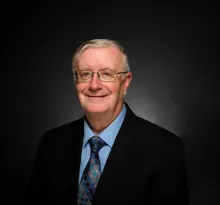
Jorge and his wife Kathy serve the Dallas (TX) and Lawton (OK) congregations. Jorge was born in Portuguese East Africa, now Mozambique, and also lived and served the Church in South Africa. He is also responsible for God’s Work in the Portuguese language, and has been visiting Portugal, Brazil and Angola at least once a year. Kathy was born in Pennsylvania and also served for a number of years in South Africa. They are the proud parents of five children, with 12 grandchildren and live in Allen, north of Dallas (TX).
