
Roy Holladay
This transcript was generated by AI and may contain errors. It is provided to assist those who may not be able to listen to the message.
Music There are, in the United States, something like two and a half million people in prison. It's been stated that half of the people incarcerated in the world are in the United States. And out of that number, a number try to escape or simply go AWOL every year. One of the stats I read was over 6,000 a year either escape from prison or go AWOL. When I say AWOL, maybe they're on a work party, and they just sort of disappear into the woods, and they're gone. And so, you know, they would like to be free. Freedom is very important to us. You know, somebody can commit a crime, not think anything about it, but once they're incarcerated and they've got a ten by ten cell, basically, that they're going to be living in for a number of years, freedom then becomes very important. Many of you may remember the movie Braveheart, William Wallace, and how that he was dedicated to freedom, to freeing the Scots from the English rule, and he was willing to die for it. There have been many patriots down through the years and many nations who have done the same things. There are many political prisoners around the world who have been jailed because of their political leanings, so they don't agree with the government, they don't agree with some of the policies, and because there's a dictator who is ruling, they're thrown in prison. We live in a country, very thankfully, where we still have a fair measure of freedom and liberty. There are a lot of people in the world who would love to come here and live and be able to experience what we experience. Now, sometimes there are situations that occur when a person who's been in jail wants to go back to jail. I don't know if you remember the story here recently. There was a gentleman who had been let go from prison. He wasn't doing too well, and I don't guess he could get a job, and he began to think about, well, when I was in prison, I had a bed, had three square meals a day, I got my teeth fixed, if I was sick, I had freed a health care, so he ended up going back and asking them to put him in prison because he couldn't take care of himself. Sometimes people forget how bad it was in a particular society. I know that there are cases of people who've escaped a totalitarian type of rulership and go back and put themselves under that rule again. You realize that ancient Israel did that very thing. They were slaves in Egypt. They were in servitude. They were treated harshly. You might say mainly. God came along and said, okay, I'm going to free you. He brought them out of Egypt. Guess what? They wanted to return to Egypt. I think there's a great lesson that all of us can learn. Let's go back to the book of Exodus, chapter 1, the book of Exodus. We'll begin in verse 7. I want you to notice this story. Remember, there had been a famine. The family of Israel came down into Egypt. There were 70 of them. Over the years, they grew. There were hundreds of thousands of them by now. It says, But the children of Israel were fruitful, increased abundantly, multiplied great, and grew exceedingly mighty. And the land was filled with them. There arose a new king over Egypt who did not know Joseph. So he didn't remember or know what Joseph had done and how he had saved the nation. So he wasn't looking to pay any favors.
In verse 11, it says, Therefore, they said to the Egyptians, they said to the taskmasters over them, and afflicted them with their burdens. And they built for Pharaoh, supply cities, Pithom, and Ramesses. But the more they afflicted them, the more they multiplied and grew. So they didn't stop childbirth. And they were in dread of the children of Israel. Why? Well, they were multiplying faster than the Egyptians. They were afraid they were going to become greater. They would take the country over, and the Egyptians would become slaves. So they didn't want that. So the Egyptians made the children of Israel serve with rigor. The word rigor means with cruelty, harshness, severity. They were very harsh in their treatment of the people. They made their lives bitter with hard bondage, in mortar, in brick, in all manner of service in the field. And all their service in which they made them serve was with rigor. Now, you might remember, if you continue on the story here, somebody came up with a bright idea. Well, let's kill the male child, or children that are born. So they asked the midwives that whenever the Israelite women had babies, it was a girl that lived, it was a boy, killing. Well, the midwives here, God, didn't do that. And so they continued to multiply. Now, God brought them up out of the land of Egypt. God did not forget His promise that He was going to bring them into the Promised Land. Let's notice in chapter 12 of the book of Exodus. And beginning in verse 40, Exodus 12, verse 40, you'll notice the story here. Now, the sojourn of the children of Israel who lived in Egypt was 430 years. And it came to pass at the end of the 430th year, on the very same day it came to pass, that although the armies of Israel went out of the land of Egypt, it is a night of solemn observance, or night to be much observed, solemn observance, to the Lord for bringing them out of the land of Egypt. This is that night of the Lord, a solemn observance for all of the children of Israel throughout their generation. Now, remember the Bible says that they came out with a high hand. I mean, here they've been slaves, they've been mistreated, trying to kill their children. And all at once, God performs plagues, destroys Egypt, kills the firstborn. God leads them out of Egypt. They come to the Red Sea. God parts the Red Sea, brings them into the desert, gives them manatee heat. Everything's hunky-dory. Now they're headed for the promised land.
And every time I hear the song, I am bound for the promised land, I think, of ancient Israel. But let's go over to the book of Numbers. Book of Numbers, chapter 11, verse 1.
Now, you might remember here, they weren't too happy with Moses and Aaron. And verse 1 here says, Now when the people complained, it displeased the Lord. For the Lord heard it, and his anger was aroused. So the fire of the Lord burned among them and consumed some in the outskirts of the camp. They wanted meat to eat. You see, they were getting tired of this manna. Now, notice who stirred the problem up in verse 4.
Now the mixed multitude, who were among them, yielded to intense cravings. As King James' version margin says, they lusted a lust. They were lusting, and they wanted meat. And so the children of Israel also wept again and said, Well, who'll give us meat to eat? Now, who were the mixed multitude? Well, these were Egyptians and different ones in Egypt who saw all the miracles of God perform and thought, Okay, God's with these people.
We're going to go with them. But they weren't willing to follow what God was doing. These were non-Israelites. In verse 5, notice what the people said in mixed multitude. Why, we remember the fish when we ate freely in Egypt, and the cucumbers, and the melons, and the leeks, and the onions, and the garlics. They smelled real good. You see everything they had to eat, but they're thinking of the fish. They had an abundance of food. Maybe they had to work with rigor, but they had food to eat.
You see, they remembered the good. They forgot the evil. They remembered only and had good memories of what happened, and they forgot how they were mistreated and how they were abused. It says, But now our whole being is dried up, and there is nothing at all except this manna before our eyes. So they were very displeased. They didn't want the manna. Notice over in chapter 14. Chapter 14, they worked their way over toward the Promised Land. Spies were sent in to examine the Promised Land. They came back, ten of them, with a bad report.
Let's notice beginning in verse 1 here. So all the congregation lifted up their voices and cried, and the people wept that night. And all the children of Israel complained against Moses and Aaron. The whole congregation said to them, If only we had died in the land of Egypt, or if only we had died in the wilderness, woe is us, we should have died.
Now you've got us out here. And there are giants in the land. They have these cities walled up to the heaven. How can we defeat these people? So they complained. Now notice verse 4. Verse 3 says, Why has the Lord brought us out of this land to fall by the sword, that our wives and children should become victims?
Would it not have been better for us to return to Egypt? So they said one to another, Let us select a leader and return to Egypt. They wanted to go back to slavery, back to prison, back to bondage, instead of being delivered from it. Let us go back. Now, stop and think. They had a pillar of fire leading them by night, a cloud by day. They had Moses and Aaron who had been selected by God, but they were going to appoint their own leader.
Now, in verse 6, Joshua and Caleb pinpoint what their problem was. And rather than we need to stop and realize that the same thing can happen to us if we're not careful. It says, But Joshua, the son of Nunn and Caleb, the son of Nephena, who were among those who had spied out the land, tore their clothes.
They spoke to the congregation. Verse 8 says, If the Lord delights in us, then He will bring us into the land and give it to us, a land that flows with milk and honey. Only do not rebel against the Lord, nor fear the people of the land, for they are our bread.
We'll just go in there and eat them up. We'll be able to destroy them. Now, as you read this, stop and think. Do we ever rebel against the commandments of God? Do we ever fear what other people think or what other people say, what other people do? Do we realize that we have God on our side? It says, their protection is departed. They no longer have any protection from them.
And the Lord is with us. Do not fear. Brethren, God is with us. He's our God. He's behind us. So we don't have to fear. And all the congregation said to stone them with stones. So here they're trying to encourage the people, and they're going to stone them with stones. So, you know, God would have taken them right into the Promised Land. But because of their rebellion, they had to wander in the wilderness for 40 years.
And guess what? The older generation died off. Those who were so concerned about their children, they died. They didn't get to go into the Promised Land. They were the children who did. Now, remember this. Today, we are spiritual Israel. We, at one time, were slaves to this world, to the society around us.
Coming out of Egypt is a type of this world. God has spiritually delivered us from this world and its ways. A mixed multitude could be compared to the unconverted. Sometimes, in the Church, we have those... Christ called them the wheat and the tares, the tares who are among the wheat, who influence us in the wrong way, stir up problems, discourage us, and don't have the faith to follow God, to do what is right.
We need to ask ourselves the question, do we want to return to Egypt? Do we want to go back into the world? Why is it hard to come out of the world, to come out of Egypt, and to stay out? I'm not saying that any of us are contemplating, well, I'm just going to give up the truth and go back and return to my old way. But when it comes to putting the world out, God took Israel out of Egypt. It's more difficult to take Egypt out of Israel. The world, its ways, its approaches, its attitude, its philosophy, it's much more difficult to get rid of that out of us, out of our hearts, out of our minds, out of our thinking, than it is to go the other way.
The world too often doesn't look too bad, or some of the ways of this world don't look all that bad to us. So how do we keep it out? It's easy to go back in our minds, our habits, our ways of life. We're not careful. We have three enemies that we know that we have to overcome. Generally, at some point during the days of Unleavened Bread, we focus on all of these.
One is the self. We realize we have to overcome the self, our human nature, and grow. The other is Satan the devil we have to overcome. He's definitely our enemy. The other is the world. And so today we want to take a look at this world and its influences, and how do we overcome?
So the first thing I'd like for us to look at is simply this. First point. We must see the world the way God sees it. We have to view this world the way God views the world. In 2 Peter 2 and verse 9, we'll begin here in verse 9.
We read that the Lord knows how to deliver the Godly out of temptation, and to reserve the unjust and to punishment of the day of judgment, and especially those who walk according to the flesh. In the lust of uncleanness and despised authority, they are presumptuous, self-willed, not afraid to speak evil, of dignitaries. Now, let's drop down to verse 15. They have forsaken the right way and gone astray. Now, the only way to forsake the right way is to have gone the right way, but then you can forsake it. So here are people who know the right way, and they go astray, following the way of Balaam, the son of Peor, who loved the wages of righteousness. So what was the way of Balaam? Well, have we ever had anyone leave the Church, because they thought that tithing was too strict? I can see saving a tithe, but that second tithe, that's just too much. God requires too much of us, tithes and offerings. Or if I didn't have to attend church on Saturday, I could get a better job. I could have another car. I could buy a second house. I could do this, or I could do that. And so they begin to follow the way of Balaam. They want more. They want to have what this world offers. In verse 17, these are wells without water, clouds carried by a tempest, for whom is reserved the blackness of darkness forever. For when they speak great swelling words of emptiness, they can sound good, but their words are empty. There's nothing to them. They allure through the lust of the flesh and through lewdness of ones who have actually escaped from those who live in error. That's talking about us, brethren. We have escaped Egypt. We have escaped this world. God has brought us out of this world. There are those, if we're not careful, who will pull us, drag us back into the world. And we need to be careful of that. We are escaped out of the sins of this world. And if we're not careful, we could go back into bondage once more. Verse 19, for while they promise them liberty, this is always a battle cry, in 1995, if you'll remember. God's law was compared to being so harsh and mean and restrictive, and people were leaving the Church and saying, Free! Free at last! They didn't have to keep the Sabbath or the Holy Days. And they looked upon God's law as a law that was restrictive. So it says, while they promise them liberty, they themselves are slaves of corruption. For by whom a person is overcome, by that he also is brought into bondage. Remember Romans 6? Romans 6 says that when we were baptized, we were slaves to sin. We were in bondage to sin. Part of sin is the way this world goes and lives.
So if the world overcomes us, we then become slaves to it. Again, we become in bondage to it again. For if after they have escaped the pollutions of the world, the word pollution just simply means that. It refers to something that defiles or vices that contaminate a person. So here, escape the pollutions of the world.
Do you stop and realize that this world, its ways, its approaches are polluted? That they're not pure, they're not wholesome, they're not clean, they're not right, they're not the proper standards, they're totally the opposite of what God wants us to do. So we've escaped the pollutions of the world. How? Well, through the knowledge of the Lord and Savior, Jesus Christ. Through studying the Scriptures, as Jacob was talking about. We read the Scriptures, we read the Bible. But notice, if we are again entangled in them and overcome, the latter end is worse with them than the beginning. It had been better for us not to have known the way of righteousness, as it says here.
Than having known it to turn from the Holy Commandments delivered to them. So it's better never to know the truth, know nothing about it, and to go back into this world, into the system of this world. Now we realize, you can just look around at the physical in the world. We have air pollution, water pollution, soil pollution, food pollution. It seems like everything is polluted today. But what about mind pollution? What about standard pollution?
What about righteousness pollution? Verse 22, it says, But it has happened to them, according to the true proverb, A dog returns to his own vomit, and a sow, having washed, to her wallowing in a mire. So God compares the ways of this world to vomit, to a pig going back to its wallow. One time, we used to grow about 200 pigs.
This was years ago, before I knew the truth. And if you were to take one to a county fair for each display, you get the hose out and wash it. Clean it up. Put a bow on it. Guess what happens when you bring it back to the pig pit? It goes right back into the wall, the muck and the mire, and it's just as dirty as it was before.
So if we go back into the world, we're just like that pig. We go back into the wallow, the muck, the mire, and this is the way God compares it. Now, notice Galatians 1. We refer to Galatians 1.4 quite often. But let's read it this time.
Galatians 1.4. Back up to verse 3, it says, So Christ was willing to be a sacrifice for our sins. Why? That He might deliver us from this present evil age. Are as many translations, King James Version says, world, this present evil world or age, according to the will of God, of our sins. Why? That He might deliver us from this present evil age. Are as many translations, King James Version says, the will of God, of our God and Father. So we are called out of this wicked, evil, bad age.
Remember Revelation 18, verse 4? Revelation 18.4 says, Come out of her, my people, that you don't partake. You have her plagues talking about coming out of Babylon. We have to realize that since the Tower of Babel, that the Babylonian system of religion, of government, of economics, the whole approach that originated there, has dominated this world. And at the very end time, Revelation 17 talks about a religious political union taking place.
Revelation 17 talks about the economic power taking place. Revelation 18, God says to His people, Come out of her. Now, you and I have the chance now to come out of her. That's what God has called us out of. He's called us out of this Babylonian system, this world system. It's world's religions, governments, education, philosophy, culture, way of doing things, basic approach, ethics, all of that are not of God. They are of this world. Let's go over to Romans 12, Romans 12, beginning in verse 1.
Romans 12, verse 1, Says, I beseech you therefore, brethren, by the mercies of God, that you present your bodies a living sacrifice, wholly acceptable to God, which is your reasonable service, and do not, notice that, do not be conformed, what? To the world. So we're told not to be conformed to this world. The word conformed means to conform oneself, one's mind or one's character, to another pattern, to fashion oneself according to how people conform. It's so easy in our society today, and especially for young people, to conform to society. If everybody has premarital sex, then if you don't, then you're going to be looked on as an oddball.
If everybody has a certain style, your dress, or a certain haircut, or listen to certain music, or whatever it might be, you don't want to be out of step, so therefore you find so many young people today go right along with it. They don't want to be thought of as not conforming. Well, God says here, we're not to conform to this world.
How do you avoid it? Well, be transformed by the renewing of your mind. That's through conversion, through God's Spirit, that you may prove what is the good and acceptable and perfect will of God. We've got to follow God's way, God's will. See, we can't live as we used to live. We can't go back to the way we used to be. God has called us out to live a different way of life, to be different. And so we're to have a different mind, a different approach.
1 John 5.19 summarizes it. 1 John 5.19. We know that we are of God. We should know that beyond a doubt. And the whole world, not just part of it, not just Russia or China or Africa or some other nation, the whole world lies under the sway of the wicked one. Have you ever seen a tree swaying in the wind? The wind grabs the branches and the leaves and it sways back and forth.
So this world is. The world is under the sway, the dominance, of the wicked one, or of Satan the devil, under the control of Satan the devil. And he influences the world. So, brethren, first of all, you and I must come to see the world as God sees it. Secondarily, we've got to understand why God hates this world or this system that we see in the world. Why God hates it. Back up here to chapter 2 and verse 15 of 1 John, 1 John 2.15. Do not, whenever you see the do nots, guess what?
That's a command from God. Do not. Do not love the world or the things in the world. Notice two things are mentioned here. Don't love the world. And then don't love the things that are in the world. Now, he goes on to say, If anyone loves the world, the love of the Father is not in him.
God's approach, God's love, won't be in us if we follow the ways of this world. So what are the ways of the world? Well, verse 16 defines it for us. So it doesn't have to be ambiguous. For all that is in the world, the lust of the flesh—now, what is a lust? A lust is a wrong desire. It can be something that's good, but it's taken to a wrong degree, such as alcohol. If somebody goes out and gets drunk every night, that's wrong. To take a drink is not wrong. So the lust, the wrong desire of the flesh, and the lust, or the wrong desire of the eyes, and the pride of life is not of the Father, but is of this world. See, that's the world. That's the way that the world is. And the world is passing away in the lust of it, but he who does the will of God abides forever. Brother Satan's kingdom is based on certain principles. Satan the devil is the God of this world. And he is the one who guides and directs the society and the world around us. Satan's kingdom is based on certain principles. It's based on the lust of the flesh. What about the liberal world that we live in today? Do what you want to do. Be tolerant. Accept others. Don't condemn. Don't judge. You can have different lifestyles. Who's to say one lifestyle, one religion, one way of life is better than another? There are no things as absolutes. See, that's what our Western societies especially function on. If it satisfies you, if it makes you feel good, do it. Again, that's the way society is. People say, well, if it doesn't hurt anybody, why can't I do it? Well, it hurts you. And if it hurts you, it can hurt your marriage, it can hurt your maid, it can hurt your children. Physical pleasure today comes before duty and responsibility and love. So again, it's hard to do what is right. You know, to put the principles of the Bible, scriptures, into practice. As I said, it could be something sexual, it could be food, it could be drink. God created marriage between a man and a woman. Nothing wrong with sexual relations in that way. But outside of marriage, pre-sexual, you know, premarital sex, I should say, or extramarital sex, those things are not right. Why does God hate the world? Because of the harm and the evil that it does to the individual. How it hurts people. How it destroys their life. What it does to the individual, to mankind, to organizations, to families. Look at families that have been destroyed because of adultery, or because of many of the sins that are committed. So you have the lust of the flesh, the lust of the eyes, or things like selfishness, greed, vanity, being materially oriented in the pride of life, dealing with the vanity and the arrogance. Let me read a translation from the West Word Studies of the New Testament of this section. Let me just read how he translates this. This is a literal translation of verses 15 through 17 here.
Stop considering the world precious with the result that you love it and the things in the world. If anyone, as a habit of life, is considering the world precious, and is therefore loving it, there does not exist the love possessed by the Father in him. I want you to notice the word habit. We'll come back to that.
Because everything which is in the world, the passionate desire of the flesh, the passionate desire of the eyes, and the insolent, empty assurance which trusts in things that serve the creature life, you see, when it talks here about the pride of life, it's talking about relying on ourselves, our own ingenuity, our own smarts, intellect.
We can solve all of our problems. We don't need God. We don't need intervention. So trusting in the physical, instead of looking to God and trusting in God, says, this is not from the Father as a source, but from the world as a source. This is the source of it, from the world. And the world is being caused to pass away in its passionate desires.
And the one who keeps on habitually doing the will of God abides forever. Now, why is it important to do things habitually or as habits? Well, we all slip in sin, don't we? We all falter. We all make mistakes. We all do things that are wrong. But our way of life, our habit, our approach should be to obey. We're walking a certain direction down a path, and we slip off, and we get back up and get on that path and keep going. Then our habit is to go in this direction.
You don't want to turn around and go the other direction, where you just came from. But you want to picture yourself back up and keep going in the right direction. This world reflects the attitude and the approach of Satan the Devil. It reveals his mind and his approach. In Ephesians 2, verse 1, it corroborates what I just said here. Let's notice Ephesians 2, verse 1. And you, he made alive, who were dead in trespasses and sins. It's talking about the way we were in the past before conversion, in which you once walked according to the course of the world. So we once lived that way, walked that way. According to the prince of the power of the air, that's Satan the Devil, the spirit that now works in the sun's disobedience, among whom also some of us once conducted our lives.
Is that what it says? Noah says, among whom we all, everyone, everybody, once conducted ourselves in the lust of our flesh, fulfilling the desires of the flesh and of the mind, and were by nature children of wrath, just as others.
So this is Satan's world. He's influenced everybody. What about Revelation 12.9? Satan has deceived the whole world. He's influenced the whole world. In fact, 2 Corinthians 2.12 tells us the problem here. 2 Corinthians 2.12 says, Now we have received not the spirit of this world, so there is a spirit of the world, attitude of the world, influence in the world. But we received the spirit that is from God, that we might know the things that have been freely given to us by God. So God has freely given, revealed to us the right way, and Satan the devil has influenced man in the wrong way. So Satan's kingdom, way of life, is based on get, take, pride, self-first, put others down, take advantage.
This world is Satan's experiment to prove, he's trying to prove that his way is right. You know what? 6,000 years have shown his way is wrong. We used to have the expression, God's way works, and that's true. God's way works, Satan's way does not work. And so he doesn't want to follow God's way.
You see, God's society, world, kingdom is based upon certain principles. When the kingdom of God is set up, it's going to be based upon give, on love, on service, God-first, humility, obedience, mission, cooperation, responsibility. Can we see why God hates the society around us in this world?
It reflects Satan's mind, his attitude, his approach. It is the opposite of everything that God stands for. I'm not talking about God hating people. The Bible doesn't say that. God loves the people. He hates the evil, the wrong, the disobedience. Remember Luke 17.32? Luke 17.32 talks about Lot's wife being turned into a pillar of salt.
Why? She looked back longingly for Sodom and Gomorrah. She didn't want to come out of that perversity and that wicked society. She looked back. She longed for that. Now, you and I are warned not to look back. In Luke 9.62, always read this scripture when I'm counseling for baptism. Luke 9.62, Jesus said to him, No one having put his hand on the plow, and looking back, is fit for the kingdom of God. When you're plowing, I don't know how many here have ever plowed with a horse before or a mule. You have a 10-acre field down there. A couple hundred yards is the end of the field.
So you've got to plow a straight line. And you say, Giddy up, and the horse takes off. If you begin to look behind you, the first thing you know, this horse is going to go this way. You've got to keep him in line. If he starts getting down a line, you've got to pull him back one way or the other.
Well, you and I cannot look back. We have to look straight forward. When you were converted, guess what? You burned your bridges behind you. It's the story of Caesar invading Britain. The Roman soldiers were a little afraid. They had all of these wild people there. The early days and the Picts and so on. So he burnt the fleet. The Roman soldiers had to stand and fight. There was no place to go. After they won, then they could come back and rebuild the fleet again. So you and I, when we come out of this world, we burn our bridges behind us.
There's nowhere to go. The only way to go is straight forward toward the kingdom of God. So do we hate the world the way God does? Again, John 3, 16, God so loved the world that he gave his only begotten son.
So there he's talking about the people. God loves the people. There's a distinction between loving the people and hating sin, loving the people and hating what is wrong and what is evil. People today are victims, as we know. They're cut off from the tree of life. They're sitting under the tree of the knowledge of good and evil. They're blinded. They're ignorant. They're deceived. We're not better than they are. We've just simply been called ahead of them. God has opened our minds.
Ezekiel 9, verse 4, is a scripture that God looks down for his people. I want you to notice. Ezekiel 9, verse 4, says, The LORD said to him, Go through the midst of the city, through the midst of Jerusalem, and put a mark on the fore to the men, who sigh and cry over all of the abominations that are done therein. Who sigh and cry over the sins and the abominations. Or, as the NIV says, those who grieve and lament. You can't turn the TV on, read the newspaper, without getting upset and lamenting over the evils that are taking place in the sins.
This past week, two cases brought before the Supreme Court on what is marriage. It was marriage between a man and a woman, or a man and a man, or a woman and a woman. If the law becomes it's between a man and a man, woman and woman, then what stops it from being between a man and a horse, or a woman and a cow?
You've removed all barriers, and so you find that this world is headed in the wrong direction. Third point, final point here, we need to realize that this world is not permanent. It is only a training ground for us. We need to keep our permanent reward continually in front of us, continually in our mind. We need to focus on our goal. Hebrews 11 and verse 24, let's notice the example of Moses, why God was able to use Moses. Actually, the book of Hebrews reveals something about Moses we don't learn in the Old Testament. Hebrews 11 and verse 24, we read this, By faith Moses, when he became of age, refused to be called the son of Pharaoh's daughter. Moses had everything. Stop and think about it. Materialism, power, he was a general in Egypt, he was the son of Pharaoh's daughter, he had wealth, he had everything, but he refused to be known as Pharaoh's daughter's son. He just refused to do that. Why? Well, he was choosing rather to suffer affliction with the people of God than to enjoy the passing pleasure of sin.
See, sin, people wouldn't sin unless it was pleasurable. Why do people do things that are wrong? Somebody who is a, let's say, who goes out, cohabits with prostitutes or runs around on his wife. Why are they doing that? Well, they get immediate pleasure, temporary pleasure, but guess what happens?
Down the road. Or they're kickbacks. Sin will give, as it says here, passing pleasure. Somebody can get drunk, and next morning they got this huge hangover. And now they're suffering. A person can be promiscuous, and after a while they get a sexually transmitted disease. Somebody can commit a crime, and then they end up in prison. And then, you know, woe is me. So we need to realize that this world, there can be the passing pleasure, as it says here, of sin. But, verse 26, he esteemed the reproach of Christ's greater riches than the treasures in Egypt.
For he looked to the reward. So what motivated him? What turned him on? Well, it was the reward. Now, back up here to verse 8. Notice what it says about Abraham. Abraham was the same way. In verse 8, it says, Let's turn over here to verse 13.
Or you could just as easily put in a heavenly city. Countries and italics. They were looking for something heavenly. Therefore, God is not ashamed to be called their God, for he has prepared a city for them. Revelation 21 and 22. The New Jerusalem coming down from God out of heaven. God has prepared that for us.
And so, Brethren, that's what we look forward to. Not the temporary pleasures of this world. We have to keep that reward in mind. Now, let's contrast the reward of this age with the reward of the future world. Very quickly. In Luke 9 and verse 25, we read, See, this world with its temporary problems and sufferings, too often we get so fixated on what we're going through in some of the pains and sufferings and the problems. We begin to forget about the future and God's calling. Who is responsible for man's conditions today? Something happens, and who do people blame? They call it an act of God. Don't they? How many times do you hear newscasters say, Satan the devil has been out there again today, and he calls this or he calls that? Nobody blames the devil, and yet this is his world. This is his society. He's leading man in the wrong way that produces wrong results. Satan is not a benefactor, and yet they blame God, and God is there to bless and to give. God wants to give us eternal life. He wants to give us pleasure. Let's go back to Psalm 16 and verse 11. Psalm 16 and verse 11. God wants to give us everything, but he wants us to be able to have it for eternity, forever. It says, you will show me the path of life. God is leading us in a direction toward eternal life. In your presence is fullness of joy. So God isn't a stuck-up. God isn't a prune. There's joy, fullness of joy, complete joy. And as it goes on to say here, at your right hand are pleasures forevermore. Our minds can't even grasp, comprehend, think. It doesn't enter into our little minds what God has prepared for us and what he's going to give to us. So God wants to give us eternal life without all the kickbacks that we can have fullness of joy and pleasure forever. See, Satan's world appeals to the five senses, to our lust. It promises immediate reward, immediate gratification, immediate pleasure. Notice what Satan tried to do with Christ in Luke 4 and verse 5. Luke 4. And we'll begin to read here in verse 5.
The devil taking him up on a high mountain showed him all the kingdoms of the world in the moment of time. And the devil said to him, All this authority I'll give to you, and their glory, for this has been delivered to me, and I give it to whomever I wish. Therefore, if you will worship before me, all will be yours.
You can have it right now. You don't have to wait 2,000 years. You don't have to go through the crucifixion. You don't have to go through all of that. I'll give it to you right now. And Jesus answered and said to him, Get behind me, Satan, for it's written, You shall worship the Lord your God, and him only shall you serve.
Satan promised Jesus Christ immediate power, immediate authority, immediate glory. He could have had any woman in the world. He could have had a harem of women. All people would admire him. But guess what? He would come to the end of his life. He would be dead. That's it. It's over. It's gone. No eternal life. No living forever. No, he was not willing to do that.
So the world brings immediate pleasure and satisfaction, but it's not always the best way. Drugs, alcohol, sex power. There are penalties when you break God's law. Satan hates that. He feels you ought to be free to do anything without any kickbacks. And there are kickbacks. They come when you break God's law.
God will give us power, glory, and wealth forever in his kingdom. You stop and think about it.
If you lived in a mansion—and I don't know of anybody here who lives in a mansion—we live in houses. We live in house trailers. We live in brick, mortar, stone, wood. They're put together. Somebody might have 2,000 square feet. Somebody might have three. Somebody might have 1,000. Whatever it might be, these things will decay. They will fall. They will go away.
And you think about this world and how temporary it is. But think about the new heavens and the new earth. Think about the New Jerusalem, 1,500 miles square, 1,500 miles high, made out of gold, precious stones. And you and I are going to be given a suite. That's going to be where we will operate from for eternity. Tons of gold! Well, not that we need it, but it's there. We will rule over cities and the millennium.
And we will have power, glory, authority, responsibility. We'll have it forever. And God wants to share it. He's going to send us out in the universe. Who knows what He's going to give us to do? And Satan says, well, you need another car. You need to work on the Sabbath. You should stop tithing. You should do all of these things. So you can have a little more pleasure now. And he wants to run us off the road in our own direction. He wants us to go back to this world.
You see, we look forward to the time when there will be a better city, a better reward. A time coming when we will have our permanent residence. And who knows what glory, what pleasure, what joy, what excitement, what happiness, what greatness God is going to give us for all eternity.
And He wants to give that to everyone. So we must come to view this world as God does. We must come to hate the system, this world, its approach. We must understand why God hates it, that it is Satan's society. We've got to keep our eyes focused on our reward. And realize that this world, this age, won't last.
1 John 2.17, again, I read it earlier.
1 John 2.17, The world is passing away, and the lust of it, but he who does the will of God abides forever.
This earth is slowly running down. It won't endure forever.
So the days of unleavened bread, brethren, picture coming out of this world, out of society, and staying out of society. Israel wanted to go back. They wanted to appoint a leader, go back to their old ways. God has called us out of the ways of this world, out of the filth, the pollution. We've escaped it.
We've escaped out of Egypt. So remember, it was much easier for God to take Israel out of Egypt than it was to take Egypt out of Israel.
So we have to be working on the world when we see the attitudes and the approaches of this world to reflect who evaluate them.
God never succeeded in doing this with physical Israel, did he?
But he will succeed doing it with spiritual Israel. Because the Bible says there will be a resurrection. We will be in his kingdom.
And if we endure to the end, they love their captors more than they love their deliverer.
You and I must love our deliverer, Jesus Christ, God the Father, and not our captor.
So God has taken spiritual Israel out of Egypt, and he is removing spiritual Egypt, this world, out of all of us.
So let's not forget what God is doing and use these days to help us to come completely out of this world.
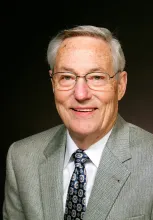
At the time of his retirement in 2016, Roy Holladay was serving the Operation Manager for Ministerial and Member Services of the United Church of God. Mr. and Mrs. Holladay have served in Pittsburgh, Akron, Toledo, Wheeling, Charleston, Uniontown, San Antonio, Austin, Corpus Christi, Uvalde, the Rio Grand Valley, Richmond, Norfolk, Arlington, Hinsdale, Chicago North, St. Petersburg, New Port Richey, Fort Myers, Miami, West Palm Beach, Big Sandy, Texarkana, Chattanooga and Rome congregations.
Roy Holladay was instrumental in the founding of the United Church of God, serving on the transitional board and later on the Council of Elders for nine years (acting as chairman for four-plus years). Mr. Holladay was the United Church of God president for three years (May 2002-July 2005). Over the years he was an instructor at Ambassador Bible College and was a festival coordinator for nine years.
