
Roy Holladay
This transcript was generated by AI and may contain errors. It is provided to assist those who may not be able to listen to the message.
Wow, well thank you, Ruth. We appreciate that very much. It's nice to have...
Some special music, and that's a very apropos for our services, for the Passover coming up. Reminded that the sermon last week was 60 minutes and 48 seconds, so... We try to time ourselves up here so we don't go over the time. Sometimes we forget to look at it, but... Brethren, we're all here concentrating and thinking about the Days of Unleavened Bread and the Passover coming up. We realize that the Days of Unleavened Bread picture coming out of this world, putting sin out of our lives. And in one sense, it pictures coming out of spiritual Egypt. That this world, its ways are compared to what Israel suffered and what they went through in the land of Egypt. Satan is still out there, and he still tries to influence us, even after we're converted. It would be very nice if you're converted, you receive God's Spirit, and Satan the devil would say, Another one got away, and then just go off and leave you alone. But he doesn't do that. Actually redoubles his effort, because he said, Well, you know, God's got him over here now. I'm going to get him back. And so, you know, he comes after us at full tilt. Do we fully understand what Satan did to us previously in the past? How he has influenced our past, and how that the past, our past, your past, each one of our pasts is unique. We're all different. We all come from different circumstances. Let me give you an example. When I grew up not too far from here, we used to have a couple of big oak trees. Actually, as a boy, I thought they were bigger than they are, because we've driven by. In fact, we drove by there yesterday. They're big trees, but they're not that big. But as a youngster, I thought they were huge oak trees. But you take a big huge oak tree that grows up. It started from a little acorn. You have a little acorn planted in the ground, and it begins to grow. And there's a little sapling. That little sapling begins to grow.
And when it's real small, you can actually tie it up in knots. But as it grows and it gets bigger, it gets set in its ways. And after a while, this little sapling begins to grow and becomes hardened. It starts going up, puts roots down. And you've got a tree, and unless a tornado comes through or lightning strikes you directly, you're not going to change that tree. It is set in its ways. Well, this is the way I think we are in many cases.
We have grown up in this world, and just like a tree, a tree is shaped by its environment, by the soil it lives in, by the wind it's exposed to, the sun that it's exposed to, its location.
If it's a little sapling trying to grow among a bunch of other saplings, it's not going to be very big. But if it's got room to grow, and it's plenty of nourishment, plenty of sun, plenty of water, it will grow up and it will be set as an oak tree. Now, we were all molded and shaped in much the same way.
Every one of us here carries the generic pattern of our parents. And when you have twins like Ron and Don here, they come from one egg. And when you're identical twins, you have an egg that splits. And so they have the same genetic pattern. We all have somewhat of the same pattern of our parents, our family traits, our family abilities and talents.
Where do all of the dances get their athletic ability? Well, they get it from their mother. Those types of talents and abilities are passed on from father to son, mother to son, daughter and so on. My wife's always telling me that I'm just like my mother. And I've got a lot of traits the same way that she does. I do a lot of things the same way that she did. Now, I don't guess that's bad, but she will just laugh every once in a while.
You know, some of the things. And you can see family traits, family patterns that are passed on. And that's true of every one of us. Jesus Christ was the only one who could choose his parents. You had no choice in the matter. You didn't choose your dad.
You didn't choose your mom. But Christ knew who his father was going to be. That was God. He knew, and there in the selection process, as far as Mary. So he realized that he needed, obviously, the right parents to be able to succeed in what he was going to carry out. Well, you and I have also been shaped by our environment. We've been shaped by the world around us. We've been influenced by Satan the devil.
We've been influenced by the past. It's had a profound influence on every one of us. We live in Satan's society, Satan's world. We use the term world. We are referring to society around us. So Satan's society, his world, is there. It's had an effect upon us. We've had no control growing up over the environment that we necessarily grew up in. We didn't determine where we were going to live. Our parents did. We lived in their home. We were influenced by them, by our siblings, by our peers, by the part of the country that we grew up in.
And so we were shaped and changes were made in us according to the environment that we grew up in. And it's funny how human nature will defend its past. And we will defend who we are, how we came about, and we don't want anyone making fun of that. The past has had tremendous influence on us, on how we think. And as we will see today in the sermon, it's helped to shape our thought processes, our ideas, our concepts, the way we think.
Everything that we do is influenced by that. My wife and I both grew up in Tennessee. She grew up in Memphis. I grew up in East Tennessee. She grew up in the city. I grew up on the farm. So my background is farming, rural, working out of doors and farming. Hers was in the city. We both have an athletic background. In fact, we were talking about this coming up the road.
I found out she's more athletic than I was growing up because she was involved in tennis. She was involved in swimming, in basketball, softball, and in volleyball in high school. She was involved in scouts, marching band, OTC band, citywide band, all-state band, dance band. She was involved in all of those things.
I'd rivled in basketball occasionally and played softball and football. But we've all been shaped by her environment. She had the opportunity and the advantages of growing up in a big city, taking advantages of museums, being able to go to concerts, things of that nature. I didn't have those opportunities. So you grow up and you find that where you grew up has an influence on you. We all understand that to a certain extent because it's helped to shape who we are, our outlook on life, what we like, what we don't like, where we get our philosophies in many cases, where we get our ideas. If you grow up in the South, you have a certain view about the Civil War. If you grow up in the North, you have another view about it. If you grow up in a foreign country, you don't even know what it is. You'll discover that if somebody marries an individual from another country, there's a whole set of problems that that marriage is faced with that you don't have American marrying an American simply because there are different cultures, different backgrounds. It's just a totally different approach. I grew up in Tended Bradley County High School here, and we never got past the Civil War in history. We just always came up to the Civil War, and we fought it battle by battle. And, you know, at that time, I could tell you almost anything you wanted to know about the Civil War. My wife said, Civil War, they didn't study the Civil War. They just, a day or two, they skipped over that and went on to something else. So it depends on where you were, your background in some of these things. Our children right now are living their past. All of you young people are living your past. Well, all of us are. What I just said is in the past. So the past is what has just happened. We live in the present. We're looking forward to the future. But when I say the past, we can all, depending on your age, look back 20, 30, 40, 50 years. Many of you are creating your own memories. You're creating your character. You're molding yourself at this point. And 30 years from now, if time goes on that long, you'll look back and you'll look, this was your past that you're living in right now. When you grow up in the church, and many of our young people here have grown up in the church, it's a little different from your parents who did not necessarily grow up in the church, grew up in the world, and then came into the church and began to change in that way. Because I do believe that most parents in the church really try to teach, educate, influence, and have the right influence on their children. But yet, in spite of that, even as a young person growing up in the church, you still grew up in a family environment, grew up in your neighborhood, had peers, went to school, all kinds of influences this world, this society, has had on us. You go back and you begin to look in the scriptures, you find that Satan manifested himself to Adam and Eve, and he didn't ask for permission. He just showed up one day and said, hi there, and started talking to Eve, and he was able to influence her. That influence was there, and that influence has continued from that time down to this time. Satan the devil has been the unseen influence in this world. He is the god of this world, the god of the society around us. None of us gave consent to Satan to influence us, and yet we grew up in his world. Let's go back to Romans 8 and verse 20. Romans chapter 8 and verse 20.
And you will discover here, it says, for the creation was subjected to futility.
Word futility here can mean vanity or worthlessness. So the creation has been subjected to these type of things, not willingly. You didn't have any say-so in it. You were just born. Here you are. You grew up in society, and this is not willingly because of him who subjected it in hope or in hope. So we are subjected to vanity, to pride, to wrong influences, right influences. Ever since Adam and Eve were driven out of the Garden of Eden, mankind has been subjected to the wrong tree, the tree of the knowledge of good and evil. Society has been built upon the foundation of the tree of the knowledge of good and evil. It's also after the flood been built upon, came out has its roots in Babylon. Society today, all aspects of it are called Babylon, and we find that that confusion, that way of life, has been promulgated throughout society today. Let's go back to Exodus chapter 16, and let's notice here what happened to Israel. Israel had been a slave people. They had been in captivity several hundred years. They had grown up in that captivity. They were under harsh task masters, as the Bible says. They were beaten. They were slaves. Now, God remembered his promises to Abraham, Isaac, and Jacob, brought them out of Egypt. God decimated, destroyed Egypt, their economy, their army, their firstborn, and yet we find shortly after Israel has left Egypt. Notice their attitude. Verse 1, Exodus 16, they journeyed from Elam, and all the congregation of the children of Israel came to the wilderness of sin, which is between Elam and Sinai, on the 15th day of the second month, after they had departed from the land of Egypt. So here they are one month down the road. You would think that they would be in high spirits by this time. It says, the whole congregation of the children of Israel complained against Moses and Aaron in the wilderness.
So it just wasn't one or two people. Everybody's complaining. We want food. We want food. We want meat. They were eating off of their flocks what they had brought with them. And the children of Israel said to them, Oh, that we had died by the hand of the Lord in the land of Egypt. Now notice, they forgot a harsh treatment, the slavery, and all of that.
Notice what they remembered. When we sat by the pots of meat and when we ate bread to the fool, for you brought us out into this wilderness to kill this whole assembly with hunger. So they remembered the good times. They forgot the bad times.
Now we human beings tend to do that, too. How many times have I seen someone or counseled someone who's had marriage problems? Maybe they're no longer married. They're very regretful. All they can remember were the good times they had, not the bad times that they had gone through. Well, this was Israel. And they had no place to go back to. Egypt had been destroyed. You know, there was no going back to Egypt. Egypt's economy had been destroyed. Army had been destroyed. Government was in a wreck. Why would they want to go back to Egypt? And yet, you find that this is what they constantly complained about. Chapter 17, we find the same thing occurring. Chapter 17 in verse 1. Then all the congregation of the children of Israel set out on their journey from the wilderness of sin, according to the commandment of the Lord, encamped in Rephidim. And there was no water for the people to drink. Now, you would think the people would say, well, let's see what God's going to do. There's no water here. Well, we know God's not going to let us die. Remember what he did at the Red Sea? Remember how he protected us when all these plagues came on the Egyptians? He protected us when the death angel came through the land? I'm sure he's going to show us a hidden spring or something around here. But notice, therefore the people contended with Moses, got angry with the leaders, and said, give us water that we may drink. So Moses said to them, why do you contend with me? Why do you tempt the Lord? Moses was able to put his finger right on the problem. You're not upset with me. You've got a problem with God. He said, you tempt the Lord. And the people thirsted there for water, and the people complained against Moses, and said, why is it that you brought us up out of Egypt to kill us and our children and all of our livestock with thirst? So same song, second verse here. So Moses cried out to the Lord, saying, what shall I do with this people? They're almost ready to stone me. They were ready to pick up stones, sand, cactus, whatever. Throw it at him. The Lord said to Moses, go before the people, take with you some of the elders of Israel, take in your hand your rod, which you struck the river, and go and behold, I will stand before you there on the rock in horrib. And you shall strike the rock, and water will come out of it, and the people may drink. Moses did so on the side of the elders of Israel. So he called the name of the place Massa and Meribah because of the contentions of the children of Israel, because they tempted the Lord, saying, is the Lord among us or not? Brethren, have we ever said such a thing likewise? Is God with us? Is God going to guide us, direct us? Has he gone off and left us? Well, you know, this was their problem. They so soon lost faith, lost trust in God, and they wanted to turn back and go back to the land of Egypt. Now, we can read many other examples. Moses went up into the mountain to get the Ten Commandments while he's up there. They make a calf. You know, here's your God, O Israel, they said, and they were going to use that to lead them back. Let's notice 2 Peter.
2 Peter chapter 2 and verse 20.
2 Peter chapter 2 and verse 20. You and I need to be careful today because we can do the same thing. Notice what the Bible says here.
Talking about those that God has called into his church, it's as if after they have escaped the pollutions of the world, through the knowledge of the Lord and Savior, Jesus Christ, they are again entangled in them and overcome. The latter end is worse with them than the beginning.
Now, have we known people who've escaped the pollutions of the world, had their minds open to see the truth and gone back to it? Well, what happened in 1994-95? How many people do we know who went back to a Protestant church again or went back to the Catholic church or just dropped out and went back to their old lifestyle, started keeping the holidays again, pagan by nature, and instead of obeying God and continuing to follow Him? God says here in verse 21, it would have been better for them not to have known the way of truth or righteousness than having known it to turn from the Holy Commandment delivered to them. But it's happened to them according to the true proverb, a dog has returned to his own vomit, and a sow having washed to her wallowing in the mire. So God compares this world, its ways, to a dog going back and lapping up its vomit, and a pig, and a pig pen wallowing around in the mire, and a pig pen. There's probably nothing any more dirty than that, you know, if you've ever seen those. So God has called us out of this world, and when He calls us, He has delivered us from slavery. He has delivered us from this world. It shackles over us. It's hold on us. He's broken the grip that Satan the devil has had on us, and He's brought us out of that. Now, when you talk about the world, 1st John 2.15 tells us what's in the world. Again, when we use the term world here, we're either talking about the age we live in or the society that we live in. 1st John 2.15, do not love the world or the things in the world. If anyone loves the world, the love of the Father is not in Him. Now, the problem is most people do love this world, the system of this world, the customs of this world, the traditions of this world, the ways of this world, the philosophies of this world, the economic systems of this world. And then they go after that. Verse 16, for all that is in the world, and God has a unique way of summarizing everything. And so God summarizes it very simply. The ways of the world, the lusts of the flesh, the lust of the eyes, the pride of life, is not of the Father, but is of the world. Mr. Armstrong, when he was alive, had that ability. He called it the way of give versus the way of get. And how could you simplify it any more than give and get? Well, that's what we're talking about here. The ways of this world are based upon human greed, human vanity, human lust, human pride, ego, selfishness, self-centeredness, wants, desires, and not upon God's way of love and outgoing concern for others. And so we are told to not love this world, not to love its ways. And yet, we grew up in this world. We've been influenced by it. And part of what we have to struggle with during the days of Unleavened Bread and all of our life is not just some overt sin, but the influences that this world has had upon us. And many of those are so ingrained in us that we we don't even realize it. And they do influence how we think in our approach. Psalm 78, let's go back there, Psalm 78, beginning in verse 19.
Psalm 78, verse 19. We discover that Israel had a lack of faith and trust in God. Well, let's back up, actually, to verse 17. It says, "...but they sinned even more against him by rebelling against the Most High in the wilderness." Well, we just read a couple of scriptures on that. Exodus 16 and 17. And they tested God in their heart. So notice, in their heart, in their mind, in their thoughts, in their actions, they put God to the test by asking for food of their fancy. And they spoke against God and they said, can God prepare a table in the wilderness? Can God take care of us? Can God provide for us? Can God provide food, clothing, and shelter for us? What does the Bible say? Matthew 6, 33. Seek you first the kingdom of God and His righteousness, and all of these things will be added to you. So all of these things God says He will give to us. He will add to us. But they had a lack of faith and did not believe that God could provide for them and take care of them. In verse 22, because they did not believe in God and they did not trust in His salvation. So they didn't trust in God and what He said, what He promised, that He was going to save them and He was going to bring them not only out of Egypt, but He would bring them to the Promised Land. Now, as we heard today in the Sermonet, an excellent Sermonet, on what our approach should be, God brings us out of Egypt. But He promises that He will help us get to the Promised Land, to the kingdom of God, to be there. And so He's not going to leave us back here.
He will provide what we need spiritually in every way so that we can be in His Kingdom. Now, in verse 32 of this chapter, it says, In spite of this, they still sinned and did not believe in His wondrous works. Therefore, their days He consumed in futility and their years in fear. When He slew them, then they sought Him, and they returned and sought earnestly for God. Then they remembered that God was their rock and the Most High God their Redeemer. Nevertheless, they flattered Him with their mouth.
I want you to notice the approach. They praised God. They talked about God.
They flattered Him with their mouth, and they lied to Him with their tongue.
So out of one side of their mouth, they flatter Him, and then they lie to Him.
And their heart was not steadfast with Him.
God is looking for a people who will be not double-minded. The Bible says a double-minded man is unstable in all of his ways. God wants us to be solid, steadfast.
So their heart was not steadfast with Him, nor were they faithful in His covenant.
But He, being full of compassion, forgave their iniquity, and did not destroy them.
Yes, many a time He turned His anger away and did not stir up His wrath.
They didn't really seek God the way they should with their whole heart, being steadfast, being loyal to God. You know what their problem was?
They still had a slave mentality.
They were still slaves in their minds and their hearts.
That's all they had known. They'd been provided for. They'd been taken care of. They had plenty of food. So what about the harsh treatment? They learned to put up with that, even though they cried out to God to deliver them.
And again, you see how the environment of Egypt shaped them.
You and I can likewise have a slaves mentality if we're not careful.
Being a slave to our own nature, a slave to Satan the devil, a slave to this world, and God has called us to be different.
In the book of Ezekiel, well, first of all, verse 41 here, before we go over there, verse 41, one last scripture says, Yes, again and again they tempted God. They limited the Holy One of Israel. They did not remember His power.
Brethren, we can limit what God can do in our life.
God says that He can take a lump of clay. That's you. That's me.
And He can change us to where we become a divine being in His family.
So from clay to glory, we become not just a human being, but a being in the family of God. That's God's calling.
Now let's go back to the book of Ezekiel, chapter 20, verse 5.
Ezekiel, chapter 20, beginning here in verse 5.
God brought them out of Egypt, and we find here God begins to show what part of their problem was. They came out of Egypt, but they didn't leave Egypt behind.
God had handpicked and selected this for them.
So God says, get rid of your idols, your old ways, but they rebelled against me.
God goes on to show that He could have destroyed them, He didn't.
And you find that Israel brought their idols with them in many cases.
They brought their old ways with them, their old customs with them.
And it was hard for them to go wholeheartedly in God's way.
Now the question is, do we forsake the past? Have we forsaken the past completely?
Do we still hold on to our old ideas, our own way of thinking? Do we compromise?
It's very easy to do so. In Acts 7, verse 37, we have a summary statement here of Israel, Moses, and God dealing with them and how they responded. This is that Moses who said to the children of Israel, The Lord your God will raise up for you a prophet, like me, from your brethren.
Him you shall hear, you shall listen to him. This is he who was in the congregation in the wilderness with the angel who spoke to him on Mount Sinai, and with our fathers, the ones who received the living oracles of the divine truths from God to give to us, whom our fathers would not obey, but rejected. And in their hearts they turned back to Egypt. In their hearts they wanted to go back.
If we ever thought this is just too tough, too hard, I want to go back and turn our back on God in his ways. Again, it makes no sense because Egypt was destroyed. Now you and I today, brethren, live in this world. We're still in Egypt. It hasn't gone away. But God is calling us out of the world, meaning out of its customs, out of its way of life, out of its traditions, its influences.
But it still has a powerful pull on us right now and from the past. So we've got a two-prong thing that we're working with. The past is still there and its influences, but we still live in society today. And when you begin to look at the society around us, its influences, its media, its entertainment, its politics, I've seen people get so involved today in politics when God says, look, my kingdom is not of this world. And people want to go out and get involved in the political system, which is not the way God has called us to change this world. Let's look at the example of Lot. Lot was a righteous man. Genesis 19. He had obeyed God. Remember his herdsmen and Abraham's herdsmen had separated. Lot had gone down to the big city and here he was living there.
God finally decided he was going to destroy Sodom and Gomorrah. If there had been 10 people there who had been righteous, he would have delivered them. I think we found one person there, Lot, who was righteous. The rest were not. But beginning in verse 5, Remember the two angels had come into the city and the men of the city had seen them come in. They went into Lot's house and they called to Lot and said to him, where are the men who came to you tonight? Bring them out to us so we may know them carnally. So they were going to sexually assault them. So Lot went out to them through the doorway, shut the door behind him, said, please my brethren, do not do so wickedly. See now, I have my two daughters who have not known a man. Please let me bring them out to you. You may do to them as you wish. Only do nothing to these men. Now, something that happened here to Lot, I don't see any of us saying, here, here are my daughters. You know, don't touch these men. He had compromised here in his mind in some way.
But in verse 9, they said, well, you stand back, they said. This one came in to stay here and he keeps acting like a judge, talking about Lot. Lot would criticize them, judge them, and they didn't like the fact that they were being told that their ways were wrong. Now, in verse 12, the men said to Lot, have you, anyone else here, sign in law, sons, daughters, whomever you have in the city, take them out of this place, where we will destroy this place because of the outcry that has grown great. So Lot went out and spoke to his sons in law. So there are at least two of these.
Two other daughters, at least two sons-in-laws, could have been grandchildren, who had married his daughters and said, get up, get out of this place, for the Lord will destroy this city.
But to his sons-in-law, he seemed to be joking. Well, they made fun of him, ridiculed him. As the morning dawned, the angels urged Lot to hurry, saying, rise, take your wife, your two daughters, get out of here. Verse 16, what did he do? He lingered. He was slow to react. He didn't want to leave. He'd become comfortable here. His house was there, his furniture was there. He had possessions there, probably had money in the bank. Who knows what all? And so it came to pass, verse 17, that when they had brought them outside, well, you'll notice, though, in verse 16, he lingered. The men took hold of his hand, his wife's hand, the hands of his two daughters, the Lord being merciful, and they brought him out side of the city. So they virtually had to drag him out to get him out of there.
And the angels told him, you escape for your life, go up into the mountains, and he then began to plead. You know, we don't want to go so far. There's a little city here, he said. Let me go there.
So God didn't destroy that city, the city of Zor. And God rained, fire and brimstone, destroyed Sodom and Gomorrah, and overthrew the cities in that area. And then, verse 26, his wife looked back behind him, and she became a pillar of Saul. I don't think it was just a matter of her looking back. God said, don't look back. But in her heart, in her mind, she wanted to go back, because her family was there, everything she had was there, and she turned to a pillar of Saul.
The Bible tells us where our heart is, or where our money is, there will our heart be also.
And where is our heart? Is it in the work of God? Is our heart with God's people in his church, doing his will? Or is our heart in the world and society? The two daughters, if you'll remember, in verse 33, got him drunk two straight nights, and got pregnant by lot, and had children to carry on his name. So we discover here that they were reluctant, and it shows how the past can affect even how we obey God. It can also affect how we repent. It can affect how we do many things. The past affects our marriages. You know, most people conduct their marriages the way they sell their parents. They will follow the example that they grew up with. Many people grow up and rear their children the way that they were reared, the examples that they have seen from their parents.
The past tends to repeat itself on us, the environment that we grew up in. Many think because at this point we can look at ourselves and think, well, I'm not too bad.
Yeah, I'm pretty good. Look at the world. Look at maybe you can find somebody else out there, and you can see how bad they are, their lifestyle. And it's a matter of comparison to another human being. And that never works because we have to compare ourselves to God. When we compare ourselves to God, we all fall short. And when we compare ourselves to another human being, we can always find somebody that we're better than. And so therefore we tend to feel good. So this world has had a profound influence on us, on all of us. Do we view our sins as we view others, or do we view it as God does? See, God looks down, He sees us as we are.
And yet, as we heard in the sermon, God by His grace has called us. God, through His mercy, forgives us. And God looks on us as His children. He realizes we have deficiencies.
I had five sons. As they grew up, they all had faults. We had to deal with those. They were still our sons. We didn't disown them. The same thing is true with God. He loves us.
Our problem is that we tend to protect our own image if we're not careful. And we'll do anything to protect ourselves. And we need to realize that God knows exactly who we are.
Let's go back here to 2 Timothy chapter 3. 2 Timothy 3. Because in 2 Timothy 3, we find a description of the society that we've all grown up in, beginning in verse 1.
Here's a prophecy for the last times, the last days. That's the time, the days that we're living in. It describes today. It describes the world around us. It describes the customs, traditions, habits, attitudes, approaches that people have. Note this, that in the last days, perilous times will come. For men will be lovers of themselves, lovers of money, boasters, proud, blasphemers, disobedient to parents, unthankful, unholy, unloving, unforgiving, slanderers, without self-control, brutal, despisers of good, traitors, headstrong, haughty, lovers of pleasure rather than lovers of God, having a form of godliness but denying the power or its power. From such, people turn away. God said, these shouldn't be your closest associates. These shouldn't be the people you hobnob with all the time. So this is a society that we've grown up in. We've all been a part of that in our past, and so God has called us out of that. This is the generation, the way it's described, and it's going to get worse. As we get closer to the end, the Bible says that men will wax worse and worse, not better and better. Now, God, through his Holy Spirit, can change us, and one of the lessons that we learned during this period of time is that God has called us to be a new person, a new creature. The old things are to pass away, and all things are to become new. God has called us to overcome our past. Romans 8 and verse 16 tells us that God has given us a spirit, his spirit. It says, if we are children, then we're heirs. That's verse 17. Verse 16 says, the spirit itself bears witness with our spirit that we are the children of God. You and I are the children of God. God has given us his spirit. God plants within us his very nature, his very DNA, so to speak, his outlook on life, his attitude, his approach, his fruits. He gives us gifts, and all of this comes through the Holy Spirit. The Holy Spirit is the vehicle through which God gives us the power to change, where he shares with us spiritual knowledge and wisdom, understanding. Satan is out there, and he is out there to undermine us. He wants us to slip, go back into the world, into society around us. And yet, as Romans 3 says, you and I are to overcome. In fact, in Revelation 2 and 3, each one of the churches, one of the last admonitions is, he who overcomes will, and God will give him a certain reward. God's Holy Spirit gives us an accurate understanding of who we are.
Without the Spirit of God working in us and through us, it's virtually impossible for a human being to really acknowledge who he is, what his weaknesses are, what his faults are, habits that he needs to overcome, sins that he needs to eliminate. We need God's help.
And so, in 2 Timothy 1 and verse 7, we read that God has not given us a spirit of fear, but of love, of power, and of a sound mind. So God gives us a sound-mindedness. That word means self-control. God gives us the ability to control our mind, what comes into our mind, our thoughts, to rule over ourself. The Holy Spirit is the only hope that we have.
See, the Holy Spirit never varies, never deviates, never changes. It will never lead us astray. It always leads us in the right way. God will lead us to be in submission to his way, his calling, his way of life. You and I need to make sure that when things are pointed out to us, that we repent quickly and not justify ourselves, that we're willing to change.
As the Bible clearly says, this whole world has been held captive by Satan the devil.
God has come along, just like he did with Israel, led us through the Red Sea, called us out of this world. Let's notice 2 Timothy 2.24, where this is mentioned. 2 Timothy 2, beginning in verse 24.
It says, "...a servant of the Lord must not quarrel, but be gentle to all, able to teach, patient, in humility, correcting those who are in opposition of God, perhaps will grant them repentance, so that they may know the truth, and that they may come to their senses and escape the snare of the devil, having been taken captive by him to do his will." Years ago, Mr. Armstrong wrote a booklet on a world held captive, and the world has been held captive. Now, God has blown the back end of the jail out, so to speak. You and I have come out, and we don't have to be subject to Him, to His influence. He will come after us, but let's remember that God has called us out of spiritual Egypt.
Spiritual Egypt has had a profound influence.
Satan's society has a profound influence on all of us. He still does.
As I mentioned earlier, the entertainment, the music, the politics, anything you can think of is Satan's world. After a while, evil begins to seem normal.
Have you ever noticed that? 50 years ago, what would have been allowed in society are things that today are just sort of taken for granted. Nobody thinks anything about it. But 50 years ago, people would not have gone that way. But decade by decade, especially through the 60s and 70s, standards have been lowered, values have been dropped.
All of these approaches have deteriorated. And if we're not careful, we get sucked down with them in this world. And so what we used to think was evil now becomes accepted as normal.
There's an expression out there today. It's called the new normal.
And the new normal, many times, can mean something that is accepted as normal today that wasn't before.
Well, when it comes to morality, many times there is a new normal. And people accept things as being normal that are evil, just because society is deteriorated so much. It doesn't seem so bad because society is so evil. So we can't compare ourselves to society. We cannot compare ourselves to others. We have to compare ourselves to God. Satan tries to rely on the programming from the past to influence us. And we've been programmed in a certain way. We need a new program. We need an updated version of Word or Office or whatever it might be. We need to be able to be updated so that those influences are not there. Our overcoming will be limited until we realize how wrong we've been and influenced in the past. We need God's Holy Spirit to overcome. It helps us to break the yoke of the past. We are to have a new nature, be a new creature. We're no longer to defend our past.
As a Christian, we are to be and have a new heredity. We have new parents. You and I now have the best father in the universe. That's God. We have the Church as our mother to help guide us and lead us and direct us. So, brethren, we are approaching the Days of Unleavened Bread, beginning with the Passover tomorrow night, in which we will be reminded of our Savior, what He did for us. We will rehearse that once more. And then we will go through the Days of Unleavened Bread, and we will hear sermons given to us to show us how to overcome what we need to do to change and to grow. So, let's focus also, as we go through these days, on coming out of this world, out of the society around us. Let's be aware of the environment around us, the influence that it's had on us. And let's make sure that we do our part to stay out of Egypt and to come out completely.
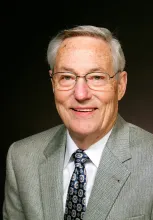
At the time of his retirement in 2016, Roy Holladay was serving the Operation Manager for Ministerial and Member Services of the United Church of God. Mr. and Mrs. Holladay have served in Pittsburgh, Akron, Toledo, Wheeling, Charleston, Uniontown, San Antonio, Austin, Corpus Christi, Uvalde, the Rio Grand Valley, Richmond, Norfolk, Arlington, Hinsdale, Chicago North, St. Petersburg, New Port Richey, Fort Myers, Miami, West Palm Beach, Big Sandy, Texarkana, Chattanooga and Rome congregations.
Roy Holladay was instrumental in the founding of the United Church of God, serving on the transitional board and later on the Council of Elders for nine years (acting as chairman for four-plus years). Mr. Holladay was the United Church of God president for three years (May 2002-July 2005). Over the years he was an instructor at Ambassador Bible College and was a festival coordinator for nine years.
