

Robin S Webber
This transcript was generated by AI and may contain errors. It is provided to assist those who may not be able to listen to the message.
As you remember, last time I was here, I had a comment made to me that we had not heard a sermon on prayer for some time. What I wanted to do with our entire circuit is not only just give a sermon on prayer, but to give a series on prayer. We're going to continue that today, not only on the importance of prayer, but how to pray, and even why to pray. Last time in this series, I gave a message entitled, Prayers That Move God. If you did not have an opportunity to hear that, I hope that you will be able to hear that on our local website. In that message, we focused on the importance of humility that was displayed in the prayer of Daniel in chapter 9. That was where he realized that the 70-week prophecy in its first part was coming to a fulfillment, and therefore he was wanting to understand and to know more and to remind God of his promises to fulfill them, that his people, the Jewish people, might be able to go back to Jerusalem. That message sprang from the words of Isaiah 66, 1-2. You might want to jot that down. Very important. And we're going to do the same thing today. We're going to build this message upon a couple of verses. That message was built on Isaiah 66, 1-2, where God says, I have made the heavens and I have made everything and the earth is my footstool, but to this man and this woman, I will add that, this is the individual that I will look to, who is contrite, of spirit, trembles at my word. And so that message is important. It was to lay a groundwork of knowing what attitude is essential in following Jesus' expectation of when you pray. It's not just simply enough to pray. That's a start. But it's not enough just simply to pray. But what attitude we come before God in prayer is just as important and just as essential.
Now, today's message is going to build upon the last message. And the springboard of today's message here is anchored in two sets of New Testament verses. Join me if you would, and let's turn to 1 Thessalonians. 1 Thessalonians 5. And let's pick up the thought in verse 16. It says, rejoice always. It doesn't say always be happy. Happy is an external manner of being.
Rejoicing is something that is internal. It's from the inside out, rather than expecting happy things to come towards you. Rejoice to have that joy always. And notice, pray without ceasing. In everything, give thanks. Thanks to who? When we're praying to God. For this is the will of God in Christ Jesus for you. So it's very interesting here. It says, simply cut to the quick, rejoice.
It says to pray without ceasing. In other words, never stop. And in all things, give thanks.
Not only that, which we really appreciate and get for the moment, but even those things that come our way to recognize that God will give us the wherewithal to move through it. And ultimately, give the understanding of why that's important in our life. Now, with that anchor verse, we're going to go to one other anchor verse. Let's go to Romans 12 in verse 12. In Romans 12 in verse 12, notice again that word of joy, encapsulated in the longer word rejoicing.
Having joy, having the knowing that God is our God, rejoicing in hope, patient in tribulation, and notice continuing steadfastly, steadfastly in prayer.
I like to read from a couple of different translations on this verse. Number one from the King James, which is instructive. Rejoicing in hope, patient in tribulation, and notice continuing instant in prayer. Instant. Boom! Even in the moment, in the need, away from the home, in the offices we heard, on the freeway, and we all know in Southern California lots of prayer, whatever freeway, or whatever intersection, in a family gathering, in the middle of the night, and to be instant in prayer. It's interesting, then, how the New King's, the New Living Translation puts this. I like this, because we're going to put this all together at the end. Rejoice in our confident hope. Be patient in trouble. And notice, and keep on praying. It says, don't cease from prayer. It says, be instant in prayer. And by the way, after that's all through, are you with me?
Keep on praying. Now, these are simple. They're very short verses. How do we couple these spiritual admonitions in real time with real people, with real challenges, coming before God to seek His will? You're real people. We all have very real challenges. We have an incredibly real God. We've been singing praise to Him today. There are other people that have gone before us, that we're going to look at and understand how they dealt with the challenges that were before them.
And the Old Testament gives a case study to show us the way, as I share this message with you, and it is simply entitled this. Here we go. Continually praying to the God of heaven. Now, in this series that I'm giving, I want to be very honest. I am one Christian speaking to another Christian. I have not mastered all of this myself. In fact, this morning, coming this way, I thought, in going through the notes this morning, there is one area that, well, one area, that's many areas, but I'll just say there is one specific area that I'm giving to you. I'll just say there is one specific situation that came to mind and to my heart that I don't want this just simply to be theory. I know that I need to practice what I'm sharing with you today. So you understand as we go forward, we're all in this together, but this is where God wants us to go. And the individual that we're going to look at is Nehemiah. Let's turn to Nehemiah. The book of Nehemiah. Fascinating individual. Ezra. Nehemiah. Let's understand some things about Nehemiah. Allow me to give you the framework here for a moment. We've used New Testament scriptures, but we're going to learn how it works through an Old Testament individual that God helped. So what we're doing is we're bringing the entire Bible together. Nehemiah was known, just to give you some background for those of you that are new to the Word, we usually couple him with Ezra. Ezra and Nehemiah. They flow together in the Bible and they work together. They both were elements, individuals that were used to restore Jerusalem after the Jewish people went back to Jerusalem.
Ezra was very much a spiritual leader. Not that Nehemiah wasn't, but we often think of Ezra in that regard. We think of Nehemiah, in a sense, as a builder. And here's the point. You might want to jot this down for those of you, and you can go back and read the full story. Nehemiah was known as the man that went back and drove the building of the walls of Jerusalem. So oftentimes what we think about of Nehemiah, we think of him as the wall builder. 140 years after those walls were taken down by the Chaldeans and the temple spoiled. And actually many, many, many decades after the Jews returned, Nehemiah went back and with the people built the walls of Jerusalem. So we think of Nehemiah as a wall builder. But here's what I want to get to you today. And you might want to jot this down as well because this is where God wants us to go. He was not just simply a wall builder. He built bridges. He built a bridge. You say, I didn't know that. Well, that's why he come to church. Find out. I didn't know that. Yes, he did. He built a bridge and he walked over that bridge every day of his life in prayer to God. And that's what prayer is.
Prayer is a bridge between us and God. God establishes that bridge for us. He gives it to us from his end. But then there are building blocks that we need to use just as well. And what we're going to come to find out is simply this.
We're going to understand two things about prayer in the example of Nehemiah. And this is very important for me to share.
He not only prayed. How often do we pray? Oh, God. You fill in the blanks. Prayer and action.
Prayer and action. Prayer and going out to meet those prayers in real life.
And that's where some of us become stymied. And we don't fully walk over the bridge that God has allowed us to have.
So that's very important to understand. And it all begins in Nehemiah. Verse 1. Let's take a look at this.
You know, that Nehemiah is kind of a complex book. I don't know if I can relate with that. You're going to relate with it. Stay with me, okay? The words of Nehemiah, the son of Hekaliah. It came to pass in the month of Jeslev in the 20th year as I was in Shushan, the citadel. Shushan, or Susa, was one of the royal cities of the Persian Empire. The one that came after the Babylonian Empire. The one that Cyrus had founded. But now we're really about 80 years beyond that.
That Hanani, one of my brethren, one of his brothers, came with men from Judah. And I asked them concerning the Jews who had escaped, who had survived the captivity concerning Jerusalem. Let's understand that when the Jews were allowed to go back to Jerusalem at the beginning of Cyrus, only about a tithe, isn't that interesting? Only about 10% of the people returned to to Jerusalem. We normally think it was like, boy, we just released it and they all went back. No, only a tithe of the people went back. And there was an interest of this, of these people. Well, how's it going? Here's what it says. Notice. And it said here, and they said to me, the survivors who are left from the captivity in the province are there in great distress and reproach. The walls of Jerusalem are broken down and its gates are burned with fire. Basically what Nehemiah did is something that we all do on our Mondays and Wednesdays and Fridays. And maybe even a day we ask somebody, how's it going? That's really how the book of Nehemiah starts. How is it going? And this news comes to him and it just blows him away. Nehemiah is devastated about the condition in Jerusalem.
There are no walls. Let's understand why the devastation in ancient Middle East city walls provided protection for the inhabitants. Those city walls were an indication of the strength of that city's gods. The walls were in a sense an indication of the power and the strength and the favor of that people's gods. Now I say that plural, recognizing what we're talking about when it comes to Jerusalem. What Nehemiah understood was those walls in their desolated state reflected badly on God's name. And they had not yet been put up. He looked upon it as, in a sense, a demerit towards God that those walls were not built. So when he heard the news, he responded with two things. Prayer and action. Now let's stay in the picture. Are you with me? When you ask the big question with somebody about a family member, a boss, a co-worker, a member in the church, we all do this. Well, how's it going? Then you find out something. What do we do? Number one, do we pray? And beyond that prayer, do we act upon that prayer? Which leads us now into how he did it. And we look at this in verse 4. So it was when I heard these words that I sat down and I wept and mourned for many days. I was fasting and praying before the God of heaven. And that's where the title of this message comes from. Continually praying to the God of heaven.
I prayed, Lord God of heaven, oh great and awesome God, you who keep your covenant and mercy with those who love you and observe your commandments. Please let your ear be attentive and your eyes open that you may hear the prayer of your servant, which I pray before you now, day and night for the children of Israel. So that's where he's going to come about. The first thing in this prayer that we want to note that we want to emulate is simply this.
He recognized God's holiness, recognized God's holiness and prayed about it. We also notice another thing. He prayed day and night. Now that's something kind of hit me when I was studying this. You know, that's what God's Word does. It molds you and shapes you that, you know, so often we might be concerned, we might even be devastated, and we throw up a quick prayer or even a sincere prayer, but then we leave it alone. It becomes isolated in time and space. And if we're really going to have God favor what we're asking and understand his God, God's will, we have to be sincere.
We have to be persistent. We have to sustain. And we have to do it just like the Apostle Paul said, pray without ceasing and keep on praying. Now we go through this and he's praying for others, your servants.
And notice what it says here. I'm praying for the children of Israel, your servants, and confess the sins of the children of Israel, which we have sinned against you, both my father's house and I have sinned. Very much like Daniel, he didn't say, you know, them. You notice there's an inclusiveness. He talks about his father's house. He talks about how he has sinned.
So he's coming to God. Interesting. Think about this for a month. He's coming to God not saying, well, you've got to deliver and you've got to do this because of how good I am or my works. No. He starts with praying to God, praising God, and looking at himself apart from God and what he is apart from God. That any and every solution has got to start with a relationship, a harmonious relationship, a humble relationship before God. And we have acted very corruptly against you and have not kept the commandments, the statutes, nor the ordinances, which you commanded your servant Moses.
Now, how's that? You know, could you imagine going in for a job interview and saying, well, most job interviews are like this and resumes. I've done this. I've done this. I've done this. I've done this. Don't you want me? Aren't I great? Reverse here with Nehemiah. Here I am, apart from you. I come to the God of heaven to seek your favor. I do not warn it. Neither do my people. Neither does the history of my people. Have mercy. He says, remember. I pray the word that you command at your servant Moses, saying, if you are unfaithful, I will scatter you among the nations.
Remember that. I want God to remember something else, but he says, remember that. But then he says, if you return to me and keep my commandments and do them, though some of you were cast out to the furthest part of the heavens, yet I will gather them from there and bring them to the place which I have chosen as a dwelling for my name. Now, these are your servants and your people whom you have redeemed. Couldn't do it on their own. Redemption is being purchased because you don't have it in your own to purchase.
Redeemed by your great power and by your strong hand. It's very interesting. You might want to jot this down in your notes or be daring enough to circle that word in your Bible. Remember. Remember is an incredibly important word in the scripture and will continue building upon it. When everything seemed so bad before the flood, before Abraham, and it seemed like everything was going askew.
There was no hope for humanity. What does it say in Genesis? But God remembered Noah. He remembered Noah after the flood. That ark is still bobbing out there, right? Up and down on the waves. It says, but God remembered. That term of remember is very important for us to understand in relationship to covenant. Covenant. Covenant. God remembers. God remembers, always remembers on his part. And we are also to remember the covenant. This is not about convenience. This is about covenant.
That God has, by his grace, stated, I will give you my all. And in turn, you give me your all. I will be your God and you will be my people. So he says, remember. Now, let's look at verse 11. Very important. Nehemiah praises God, acknowledges God, repents, confesses, states his human condition and the need for God, and implores God based upon covenant. Now verse 11 is very important. O Lord, I pray, please let your ear be attentive to the prayer of your servant and the prayer of your servants who desire to fear your name.
Now, the others that don't, you're going to deal with them. You said you will. But those that fear your name and let your servant prosper this day, I pray and grant him mercy in the sight of this man. What man? The man was the king of Persia, the king of Persia, a Gentile, a pagan. You might even say when you go to Daniel 2 and 3, one of the beasts of antiquity, the Persian empire. He asked something specifically. Allow me to have favor in the sight of this man for I am the king's cupbearer. Here's something that we need to do with our prayers. We praise God, we give God glory, the God of heaven.
We confess what we are apart from him. We repent. We remind him of his promises. That's okay. It's not that he forgets. We need to remember. But that's how it works. Remind him of his promises as a covenant person. Then one thing that we don't always do is this. Specifically request something. Specifically request an action.
Specifically request an action. Recognizing you, not just God, is going to be a part of that action. Because you just leave it to God. It's not going to necessarily happen. It's a partnership in covenant. He's waiting upon us to do his part so then that he will do his part. What Nehemiah is specifically asking is, help me as I come before this man because I'm the cupbearer. A cupbearer was not just a waiter or waitress in those days. A cupbearer was a confidant. He's a guy that ate and drank the king's food. In other words, he took the bullet rather than the king. If somebody was trying to poison the king.
That person became your best friend unless in case he decided to poison you. Got it? The cupbearer was a very, very important, essential person. Let's talk about this a little bit more here. Why was Nehemiah able to do that? Join me if you would in Proverbs 21.1 because he read the Word and he talked to God. He received God's Word. Notice Proverbs 21.1 when it comes in relationship with what he asked specifically. Proverbs 21.1. The king's heart is in the hand of the Lord.
Like the rivers of water, he turns it, not the king, but God, he turns it wherever he wishes. David wrote that being a king himself and recognizing that God above had a force and a way and a manner with all kings. And that God's purpose will come to the fore. The king's heart is like channels of water in the hand of the Lord. And channels of water means, and you know that with our irrigation in Southern California, it can be redirected, can it?
That's what channels of water are in the irrigation system. They can be redirected. And what Nehemiah is saying is, redirect the heart of this king towards your purposes. Now, with all of this, what is happening here? By Nehemiah, including God in his plans—this is a simple part I want to share with you—it helped prepare his heart. It helped prepare his heart for what God was going to do. That's what prayer does. God's purpose and God's pleasure is going to happen. What prayer does is allow us to begin to see things as God sees things.
We put him into our lives and into our hearts. And what is prayer? Here it is. Simply put, are you ready? Prayer is making room for God in our lives. You know how we all like to get rid of stuff, and we still have stuff to get rid of, whether it's an apartment, whether it's a house, whether it's an office? We've got a lot of stuff to get rid of. We have a lot of stuff to get rid of in our hearts that sometimes we don't even know. Just as was mentioned by Brandon, there are sins of commission and there are sins of omission. We so often tackle the sins of commission with all sorts of vigor without recognizing we're stumbling to disaster over the sins of omission of what we're not doing.
And so we see that here. Here's the thing I want to share with you. The big question now as we move off this.
Have we ever been in such a crisis situation as Nehemiah? And what is our first response? What is our first response when it comes to, as we say today in the 21st century, issues? When there's a crisis, what do we do? What's our first response? You know, so often we talk about first responders, those that are on the scene. What comes on the scene first? Do we approach the God of heaven or take matters into our own hands to try to fix the situation? How often have we tried to fix the situation in our own way and then pray?
Well, God, I've been working on it down here and it's not working, so it's reverse. What we find here, very simply, beginning of Nehemiah, this bridge is being built between God and him. He doesn't deal with the situation, so that didn't work, and then goes to God. He starts by going to God first, sharing it with God so that God can prepare his heart, so that Nehemiah will have room for God and know that he's not alone. When God grants him the specificity of being able to talk to this king about it, that's what we need to understand. Now, so far, so good, but now let's go a little bit further. Remember what it says in the New Testament. Keep on praying. It's not done. You know, we might say if we got through Nehemiah 1 and we got up to Nehemiah, we might say, no, nim-nim, we're doing all right. I got that first one down with you. We're buds. We're prayer buds. We're prayer warriors, but it doesn't stop there. Now he goes out and meets his prayers. Notice what happens here. And it came to pass in the month of Nisan, the 20th year of King Artaxerxes, when wine was before him that I took the wine and gave it to the king. Now, I had never been sad in his presence before, and therefore the king said to me, why is your face sad since you are not sick? This is nothing but sorrow of heart. You know, your face is worth a picture of a thousand words, right? So I became dreadfully afraid. And the king said to the king, and said to the king, may the king live forever. You know, I always love this line, this is not the only time that it's in the Bible, that whenever there's a squeeze play on you, the best thing all you should do with this guy that rules the world, king live forever. You know, you hope to get some favor here. King live forever. So he said, king live forever.
Why should my face not be sad when the city, the place of my father's tomb, lies waste and its gates are burnt with fire? Then the king said to me, what do you request? Remember prayer, action, be specific. God doesn't mind us asking. Now, notice what happens here. So I prayed to the king. Notice the God of heaven. So I prayed to the God of heaven.
One of the most interesting parts of the book of Nehemiah is this short prayer.
You might say this emergency prayer that he gives. So I pray to the God of heaven.
When I am talking about this, let's understand there is a time to be on your knees and to be praying to God in formal fashion. Just as we noticed when this came upon Nehemiah, he was praying, he was fasting, he was supplicating.
We just can't take short breaths during the day and pray to God. These two go hand in hand, but this is also very important to recognize what is happening here when it comes to praying before the God of heaven continually. And that is simply to recognize that prayer is not just simply an event, it is an existence. We talk about walking in the spirit. We could also say walking in prayer. Walking in prayer. Prayer is not just an event. You need to be just like us during the day. Okay, you know, it's six in the morning. Well, I'm going to be gone all day. Here we go.
I've got to get it all in because I'm not going to be able to breathe till tonight.
And you pass out before you leave home. No way of doing anything. You can't even get specific. No, there is formal prayer, and there is prayer where we, in a sense, in a moment, ask God to be our partner. This is very important, and one of the unique portions, as we explore Nehemiah, is simply this. I'm going to ask you to jot these down. I want you to go back to them later. I'm going to explain it. Jot these verses down. Chapter 2, verse 4, which we just covered. 4, verse 4.
4, verse 9.
5, 19. 6, 14. 13, 14. 13, 22. 13, 29.
What I'm sharing with you here is that, as Nehemiah did all what he did in the first chapter, supplicating God in the way that we talked about. He did not leave God in his prayer closet or by his bed, but took him with him and kept on bringing him off or down from heaven by bringing him into the situation. And so, I pray to the God of heaven. It was almost like he's here. He's asked, what's wrong with you? He's going to reply over here, but it's almost as if he just implores God and says, God, this is where I need you to lift me up like those like those eagles. Lift me up right now, because I'm in motion now. And I'm not leaving you here in my bedroom. I'm not leaving you in the living room. I'm not leaving you. I'm not able to get to my knees, but my heart surrenders to you. The knees of my heart supplicates that you might be involved in this. Now, when we think about this, when we think about this, sometimes a short sentence prayer under our breath is all that we're going to have time for, and they can be powerful. You know, I think, you know, we have some that are students, you know, before you take a test. Some of us, we pray in the morning, but then we go and we're about to go for a job application. Some of us are going down to the bank. We really need something very important from the teller for financial security, and you say a prayer going in. You know, it's interesting that over the years there's a couple of expressions. I think they go like this. Remember, about 20 years ago, it was with the MasterCard. What was the famous MasterCard expression? Help me?
Don't leave home without it. Take prayer with us. Number two, there's another one now these days, which is, what's in your wallet? So, we might ask ourselves this, what's in our heart? And throughout the day, are we making space, and are we making room for God, desiring his perfection, rather than our best? Very important. But it didn't stop there. There's more. Actually, what happened here was a man that was so dedicated. Here he was at the very pinnacle of power by the ruler of the world, and yet he felt compelled.
He put his skin into the game. Something about Nehemiah. He was not a Monday morning quarterback. He was not a guy that just sat there. Oh, look at, why doesn't somebody do something about it? He was not willing to do could have, should have, would have. Are you with me? He prayed about it. He asked for a specific, and then he walked away, as it were, from the seat of power by the king of Persia, and was willing to go and help his people.
Very important. If we are praying to God, if we humble ourselves before God, if we keep on praying to God, and we give him specifics that we not only trust in God, but then we act upon it, and that we're willing to go wherever those prayers are manifest. Therefore, be careful what you pray for, and recognize that there's a purpose and the reason why God is doing that. Now, let me go to another thought, though. Let's go to a different, because it doesn't end there. Remember, keep on praying. Join me if you would in chapter four for a moment. Chapter four. In chapter four. Here's a story of where the walls just weren't built easily.
There were forces against it. The local residents were against it. But notice what happens here in chapter four. And we pick up the thought in verse one, but it so happened when Senballat heard that we were rebuilding the wall that he was furious and very indignant and mocked the Jews. And he spoke before his brethren in the army of Samaria and said, what are these feeble Jews doing once the building was being built? The walls?
Will they fortify themselves? Will they offer sacrifices? Will they complete it in a day? Will they revive the stones from the heaps of rubbish? Stones that are burned? And then Tabiah ways in. Tabiah the Ammonite was beside him. And he said, whatever they build, if even a fox goes up on it, he will break down their stone wall.
Then notice verse four. Prayer. Hear, O our God. For we are despised. Turn their reproach on their own heads and give them as plunder to a land of captivity. Do not cover their iniquity. Do not let their sin be blotted out from before you, for they have provoked you to anger before the builders.
Now, what is going on here? Here, Nehemiah and the faithful Jews that were building the building were being taunted. They were being bullied. They were being belittled. But what Nehemiah recognized, you know, we're talking about the coarse world that we live in today and what goes on, is what Nehemiah recognized was simply this. That they were not mocking them. He took it up to God. They were mocking what God was doing. He realized now that God wanted those walls to be rebuilt because those walls were being, were surrounding His holy temple.
So it wasn't just simply about them. So often, when it's just about us, when it's just about us, and our feelings get hurt or our feelings get crushed as people ridicule us or people taunt us, belittle us, etc., we take it so personally, rather than recognizing that it may be about God. Now, Nehemiah was angry, but he didn't take matters into his own hands. It says here that he and the people went out. They prayed to God, and they asked God to intervene, and they gave it to him to take care of other people.
Nehemiah didn't say, roll up your dukes. You know, he didn't have a hissy fit. He took it to prayer. Let me ask you a question, because this is as old as yesterday. What was happening 2,500 years ago is having today when we are ridiculed, when we are belittled, when we are taunted. Do we take matters into our own hands?
Or do we give it to God? Just as Brandon was bringing up, we're Christians. We do things differently. Brandon, we do things differently, don't we? We do things differently, don't we? We are a counterculture to this world. We're a counterculture. We're not of this world. And so, if you want to go back and forth and back and forth, it's going to be a bag of wind. Nothing's going to happen. Give it to God. Here's another example in chapter 6, verse 5, where they had to respond to threats, because it didn't go away. Remember? It's not enough to be—stay with me—it's not enough to be instant in prayer.
We must not cease from prayer. We must keep on praying. This is the whole story of Nehemiah. Nehemiah. Notice chapter 6, verse 5. Then Sanballat sent his servant to me, as before the fifth time, with an open letter in his hand. It was written, it is reported among the nations and Jeshem, that you and the Jews plan to rebel. And therefore, according to these rumors, you are rebuilding the wall that you may be their king. Here, Nehemiah is God's servant. He has— he's actually removed himself from the pillar of power, being by the king, goes over and helps his people. He's not getting anything out of it. It's all for God. And yet, his godly actions are taken for naught, and he is vilified. And it's like, oh, you just want to be king. That's the last thing. It would have been better for him to be a cupbearer in Susa, or Persepolis, or the other royal cities of Persia, than to be some puppet king over in Israel, or in Judah. And so, here he is being threatened that we know what you want, so therefore, we're going to take care of you. But notice what he says here later on.
Verse 8, Then I said to him, saying, No such things as you say are being done, but you invent them in your own heart. For they were all trying to make us afraid, saying their hands will be weakened into work, and it will not be done. Now notice the end of verse 9. Now therefore, O God, strengthen my hands. Gets right to the point. Notice, short to the point. And ask something specifically.
Not, Now I lay me down to sleep. I pray the Lord my soul to care. And I, no problem with that, but I'm just saying, He gets very, very specific. Strengthen my hands. What happens when people say false things about us? And if you're in a role of leadership, if you're in a role of leadership, that's just part and parcel.
Over the years, things will be set. I know things have been set over the years. Happens to all of us that are in any role of leadership. You say, Wow, what block does that person live on? I've never met him. And yet, things will come to the fore. And you've just got to know that you're God's man. You're trying to do your human best with God's Spirit. And you have to ask God to strengthen your hands. Now, you don't have to be a leader in an organization. You don't have to be a pastor. This happens to all of us when people take what we're trying to do to serve God, belittle it, and turn it around as if we're trying to get something out of it that we're not.
Nehemiah, in his prayer, specifically—and I want to really hone in on that, please, today—specifically asked God to do something for him. Strengthen my hands. Let's use one more example here. Let's go to Nehemiah 13. Nehemiah 13. Let me set the stage here.
When Nehemiah prayed that prayer, and he gave up everything to go back to be with his people, just 10 percent of the Jews were back there. He walked away from being not just on the steps of the throne, but by the king. He went back there. He spent about 12 years back there. But for one reason or another, then, he had to go back to Persia. That might have been the deal with the king, because maybe the king liked him as his cup bearer. He felt secure with him, because he was a godly man. So he was away for 12 years. He was away for 12 years after God threw him and inspired the Jewish people to build that wall, actually within just a little bit over 50 days. What a building project! Because he inspired the people that when he laid the plans, he walked around. He said, this is what God has shown me to do. The way that he shared it to people, at the end of that, they said, let us go up and build the wall. It wasn't about Nehemiah. There was an incredible collaboration between God, Nehemiah, and the people. And they went to work, and they built that wall in just a couple days, over 50 days. But now he's been gone. And then he comes back. You know, sometimes you can't go back. Have you ever noticed that? But he went back. Or am I the only man that's noticed that about life? Sometimes you kind of remember how things were, and everything was nice, and everything was familiar. You go back, well, what happened when he went back? Let's understand again. He'd gone from the throne to Jerusalem, stayed there about 12 years, then went back to Persia. Now he's gone back. He's an old man. You know what happened? The foxes are in the hen house. You know the people we mentioned, like Tobiah and and Sanballat? They're actually in Jerusalem. And actually, some of the people have actually allowed them to live within the temple area. And they being gentiles, and when you understand that, what it meant back in that day to have a gentile in the temple area, all bets were off. The people sometimes, have you ever noticed, are only where the leader is at the time in the midst of them. And they had turned away. They had turned away. That had to be very, very disappointing to Nehemiah and Ezra, with everything that they had invested in these people. That now that they were breaking the laws of God, breaking the statutes of God. Now, notice what it says here, because we're going to start concluding. It says here, verse 29, Remember them, O my God, because they have defiled the priesthood, and the covenant of the priesthood, and the Levites. Thus I cleanse them, action cleanse them of everything, pagan. And I also assign duties to the priests and the Levites, each to a service. They had just allowed it to falter. They were not doing things decently in order. The personnel that needed to be at the temple and around the temple were profane to God, and to bring in the wood offering and the first fruits at appointed times. Now, let's conclude with this thought, verse 30. Remember, here's a prayer, one of those remember me's, remember me, O my God, remember me, O my God, for good. Now, again, let's remember, very important, maybe if there's anything that you get out of this message, as we conclude, the word remember is extremely important. Remember, because remember underlines covenant.
Underlines covenant. God said, I will write my laws in your heart and in your minds, and I will be your God, and you will be my people. Remember Noah? Noah's bobbing up and down in that box on the waves. Remember what it said? What did it say? And then God remembered Noah. He made a promise, a promise that is signified by a what? Later on, that God would never destroy the earth again that way? What is it? Rainbow! That rainbow was not a new invention. That rainbow is in heaven. That rainbow, when you go to the book of Revelation, is in heaven. It is what is behind God's throne. The rainbow reminds us of the faithfulness of God. That can't be broken. It cannot be broken.
That's how we need to pray. We pray by praising God. To the God of heaven, we confess. We repent. We recognize that we cannot handle this on our own just as much as Israel had gone astray in the past. And then we ask God specifically to bolster us, to give us an action, to strengthen us. And then when we are in that situation, in our home, at office, at school, on the freeway, in this arena between our ears called the mind, we ask God, remember me how important that is. Let's understand some things. I'm going to just read a psalm to you for a moment that I find so encouraging. Through the example of Nehemiah, we find encapsulated the invitation and the desire of God. Number one, here we go. Number one, to pray instantly. Live by the Spirit. Walk by prayer. Number two, to pray without ceasing. A marvelous story about my wife. My wife, before she came into the Church of God culture, was a part of the Christian Missionary Alliance. And there were a couple of these ladies there. And they are, in a sense, tremendous mentors to my wife over the years. And that these were, what do we call, prayer warriors, prayer servants. And recently, wasn't it Susie, where a couple years ago, somehow her family, and I think Susan was with him at the time, you weren't, but that they had not been a part of that fellowship for 50 years. Of course, Susan was only 18, but for 50 years. And they were still praying for that family, the Leimbach family. They were still praying for them. How often do we pray? And I say this to myself, we're all in this together, okay? How often do we just pray one for the gipper, as it were? Move on to life to the next situation. So what do we do? I want you to begin to do this hard work and homework this week. I am, number one, pray instantly. Number two, pray without ceasing. And number three, pray to the end. We keep on praying. And if we don't understand, God's will keep on praying. That's how important it is. Let me conclude. We open to a scripture. We'll conclude with scripture, Psalm 139. Join me if you would. Let's open up God's Holy Word and we'll read it together. And I leave this with you.
Psalm 139. And we're going to pick up the thought in verse 7. Where was Nehemiah?
He was knelt down in his room in the palace praying. Where was Nehemiah later? He was by the king. Where was Nehemiah later? He was back in Judah, being taunted, being ridiculed, being threatened, being lied about. Where was Nehemiah later on? With everything that God had done through him, it seemed as if it was faltering. Like, why did I even begin this, God? Because they've gone their way again. Here's one thing that Nehemiah knew and why he prayed. He knew that God was ever present, ever knowing, ever powerful, ever loving. When we pray to the God of heaven continually, remember this. Where can I go from your spirit? Or where can I flee from your presence? If I ascend into heaven, you are there. If I make my bed in hell for the grave, behold, you are there. If I take the wings of the morning and dwell in the uttermost parts of the sea, even there, your hand shall lead me and your right hand shall hold me. If I say surely, the darkness shall fall on me. Even the night shall be light about me. Indeed, the darkness shall not hide from you, but the night shines as the day. The darkness and the light both are alike to you. Both are alike to you. Both need to be understood by us, dear friends, here in Redlands as we continually pray to the God of heaven.
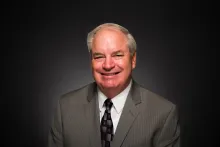
Robin Webber was born in Chicago, Illinois, in 1951, but has lived most of his life in California. He has been a part of the Church of God community since 1963. He attended Ambassador College in Pasadena from 1969-1973. He majored in theology and history.
Mr. Webber's interest remains in the study of history, socio-economics and literature. Over the years, he has offered his services to museums as a docent to share his enthusiasm and passions regarding these areas of expertise.
When time permits, he loves to go mountain biking on nearby ranch land and meet his wife as she hikes toward him.
