

Robin S Webber
This transcript was generated by AI and may contain errors. It is provided to assist those who may not be able to listen to the message.
What we're going to be doing this morning is we're going to be building upon the previous messages that I've given here in Redlands. And actually, I'm giving it everywhere that I am going. And that is simply about this way and this walk that God wants us to live in, which is not simply living by faith, but praying on that walk in that way.
For those of you that weren't here before, allow me just to go back for a moment. We'll rewind together so you'll know what we're leading up today. And remember that we started out, number one, dealing with the prayer that Daniel offered in Daniel 9. That he offered a prayer that he desired to have understanding about the future of Jerusalem and the wall that needed to be built.
And we spent time on just specifically dealing with how Daniel prayed to God. And then, next, we dealt with the story of Nehemiah, and how Nehemiah had a challenge and had a desire, and then how he prayed. And so, we took some examples out of the Old Testament of always praying towards God and constantly praying towards the God of heaven. Well, in this third message, which we'll conclude this series for now, we're going to be moving into the example of Jesus Christ and how he prayed.
We're also going to be moving into the example of the early apostles, those that were those that first followed him. And I hope that it will be encouraging. Sometimes we look at individuals, whether it be a Daniel or whether it be a Nehemiah, whether it be Peter or Paul or John. We look at these luminaries as giants, and or maybe just fossilized in black and white in the print of our Bible. But sometimes forgetting that they were very, very real people, flesh and blood, just like you and me, that had some very big challenges.
But they took those big challenges before a great God, and the rest is history. And they're there to be our example. So with that stated, I'd like to give you the title of today's message so that we can build upon it. And it is simply entitled, this message, Developing a Lifestyle of Prayer. And we're going to bring it up a little bit closer to our day and especially recognize that the one whose example that we follow is not just simply one that is now dead, but is living.
And it's in His name that we actually pray to God as we've seen this morning. Let me just share a thought with you when you think about it that one of the great admonitions to all of those that would walk, as Stephen brought out, in this way, there's an invitation throughout the New Testament, throughout the ministry of Jesus Christ.
Let's think about it for a moment. It's the first thing that He tells the disciple and it is the last thing that He tells the disciple. So it's kind of a bookend of life. It's where we begin and where we end with Jesus Christ. And that is simply this.
Remember when He was on the shore of the Galilee, He told Peter, what? Follow Me. And then in John 21, we remember that when Peter was having conniption fits over what might be happening to the Apostle John, and Jesus said, what's it to you? No matter what I do with that man, you follow Me. So when you think about it, there's nothing more intimate and more personal than learning to follow Jesus Christ as He prayed and as His early disciples did. I'd like you to go to John 14 and verse 6 with me to open up this message. John 14 and verse 6.
I think you'll see some of the segue between what Mr. Richardson brought us this morning and what I'm hopefully going to build upon. In John 14, the Gospel thereof. Notice Jesus' self-disclosure about Himself. John 14 verse 6. Jesus said to Him, speaking to Thomas, and notice how He begins it.
I am, using the name of the Godhead, the Father and the Word, the One that became the Son, I am the way, the truth, and the life. And no one comes to the Father except through Me. It's very interesting that one of the self-disclosures that Jesus used about Himself is that He's the way. Now, if that's the way... Have you ever been lost in a neighborhood?
Or like, if you want to join Stephen in a mall and get lost with him? Because he's looking at everything. If you get lost, and you say, well, you know, I've been here before, but I'm lost. Could you tell me the way? Then when somebody tells you the way, what do you do? You go the other way? No. You go that way. That's what Jesus is telling us.
This is the way to the Father. And it does come through Me, and there was a way. Now, let me build upon that. A lot of this is going to go quickly, so I'm going to go kind of give you a breather, every little bit of point of the way to build to a point.
Jesus said, I am the way. Now, let's build upon that. In the book of Acts, that phrase, the way, is mentioned at least 10 times, maybe more, but directly 10 ways, talking about what you and I are striving to do today, and that is to live in the way. Very interesting. When you look at the book of Acts, two major phrases leap out of the book. Number one, it talks about the church. It talks about the church. Now, 2,000 years down the line, we look at the church as a building, as a place to go, but that was not the initial thought of the word ecclesia.
The word ecclesia was designed to talk about those that are called out. It wasn't about going to a building. It was about the edifice that God was developing through Jesus Christ, called the household of God and or the church. It was not a building made of plaster or concrete or glass. It was made up of human beings that God had decided to work with, to deal with, to reveal to. So, we notice that word that comes out. So, to recognize very importantly, please listen, and I see some people that were my age when I was growing up in the church.
We don't go to church. We are the church. When we understand that, there's a profound, profound lifestyle that begins to develop. Number two, we see that in the book of Acts, this other phrase comes up, the way. The way. It's a way that is not just a one word. It's not just an event. It's an existence from the time that God calls you. And we surrender our lives to God. The way. And we find that way in the Gospels. We find that way in the book of Acts.
And we're going to build upon that, especially when it comes to developing a lifestyle of prayer. When we look at this, join me, if you would, now in the book of Acts, to see what the one who called himself the way did. In Acts 1 and verse 2. And this is the opener. Now, when I say this, let's understand something. For those of you that have never heard this. When Luke wrote these two books, the Gospel of Luke and the book of Acts, they initially thought that they came out as one gigantic piece of work in two volumes. And I'd like to give you the phrase. It was called a history of Christian origins. A history of Christian origins. It was thought to be one massive work. The book of Luke actually became more in vogue before the book of Acts did, which would be a later event. But he wrote them together at the same time. Now, why did he write them, and what is the difference? Number one, the Gospel of Luke was written to show how salvation came. How salvation came through Jesus Christ. Then the second half of that, what we now call the book of Acts, was to show how salvation was spread. How salvation spread. And actually, you know, so often we call it the Acts of the Apostles. What Luke was really getting across as he wrote it was this. It is the Acts of the Holy Spirit, because God had promised a comforter. He had promised a gift. And that these people that were one way before then the Holy Spirit came and they followed Christ, became a completely different people. So let's look at that as a background. Now let's go to Acts 1 and verse 2, and notice something very important. That's actually being in verse 1. The former account I made O Theophilus of all that Jesus began, notice, began both to do and to teach.
Incredibly important for us to understand to be in the way. What we notice is here is that Jesus taught and he did it. And this sets the example, and frankly the high standard, that we as Christians have always had to do. You know the old line when it comes to Christians, sometimes when they're not asking Christians, you're not practicing what you preach. What we find with the example of Jesus when it came to prayer is simply this. He practiced what he preached. And what he preached and what he taught became an integral part of the early church in the book of Acts. Let's think about that for a moment as we try to wed the Gospel of Luke with Acts for a few minutes. When you think of the Gospel of Luke, you might just want to jot this down. Maybe you didn't know this. I found it out in a commentary myself. It's simply this, that Luke deals with prayer in his Gospel more than any of the other Gospel writers. In fact, you may not realize this, that Luke has more words in the New Testament than any other writer. He said, well, I thought that was the Apostle Paul with all those books. Actually, there is more space in the New Testament between the Gospel of Luke and the Book of Acts than any other writing. Luke writes more than anybody else in the New Testament. Did you already know that? Isn't that interesting? You thought it was. It wasn't Jude. It was not Jude, for those of you that went with Jude. That's only one page on the Bible. Okay. It was Luke. And what he did, he talked about Christ.
Here's what I want to begin with, just to begin to move us into it. It's going to take a few minutes for us to understand, perhaps, where I want to go. Luke deals with the subject of prayer. It's very interesting, as he moves through the example of Jesus, the emphasis that he puts on Jesus. I'm just going to give you a few verses, because there are other verses that we're going to maximize here. But I would like to just mention this. As Luke goes through the story of Jesus, in Luke 3 and 21, we find something profound. Jesus starts his ministry with prayer.
Before he goes to minister, he starts it with prayer. Before, not after.
I said, well, you say, well, so what's the big... That's obvious.
Is it? In our own lives? When we pray? How we pray? Do we pray before or after the events of life?
Luke 5 verse 15. Before his healings, he prayed. Before choosing the 12 in Luke 6 and verse 12, he prayed. And it's interesting, before the transfiguration, when he went up to the mountain in Luke 9 and verse 28, it says that he prayed on the mountain before he was glorified.
I just want to share a thought with you, because we're going to keep on building on this, okay?
So often, people pray after everything else has slipped out of their hands.
Things are going wrong. You're lost on the mall. You're stuck in the freeway. You're hanging upside down 60 feet in a dark well. Then you say, it's time to begin my prayer life. Hello?
Anybody up there? No answer. Anybody else up there?
What we find from Jesus very quickly, and you can study this on the Sabbath afternoon, before he entered into the room of life. He prayed before, and we're going to build upon that.
Now, why did he do that? Jesus knew that his time was short. He knew that his time was short. He was a Messiah. He was God in the flesh. He knew that he had merely three and a half years of ministry.
But with all of that time that is short, he never missed an opportunity to pray.
Even though he knew that his time was short and was extremely measured, just three and a half years, he never felt the squeeze.
He always prayed before he acted. I have a question for any day, and I think Stephen brought it up very well.
This whole world is coming down around us. You know? All of this information. We're in the information age. I've got to go here. I've got to go exports. I've got to do this. I've got to do that. I've got to hook up with this person. I've got to connect here. I've got to go to the work. I've got to beat the traffic. I've got to do this. I've got to do that. I've got to do this. I've got to do that. I've got to do this. I've got to do that. No, I'm off the record now. Okay, but that's how life is, isn't it? I did it for a purpose. But, but, Jesus never missed an opportunity to pray. His time was short. His mission was incredible. But he never missed an opportunity to pray. It was his lifestyle. It was the way. Now, let's think about that for a moment. With everything that the Apostle saw, the beginning of his ministry, the healing of the sick, the transfiguration, at least three of them saw it personally, the rest heard about it. You can be guaranteed they heard about it pretty quickly from Peter, James, and John. Did you see what you want to know what we saw? And it was all linked to prayer. Is there any wonder, then, that the disciples came to Jesus? Seeing these results that were in their life, is it any wonder that they asked Jesus, teach us how to pray? Teach us how to pray. If you saw somebody making gold and it came out of the basement and they had the gold, don't you think you might ask a few questions? How did you do that? And that's exactly how the early apostles were. They wanted to know how to pray. So you say, but wait a minute, Jesus was the Son of God. I'm merely here in the 21st century. Jesus was given a specific commission to be Messiah. Let's understand something, each and every one of us in this room, all of us have been given a specific commission. You say, my job can't be nearly that important. Well, there is only one name under heaven. There's only one Messiah. But you and I have been called to be a holy people. God says, both in the Old Testament and in the New Testament, in Leviticus and in 1 Peter, Be holy, therefore be holy, because I am holy. The only way that we are going to be able to do that by God's grace and God's patience with us is to learn how to have prayer as a lifestyle. Join me if you would in Acts 1.14 now. And let's see how everything begins in the book of Acts. To solidify the importance of always taking opportunity to pray in Acts 1.14, we notice these all continued with one accord in prayer and in supplication with the women and the mother of Jesus and with his brothers.
The book of Acts, which is like the most incredible active book in the Bible, probably other than the book of Exodus. You talk about color, you talk about personalities, you talk about depth. Where do we find them? They are given a commission. Go, you therefore, into all the world, preach the gospel unto all nations, baptizing them in the name of the Father, the Son, and the Holy Spirit.
Big job! And the first thing that we find that the apostles are doing in the book of Acts is stopping. Stopping and praying.
Is that what we do when we have a lot on our shoulders, a lot on our heart? Do we just simply stop and look up? Rather than what's inside of us or what's coming around us? We find an amazing example of these apostles doing this. Why were they doing that? Because they've been promised a gift.
They had been promised a gift. You will not be left alone. You will not be left orphans, as it says in John 14.
And Jesus had promised them that they would not be orphans, that they would not be left alone. He spoke of this spirit that would come. Now, they didn't quite understand what it was all about because we read it afterwards, right? We read it from hindsight.
But they've been promised something. They've been promised a gift. They have been promised a gift. And what do we find them? In that prayer. They are expectant. God says, He's going to do something. He's going to do it. And they are open with that expectancy. Whatever might come, they will take it. And number three, they are willing, then, to act upon that.
Now, what we also see here with prayer, which is so important to why it's good that we pray as we begin services, it brings people together. Prayer brings people together. Singing the Psalms of God, as Stephen brought out, bring people together. Praying brings people together. Even people that sometimes don't... Do I dare say, not get along with one another?
And or have concerns about the person sitting behind them, or right now, or before them.
We all have different mothers, but we all have a common father. And when we pray our Heavenly Father and have that expectancy, and have that openness, and have that willingness, things are going to begin to happen.
This is how the book of Acts started, with the greatest job that was ever given to human beings to spread the good news that the world was now headed towards redemption rather than destruction.
And we find a case example here. They began with prayer.
Didn't start in Acts 28, it started in Acts 1 and verse 14. Let's look at Acts 2 and verse 42 here for a second. And Acts 2 and verse 42 as we wander through here for a moment. What we find here, notice verse 42. It wasn't just... It was just not an event. It was an existence.
It was a lifestyle whenever they met. And they continued steadfastly... there's that word... steadfastly... in the apostles' doctrine and in fellowship, in the breaking of bread, and notice in prayers.
It's not just simply enough to have, quote-unquote, truth. It's not enough just simply to have really rich and warm and fantastic fellowship.
It must also be encompassed with prayer.
Whenever Susan and I have told you this before, and sorry to bring it up again, but whenever we go on the Sabbath day, we ask for God's blessing. We ask that God will use us as instruments. We ask that we will be able to worship Him, glorify Him, and be a blessing to others. And we ask that we, Susie and me, be open to all of you today here in Redlands or in Los Angeles to be open and to be willing and to be listening, not just to Stephen up here behind a microphone, but everybody that comes into our life. And then we move forward, and then we have to be willing to meet our prayers. Sometimes, as Christians, even Christians, we pray, we move out, and it's almost as if we have amnesia, what we prayed about, rather than be willing to go out and see our life happen with prayer. That's what we find here. Church is not just about understanding. It's not just about truth. It's not just about socials. It's not about fellowship. All of those are wonderful. All of those are rich. All of those are needed. But it has to also come so very much with prayer. So you see that. Now, why is that important for us to understand? Join me if you would in Isaiah 56 and verse 7. In Isaiah 56 and verse 7, you will recognize this through Jesus' lips, but this is where He drew upon it in Isaiah 56 and verse 7. Notice what it says here. Even then I will bring to my holy mountain and make them joyful, notice, in my house of prayer. And their burnt offerings and their sacrifices will be accepted on the altar, for my house shall be called a house of prayer for all nations. The church, the body of Christ, this spiritual organism, is known as, in Ephesians, the household, the house of faith. We ought be a praying people, both collectively and individually. It is an existence. It's not an event. And what we want to do is we move through Monday, Tuesday, Wednesday, Thursday, Friday, and then come on to Saturday. Saturday cannot be the big wall of polluiser that is where our spiritual life happens. That's a part. That's a part. It's important. We learn.
But if we're waiting just to come to church on Saturday and begin to have a lifestyle with God, we, of all people, are going to find ourselves desolate. This is almost like the cherry on the top of the, do I dare say it, the hot fudge Sunday, the Sabbath day, the services. It's the cherry. It's the sweet spot. It's beautiful. It's wonderful. We come and worship God. We glorify God. We praise God. We talk with one another. We open the Bible, but studying the Bible, praying to God. Even though it seems like we don't have time, we don't have time not to pray. Jesus never missed an opportunity. Neither did the disciples. Now, let's see how it works in real time. Acts 4 and verse 32. Anybody have challenges today? Look me. I'm a goal post. I've got both hands up. Okay? I guess I'm the only one that has challenges in this room today. I'll take my hands down. Thank you. That was a TV antenna. You only had one hand up. Okay? I've got the full goal post going. Join me if you would in Acts 4.22. Let's break this down and see how this works. Here they're quote-unquote doing everything right. They're praying. We say, God, help us as we go out. Then there's Pentecost and they're praying together. But by the time we get to Acts 4, we've got some challenges going on. In Acts 4, let's pick up the thought here. In Acts 4, let's move through this. In Acts 4, let's pick up the thought in verse 23. This is after Peter and John are taken as captives the first time by the temple guard and by the Jewish people there that thought that they were being confronted. But then they are let go. Now notice what happens. Speaking of Peter and John, and being let go, speaking of Peter and John, they went to their own companions and reported all that the chief praised and elders had said to them. So when they heard that, notice, they raised their voice to God with one accord and said, Lord, you are God who made heaven and earth and the sea and all that is in them. Who by the mouth of your servant David has said, why do the nations rage? And the people plot vain things. The kings of the earth took their stand and the rulers were gathered together against the Lord and against his Christ. So we notice this.
For truly against your holy servant Jesus whom you anointed, both Herod and Pontius Pilate with the Gentiles and the people of Israel, were gathered together to do whatever your hand and your purpose determined before to be done. Now, Lord, look on their threats and grant to your servants all with the boldness that they may speak your word by stretching out your hand to heal and that signs and wonders may be done through the name of your holy servant Jesus. Now, that which Jesus began and did, he practiced what he preached. The early apostles got the formula. They were praying together in the upper room. They were praying together in the fellowship hall. Now we find themselves praying when the church has its first big problem. Let's break this down just as much as Stephen just did and broke down the scriptures that he went through. What do they begin with? Let's notice the first thing that they begin with. So when they heard that, when they heard that, one thing, remember, it is so important to be instant in prayer. Don't pack it away. Don't mortgage it to the future. They were instant in prayer. When they heard that, they raised their voice to God in unity. And then notice the first thing after they did that they were instant. And number two, they praised God. No matter what the circumstance they offered, praise to God. Lord, you are God who made heaven and earth and the sea and all that is in them. They praised God. Whatever we are going through in our life, and I want to share something with you. I'm not talking at you. I am not talking down to you. I am talking with you as one Christian to another. I have personally learned, so very much, going through this series on prayer, that it has shaped my existence. You'll find out, as I mentioned, something towards the end of this message. Something that you might have just read this week. Number one, you praise God. Number two, you notice this, then they quote out of the Psalms, Why did the nations rage? The kings took their stand. The rulers were gathered against the Lord and against His Christ.
One thing that we find, friends, is that their prayer life was informed by their study of the Scriptures.
Their prayer life was informed by their study of the Scriptures.
You just can't simply lead a life of prayer and, you know, just kind of...
There is the reading of Scripture, there is the knowing of the doctrine, there is the knowing of the lifestyle of Jesus Christ. There are the examples in the Old Testament, there are the pronunciations of God from the book of Genesis to Revelation. Sometimes, when we do not even feel like praying before we go into the challenges of life, just open up the Bible. Just open up the Bible and begin to read the Scriptures.
Because so many of the Scriptures are prayers, especially out of the Psalms, and a lot of the writings of Paul are prayer.
You say, I don't know what to say. Open up the Bible and begin praising God.
Begin praising God. Then, number two, be sure that your prayers are informed by the Scriptures.
Also, then, be specific. Go into detail. They share the details of their challenge. They share the details that looks like the rulers of the land now, not of yesteryear, but now, are causing a roadblock to spreading the Gospel. Be detailed. Break it down. If it's big enough to care about, if you feel like Atlas with the world on your shoulders, break it down.
They say, yeah, but God already knows that. Yeah, but He wants to know that you know that, and that He alone can take that globe off of your shoulders. Next, let's notice another thing. Another thing in verse 29. And this is really important. Now, Lord, look on their threats and grant to your servants that with all boldness that they may speak your word. There's two things that happen here. There is an action item that needs to occur when we pray to God. I don't know if I can do this to God. No? He wants us to do this to Him. He asks us to draw our attention. He says here, number one, look from your sovereign heights. Notice. Take notice. Here I am your servant. Then, number two, He says, they say grant. Give. Give according to your will. Give according to your sustaining grace. Give according to that, you know, the end from the beginning and the beginning from the end, but to give. You know, when you pray that kind of prayer, things can happen. Join me if you would over in Acts 9 for a second.
You don't think God doesn't notice the prayer of the righteous individual? After Paul fell off the donkey on the road to Damascus, he was blind as a bat. He was in Damascus. And nobody wanted to be around him, especially a Christian, because this man was breathing slaughters against the Christians. You don't think that God does not notice when you are praying? Notice what it says here. This is God speaking to Ananias, who is the individual, the Christian in Damascus, that was going to be sent out and have that talk of talks with Paul. And notice what it says. Verse 12, So the Lord said to him, speaking to Ananias, Go to the strait called strait, and inquire at the house of Judas, for one called Saul of Tarsus, for behold he is praying. And in a vision, he has seen a man named Ananias coming in. Now how do you like it? Ananias can't squeeze out of this now, because God's already given the vision to Paul that the man... You know, God has kind of a way of doing things, like, you are in, bro. You are in. You're not getting out of this. He's already seen you coming. What are you going to do? You going to disappoint him? No.
He has seen a man, Ananias, coming in and putting his hand on him, so that he might receive a sight. Then Ananias answered, Lord, I've heard a lot about this guy. How much harm he has done to your saints in Jerusalem. And here he has authority to turn from the chief priest to bind all who call on your name. When you notice this, and you look at this verse, verse 11, notice what it says.
He is praying. That's pretty powerful. Whether we're in Palm Desert, whether we're in Indian Wells, whether we're up in the high desert, the low desert, the mid desert, the hot desert, the cold desert, whether we're in the mountains, whether we're in suburbia, whether we live by a ranch. When we pray, God takes notice. And when we begin to have this way of life and this walk of prayer, things begin to happen. The one thing that I've learned from this series of messages I've been giving is, be specific. Break your prayers down and be specific. And we have that same privilege and opportunity to say, God, behold, look and grant. If any of you read the chairman's letter that I sent around the world to all of our members and all of our ministry, you will see what I've learned about prayer in that letter. It's not enough just simply to read. It's to do. And I have been more detailed and more specific than ever in asking those in the body of Christ that are in the United Church of God what to pray for in this coming week. I say that because, like I said, I'm talking to myself up here. I need to grow in this existence. I need to grow in this way of life. I have not always been as detailed, specific, or praiseworthy as I ought be.
And there's no time like they're doing right now, and this is the time. Let's take another example here. Look for a moment. And understand that prayer as a lifestyle opens doors and windows that we would never see on our own. Now, sometimes, have you been by a door and it's jammed? I've got a lock on our front door, Susan, what I'm talking about. Sometimes that puppy just does not seem to want to open and close. You say, go get the oil. Okay, I got it. Okay. Let's go get the three in one oil. No. Okay. Sometimes, though, there are locks in our life or doors or windows that are jammed. We don't seem to want to open, can open, or have not even considered opening. That there are doors and there are windows in our life that we have not focused on, that God wants us to walk through. Turn to me if you would in Acts 10. In Acts 10.
Let me use two quick examples of two men. Totally opposite men, but all within the body of Christ. In Acts 10, there was a certain man, verse 1, in Caesarea called Cornelius, a centurion of what was called the Italian regiment. Good Italian Latin boy, okay, of the Italian regiment. He was a devout man and one who feared God with all his household, who gave alms generously to the people and prayed to God always.
This centurion was what we would call a devout person, a God-ferer. We would call him a proselyte. He was leaning towards the way of God as he understood them. And about the ninth hour of the day, he saw clearly in a vision an angel of God coming in and saying to him, Cornelius, and when he observed him, he was afraid and said, What is it, Lord? So he said, Your prayers and your alms have come up for a memorial before God.
Now, send men to Jaffa and send for Simon, whose surname is Peter. God goes into detail, tells him right where it is so he can't miss it. Here's what I want to share with you in brief. We recognize this is the great story of God showing the manifestation and the expansion of what he'd mentioned back in the Old Testament, that there would be a light under the Gentiles, and that God would be grafting all people into this way of life. And Cornelius was going to be the man to do it, or one of the men.
And what do we find about Cornelius, I ask you? He was praying when this occurred, and his prayers went up before God. Hmm. Prayers went up before God. Now, that's what it says. Verse 8. So when he explained all these things to them, speaking of the angel, he sent them to Joppa. The bottom line is this. And here's what I want to get across to us about our life and prayer. It's not enough to pray.
It's not enough just simply, God, look. It's not enough to say, God, grant. Number 3, then, we have got to go out and meet our prayers. We have to go out and meet our prayers in faith. Being willing, being open, and being available. When Susan and I prayed this morning, and I prayed in the car, we always, don't get out of the driveway.
Don't leave home without it. That prayer that I mentioned to you, I know, and I am open, and I am willing, and I am available to watch that prayer happen today. That's how our prayer life needs to be. Now, let's go over here, then, to 10 verse 9. Things that maybe you've just never quite noticed before. The next day, as they went on their journey and drew near the city, this is the Gentiles moving towards Joppa, Peter went up to the household to pray about the sixth hour. And then he became very hungry and wanted to eat, but while they made ready, he fell into a trance, saw heaven open, saw that picnic coming up and down back and forth between heaven, and saw the little creepy crawly things in there.
You know the story. So, oh God, no, no, no. This is where no man dares to go, never, never ate, never, never had that bite of lobster. Never had that squirrel meat. Of course, we recognize it was talking about something completely different. But here's the thing that you want to notice. Notice here, in here, that what he did is he went up and what was he doing? He was praying. Cornelius was praying when God came to him.
Peter was praying when God came to him. Isn't that interesting? And then Peter had to be willing to go out and do it. To think of what a man of Rome had to do and to leave everything else behind. And what a good Jew of that day and a Jewish Christian had to do, to what God asked them to do, was completely off the map. That light had not come through the window yet until that moment. That door was going to have to be opened up by God and walked through very judiciously and carefully.
But they did it. And what did they do? They were praying. We prayed for people that are sick. We prayed for people that have challenges. There's somebody in here today that asked us to pray about three or four weeks ago that they were facing a challenge and they didn't know what was going to happen. We rallied around as Redlands brethren.
We prayed for that person. And I was so delighted knowing that we had done our part that God would do His part. That person has a smile on their face today. I'm not looking at him, so I'll go over the stuff. Isn't that wonderful that we pray? That we become instant in prayer? Last week, after I gave this message in San Diego, we had a prayer request come up.
A song leader came up. A Deacon song leader came up. And I'd forgotten to give the prayer. This was all for a purpose now that I look back on it. And I'd forgotten to give it during the announcements. So the person gave me the announcement again that I'd like to look at me, don't you care? I do. I just had a lot in my head at the time. But it was all for a purpose. And so the song leader is up there.
And it was a very challenging situation. I believe it had to deal with cancer. And I said, okay, so what are you going to do? This is after a whole hour of sermon on prayer. So what are you going to do?
Because you know how I usually pray about people. What are you going to do? Well, it wasn't planned for. What are we going to do? He got the point. He led the prayer. I didn't have to get up and lead the prayer. He led the prayer. That's what we do. We're not talking about a three-day cold that's going to come and go.
We're not talking about a stubbed toe that's going to get better after your husband stops stepping on your feet when you're dancing. No, we're talking about life-rendering situations that can alter life. And so we had prayer before the last hymn. Well, I don't know if we can do that. Well, what do you mean we can't do that? God says to pray instantly, to pray without ceasing, and always keep on praying. So we learned these lessons even in the middle of a Sabbath service. Let me go real quickly here because I want to change something here.
Let's go to Acts 12 and verse 4. I'm not going to be here for a little bit longer, so I'm going to just share a little bit more with you. Acts 12 and verse 4. This is the story of James. James is the first apostle to be killed. He's the first martyr. Then in verse 5, Peter was therefore kept in prison. You know, Herod was going for the whole enchilada here.
He wanted to do a one-two punch. Get rid of James. Get rid of Peter. Notice what the church was doing. Peter was therefore kept in prison, but constant prayer was offered to God for him by the church. Constant prayer. Constant. Without ceasing. Always on their mind. God, look down. God, grant. This is our desire. This is our prayer. Now notice verse 12. What happens here, there were still many that were gathered praying.
They did not even realize that Peter had had an angelic angel break. He'd been loosened out of prison. And of course, when he got loosened out of prison, he ran for the people that he knew, and he went to the house here. It was a house church. And they were in, oh Lord, oh Lord, save, you know, just how the Middle Eastern community might do it. And doing this, oh, making all this noise. And God, God, God.
And they didn't even realize that God was already answering their prayers. So much so, so much so, that there's so much noise going on. Here's Peter. He's just escaped from prison. You can see one of those 1940 movies. It's kind of black and white. They're going down the alley, and they're knocking on doors, trying to get in, trying to get in, trying to get in. Finally, he's got the right door, and he's going like this. You would too, if the guards were coming after you. You have to get a little color in the book of Acts. That's why it's called the book of Acts.
And here he's so near and yet so far. Safety's on the other side, but nobody's opening at the door. Why? Because they keep on praying. That audience was not ready to meet their prayers. Sometimes we do that. We pray, and we keep on the hoopla, and we don't recognize that God has already answered the prayer, and we need to open up the doors and the windows of our life, and let that light come in. And here's the biggest thing I want you to get out of this message today.
When you pray, and you pray that way, in that lifestyle, in that way, in that walk, you go out with faith and confidence, openness, willing, and availability to meet your prayers. To meet your prayers. I didn't say to meet your needs, not to meet just your list, because God's perfection is always better than what we're praying for. But then, at least, you go out and you meet His perfection. It's a little rota that comes along in Acts 12 and opens up the door.
Oh! It closes the door, doesn't open the door, goes back and... You won't believe who's at the door. Shush! Go away, kid. Go find your mother. Right? You know. It must be His ghost.
So often, we just want to have, or have, what God wants to give us. We want to deal in the mystical. We want to deal in the theory. Rather than God wants to open up the doors of heaven, that we might walk toward salvation. That's very interesting. I'm going to go to one more story. Acts 16. That's why they... Acts is so... I want to finish up here. Acts 16, verse 22.
It's not always that good things happen at once. I'm not saying that. I don't believe in just simply a health and wealth gospel, because we pray. God answers like a cosmic bellboy. Sometimes God has His go-through things. Here we have the story in Acts 16, 22, where the city had been aroused. They put Paul and Sylvanus in prison, and then the multitude rose up. Magistrate tore off their clothes and commanded them to be beaten with rods, speaking of the men of God. When they had laid many stripes on them, they went to prison, committing the jailer to keep them securely. Having received such a charge, he put them in the inner prison and fastened their feet in the stocks. To bring it up to modern parlance, they were like in Gitmo. They were not going to get away. But at midnight, Paul and Sylvanus and Orsilus were praying and singing hymns to God. The prisoners were listening to them. What were they doing in the middle of the... How did we ever... Look at this. What's my life about? Done this, done that, got shipwrecked, got thrown to the lions, got beaten by the Jews, got beaten by the Romans. Everything's some kind of out there. They don't understand what I'm talking about with the Jews and the Gentiles. What's this world coming to? Have you ever had that in your own little self-made prison? What's this world coming to? They were praying and they were singing psalms, just like Stephen brought out. They were praying and those psalms inform us of our faith. Prayer must be informed by belief and by the Scriptures. They were probably singing other songs. I'd like to just throw this at you. You can look it up later. 1 Timothy 3.16 and 2 Timothy 2.11. You'll often find in the Bible, in the New Testament, where there's an indention, like a set-off of phrasing, three or four Scriptures. The commentaries often say that those most likely were early hymns of the early church, that Paul then incorporated into the Epistles. They were informed of their faith. I'm just going to go to 1. We have 1 Timothy 3.16. 1 Timothy 3.16. I'll show you how it works. Seeing is believing, right?
1 Timothy 3.16. OK, here we go. Notice in 1 Timothy 3.16, I don't know if it's like that in your Bible, but is it indented in your Bible? That most likely was an early hymn of the early church. They made their hymns very simple. It's usually the simple ones that you remember, right? In our songbook. God was manifested in the flesh, justified in the spirit, seen by angels, preached among the Gentiles, believed on in the world, received up in glory. You've almost got the whole gospel there, don't you, just in those five brief lines. I would suggest this is the kind of hymn that they were singing, an early hymn of the church. And they were singing the Psalms of David or Aesop or from the sons of Korah, as Bob brought out. Our faith and our Scripture informs our prayers. It makes our prayers real, makes us want to go out and meet them. Now, let me just conclude with this. Praying to God is not simply how we start, but it's how we conclude. Our fellowship together, sometimes our life before God. You know, there's a phrase actually both in Israel and in Hawaii. Maybe that's where the Israelites were. Just having fun. Don't take that any further than they need be. But they have a commonality is why I'm bringing it out. In Israel, what do they say both in greeting and goodbye? Shalom. And in Hawaii, what do they say in greeting and goodbye? That's what prayer is to a Christian. It is both the beginning and it is the end of our life. It is both our greeting to God and also our goodbye to God in this time. Let's think about this for a moment. When Jesus was on the cross on Golgotha, what was the last thing that he was doing who began to teach? The last thing that he was doing in his earthly existence was committing his soul to God. To you, I commit my spirit.
It was a prayer. Stephen, the first Christian man to be murdered, how did he end? He ended his life in a prayer. Much like Jesus, he said, Don't hold this against them. Don't hold this against them. And to you, I commit my spirit. Ever thought about that? Prayer is not just what we do before something happens or at the beginning of our life.
Sometimes it's the last thing that we do in our life. In Acts 20 and verse 36, you can jot that down. You can study it later. When Paul met with the Ephesian church, the last thing that he did with them is he prayed with them. He prayed with them. And you can imagine a bunch of Greeks and a bunch of Jews, how emotional that had to be.
And in that time setting. But they were praying together. Prayer is not only a hello, it's a goodbye. It's a goodbye based upon faith and confidence and hope. That God's ways work, God's ways work best, and that He'll never be late. I want to show you something really neat. I want to see something really neat at the very end.
Join me if you would in Revelation 22. Did you know that the entire Bible ends with a prayer? If you look at this for a moment in Acts 22, verse 17, And the Spirit and the Bride say, and you've got to ask, well, who are they talking to? They're talking to God. They're praying. And the Spirit and the Bride say, Come, and let him who hears say, Come, and let him who thirst, Come, who desires let him take the water of life freely.
Now, the Spirit and the Bride, let's understand that we are the Bride of Christ. And that Spirit does reside in us. And so that Spirit that resides in us as members of the Bride of Christ, we have this prayer on our lips to the very end of our days to come. Then join me down to verse 20. He who testifies to these things says, Surely I come quickly. That's Jesus speaking. Then notice, Amen.
Then notice, Even so, come, Lord Jesus. What I want to share with you is simply this. Stay with me here, okay? You ready? This is written after the revelation and or the apocalypse to say it in Greek has occurred, the unveiling. And John is shown in vision what must occur from the time of Jesus until his Second Coming.
There are mountain top experiences. There are deep valleys. There are deserts. There are lush settings. There are also tremendous droughts of time. Where the faithful say, What's going on? But having seen all of that, experienced all of that in vision, and knowing what is going to happen, it is this prayer at the end of John, written for all times at the very end of the Bible. Even so, even with all that you have shown me, and knowing the hope that is there before us, even so, come Lord Jesus.
Now, what have we learned from all of this? See if I can recite it without looking at my notes, which I don't look at that much anyway. What have we learned over these last three messages?
Because if we haven't learned anything, our time is wasted. Number one, we are to be instant in prayer. Number two, we are to pray without ceasing. And when in doubt, keep on praying, and keep on praying, and keep on praying. We learned that we follow the example of men of old, like Ezra, like Nehemiah, Jesus the Christ, who began both to do and to teach. We learned that we're following the example of the early apostles. We learned that in our prayer we need to praise God. We need to, number two, give Him the details. We need to then ask Him to look down from His sovereign heights, include Him in our life.
Number four, we need to ask Him to grant us that which we need to meet the day. Sometimes, just frankly, are you with me to meet the minute? Like Nehemiah, who prayed in the moment as he's facing the ruler of Persia, we've come to understand that we need to pray before things happen. Before things happen. We need to pray even when things aren't going well.
We've learned that prayer is our beginning and it is our end. It is throughout the Bible. And the most important thing that we've noticed is that we want our life to happen. We read to know that we are not alone. That's why God gives us the Bible. He's given us Daniel, He's given us Ezra, He's given us Paul, He's given us Peter, He's given us Cornelius. We read to know that we are not alone. And when you pray to the God of heaven without ceasing and constantly, He knows that you know that indeed all of us truly are not alone. We are not alone.
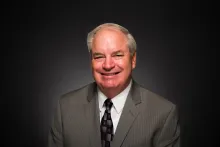
Robin Webber was born in Chicago, Illinois, in 1951, but has lived most of his life in California. He has been a part of the Church of God community since 1963. He attended Ambassador College in Pasadena from 1969-1973. He majored in theology and history.
Mr. Webber's interest remains in the study of history, socio-economics and literature. Over the years, he has offered his services to museums as a docent to share his enthusiasm and passions regarding these areas of expertise.
When time permits, he loves to go mountain biking on nearby ranch land and meet his wife as she hikes toward him.
