
Greg Thomas
This transcript was generated by AI and may contain errors. It is provided to assist those who may not be able to listen to the message.
Thank you. Did I fool you? How many of you thought I was talking about Mr. Miller when I said that? Mr. Miller, I counted 140 hands went up, just in case you're wondering. Well, again, happy Feast of Trumpets to each and every one of you. I'd like to begin with a question today. Here's the question. What does God tell us He wants us to think about when we ponder the Feast of Trumpets? There's a lot that's going on around the time of the Feast of Trumpets, specifically regarding prophecy. A lot of prophetic events associated with the Feast. There are trumpet blasts that signal future plagues, as outlined in the book of Revelation. There are seven trumpets, and they comprise the seventh seal. There's environmental destruction. There's a reduction of sunlight. There's various woes and plagues and all kinds of things going on upon the earth. Even after Jesus Christ returns, He will need to confront a gathering of world armies that are waiting to battle Him in the valley or the range of Megiddo, sometimes commonly referred to as the Battle of Armageddon. In a world that lacks knowledge of God, the trumpet sounds of Revelation 7 and 8 will usher in terrible and tragic events as a result of a world war. And all those things are absolutely going to happen. Prophecy is sure. For those who don't have a right relationship with God, it will be a time of extreme horror and terror. There's no doubt about that. That's what the Bible clearly reveals. Yet for those who do have a personal relationship with God, it will be the greatest day of your existence. In the moment, in the twinkling of an eye, you will be changed forever. Like a butterfly, a butterfly being transformed coming out of this physical cocoon that we live in to begin an entirely new level of existence. So there are two contrasting things there. The prophetic events that are quite horrible, a lot of anguish, and some very beautiful events for those who are called and are God's people on that day. Let's go to Leviticus 23 once again. I know it was covered briefly in the arpatory. We'll take a look at the verses here. Leviticus 23 and verse 23, we'll pick it up there.
Moses was inspired to write. Then the Lord spoke to Moses, saying, Speak to the children of Israel. In the seventh month, on the first day of this month, or the first day of the month, which is today, the Feast of Trumpets, you shall have a Sabbath rest, a memorial, a blowing of trumpets, a holy convocation. You shall do no customary work on it, and you shall offer an offering made by fire to the Lord. Now, here's what the treasury of scriptural knowledge says about this phrase, a memorial, a blowing of trumpets. It's actually a Hebrew word, zakran turoa, and that means a memorial, the blowing of trumpets. Here's what it says. This properly signifies a memorial of triumph. I have to watch those letter Ts, to start with the letter T. So Ts are out, P's are out, pretty soon. Not another P, that was, wasn't it? All kidding aside, I will quote what they say here. They say this properly signifies a memorial of triumph for shouting for joy. This festival is generally called the Feast of Trumpets. And though the Scriptures have not expressly declared the reason for its celebration, according to the person who wrote this, obviously, they don't understand what we do. Yet, as it fell in the seventh month of the sacred year, which was the first month of the civil year, that is the month Tishri answering to our September. So they're saying this because it was in the seventh month. But we know, of course, that this was specifically done as a memorial of triumph or a shouting of joy because those who have a relationship with God will be in triumph. And literally, as that transformation takes place in our lives and our feet leave this earth, and we begin to rise and meet the dissenting Jesus Christ who's coming down to this earth, our hearts will leap inside of us. We will be doing fist bumps. Some of us who are not capable of doing cartwheels will probably in the air be doing cartwheels. I've never been able to do a cartwheel. I do more like a flop. I'm really good at that. But I can't do a cartwheel. But we will be filled with triumph and joy after all that we've experienced in this physical life. All the trials that we went through, the physical pain, the discouragement, all the things in this fleshly body that we experienced will be dissolved away as we begin to be transformed and enter an entirely new level of existence. Let's go to Numbers now, Numbers 10, verse 1. So we saw here in Leviticus 23 that this was a memorial of blowing of trumpets on a holy day. And the blowing of trumpets wasn't to signal sadness or fasting or atonement or sorrow, but it was to express triumph or a shouting for joy. And this is confirmed by the introduction of the two silver trumpets and what their purpose was in Numbers, chapter 10, beginning in verse 1.
When you consider the time they lived in, they didn't have email, they didn't have Facebook Messenger, they didn't have Instagram. This was the way that they communicated that it's time for everyone to gather together. When you hear that trumpet blast, it's time for everyone to assemble together. Dropping down to verse 10 now.
The translation of God's Word for today says a reminder for you in God's presence, continuing, That's a statement of certainty. That's a statement of joy. It says, in the day of your gladness, so the festivals of God were to be celebrated by the blowing of these silver trumpets in gladness. I want you to notice that emphasis. I also want you to notice that the silver trumpets were to be specifically blown during times of celebration. Like the Holy Days or the beginning of months, the trumpets were first and foremost a representation of God's presence and the reason to be joyful, the reason to be filled with gladness. And have you ever considered what the trumpets remind us of and why the trumpets were blown on all of the Holy Days? Well, we know why it's blown on this Holy Day. That is the return of Jesus Christ. And the truth is that every one of the Holy Days are centered around Jesus Christ. What He has done, what He is doing today, and what He will yet do in the future, beginning with Christ our Passover, and Him praying to the Father that His disciples would receive the Holy Spirit, to the return of Jesus Christ, to His instructions to the banished Satan the Devil, to Him establishing the Kingdom of God and being King of Kings, to the great white throne and judgment. All of God's Holy Days center around Jesus Christ. What He has done, what He is doing today, what He will yet do in the future. And that's one of the reasons of that trumpet blast on all of the Holy Days with those silver trumpets. Let's see what the book of Psalms tell us we should do when we hear those trumpets. Psalm 47, if you'll turn there with me, Psalm 47, beginning in verse 1. Oh, clap your hands, all you peoples. Imagine how it will feel when Jesus Christ is returning to this earth, and we begin to leave this earth, and our feet no longer touch the ground, and we are rising into the air. Oh, clap your hands, all you peoples. Shout to God with the voice of a trumpet, for the Lord Most High is awesome. He is a great King over all the earth. He will subdue the peoples under us. You see, God's elect have been prepared to serve as leaders in that kingdom. And the nations under our feet, we've been called to be teachers and rulers and servants and priests within that kingdom to all of the nations. He will choose our inheritance for us. Revelation 22, verse 12, Jesus says, My reward is with me to give to everyone according to their works. The excellence of Jacob, whom he loves, Selah. Stop and think about that for a second. That's what that word means. Pause, and just think about that for a second. The excellence of Jacob, whom he loves. God has gone up with a shout, the Lord with the sound of a trumpet. Sing praises to God. Sing praises. Sing praises to our King. Sing praises, for God is the King of all the earth. Sing praises with understanding. God reigns over the nations. God sits on his holy throne. The princes of the people have gathered together. They are in submission to the King of kings and the Lord of lords. The people of the God of Abraham, for the shields of the earth, belong to God. He is greatly exalted. What a wonderful description of how we will feel emotionally upon the return of Jesus Christ. Great joy, great triumph, clapping of our hands in excitement, raw energy and enthusiasm of being transformed into another level of existence. Psalm 81 and verse 1.
Sing aloud to God our strength. Make a joyful shout to the God of Jacob. Raise a song and strike the timbrel, the pleasant harp and the lute. Blow the trumpet at the time of the new moon and the full moon at the full moon on our solemn feast day. For this is a statute for Israel, a law of the God of Jacob. So there again we see joyfulness, we see shouting excitement, exhilarating at the sound of that trumpet. I'm going to read this from the translation of God's word for today. Sing joyfully to God our strength. Shout happily to the God of Jacob. Begin a psalm and strike a tambourine. Play lyres and harps with their pleasant music. Blow the ram's horn on the day of the new moon, on the day of the full moon. On our festival days, this is a law for Israel, a legal decision from the God of Jacob. Now Jewish tradition associates these verses we just read in Psalm 81 with the beginning of the Feast of Tabernacles. But the joyful blowing of trumpets was true when all of the celebrations of God's festivals. Again, like Numbers 10, notice the association with joy and a trumpet sound on the feast days. Unfortunately, there's not a lot of examples of ancient Israel actually keeping the Feast of Trumpets. They didn't set a very good example for us by what we find in the Old Testament. But there is an interesting account in the time of Ezra and Nehemiah as the captives returned back to Jerusalem to rebuild the wall and to establish a temple. There is an account that is quite fascinating and interesting that I think we should take a look at. Nehemiah chapter 8, if you'll turn there with me. Again, Nehemiah chapter 8. We'll begin in verse 1.
Let's see what happened on this very day of the Feast of Trumpets. Now all the people gathered together as one man in the open square that was in front of the Watergate. And they told Ezra the scribe to bring the book of the Law of Moses, which the Lord had commanded Israel. So Ezra the priest brought the Law before the assembly of men and women and all who could hear with understanding on the first day of the seventh month. Sound familiar? Verse 3.
Then he read from it in the open square that was in front of the Watergate from morning until midday. You think two services are tough. From the morning until midday, they read the Law to the audience before the men and women who could understand.
And all the ears of the people were attentive to the book of the Law. Now this event occurred during the Feast of Trumpets and was a very emotional event. Realized that virtually all the hearers had never heard the book of Moses read before aloud like that. They had been captives. The Babylonians didn't allow you to publicly read from the Law of Moses when they were in Babylon. So this was quite an emotional event. Let's continue. Verse 9. And Nehemiah, who was governor, Ezra the priest and scribe and the Levites, who taught the people, said to all the people, This day is holy to the Lord your God.
Do not mourn nor weep, for all the people wept when they heard the words of the Law. You see, they were heartbroken. They felt shame and regret. That's why we went into captivity. Because we violated our covenant with Yahweh. That's why we suffered. We haven't been keeping His laws. We haven't been obedient to His commandments. They were broken up over it. They were torn up over that being revealed to them. Verse 10. Then He said to them, Stop whining.
Stop weeping. Stop crying. He said to them, Go your way. Eat the fat. Drink the sweet. In other words, feast. This is a feast day. It's not a day for sadness. It's not a day for regret. It's not a day to ponder the negatives in the world. It is a feast day. Go your way. Eat the fat. Drink the sweet. Then send portions to those whom nothing is prepared.
For those who didn't come prepared to feast, give some of what you have so that they also get to feast along with you. For this day is holy to our Lord. Do not sorrow. For the joy of the Lord is your strength. So the Levites quieted all the people, saying, Be still, for the day is holy. Do not be grieved. And all the people went their way to eat and drink, to send portions, and to rejoice greatly.
Because they understood the words that were declared to them. They understood what they were told to do. That is, this is a feast in spite of your sorrows and afflictions, in spite of what you've been through, in spite of the fact that everything is devastation. The city was destroyed. The old temple was destroyed. In spite of all of those things.
This is a feast day. Enjoy the feast. So again, we see the example of how we should think about the Feast of Trumpets. You know, much like our modern generation today, and there will be a generation who is of faithful believers, who are alive at the return of Jesus Christ, these people were reading about witness great personal devastation and loss in their lifetimes.
If they were old enough, they knew about the collapse of Judah and the temple being destroyed, and the people being shipped off to Babylon, and being controlled by an occupying force. They knew of all of those horrors and everything else negative that's associated with war.
They had lived through those kinds of things. But what was to be emphasized were not the tragic events that led up to that time, but the celebration of God's restoration with feasting, good food, great fellowship, and the other blessings that God gives us, the truth of what this day actually means. So with this background in mind, let's now look at some New Testament scriptures. 1 Thessalonians 4 and verse 9. 1 Thessalonians 4 and verse 9.
Paul writes to Thessalonica, But concerning brotherly love, you have no need that I should write to you. For you yourselves are taught by God to love one another, and indeed you do so towards all the brethren who are in Macedonia. We urge you, brethren, that you increase more and more, that you aspire to lead a quiet life, to mind your own business, to work with your own hands, as we commanded you, that you may walk properly towards those who are on the outside. In other words, be a great example to the neighbor who lives next to you, the person who lives across the street, the individual that you're in line with at Walmart as you're checking out, wherever you are and wherever you go, be a prime example of being an ambassador for Jesus Christ.
That's what he's saying. Walk properly towards those who are outside, and that you may lack nothing. Be a great example to others. verse 13. But I do not want you to be ignorant, brethren, concerning those who have fallen asleep. That was Paul's typical term for those who died who were in an unconscious state, not aware of anything going on, much like we have when we sleep. That's the analogy that he used quite often. Lest you sorrow as others who have no hope.
For if we believe that Jesus died and rose again, even so God will bring with him those who sleep in Jesus. Now, do you know a lot of preachers stop right there? I read a book recently, and the preacher stopped right there. Stopped at verse 14. He says, see? So Jesus is bringing all of those in heaven back with him because he says here, even so God will bring with him those who sleep in Jesus, so all those in heaven are coming back to earth at this time.
Well, let's be honest. Let's read the rest of what Paul wrote. Verse 15. For this we say to you by the word of the Lord, that we who will live and remain until the coming of the Lord will by no means precede those who are asleep. For the Lord himself will descend from heaven with a shout and with the voice of an archangel and with the trumpet of God, something this very day focuses on and represents.
And the dead in Christ will rise first. Then we who are alive and remain shall be caught up together with them in the clouds to meet the Lord in the air. So going back to verse 14, that's what he meant when he said, so God will bring with him those who sleep in Jesus.
The faithful come out of their graves and those who are alive shortly follow. They meet Jesus Christ in the air and they return to earth with Jesus Christ. And thus we shall always be with the Lord, therefore comfort one another with these words. And we know, of course, from Zechariah that it says that his feet will stand on Mount Zion. So Paul tells the church that in spite of what's going on in this world, and there's a lot of hopelessness in his age, there's a lot of hopelessness and a lot of hopeless, sad, depressed, discouraged people in our age. In spite of what's going on in our world, the return of Jesus Christ, according to Paul, for his believers, for the church of God is one of hope and comfort and expectation of being literally resurrected from the dead and changed into a new spiritual being, a new state of existence.
Notice that at the trumpet of God, the dead come again to life. Jesus Christ is descending to the earth. He is omnipresent, and by his power and his resurrection, he calls his people to a new form and level of existence. Let's see something else that Paul wrote in 1 Corinthians chapter 15 and verse 50. Paul wrote the Corinth. Now this I say, brethren, that flesh and blood cannot inherit the kingdom of God.
We can't serve in the kingdom of God as fleshly human beings. This has to go. This is fleshly, mortal, corrupt. If it isn't bathed in a few days, it stinks. It gets hungry. It gets tired. It ages. This has to go. And that's what he means when he says that flesh and blood cannot inherit the kingdom of God, nor does corruption inherit in corruption.
Again, what this very day represents in the minds of the believers and under what they can understand.
In the book of Revelation, written, death is swallowed up in victory. Is there sadness with victory? Is there sorrow when you feel like you're a victor? Is there gloom and doom when you experience victory? Of course not. Oh death, where is your sting? Death is abolished when you become a spirit being. You can't hurt me or my loved ones anymore. You can't take those whom I love away from me anymore, death. So where is your sting? Continuing here. Where is your victory? The sting of death is sin. And of course, sin is what causes death. And the strength of sin is the law. But thanks to be to God who gives us the victory through our Lord Jesus Christ. You see, Paul's talking about an attitude of thankfulness. Having a sense of victory when we think about what this day means, the day when the trumpet will sound and the dead will be raised incorruptible and we shall be changed. There's no room for sorrow. There's no room for melancholy. There's no room for focusing on the negative because God is going to take care of all of the problems that exist on earth at that time. All the destruction, all the havoc, all the wounded people. We have been called to love them and be there for them. God has it under control. What God wants us to focus on is the victory and thankfulness to God. I want you to notice how this scripture, regarding the return of Christ, parallels 1 Thessalonians 4 that we read just a few minutes ago. Paul states here that at the last trumpet, that seventh trumpet sounded in Revelation 11, the dead in Christ are raised and literally changed to immortality. What does Paul say? He says this is a time to be thankful because God will give us victory over death. It will no longer be feared among God's people. It will no longer take away those whom we love. It will no longer remove life from the children of God. Matthew 24. Let's tie these in with something that Jesus said. Matthew 24, verse 30. Jesus said, Then the sign of the Son of Man will appear in heaven, and then all the tribes of the earth will mourn, and they will see the Son of Man coming in the clouds of heaven with power and great glory. As I said earlier, if one does not have a personal relationship with God, it's going to really be a bad day. It's going to be the worst day of your life. The feelings and the emotions you have when Jesus Christ returns. The nations will have been convinced that this is an alien invader from outer space who's coming to destroy all of humanity. The scripture says that for the sake of the elect, if he didn't intervene, that earth would destroy itself. All men would destroy themselves from off this planet. So actually, the reverse is true, but these nations are convinced that this alien creature from outer space is coming to invade the earth. That is one reason why these armies have gathered together in the valley of Megiddo and are ready to battle against Jesus Christ in that great, horrendous battle that says that it will be so horrible that their eyes will liquify in the earth. Their eyes will liquify in their sockets and their tongues will rot in their mouths. It's going to be a very quick battle, but it's going to be very horrible again for those who do not have a relationship with God. But what about those who do? Verse 31.
Four winds will be resurrected and gathered together to meet Jesus Christ in the air as he returns. Again, from one end of heaven to the other, they will be gathered together. So Jesus confirms here in Matthew's Gospel what Paul and others wrote. And here's what they said. When Jesus returns, for those who don't have a personal relationship with God, it's going to be a time of extreme sorrow. For those who do have a personal relationship with God, it's going to be the greatest day of your existence, ever. Those dead and living who are sealed with the promise of the Holy Spirit will be gathered from all around the world to meet Christ in the air as he descends to bring earth his rule.
Our final scripture today, Revelation 11 and verse 14. Final scripture for this morning's service. Again, there's a lot that we can focus on. A lot of events occur around the return of Jesus Christ and the earth.
Revelation 11 and verse 14. The second woe is passed, behold, the third woe is coming quickly, and the seventh angel sounded. And there were loud voices in heaven, saying, the kingdoms of this world have become the kingdoms of our Lord, and of his Christ, and he shall reign forever and ever. And the twenty-four elders who sat before God in their thrones fell on their faces and worshipped to God, saying, We give you thanks. That's what happens when the seventh angel sounds that trumpet. We give you thanks. O Lord God Almighty, the one who is, the one who was, is to come, because you have taken your great power and reigned. The nations were angry, and your wrath has come, and the time of the dead that they should be judged. Again, for those who don't have the right kind of relationship with God. And that you should reward your servants, the prophets, and the saints, and those who fear your name small and great, and should destroy those who destroy the earth. So, in conclusion to this morning's sermon, the future for humankind is not very bright, and we have to be open and honest about that, and acknowledge that there are some very difficult and horrible things. And the trumpets represent the omnipresence and the power of God upon the earth. But in contrast to all of that that we're fully aware of, and that most of us have studied and understand, what God wants us to focus on is this as a feast day. A day to joyfully thank God and reflect about God's promises for us, to transform us from who and what we are today into an entirely different level of existence that will be spirit, that will be immortal, and live for eternity. For us, the trumpet is a time of joy, celebration, and worship, because we know that the return of Jesus Christ will usher in the kingdom of God and our inheritance within the family of God. For us, it's a holy day. It's a time of joy, because the kingdom of God is a time of peace and prosperity and healing to the entire world. So, brethren, for the rest of this holy day, let us be thankful, let us feast, and truly let us rejoice. I wish all of you a wonderful Festival of Trumpets.
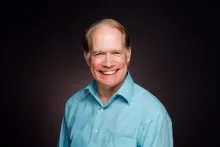
Greg Thomas is the former Pastor of the Cleveland, Ohio congregation. He retired as pastor in January 2025 and still attends there. Ordained in 1981, he has served in the ministry for 44-years. As a certified leadership consultant, Greg is the founder and president of weLEAD, Inc. Chartered in 2001, weLEAD is a 501(3)(c) non-profit organization and a major respected resource for free leadership development information reaching a worldwide audience. Greg also founded Leadership Excellence, Ltd in 2009 offering leadership training and coaching. He has an undergraduate degree from Ambassador College, and a master’s degree in leadership from Bellevue University. Greg has served on various Boards during his career. He is the author of two leadership development books, and is a certified life coach, and business coach.
Greg and his wife, B.J., live in Litchfield, Ohio. They first met in church as teenagers and were married in 1974. They enjoy spending time with family— especially their eight grandchildren.
