
Christopher Shude
This transcript was generated by AI and may contain errors. It is provided to assist those who may not be able to listen to the message.
Well, again, I'd like to welcome all of you to the Feast of Trumpets here in 2021, and I'd like to thank you for accepting God's personal invitation to celebrate this festival day with Him. As we know, the first group of Holy Days mentioned in Leviticus 23 are all connected with the first coming of Jesus Christ. We have the Passover that represents His death and crucifixion, His ultimate sacrifice for our sins. We have the days of unleavened bread in which He is resurrected, and it represents the process of our sanctification, getting sin out of our lives, eating that unleavened bread, pictures our desire for the righteousness of Jesus Christ to be within us, and then the day of Pentecost, in which the Church was given God's Holy Spirit. Then, after a long summer break from Pentecost, we begin another group of Fall Holy Days that picture the events surrounding the Second Coming of Jesus Christ, and that's what we're beginning to do today on this first of those latter group of Holy Days known as the Festival of Trumpets. Let's turn to Leviticus 23, beginning in verse 1. I think it's always important for us to be grounded with God's original instruction on these days. Again, Leviticus chapter 23 and verse 1.
And it is written, and the Lord spoke to Moses, saying, Speak to the children of Israel, and say to them, The Feast of the Lord. So they're His beast, not the Jew's feast, not simply the Feast of Israel, not simply the Feast of the Church of God. Even though we all celebrate His festivals, it makes it very clear that these are the Feast of the Lord, that their original intention was universal, not simply for a small group of people. The Feast of the Lord, which you shall proclaim to be holy conventions, convocations, these are my feasts, six days shall work be done, but the Sabbath day is the Sabbath of solemn rest, a holy convocation. You shall do no work on it.
The Sabbath of the Lord, it is the Sabbath of the Lord in all your dwellings. So the first feast mentioned is the weekly Sabbath, and it says there again in verse 4, These are the Feast of the Lord, holy convocations, which you shall proclaim at their appointed times. So we choose to respect God's invitation to worship Him at the time that He has chosen, at the sacred time that He has appointed. And today is one of those feasts of the Lord and the Feast of Yahweh. You'll notice that Lord is in capital letters the Feast of the Eternal One. I want you to hold your place here, because we're going to come back to Leviticus 23 in just a minute, but let's go to Numbers chapter 15 and verse 14. I'd like to see or remind ourselves who were to observe these festivals and other laws. Again, it's a common misconception that these are the Feast of the Jews, or these were the Feast given simply or strictly to Israel. Numbers chapter 15 and verse 14. As we'll see, they have a universal application, and more so in the kingdom of God. And if a stranger dwells with you, or whoever is among you throughout your generations, and would present an offering made by fire, a sweet aroma to the Lord just as you do, so shall he do. One ordinance shall be for you of the assembly and for the stranger who dwells with you, an ordinance forever throughout your generations, as you are. So shall the stranger be before the Lord. One law and one custom shall be for you and for the stranger who dwells with you. So, anciently regarding God's law, and it certainly includes the Feast days here, anyone who lived in the nation of Israel was equally expected to observe the festival days just like in Israel, like would. In the future kingdom of God, it will be the same principle for all of the earth, as the prophet Zachariah mentions in the 14th chapter. He said, if the family of Egypt will not come up and enter in, they shall have no reign. What scripture we're familiar with regarding the Feast of Tabernacles, they shall receive the plague which the Lord strikes the nations who do not come up to keep the Feast of Tabernacles. This shall be the punishment for Egypt and the punishment of all the nations that do not come up to keep the Feast of Tabernacles. So again, I want to emphasize that it was God's intention from the beginning, since these are the Feast of the Lord, his Feast, that all the world would acknowledge his supremacy and would acknowledge him as the Great God. So God's festivals are intended to be universal, especially so in the world tomorrow when the kingdom of God is established on this earth. Now let's go back to Leviticus 23. Now that we understand that clearly, and I hope we do, let's go back to Leviticus 23 and look specifically to the instructions of this very day. Chapter 23. We'll pick it up here in verse 24.
Moses was inspired to write from God's instruction, speak to the children of Israel, saying, in the seventh month, on the first day of the month, you shall have a Sabbath rest, a blowing of, a memorial of blowing of trumpets, a holy convocation. You shall do no customary work on it, and you shall offer an offering made by fire to the Lord. You know, this is the only festival of God's festival plan of his days. The only one, it falls on the first day of the month in the Hebrew calendar. According to Numbers 10, chapter 10 and verse 10, trumpets were to be blown on the first day of all new months to announce them to the nation. This was a new month, and trumpets naturally were to be blown on it. Why were trumpets blown on each new month? Because they weren't advanced enough to have a little calendar chart like we do. In their society, it was very easy to lose track of time, very easy to get so wrapped up in day-to-day living that you forgot a concept of time moving by. So every new one month, those trumpets would be blown, remind you that now it is the next month of the year. And that was important regarding planting and harvesting and a lot of things that would occur throughout the rest of the year.
Now, I want to emphasize that the scriptures do not call this day Rosh Hashanah. That's an invented title by modern Judaism. The word itself means the head of the year, or also called oftentimes the Jewish New Year. It was during the Jewish captivity in Babylon that the rabbis developed this myth that this somehow would be the head of the year, or the Jewish New Year. The way that happened is in the Hebrew calendar in the seventh month in the first day, while they were living in Babylon, it so happened that the Babylonian calendar and observances recognized it as a New Year, according to the Babylonian calendar. And when the rabbis came back from Babylon and influenced the rebuilding of Jerusalem and what would become Judah at the time, they brought this concept with them. But God all along had instituted that the first month of the New Year in the spring was the head, or the first of the year, the month of Abib. The biblical name for this holiday is Yom Teruah. Yom meaning day. Teruah meaning literally a day of shouting or blasting. And that's what I would like to talk about today, particularly shouting. The word translated into English as blowing is, again, the Hebrew word teruah. And it means a clamor, a loud noise, an acclamation of joy. Or it may mean a battle cry. It can also mean the clang of a trumpet or an alarm. And I also want you to notice that it's a memorial of teruah. And I'll talk about what we remember, why it's a memorial a little later on in the sermon today. We often naturally focus on the trumpet sound. Don't we? We have symbols of trumpets. We blow trumpets. We think of the Feast of Trumpets as trumpets. But there's another element to the Feast of Trumpets. And we usually don't focus on the audible, vocal sound of shouting that occurs at the same time on this day. And depending on the scriptures in the context, sometimes trumpets are accompanied by humans shouting. Sometimes it's by angels shouting. Sometimes, we're looking forward to, there will be an archangel who will shout. And it even implies there's a time when Jesus Christ himself may shout. So that's what I'd like to talk about today. Again, we often focus on the trumpet sound, but we don't usually focus on the audible sound of the shouting at the same time that the trumpets are blown. And today I'd like to talk about those vocal shouts that occur along with the sound of the trumpet mentioned in many scriptures. As a matter of fact, the majority of scriptures in which that word teruah is, is always translated as loud voices and not as trumpets. So I think it's important that we understand what this means. Shouting happens for a number of different reasons. It's usually the result of an intense emotional reaction. Shouting can happen when we're in pain, like we hit our thumb with a hammer. Have you ever hit your thumb with a hammer and maybe cried out? Had an exclamation of maybe a few words you shouldn't be saying came out of your mouth? I know that has certainly happened to me. It can happen when we're frightened. I'll tell a little story on myself here now. A few weeks ago I was working in my yard and I was trimming a bush.
And on the other side of me was this much smaller bush that very prickly has short pine-like needles and you touch it and it like prickles you. Well, as I was cleaning this other bush up and stooping low, there was apparently about an 18-inch snake who on the other bush behind me slithered up the bush to the top and at the end of the bush his little head came out and was just poking out of the top of the bush. Well, while I'm trimming my little bush over here and I had the needle down to cut some little twigs, I turned around and about six inches from me was that little snake's head.
And I went, AHHH!
There's something about human nature and that reptilian look that brings out kind of an instinct in us, isn't there? That was, in case you're questioning, that was a shout of fear.
Maybe accompanied by shock. So I quickly got myself together and I went and I poked around the corner of my deck to make sure that my wife had not seen what a sissy she's married to.
But sometimes we have shouts of fear. We're scared at something. That's natural, too. It can be when we are excited. For those of you that have been around for a while, do you remember when the Beatles came to America? Young girls don't do this much anymore, but you can see the old films of young girls' crowds when the Beatles would come.
And that was a shout of joy. They were excited that the Beatles had come and that they were able to actually look at the Beatles. Now we don't do that much anymore in our culture. Even young girls, it's rare that they do that no matter how much of a celebrity or so-called idol someone is. We don't see that happening much anymore. Sometimes I think we come close when in a sermon I say, and now in conclusion, I think I see some people doing that.
But sometimes we shout out of sheer joy. We are exhilarated with something. Shouting can be a sign of aggression, like a war cry to go to a football game, or you watch a bunch of folks preparing for a sports event. Right? People shout. They get all worked up kind of like a war cry thing. In the American Civil War, we had the rebel yell, which was a unique war cry that the Confederates had before they would go in the battle. Raising the voice creates stress and tension. If you're in a room and somebody starts screaming, you instinctively, naturally, will have increased tension and stress.
And the louder they get, the more stress you will feel. That's been proven over and over again by studies who have actually looked at people who are screaming and why they scream and how a scream affects us and our bodies. So the higher the intensity and tension, the greater the reaction is to that screaming. Finally, shouting can be a reaction to extreme joy and exaltation, like we will be experiencing when Jesus Christ literally returns to this earth on that day of trumpets, represented by this very day. So with this understanding, let's see how trumpets and shouting work together and how they are connected together and why it's so important not simply to consider the trumpets on this day, which is very important, but also on the shouting.
That occurs in this day, and the emotion behind the shouting that occurs in this day. Let's begin with Joshua chapter 6 and verse 2. We'll take a look at the fall of the city of Jericho. Joshua chapter 6 verse 2. It is recorded in Scripture, and the Lord said to Joshua, his name by the way in Hebrew, with Yehoshua.
He said to Yehoshua, See, I have given Jericho into your hand, it's king and the mighty men of Valor, you shall march around the city, all you men of war. So I think we understand what kind of shout this is going to be. It's a war cry.
It is to create terror in those who are inside of the city walls. You shall go all around the city once, you shall do six days, and seven priests shall bear the seven trumpets of the ram's horns before the ark. But the seventh today, you shall march around the city seven times, and the priests shall blow the trumpets, and it shall come back past when they make a long blast with the ram's horn. And when you hear the sound of the trumpet, that all people shall shout with a great shout.
That Hebrew word is teruah. Same word as this day is named after. A great shout. Then the wall of the city will fall down flat, and the people shall go up every man straight before him. So we see that along with the trumpet blast is a great shouting. And that's kind of interesting when we think about that. Again, this is a war cry, and its intention was to instill fear and terror in Jericho, verse 20. So the people shouted when the priests blew the trumpets, and it happened when the people heard the sound of the trumpet, and the people shouted with a great shout, teruah, that the wall fell down flat.
Then the people went up into the city every man straight before him, and they took the city. Now we may not realize it, but this is actually a parallel. This is a type of exactly what Jesus Christ will do spiritually in the very near future. There's a parallel here between Joshua and Jesus. Again, Joshua, his Hebrew name was Yehoshua, and he used trumpets and shouting to lead the old covenant people into their promised land. But we often say the name Jesus, and it's fine and acceptable to do that.
Jesus is just a Latinized version of Joshua. Now, they spoke Aramaic at the time of Jesus, but if someone would have pronounced his name in Hebrew, it would have been Joshua. It would have been Yehoshua, just like the original Joshua. And Jesus Christ will lead his new covenant people into the spiritual kingdom of God. So there's a direct parallel between that event and what Jesus Christ himself will do. Now let's look at a very encouraging prophecy in Psalm chapter 47 that's a prophecy about the literal return of Jesus Christ, and hopefully this is how you and I will feel at that moment as Jesus returns, and we hear that trumpet blast.
Psalm chapter 47, and we're going to begin with verse 1. Again, this is prophetic. Chapter 47, Psalm verse 1.
Oh, clamp your hands all ye peoples. Shout to God with the voice of triumph, for the Lord Most High is awesome. He is a great king over all the earth. He will subdue the peoples under us and the nations under our feet. He will choose our inheritance for us, which in our case, that inheritance is eternal life. The excellence of Jacob, whom he loves, Selah. We'll just stop and pause and think about that for a few seconds. Selah, verse 5. God has gone up with a great shout. That's teruah. The same Hebrew word this name is named after, because feast is named after. God has gone up with a shout. The Lord with the sound of the trumpets. Sing praises to God. Sing praises. Sing praises to our king. Sing praises for God is the king of all the earth. Sing praises with understanding. God reigns over the nations. God sits on his holy throne. You see, in Christ's second coming, there will be joyful shouting. There will be exaltation for the awesome glory of God. This is exactly how we will feel when Jesus returns. You hear that trumpet, heavenly trumpet blast and those loud voices. In our case, the voice of a literal archangel. And our feet begin to leave this earth. And we rise in the air. And in the wink of an eye, we begin being transformed from this mere human flesh to being immortal, to having eternal existence and meeting Jesus Christ in the air with all those who have ever had God's spirit throughout history and returning to this earth with him to help rebuild the world. That's our calling. That is why God has called us in this age and given us the understanding of his holy days and our role and purpose to serve God for all of eternity. Let's take a look at another example in 2 Samuel 6 and verse 12. This is when the ark was brought to Jerusalem. Now, the ark of covenant was made to be mobile. But my oh my, if you look at its history, it traveled all over the place. From the time the Israelites came into the Promised Land, it was from one city and then held in another city and then held in another city and held in another city. Eventually, it was even taken by the Philistines and then returned. People looked into it and they died. A man tried to move it and touched it. He died. So, it had a unique history. And David decides that he wants to bring it to Jerusalem and give it a final home. Give it a place that's sacred. Give it a place of dignity.
And that's what this is talking about here. 2 Samuel 6 and verse 12. That was told King David, saying, the Lord has blessed the house of Obed-edim, where it was residing at this time, and all that belongs to him because of the Ark of God. So, David said, this is the time. God is blessing those who possess it. It's had a difficult past. People have died who have touched it and looked into it. But I think this is the time right now. It's right to bring it to Jerusalem. So, David went in and brought up the Ark of God from the house of Obed-edim to the city of David with gladness. There's a hint when we see the shouting and the trumpets blowing. What is the emotion behind this shouting? It's going to be excitement. It's going to be joyful. It's going to be because people are glad. Verse 13. And so it was when those bearing the Ark of the Lord had gone six paces that he sacrificed oxen and fatachete, then David danced before the Lord with all his might, and he was wearing a linen ephod. So David and all the house of Israel brought up the Ark of the Lord with shouting. That's the word, Hebrew word, teruah. Same word that this day is named after. Brought up the Ark of the Lord with shouting and with the sound of the trumpet.
Now, as the Ark of the Lord came to the city of David, Mikael, Saul's daughter, looked through a window and saw King David leaping and whirling before the Lord, and she despised him in her heart. It said, purposely, he was dancing and leaping, and he also was wearing a linen ephod. That means when he was jumping up and down and leaping, to use a modern phrase, David was showing a little thigh, and his wife didn't like that. She thought, she resented that, she thought it was undignified that the King of Israel would be showing such raw, joyful emotion that he wouldn't be concerned about his legs being seen by people. He wasn't concerned with that. He was celebrating. He was rejoicing. He was happy. He was gleeful at what was occurring here. Verse 17, so they brought the Ark of the Lord and set it in a place in the midst of the tabernacle that David had erected for it. Then David burned burnt offerings and peace offerings before the Lord, and when David had finished offering burnt offerings and peace offerings, he blessed the people in the name of the Lord of Hosts.
So here we see the blowing of trumpets, and shouting are caused by raw excitement and joy, exhilaration. There's gladness as the Ark is brought to a place of honor and sacredness. After all the time it had been in so many places. Remember, earlier it had been captured by the Philistines. People in the village of Beth Shemeth died looking into what Beth's in 1 Samuel chapter 6. Even an earlier attempt to move it resulted in the death of a man named Uzzah as he touched the Ark rather than following God's instruction and allowing rods to be put through rings that had been created in the sides of the Ark to carry it and lift it as was God's original instruction. So this final resting place was a time of great excitement and raw joy, and it was accompanied by trumpets and by teruah, a shouting, in this case, shouts of joy. Let's see another example, 2 Chronicles chapter 15 and verse 9, one of the reforms of King Asa.
Judah had good kings and it had bad kings. If it had bad kings for a while, Judah had been filled with idolatry and paganism, and King Asa decided to have reforms and bring the people back to God. And we're going to pick it up here in 2 Chronicles chapter 15 and verse 9.
Then he gathered all Judah and Benjamin and those who dwelt with them from Ephraim, Manasseh, and Simeon. Now, Ephraim and Manasseh were from the northern tribes, but those who were godly, even in the northern tribes, saw that what Asa was doing was right and good, and they wanted to come and participate. For they came over to him in great numbers from Israel when they saw that the Lord God was with him. So they gathered together Jerusalem in the third month, in the fifteenth year of the reign of Asa, and they authored to the Lord at that time seven hundred bulls and seven thousand sheep from the spoil they had brought. Then they entered into a covenant to seek the Lord God of their fathers with all their heart and all their soul, and whoever would not seek the Lord God of Israel was to be put to death, whether small or great, whether man or woman. They were determined to clean up the paganism, to get it out, clean it up, root it out of Judah, and dispose of it once and for all. Verse 14, then they took an oath before the Lord with a loud voice. That's the Hebrew word, teruah. Same word this day is named after, teruah, with shouting and trumpets and ram's horns, and all Judah rejoiced at the oath, for they had sworn with all their heart and sought him with all their soul. And he was found by them, and the Lord gave them rest all around. So Esa was the king of Judah. He raped for 41 years from 913 to 873 BC. He was a pious man, and he instituted several reforms to remove the foreign gods and the pagan religious practices from Judah. To give you an example of how dedicated he was, he even removed his own mother from political power because of her pagan worship. That's in verse 15 and verse 13.
But notice in these scriptures, again, the shouting is combined with trumpets. And in this case, once again, the shouting is joyful. The reforms are taking place. We're getting back to the right relationship with God. We're getting rid of the paganism that, like a cancer, has infected the kingdom of Judah. And that resulted in people being filled with gladness and great joy.
Now let's take a look at an example of a war cry. Trumpet and Tarua, but a whole different emotion expressed. We're going to go to the book of Zephaniah, one of the minor prophets. If you'll turn there with me, Zephaniah chapter 1, and we'll begin by looking at verse 14.
This is a prophecy about what happens through the day of the Lord and time events. We have the Great Tribulation followed by the Day of the Lord, and that occurs just before the return of Jesus Christ. Zephaniah chapter 1 and verse 14. The great day of the Lord is near. It is near and he sins quickly. The noise of the Day of the Lord is bitter. By the way, in Revelation chapters 8 through 11 are seven trumpets which outline the events of the Day of the Lord. So this is what the prophet is talking about here. There the mighty men cry out. That day is a day of wrath, a day of trouble and distress, a day of devastation and desolation, a day of darkness and gloominess, a day of clouds and thick darkness, a day of trumpets and alarm. Now, the word, the Hebrew word, is teruah. That happens to be translated in English here alarm. So many translations, instead of saying a day of trumpet and alarm, say it's a day of trumpet and battle cries. But the New King James Version uses the word alarm. But I want you to understand that this is talking about a trumpet and separately teruah or shouting, in this case, a battle cry. Against the fortified cities and against the high towers, I will bring distress upon men and they shall walk like blind men because they have sinned against the Lord. They look like dead men walking, what the prophet is saying. Their blood shall be poured out like dust and their flesh like refuse. Neither their silver nor their gold shall be able to liver them in the day of the Lord's wrath. Doesn't matter how many mansions they own or if they live in a gated community in California or how much money or how much is sitting in someone's 401k or their bitcoins or all the things that people think are going to give them security today.
We'll mean absolutely nothing at this time. Neither silver nor gold shall be able to deliver them in the day of the Lord's wrath, but the whole land shall be devoured by the fire of his jealousy. Remember that the great tribulation is basically man turning on himself with great destruction and the day of the Lord is God's direct punishment on humanity because of our sins. For he will make speedy riddance of all those who dwell in the land. So this is talking about a time directly before Jesus Christ's return and the devastation that has been caused by the great tribulation followed by the day of the Lord. And when Jesus himself comes to this earth, he will make speedy riddance of the nations that have gathered to fight him in the valley of Megiddo.
Now let's take a look at a commission that the church has in the end time in Isaiah chapter 58.
Isaiah chapter 58. This is one of the missions that we have as the end time church of God. And this is what we attempt to do with dedication. It's one reason why some of our messages are very strong. It's one of the reasons why we can expect some of our messages and our efforts to preach the gospel to be canceled in the future because it's the truth of God can be offending, can offend many people. Isaiah chapter 58 verses 1 through 2.
Cry aloud. In other words, make a loud noise. Shouts. Get people's attention. Stare not. Don't worry about their feelings. Don't worry about if they're offended. Don't worry about if you'll be canceled over what you have to say. Spare not. Lift up your voice like a trumpet.
Tell my people their transgression. And the house of Jacob, their sins.
And then beginning in verse 2, God actually talks about how the people here put on such a great show being religious. But God says, they're far from me. They're loaded with sin. But my, do they pretend? Do they put on a really great show? Why, they have symbols like crosses and fishes all over the place. They put on this great show of loving God, but there's nothing really there. And then he condemns them for the type of fasting that they do. But here's what he says, and we'll just stop right here. Tell the house of Jacob their sins. Yet they seek me daily. They delight to know my ways as a nation that did righteousness. They act like they want to be righteous. God says, but there's just nothing there. And did not forsake the ordinance of their God. They ask me the ordinance of justice. They take delight in approaching God. Oh yeah, let's assemble every Sunday. Let's put on a good pretense like, we love God. But oh, oh, those laws. That one about the Sabbath? It's the Sabbath day? How about just the token two hours on Sundays? Does that count? Is that good enough? These laws on marriage between what? One man and one woman? You don't understand there are 56 genders? Come on, God! You made everything! You should know that! So they put on this great pretense of being religious, of wanting to know God.
But God says they're loaded with sin, and the church's responsibility is to cry aloud and spare not.
Lift up our voice like a trumpet, and boldly proclaim people's transgressions and their sins.
And whatever the consequences are of that, we'll just have to deal with it. One of the roles of the End Time Church of God today is to proudly proclaim a warning message to the people of Israel who act like they want to know God. Again, they go through the motions real well, but they're disobedient to His laws. As the Believer's Study Bible notes about this very verse, it says, God is more concerned about how we treat and care for our fellow man than about any vain ritualism. So the loud voice here in Isaiah is intended to be one of alarm, warning the nation, warning the people that there's a consequence to sin, that there's a consequence to transgression, and our God is a gracious and patient God, but we can push Him too far, and there are consequences to sin, and ultimately, they catch up with us. Now let's look at an important coming trumpet blast that will create different emotional responses from hearing the same trumpet, from hearing the same voice, but people will respond to it differently depending on their relationship with God. The same event, the literal return of Jesus Christ, is what we're going to talk about now through the rest of this sermon, will mean different things to different people depending on how close they are to God and the degree of protection that they have from God. So we're going to look at the return of Christ. So we might say three, four different angles, the angles of the individuals who are writing these scriptures and see the different reactions to the same event, the same trumpet, the same shouting. We'll begin in Revelation chapter 1 and verse 7. I believe Mr. Howson read this scripture earlier today. Revelation chapter 1 and verse 7.
It says, Behold, he is coming with clouds, and every eye will see him. Well, it's pretty obvious what Aventhas is talking about. It's very event pictured by this feast, the Festival of Trumpets. Even they who pierced him, even the Jewish leadership, will recognize that we denied him as the Messiah. We executed him 2,000 years ago, but he is the Messiah. And all the tribes of the earth will mourn because of him. So are they happy to see the return of Jesus Christ in the clouds? I'm afraid they're not. They're not happy at all.
Even so, Amen. I am Alpha and the Omega, the beginning and the end, says the Lord, who is and who was and who is to come, the Almighty. I, John, both your brother and companion, in the tribulation and kingdom of the patrons of Jesus Christ, was on the island that is called Patmos for the Word of God and for the testimony of Jesus Christ. I was in the Spirit in the Lord's Day, the end time, the time of the day of the Lord, and I heard behind me a loud voice, as of a trumpet, saying, I am Alpha and Omega, the first and the last. What you see, write a book and send it to the seven churches which are Asia, the Ephesus, Myrna, Pergamos, Thyatira, Sardis, Philadelphia, and Laodicea. The inference here is that this loud voice comes from Jesus Christ himself, even though it's certainly possible that he has an angel filled in for him, but it implies here in these verses that this loud voice, as of a trumpet, is Jesus Christ literally saying these things. So in a vision, John begins to see end time events, considering the return of Jesus Christ. With the loud voice, as a trumpet, John sees the earth mourning, it's afraid.
Our time is up. Our time of rebellion, excuse me.
Our time is up. Our time of rebellion against God's laws and the instructions of accepting the gospel are up, and now we are in deep trouble. He is returning to destroy the world's existing cultures and political systems. He's returning to earth to punish the disobedient nations and to punish the armies who oppose him. That's why they mourn, because they know that their time is up. Now let's look at this same event from another angle. Revelation chapter 11 of verse 14. Revelation chapter 11 and verse 14, and see how different individuals in these verses hear the same trumpet, the same shouting, the same taroah, and have totally different emotional reactions. The same event, the same shouts. Revelation chapter 11 of verse 14, the second woe is passed, behold the third woe is coming quickly, and the seventh angel sounded. And there were loud voices in heaven, saying, the kingdoms of this world have become the kingdoms of our Lord and of his Christ, and he shall reign forever and ever. And the twenty-four elders who sat before God on their thrones fell on their faces and worshipped God, saying, we give you thanks, O Lord God Almighty, the one who is, the one who was, and the one who is to come, because you have taken your great power and rained. That's one emotion. That's one reaction. The nations were angry, and your wrath has come, and the time of the dead that they should be judged.
That's another reaction. The nations have a battle cry. That's how they hear a battle cry. It's time to go to war against this invader who is coming to earth, and that you should reward your servants the prophets and the saints. The prophets and the saints. That sound to the prophets and saints has a whole different meaning. Same trumpets, same shouting, but to them, it's time for our reward. It's wonderful. It's exciting to hear that sound. Your servants, the prophets and the saints, and those who fear your name small and great, and should destroy those who destroy the earth. I want you again to notice in the same event, the return of the Lord, there are different reactions to the loud voices depending on one's relationship with God. There are 24 elders. What do they do?
They kneel down in awesome worship when they hear the trumpet and the sounds, and then there's the nations of the earth. They hear a war cry, and it's a time for alarm. They have anxiety. They have fear. They have anger and rage. Same trumpet, same sound to the prophets and the saints. It's a joyful time because they are going to receive their reward. It sounds beautiful.
It sounds pleasant. To those whose heart are set on destruction, it's the terror of their impending destruction that they will feel. Terror. All of these different emotions expressed by people hearing the same trumpets, by hearing the same loud voices, depending on the relationship with God.
At the second coming of Jesus Christ. The same loud voices signal different responses from angelic beings and people. If we heard the great trumpet blast right now, if I was interrupted, and we heard a trumpet blast right now, and we just knew that it was the final literal return of Jesus Christ, I would be surprised. How would you react?
What would your emotions express?
Let's go to 1 Thessalonians chapter 4 and verse 13. 1 Thessalonians chapter 4 and verse 13. I believe this was also mentioned by Mr. Housing. I think he was sneaking a peek at my notes last night. That's okay. 1 Thessalonians chapter 4 and verse 13. But I do not want you to be ignorant. This is Paul trying to encourage the brethren to make sure that they understand the power of the resurrection and the fact that it occurs on the Feast of Trumpets and the Day of Trumpets. I don't want you to be ignorant, brethren, concerning those who have fallen asleep, those who have died. Lest you sorrow as others who have no hope. I don't want you to be sorrowful. I want you to be encouraged and to be joyful, Paul is saying. For if we believe that Jesus died and rose again, even so, God will bring with him those who sleep in Jesus. For this we say to you by the word of the Lord, that we who are alive and remain into the coming of the Lord will by no means precede those who are asleep. So those who have died in the faith will be resurrected, can eat Jesus Christ in the air, then those who are alive and faithful at that time who have received God's Holy Spirit will also will immediately rise and meet Jesus Christ in the air.
Verse 16, for the Lord himself will descend from heaven with a shout, with the voice of an archangel, and with the trumpet of God. And the dead in Christ will rise first, then we who are alive, Paul thought he was going to live long enough to still be alive at the return of Jesus Christ, only off about 2,000 years. But he was a man of faith, this is what he believed, and we who are alive and remain shall be caught up together with them in the clouds to meet the Lord in the air, and thus we shall always be with the Lord. And of course we know that the Lord at this point then is going to return to earth with his saints to establish the kingdom of God and the world. Therefore comfort one another with these words.
Brethren, for those of us who are in a right relationship with God, this heavenly sound of the loud voice along with the trumpet of God will be the most exciting sound you have ever heard. It will be the ultimate reward for years of patience, for your years of self-sacrifice, for your years of commitment and faithfulness to God. And no matter what you're experiencing right now and what you have experienced, it will make all of your sufferings, all of your trials and disappointments worth it because the reward is phenomenal. The reward is great.
For those who are in the right relationship with God, when that trumpet sounds, when that loud voice is heard by the archangel, I guarantee that it will be the best day of your life. Nothing will leave you close to that experience.
And for those of us who are not in a right relationship with God, it may be the worst day of our life.
The choice is ours. God is always ready to welcome us home if we've strayed or if we've hosted in the faith far too long. The Jews call this period of time between the feast of trumpets and the day of atonement the ten days of awe or the ten days of repentance. According to Jewish tradition, it calls upon individuals to ask forgiveness from God for their sins and from those that they may have offended during this past year to ask them for forgiveness and to forgive others who have offended them during the past year. Well, it's just a Jewish tradition, but it's a good humble attitude at any time of the year. How about if we begin calling it the 365 days of awe or of repentance? If you feel right now that you are not in the kind of relationship you need to be with God or one of your brothers and sisters in Jesus Christ, there's something you can do about it right now beginning with the repentant hearts, changing our attitude. Back to Leviticus 23.
This day is a memorial. Leviticus 23 24. I mentioned earlier that this is the memorial of Teruah. For those of us who are part of the new covenant, what is the memorial?
Let's read about the verses here in Leviticus chapter 23 and verse 24.
Speak to the children of Israel, saying, in the seventh month, on the first day of the month, you shall have a Sabbath rest. A memorial of Teruah of trumpets, a holy convocation. You shall do no customary work on it, and you shall offer an offering made by fire to the Lord.
So again, a very interesting phrase, the memorial of Teruah. The Hebrew word translated memorial is zikron, and it means something to be remembered. We have something in our culture we call Memorial Day, and it's a time of remembering those who gave their lives and service to the nation. We call it Memorial Day, but it's intended to be a time of remembrance. And in the case of this Hebrew word, remembrance, so important to you, is as if you recorded it in writing. That's how strong this word is in the Hebrew. For New Testament Christians, it's a reminder that God will keep his promises to reward his children for our lifelong faithfulness. We should remember that Jesus promised to return. That was his promise, and he will. And when he returns, symbolized by this very day, the faithful will receive the reward that God has planned for them. Our final scripture today, Revelation chapter 22 and verse 12.
Revelation chapter 22 and verse 12.
This is a promise from Jesus Christ.
It's a very powerful promise. And this is what we should remember.
This is why this is a memorial. Why this is a time of remembrance. Jesus said in Revelation chapter 22 and verse 12, it's as important today as it was when John wrote it. It's even more important today because 2,000 years have gone by, and I don't know when Jesus Christ will return, but we're closer than we were yesterday, and we're a lot closer than the time when John wrote this down. And behold, I am coming quickly, and my reward is with me to give to everyone, according to his work.
I am the Alpha and Omega, the beginning and the end, the first and the last. Blessed are those who do his commandments that they may have the right to the tree of life and may enter through the gates into this city. So, brethren, on this day of trumpets in the year 2021, let us remember that the soon-coming trumpet sound accompanied by the voice of an archangel at the same time.
Will reveal, finally, our destiny. A time that we have longed for, a time that will change this world completely and change this world forever. And we have the joy of being the servants, of being the leaders, of being the kings, of being the priests, to usher in that new world.
The reward that we will have by Jesus Christ. His promises and his prayer of thy kingdom come will finally be heard and fulfilled. Let's all pray for a complete fulfillment of the feast of trumpets. Have a wonderful high day. Please stay around in fellowship. Enjoy the fine food that's been provided, snacks that have been provided for you. And think about all the awesome things this day represents. And we get to be part of it. Have a great holy day.
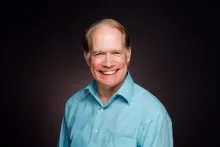
Greg Thomas is the former Pastor of the Cleveland, Ohio congregation. He retired as pastor in January 2025 and still attends there. Ordained in 1981, he has served in the ministry for 44-years. As a certified leadership consultant, Greg is the founder and president of weLEAD, Inc. Chartered in 2001, weLEAD is a 501(3)(c) non-profit organization and a major respected resource for free leadership development information reaching a worldwide audience. Greg also founded Leadership Excellence, Ltd in 2009 offering leadership training and coaching. He has an undergraduate degree from Ambassador College, and a master’s degree in leadership from Bellevue University. Greg has served on various Boards during his career. He is the author of two leadership development books, and is a certified life coach, and business coach.
Greg and his wife, B.J., live in Litchfield, Ohio. They first met in church as teenagers and were married in 1974. They enjoy spending time with family— especially their eight grandchildren.
