

Robin S Webber
This transcript was generated by AI and may contain errors. It is provided to assist those who may not be able to listen to the message.
Well, Susan and I are delighted to be able to share this very special weekend of Holy Time with all of you. And what I wanted to do was today to highlight some of the understanding of what this coming festival is all about starting this evening. Starting tonight, we are going to be observing what's called the Feast of Pentecost.
But I want to move beyond that, and you might be ready to jot down a few notes, especially for those that are newer and younger students of the Scriptures, and at the same time some of those have been around for a long time. Because I think you'll find the next thought hopefully fascinating and important. Because so often in the Church of God community, we call it the Feast of Pentecost. But likewise, it's biblically known as the Feast of Harvest. It's also known as the Feast of Weeks. It's also known as the Day of the First Fruits. You can find that in Numbers 28-26. I'll save you the searching time.
And this is very, very important. And I think it's a very, very important lesson for every Christian to take into a study of Scriptures to recognize that oftentimes, especially with the festivals, God gives us many, many windows to look into His purpose. It allows us to create an elasticity that allows us to expand thoughts and to comprehend even more fully what God's divine purpose is for each and every one of us. Sometimes, and I think all faith communities can get into this, is that we can tend to seal or put something into concrete. And therefore, then it doesn't have room to breathe.
It doesn't have room to grow. We are not able to maybe look at it in new ways, new understandings, based upon the basic value that's there. I think we even just found that out in the Bible chat group that we just had, that so often we come in with just one thought or one understanding, or we've just simply not thought things through, taken our time to meditate on matters and to recognize, just as we just had a couple minutes ago, how rewarding it is to have some elasticity, to be able to allow it to bubble, to allow it to grow, to allow a thought to ferment, and to appreciate it and to understand it.
And that's why I specifically wanted to give you all of those names, all of those names. We're keeping the Feast of Harvest tonight. We're keeping a day of firstfruits tonight. We're keeping the Feast of Weeks tonight. And every one of those, as well as Pentecost, has a specific meaning towards this holy time that we're going to participate in tonight. Today, what I would like to do in setting the stage for tomorrow is that, and I realize that many subjects are going to be covered.
I asked all of the men around the circuit to provide one another, as well as myself, what they might be choosing to address over this 48-hour period of time. And I said that I would look at what they're all preparing for, and then I would fill in the vacancy, as it were.
And I appreciate that. And we're going to have wonderful messages tomorrow about the church, about the birth of the church on Pentecost. We're going to be having messages on the Holy Spirit and how to more fully utilize it, understand it, to appreciate it, to allow it to expand and to grow on us. But today, what I want to share with you, the San Diego congregation, is simply this.
I want to share with you the fundamental revelation, the fundamental revelation regarding the day of firstfruits and what we can take away from it. The reason why I want to share with you, it means a lot to me. I realize it means a lot to God Almighty above because He's the one who ordained it. But I remember as a 12-year-old lad coming into the Church of God community, and it truly did, understanding the meaning behind this day expanded my understanding regarding the power of God and the love of God and the purpose of God and what God is about and why humanity was created.
The divinely ordained GPS, if you want to put it that way, of the seven biblical festivals allows us to understand ultimately not only our destination, but to understand what is behind it, and that is God Almighty. Let's go to Isaiah 46 for a moment. Isaiah 46, because I think this is a fundamental verse that allows us to understand what God is doing.
In Isaiah 46, verse 9, it says this, Remember the former things of old, for I am God, and there is none like me, declaring the end from the beginning, and from ancient times things that are not yet done, saying, My counsel shall stand, and I will do all of my pleasure, calling a bird of prey from the east, and the man who executes my counsel from a far country. Indeed, I have spoken it, and I will also bring it to pass. I have purposed it, and I will also do it. Now, oftentimes we have speakers within the Church of God community that will read the Scripture, and it does speak of God's omniscience, and it also speaks of God's omnipotence. It speaks of His all-knowing nature. It speaks of His sovereignty. It speaks of His reach beyond that, which we can imagine to make things happen. But what I want to share with you today, when it says that He will perform His purpose and do all of His pleasure, here's what I want to share with you today, and to bring home into your hearts and into your minds. Beyond His omnipotence and beyond His sovereignty, this set of verses expresses His unyielding and unfathomable love for His special creation, humanity, and all of it. And that's what this day is about. As we move into a discussion about the day of firstfruits, let's understand something that God's great love is not just simply in motion, but it's also in formation. There is a formation to His activity and what He's doing here in time and space in each and every one of our lives and in the lives of all humanity. And we need to understand what that is. I want to bring you to a very cardinal verse, may I? Join me, if you would, over in Hebrews 2 and verse 1. In Hebrews 2 and verse 1.
Because then we're going to expand on this. In Hebrews 2 and verse 1.
Is that what I want? Excuse me a second here. I have Hebrews 2 and verse 1. Okay, what I really want is Hebrews 2 and verse 10. Excuse me. For it was fitting for Him, for whom are all things, by whom are all things, in bringing many sons to glory, and to make the captain of their salvation perfect through suffering. What I want to share with you today and what this day brings about and why we rehearse it every year is to perhaps underline the word many and to understand what many means. This is a very urgent thought that we need to have as a people. When I say, you know, when we look at a word, it's like the old phrase, is, is means what? How many words do you get or many definitions do you get out of the two-letter word is? But what does it mean many? What does it mean many? Let's talk about that for a moment. The question I have that was answered for me nearly 50 years ago and continues to astonish me is simply this. Is salvation only for a select few? Is salvation just for those that have a certain understanding today? Is select is I'm going to wait until they have the sound ready here.
Hello.
Thank you. Are we set? You sure? With this, the forerunner of Pentecost might start speaking in tongues up here. Careful. Get this all set. It'll be in Bulgarian.
Okay. Here we go. But let's get back to the main point. What does this mean? Over the years, there have been people that have thought that it's a few. There have been people that have thought that there are vessels of honor and there are vessels of dishonor. And that is already, in a sense, through what they consider predestination, been predetermined as to who will be with God and who will not be with God. I remember growing up as a lad in a very fundamental church where we believed in heaven above and we also believed in hell below. And that those that did not know the Lord as it were at this time, there was no hope. There was only one destination that was allotted them. Another question that we want to ask in all of this is simply this, then. When we think about it, is this the only day of salvation for our friends and for our neighbors, for our children and our grandchildren that are not with us here today, or have not surrendered themselves to Jesus Christ and have not known God the Father? Beyond this, if we are being saved now, what are we being saved for? For what? And for who? And how do we show appreciation for such salvation? These are a lot of questions that we need to talk about. I think one question, again, that I'm just piling it on here is simply this. Have we been called just simply for personal salvation? Okay, I understand. I've got it. I'm signed, sealed, and delivered. All of this is answered through this, the day of firstfruits. So I'd like to talk about it. There's two very special thoughts I'd like to share with you to keep you into this message. Very simple if you want to jot it down. A day of firstfruits has two specific elements to it that I want you to take away after the end of this message. Simply this. Something special, something special, and also something wonderful. I'll try to make this as simple as possible about what God has granted us. Something special and something wonderful. Let's understand that the concept of firstfruits is discovered first in Scripture in Exodus. Join me if you would there for a moment. Exodus 23.
Next is 23, and let's pick up the thought in verse 14. Three times, you shall keep a feast to me in the year. Mr. Kozer alluded to this, and you shall keep the feast of unleavened bread, and shall eat unleavened bread seven days as I commanded you at the time appointed in the month of Abeb. For in it you came out of Egypt, and none shall appear before me empty. And now notice another reference, verse 16. And the feast of harvest. The feast of harvest.
So it speaks of a time of gathering. It speaks of a time of reaping. And these are very important terms to think about as we proceed forward.
The firstfruits of your labors, which you have sown in the field. So we begin to see the terminology of firstfruits. And then it mentions thoroughly the feast of in-gathering at the end of the year, when you have gathered in the fruit of your labors from the field. So we understand that a lot of this that surrounds the festivals is dealing with agricultural cycles. It's dealing with the aspect of harvest. These harvest festivals were given to a covenant people. What is a covenant person? That's a person that's been invited and accepted, a very special compact with God. And these festivals were given to remind and to reveal to them, first and foremost, allow me to share this thought, that God is an active force. That God is an active force. And that He is gathering a people and also gathering peoples.
Now that's very important because, again, we recognize that sometimes in our understanding or other people's understandings, there are people that believe that God is a benevolent first force. He kind of started up the universe and let it go and kind of hands off.
But we come to understand that through the festivals that God is an active force. And that He's gathering. There's a gathering, there's a harvesting that's occurring that involves a rescue and involves a harvest. Now let's think those thoughts through for a moment. It does involve a rescue and it does involve a harvest. And a harvest means that something has to come to – keyword – has to come to fruition. There has to be something growing. There has to be something desirable that it might be harvested. Now, this particular festival then that reminds us that God is the first cause also reminds us that He intervenes in the lives of persons and nations in His own time and in His own way. And oftentimes He does this when either people or nations are at their lowest ebb. Join me if you would in Deuteronomy 16. In Deuteronomy 16, again speaking about this day, and I want to share some thoughts and just allow the Scripture to read for itself.
Then you shall keep the Feast of Weeks. Now that's the same day that we're keeping. We call it, by and large, Pentecost. I'm calling it the Day of Firstfruits, but it's also known as the Feast of Weeks. Then you shall keep the Feast of Weeks to the Lord your God with the tribute of a freewheel offering from your hand, which you shall give as the Lord your God blesses you. And you shall rejoice before the Lord your God, you and your son and your daughter and your male servant and your female servant, the Levite that is within your gates, the stranger and the fatherless and the widow who are among you at the place where the Lord your God chooses to make His name abide. Now, verse 12 is essential in this thought, and this is where I wanted to lead you. And you shall remember. All of this is done for a specific purpose.
Why we come together tomorrow and why Israel was given this long ago. You shall remember, and God does that so often because we do forget where God picked us up along the road. You shall remember that you were a slave in Egypt, and you shall be careful to observe these statutes.
We can so easily forget where we were before by God's grace he began to work in our minds and work in our hearts. And by the guidance of the Spirit, we began to be, as it were, dusted off, cleaned up. Our hearts renewed, given a new spirit, given a new heart, given all of that which is essential for the new covenant. And we can have somewhat of an amnesia, thinking that we've always been this way. We've always had this understanding about God. We've always had this understanding about God's beloved Son being our propitiation and that way back to Eden to recognize that in our lives, and we didn't even know it, that we were cut off, that we were in the slavery of sin.
And so these holy days are always, it's like a bow on your finger or however you try to remind yourself, you were a slave, you were a part for me, you had no hope. And God says, you will remember that you were a slave in Egypt. And so these days do remind us this is a festival about God's goodness, about God's deliverance, and about God's love when we frankly didn't deserve it. And yet in that, that was His purpose and that was His pleasure, and He wanted us to be a part of His people.
I speak to myself in this, to recognize that unless sometimes I've whacked by a two-by-four, I can kind of go down, of course, it's not spiritually healthy. And we must always go back and to recognize that yes, we too were slaves of sin.
And that if God can grant His miracle to me, He can grant it to all of those that are yet out there that have not heard His name, the name of His Son, and have not surrendered themselves to. When we go through these festivals, brethren of San Diego, if we allow them to have the full impact in us that God desires, we're not only going to look at Him differently, but we're going to look at ourselves differently. And especially with this day of firstfruits, this thought of gathering and this thought of harvest, here's what I want to share with you, please. May I? You will begin to look at other people differently, too. You'll begin to look at people differently that are in this room. You'll begin to look at people differently in your community. You'll begin to look at people differently that are in your schools and to recognize that we are not the end of the game, but only the beginning of God's purpose, that we're firstfruits, and that God's great love, which is unfathomable, which is unmeasurable, is going to be met out on every individual that has ever lived. I'm here to tell you something. This is not the only day of salvation, because what do you do then with people that have never heard the name of Jesus Christ, have never even heard His name? Are they condemned forever?
Or does God have a plan? And does God have a purpose? Maybe I'm ahead of myself here. Let me back up a second. To understand what God is doing and His all-encompassing plan, He made it surround what we call the two annual physical harvest cycles that we find in the Mediterranean basin, in what we know as the ancient land of Israel. In the spring, you might want to jot this down in the spring, there was what we call a smaller harvest, a small harvest. And then in the fall, there was what we call the autumn harvest, the harvest that we often think of, this feast of ingathering that surrounds it. And that's a much greater harvest. What we need to understand, I'm not here just to teach you agra economy, is this. Those two harvests, when we understand the revelation of the Bible, are typifying two spiritual harvests, two spiritual harvests. And we need to understand that when we understand, and we're going to expand on it some, when we understand the concept of first fruits. Let me ask the audience here a second. We'll see if I do better than Sandy did. Who am I going to call upon? Oh, no, not me. If there are first fruits, and God speaks so much about first fruits, if there are first fruits, I would suggest that automatically demands something else, doesn't it, Doug? You're the one. What is that? If there are first fruits, what does that demand?
Pardon? Later? More. If there's first fruits, there's got to be second fruits, and there's got to be third fruits. Right now, we have this berry bush. It is so cool. I wish you could all be there picking berries with me in the morning. I go out with my little bowl, and we did have first fruits. But now there's all sorts of fruit, and I just go out there and I pick, and I pick, but it had to start somewhere. It had to start with a first fruit. And the very concept that God shines the spotlight on what He is doing, that yes, He is calling first fruits today. There are those that are surrendering themselves to God that have come up against the understanding that Jesus Christ is that way back into Eden, having those angels separated, that we can go back to the tree of life. And there are people that have surrendered themselves and are experiencing that Kingdom of God experience now. But at the same time, there are more that are going to come.
That's an incredible truth, brethren. For you that have been a part of the Church of God community for 30 or 40 or 50 years, do I dare say this? This is one of the great revelatory franchises of the Gospel. This is the good news. The good news is that God's purpose is going to reach and touch every heart that has ever lived. Now, what that heart does with it, what that mind does with is going to be their responsibility. But I do believe in universal opportunity. And I do believe that God is going to allow every knee, every knee, and every heart that is connected to every knee, ultimately to bow. And it all comes back, all comes back to this understanding that we gain through this the day of firstfruits. Very important. Join me in 2 Peter 3 and verse 9 for a second. 2 Peter 3 and verse 9. Let's just allow the Bible to speak. 2 Peter 3 and verse 9. Let's notice what it says. The Lord is not slack concerning His promise, as some count slackness, but is long suffering towards us. And then notice what it says. Not willing that any should perish. Not willing that any should perish. God is not up there. He loves me. He loves me not. She surrendered. She surrendered not.
Vessels of dishonor. Vessels of honor. God said, let's just take the Word of God, understanding that God in His ultimate divine common denominator's love says that His will, the will, not willing. Remember what we said in Isaiah. It says that this is my purpose. This is my pleasure. And God says, I will do it. Not willing that any should perish, but that all should come to repentance. Jesus Christ is not selfish about His sacrifice. He wants everybody to understand it, to experience it, and to surrender to His Father above. Join me if you would now.
I get so excited talking about this. This is when I was 12 years old, and some of you are a little bit older than that. We don't have a lot of 12-year-olds here. This is what turned my cork when I was 12 years old. I had learned about God, and I had learned about the love of Jesus in churches out in the world. But I wasn't understanding, and my family was not understanding, that God has a work and what God is working on, and that that work ultimately, His will, His desire, is that all humanity, His special creation, might be redeemed to Him. That He's not going to lock them up into eternal torture and or eternal punishment, but is going to make a way in His time and in His way. Join me if you wouldn't do it on me 16 again. Do it on me 16. I commented on this before, but now let's take it with a different thought.
It says here in verse 9, You shall count seven weeks for yourself, and begin to count the seven weeks from the time you begin to put the sickle to the grain. And then you shall call it the feast of weeks to the Lord your God. And it goes on about the tribute. It's very interesting here that when we think of Pentecost, and what does Pentecost mean? Somebody help me? It means count 50. And here we have this aspect of weeks that is mentioned. Let's understand two very specific points about this day that we go into beginning tonight. There are two very important aspects. Number one, first one, is counting. Counting is very important when it comes to Pentecost, Feast of Weeks, Feast of Harvest, Day of First Fruits, whatever you want to call it. Counting. It denotes a responsibility. It denotes a responsibility. And not only that, but with Pentecost, let me share a word with you if I could. Anticipation. God has this count because He wants us to be anticipatory. All that discussion that we had over there in the other room today, what was that all about? You will tarry here in a few days when that day has fully come. It was all about anticipating and getting excited about what God was going to bring. Pentecost is about getting excited, turned on, to use a word and a phrase out of the 60s, about what God is doing. And perhaps we will not completely understand it all at once as we discuss next door, but to know that that good God, that loving God, the one that gave His Son, has something really wonderful for us. I know we're going to probably discuss it more tomorrow, but you know what? Jesus said on that last night of His life, you hold on. I'm going to give you something very special. I'm going to give you another comforter. And it's going to come. And you know what? Those disciples, as perhaps as much or as little as they understood, as we're talking about in the Bible chat today, they knew that God had promised them something.
And they were breathless waiting for it. They knew that something good was coming. That's what Pentecost is about. The fulfillment of God's promises that He has promised something and that He is going to make it good. Number two, it is again about remembrance and remembering again that we were slaves and that a rescue had to occur in the life of the firstfruits and that there's even going to be a greater rescue in the future. And we'll talk about that a little bit more. Now, to understand all of this, we have to go 50 days back for a moment. Join me if you would in Leviticus 23. Leviticus 23. And verse 9. And this again, I think it was down here that I spoke on the wave sheaf, but let's talk about it a little bit more. And the Lord spoke to Moses saying in Leviticus 23 verse 9, saying, Speak to the children of Israel and say to them, When you come into the land which I give to you and reap its harvest, then you shall bring a sheaf of the first fruits of your harvest to the priest. Now that was the first harvest, early in the harvest, the first fruit of that harvest, which was a barley harvest. And he shall wave the sheaf before the Lord to be accepted on your notice, on your behalf. On the day after the Sabbath, the priest shall wave it. And you shall offer on that day when you wave the sheaf a male lamb of the first year without blemish as a burnt offering to the Lord. It goes down to explain more about the ingredients of that. Join me in verse 14, because this is what is essential. And you shall eat neither bread nor parched grain nor fresh grain until the same day that you have brought an offering to your God. It shall be a statute forever throughout your generations in all your dwellings. The major point that we want to understand, brethren, in this is simply this, that until that wave sheaf was offered, let's put it this way in a colloquial sense, the camp stood still. Life did not move on. Let's understand that we're talking about grains. We're talking about bread. Bread was the staple of life. And God is making a very specific point here that until that wave sheaf was offered and in that sense accept it, nothing moved, nothing lived. Israel itself, Israel itself as a covenant people, could not move forward. Now you and I have come to understand through the New Testament and the accounts there that that wave sheaf actually expresses what God would later on do through not only the resurrection but then the ascension of Jesus Christ to his Father after he came out of that tomb. And we need to understand that. Now what I want to share with you then is go let's go to 1 Corinthians 15 verse 23 and 1 Corinthians 15 23.
Actually let's go up to verse 20. But now Christ is risen from the dead and notice what it says he's become the first fruits of those who have fallen asleep. For sins by man came death by man also came the resurrection the dead. For as in Adam all die even so in Christ all shall be made alive. But now notice, but each in his own order. It's not everybody comes up at once. God plainly states here that there is an order. Notice Christ the first fruits afterwards those who are Christ at his coming. So we recognize then here as we're looking at this scripture that Christ is called the first fruits. And actually as it refers to in scripture in Romans 8 and 29, join me if you would there for a second in Romans 8 and verse 29. It tells us again, for whom he foreknew he also predestined to be conformed to the image of his son that he might be the first born among many brethren. So Jesus is the first that has come out of the grave and resurrected and has ascended to his father. Now where does that leave you and I then? Let's go back to Leviticus. I know we're going back and forth here, but it's good to get into the scripture. Let's go to Leviticus 23. Because again, this is a day of first fruits that begins this evening because it was not only the wave sheath that occurred during the days of the love and bread, but now we're going to find out something else. Verse 15, and you shall count for yourselves from the day after the Sabbath, from the day that you brought the sheath of the wave offering, seven Sabbath shall be completed. And that's very important. There's a counting. There's a timing. Count 50 days to that day after the seventh Sabbath, and then you shall offer a new grain offering to the Lord. And you shall bring from your dwellings two waves, two loaves of two tenths of an epa, and they shall be a fine flower, and they shall be baked with leaven. And they are, notice, the first fruits to the Lord. Now, I know oftentimes there's a lot of discussion, well, what does that mean? And what are those two loaves? I'm going to let that go for right now. That can be a long period of discussion, and I know there's many ideas on it. Let me just simply say what the Bible says and where the Bible is loud. This is a very good rule for Bible study. Be loud where God is loud. Are you with me? And understand there's a time to be quiet, and there's a time for some exploration. What is loud in this verse is that these are the first fruits of God.
And to the Lord. And you shall offer with bread seven lambs of the year without blemish, one young bowl and two rams, and they shall be as a burnt offering to the Lord with their grain offerings and their drink offerings, an offering made by fire for a sweet aroma to the Lord. And it talks about sacrifices and etc. Down at the very end it says, notice verse 20, the priest shall wave them with the bread of the first fruits as a wave offering before the Lord. Now, I don't know if you ever noticed that before, so let's look at the Scripture for a moment. We've often thought of the first round that the wave sheaf that was offered during the days of 11 bread, and that was waved and that was in a sense offered to the Lord. That's the first of the first fruits, which the New Testament describes as Jesus Christ. But now it speaks about these two loaves. And you know what? It's very interesting. They too are waved before the Lord. What occurred to Christ who was risen from the dead and ascended to the Father, likewise with these first fruits, is going to be the same thing. And that's wonderful and that's incredible. And to recognize that we have a part in that. Join me if you would in Colossians 3 to further express that thought. Colossians 3.
And let's pick up verse 1. If you then, and think of the aspect of wave sheaf and waving and the lifting up, if then you were raised with Christ, Christ in type was raised 1,400 years before symbolizing His ultimate coming and what would occur. And He was raised up, as it were. And if you then were raised with Christ, Christ being the first of we that are the first fruits of God, seek those things which are above, where Christ is sitting at the right hand of God. Set your mind on things above, not on the things of the earth. For you died, just like Christ, in what's being referred to in that sense as baptism here, but as Christ died, we died. For you died and your life is hidden with Christ and God. And when Christ, who is our life, appears, then you also will appear with Him in glory. Therefore, put to death your members which are on the earth, fornication, uncleanliness, passion, evil desire, and covenants which is idolatry.
And it goes on expressing what we are to put off.
Verse 12, therefore is the elect of God holy and beloved put on, tender mercies, kindness, humility, meekness, notice that, and long suffering, bearing with one another, and forgiving one another. If anyone has to complain against another, even as Christ forgave you, you must also do. And put above all these things, put on love, which is the bond of perfection.
You see, being a first fruit is not only about counting, it's not only about being rescued, but it's also about a responsibility. It's about a responsibility that God has given every one of us to imitate and to be like that first of the first fruits. Why is that? Join me if you would in Revelation 20 and verse 5.
In Revelation 20 and verse 5.
Actually, let's pick up the thought in verse 4.
Speaking of a time in the future, when I saw thrones and I sat on them and judgment was committed to them, it speaks about people that were martyred, beheaded for the witness to Christ, and for the word of God, who had not worshipped the beast or his image, had not received his mark on their foreheads or on their hands and noticed, and they lived and reigned with Christ for a thousand years. And then there's this fascinating verse that's in the Bible.
But the rest of the dead did not live again until the thousand years were finished. It's kind of an insert thought. And then it concludes with where it was, and this is the first resurrection. It says, Blessed and holy is he who has part in the first resurrection. Over such the second death has no power, but they shall be priests of God and of Christ, and shall reign with him a thousand years. But I'd like to share with all of you right now for a moment, and if you look at verse 6, it's simply this thought. It says, blessed, blessed.
My thought to all of you this afternoon, as we begin to conclude here, is simply this. We are those that have, in a sense, been called before that major season in the future. And I realize that sometimes we can say, why me, and why now? Because it'd be so much easier to go down that stream of humanity with the rest of the fishies, as it were, and to recognize the challenges that beset us, what we call the three S's, the S of self, the S of society. And when things can't get any tougher, we know that there's a Satan, and he's the prince of the power of the air, and the accuser of the brethren.
And so we can say, why be called now? And yet, what I want to share with you, it says, and I believe that those that are the firstfruits of God are going to experience that, their portion of that first resurrection. God says there is a blessing.
There is a blessing. What I want to share with you, because I, like you, are going through this, what we call a human drama of life, and it's not always easy.
There are challenges. There are times when we stand on the mountain top, and there are times when we fall flat on our kisser, and we're down in the valley, spiritually speaking. And yet, God says that there is a blessing to be a firstfruit.
Have you considered that, brethren, what a blessing it is, the understanding that we have, that we worship a good God, a loving God, a God whose love cannot be measured that moves beyond millennia to serve out His purpose, and that He loves people that today are unlovable, people that do not know Him, people that we would like to throw into the trash bin of history, people that we make comments about when we are unloving, and to recognize that this day tells us that we worship a Father above and a Son whose love is so incredible and so constant that they want every human being that has ever lived to be a partaker in their kingdom. And then it says that we that are the firstfruits of God are going to, in some way and in some fashion, and maybe I'm a little not ordinary, I don't have it all planned out. I don't have all the ideas of how we're going to do it. I do know that God calls us a kingdom of priests, and so there's going to be this realm of teachers and helpers. Let's understand the main focus is going to be the Father. The main focus is going to be the Son and bringing many sons to glory, but you and I are going to have a part in that. It's not as if God needs us, but he desires and he makes room for us to, in the future, when these people are resurrected, which we discuss in the fall festivals, that you and I are going to have some small part.
And to recognize that God doesn't make mistakes. God has a plan and it's on time.
I look around this world today and I don't see a lot that works. And I'm an optimist by nature. Most of you know that. I'm an optimist, but I don't see much that works in governments and local governments.
In most people that I meet, there's something not quite working.
And then I think, well, you know, it's really been that way since the Garden of Eden. For 6,000 years, the world's been dysfunctional because it hasn't had a father, and it hasn't had that door open to Eden.
But you and I have part in that. That's what this day of Pentecost is about. That's what this day of firstfruits is about. My encouragement to you, and I'll conclude here, I have a whole lot more to say, but maybe that's what I need to tell you, is don't let anything, and don't let anybody, take you away, and don't let anybody, take you away, from the calling of the destiny that God has given you to be a first fruit.
I don't say that in a selfish vein that, okay, I'm a first fruit.
Look at me! It's not what a first fruit is about.
First fruits do not have a monopoly on God's purpose or God's love.
They're just simply a part of the model. They're a part of the plan.
But to recognize that one day, by God's grace, you and I, as first fruits, and being a part of that kingdom in the future, are going to have an opportunity to see lights go on in people's eyes. I know we have a number of teachers here. Let's see. Got Tammy's here today.
Will is here. Who else is a teacher out there who teaches in school? Oh, yes, Jennifer. There you are, Jennifer. You're hiding in the painting. Jennifer, I have a question for you. Can we just talk for just a second?
I have a question for any three of you that are teachers.
What is it like when you see the lights go on in a child's mind?
And you've been working with them a long time, but, you know, it's kind of been dark, like where the bats are. It's just not working. Bats and mushrooms.
What is it like when you see lights come on in a child's mind and they get something?
You ever seen that? You ever experienced that, Tammy? You're, I think you have the seniority here. What's that like?
It's pardon? It's a very good feeling. And sometimes it takes a lot of time, doesn't it? And it takes a lot of effort.
Jennifer, you have a thought? Have you seen some lights come on in whom you teach? What's it like? Pardon? I cannot hear you. It's awesome.
I don't like two or three word answers, but it's awesome. That's good. Will, have you seen any lights come on with what you're doing? Yeah.
Can you imagine what it's going to be like when we as first fruits and we come into the destiny that God has in store for us, that when we're going to see lights come on in people's minds and they're going to be able to shout, Eureka, I have found it. I got it. I understand it. I thought I knew. I did not know. It's a little bit like we were talking about in Bible chat today. How come the disciples didn't know? No matter, we were kind of getting frustrated at that point because the lights hadn't come on yet. And sometimes it just takes time and more teaching.
I want to share a thought with you that maybe you've never thought about before, and that is that what we understand is that there's that smaller harvest and there's that bigger harvest and that at this time, by God's grace, we're a part of that smaller harvest. You're going to be instituted and utilized in that greater harvest. And one of the reasons we're going to do it is because we're going to be able to be teachers and we're going to be able to see lights come on for the very first time. Remember what it's like? I see a lot of new people that are here in our congregation that have joined us the last couple of years. You were out there, you did not understand it, you've been reading the Bible, and then all of a sudden the lights came on. You understood. You got it. You saw that great light.
Brethren, when we understand what the day of firstfruits is about, and if I can just put it this way to you, and I know that Mr. Smith and the others are going to build upon this tomorrow, it's about God's love. His never-ending, ever-expanding love that he wants every human being that has ever existed to be in his kingdom. And he'll go to the furthest extent, the furthest realm, and he looks at everybody that's out there today in San Diego.
And it's not like they're pleasing him right now. Please understand.
But it says that even we that are the firstfruits, even while we were yet in sin, he loved us.
Thus, here's what I want you to leave with. If you understand your role as a first fruit, and you begin to measure the unmeasurable love of God, it sounds like a bad assignment I just gave you. How do you measure the unmeasurable measure of God? I suggest to you, allow this Pentecost to be differently. Allow this day of firstfruits to be differently. And ask God to instill within your heart as a first fruit in development, that you will look at your fellow man and your fellow woman, and yes, your fellow brethren in this congregation, that you'll look at them with new eyes. New eyes and a new heart. Because if we're not doing it now, we're not going to do it in the kingdom.
This is our destiny. This is what the day of firstfruits is all about. This is not the only day of salvation. God has an incredible plan, brethren, and let's just be so very thankful and praise Him, and be so thankful that He has opened our hearts and our minds to recognize the good and the great and the loving God that He is. See it, message chat.
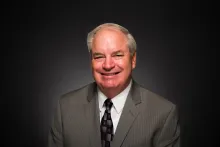
Robin Webber was born in Chicago, Illinois, in 1951, but has lived most of his life in California. He has been a part of the Church of God community since 1963. He attended Ambassador College in Pasadena from 1969-1973. He majored in theology and history.
Mr. Webber's interest remains in the study of history, socio-economics and literature. Over the years, he has offered his services to museums as a docent to share his enthusiasm and passions regarding these areas of expertise.
When time permits, he loves to go mountain biking on nearby ranch land and meet his wife as she hikes toward him.
