

Robin S Webber
This transcript was generated by AI and may contain errors. It is provided to assist those who may not be able to listen to the message.
Well, what an honor to be able to speak to all of you on one of God's holy days. I am going to go down the same trail that Mr. Beatty introduced us to. We will be covering some of the same material, but that's always good when lightning strikes twice and will allow it to rumble a little bit more with thunder, and probably go down a few different footprints that he didn't have time to be able to go through. So, repetition, I remember from somebody that used to say that in Pasadena, repetition is the best form of emphasis. And what Mr. Beatty was alluding to in his messages really leads us to the great fundamental understanding of this day. As he mentioned in his message that this day that we normally call the Feast of Pentecost has many handles, different names upon it that we can address and consider the Feast of Weeks, the Feast of Harvest, the Day of First Fruits, etc., etc. And what is interesting, and sometimes we can take it for granted that what a blessing in the Church of God that we are able to use the entirety of Scripture and recognize that it's not two stories, but one ongoing expanding story about God's grace, about God's revelation, and what ultimately he is going to be doing for every human being and to be able to go back and forth between the Old Testament and the New Testament and responsibly bring them together. What a blessing that is! Appreciate it. Today's message, then, is designed to address the fundamental revelation regarding this festival centered on the title that I'm going to give you. That's simply the Day of First Fruits Revealed. The Day of First Fruits Revealed can not only explain why we are here, which is a very famous question in the Church of God community whenever we would get together, and we'd hear, why are we here today, brethren? And we need to be reminded of that. We need to be reminded of why we are here. We need to be told the stories of old and our stories today, and to be able to bring them together. But most importantly is to ask, where are we headed? We're here today, but where are we headed? And thus, how will we travel based upon what was shared in the first message that God has called each and every one of us to be a first fruit in His hands? And then, to answer that great fundamental revelation, who is ultimately going to join us as time goes along? The divinely ordained GPS of the seven biblical festivals allows us how to understand our ultimate destination and destiny in His hands. And as best understood by Isaiah 46, if you would there, please. Let's open our Bibles together as a church. And if you're at home, please open your Bibles well. And even as we open up our Bibles, let's open up our hearts to receive the instruction in the Word of God on this day. In Isaiah 46, verse 9, it says, Remember the former things of old, for I am God, and there is none other. I am God, and there is none like me, declaring the end from the beginning and from the ancient times things that are not yet done, and saying, My counsel shall stand, and I will do all of my pleasure, which we're going to touch upon. What is God's ultimate pleasure? Calling a bird of prey from the east, the man who executes my counsel from afar country, indeed I have spoken it, and I will also bring it to pass. I've purposed it, and I'm going to do it. Listen, listen, and it goes on talking about what he's going to do.
Many, many years ago, when I was a boy, sometimes you go back and remember what was said in a church, and some of us are younger in the faith here, or even younger in age. I remember that it was so often mentioned that there is a purpose being worked out here below. That hasn't changed over the last 50 or 60 years, the first time I heard those words as a young man. There continues to be a purpose because it's this God that has a purpose for every human being that is made in his image and in his likeness. And that is one of the great truths and revelations about this, this, the Feast of First Fruits, is to recognize that when we discuss the Feast of First Fruits, if there are first fruits, what does that automatically demand? That there are other fruits that will be following those first fruits. When I came to the understanding of what the Feast of Weeks, Feast of Harvest, Feast of First Fruits, Pentecost, whatever you want to call it, meant, my life changed. My life changed not only because we went from going to church on Sunday to Saturday or Sabbath, it didn't only change just because I came to recognize that we don't go to church, that the people of God, the ecclesia, are the church. We are the flesh and blood walking and talking church in which God dwells in that makes it his temple. I was used to going to fancy churches, beautiful pews, lovely carpet, a man that looked like Orson Welles as our pastor with the voice, for those of you that remember Orson Welles of long ago and far away Hollywood fame, my mother really liked him. I think that's why she went to church twice sometimes on a Sunday. But then I came to understand something else, that God has a purpose. I'd come out of a background, a religious background like a lot of you that either go to heaven or you go to hell. There wasn't much in between. But that didn't answer the big question that was brought to me. What about individuals that lived before Christ, that never heard the name of Jesus? What about the young African lad in 13th century Africa in the bulge, in the Islamic area, that had never heard the name of Christ, that did not know, as some will say, and Protestant jargon, didn't know the Lord? What about that person? Are they condemned? Are they without? Has God turned his eye from them? Or is the purpose being worked out here down below? And that's what I'd like to address today. Because what we address today in a festival is more than, and I appreciate what has brought out definitions, words, titles, this, that, the festivals of God bring us into alignment seven times a year regarding God's great love.
These are love feasts. This is about God's outflowing, outgoing concern. He is inherently love. He is inherently hope. He didn't create hope. He is hope. He didn't create love. He is love. And he wants each and every one of us that are made in his image and likeness in his time to be a part of his family forever. With hopefully, God willing, nobody lost, that he is incredibly merciful beyond mercy, beyond judgment, as you and I would think of judgment, and to think that he wants everybody to one day be in his kingdom. So when we look at this, when we understand that God is sovereign, we can say that God is sovereign. But when we say that, he's not sovereign like the idols and the deities of old. He's different. He has unwavering, immeasurable love for his special creation. I'd like you to go to Hebrews 2 and verse 10 with me a second, please. Join me if you would. In Hebrews 2, verse 10. Let's notice a verse. What is the ultimate purpose? What are these scriptures all about? What is Jesus Christ's sacrifice all about? Why does God visit us in this day and has called us and will yet call others?
Hebrews 2 and verse 10. For it was fitting for him for whom are all things, and by whom are all things? In bringing many sons. What does that mean? Many. I suggest it's undefinable in human terms. He says many sons to glory. Not just those that are here today, that have today yielded their lives to him, but in the future, and to make the captain of their salvation perfect through suffering.
So we're going to talk about that today and come to understand it. To recognize that when we think about God is to recognize that he has a plan. It's in motion. It's been in motion since he said, let us make man in our image and after our likeness, but only half the job was done, wasn't it? We were made in that physical similitude, but not that spiritual similitude. We were made in the form of a man, but we are now to become in the form of Jesus Christ inside and out.
And so we take a look at all of this. And so we're going to talk today about the day of firstfruits revealed. And there's two things I want to share with you. May I? And that is simply this. If you get anything, receive anything. That sounds nicer, doesn't it?
If you receive anything out of this message, here's what I want you to receive. I hope my message is in that I will have shared with you. Number one, something special. Maybe you haven't thought about it for a while. Just something special. Isn't it nice when you get something that you weren't thinking you're going to receive? Something special. And maybe that's the story of humanity, that God is going to give us something special that we never thought that we would receive.
Number two, and something wonderful. Something wonderful. Isn't that a way to celebrate the day of Pentecost? Something special. Something wonderful. Because it's God's love manifested as He interrupts human history to His glory. I want to go where Sandy went to begin with. The concept of first fruit is first discovered, and it's linked with the Feast of Harvest, found in Exodus 23, 14 through 16.
And again, we're going to be doing some repetitive homework here. These harvest festivals were given to covenant peoples. Let's understand, though. Given, they are given. They were not created by those people. They were given to those people, as Sandy mentioned, from Mount Sinai. They were given to them, to those who were invited, invited into a special compact by and with God for all times to reveal and remind them that our God, your God, your personal God, my God, is a dynamic, interrupting, intervening force in our lives, gathering up a people, gathering up a people.
And the story flows through from the book of Exodus all the way through. Because the Bible is really the story of Exodus. It's the story of drawing out a people, isn't it? From Egypt until this day and age. There's three things that we want to understand as that God gathers the people. I'm going to give you three quick items, and you can go home and contemplate them, okay?
Number one, there is a rescue. When there is an exodus, it begins with a rescue, and it begins with redemption. The rescue demands redemption for those that God is calling. We don't have it in ourselves as much as ancient Israel did not have it in itself to loosen the shackles of slavery. That's what redemption means. You can't do it by yourself. And I know that Mr. Smith is going to address that this afternoon because God gives us something to deal with that, but this day also manifests.
A drowning person cannot save themselves. That arm, that reach, has to come from somebody else outside of themselves. Number two, there's got to be a drawing out. A drawing out. That's what exodus means, to draw out, to take out. Not only to take out, but then to create a journey and a beginning towards a promise. Whether it's the land of promise of milk and honey of old and or that sure kingdom of God, that ultimate promised land that the Israel of God today is being drawn to.
Number three, there's a harvest upon full yield and fruition, which we'll be getting into building upon what Mr. Beatty brought. There's a harvest. There's a fruition. That's why we're here today to discuss that. We're here to discuss the rescue. We're here to discuss the drawing out, the journey that each and every one of us are on, and ultimately the goal ahead.
That's why I'm the festival, and I always acknowledge where I got this many years ago from Mr. Vern Hargrove. You've heard me say it before, why are we here today? Vern used to say it this way, to gather the family, to break the bread, and to tell the story. That makes it as easy as anything I've ever heard of why we gather on the festivals.
We gather the family. We are the family of God by His grace. We tell the story, not our story, but God's story, that we have accepted and said we will surrender to it. And as that exodus comes to us in our period of time, that it draws us forward, and we join those that have come before us in faith and confidence as we were reading through Psalm 139 during the offering to recognize who is in that pillar, that cloud, that fire, and as will be brought out this afternoon, who dwells inside of us today and the power that we can draw upon.
Again, these festivals remind us that God is more than a first cause. There's a lot of people that believe in God. You know, I recently, while we were just back in Virginia, studying all the different documents of history, which was so much fun. Okay? Both Susan and I love history, and you know I love history. She's almost my match.
And we go back and forth and talk about all the things that we saw. And back in that time, there were a lot of people that talked about nature's God. There were people that were somewhat agnostic or deist. And there were also many, you know, people that were fundamental Christians, whether Anglican or Protestant or this or that. But there's a lot of people today that they say that they believe in God. They think that somebody wound up the world like a top and let it go. But we're here today to recognize that the God that we worship is not just simply a first cause, but continues to intervene in our life.
And you say, well, you know, Mr. Weber, you know, I remember that intervention, you know, 20 years ago, two years ago. See some people that are more recent with us of recent date. Thank God. And to recognize that you can say, I remember it when God interrupted my life. Well, I've got news for you. God's going to continue to interrupt your life. God's going to continue to intervene in your life. God's going to wake you up.
We had a wake-up call the other day in a congregation that just reminded us how short life is. And as my dear wife always says, all we have is but the moment. So what are we doing? It is a first-fruit people of God.
You and I have had the day of visitation come upon us. This is our day. I do know in my heart of hearts, and I ask you in your heart of hearts, do you consider yourself a first fruit in the hands and the heart of God? I believe this is the biblical talk is the day of visitation. When God interrupts the life of peoples, whether it's the Israel of old or the combination of the Israel of God today, the New Testament church. This is my time. This is my calling. This is when from a lad, God visited my life. And there's responsibility that comes with that. That is very important.
When we look at Deuteronomy 16, join me if you would there for a second, Deuteronomy 16.
Again, noticing this day where it says, you shall count seven weeks for yourself. Begin to count the seven weeks from time you begin to pick the sickle to the grain. Then you shall keep the feast of weeks. There it is. To the Lord your God with the tribute of a free will offering from your hand, which you shall give as the Lord your God blesses you. You shall rejoice before the Lord your God, you and your son and your daughter and your male servant and your female servant and the Levite who is within your gates. God doesn't leave anybody out. The stranger, the fatherless, the widow, who are among you at that place where the Lord God chooses to make His name abide. But it's very interesting when you go to the the the the books of the law and when they discuss the festivals, any festival, whether it's the the Passover, whether it is this festival, whether later on when you go to the end of Leviticus 23 with the Feast of Tabernacles, it always comes back to this, and you shall remember. Oh, because you know human beings tend to forget to remember and remember to forget. It says, then you shall remember that you were a slave in Egypt and you shall be careful to observe these statues. Remember where I picked you up and gave you a name, brought you into a family, brought you into God speaking of God into my grace, and shared it with you. Go back. Don't forget. Remember who you were.
I will say this as I said it to Redlands yesterday. I believe today in 2022 that's the most important thing that I can speak to the body of Christ today as firstfruits. Humility in all things. Humility to remember we would be nothing, nothing, without God's hand in our lives, His redirection, His revelation. At times the peoples of God, whether in yester-age or today, can at times be a proud people. Look at what we know. They can get fixated on dates, they can get fixated on words, they can get fixated on conjectures. There can be a pride.
God can't use firstfruits like that. If I were to ask you one thing today, I would say to ask that God will allow us. That means by experiences, I know that, to remember where He brought us from and to be humbled. I'm not just talking to you, it's coming right back to me. To be humbled. Yes, there's a time to be bold as a first fruit, too. But it starts with humility. It starts with that example of the ultimate first fruit, Jesus Christ, who gave up everything, who humbled Himself and came down to this earth. When we look at this, when we see, as Mr. Beatty brought out, there was a spring harvest, there's a fall harvest. Spring harvest was barley, the fall, later on, in the spring harvest, during the time of Unleavened Bread, that was barley. And this one in the Middle East would be that, which was the wheat harvest. What is interesting, some of you may be hearing this for the very first time, is that this two-harvest cycle is very important. The spring harvest was smaller. It was a much smaller harvest. But then comes the in-gathering at the end of the year. What we oftentimes think in America is the abundant Thanksgiving, the harvest, etc., etc. And that's telling us something if we'll allow it to. There's something that's happening here that reminds us that God's plan is not only in motion, but it's in formation. And He's doing something here that we need to understand. And that is that this is not the only day of salvation. This is the day of my visitation. I understand that, and I say that quite solemnly. Solomently. Not Solomon. Sincerely. Does that impact you, that this is the day of your visitation and what you're doing as a first fruit in God's hands? The very concept of one harvest that is smaller that speaks of first fruits, as Mr. Beatty so well delineated, first fruits demand more fruits. First fruits don't stand alone. First fruits are just an inkling of a greater harvest that is yet to come. And that's what we want to understand. And I think a verse that pinpoints that is 2 Peter 3 and verse 9, if you'll join me there, please. Let's explore the abundant mercy of God and the plan that He has for all that are made in His image. In 2 Peter 3 and verse 9, the Lord is not slack concerning His promise as some count slackness, but is long suffering toward us. He does not give up on us. He suffers and He suffers long, long suffering towards us, not willing that any should perish, but that all, all, all should come to repentance. What's that mean? As you say today, what's that all about?
Susan and I have three daughters. They're all somewhat made in our image. Some of them favor Susan more than me. They're smart. Some of them, one favors me. And we love them all. In a sense, God has allowed us. Yes, it's in His image, but it's come through Susie and me. Which of our daughters would we forget? Which one of our daughters would we want not to be with our family forever as much as they can in this physical lifetime? Who would I give up on? Who would you give up on? I see a lot of parents and grandparents here. Who would you give up on?
I wouldn't jump over a cliff for a cat, even though I might be tempted to.
But if one of our daughters went over a cliff as pops, I'm gonna be the first one over.
That's how much Susan and I love them. And as Jesus said, if a father below does this and that, does this and that for their child, how much more than does our Heavenly Father love us and want everybody to one day be in His Kingdom? Susan and I had a very moving experience. We were staying in Yorktown. We often think of Yorktown being a revolutionary war. That's where Washington and the French trapped Cornwallis. We were literally just around the corner from the battlefield. But it also duplicated, unfortunately, because wars don't go away during the Civil War. The same people that fought together during the Revolutionary War, the Yankees and the Southerners, now they're pitted against one another. And there's a Union Cemetery there. There's a Union Cemetery there. And Susan and I were walking through it. When you're with Susan, you go through a lot of cemeteries. Okay, trust me. Walking all over those people. Walking all over those people. She just loves looking at that and taking pictures. And we'd be walking. I looked down and she'd be looking down. And these gravestones are like 150 years old. And there'd be a tomb to an unknown soldier. No name! Then tomb to four unknown soldiers, all with the same slab. Then over here, a tomb to two unknown soldiers. And again and again and again, boys that were from Ohio, boys that were from Indiana, boys that were from Wisconsin, men that were from New England. Far from home.
Maybe they did not know at that time or believe in God the Father or Jesus Christ. But this day of Pentecost, this festival that is about first fruits reminds us that one day God is going to draw all people towards Him and allow them to understand revelation. God doesn't believe in chances. He believes in opportunity. I remember many, many years ago, Herbert Armstrong, we were in the gym and he said, Brethren, I don't believe that God believes in chances. He believes in opportunity. God knows what He's doing and when He's going to do it.
That's what this brings us to a festival of hope, that if there are first fruits, there's more to come. God's not done.
These people are not lost. They are just waiting for the next step of God's interruption. And it started with Jesus Christ. Join me if you would, and again, I want to share something that Sandy brought out. Join me if you would and let's go to 1 Corinthians 15, 20. That's where I want to go. That is what it says here. 1 Corinthians 15, verse 20. But now Christ is risen from the dead, and has become the first fruits of those who have fallen asleep. Jesus is the first fruit. For sins by man came death by...for sins by man came death, by man also came the resurrection of the dead. For as an Adam all die, even so in Christ all shall be made alive. But each one in his own order, God's order for them in his time and in his way. God says, I have declared it from the beginning, and it will happen at the end.
Each one in his own order. Christ the first fruits. Afterwards, those who are Christ at his coming. And then comes the end, when he delivers the kingdom to God the Father, when he puts an end to all rule and all authority and power.
But we have to insert something in here, hopefully by God's Spirit. We need to go to Revelation 20 for a second. In Revelation 20.
We notice something that is mentioned here.
I'm actually picking it up in verse 4.
They lived and reigned with Jesus Christ for a thousand years. But now notice verse 5. But the rest of the dead did not live again until the thousand years were finished.
This is the first resurrection.
Blessed and holy is he who has part in the first resurrection. The first resurrection is for those that down through the ages, that God has called as a first fruit people. But there's more. It's going to be added to.
You think of the Grand Canyon sometimes for those. Anybody been to the Grand Canyon or am I the only one? You know how the Grand Canyon was formed? Scotsman lost his nickel. Okay. But you know when you look at the Grand Canyon, just when you think you've got it in your mind, there's another canyon and there's another canyon and there's another mesa and there's another vista. There's another plateau. There's another butte and it goes on. And just when you think you've got your mind wrapped around it, it just goes and goes.
Dear brethren, we're here as members, God willing and by his grace, of that first harvest, the harvest of first fruits. But to have first fruits means that more are going to come along. I got home, had been away for a week and we're out, I was doing lawn work and all these raspberry bushes had grown up in the background.
Because I'm always battling the birds and the ants for the first fruits. And I'm going, oh man, look at that, oh man, it's ripe. It's so purple. Look at that raspberry. And I'm looking and then there's another one. But there were only five and I see all sorts of buds. They're coming. It's not over. There's more that's coming. And that's why God's calling us now to be a first fruit because he's calling us one day to help the first of the first fruits, Jesus Christ. We're being called to be a kingdom of priests. Under him, to be holy. You know, it's interesting that Sandy brought up the two loaves. And I, again, there are a lot of typologies. I certainly concur with Sandy. I believe it's talking about the covenant people, both in the Old Testament and in the New Testament. You have the Israel of old. You have the Israel of God. It's very interesting what makes up those loaves. That they are offered to God. There is sacrifice that is involved. And there is what? Oh my holiness. These are holy under the Lord. We're to be holy under the Lord. Why? Because God said, I am holy, therefore you be holy. And so that holiness is so important to understand. Join me if you would for a moment over in Revelation 14. In Revelation 14, you may never have thought about this before.
Probably going to wind up almost on this and conclude because we want to be in time here. I was hoping for Joshua's son. That time might stand still, but I don't think it's going to work today.
Everybody always is wondering who are the 144,000? Ever had that conversation with somebody? Maybe just having that conversation with yourself. That's dangerous. You're talking to yourself. Who are the 144,000? I'll be very honest. As a student of the Bible and a disciple of Christ, I'm not worried. God knows who the 144,000 are, just like he knows who the two witnesses are. I just leave that to God. It makes it simple. It takes all the worry off. It's his program. He just invites us in. But I don't know if you ever notice this in chapter 14 verse 1. I guess I'm saying, rather than who are the 144,000, what are they like? What makes them that 144,000? What are the ingredients? You notice that here in chapter 14 verse 1 of Revelation. I look and behold a lamb standing on Mount Sinai, and with him 144,000, there they are, 144,000 having his father's name written on their foreheads. And I heard a voice from heaven like the voice of many waters, and the voice of loud thunder, and I heard the sound of harpists playing their hearts. They sang as it were a new song before the throne, before the four living creatures and the elders, and no one could learn that song except the 144,000. Now, notice who were redeemed. There's that R word, who were redeemed from the earth.
They couldn't do it themselves. God intervened in their life and revealed Himself to them, and they accepted Him, and they surrendered to Him. These are the ones who were not defiled with women. This is talking about life-wise spiritually. They were true. They in that sense were consecrated, in that sense married to God. They were not running around. They were true blue to He that is the head of their life. These are the ones who follow the Lamb wherever He goes, wherever He goes, whatever the surprise, whatever happens in our life.
We had a situation yesterday in Las Vegas.
Our people were gathering as they always do yesterday.
One of our members was having a pain issue in the parking lot. We walked in. People began helping the individual to the restroom. That was the last time that individual ever went into a restroom. One of your members, one of our brethren, died yesterday right before church. I'm so glad that Victor was over there. Last night, getting home from Redlands, talking to the different members of the family, because there's three family members there, including the husband. Whatever God allows, even when we don't understand it, to follow, to understand. Dear lady, as soon as I just love her, I look forward to seeing her again now. Sandy knows her. Some of those have been over to Las Vegas. I talked to her husband last night. I said, I can fully understand that you'll be home. He said, no, I'm coming to church.
Some of the people over there said, well, maybe we should just do this or that tomorrow. I said, I don't think she would have wanted that. She would have wanted us all to continue worshiping God on the feast day. I know that person. I'm not saying any of this is easy. It really was kind of hard all day afternoon and talking to people. Las Vegas is like you, smaller than you, by probably a half. And we don't know where God is going to yet take us to mold us and develop us to be the spirit of experience like Jesus Christ, to be able to be that kingdom of priests, but to humbly surrender ourselves, knowing that we are in the hands of God, and knowing that He is molding us and He is shaping us as much as these 144,000 that were in the future in times of the beast kingdom. And notice what it says here, these are the one who followed the Lamb wherever He goes, whether it be green pastures, whether it be still waters, whether it be the valley of the shadow of death. Whatever God allows, whatever God allows. These were redeemed from among men, being noticed the first fruits to God and to the Lamb. It's not easy being a first fruit. Any of you that ever raised gardens, first fruits are those that first faced the cold in the winter, faced the heat, you don't know what heat is like down in San Diego County, I don't think. Riverside County, there's heat, okay? First to face the heat, first to face the birds, first to face the ants, you name it. It's not easy. And you and I will not always recognize first fruits, but God does. Jesus was the first of the first fruits, and people would say, what good thing comes out of Nazareth? The Scripture tells us that that first fruit, God's first fruit, planted amongst us, was rejected of men.
And yet there's a reason why at times people will not recognize that. Join me if you would at 1 Corinthians 1.29. I'm going to go to three scriptures, then we're going to go real quickly here. 1 Corinthians 1.29. 1 Corinthians 1.29.
1 Corinthians 1.29. Let's try 26.
For you see your calling, fellow first fruits, brethren, that not many wise according to the flesh, not many mighty, not many noble, are called. But God has chosen the foolish things of the world to put to shame the wise, and God has chosen the weak things of the world to put to shame the things which are mighty, and the base things of the world, and the things which are despised. God has chosen! And the things which are not to bring to nothing the things that are. Why? Why all this? Notice what it says in the verse, that no flesh, no flesh should glory in His presence. But of Him you are in Christ Jesus, who became for us wisdom from God, and righteousness, and sanctification, and redemption, that as it is written, He who glories. And this is what I speak to the church of God here and those that will listen to Him, that He who glories, let Him glory, not in ourselves, not just merely in our knowledge, not merely in our cerebral understanding of the Scriptures.
To avoid the leaven that was brought out by Sandy, the leaven of the Pharisees, of pride, of hypocrisy, of self-importance. If there is anything that makes God love us more, and He loves us always, and which will be attractive to what Sandy mentioned at the end of his message about evangelizing and being a witness and being a light to the world, it'll be that when we speak to others more about God than about ourselves. And not what we're doing, not what we're thinking, but what He has done. If we are to glory, we're to glory in God. That is the soil that He plants us into. Join me if you would in Romans 8. In Romans 8, 2nd Scripture, and one more after that. Romans 8.
Notice what it says here. Verse 28, and we know all things work together for God to those who love God, to those who are the called according to His purpose. Here's who we glory in. We glory in His grace. We glory in His favor. That in our lifetime He's called us into His family and into His way of life, for whom He foreknew. Notice the pronouns. He also predestined to be conformed to the image of His Son. Note, oh my, that He might be the firstborn among brethren, more for whom He predestined. These He also called, whom He called, that He also justified, and whom He justified. These also glorified. These also He glorified. Here's what I want to share with you and give you this PowerPoint as I end. The movement of God, the purpose of God, moves down through the ages. It moves through the time of the exes. It moves through the time of the kingdoms. It moves through the time of the prophets. It moves through the time of the apostles. It moves through the last two thousand years, and it has now come to us. And we have accepted to be in the flow of this great drawing out, the flow of this great exodus that continues to move forward to that promised land of where we are given by God's grace. Not that we deserve it, but those that are the firstfruits today and down from the time of Christ are given something wonderful. Join me in Revelation 3. In Revelation 3.
It says this, and again, I believe the seven churches that have written to all the churches. It went circular. We learned lessons from all of them to apply today.
Notice what it says, and he shall go out no more. I believe sincerely that those that are firstfruits of God are going to have an opportunity to be in the very throne room of God. They are going to see God as He is, and I think that there is a special calling and role. And yes, grace filled reward.
You've been given a birthright, the firstborn. Jesus is the first of the firstborn. Let's just put him up there, right? Are you all with me? That's when you're going to nod. But we also are given a birthright as much as Esau was given the birthright, and he turned away from it and gave it up by the cunning of his conniving brother, who later on turned it around too.
We've been given a birthright. I'm not here to judge where people are and what God will yet do with them. Those that have been amongst us that are no longer with us. I give it to God. God is the judge. Maybe there'll be secondfruits. Maybe there'll be thirdfruits. You've been called to be a first fruit. You hang on to that tree of life that the first fruits need to be connected to. Do not give up. Do not give in. Do not give out. You look up. Imagine that one day you are going to have an incredible divine privilege of having intimacy with God the Father and Jesus Christ in that very throne room. You don't want to miss it. You want to be there. God already sees you there. It's not easy being a first fruit. But that's why we need God's grace. We need God's favor. We need to obey Him. We need to love Him as much as He loves us. And leave the rest up to Him. Look forward to seeing you after services.
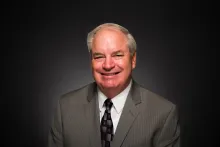
Robin Webber was born in Chicago, Illinois, in 1951, but has lived most of his life in California. He has been a part of the Church of God community since 1963. He attended Ambassador College in Pasadena from 1969-1973. He majored in theology and history.
Mr. Webber's interest remains in the study of history, socio-economics and literature. Over the years, he has offered his services to museums as a docent to share his enthusiasm and passions regarding these areas of expertise.
When time permits, he loves to go mountain biking on nearby ranch land and meet his wife as she hikes toward him.
