

Roy Holladay
This transcript was generated by AI and may contain errors. It is provided to assist those who may not be able to listen to the message.
The following message is presented by John Elliott, a minister in the United Church of God. Recently, some of our friends were all excited about a new movie, a big action movie. It was one that they had been waiting for for a long time, about superheroes saving the universe. The thing that struck me while enduring this film, as I looked at the imagery that was being portrayed, from the best to the worst, there were all these imaginary gods, and each of these gods had superpowers. I'll call them gods with a little g, but they had superpowers. They went around just bashing everything and everyone, fighting for good in the face of evil. But as you looked at these superpowers, it was hard sometimes to tell which ones were the good and which ones were the bad. I mean, everybody was beating on everybody else pretty hard. Even the good ones were trashing everything that was around them. All the buildings were coming down, the big cities, buildings full of people. They were smashing into cars as they fought the other side and people were dying. Some officials were getting wiped out. I mean, there's just a lot of destruction, kind of indiscriminate, it seems, as they went after each other. Every superhero destroyed, killed others, and eventually, don't want to do a spoiler, but eventually either died or in some future episode will die. These are temporary people. Not one provided life after death for anybody on the landscape, including themselves. No one gets to live forever in these scenarios, not even the superheroes.
Now, when you look at all the imaginary gods down through time, down through history, and all the heroes and superheroes of the future, our real God is an incredible find.
When you think about it, our real God is an incredible find. Let's notice in John chapter 3 and verse 16, in comparison with any other type of God of any religion or any imaginary God or any cartoon God, powerful being, notice our true God, John 3, 16, for God so loved the world that He gave His only begotten Son that whoever believes in Him should not perish what have everlasting life. For God did not send His Son into the world to condemn the world, but that the world through Him might be saved. And this is the whole world as the plan of salvation unfolds in the Scripture to include everyone who has ever lived that didn't have a chance, that didn't have an opportunity. In John chapter 17 and verse 1, before his crucifixion, he prayed to the Father, and He spoke these words. He lifted up His eyes to heaven and said, Father, the hour has come. Glorify your Son. Think of the superheroes wanting the power. No, but He says, Glorify your Son that your Son may also glorify you as you have given Him over authority over all flesh, that He should give eternal life to as many as you have given Him. Eternal life. This is a great God. A God whom we come to know is love. A God who is truth. A God who is right. Going on, verse 3, and this is eternal life that they may know you. The only true God. There's no other gods besides the Godhead. All these other fake imaginary gods that humans can come up with in their best imagination do not come anywhere near what the true God is. How does anyone know the only true God? The Godhead that exists? In 1 John 2 and 3, notice we are told the answer.
Now, by this we know that we know Him, this true God, if we keep His commandments. If we do like He does, if we start acting like He does, think like He thinks, then we begin to know Him. He who says, I know Him and does not keep His commandments is a liar and the truth is not in Him. But whoever keeps His word, truly the love of God begins to be perfected in Him. And by this we know that we are in Him. He who says He dwells in God, ought Himself also to walk just as He walked. So this isn't about some God who wants to, you know, boom, hey, you get to be saved, you get eternal life. No, this is a God who wants us to become like Him and inhabit His kingdom, His dominion. Jesus said, if you want to enter life, keep the commandments. The commandments are essential to the kingdom of God where only godliness and righteousness will dwell. None of this other chaos. God reveals a plan of salvation for mankind. He established His annual holy days, His feast. Let's go to Leviticus chapter 23 and verse 2. Leviticus chapter 23 and verse 2, and here hidden in the festivals of God, rather the fantasy holidays of men, is God's plan of salvation for all humanity. And it's a wonderful plan. In verse 2 of Leviticus 23, speak to the children of Israel and say to them, these are not Jewish feasts, the feasts of the Lord, which I proclaim to you to be holy convocations. These are my feasts. And then God begins to lay out His feast starting with the Sabbath day in chapter 3. It's His feast. And then verse 4, these are the feasts of the Lord. And He lays out seven festivals. Seven festivals. Today I'd like to review God's holy days in particular and specifically the one that we're observing today, the one that's called Pentecost, this annual festival that is so rich and alive with meaning for us and rich and alive for humanity as one of the elements in the process by which all humans can have eternal life.
God's seven annual festivals are timed with the harvest season in the area in which they were given. It's called the Near East. So the seasons in the land of Canaan, which Israel was given as a promised land with Jerusalem as its capital, we see dropping down here to verse 9, we see that these festivals fall along the seasons of harvest in that area. Leviticus 23, we'll notice verse 9, the Lord spoke to Moses saying, speak to the children of Israel and say to them, when you come into the land which I give you to reap its harvest, then you will bring a sheaf of the first fruits of your harvest to the feast. The name of this festival is actually several. Festival of Harvest, Festival of First Fruits, the Festival of Weeks, the Feast of Weeks, or the Festival of 50th, which is what Pentecost means in the Greek.
And he shall wave the sheaf before the Lord to be accepted on your behalf the day after the Sabbath. And so as we go on down through here in verse 15, you shall count for yourselves from the day after the Sabbath from the day that you brought the sheaf of the wave offering. Seven Sabbaths shall be counted. Count 50 days to the day after the seventh Sabbath, and then you shall offer a new grain offering to the Lord. And we are here on that day, the 50th day after the wave sheaf from the Sabbath during the days of Unleavened Bread. This is the third annual festival in God's plan. And it's a very meaningful day, a very, very meaningful festival. In Exodus 23, we're in Leviticus 23. I'll just go back to Exodus 23 in verse 14.
Three times a year you shall keep a feast to me and the Lord. So three seasons, these seven festivals fall in three seasons. You shall keep the feast of Unleavened Bread. And you shall keep Unleavened Bread seven days. In dropping down, verse 16, and the feast of harvest, the first fruits of your labors, which you have sown in the field. You sowed those back in the autumn before the winter. And then the feast of ingathering at the end of the year, when you have gathered the fruit of your labors from the field. So here we have that early wave sheaf taking place when the harvest of barley begins during Unleavened Bread. And that represents Jesus Christ. And then 50 days later, we have the end of the wheat harvest coming in, rolling in, the massive wheat harvest. And this day celebrates that. These are first fruits in the sense of the first harvest of the year, first harvest of the season, with a great harvest to come, a huge harvest from all the summer crops, all the autumn crops, all the corn and the vegetables and the beans, things that you can store in the fruit, the olives that will provide so much oil throughout the year, the dates that can be stored. All of those things are the huge harvest.
These holy days parallel the harvesting of people for God's kingdom. They also come in waves, as it were, or as in seasons. Let's go to Matthew 13 and verse 24. Matthew 13 and verse 24. Jesus gave a parable and he said, The kingdom of heaven is like a man who sowed good seed in his field. But while men slept, the enemy came and sowed tares among the wheat.
So we know he's sowing wheat. When do you sow wheat? Will you sow wheat in the autumn? And this particular crop is unique because it has to grow through the winter, through the snow, through the freezing rain, through the lack of sunshine. It's a very difficult journey for this particular grain. But here we find here that the kingdom of heaven is like this. And among this group, we have an enema.
We have Satan because this group is called during a present evil age when, as 2 Corinthians 4, 4 says, Satan the devil is the god of this world. Jesus Christ has not come. This is not the kingdom yet.
So in verse 28, when the grain had sprouted and produced a crop, the tares also appeared. There's other mindsets. There's other mentalities at this time, extent. In verse 30, Jesus said, Now let both grow together until the harvest, and at the time of harvest I will say to the reapers, First gather the tares and bind them in bundles to burn them, but gather the wheat into my barn. So part of what this day celebrates, this feast of the first harvest, the harvest of first fruits, the harvest of the grain harvest, the harvest that's kind of like Christ.
Christ was a barley harvest, waving the barley. We're wheat. We are also going to join him as first fruits in the kingdom, the Bible says. Holy days have meanings that build upon each other. Together, they progressively reveal this plan that God is working out for all humanity.
Like I said, this is a much greater God than anything humans have ever imagined. A loving, benevolent God with a fabulous future for small humans that he has created in his image for a purpose. The first festival is the Passover. It symbolizes Jesus Christ pouring out his life so that we can have life through many gifts that God gives us. One is a calling at this time. Another is a recognition of God's law, which was probably given on the first feast of Pentecost at Sinai.
It's about this time when God gave the Ten Commandments. We begin to live those commandments and those who live the commandments and internalize them and reflect them, reflect the mind of God and they will be in the kingdom, as we read. Jesus said, you know, if you want eternal life, keep the commandments. That's where we begin. We are redeemed from an eternal death by Jesus Christ paying the penalty for sins we've repented of.
If we grow in proper fruit for the harvest, we just read here in Matthew that if we don't, we'll gather the tares up and they'll be burned. God does have justice in this process. And next comes the Festival of Unleavened Bread, seven-day festival, as we just read, where we eat something odd. It's bread, but it's not all puffed up. It's not about me. It's not about how I look and how I feel and what I'm going to be. It's just the ingredients of life, rich life. It is full of goodness at a very important time, as we'll see in a moment. The unleavened bread of sincerity and truth that we are to eat for seven days is to remind us that we need to be like that unleavened bread Jesus Christ was symbolized by during the Passover service.
As it says in 1 John 3, 16, we know love because He laid down His life for us. Now we need to imitate Him. We need to lay down our lives for the brethren as well. Not physically, not literally, but lay down. In other words, sacrifice our thoughts, our time, our love, our help like God does for us. Next comes this festival and Holy Day. Pentecost builds on the foundation of the Passover, which is then built upon by individuals who are becoming Christ-like. And now comes, as it were, a celebration day, a day of harvest of those who will be part of the government of Jesus Christ to bring what the special music today spoke about, a right government, a true government, a good government.
This festival is actually given several names, and it is referred to in Numbers 28 and verse 26 as the Day of First Fruits. Let's notice that. Numbers 28 and verse 26.
Also, on the Day of First Fruits. So here's the feast, the feast or the Day of First Fruits. When you bring a new grain offering to the Lord at your Feast of Weeks. Here it's called the Feast of Weeks because again it's seven times seven weeks, seven weeks plus one day. So it's the Feast of Weeks. You shall have a holy convocation. You shall do no customary work. And so here we are, gathered on this day, the Day of First Fruits or the Feast of First Fruits. Now there's some interesting things that are unique about this particular harvest and those involved in it. And we should come to appreciate and understand so that we can endure. You know, this harvest is the one that has to endure to the end in order to be saved. Jesus said in Matthew 24, we're the ones who have to be committed and develop that patient endurance through various trials and tribulations. Barley and wheat, as I mentioned, are planted in the late autumn. It's kind of an odd time to put things in the ground, isn't it? We don't think, well, I think I'll grow some lettuce. Well, it's freezing outside. We don't tend to think about the crops that are in the fields, out in the prairies and the Great Plains in this country or in other countries, as the snow flies and we're watching, well, it's cold out there. No one thinks that, you know, there's a wheat crop in the ground and this poor wheat crop is toughing it out and there's not much sun and there's not much moisture. And how's this thing ever going to come up? There's no other crops growing at that time. The important thing here is to think about it a minute. There's no other crops growing. There's not going to be any food for humans. And you think, oh, spring is coming. You ever feed animals in the winter, in the spring? You think, oh, spring's here. I need to quit feeding. No, those animals still don't have food. There may be leaves coming out on the trees, but there's no fruit. There may be some other things popping out, but there's nothing for them. God has provided seeds on various plants and trees actually to finish ripening when winter ends because it's a time to void a food. And with humans in an agriculture environment, what you did is you stored all your food after the, say, September gathering in and you stored it and you've been eating on it. You've eaten it on it all October and November and December and January and I got cold out there and you need a little fat so you ate some more and those stores are going down, down, down, down, down. Guess what? Now the spring comes. The grain harvest comes in at a very crucial time. The grain harvest is bread of life, as it were. That's what most people do with these grains. They make bread from them. They make something that is going to give them energy and it just happens to be full of protein and carbohydrates and vitamins and everything the body needs to sustain itself until, we'll say through April, May, June and things finally start coming out and you can begin to eat some things. This is bread of life. These things are also long-lasting. They'll last an entire year. You talk about something that endures. It's not going to rot on you.
Each seed that was planted now has multiplied itself some 50, 100 times. It stores well. It endures. It feeds. But it is a small harvest. It is a singular harvest and when you compare it to the later harvests, it is not insignificant at all. It is one that provides life and helps people sort of get going and have the energy to develop fruit for the next harvest.
Reminds me of Jesus's work on earth. It was a difficult time. Satan was trying to kill him from the time he was born and he finally did kill him when he was 33 and a half years old. Let's go to Acts 1 and 15 and just notice the fruit of Jesus's labors while he was on earth. Acts 1 and 15. An individual who was God, he came to earth, he had God's support, he had God's inspiration of the words, he had the miracles, he had the teachings. Here in Acts 1 and 15, let's see what we might say was the result of his ministry. And in those days, Peter stood up in the midst of the disciples. So here are the disciples of Jesus Christ. All together, the number of names was about 120. 120. You see how this group of first fruits who is imitating Christ, it's persecuted, it's small. But as we're going to see, it's important. It's very important because it's part of the process that helps others in greater numbers have life later on. In the next chapter, Acts 2, when God began to pour out his Spirit on the few who believe in this age, we see a transformation take place. Acts 2 and verse 1, now when the day of Pentecost had fully come, they were all with one accord in one place. One thing that God's Spirit brings to us is unity. The love, joy, peace, the word peace in the Greek Ereni means to stitch together, to bind, to unify. And it showed here, they were all in a cord in one place, and suddenly there came a sound from heaven as a rushing mighty wind. It filled the whole house where they were sitting. Then there appeared to them divided tongues as a fire, and one sat upon each of them, and they were all filled with the Holy Spirit and began to speak with other languages as the Spirit gave them utterance. And then we began to see that through those few, all the individuals who had come in for that festival from various countries, from all these other languages, were able to hear them because God gave them the ability to speak in foreign tongues, and everybody heard others speaking in their own tongue. And then from there we saw the church begin to grow, and individuals who had been repenting ever since they crucified Christ, and so all those miracles done, the darkening skies, the earthquakes, the dead come to life, the curtain rent, even the Roman soldiers saying, wow, you know, a really wonderful man has died here. Those individuals had had seven weeks to think about their guilt of killing Christ.
And they said in verse 38, men and brethren, what shall we do? And Peter said, repent and let every one of you be baptized in the name of Jesus Christ for the remission of sins, and you shall receive the gift of the Holy Spirit also. For this promises to you and your children, and to all who are afar off, notice, as many as the Lord our God will call. There are various seasons in the agricultural world in these festivals, and there are various seasons in the spiritual harvests that God does. So it's up to God. And so this day or feast of Pentecost is an annual reminder that God has poured out His Spirit to establish His church. He's given us His laws written in our hearts and minds. We are led by His Holy Spirit, and this is available to all who God calls, who repent or baptized, and then use that Spirit. But how many do? We humans have a fatal flaw. We all do. I'll call it a fatal flaw because it is fatal. The soul who sinned shall die. We have all sinned. So there's our fatal flaw. We desire to sin by nature. We desire to depart from obeying God and loving God as He loves us. We want to be some other kind of superhero. We want to be all self and self-glorified and all about me and my pleasures and my senses. That doesn't work. That gets in the way. In Deuteronomy 5, here's how God sums up even those that He gave His law to, right after He gave them the law. In Deuteronomy 5, quoting from the Ten Commandments given on Mount Sinai, He says, Oh, that they had such a heart in them that they would fear or respect me and always keep my commandments, that it might be well with them and with their children forever. God's commandments are for our good. When you love God with all your heart, soul, and might, and you love your neighbor as yourself, only good goes out and you get these tsunamis of good coming back in. It's a wonderful thing, but we don't have that heart. And academic knowledge does not give us the ability to think like God. No matter how much knowledge we get, we do not think in the terms that God does. We need an additional ingredient, and that is God's Holy Spirit. That's why God infuses those whom He calls and those who repent with the Holy Spirit, so that we can begin to think like Him if we choose to. We have that choice process. In Romans 13 and verse 8, as we follow that process, good things result.
Happiness, love for all others, not just a few others, a select group, which would be carnality, but all others. Romans 13 and verse 8, O, no one anything except to love one another. See, if we all owe each other love, that's a concern away from me, away from self, that is our debt because God loved us. We are now to sacrifice our thoughts and love for others. For he who loves another has fulfilled the law. For the commandments, we shall not commit adultery, not murder, not steal, not bear false witness, not covet. And if there is any other commandment, all are summed up in this saying, namely, you shall love your neighbor as yourself. Love does no harm to a neighbor, therefore love is the fulfillment of the law. It says in 1 John chapter 2, a couple of places, God is love. That's what He is. And He wants us to be love. He wants to grow in it. Let's go to 1 John chapter 5 and verse 2. By this we know that we love the children of God when we love God and keep His commandments. For this is the love of God, that we keep His commandments. And His commandments are not burdensome. I'll tell you what's burdensome is breaking God's commandments. That's when you get knocks on the door and people want to put you in cuffs. That's when you get people irate and upset with you and start vandalizing your stuff and people start arming themselves to defend or whatever.
But God's commandments are not burdensome. They're actually blessings. They're blessings to all. They just take a little bit of self-discipline and a little help from God to perform them. So God's gift of the Holy Spirit on Pentecost makes it possible for us to observe God's commandments of love, develop the mindset of the God family. And these things are very, very helpful, very important to us. Let's notice Romans chapter 8 in verses 12 through 17. Romans chapter 8 and verse 12.
Therefore, brethren, we are debtors. Yes, we are debtors. We are debtors because in the previous verses, Christ died for us, gave us an opportunity to live godliness. And therefore, we are debtors not to live to the flesh, but to live according to the Spirit. In verse 13, if you live according to the flesh, you're going to die. Eternally, there's just no future for that in God's kingdom. But if by the Spirit you put to death the deeds of the body, you will live. That's what God wants. He wants everybody to live. With Him in His kingdom. For as many as are led by the Spirit of God, these are the sons of God. Verse 16, the Spirit itself bears witness with our spirit that we are children of God. Wow! You see, we now are growing here into a family relationship where we're calling God our Father. We are children of God if we're led by that Spirit. Jesus Christ calls us brethren, or brothers and sisters. This is family. And it gets a lot, lot better. Verse 17, And if children then heirs, heirs of God and joined heirs with Christ, what does Christ inherit? Everything. God gave Him everything. If indeed we suffer with Him that we may also be glorified together. That's the challenge that wheat crops have. We have to suffer, but we have to produce. And throughout this time that is difficult and the Bible forecast it'll be more difficult, we have to produce fruit. And that fruit, and essentially will feed the people of the next harvest, won't it? We, in Jesus Christ, who are harvested at this time, will then reign and rule and help give life to those for the thousand-year period in the millennium and then at the second resurrection.
First fruits are the first agricultural products to ripen, to mature. And the primary lesson of this is this harvest is absolutely necessary first. Let's go to 1 Corinthians 15 and verse 20. For without the harvest of the first fruits, no other harvest can happen. 1 Corinthians 15 and verse 20 says this, Jesus Christ is risen from the dead and has become the first fruits of those who have fallen asleep. Without Him being the first fruits, the first one to rise from the dead and be resurrected a spirit being and sit at the right hand of God, you and I would not have an opportunity for life. This is crucial. In Colossians chapter 1 and verse 15, we see that Jesus Christ presented Himself and He was the first to be born. Notice here in verse 15 of Colossians chapter 1, He is the image of the invisible God, the firstborn over all creation. So He gets the preeminence. He is absolutely the first. For by Him all things were created that are in heaven and that are on earth, visible and invisible. In verse 18, He is the head of the body, the church, who is the beginning, the firstborn from the dead, that in all things He may have the preeminence. So we now begin to find that after His being the first fruits, we now have firstborn from the dead who are coming in His church in His body. He is the head of the body that He can have preeminence over them.
But relevance is Christ to us in the church today. Let's notice in Romans chapter 8 and verse 28.
Romans 8 and verse 28, it says, And we know that all things work together for good to those who love God to those who are the called according to His purpose. So there are good things happening for the called at this time. For whom He foreknew, He also predestined to be conformed to the image of His Son, that He might be the firstborn of many brethren. Moreover, whom He predestined, these He called, whom He called, these He justified, and these He justified, He also is glorifying or will glorify. Jesus Christ, the firstborn of many brethren, if we back up a little bit to verse 9, we'll find that the Spirit is creating within us this family relationship. You are not of the flesh in verse 9, but of the Spirit, if indeed the Spirit of God dwells in you. Now if anyone does not have the Spirit of Christ, He is not His. And if Christ is in you, the body is dead because of sin, but the Spirit is life because of righteousness. But if the Spirit of Him who raised Jesus from the dead dwells in you, He who raised Christ from the dead will also give life to your mortal bodies through His Spirit, which dwells in you. We now begin to be attached to that resurrection, to that life. Notice in verse 23, not only that, but we also who have the first fruits of the Spirit, this early group that's going to grow through the winter, that's going to grow through this desolate time of Satan's rule, have the first fruits of the Spirit. Even we ourselves groan within ourselves, eagerly waiting for the sonship, the redemption of our body. In James 1 and verse 18, it says, Of His own will He brought us forth by the word of truth that we might be a kind of firstfruits of His creatures. Firstfruit of the family of God. There's going to be a big harvest later. All humanity is going to be resurrected in what is pictured by the seventh of the festivals. They're going to have the opportunity to have God's Holy Spirit as well. They're going to have an opportunity to choose life and to develop the godly mindset. But there are firstfruits. There's that first group that's going to be there to help them, that's going to help them have life. When does this happen? Let's go to 1 Corinthians chapter 15 and verse 20. 1 Corinthians chapter 15 and verse 20. Now this is not just some ethereal thing that someday might take place. Now it happens in a moment, in a twinkling of an eye at a certain point. I mean, before you even blink your eye, it's going to take place. This is 1 Corinthians chapter 15 and verse 20. But now Christ is risen from the dead and has become the firstfruits of those who have fallen asleep, dropping down for as an Adam all die, you and I, we're just human. We die and we go back to being dust.
Even so in Christ all shall be made alive, but each one in his own order. So here comes the order of the harvests of humanity. Christ the firstfruits. He has already risen afterward those who are Christ's at his coming. The firstfruits harvest, pictured by this holy day of those who have developed the fruit for that harvest, will be resurrected at his coming. Verse 50. Now this I say, brethren, that flesh and blood cannot inherit the kingdom of God. So the kingdom of God is not here. Nor does corruption inherit incorruption. Behold, I tell you a mystery. We shall not all sleep, but we shall all be changed. Verse 52. In a moment, in the twinkling of an eye, at the last trumpet, for the trumpet will sound, the dead will be raised incorruptible, and we shall be changed. When does that happen? Well, it happens when Christ returns, we find this in Revelation chapter 11. The seventh trumpet, it just said right there, the trumpet will sound, the last trumpet will sound. We can pick this up over in Revelation chapter 11.
And the seventh trump sounds. In verse 15, the seventh angel sounded, and there were loud voices in heaven, saying, The kingdoms of this world have become the kingdoms of our Lord and of His Christ, and He shall reign forever and ever. Then we look in chapter 14, and I looked, and behold, a lamb standing on Mount Zion, with Him 144,000, having His Father's name written on their foreheads. Now drop down to verse 4. These are the ones who grew up through the winter. These are the ones who grew up in Satan's age, through the difficult age. But they were not defiled with women, talking about false religions, for they are virgins, virgins to God and Christ of truth. These are the ones who follow the Lamb wherever He goes. These were redeemed from among men, being firstfruits to God and to the Lamb. This is the first time humans are called firstfruits, is once they, like Christ, the first of the firstfruits, were resurrected. And these are now resurrected, being firstfruits to God and the Lamb. You know, these are very encouraging things for us to contemplate. Today, we've just generally looked at some of the festivals lightly. The United Church of God produces a book, God's Holy Day Plan, and it looks at the Scriptures of the Bible and shows how each of these festivals build one upon the other. The next festival, of course, is Feast of Trumpets, which speaks of the seventh trumpet we just read about. It speaks of a change in government. It speaks of the actual timing of what this day portrays. The timing of when this harvest takes place will be at the seventh trumpet when Christ returns. Few people understand that God has this systematic plan to include all of humanity. Humans are out there with their education and their intellect, but without God and without His Word and without recognizing Him, they live in a world of fables and they can't really help it because Satan has deceived the whole world.
In 2 Corinthians 5 and verse 15, speaking of Jesus Christ, it says, and He died for all. He didn't just die for a psalm, a few friends, a select group, or just His church now. No, He died for all. That those who live should live no longer for themselves. And in each opportunity that God gives throughout His festival plan, throughout His timing of His feasts that portray His plan of salvation, God will give people a chance to live. And Jesus will have died for them at that time so that they would no longer live for themselves, but live for Him who died for them and rose again. The seventh of God's festivals celebrates a return to life for everyone. That's a truth that is right in the Bible, but everybody kind of ignores. They come up with their own ideas of what the future is or what life is about. But all who have ever lived and not had the opportunity to know God and sample His Spirit and keep His commandments that are blessings and receive additional miraculous blessings from God for keeping His commandments, they will have the opportunity. And what a great time that will be when Satan is removed and they have that opportunity. However, right now, the timing is we are on this earth in our seven weeks. Each of us has this time, after we have come to know the truth, to eat the bread of life, to put sin out of our life, to put godliness into our life. That's where we're struggling and we look forward to what this day pictures, the harvest of the first fruits with Christ so that they can begin to usher in opportunities for humans to live in the kingdom of God. God and Christ are preparing a few for that first early harvest of children into their kingdom. The next festival, the Feast of Trumpets, that's exciting. So we heard again in the special music. It's exciting to hear that. Jesus Christ's rule, a time when the resurrected first fruits will assist Christ during a millennial reign, when you can really make changes in the world and in the government and in the way people live, when things will be wonderful and according to God and His nature. Let's conclude by reading Revelation 20 and verse 6. Revelation 20 and verse 6 speaks to those who are harvested on what the Feast of Pentecost pictures. Notice Revelation 20 verse 6, "...blessed and holy, O supremely blessed and holy is he who has part in this first resurrection. Over such the second death has no power, but they shall be priests of God and of Christ, and shall reign with Him for a thousand years." So devote yourself to using God's Spirit to develop the fruits of godliness, the nature of God, the mindset of God as fruit for His kingdom. If you have that fruit for the harvest, you will contribute now to His work and reign with Jesus Christ during the millennium.
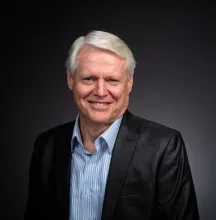
John Elliott serves in the role of President of the United Church of God, an International Association.
