
Roy Holladay
This transcript was generated by AI and may contain errors. It is provided to assist those who may not be able to listen to the message.
8.
The most obvious is through the Scriptures. God's given us a revelation here, and by revelation, by His Spirit, inspiring and opening our minds, what is hidden from the world is revealed to us. We know that for the world, most of what the Bible writes are called mysteries that they don't understand, but we do. So that's one way, one obvious way, through inspiration and guidance of the Holy Spirit in reading and studying the Scriptures. Also, when you study through the construction of the tabernacle and all of the ceremonies surrounding the tabernacle, it reveals God's plan likewise.
It shows us what we must do to be able to approach to God to be able to reach Him and what our ultimate objective is and who made it all possible. Actually, when you begin to look at something like the tabernacle, it emphasizes a particular aspect of the plan of God, but it also helps to give us the overall picture of what God's working out. Same is true of the sacrificial system. The emphasis there is more on the sacrifice, what kind of sacrifice you and I ought to be, but it also helps to explain the plan of God.
However, there's another aspect or another way that we want to focus on today, and that is God's annual Holy Days or God's festivals. That the festivals of God reveal the plan of God in sequence, one thing after another. We come to the third part of that plan, the Day of Atonement.
We observe the Passover, which picture Jesus Christ's sacrifice for our sins, our acceptance of that sacrifice. Also, the Days of Unleavened Bread, which picture Israel coming out of Egypt, our coming out of sin, putting sin out of our lives, striving to be righteous and to do what God wants us to do. Now we come to the Day of Pentecost. And let's take a look at how Pentecost helps us to understand God's plan, as it's revealed to us in the Scriptures. If you will take your Bibles and turn back here to Acts 2.
Acts 2. I notice I've got my bigger Bible today. My Bible and my notes don't both fit on this podium up here very well. But Acts 2 says, now when the Day of Pentecost had fully come, they were all with one accord in one place. Now I want you to notice several striking things about verse 1.
Number 1, Pentecost is a day. It's not an experience. Today you have what's called the Pentecostal movement, and it's where people jump up and down and shout and roll in the aisles. They're trying to pray down the Spirit. They're trying to duplicate the experience back here in chapter 2. The word for Pentecost means fiftieth. We used to say, count fifty, but that's not what it means. It just means the fiftieth. It is the fiftieth day. Now the question is, fiftieth day from what? And that's one of the things that we're going to answer.
This is a festival of God that he instituted in the Old Testament, but which we see continue to be observed in the New Testament. I'll just give you one example. Acts chapter 20. You might hold your place here, but Acts 20.16. We read this. Acts 20 verse 16. Paul had decided to sail past Ephesus so that he would not have to spend time in Asia, for he was hurrying to be at Jerusalem, if possible, on the day of Pentecost.
Now why would he want to be in Jerusalem on Pentecost except to observe Pentecost? And here he was, the apostle to the Gentiles. Okay, let's back up here to verse 2 of Acts 2. And you'll find something else. It says, Suddenly there came a sound from heaven as of a rushing, mighty wind, and it filled the whole house where they were sitting.
Then there appeared to them divided tongues as of fire, and one set on each one of them. And they were all filled with the Holy Spirit, and they began to speak with other tongues as the Spirit gave them utterance. Now again, as I mentioned, the Pentecostal movement, many of them tried to replicate or duplicate this experience. So they will get in church, they'll sing, they'll holler, they'll jump up and down, they'll fall on the floor, they will pray, they'll go through all of these gyrations trying to get a baptism of the Holy Spirit.
But I want you to notice some of the facts of this. Verse 2, the sound didn't come from the people. The sound came from God. It says here, there came a sound from heaven as a rushing, mighty wind. And I want you to notice the people were sitting. They were not standing up and down, and they didn't know exactly what was going to happen. But they were waiting. They had been told stay in Jerusalem until the promise comes. Now verse 3, in the NSB translation, we read it this way.
And there appeared to them tongues as of fire, distributing themselves, and they rested each one on them. Sometimes people, when they read this section, think that the fire was like a forked tongue, you know, it said on them. Now it's talking, if you've ever seen a fire, flames coming up, there all kind of, you know, flames come up, and some will go this way and that way and shoot all over. That's the way this was. There was fire, and out from it came different flames. They rested on them, and they were all filled with the Holy Spirit. This was 120 in the upper room at this time on the day of Pentecost. And they spake as the Spirit gave them utterance. Now I don't have time to go through the rest of this chapter, but as you go through, you'll notice that the tongues that they spoke in are not quote-unquote unknown tongues. They're languages, and they were languages that the people understood. Just verse 11, the Cretans and the Arabs says, we hear them speak in their own tongues, the wonderful works of God, not only just language, but in their own dialect.
Be like somebody speaking southern and somebody else speaking northern or, you know, western or whatever it might be. They spoke in a way that identified with the people.
Now this was a fulfillment of what Jesus Christ had promised. Back up to chapter 1, verse 4 of the book of Acts. Notice what Christ had told his disciples. Being assembled together with them, he commanded them that they not depart from Jerusalem, but wait for the promise of the Father, which he said, you've heard from me. So what was that promise? For John truly baptized with water, but you shall be baptized with the Holy Spirit not many days from now.
Therefore, when they had come together, they asked him, saying, were you going to restore the kingdom at this time? And he said, verse 7, you don't know the hour, day, time, and so on. But verse 8, you shall receive power when the Holy Spirit has come upon you. So notice what the Holy Spirit would do for them. You'll receive power, and you shall be witnesses to me in Jerusalem, Judea, Samaria, and to the ends of the earth. So they were going to be witnesses. The Spirit of God would help them carry out the work of God at that time. So one of the fulfillments of the day of the day of Pentecost was the giving of the Holy Spirit. The Holy Spirit was poured out and made available to the church, to those that God was calling. Now in verse 37, we find, over here in chapter 2 again, notice Peter stood up, gave this inspiring sermon, motivated many of them. When they heard this, they were cut to the heart, and they said to Peter and the rest of the apostles, men and brethren, what shall we do? What do we need to do? Peter said to them, repent, let every one of you be baptized in the name of Jesus Christ, for the remission of sins, and you shall receive the gift of the Holy Spirit. For the promise is to you and to your children, and to all whom are far off, as many as the Lord our God will call. So notice again the promise from God, which is the Holy Spirit. And then in verse 41, those who gladly received the word were baptized, and that day about 3,000 souls were added to them. So a second fulfillment of that day is that God started the New Testament church on the day of Pentecost. First, with 120 in the upper room, then later on 3,000 were added to the church. Now remember this, it is the Spirit of God that makes you a member of the church. It's not being baptized, that's part of the process, but it is actually receiving God's Spirit. 1 Corinthians 12-13. The scope of 1 Corinthians 12-13.
How do we know who's in the church? Who's a member of the church? Who's not?
What we read here, for by one Spirit we were all baptized into one body.
For the Jews are Greek, slaves are free, and have all been made to drink into one Spirit.
So it is the Spirit of God that baptizes or immerses us or places us into the body.
So, brethren, it is having God's Spirit. Now you do have to repent, you do have to be baptized, and upon genuine repentance and baptism, through the laying on of hands, God gives you the Holy Spirit.
That makes you a member of the church. Now in the Old Testament church, or the Old Testament, this festival was not referred to by the term Pentecost. But you and I would not understand the meaning without going back to the Old Testament. So let's go back to where the first reference to Pentecost is mentioned, back in Exodus chapter 23 and verse 14.
Exodus chapter 23 and verse 14. And let's notice here.
Three times you shall keep a feast to me in the year, God says. You shall keep the feast of unleavened bread, and you shall eat unleavened bread seven days as I command you, at the time appointed, in the month of Abib, for in it you came out of Egypt. None shall appear before me empty.
Now verse 16. And the feast of harvest, the firstfruits of your labors, which you have sown in the field, and the feast of end-gathering, which is at the end of the year, that's the feast of tabernacles. So in the Old Testament, this was called the feast of harvest, the firstfruits of your labors. So you'll notice harvest is connected with this feast, and this is the early harvest, the spring harvest. Firstfruits are connected with it also. Now, in chapter 34, if you'll just turn over a few pages, Exodus 34 and verse 22, God says here, you shall observe the feast of weeks. So it's also called the feast of weeks.
You count seven weeks, or you count seven Sabbaths, and then the next day, the fiftieth day, is Pentecost. So notice, you shall observe the feast of weeks of the firstfruits of the wheat harvest and the feast of end-gathering at the end or years end. So it's the firstfruit of the wheat harvest. So there are three aspects you find in the Old Testament. Number one, it's called the feast of weeks. Why? Well, you've got to count. You've got to count seven weeks, or seven Sabbaths. Number two, it has to do with firstfruits. And number three, it has to do with the harvest. So all of those aspects have some weight, some meaning, some connection with what we call the day of Pentecost. So let's take a look at each one of those quickly, individually, and look at, first of all, the feast of weeks. Take a look at the feast of weeks.
In Leviticus 23, let's turn over to Leviticus 23. You will discover that all the holy days, except Pentecost, have a definite day, definite date that is given for their observance. We read in verse 5, on the 14th day of the first month at twilight is the Lord's Passover. So there's no confusion. You have a calendar. You look at the 14th day when it starts. That's when you keep the Passover. So it's clear. Verse 6, on the 15th day of the same month is the feast of unleavened bread to the Lord. So on the month Abib, 15th day to the 21st, you observe the days of unleavened bread. Now verse 24, feast of trumpets. Speak to the children of Israel, saying that in the seventh month, that's the month Tishri, on the first day of the month, you shall have a Sabbath rest, a memorial, a blowing of trumpets, a holy convocation.
Remember, a holy convocation is a commanded assembly, a sacred assembly, that they were to meet on. So the feast of trumpets is always on the first day of the seventh month. Now verse 27 says, also the tenth day of the seventh month shall be the day of atonement.
So it begins at sunset, you know, the previous evening to the sunset that evening. So on that day, we have the day of atonement, the seventh month. Now the feast of tabernacles in verse 34, speak to the children of Israel, saying the fifteenth day of the seventh month shall be the feast of tabernacles for seven days to the Lord, or as it's also called, the feast of in-gathering.
So that's specified, fifteenth day. And then the last day, or the eighth day, verse 36, for seven days you shall offer an offering made by fire to the Lord, and on the eighth day you shall have a holy convocation, and you shall offer an offering made by fire. And then they were to have a sacred assembly. So that was on the 22nd day of the seventh month. Count seven days, next day the eighth would be the eighth day. Those are all clear. We don't become confused about that day. But you know what? People have become confused over how to count Pentecosts. And in the past, we were confused as to exactly how should we observe, not how to observe, but how to count this particular day. Let's back up to verse 15 and take a look at the instructions that are given concerning this day. We are told you shall count. Anytime you count, you get into trouble. And so you shall count for yourselves from the day after the Sabbath. Well, that seems simple.
The question is which Sabbath? Weekly Sabbath or annual Sabbath? So that's where the rub comes in.
You shall count from that day that you brought the sheave of the wave offering. Seven Sabbaths shall be completed. Count 50 days to the day after the seventh Sabbath. Then you shall offer a new grain offering to the Lord. Okay, the Pharisees interpreted the Sabbath here as literally the Sabbath. Well, they interpret the Sabbath as the first day of unleavened bread.
That's what they thought. So they thought, well, you begin to count the next day afterwards.
Guess what? That always brings you to a specific day on the calendar. Seven to six. It's always there. Now, that's what the Jews do today. That's why they keep that particular day, because they follow what the Pharisees did. Now, you have to remember there were eight or ten fairly large sects back in Christ's day. The Pharisees were one of them. Sadducees were another. Essenines were another one. They all had different ideas and different ways of doing things. Now, the Sadducees were in charge of the temple up until 70 AD when Titus and Vai Jerusalem destroyed the temple. The Sadducees took the word to mean literally the Sabbath after the beginning of the Passover festival, the weekly Sabbath. And notice for them Pentecost would always fall on a Sunday, because if you count seven weeks beginning on a Sabbath and then come to the seventh day, you're always going to come to a Sunday. Notice what the new Bible Dictionary article calendar has to say. In general, the Jewish calendar in New Testament time, at least before AD 70, followed the Sadducees' reckoning, since it was by that reckoning that the temple services were regulated. Thus, the day of Pentecost was reckoned as the 50th day after the presentation of the first harvest sheave of barley, the 50th day inclusive from the first Sunday after Passover. Hence, it always fell on a Sunday, as it does on the Christian calendar.
The Pharisees' reckoning, which became standard after AD 70, interpreted Sabbath as the festival day of the days of Unleavened Bread. And so for them, it always fell on a day of the month.
Why does God say count if it's a day of the month? Every other festival is on a day of the month. He gives it. Why not this one? If you remember, we have always traditionally taught that the wave-sheaf offering that was offered up at the end of the Sabbath pictured Christ being resurrected, and that he had been in the tomb three days and three nights, was put in shortly before sunset.
And so, shortly towards the end of the weekly Sabbath, he was resurrected.
In the morning when the women came to see him, he said, touch me not. I'm not yet ascended to my Father and your Father, but go tell my disciples you let I ascend to my God and your God.
So apparently, on that day, the wave-sheaf offering was a symbol of Jesus Christ rising up after his resurrection and being accepted to the Father. He came back to the earth, was here for 40 days, taught his disciples, and then he ascended up and he's on the right hand of God at this point. So when you look at what happened to Christ that week, he was crucified, he had to pass over. Christ was crucified on a Wednesday, put in the grave. He came out and was resurrected Saturday evening, shortly before sunset, and then he ascends the next day to the Father.
So the wave-sheaf, if we understand the wave-sheaf offering correctly, and I think we do, shows it was a weekly Sabbath. It was after the weekly Sabbath that they did this, and I'll get into that a little more as we go along. I want you to back up to verse 15, and I want you to notice something specific about this verse. Verse 15 says, You shall count for yourself from the day after the Sabbath. What is the day after the Sabbath?
That's a Sunday. Okay, now we're to count from that day. So do we count that day, or do we start counting on Monday? This Armstrong years ago, when he read that verse, said, Well, if you count from that day, you begin on Monday. And that's why we always came up with the Monday Pentecost. But the word in the Greek is the Greek preposition, me, M-I, or mim. M-I-N. Expression is memahoroth. It's used 28 times in the Old Testament, and 26 times it's translated or rendered on the morrow. In other words, on the next day, or on tomorrow. Once it's translated from, guess where? Right here. And once it's translated unto, and guess where? Well, verse 16. Well, if they'd been consistent with the translation, I don't think we'd had a problem. What you can translate verse 15 as is simply this.
You shall count for yourself beginning on the next day after the Sabbath. So you begin on the next day. That's a Sunday. Count seven days. That brings you to the Sabbath. Count seven, you know, seven Sabbaths or seven weeks, however you want to count it. The next day is a Sunday, and that's the day of Pentecost. The word, me, mahoreth, here, me is a shortened form of the Hebrew preposition, mem, and has various meanings. It can be translated in several different ways from of, by, at, on, but. However, when it's used in conjunction with the element of time, you're counting time. It is always used inclusively, never exclusively. Inclusive means it includes a period of time being counted. So you begin on Sunday, counting. Notice in chapter 22, right across the page of my Bible, verse 27, we have another place where me is used, or mem.
Verse 27, it says, when a bull or a sheep or goat is born, it shall be seven days with its mother, and from the eighth day and thereafter you shall be accepted as an offering made by fire to the Lord. That can be translated again from beginning on the eighth day and thereafter. So you let it nurse for seven days, then beginning on the eighth day forward, it could be offered up as an offering to God. So there, again, the element of time is being used with it. Now let's back up to verse 9, and let's see what day did they bring the wave sheaf offering, and what did it picture? Verse 9, the Lord spoke to Moses, saying, Speak to the children of Israel. Say to them that when you come into the land which I give to you, and reap its harvest, then you shall bring a sheave of the first fruits of your harvest to the priest. He shall wave the sheave before the Lord, be accepted on your behalf on the day after the Sabbath. So what day was it offered on? On the day after the Sabbath, or on Sunday. The priest shall wave it, and you shall offer on that day when you wave the sheave. A male, he goes on talking about various offerings that were to be offered. That was on a Sunday. Now, verse 14, you shall eat neither bread, nor parts grain, nor fresh grain, nor, in other words, newly picked grain, until the same day that you have brought an offering to your God, you shall be a statute forever throughout your generations in all of your dwellings. Important to notice, this sheave is called the sheave of the first fruits.
It was to be offered on the day after the weekly Sabbath, and they could not begin the harvest. In other words, they could not go out and start really harvesting until the wave sheave had been offered to God. And again, as I said, that picture, Jesus Christ. Now, with that in mind, I want you to notice another scripture. It doesn't tie in with this Holy Day, but just notice it. We'll tie it all together and we get to the New Testament.
Exodus 34, verse 26. Exodus 34, verse 26. We read, The first of the first fruits of your land you shall bring to the house of the Lord your God.
You shall not boil a young goat in its mother's milk.
Okay, the better translation of this first of the first fruits is to bring the best of the first fruits. Bring the best. When they brought animals, when a farmer brought an animal, he wasn't to look at a sickly animal or one that was skinny, this type of thing. He was to bring the best to God for an offering. Well, the same thing was true when it came to the crops.
They couldn't look around and say, oh, look at this old skinny tomato over here. It's blighted.
It doesn't look too good. It's gnarled. I'll give that to God, to the priests.
Oh boy, look at this luscious, big, wonderful tomato. I'll keep that.
No, bring the best, God said, to him. And there was a reason for that.
Now, with all of that in mind, let's go back to 1 Corinthians 15, verse 20.
1 Corinthians 15, and we will read here in verse 20.
We read that now Christ is risen from the dead.
We know that Christ was dead three days, three nights in the heart of the earth.
And he has become, what? The first fruits of those who have fallen asleep. So Jesus Christ is called the first fruits. And as we will see, he is the first of the first fruits.
He's the first one of the first fruits to be resurrected.
And then verse 23, but each one in his own order.
Well, verse 22 says, as Adam all died, even so in Christ, all shall be made alive.
But each one in his own order, Christ the first fruits, afterwards those who are Christ at his coming.
So Christ again is called the first fruits.
This is mentioned again over here in the book of Acts, Acts chapter 26, and verse 23, if you'll notice.
Acts 26, verse 23. And this is also mentioned over here in the book of Acts, verse 23.
That the Christ should suffer, that he would be the first to rise from the dead.
So Jesus Christ was the first.
He went before us all. He showed that it's possible.
And that he would proclaim light to the Jewish people and to the Gentiles.
Philippians 2, verse 5.
Let's notice here.
Chapter 2 and verse 5.
Says, let this mind be in you, which was also in Christ Jesus.
And verse 6, who, being in the form of God, did not consider it robbery to be equal with God, or a thing to be grasped at, or held on to.
But he made himself of no reputation. He emptied himself.
He gave up his existence as a glorified spirit being.
Came to the earth and became God in the flesh.
Taking the form of a servant and coming in the likeness of men.
Being found in appearance as a man, he humbled himself and became obedient to the point of death, even the death of the cross.
Therefore, God also as highly exalted him and given him the name, which is above every name, that at the name of Jesus every knee should bow.
So Jesus Christ has a name, the word in the Greek for name, generally stands for office, duty, responsibility.
Jesus Christ, he is the best.
He will have the highest office, the greatest responsibility, the greatest duty.
He is the first fruit, but he will rule under the Father overall.
So in that sense, you could say he is the best of the first fruits.
Now, in Revelation 20, beginning in verse 4, we have clearly pointed out to us that there's more than one resurrection. In verse 4, it says, So here's the first resurrection.
It is the resurrection at the beginning of the millennium, and it's the resurrection of those that God has called during the first six thousand years, going all the way back to Abel, Enoch, Noah, Abraham, Isaac, Jacob, Moses, David, coming through the prophets, down to the New Testament Church, all of these individuals. It says they lived, so they came to life again. They were resurrected, and they reigned with Christ for a thousand years.
But the rest of the dead, everybody else, did not live again until the thousand years were finished.
This is the first resurrection.
So the first resurrection is a resurrection to eternal life and mortality at Christ's Second Coming.
Blessed and holy is he who has part in the first resurrection.
On such the second death is no power, but they will be priests to God.
They'll reign with him for a thousand years. So the Bible is very explicit about that.
The Bible clearly shows by this scripture that there are two harvest seasons.
They, they of Pentecost, pictures the early harvest, the spring harvest, the light harvest.
It pictures those who will be resurrected at Christ's return, and therefore it is referred to as the first.
The second harvest is the one in the fall. All of the billions of people who have never understood God's way of life, his calling, will be given an opportunity for salvation. They'll be resurrected, have their minds open, be given a chance. They just simply have not had an opportunity at yet. So the, it pictures the two harvest seasons, the spring harvest being a smaller harvest, fall harvest much greater. The first resurrection will be the resurrection of the first fruits, those called to salvation. Now notice Romans 8 23. Romans chapter 8 23.
We read this scripture says, not only they, but we are also who have the first fruits of the spirit.
So we're the first ones to have God's spirit, the first fruits of the spirit, even we ourselves, grown within ourselves, eagerly waiting for the adoption. Now in James 1 18, James chapter 1 verse 18, we find even a clearer statement here.
Says of his own will he brought us forth by the word of truth, that we might be a kind of first fruits of his creation, or creatures. The word creatures there in the Greek simply means that which has been created. So out of the ones that God has created, we are the first and we are called the first fruits of his creation. So we're the first ones to trust in God and we will be the first to have an opportunity to be in the resurrection.
How do I know? Revelation 14 and verse 4. Revelation chapter 14 4 describes Christ coming back, sea of glass, resurrection having taken place, and notice who's there with him.
These are those who were not defiled with women, hadn't gotten involved with the wrong churches.
Remember, it says, for they are virgins.
Revelation 17 talks about people being involved in a false system and calls them harlots, prostitutes, and so on. It says, these are the ones who were not defiled with women, for they are virgins. They are the ones who follow the Lamb wherever he goes.
These were redeemed from among men, being first fruits to God and to the Lamb. So here you find the first fruits are resurrected as Christ is coming back to this earth, and he's finishing pouring out the final plagues on this earth.
As you will remember, back in Exodus 34.22, a harvest is referred to as the first fruits of the wheat harvest. It pictured a harvest, the first harvest. Now, it's ironic, you and I are part of that first harvest. We have been called now also and have a dual responsibility. God is in the process of harvesting his family, putting together his family, and he calls it a harvest. But he has called us to be a part of that harvest, in other words, to be a part of the resurrection in the future. But he's also called us to be laborers in that harvest. So we have a dual responsibility. We are called to assist him in the world tomorrow when the resurrection takes place, but we also have a responsibility to help in the harvest now, as a harvest goes on. Remember over here in Matthew 9.35, Jesus Christ, looking at a number of the Jews of his day, they were scattered, not having anyone to lead and guide and direct them. Well, this is what Christ had to say. Jesus went about all the cities and villages teaching in their synagogues, preaching the gospel of the kingdom, and healing every sickness and every disease among the people. But when he saw the multitudes, he was moved with compassion for them because they were weary. They were scattered like sheep, having no shepherd. And he said to his disciples, The harvest truly is plenteous. Be like you if you had a hundred acres out here and you plant a crop, and you've got this crop growing, and you don't have anybody to harvest it. You see it growing, it's producing fruit, maybe it's wheat field, oat field, corn field. When I grew up on the farm, we used to grow wheat, oats, corn, all kinds of things. And when it came time to harvest them, that's all you did. You harvested until you got it in.
So he says, look, the harvest truly is plenteous, but the laborers are few. Not many are called today, but a few. But he says, therefore, pray the Lord of the harvest to send out laborers into his harvest. So the harvest goes on. People are being harvested. But Christ said, if you want to know something to pray according to God's will, here it is. Pray that God will send laborers into the harvest. That God will send those who can help with that. So we are a part of the first harvest, but we've also been called to help with the harvest, a two-fold function. Now, in chapter 13, just a few verses from here, chapter 13, verse 24, Jesus Christ gives a parable that pertains to the harvest. It says another parable he put forth to them, chapter 13, book of Matthew, verse 24, saying, the kingdom of heaven is like a man who sowed good seed in his field. But while men slept, his enemies came, and sowed tares, or his enemy came, and sowed tares among the wheat and went his way. But when the grain had sprout and produced a crop, then the tares also appeared. So the servant of the owner came and said him, sir, did you not sow good seed in your field, and how then does it have tares? And he said to them, an enemy has done this. And the servant said to him, do you want us then to go gather them up? Do you want us to go pull those tares out? And he said, no, lest while you gather up the tares, you also uproot the wheat with them. Let them grow together until the harvest. Notice there's going to come a time when God will say, this person's in my kingdom, this person is not. He is the one who's going to decide the time of the harvest, which go into his barn, which do not go into his barn. He says, let them grow together until the harvest, and at the time of the harvest I will say to the reapers, first gather the tares and bind them in bundles to burn them, but gather the wheat into my barn. So he's very explicit about that. But what exactly is this talking about? Well, verse 36. Jesus sent the multitude away, went into the house, disciples came to him, said, please explain to us the meaning of the parable of tares. He answered and said to them, he who sows the good seed is the Son of God. So God's responsible for sowing the seed. Now the question is, how does God sow the seed? Do you just sort of walk around?
One day you hear, Charlotte! Oh, Charlotte! God's calling you! Is that the way God calls us? How does God call us? Well, let's read the rest of it. I think we'll see. It says, the field is the world, the good seed are the sons of the kingdom, but the tares are the sons of the wicked one.
The enemy who sowed them is the devil. The harvest is the end of the age. That's when the harvest is going to take place. Christ's return, the resurrection, the reapers are the angels. They're going to go around and collect those around the world. Therefore, as the tares are gathered and burned in the fire, so will be at the end of the age. The Son of Man will send out his angels, and they will gather out of his kingdom all things that offend those who practice lawlessness. Cast them into the furnace of fire, and they will be where there will be wailing and gnashing of teeth. And then the righteous will shine forth as the Son in the kingdom of their Father, he who has a near, let him hear.
So obviously, the time of the resurrection. So what is the parable talking about? Well, it's talking about that today, that there are those who are truly converted in God's Church. And there are those who are not converted in God's Church. God says, let them go together.
There's going to come a day when those who are just sort of play-acting, who are not with it, who are not walking the walk, are going to have their works exposed. And they won't be in the kingdom. You'll find that they will be thrown in the furnace of fire, but the righteous will be in the resurrection in God's kingdom.
So God's very clear that there are those who are not converted, the terrors, who are among the good wheat. Now, God is looking for good workers in His harvest. If you ever ask yourself, why are we called now? Why didn't God just wait until the second resurrection, call us all at that time? Wouldn't it be a lot easier to know the truth then?
Well, God has called us now to help spread the gospel, the message of the kingdom of God to the world. Now, recently I've had some people tell me, that's God's job. It says here, He's the Lord of the harvest. It's God's job to preach the gospel. But how has God preached the gospel? The Father sent the Son to the earth. And what did the Son do for three and a half years? He went about preaching the kingdom of God.
He taught the apostles. Now, after He taught the apostles, what did they do? They go sit on a rock? Well, they went to the twelve tribes, and each one of them went to a different tribe. And they carried the message to those tribes, to those areas. They went all over the known world at that time. And they preached the gospel. God called Paul.
He was the apostle to the Gentiles. God called Barnabas. God called Timothy. Titus, Silas. You can go on and on. Evangelists and ministers said God called. They preached the gospel. Now, we understand that God does the calling. You see, we don't do the calling, but the message goes out. Just like you can watch on television, there's an ad. Millions of people can see that ad. Probably a few hundred who might respond to it. That's the way it is today. The message goes out. How? Radio, TV, printed words, booklets, magazines, programs, personal example, church service, public speaking, and so on. It goes out. Some people think, because we're doing the kingdom of God seminars, that we are trying to convert people.
God does the calling. God does the converting. The seminars just help to spread the word, spread the information, preach the word. If God's working with somebody, he will come to the point where he will say, Aha! And you'll understand. You have to realize, many of you will remember back when you first heard the World Tomorrow broadcast, did you know there was a local church? Did you know there was a local group? How long did it take you to find out that you didn't have to go to Pasadena to attend church?
Well, a lot of people actually sat for years thinking, I can't get out to Pasadena. I'll never be able to attend. There was a local church right there where they live. Well, one of the things that the Kingdom of God seminars are doing is at least letting the public, everybody who reads our magazine, watches our program, know that we have local churches in your area. And they're having Kingdom of God seminars.
You go over here and check it out. So, people are being made aware that the United Church of God is around. Notice what Paul wrote in the book of Romans 10, verse 14. Romans 10, 14. It says, How shall they call on him in whom they have not believed?
How are you going to call on somebody who can't believe in him, or don't believe? And how shall they believe in him in whom they have not heard? And how shall they hear without a preacher? Somebody's got to proclaim the message. And how shall they preach unless they are sent? As it is written, how beautiful are the feet of those who preach the gospel of peace, who bring glad tidings of good things. But they have not all obeyed the gospel, Isaiah said. Says, Lord, who has believed our report. So then faith comes by hearing and hearing by the Word of God.
So the message goes out. Some people respond. That's God's doing. He calls, but he expects us to get the message out. There are some today who feel well, work's all done, and so they're not doing anything. They're just sort of lazily sleeping during the harvest. Notice in Proverbs 10, an interesting Bible study, if you'd like to do it, is just look up every place where the word harvest is mentioned.
And some of the principles around harvest, harvesting, and tie it in with the fact that God is producing a harvest. But in Proverbs 10 and 4, it says, He who deals with a slack hand becomes poor, but the hand of the diligent makes one rich. He who gathers in the summer is a wise son. He who sleeps in the harvest is a son who causes shame. There are those who think the work is all over, and they are asleep. They're not doing anything. They're just taking it easy.
And yet God says, a harvest is plenteous. So we should not sleep during the harvest. Remember chapter 6, beginning in verse 6, Go to the ant, you slugger. The principle is we're not to be a slugger. We're not to be lazy. We are to work hard. God is looking for those who are willing to be diligent, hard workers, in his harvest. Somebody has to go into the harvest, so he's looking for his children to be reliable. So who are those called to the harvest? Are they perfect?
No. Are they sinless? No. But has God called us? Yes. Let's notice in Leviticus 23, one last scripture here, Leviticus 23 and verse 16, Leviticus 23, 16, where we come back to the day of Pentecost. It says, Count fifty days to the day after the seventh Sabbath, then you shall offer up a new grain, offering. Then verse 17, You shall bring from your habitation two wavelengths, a two tenths of ephod, and they shall be a fine flower, they shall be baked with leaven. Now in all of the other wave sheep offering, grain offerings, God specifically said not to use leavening, but in these two, leavening in Jews.
They are, what do they represent? The firstfruits of the Lord. Now in the Bible in Jeremiah 2.3, we find that Israel was referred to as the firstfruits of God. So anciently, they were the first nation that God called and worked with, that he was going to have lived his way, and they would be an example to all other nations, and they failed miserably. Today, the church, as we found in James 1.18, we are the firstfruits.
We are the ones that God is working through. We are spiritual Israel today, the Israel of God. And so we are the firstfruits. And yes, as this scripture shows, we're not perfect, but God doesn't say you have to be perfect. You've got to be striving to overcome.
You've got to be trying to overcome. You've got to be going this way. He who overcomes and endures to the end will be saved. So we have to be striving. So brethren, beginning at sunset tonight is the day of Pentecost to God. This is a holy day. It is the third step in God's plan, after the Passover and the days of Unleavened Bread. We count to know when to observe this day. It's called the Feast of Weeks. It pictures the harvest. It pictures the first harvest, a smaller harvest of the saints, those called to the first resurrection.
It also pictures the firstfruits, those first called to salvation. We are a part of the harvest. We hope when Christ comes back that we will be changed and made immortal. We've been called to be the children of the resurrection, but we've also been called to participate in the harvest, to do work in the harvest. This day pictures the giving of the Holy Spirit on the day of Pentecost. It also marks the beginning of the New Testament Church.
So we need to realize what tremendous blessing it is to be accounted among the firstfruits. So let's not take that for granted. We will learn more tomorrow on the day of Pentecost about the meaning of the day.
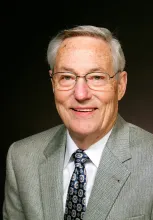
At the time of his retirement in 2016, Roy Holladay was serving the Operation Manager for Ministerial and Member Services of the United Church of God. Mr. and Mrs. Holladay have served in Pittsburgh, Akron, Toledo, Wheeling, Charleston, Uniontown, San Antonio, Austin, Corpus Christi, Uvalde, the Rio Grand Valley, Richmond, Norfolk, Arlington, Hinsdale, Chicago North, St. Petersburg, New Port Richey, Fort Myers, Miami, West Palm Beach, Big Sandy, Texarkana, Chattanooga and Rome congregations.
Roy Holladay was instrumental in the founding of the United Church of God, serving on the transitional board and later on the Council of Elders for nine years (acting as chairman for four-plus years). Mr. Holladay was the United Church of God president for three years (May 2002-July 2005). Over the years he was an instructor at Ambassador Bible College and was a festival coordinator for nine years.
