
Steve Shafer
Two powerful events came together on December 7, 2024. One is the remembrance of the attack on Pearl Harbor coupled with our observance of the 7th Day Sabbath. Human nature has a tendency to remember to forget and forget to remember. "Lest we forget" how do we remember not only what is past, but keep in focus and remember with hope what "The 5th Horseman of Revelation" will bring forth in the future.
I am looking forward to bringing this message to you today here and those that may hear it in the future. It's a message that is challenging to share because of some of the material that I'm going to be offering to you to be able to come to point. But I feel that it needs to be given. You know, the Scripture says to give meat in due season. And sometimes meat as we go through the year and come to certain calendar dates and to recognize that there's a purpose behind all of this.
That one day God, the God that we just heard about, this loving, merciful, intervening God, is going to bring forth to all humanity. We're not quite there yet, but there is a specific need in so doing. Today is a unique experience, very unique, in which two dates, two dates on our calendars, signifying two separate world-changing events, merge to grant us understanding today and tomorrow and in the future about the purposes of God here below. It's interesting these two dates are incredible that they're here today and I got to thinking about this about three days ago.
Today, if you have forgotten and have not remembered, is Pearl Harbor Day. And yes, it is also the weekly Sabbath. Whose Lord and master is none other than the Lord Jesus Christ, who said, I am the Lord of the Sabbath. Amazing, then, that we have December 7th and we have the seventh day Sabbath. And they come together for us in this moment, you that are listening and that will listen to the future to understand ultimately what God is doing here below. Thus, I would share some thoughts about this day, knowing there is a central attribute regarding human nature that we all tend to practice too much, that we forget to remember and we remember to forget.
It's very interesting that as Susan and I were coming down the 15 freeway today, all the flags were basically at full mast. We saw one flag that was at half mast, but all the rest were full. As time goes forward and goes on, generations arise or maybe we that were alive or are at least aware of the facts begin to forget. But there are some things that we should not forget. And as I wind up this message towards the end, which this will lead to God wants us to remember something every day of our life that ultimately he is going to intervene in human history.
Once and forever. And there are some surprises along the way past, present and future. And to understand ultimately what God wants, wants to bring to humanity that humanity cannot bring to itself. Therefore, the title of this message is simply this. December 7th and the seventh day Sabbath. Lest we forget. And it's not only forgetting what is past, but also what God has in store for us in the future, because sometimes we get so swallowed up.
What's actually happening in a moment and in our time and perhaps thinking it's too much. And the more the more we don't think about it, the more we won't think about it. So let's talk about that Pearl Harbor. Honolulu, Hawaii. 1941. The world changes. Because America is attacked in a heinous surprise attack on a neutral country by the Japanese empire. After that, nothing will be the same in world history up to our point today. This colossus on the North American continent that wants to be isolated from the rest of the world doesn't want to get involved with the old world.
Yes, we will do kind of what we're doing with Ukraine today. We will supply arms. We will supply what might be needed. But we've already, as we say, been there, done that. We saved the old world back in World War One with a late entry into that war. Oh, and by the way, that war, what was then called the Great War, that was called later on the war to end all wars.
I have a question for you. How did that work? And that was traumatic because that was the first great world war. There had been world wars before, in a sense, on the Eurasian landmass, if you want to call it. But this got everybody involved along the way. The attack on Pearl Harbor was a surprise military strike was strike by the Japanese empire. It was a normal Sunday morning with everybody waking up in the Hawaiian Islands.
The population was much smaller than it is today. Honolulu was there. The Royal Hawaiian Hotel, the old grand dame of Susan, I've had a chance to walk through that one time, was there. The sailors were kind of going back and forth, relaxed.
After all, it was Sunday morning and then something happened. Something horrible happened. And at this time, when it happened again, as I stated, America was a neutral country in World War, what would become ultimately titled World War Two.
The attack on Hawaii and other U.S. territories led us ultimately into entry into World War Two, as I stated. After this attack, we would declare war on the Japanese empire on the next day on December 8th. And I'll come to that in a moment. Let's just talk about what happened. And this is an audience that can probably understand this, as well as any audience outside of perhaps Honolulu itself, our Hawaiian brethren, or maybe up in Seattle or maybe back in Virginia, Newport News, and in that area, because San Diego, after all, has for the last three years been what?
It's been a Navy town. We go down to the harbor and what do we see? We see destroyers. We see aircraft carrier. I think there's normally about two to three, four aircraft carrier they can see right off of the Embarcadero. Sounds like I'm a San Diegan, right? I grew up here, been on those ships, looked at them and understand it. And so that's what was happening. On that morning, though, Pearl Harbor, which was the naval base at Honolulu, and I want you to think about this for a moment. The base was attacked by 353 Imperial Japanese aircraft. Wow. Including fighters, level and dive bombers, and torpedo bombers.
And it came in two waves. Now, have you ever seen a flock of birds? You know, sometimes when you really get out in the country, up in the Central Valley or back in the Midwest, or you see a bunch of swallows dive bombing going, it's like a big cloud. You go, wow, can you imagine? How many you try to count after, you know, three because you're going so quickly, you lose it. 300, I want you to think about this for a moment, 353 enemy aircraft coming onto this harbor.
And they came in two waves. Obviously, destruction would follow. Of the eight United States Navy battleships present, all were damaged and four were sunk. One of them remains sunk as a memorial for all times. USS Arizona, which perhaps we've seen pictures of. The others were later raised and six were actually returned to active service and went to fight in the war. The Japanese also sank or destroyed. And we see these in our harbor here in San Diego.
They destroyed three cruisers. They destroyed three destroyers, an anti-aircraft training ship, and one mind layer. More than 180 US aircraft were destroyed. I want you to just kind of wrap your mind around that as this is December 7th, Pearl Harbor Day, lest we forget. A total of 2,923 Americans died that day on that heinous attack on a neutral country.
It would be the deadliest foreign attack to occur on US soil until in our lifetime, in which we remember, on 2001, when nearly 3,000 people were killed in the bombing and the destruction of the Twin Towers in Manhattan. Japan declared war on America and the British Empire later that day.
They were both declared war upon. The British Empire had much land, much territory in Southeast Asia. Both would be declared war against by Japan. The United States Congress, our Congress, would declare war the next day on December 8th. I think all of us, any student of history, or just a little bit of history, remembers the story of Franklin Delano Roosevelt in the opening line of his speech to a joint session of Congress that next day, when he would famously label December 7th, 1941 as a date which will live in infamy, and well it should.
A little bit more of the story before we start adding points like Matt did in his. An isolated America in righteous indignation once again catapulted onto the world stage. It thought it could stay off. It saved the old world once, wanted to come back, isolationist, characteristic, that the old world be the old world in Asia. Well, you know, we kind of got into it, but we couldn't stay out of it at all. What happened to follow after that surprise attack on Pearl Harbor as we went into war? Allow me to show you some figures. I'll be sending out my notes later. That's fine. So you'll get it. Eventually, 12.2 million Americans would serve in the armed forces. 12.2. That was in a country then of about 139 million. We're about two and a half times more populous than we were back in 1939. Imagine that. Basically one out of 10 people, a tithe of the nation fought in the war. Basically men, some women that were in the waves and others that would go out as well.
300,000 of our fellow Americans would die during World War II, not only in the Pacific, but of course also in Africa and also in the European continent.
300,000 would die. 700,000 would be wounded. And some of them would never recover. There would be a living death in that sense if we could put those two words together. And 120,000 would be prisoners of war during that time. For our country, for our nation, it started on this date that we need to remember, lest we forget. Lest we forget the sacrifice of our fellow Americans, some of our parents, some of our grandparents, some of you, a few of you. I won't call out names. We're alive, little infants at that time, very small infants. You're not that old, okay? Bob. Did I say Bob? Bob and others? Maybe Skip? I think Skip was like one year old maybe.
He's shaking his head. I'm not sure we're looking at that. Okay. But that was a surprise on America. Later on, another nation would be surprised in 1945, the one that we called War Upon based upon their invasion. And a surprise would occur in Hiroshima, Japan in 1945. On August 6th, an atomic bomb was dropped. 80,000 people were killed immediately, immediately.
Many other tens of thousands would die later due to radiation, chemical poisoning off of that. Just a little bit later, days later, because Japan would not surrender. Another city, Nagasaki. The city that had many Christians in it too, interestingly, but was then a military industrial complex there. In one minute, 40,000 people, in a flash, 40,000 people would die. Let's think of a town of 40,000 around here. I'm just thinking out loud. 40,000. Think of La Mesa. Everybody got La Mesa in their mind? Oh, hello. Some of you live by La... Oh, Bob lives in La Mesa. I grew up in La Mesa.
40,000 people dead like that because of what man had done. I want to leave a few thoughts with you here for a second, and it's simply this, some quotes, and then I'll get to more points here. It is well that war is so horrible, lest we grow fond of it.
Even as a victor, even maybe for a quote unquote, a righteous cause, how horrible war of and by itself is. Another comment by Edmund Burke, a Brit. War never leaves where it finds a nation. War never leaves where it finds a nation, and I'll speak to that in a moment. The third one that I'd like to share with you, a quote out of history, is by Herodotus, going back 2,500 years, and it simply says this, in peace, sons bury fathers. In war, in peace, I said in peace, excuse me, sons bury fathers, but in war, fathers bury sons. And that's something I just simply can't wrap my mind around when it comes to war. We know about this in San Diego. All we have to go is go out to Point Loma. Have you been out to Point Loma yet? Okay. And you go through Fort Rosecrans, don't you? And you see on the top of that point, on Fort Rosecrans, as you go to the old Spanish lighthouse, which is not that old, it's not Spanish, but it is a lighthouse. I'll talk about that another time. But there to recognize that you see that beautiful green and you see all of those white gravestones, some with the cross, some with the Star David, some with nothing. Many of those came out of not only the Spanish-American War, the World War I, but many of them came out of World War II.
And then the war ended. And those 12 million people had to go home. Start all over. Growing up, they had already as kids been through the Great Depression for 11 to 12 years if you go back to 1929. Life was pretty tough in many quarters of America. And then all of a sudden the news came. After everything they'd been through for a decade, the news came of the war and everybody wanted to rally around the war. We had been attacked. You know, there's something about, you know, okay, we're Americans. Remember the Alamo. Get up and get going. And people didn't even have to wait to be drafted. They were going in and volunteering to be drafted. And some of those southern boys down there that were 16, 18, you know, that were, they just, they got in before they were 18. But then all of a sudden it was over and everybody went home all at once. 12, not total 12 million, but most of those were back in America within the year and they had to start all over again.
And they came back. They'd left their fiances. They'd left their wives. They've left their little babies.
Hmm.
They'd left perhaps a good job, but they'd experienced something that no human being should experience and that's war. And what that does to a mind and what that does to a heart that you can't quite get rid of. You keep it with you the rest of your life. And they come home and they see their fiance. They see that beautiful gal or that handsome guy, but things have changed. They're not, they're not the same person that they were when they went to war. They've experienced things that have never been experienced before in their lives and they can't get rid of it. It stays with them. It's buried in. I know somebody like that. A young guy who was young out of the Midwest, graduated high school, went down to the University of Alabama, was there for two years. For two years and then the war came. When involuntary. He said goodbye to his fiance who was actually the girl literally who lived next door to him in Lagrange, which is a suburb just out of Chicago. They said goodbye. They wouldn't see one another for three and a half years.
That man would go to the South Pacific as many Americans went also to Europe and went under the shores of Normandy and Omaha Beach and et cetera, et cetera. When that man came back after three and a half years, he wasn't the same person. He'd seen things that human beings shouldn't see. He had three landings. Some of them you might know of. One most of us will know of is Guadalcanal. Another which one was Pella which most Marines and a lot of people that know their history will know about Pella Lou. I'll talk about that in a moment. And another one was in Boganville all along the Solomon Islands leading up to that ladder going up to Japan. When this individual landed was the war in Pella Lou, a descriptive following Pearl Harbor. The war in Pella Lou is that MacArthur wanted that island.
And he knew that there was a Japanese air base on there and he wanted that air base to help him launch his invasion back into the Philippines. They said it's going to take a week. It'll be all over. We'll take the island. It'll all be good.
Three months later, three months later, they take the island. There's 11,000 Japanese soldiers on that island.
After three months, there will only be 200 taken off that island alive.
And our troops will take incredible casualties and deaths as well.
To only take 200 Japanese soldiers off of an island tells you that a lot was going on on that island.
He comes back like so many other men.
And there's something burdening him down deep because men don't talk a lot. You know, they want to be brave. They don't want to share their feelings. So they bury it. But it comes out at night. By the way, if you haven't guessed, most of you know who I'm talking about. I'm talking about my dad, Jack Weber, who is only one of 12 million other GIs that are out there. He goes back to the girl next door. My mother, Thomasina, you would know her as Tommy. They get married. They have the Marine wedding underneath the swords, etc. But then they've got to go home. And there were times at night when my mother would wake up. And my father's hands were around her neck.
He was still at war. Hello. He was still at war. We have fancy words for today. P.S.A.T., etc. Syndrome. But all those guys came back at once. So how do you how do you institutionalize them? How to get the therapy for them to get the war out of them? Because you've got to go back to work. You want to marry your girlfriend. You want to marry your fiance. You want to get the job before the other guy gets the job. And so you're all doing this to get things going. And yet you bear the burden of war. My mother, a wise lady, simply said, as my father's hands were on her neck, thinking he was about to choke her, would say, Jack, Jack, you're dreaming.
It's OK. And go back to bed. How many times was that repeated in different ways and different instances because of what war does to a human being?
I ask you. And we remember their valor for what they accomplished. And for some purpose beyond that, God wanted America to go on as a bastion of for so many different reasons in today's world. But now, lest we forget, I talked about.
December 7th, let's talk about now about the Seventh Day Sabbath and that's we're going to do an exercise. You know, that's where I've gotten this worn out with this exercise. There were four points. I'm just going to make it a little bit simpler. Just joking. He's going to pass out his notes to everybody. I mean, I got a commitment. But now what about the Seventh Day Sabbath? Two numbers that come together on this year calendar, December 7th and the Seventh Day Sabbath. How do we bring those together? The word Sabbath, you might want to jot this down, both in the Hebrew, in the Old Testament and in the Greek, in the New Testament. The word means to cease.
To cease. To stop.
And it brings us therefore into remembrance, not only what God has done, but what God is going to yet do. And that is, Matt, a part of our culture, isn't it? To remember that we have a God that looks beyond the moment who wants to bring his kingdom to this earth, who states in Scripture, it'll be a surprise to everybody every day, but it's no surprise because it's in here that the Father is going to send Jesus Christ back to this earth. And there will be no more war. There will be no more corruption of the human psyche, even for good causes and perhaps needed causes.
But men and women will never again have to go through that grindstone.
And it continues. There's World War Two. There's Korea. Korea lost, in Korea we lost 55,000 soldiers. In Vietnam, we lost around 55 to 60,000 soldiers. And even in our recent lifetime, we have lost 7,000 of our fellow citizens over in Iraq and over in Afghanistan with the longest prolonged war that America has ever experienced. You know, war doesn't go away. War doesn't go away. Syria is at war right now amongst themselves. We have the situation in Israel and Gaza. We have this massive situation in Ukraine and Russia in which it's thought that probably up to 600,000 individuals have died just the last two years. 600,000.
Think of San Diego with 1.3 million people. Divide that in half. That's how many have died. Slavic cousins, basically out of the same culture of orthodoxy and ethnicity and history, slaughtering one another. That's all going to end. And the point I want to make today is simply this, the Sabbath. The Sabbath tells us not only what God has done, the Creator, or defines us as His people today, those that observe that commandment, but tells us what He's going to do in the future. And in the future, we know that there is going to be no more war. Join me if you would for a moment. I'm going to go just to a few verses just to put this into our minds. Let's go to Daniel 2 44. Daniel 2 44. Let's take a look here. Notice what it says. And in the days of these kings, the God of heaven will set up a kingdom which shall never be destroyed and the kingdom shall not be left to other people. Thank God. And I don't say that lightly. And it shall break in pieces and consume all of these kingdoms, all of them. And it shall stand forever. And as much as you saw that the stone was cut out of the mountain without hands and that it broke in pieces, the iron, the bronze, the clay and the silver and the gold, the great God is made known to the king what will come to pass after this. The dream is certain and its interpretation is sure. When Jesus Christ comes through the clouds as shown in Revelation in an apocalyptic sense on a white horse, He's interrupting human history once and for all. He coming down to accomplish this. He is the one that is the stone disallowed all of the book of Psalms, all of first Peter. And he's going to interrupt human history. Over. Nobody next to keep the wars going. And to put humanity and men and women into places that stick with them the rest of their life that they grapple with. Brother, and I can't wait. I can't wait. I did not serve in the armed forces. I'm a son of a veteran. And not only that, though, for you, these are fellow Americans are fellow human beings to recognize that what I'm sharing with you today is just understand the truth that we have in the wonderment that that God is going to intervene. This is not a myth. There's no surprise that he's going to intervene, but people don't believe it. Oh, they say, oh, look, it's kind of, you know, these people have this hope in this dream. No, this is our reality. This is our reality. Join me if you would in Isaiah nine and Isaiah nine. And let's pick up the thought in verse six. And Isaiah nine and verse six for unto us a child is born and unto us the son is given and the government will be upon his shoulder and his name will be called wonderful counselor, mighty God, everlasting father. And note the place. The Prince of Peace.
The Prince of Peace. If you look at human history for, let's just say the last six thousand years, somebody has figured out that probably in six thousand years, there's only been 300 years within that six thousand years or where there was relative peace. If you are in a grading system, what would you give humanity? Is that a passing grade for peace? 300 years out of six thousand that seem to have in one way or another been peaceful. But the Prince of Peace. And he knows what it's like to be in grueling pain. He knows what it's like to be tortured. He knows all of the what would lead to PSAT.
He's coming back and of the increase of his government and peace, there will be no end. And upon the throne of David and over his kingdom to order it and establish it with judgment and justice from that time forward, even forever. The zeal of the Lord of Host will perform it. Join me if you would in Isaiah two and verse two.
In Isaiah two and verse two, when is this going to occur? The Sabbath day that we are keeping and it brings us into remembrance. Oh, not that we just need to come to services at one o'clock in the afternoon. It brings us into remembrance of the three point structure of what God is doing past, present and future and brings it all together. You and I to build upon what Matt mentioned in his very fine first message, we are to be a culture of peace. Blessed are the peacemakers. The peacemakers.
That's our culture. We've been called to peace. And the whole world one day is going to have what we have the opportunity to experience now. It shall come to pass in the latter days at the mountain of the Lord's house shall be established on the top of the mountains and shall be exalted above the hills. And all the nations are going to flow to it. Many people shall come and say, come and let us go up to the mountain of the Lord to the house of the God of Jacob. And he will teach us his ways and we shall walk in his path. Cause.
A fact. And God's going to be down here on Terra firma. Making this happen for out of Zion shall go forth along the word of the Lord from Jerusalem and he shall judge between the nations and many and rebuke many people and they shall notice beat their swords into plowshares and their spirits into pruning hooks and nation shall not lift up sword against nation. And neither. Neither shall they learn war anymore. My dad went to the marine base down here at the harbor back in the early forties. He was also a camp Matthews here for shooting practice.
We're not going to have those anymore.
No more war. I just went as we go through the rest of the just wrap our mind around that there's going to be no more war. There's going to be no more surprise attacks on people whether it was Honolulu and Pearl Harbor or what happened to the Jewish citizens and the American citizens.
That were brutalized outside of Gaza going to be no more surprises. Christ is coming back to town. When you look at Revelation to recognize there's going to be a charge not of the light brigade but of the heavenly brigade coming down so often we remember that the book of Revelation talks about the the four horsemen of the apocalypse. So we try to figure out what you know so we try to put that all jigsaw puzzle into compartmentalization. But we forget that there's a fifth horseman.
That's the piece that you get when you read the book of Revelation.
Like the old cowboy Western the guy coming over the hill on the white horse. The sheriff's coming not back to town but down to earth.
It's going to be peace.
I just want to lodge this into your minds for a few moments lest we forget.
Not only what has occurred in the past nearly now over 80 years ago. But what has occurred in the past. Fitzgerald is a great place to be. I think what a blessing that these two gigantic events came together on one day in the calendar in two thousand twenty four. December 7 Pearl Harbor Day. That which is past.
And the seventh day Sabbath which is yet to come in fulfillment because the Sabbath the seventh day represents in a sense the millennium and the kingdom of God that is not going to be left to man but is going to be God in place. And those that in this lifetime have led or striven to lead in a culture that God has ordained to be peacemakers here and now.
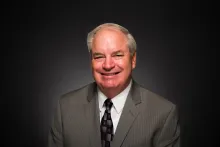
Robin Webber was born in Chicago, Illinois, in 1951, but has lived most of his life in California. He has been a part of the Church of God community since 1963. He attended Ambassador College in Pasadena from 1969-1973. He majored in theology and history.
Mr. Webber's interest remains in the study of history, socio-economics and literature. Over the years, he has offered his services to museums as a docent to share his enthusiasm and passions regarding these areas of expertise.
When time permits, he loves to go mountain biking on nearby ranch land and meet his wife as she hikes toward him.
