

David Mills
This transcript was generated by AI and may contain errors. It is provided to assist those who may not be able to listen to the message.
Good morning, everyone. Beautiful Sabbath day. So good always to be here and see all of you. This is certainly the highlight of the week, and let's try to be here every time, because we miss you or anyone that is not able to be here.
I'd like to begin the message this morning by reading from the United Church of God's Strategic Plan and Operation Plan budget for the year 2021-22. I'd like to read the mission statement of United Church of God. You know what it is? Well, here it is.
The mission of the United Church of God is to preach the gospel of Jesus Christ and the kingdom of God in all the world, make disciples in all nations, and care for those disciples. And, of course, our church seal has these two basic elements of preaching the gospel and preparing a people.
Just a bit further down on this same page under guiding principles, it is the duty of the church to proclaim a message of hope and a call to repentance, to observe all things Christ has commanded, and prepare members of the body of Christ for service.
To maximize the effectiveness of the gospel message, we endeavor to reach all people in a way they can understand with a combination of doctrine, prophecy, and Christian living, recognizing that any lasting fruit is produced by the power of God's Holy Spirit.
We believe humanity is in urgent need of the gospel message in advance of the events surrounding Christ's return. We believe Christ commissioned his church to declare what is to come, to warn of the consequences of sin, to preach repentance and proclaim the hope of eternal salvation.
Therefore, we take very seriously the church's responsibility to boldly preach the gospel to this world with zeal and a sense of urgency.
Brother, this is a big mission, isn't it? And that's an exciting mission. It's a mission I have been involved in ever since, well, my teenage years, many years ago. It's exciting. But this is a big mission, and yet we are small people. We're even smaller than we were at one time.
Can we be up to the task? You know, the situation that we find ourselves in makes me think about the Jews who returned from Babylonian captivity. And they had the job of rebuilding the temple, which the glorious Temple of Solomon, they had the job of rebuilding or making a new temple in their time, about 500 years BC.
Let's read about that in Zechariah 4.
A few of the people who came back from captivity remembered the previous temple, and we'll refer to a verse in Haggai in just a moment.
But these people had the responsibility of rebuilding the temple. Let's begin reading in Zechariah 4 and verse 9.
The hands of Zerubbabel have laid the foundation of this temple. His hands shall also finish it. Then you will know that the Lord of Host has sent me to you.
But look at verse 10. I want to especially focus on this thought. Verse 10.
Who has despised the day of small things?
Here they were a very small, a very insignificant people in many ways, yet they were building the second temple.
Later, Jesus would come to this temple when he was on the earth.
Who has despised the day of small things?
You know, some of the people that remembered Solomon's temple looked at this new temple, and Haggai chapter 2 brings out that it wasn't it as nothing compared to that first temple. And here they were a very small people, and they were told to not despise the day of small things.
The word despise in the Hebrew means to disrespect, to disdain, or have contempt, or utterly despise.
They were not to disrespect the smaller work that they saw going on, or the smaller, less glamorous temple.
The expositor's Bible commentary has this comment to make about despise.
Some of the people had a negative attitude toward the temple project. Some thought it was insignificant, forgetting that little is much when God is in it.
I like that, don't you? Little is much when God is in it. Perhaps the despisers were also discouraged because they were a relatively small group.
Forgetting that God's work is usually accomplished through a small, believing, righteous remnant.
They were to realize that when God is in something, little is much. Little is much. God can accomplish His purpose with just a handful of people and accomplish what He has in mind.
He does not need big numbers to do His work.
They were to realize, let's go back in the same chapter, Zechariah 4 and verse 6, This is the word of the Lord to Zerubbabel, not by might nor by power, but by my spirit, says the Lord.
Just by the power and the Spirit of God that the work of God has done.
Little is indeed much when God is in it.
And God's work is accomplished by a small, believing remnant.
We're going to see that's been the case down through history as we go through this sermon. God does not need big numbers to do His work.
I got to thinking about our smallness.
Many of us have been in the church for decades.
We might remember when the number of people was considerably larger than we have today.
Should we be discouraged about this?
Some may remember Feast of Tabernacles.
We'd have well over 100,000 people around the world. And some of the festival sites would be 5,000, 6,000, 8,000 people, maybe more.
We had pretty big numbers.
Even then we weren't very big when you compare us with the population of the earth.
But now we, in a very real sense, have been reduced down to very small numbers by comparison.
Our local congregations back in those days may have been easily 100, 200, 300, 400 people.
And today many of our congregations are very small by comparison.
We're small in our local congregation here.
And you know, during the COVID period when some were not able to come, our numbers even got down pretty small.
But how should we look at our smallness?
Should we be discouraged?
No, we should not.
We should highly esteem what God is accomplishing and will yet accomplish through very small numbers. We must not despise our day of small things today because little is much when God is in it.
I give him the title of the sermon, Despise Not the Day of Small Things.
Because down through history, actually, God has always worked with small numbers.
Well, look before the Flood, just a few individuals, Abel, Enoch, and then Noah.
How many people got aboard the Ark? How extensive was the result of what Noah was doing on people around him?
Just eight people in his own family got on board the Ark.
Abraham, Isaac, Jacob, they were pretty much strangers and loners.
Abraham must have had a city state of maybe a thousand people or so.
He gathered 314, I think it was, to go rescue Lot. He must have had a city state of maybe a thousand, two thousand people.
There's no indication that any of those people were really converted people as Abraham and Sarah.
Only Abraham and Sarah that we know about were actually converted or, let's say, were being worked with by God and being prepared for his kingdom.
So very small numbers. The nation Israel, a very insignificant nation compared to Egypt and Babylon, the big superpowers of that day and time.
And in the New Testament, the smallness continues.
Jesus referred to his church as little flock, and down through its history, the church has been small and continues to be today. No, God has never and doesn't need big numbers to accomplish his purpose, because again, little is much when God is in it.
You know, a prime example in the Bible of God doing, accomplishing his purpose with small numbers is the example of Gideon and his army. Let's go back and look at this. It's worth, certainly, very briefly, perusing this story that we find in Joshua, or in Judges, rather, Chapter 6.
Judges, Chapter 6, 7, and 8, in fact.
Here we find the Israelites were greatly being greatly oppressed by the Midianites.
Judges, Chapter 6, and Verse 1, the Lord delivered them because of their disobedience and evil.
He delivered them to the hand of Midian for seven years.
And Verse 6, we're just going to skip very rapidly through this, Israel was greatly impoverished because of the Midianites.
The Midianites and others from the east came against Israel.
And here God chose Gideon to deliver the Israelites from the Midianites.
Well, Gideon was very skeptical. He wanted signs. You may remember one sign was this fleece of wool.
Let it be wet, but then let the ground all around it be dry.
Well, that happened. Well, he wasn't quite persuaded yet.
The next night he said, let the fleece be dry and the ground all around it wet.
And that happened. So God gave Gideon some signs to let him know that he was with Israel and delivering them from this, well, this huge army, as we're going to see. Let's go to chapter 7.
And then in verse 1, Gideon gathers the people together, his army.
Verse 2, the Lord said to Gideon, the people who are with you are too many for me to give the Midianites into their hands.
Lest Israel claimed glory for itself against me, saying, my own hand has saved me.
So in verse 3, they invited anyone that was fearful and afraid to depart.
Go back home. And 22,000 of the people returned and 10,000 returned.
Well, Gideon had an army of 32,000 people. 22,000 of them went back home.
That left 10,000.
In verse 4, the Lord said to Gideon, the people are still too many.
Bring them down to the water. I will test them.
So he had people to go and drink water. Those who got down upon their knees and then those who lapped.
The number who lapped with their hand to their mouth would be the ones that would be left in his army.
300 men. Here's an army of 32,000 that was cut down to 300.
Just 300 soldiers in his army.
In verse 7, the Lord said to Gideon, by the 300 men who lapped, I will save you and deliver the Midian knights into your hand.
Verse 12, the Midian knights and the Amalekites and all the people of the east were lying in the valley as numerous as locusts.
We'll see in just a moment just how numerous they were.
And their camels were without number as the sand by the seashore in multitude.
So here's Gideon with 300 men against this huge army.
We'll see just how huge it was.
I'll give you the number ahead of time. 135,000. How would you like to have odds like that?
450 to 1 were the odds.
135,000 with 300 men.
Well, Gideon divided, verse 16, he divided the 300 men into three companies.
He put a trumpet in every man's hand with empty pitchers and torches inside the pitchers.
So in the middle of the night, they come in, these three armies, each one 100 in size, on different sides of the Midianites.
And in verse 20, the three companies blew the trumpets and broke the pitchers.
They held the torches in their left hands and the trumpets in their right hands for blowing. And they cried, the sword of the Lord and of Gideon.
And verse 22 says, when the 300 blew the trumpets, the Lord set every man's sword against his companion.
But notice God was involved in this. They had their strategy, all right? They had their part.
But the Lord set every man's sword against his companion throughout the whole camp, and they fled.
You can read how they captured the princes and utterly routed this multitude, 135,000.
Let's skip on to chapter 8 just to get a couple of verses.
In verse 10, Zeba and Zalmuna, they were two of the kings of the invading armies and their armies with them, about 15,000 men. Well, that's cutting its way down, isn't it? 15,000 now.
All who were left of all the army of the people of the east, for 120,000 men who drew the sword had fallen.
So 120 had fallen. There were 15,000 remaining.
And you can read the rest of the story here, how they chased them. They put these two kings to death.
And what a tremendous victory it was that God gave the Israelites.
But you know, the important part of this story is that God accomplished His purpose at that time, delivering Israel.
God accomplished it through very small numbers. He did not need the huge army of 32,000 against 135,000.
It was not very good odds. But God said, I don't need that many. Cut it down.
It got down to 300 people to do His work at that moment.
Why did He do that back in verse 2 of chapter 7 again?
The Lord said to Gideon, The people who are with you are too many for me to give them many a night into their hands, lest Israel claim glory for itself against me, saying, My own hand has saved me.
We don't want to ever think that God's work that we are used to do is somehow through our own power or might.
So what a tremendous story that is. Again, it shows that God does not need big numbers to accomplish His purpose.
And again, as the commentary said, little is much when God is in it. I like that. Little is much when God is in it.
Well, as I mentioned, Jesus referred to the church as little flock.
That's in Luke 12 and verse 32. Little flock. That's what we are a part of. We're not a part of a big church.
We're a part of a very small little flock. And yet God has given the church a big mission.
It's kind of like Gideon. That's a pretty big mission for 300 men to take on 135,000.
That's a pretty big mission. Well, God has given us a big mission, but He plans to do it and is doing it through small numbers.
Let's notice there are five scriptures, and I think it is worth taking a few minutes just to read these five scriptures, that define the mission statement that I read from our guiding principles, our mission and guiding principles. There are five scriptures that describe this mission that God has given to us, which we are a part of this mission.
Each and every one of us, as I want to bring out in this message, is a very vital part of that mission.
I think what we've heard already from comments made showed that we do have a work to do in warning the world, a message to take out that the world needs very, very much. That's a very important mission. Let's go to Matthew 28, verse 18.
And our young people, I hope that our young people here will be turned into Matthew 28, but I hope that our young people will feel a part of this message as well.
Well, go ahead and keep your finger there in Matthew 28, but let's also read Acts 2 at this point, and then we'll come back to Matthew 28. Acts 2, a very important thing here, showing that our young people here, and we have a good number of young people, we appreciate each one of you, and we hope that you will want to be a part of the mission that God has given to the church.
That's going to be a choice you have to make. Your parents can't make it for you.
We do have some who have made that choice, whose parents were in the church, and that is encouraging the sea, but we'd like our young people to be a part of this mission also.
In Acts 2, verse 38, on the day of Pentecost, the start of the New Testament church, we know this scripture, repent, Peter said. They were asked, what shall we do?
Well, Peter answered, repent, and let every one of you be baptized in the name of Jesus Christ, for the remission of sins, and you'll receive the gift of the Holy Spirit.
But let's emphasize verse 39.
For the promise of life, eternal, the promise of all good things that God wants to do for us, the promise is to you and to your children.
So, I hope that our young people, as you grow up, can begin to identify with this.
And we have a number of young people that did. I began to identify with it when I was about 15 or 16.
I began to study the Ambassador College Bible Correspondence Course.
I began to read the Plain Truth magazine and booklets and articles, and began to believe.
I know that you can do it when you're young.
So the promise is to you and to your children and all who are far off as many as the Lord our God will call.
So let's go now to Matthew 28. We'll begin to read those five verses that describe, here in the Scriptures, the mission of the Church of God.
Matthew 28 and verse 18.
So here's our mission, our commission.
So here's our mission, our commission.
So here's our mission, our commission. So the Gospel is to be taken out. Go, therefore. We are to go travel somewhere and make disciples and then teach them. Okay, let's go to Mark's account, Mark 16 and verse 14.
Mark 16 and verse 14. Matthew 18.
Matthew just said, go, therefore. But here, tell us where we are to go. Go into all the world and preach the Gospel to every creature, to every human being all over the earth. He who believes and is baptized will be saved. He who does not believe will be condemned. He'll be judged at a later time. And these signs will follow those who believe, give certain signs that have followed the Church down through its history. So we ought to go and baptize and make disciples. We ought to go into all the world. Let's go to Luke's account. Interesting, Luke just emphasizes one aspect of the mission. Luke chapter 24 and verse 46. He said to them, thus it is written, and thus it was necessary for the Christ to suffer and to rise from the dead the third day. You have to explain about the scriptures that prophesied about the suffering of Christ and his death. Verse 47, and that repentance and remission of sins should be preached in his name to all nations beginning at Jerusalem.
So Luke emphasizes the repentance and remission of sins aspect of the message, very much a part of the message we preach today.
Verse 48, you are witnesses of these things. You know, witness is one that gives testimony. We continue to give the same testimony the New Testament apostles did.
It's a statement, the word in the Greek means a statement of facts. When somebody gets up to make a testimony, they're making a statement of facts. So we are making a statement of facts as we preach the gospel. The truth is God's kingdom is going to be set up on this earth. The truth is God's purpose is that all of mankind may enter his family.
So we are witnesses of these things.
Okay, let's go to this John heaven account of the mission of the church. Yes, he does. John chapter 21 and verse 15.
Interestingly, John emphasizes the teaching of those who believe, the feeding of those who believe in John 21 and in verse 15. When they had eaten breakfast, Jesus said to Simon Peter, Simon, son of Jonah, do you love me more than these? And he said, Yes, Lord, you know that I love you. He said, feed my lambs. A second time he said, do you love me? And Peter said, you know that I love you. He said, tend my sheep. And then verse 17, a third time he said, do you love me?
Peter was grieved. He said, Lord, you know everything. You know that I love you. Jesus said, feed my sheep. And so John's account emphasizes the teaching and the feeding. You know, that's really what happens every Sabbath day. That's what happens with our literature. That's what happens on our Internet TV program. We're feeding, feeding, feeding. Feed my sheep. Feed my lambs. So that's number four. The fifth area where we find the mission stated is in Acts chapter one. And my Bible is right in the opposite page. Acts chapter one and verse six.
When they had come together, they asked Him saying, and this is right before Jesus, where to send up to God's throne. They asked Him saying, Lord, will You at this time restore the kingdom to Israel? He said to them, it's not for you to know the times or the seasons which the Father has put in His own authority. But You shall, and here's the mission that is given to the church, You shall receive power when the Holy Spirit has come upon You.
And You shall be witnesses to Me in Jerusalem. And it did begin in Jerusalem. And in all Judea and Samaria it did spread out. And to the end of the earth. So the gospel message extends all the way to the end of the earth. I don't know if the church ever went to the ends of the earth as we have done in our time through the internet, through television, through the ability to travel and take the message.
But this little flock was given a big commission. But it began, it's always been by small numbers. The church began with over 3,000 others who were added. But you know, 3,000, you say, that's a pretty big number. But there were about a quarter of a million, well, I'm sorry, about 250 million people estimated to be on the earth at that time.
So 3,000 is still pretty small. But you know these 3,000 people and others that were added to them, in Acts 17 it is said of them that they turned the world upside down. The message they preached and the miracles that backed them up, the Church of God became known, especially in those early years of the church. But guess what? In the latter years of the New Testament church, many left. The church dwindled. Persecution set in. Smaller numbers are indicated by the end of the century. And down through the centuries that followed, the church is not all that large.
There may be certain periods where it was a bit larger than others. In a sense, the church was on the outskirts of the mother church that was giving the church persecution. And Revelation 12 brings out the church was hidden in the wilderness. 1,260 days. Will that be 1,260 years then? Roughly around 300 to 1,600 AD. Anyway, around 1,600 AD, what began to happen? In England, and then especially in America, there began to be that the church could come more out into the open.
Persecution in the United States, as this nation formed, their religious freedom and the ability to have freedom of speech and freedom of assembly. Those are things that we enjoy. But it's not always been that way for the church. Why did God do it this way? Why did He let the church be able to come out more in the open? Because He wanted the gospel to be preached to the world.
Let's go to Matthew 24, verse 14. We've always felt and still do that this is very much a part of the mission that is given to the church to take the gospel, the glorious gospel, into all the world. In Matthew 24, verse 14. We've heard this verse read many times.
It doesn't hurt to turn to it and read it again. It is the Olivet prophecy. This gospel of the kingdom shall be preached in all the world as a witness to all nations, and then the end shall come. Yes, the gospel then has to go to the ends of the earth. It has gone to the ends of the earth in our time through the work of Herbert Armstrong and now the work of United Church of God and some of our sister churches of God preaching the gospel to the ends of the earth.
But notice it's as a witness. It's not to save the world. Not to save the world at all. We sometimes may be a little bit disappointed that we don't have more people come into church. Why? Because God is in control, and He's the one that calls and adds to the church. But the gospel is going out as a witness. And the big results are going to come in later. Just think of this.
Millions and millions and millions read the Plain Truth magazine and booklets and articles who did not become members of the church. And many of them would even be dead by this time. Is our work in vain, or will not these people come back and already have a head start? Many of these people believed that Mr. Armstrong and us as well are preaching the truth. I know ones in my own family that are not members of the church who believe this way.
They just aren't members of the church at this time. Somehow their mind has not been opened. I guess that would be God's doing. When God wants someone to understand and be motivated, He makes that possible. My grandfather first heard Mr. Armstrong in 1945. 1945, right at the end of World War II. And he told my father, this man is preaching the truth. Four years later, and I remember I would have been about 10 at that time, four years later my grandfather died. He never became a member of the church. When he comes back in the Second Resurrection, he already has had a witness that starts him on the way toward God's kingdom.
My father did receive the Plain Truth magazine and listened to the television program. My mother even began to join in. They never became members of the church, but they began to understand and believe certain things. They already have a head start. So millions and millions of people like that have been favorable toward the message we preach, yet they just have not been brought into the church. God has simply not opened their mind yet to repent and be in his church. So, brethren, we've got a lot of big results. We have millions and millions and millions of people that we have witnessed, too, down through the decades who one day have a head start toward God's kingdom.
Our work is not in vain. This is just not the day for big things. The army has, you know, the Gideon's army, the spiritual Gideon's army, has been pared down. God has kept it small. He does not want everyone to fully understand at this time. You know, even so, we want to do as big a work as we can.
We want to preach the gospel in such a way that we make it attractive and maybe might be able to save some, as the Apostle Paul put it. But you wonder, does a bigger work than what we are doing today? We're pretty small in many ways. Yet, our Internet presence is very powerful and extensive. There's a big work that is being done, maybe bigger than we realize.
But you know, we have felt that at some point a bigger work may very well take place here at the end of this age. Doesn't God want Israel to be just, you know, Manasseh, Ephraim, to be fully warned about what is going to come? You just have to think that a bigger work is going to be done, but it is God who actually opens the doors and He will determine whether or not just how big that work is going to be at this present time. We do know this, that at the very end, the very biggest work of all is going to be when the two witnesses show up on the scene. They are going to reach the world with power and miracles. They're going to be known all over the earth. And a big work is going to be done by them and their witness. They will be warning, urging mankind to repent, believe the Gospel. Meanwhile, today, regardless of how God handles, you know, whether we get how big we might get and our message might be known, One thing for sure, if God wants to put us on the map, He can do so. That would be followed, no doubt, by persecution and opposition, but He certainly can make our message and expose our message if He chooses. We, in the meantime, are to cry aloud and spare not. We're to warn nations and individuals to repent.
We're to stand in the gap. We are to be the watchman, sounding the trumpet. But we must always remember that our mission, our work, is accomplished not by human power or might, but by God's Spirit. Remember, as we heard by Mr. McNeely in one of those B.T. Dailies, that Jesus Christ is the head of the Church. And we can have absolute confidence that He is guiding in just how we are to proceed in doing His work. I tell you, we have some wonderful leadership in the United Church of God. They have been meeting this past week in a workshop, a retreat in Ohio. They have Council of Elder meetings coming up this coming week. And I know that Mr. Cubic, our President, and the Council of Elders want to go on forward more powerfully preaching this message. They're looking for ways to get through to people and looking to God. One thing for sure, God is not using big numbers to do His work. He uses smaller numbers.
Should we be discouraged because we're very small? Just have a handful of people? Not at all. Just like Gideon's army, no indication those 300 men were discouraged. No indication they lost morale. They did not turn and run.
Here they were. They came down on three sides of this enemy army. 135,000 people, 300 men coming down, and three 100 men companies. No, they were not discouraged at all. We then let us not be discouraged. I'm as excited, I think maybe more than ever, because we're continuing to preach that same gospel. We ought to go into the world and preach the gospel and baptize and teach those who believe. But something that is very important, this mission of the church, how do you feel about it? Do you feel a part of the mission?
You should. Each and every one of us has our part. Mr. Armstrong never considered that it was his work, but the work of the whole church. He was at the spearhead, alright, and the leadership of the church should be like at the spearhead. But this is a mission that is given to the church, and each and every one of us can help. We can help with our tithes and offerings. We can help with our prayers. We can pray for open doors to preach the gospel.
I'll turn to Colossians 2. Here's something we can do every day, and it's very important. Colossians 4, that is, not 2. Colossians 4 and verse 2, "...continue earnestly in prayer, being diligent in it with thanksgiving." Now verse 3, "...meanwhile praying also for us, that God would open to us." He's referring to the ministry now, offering the leadership, the human leadership, at the human leadership level. "...praying also for us, that God would open to us a door for the Word." You know, we can pray that every day, that God will open a door for the Word. "...to speak the mystery of Christ, for which I am also in chains." And verse 4 is important as well, "...that I may make it manifest as I ought to speak." I know that the Council of Elders and Mr.
Kubik, our President, are very concerned about, how do you get through to people today? There's clutter, there's so much clutter, so much distraction. How do you reach the hearts and minds of people today? We can pray about that. The Apostle Paul said he became all things to all men, that he might save some. So how can we connect? Pray that God will guide our leadership to see how we can connect our message in a way that they will want to act on it.
I think we ought to pray every day for our Home Office, pray every day for our President, our Council of Elders, pray for congregations, pray for our pastors. Our example is very important as well, on the job and our families, with everyone we come in contact with. A believing mate may save the unbelieving mate.
We have verses in the Bible on that. We can refer people to our literature. We can make comments at work with our relatives. We can teach our children that they are a part of the mission that God has given to the Church. So there's a lot that we can do individually. I'll tell you, it's exciting, and I'm excited about God's work.
I've always wanted to keep my heart in the work of God, and I hope that you do as well. I want to conclude. My time is running down. I want to conclude with a couple of Old Testament Scriptures. Let's go to Habakkuk chapter 3. The little book of Habakkuk. I hope you can find it. Habakkuk chapter 3.
This man, this prophet of God, was living in a time just before Judah would go into captivity. God revealed to him that a time of captivity was just ahead. Actually, the one doing the captivity was a worse people than the Jews. Why would God do that? He would bring someone that is worse to punish someone that wasn't as bad. That is what Habakkuk has to try to understand.
In chapter 3, verse 1, we have a prayer of Habakkuk. In verse 2, he says, O Lord, and this I believe can be our prayer today as well. O Lord, I have heard your speech and was afraid. We understand similar things are going to happen to our nation that happened to his nation back at that time. I've heard your speech and was afraid. O Lord, revive your work. I think we can pray that God will bless his work and help his work to accomplish what he has in mind. Revive your work in the midst of the years. In the midst of the years, make it known.
I like the last part of verse 2. In wrath, remember mercy. We can ask God, as we have evil events that lie ahead of us, that he would remember mercy. This book ends in a very good way as well. In chapter 3, verse 16, when I heard my body tremble, we kind of trembled too at events yet to happen, my lips quivered at the voice, rottenness entered my bones, and I trembled in myself, that I might rest in the day of trouble.
It would be better just to rest. When he comes up to the people, he will invade them with his troops. And he ends on this personal note of determination in verse 17 on down. Though the fig tree may not blossom, nor fruit be on the vines, though the labor of the olive may fail, and fields yield no food, all these bad things begin to happen.
Though the flock be cut off from the fold, and there be no herd in the stalls, all these prophetic events begin to come to pass. Yet, verse 18, what was he determined to do? I will rejoice in the Lord. I will joy in the God of my salvation. The Lord God is my strength. He will make my feet like deer's feet. He will make me walk on my high hills. See, this is an example of the faith of one of God's servants, Habakkuk.
Let's also turn over to Haggai. And this is a prophet who was contemporary with Zechariah. Same time they were building the temple there, and Zerubbabel was the governor. But in the book of Haggai, right before Zechariah, in chapter 2 and verse 1, I want to read a few verses here. They were to be strong, and you know, we ourselves too. Let us be strong. Let us not ever be discouraged by our smallness.
If we have less numbers, you know, God is not interested in numbers that much. He doesn't need big numbers. He's going to do his work. And small, indeed, is great when God is in it. Or much. Small is much when God is in it. Chapter 2 and verse 1 of Haggai, the seventh month on the 21st day of the month, the Word of the Lord came to Haggai, the prophet, saying, So this is God speaking here.
Speak now to Zerubbabel, the governor, to Joshua, the high priest, the remnant of the people. Who is left among you who solved this temple in its former glory? And how do you see it now? In comparison with it, is it not in your eyes as nothing? This temple they were building didn't begin to compare with Solomon's glorious temple. Isn't it as nothing? Yet, now, be strong, Zerubbabel.
In a way that's kind of a comparison with us, we are much smaller in numbers than we were at one time. But, you know, we are to be strong. We're not to be discouraged at all. Christ is the head of the church. He's still on the job. Yet, now, be strong, Zerubbabel, and be strong, Joshua, the high priest, and be strong all you people in the land, says the Lord, and work.
For I am with you, says the Lord of hosts. So, you know, God is with us, too. Jesus Christ has not deserted us. He promised to be with us to the end of the age. So, I guess this sermon, the purpose of this sermon is that, hey, we've got a big job that God has given to us to do. The church mission is big. You have to say it's worldwide.
It's to the ends of the earth to take the gospel, the good news of God's kingdom, to the very ends of the earth. It's a big mission. And we are just a small group. But God can and will accomplish it using small numbers. He doesn't need big numbers to accomplish His purpose. God will accomplish His purpose with a small, believing, righteous remnant. Let's highly esteem what God has accomplished, what He will yet accomplish through small numbers.
We must never despise the day of small things. And remember, little is much when God is in it.
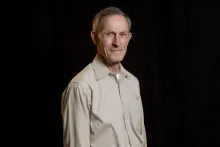
David Mills was born near Wallace, North Carolina, in 1939, where he grew up on a family farm. After high school he attended Ambassador College in Pasadena, California, and he graduated in 1962.
Since that time he has served as a minister of the Church in Washington, Florida, North Carolina, South Carolina, Oregon, West Virginia, and Virginia. He and his wife, Sandy, have been married since 1965 and they now live in Georgia.
David retired from the full-time ministry in 2015.
