

Don Ward
This transcript was generated by AI and may contain errors. It is provided to assist those who may not be able to listen to the message.
Brett and I have used the preacher's outline and sermon Bible commentary for the preparation of the sermon today. This is the sermon I wanted to give a couple of weeks ago, but events overtook us and I was not able to give that sermon then. But if you want to go to Deuteronomy again, we want to go back and keep on covering this book chapter by chapter.
Today we're going to highlight Deuteronomy chapter 10. Again, we've got some guests here. We're happy to have our guests, but I'll let you know what we've been covering. The book of Deuteronomy is a series of messages, a number of sermons, actually three sermons, preached by Moses as he saw to prepare the second generation of Israelites to enter, conquer, and possess the Promised Land.
The book of Deuteronomy was written at the end of the 40 years' wilderness wanderings just before the Israelites were entered the Promised Land. They're standing at the Jordan, so to speak, looking over into the Promised Land. It's just very close to them. And there are reasons why we want to study this book in our age today. Deuteronomy was written to teach God's people how to live victorious lives. We as Christians want to live victorious lives. The book of Deuteronomy teaches the believer how to conquer the enemy, the trials, the temptations that confront the Christian. Obviously, that's something that we need. And secondly, the book of Deuteronomy was written to stir God's people to rededicate their lives to God, to renew their commitment to obey God in the covenant that we made with God.
In our case, the covenant we made with God at baptism. The first sermon Moses gave went through basically the first five chapters of the book, what God had done for Israel. We're now in the middle of the very long second sermon, what God expects of Israel. That goes from chapter 5 through chapter 26.
So that's a very long sermon. To outline chapter 10, verse 10 verses are a warning against continued disobedience. Excuse me. Continue disobedience and rebellion. Don't be like your fathers who died in the wilderness. The balance of the chapter is a detailed discussion of obedience. That will actually carry over into chapter 11, but we won't be getting there today. But from chapter 10 verse 11 through the end of the chapter is a detailed discussion in part about what God expects from His people, how we need to be obeying Him.
Okay, with that in mind, I've not turned there yet. Let's go to Deuteronomy chapter 10. At that time, verse 1, the Lord said to me, You for yourselves two tablets of stone, like the first, and come to me on the mountain and make yourself an ark of wood. And I'll write on the tablets the words that you were on the first tablet, which you broke, and you shall put them in the ark. So here we see God immediately instructing Moses to prepare and receive a second copy of the Ten Commandments. This is something that was going to be etched in stone, literally.
It was something that was very important. It was something that God wanted the people to have. It was a reminder. God understands we're physical people, and we need physical things to remind us. And so God wanted very much to have that with them, to carry that with them. It meant, obviously, a great deal, and symbolized a great deal. Verse 3, So I made an ark of a cachawood, and ye two tablets of stone, like the first, and went upon the mountain, having the two tablets in my hand.
Now, it's maybe a minor point here, but you know, we are Christians. We are spiritual people. But that doesn't negate doing physical things. During the days of Unleavened Bread, we de-leaven our homes. During the Feast of Tabernacles, we get in a vehicle, and we travel to the Feast. We are, after all, physical, flesh and blood, human beings. And there are physical things that God wants us to do in His service. God simply asks Moses, okay, you're going to build this ark, you're going to view these two tablets.
I'll take care of the writing on the tablets, God says, but I want you to make those ready. You prepare those. And so we see here preparation for obeying God. I don't know what it was. This is a two years ago we had the Sabbath Seminar, or one year ago. I forget how long ago that was. But when we had our Sabbath Seminar, our ladies gave a wonderful explanation about preparing for this Sabbath, making the Sabbath a true delight in our lives. And certainly, preparation is a big part of Sabbath keeping.
It's a big part in any of our obedience to God. And certainly we see that here in verse 3. Notice verse 4. And He wrote on the tablets, according to the first writing, the Ten Commandments, which the Lord has spoken to you in the mountain from the midst of the fire in the day of the assembly, and the Lord gave them to me. So here we see God Himself rewrote the Ten Commandments. He etched this in stone.
It was important. You know, I think it's important to know people want to say the Ten Commandments are done away. Well, if God, you know, God understands the future, God is the author of prophecy. If in a New Testament era He was going to do away with the law, why write them in stone now? He could just have easily have had it placed on animal skin or something else. No, He put this on something permanent because God's law, I mean, relatively permanent. Stone is not eternal, but so far as man's concerned, it's pretty permanent. He put it on stone because it is permanent from man's perspective. It's not something to be done away with. Verse 5, Then I turned and came down from the mountain, and put the tablets in the ark which I had made, and there they are, just as the Lord commanded me.
So God tells us to do physical things, do physical things. And, you know, there's a principle in the Bible that whenever we are obeying God from a physical point of view, we're going to be blessed. You know, some things we do, we do because they have spiritual meaning.
I remember back in the day, this goes back almost, well, it goes back by December 11th, it goes back 30 years. I remember when my son was born. I remember that I wanted to make sure that my son was circumcised according to what God said in the Bible. I wanted to have it done on the day. At the time, we were living in St. Clair Shores, and the hospital we were going to was Bonseau Courant. I know they've changed the name of it now, but it was Hoyte-Toyte Hospital in the Poynts.
Very nice hospital. As a matter of fact, when you are about ready to leave, if you've had a child there, they will have a full filet mignon dinner, candle it. I'm not joking. There were probably six or eight couples where, you know, it was really nicely done. They had the order ladies come in, they were addressed to the nines, they brought us our steaks, and before we left the hospital, it was that kind of a place.
I remember signing into the hospital, and there was one form that they wanted me to sign about, well, if you have a son, you know, we're going to circumcise him immediately. I said, no. Well, you can't come in this hospital. Well, yes, I can. My doctor works out of this hospital. Anyhow, we had a long to-do going over and over and over. My doctor was even arguing. He said, you're not even Jewish, Dele'sandru, you're Italian. I said, you know, well, I'm spiritually a Jew. I said, and this is what I want.
So after a lot of carping and whatever, finally, the hospital caved. I wasn't about to cave. And on the eighth day, my son was circumcised. That was not so unusual, fighting the organization there at the hospital. What was unusual is the flack I got from my fellow Christians in the worldwide Church of God in the congregation I was attending. And how many people thought I was a fool for going through all that trouble? Now, maybe I'm just different.
But if God says to do something, I think we should do something. I don't care if it's a physical thing. If He asks me to do a physical thing, I'm going to do a physical thing. Of course, no, science would tell you that for little boys, the eighth day is the best time for circumcision because the blood clotting factor is higher than any other time.
There are reasons why God has things done. And so I just bring that story up here because even though we are spiritual people, we are physical people, too. And there are times God asks us to do physical things, and we should be mindful of those physical things. But a greater lesson through these first five verses, I want to pause here, a greater lesson to be learned is God's mercy and God's patience.
God's mercy and God's patience. God's patience with us as imperfect people. God could have destroyed all the Israelites and started over with Moses. It wouldn't have hurt his plan at all. Moses was from Abraham. God could have done it that way. It wouldn't have hurt the plan of God one bit. And yet Moses interceded in prayer.
God listened. It must have been a tremendously powerful prayer, something that you and I can study. And God listened, and the people were spared. Millions of people were spared. God had mercy. We must always remember that God has mercy upon us. When God shows us mercy upon us, then there's something incumbent upon us.
When God shows us mercy upon us, as we see in Passover, then we must remember what the Days of Unleavened Bread are all about. God does show us His mercy. We do have Christ as our sacrifice. In the way God has put together His Holy Day plan, okay, you've enjoyed the sacrifice, you've enjoyed the mercy. Now, here are the Days of Unleavened Bread, which picture you coming out of sin. Here are the Days of Unleavened Bread, which shows you bringing in righteousness.
And so, once God has had mercy upon us, we must not live ungodly, disobedient lives. We receive God's mercy in order to live holy, righteous lives before God. And that must be our work.
Now, put our marker here in Deuteronomy 10. Let's go over to Ephesians 2.
Ephesians 2 and verse 4.
But God who is rich in mercy because of His great love with which He loved us is not His own love. You know, you think about your children, how much you love your children, when your children cross a line and they do things they shouldn't, you get upset and you want to teach them to do better, but you love your children. You love your children. God loves us with a greater love than we love our own children. Even when we were dead in trespasses, He made us alive together with Christ by grace you have been saved. And make no mistake, the good works we perform, the obedience that we perform, doesn't wash away our sins. Sabbath keeping, holy day observing, tithing doesn't wash away a single sin. But that doesn't mean they're not to be done. They are to be done.
We are saved by the shed blood of Jesus Christ. We are saved by the grace. And we've talked about grace. There's a grace whereby our sins are forgiven. And then there's a grace whereby we live our lives for God. Verse 6, He raises up together and made us sit together in heavenly places in Christ Jesus. That in ages that come, He might show the exceeding riches of His grace and His kindness toward us in Christ Jesus. In other words, we're going to be resurrected. We're going to be made Spirit beings of power and glory because of the great love with which God loves us.
Okay, let's go back to chapter 10 of Deuteronomy.
Verse 6 and verse 7.
Now, the children of Israel journeyed from the wells of Ben-e-Jakan to Moshe-Ra, where Aaron died, and where he was buried. Eliezer, his son, ministered as priest and instead. From there, they journeyed to Gadgoda. From Gadgoda, they went to Jabat-tha, a land of rivers of water.
You know, you can look at those two verses and you can puzzle yourself how to pronounce all that, but you can also look at the very last phrase there in verse 7.
That you see Israel journeying, you see them being led by God, and you see them being led to a land of rivers of water.
They had gone through their share of trials. They've gone through their share of difficulties. And God knew that, and God led them to a place of water.
By illustration, a place of rest, a place of refreshment.
You know, it was interesting. Last weekend, we stayed with the Shutz family there in Traverse City.
A very interesting couple lived very interesting lives.
They were wanting to take a look at a back old envoys. They didn't have one ancient enough to see me in it, but they had one old enough to see Mary in it. And they said, I want to see that one, too.
Mary, when she was a senior student at Ambassador College. And of course, she was just as pretty today as she is then. But she said, boy, you look a little different. Oh, there's some glasses now put on a ear or two, but still a pretty girl. And we got to talking as we were looking at some of the faces, some of the names that they knew, I knew, some pastors that had come through the area and whatnot. And then we got to talking about trials. And certainly this couple hasn't known their share of trials, just like you have. And there was another picture book they brought out and had a picture of Karen Catherwood. I remember years ago, and probably some of you remember Mr. Catherwood. He was a very charismatic speaker. I mean, when I heard I would have a tape, I didn't care if it was a live person. When it was Karen Catherwood, it was Memorex, that was fine with me. Because he was always inspirational, always interesting to listen to. And he was the one who gave so many sermons because he had gone through so many, you know, cancer and other things. He had gone through so many things in his life. And he talked about on a number of occasions how he would ask God for a wide space in the road.
Father, the road is really narrowing in on me. I feel like I'm being clobbered. I feel like it's coming at me from every angle. Would you please lead me into a wide space in the road? You know, I think that strikes with everybody in this room. Everybody in this room wants to find a super highway someplace where it's really wide because we've gone through so many hard times. We want some rest, some refreshment. And that's what I see God doing here. They had had their share of troubles. God leads these people to a land of rivers of water. And, brethren, it's not wrong for us to ask God to do that. We need to be doing that. You know, as I look at you as a congregation, I know what some of you are going through. Some I may not know. But those who I know, I realize you're going through some very difficult times. Life is hard right now.
In addition to all the hardships we all face, living in this world, living in this country, which I think is going down, living in a world that is in love with sin, all those things that plague us as Christians, we also have our own individual crosses to bear. So here we see that God has guided His people. Let's take a look at the marker there again. Keep a marker here at all times. Let's go to Psalm 73. Psalm 73, verse 24. You will guide me with your counsel, and afterward receive me to your glory.
So yes, we very much want the guidance of God. We have a tough road to hope. We have a hard road to walk down. But when we walk down that with God's help, and that's always the key with God's help, then afterwards we will be resurrected to glory. We will be received or resurrected to glory. So we can appreciate that. We want to look forward to that. But we must go through these difficult times in life with God's help. I had to commend the person I was talking to on the phone yesterday. A person called up, and they were having different kinds of trials, and I told them, you know, I really appreciate your attitude. I appreciate it. I know what you've been going through. I know, at least in part, the things you've told me about. And I appreciate the attitude you have, the perseverance. You know, sometimes I've seen people who've gone through much less than a way of trials walk away from the church. This person said, well, how can I walk away from God? Well, I said, some people do it because they want to put everything on their own shoulders, and their shoulders aren't broad enough. So, you know, God does appreciate what you do as you stay with Him. Going back to chapter 10 of Deuteronomy, verse 8 and 9 here.
At that time the Lord separated the tribe of Levi to bear the ark of the covenant of the Lord, to stand before the Lord, to minister to Him, to bless His name to this day. Therefore, Levi has no portion nor inheritance with his brethren. The Lord is his inheritance, just as the Lord, your God, promised him. So, here we see that God has a permanent core of ministers to serve His people. God wanted them to be full-time. He didn't want them to be worrying about things of the land and having a business and those sort of things. They had plenty of work to do.
And I think it's important for us to remember that these days, you know, as we ask God to look after His church. They were to look after the tabernacle. We in the ministry are to look after the church, the spiritual church, the house of God. And we certainly need your prayers.
Right now, I think I may mention a couple of weeks ago, we have an online educational program.
They're taking some of the newer men. Mr. Murray and Mr. Joseph are now taking the classes. They're fairly in-depth classes, many hours a day. They do it, I think, on Skype or something like Skype, where you can see back and forth. And a lot of writing, a lot of papers, both Malcolm and, you know, Mr. Joseph, Mike are very interested in their classes. I was talking to Mr. Kubik. He's interested in teaching those classes. We've got Dr. Ward teaching those classes, a number of other people. The ministry needs to be trained. And one of the greatest things, brethren, that the ministry needs is a greater understanding of how to counsel people.
With what people go through today, you know, the kind of things that we were taught at ambassador college decades ago is not that helpful. We need real hands-on experience in terms of some of the life situations that people are going through today. And we're getting some of that, but we need more of that. So, again, we would ask your prayers, and we would continue to have these kinds of classes. But more than that, we would ask that you would pray for us in the ministry, that we would have the love, certainly the wisdom. Some of the Gordian knots that come to us in the ministry, here's this tangled mess of a situation in people's lives. You love them, you want to be there for them, you want to help them. But what do you say? How do you say it? When do you say it? Do you wait for them to come to you? Do you intervene? Do you initiate? Or do you drive them away by doing so? There are just so many things for us to consider when it comes to the ministry.
Consider when it comes to working with people and being there for them in the proper and the right way. And that's not always easy to determine. And we do need wisdom. And we ask, we covet in the proper sense, your prayers for us, that we'd be able to function as we should function, to serve the people of God, to prepare the people of God. And, of course, these people here were to be totally committed, totally committed, to the work of God. Just as our ministry today is to be totally focused, our energies on the work. Now, I realize at some point I'm not going to have a paycheck from the church anymore. When the final crunch comes with prophecy, we all might be losing our homes and losing jobs and running for our lives and fleeing from one city to another. So there comes a point where life will be very difficult for every one of us. And when I say that we need, the ministry needs to make sure that the members are prepared, that's very much my strong feeling here in Ann Arbor. That's why I try to prepare. You know, I go on these visits to various places and realize, you know, between Mary and I, we've had four people killed in auto accidents. You know, her dad on her 10th birthday, her brother, her uncle, and my niece. All four killed in auto accidents. And so that can happen to me at any time. So I want to make sure the Ann Arbor and Detroit churches are prepared, because we're not a big church. I want to make sure that our local leadership is prepared to take over in case we can't get a full-time man in here on payroll. You know, we might have to, at some point, have, you know, poor Malcolm Murray or somebody who already has four churches, the pastor, pastor of fifth or sixth. I don't know how that's going to work out. So if you wonder why sometimes good old Mr. D doesn't speak every Sabbath, well, we're giving people opportunities. We want to make sure you're prepared. But wherever possible, I want to do my job. And I ask, I don't know, I guess I'm being a little selfish. I would like to live a little longer. I don't want to be taken up. So, you know, we want to be praying that God would use His ministry to help the brethren. So there's a lesson to be learned here about our need for a trained and dedicated ministry. So please be praying for that, that we have a trained and dedicated ministry. We've hired some men who have no ambassador college training. We've hired some men who have no college training whatsoever to be pastors, and they are full-time men. And doing marvelous jobs. Their heart is that they love the people. Their heart is that they are grabbing up every opportunity they can to go online and take classes from A-B-C. You know, when I went through the, my ambassador college experience was not the best. The church was under a lot of duress in the years I went there from 1970 to 1974.
The year I graduated, D. Barr, a party, and said, you know, these last four years have been the worst in ambassador college history. And I said, well, thank you, D. Barr. But that was true. That was true. We had all sorts of problems back in those days, and my education was not as strong as some others who had gone in the earlier years. But I remember hearing that one of my friends in the ministry had a series of tapes by Dean Blackwell in the book of Isaiah. So I called and said, hey, Mike, can I have those tapes? He said, sure. So he sent me about 65 tapes. And you got the benefit of that a couple of years ago. Because I took those tapes, and I listened to each two-hour tape, or whatever it was, hour and a half tape, took copious notes, put them in my Bible, and then when I was all through, then I went and I gave you the benefit of that. And so that's what some of our ministers are now doing. They're getting notes from different places. They're being self-taught, self-educated in some places, looking to what we have from the Home Office or ABC. But be praying that we have the education that we need, because we certainly need to feed our people. Embarker here in chapter 10 of Deuteronomy, let's go to John chapter 21. John chapter 21. Verse 15. So when they had eaten breakfast, Jesus said to Simon, Simon, son of Jonah, do you love me more than these? Do you love me? Do you agape me more than these? He said, yes, Lord, you know that I love you. I love you. Here he's using Peter. Christ is asking, do you have agape love? And Peter is responding, yes, I've got filial love.
So Peter, in one sense, wasn't quite giving it. Yes, Lord, you know that I love you. He said to them, feed my lambs. Feed my lambs. And so God, Christ is talking to Peter, saying, look, you need to feed the sheep. You need to do it in a loving way as you feed the sheep. Don't just duff it down their throats. Don't give it to them when they don't want it. Don't need it. Give it to them lovingly as they need it. Verse 16. Then he said to him the second time, Simon, son of Jonah, do you love me? Again, do you agape me? The godly kind of love. He said, again, Lord, you know that I love you. And again, the filio love. Tend my sheep. Tend my sheep.
Shepherd them. Love them and shepherd them. He said to them the third time, Simon, son of Jonah, do you filio me? Now, Christ now is going to bring it down a notch. He's not upping the way. He's lowering the box. Filio me. Peter was greedy because he said to him the third time, do you filio me? He said to him, Lord, you know all things. You know I love you. Feed my sheep.
So Christ wanted to make sure that Peter here was loving, shepherding, and tending properly the people of God. And that's something for the ministry to always remember as we're taking care of the flocks. Acts chapter 20. Acts chapter 20.
Verse 17. From Miletus he sent to Ephesus and called for the elders of the church.
Normally Paul would have gone to where they were. Paul realized he had a job to do, he had a mission to accomplish, and he was not going to be with this group of ministers any longer. He knew his life was coming toward to a climax, to a close, and he wanted to get together and discuss things with them. Verse 18. And when they had come to him, he said to them, you know from the first day I came to Asia what men have always lived among you, serving the Lord with all humility, with many tears and trials which happened to me by the plotting of the Jews. And notice here in verse 19, the very first thing Paul talks about is his humility. Is his humility.
And I've talked to you as a congregation on many occasions about how the the building block of a mature Christian will always rest on humility.
Verse 20. How I kept back nothing that was helpful but proclaimed it to you and taught you publicly and from house to house. Now Paul here is not going to new people house to house.
You know, he was going to members houses and not just members houses, he was going to ministers homes home to home to teach them, to educate them, to further develop their development.
Testify the Jews and also to the Greeks repentance toward God. We repent toward God because we break God's law and faith toward our Lord Jesus Christ. We have faith because of the sacrifice of Jesus Christ to shed blood. And see now I go beyond bound in the spirit to Jerusalem, not knowing the things that will happen to me there. Well, not pleasant things. Except that the Holy Spirit testifies in every city saying that chains and tribulations await me. But none of these things move me nor do I count my life dear to myself so I might finish my race with joy. And the ministry which I received from the Lord Jesus I had to testify to the gospel of the grace of God. And indeed now I know that you all among whom I go on preaching in the kingdom of God will see my face no more. You know, that is a truly difficult time. Mr. Armstrong went through that time. But Mr. Armstrong was in the process of dying. He wanted to see his evangelist, his leading man, one more time. Mr. Helge told him that maybe with your health we need you as long as we can keep you. Maybe that's not the best thing to do. So Mr. Armstrong said, okay, if it's for the betterment of the church I won't see my men. He died shortly after that.
And, you know, he really wanted to see his men. One more time. Verse 26, Therefore I testify to you this day that I am innocent of the blood of all men, for I have not shunned to declare to you the whole counsel of God.
And this is why, brethren, it's so needed for we to have a trained, educated ministry.
I can't stand up here week after week talking about one subject.
I need to be a person, a generalist, who can go through prophecy, who can go through history, who can go through salvation issues, who can go through all different parts of the book of the Bible. And that requires an educated ministry to be able to do that. The whole counsel of God.
So once again, we ask and we covet your prayers for God to give us that ministry.
One of the things that Mr. Kubik said, he said, you know, our attendance has been very stable since it split with Kogwa, or since they left us. We have been averaging 7,500 people, give or take 100 people virtually, you know, all throughout the whole last couple of years.
But we're not adding people. We're not losing a great many people. We're not adding people, but we need new people, especially for the ministry.
So again, we ask for your prayers. You would have a trained ministry that can give you the whole counsel of God. Verse 28, Therefore, take heed to yourselves into all the flock among which the Holy Spirit has made you overseers, to shepherd the church of God, which he purchased with his own blood. Paul here is teaching as he has been taught. We know that Paul went into Arabia for three years to be taught by Christ. Christ told Peter, Feed my flock, shepherd my flock. And here Paul is passing it on to the next generation saying, Shepherd the church of God.
So we very much need that, and we certainly ask for your prayers.
Okay, we go back to Deuteronomy chapter 10.
Verses 10 and 11.
Verse 10, As at the first time I stayed in a mountain forty days and forty nights, the Lord also heard me in that time, and the Lord chose not to destroy you.
Then the Lord said to me, Arise, begin your journey before the people, that they may go in and possess the land which I swore to their fathers to give them.
So verse 10 and 11 refers to the fact that Moses had to pray this tremendous, inaccessory prayer that saved millions of people. Millions of people. A tremendous prayer. Something you and I can study. You know, if you've never, sometimes you wonder what to study, go through the Bible. I gave a number of sermons some time ago on that subject, where I looked at a number of people, Hannah and different other people, Moses, and different other people, and study their prayers. What's effective? Why it is effective?
You know, we don't pray just to bend God to our will, but God does hear our prayer and answer our prayer. Well, why? What do we do? Well, we can study those prayers and find out the keys to solid prayers. Okay, starting here now in verse 12, we see where Moses is going to begin to give a number of details about how we are to obey God. Let's look at verses 12 through 15. I want to read this in its entirety, verses 12 through 15, and then begin to comment on it.
And now, Israel, what does the Lord your God require of you but to fear the Lord your God, to walk in all of His ways, to love Him, to serve your God with all of your heart, with all of your soul, and to keep the commandments of the Lord and His statutes, which I command you today for your good. Indeed, the highest heavens belong to the Lord your God, also the earth and all that's in them, the Lord delighted only in your fathers to love them. And He shows their descendants after them, you above all peoples as it is this day. Now, some commentators put this, and I think it's an interesting way of putting it, that verses 12 through 15 are a pledge of allegiance to God. A pledge of allegiance to God. You know, any relationship, an allegiance is an absolute necessity. When you get married, you pledge your allegiance to your mate. If you have a close friendship, not just, you know, hi, how you doing, but I mean a real deep friendship, you pledge your love for one another. People will make pledges to their employers.
As a student, you will pledge to do your best in classwork, so you'll be the best student.
So now we begin to break this pledge down. Let's take a look again at verse 12.
And now, Israel, what does the Lord your God require of you but to fear the Lord your God?
So this is a key. It sets the stage. It's a basic reference to fear God, which means to reverence Him, to honor Him, to hold Him in the highest esteem so that we worship Him.
It means we respect who He is and what He does and why He does it.
And that's the groundwork by which the rest of this is built.
Fear the Lord your God, that's the basis, then walk in all of His ways to love Him.
So the first part, loving Him, fearing Him, is a basis. Now we can begin to move forward in our actions, walking in all the ways, following Him.
Of course, we need to be studying God's Word to know how to do that.
The next phrase there in verse 12, to serve the Lord your God with all of your heart, with all of your soul. They're talking about an action which is from love, which is total commitment. We have a proper fear. We begin walking forward the way God would have us, and we walk forward with total commitment in our love to God.
Verse 13, and to keep the commandments of the Lord in His statutes, which I command you to this day for your good. So God's going to tell us what we need to do. He's not going to leave us without understanding. If He asks us to obey Him, to pledge yourself to Him, He's going to tell us how to do that, what we must be doing. Why does God say this? Verse 14, Indeed, heaven and the highest heavens that belong to the Lord your God, also the earth and all of them.
Excuse me, a little bit of dry throat here.
Why do we give God this allegiance? Verse 14 shows we give Him this allegiance because of who He is.
He's the great God. He's the God of heavens. He's the God of everything. Everything that you can think of, He's designed, He's created. He's worthy of our worship. He's worthy of our followership.
Verse 15, Second reason we pledge our allegiance to God is because of His love for us.
We pledge our allegiance because of who He is. We pledge our allegiance because of His love for us.
What He does for us. How He cares for us.
For those reasons, we must totally take up action. Luke 9, verse 23. If anyone desires to come after me, let him deny himself and take up his cross and follow me. Take up our cross. It's not that we're talking about the fact that we might have a problem of vision or hearing or something like that. The cross was an emblem of death. We are to die to the old self. We are to die to the old way of thinking, the old way of doing things. We are to be a new creature in Christ. And so this idea of taking up our cross conveys the idea that whatever it takes for us to be a good Christian, we will do. We will jettison anything that shouldn't be there. We will burn off all the dross. We will take care of, get rid of just all the things that weigh us down. We will take up our cross. We will crucify the things that shouldn't be there.
Put them to death and live a new life in Christ. Romans chapter 12.
Romans chapter 12.
And verse 1.
I beseech you therefore brethren, by the mercies of God that you present your bodies, a living sacrifice, holy, acceptable to God, which is your reasonable service.
A living sacrifice, day by day, moment by moment. Watching our thoughts, watching our actions, watching our motivations.
Verse 2. Do not be conformed to this world, but be transformed by the renewing of your mind.
Brethren, it's easy to be conformed to this world. This world cries out to us from every angle possible. You're driving down the street. You see billboards that cry out to you. You've got the radio on your car. You've got a CD playing in your car. You've got messaging coming from songs, from commercials. You've got it on TV. You've got it on a printed page. You've got it from your co-workers. You get it in the neighborhoods. You get it from family members who aren't a part of the church. You and I are bombarded to conform to the world. Satan makes it easy. Satan makes it hard to be transformed by the renewing of our mind. Satan doesn't want that to happen. He doesn't want our mind to be transformed. And when you think about what's happening in our society today, you know, I've told you in the past, I mean, I had to, almost poor Mary, and I'm watching TV, and I'm talking to TV set, because of things I'm hearing on news broadcasts, things I'm seeing on maybe a show here or show there, things that are taken for granted as being, well, this is normal.
This is normal? This is not normal? Years ago in this country, people who would be espousing the things that are on television or radio now, they would be put out of business. But today, if you don't believe in the LGBT group, you can be put out of business. It's that sick. It is that sick.
Okay, we go back to Deuteronomy chapter 10.
So verses 12 through 15 show a pledge of allegiance to God. Verses 16 through 19 talk about something I may have mentioned earlier, and that is circumcision, but of a spiritual nature. Verse Therefore, circumcise the foreskin of your heart and be stiff-necked no longer.
For the Lord your God is a God of gods, the Lord of lords, the great God, the mighty and awesome, who shows no partiality nor takes a bribe. He administers justice for the fatherless and the widow. He loves the stranger, giving him food and clothing. Therefore, love the stranger, for you are strangers in the land of Egypt. So here's some discussion here about looking out for our hearts. Make sure your heart is not hard, and it can be easy in the world in which we live.
You and I watched newscasts that years ago would have greatly disturbed other people.
You know, you and I might see a newscast where somebody's been blown up.
They'll show you body parts. They'll show you blood on the streets and so on and so forth. You know, if you were to show those kinds of scenes to people 40 or 50 years ago, they might have needed psychiatric care. You and I don't think a single thing about that anymore. We have been so numbed by our society, so numbed, and our hearts can be numbed as well, hardened.
But we need to make sure that our spiritual nerve endings are raw and sensitive before God.
We have to ask God's help for that to take place.
So let's make sure that we are living that way.
Mark here. Let's go to Colossians chapter 2.
Colossians chapter 2, verse 11.
In Him you were also circumcised with a circumcision made without hands by putting off of the body of the sins of the flesh by the circumcision of Christ, buried with Him in baptism, in which you were also raised them through the faith in the working of God, who raised them from the dead. And you being dead in your trespasses and the uncircumcision of your flesh, He has made a life together with Him, having forgiven you all trespasses.
Again, we are a new spiritual creation. We are a new spiritual work in God the Father and Jesus Christ. And we need to have a very understanding heart along those lines. Ephesians chapter 4. Ephesians chapter 4, starting in verse 24.
And that you put on the new man, Ephesians 4, 24, put on the new man which we created according to God in true righteousness and holiness. You know, we're carrying that cross. We're putting to death the old guy, the old way of thinking, the old way of living. We're walking forward now.
Verse 25, therefore putting away lying, let each of you speak truth with his neighbor, if we are members, one of another. Verse 27, nor give place to the devil.
Anger can help us to give place to the devil. Resentment can help us give place to the devil.
Doubt or discouragement, disillusionment can give place to the devil.
A lack of love and concern from brothers and sisters in the faith can give place to the devil.
Of course, in justices, there are so many different ways that Satan can come at us.
So many different ways that he would say, you know, I can use this to my advantage. If I can get them thinking about their situation and how somebody has treated them improperly, and that may well be true, you may well be being treated improperly. Satan can get in there and say, well, you know, let's really explode that, exploit that, let's get them to be angry, let's get them to be hateful.
And you and I, any of us, can be victim to that. We need to be very careful about that. Okay, let's go back to Deuteronomy again one last time to finish out this chapter.
Verse 20. And so, in addition to pledging our allegiance to God, in addition to circumcising our hearts, spiritually, basically what Moses is saying here is, keep close to God. Stay close. Don't wander off.
You know, we say that to our friends when we leave our friends. Now, stay close. Don't wander away.
I need you. Certainly, that is true for us in our relationship with the great God.
Verse 21, we want to stay close to God because, as it says here, God is our praise.
If we know how to praise God, if we understand the mechanism there, what praise means, He is the target of our praise.
And when we understand how to properly praise God, that does a great deal of good for us.
I gave a sermon here during the Days of Melchtham Bread a year or so ago about Exodus chapter 15 and how you can use Exodus chapter 15 as a template for how to praise God.
It's the very first Psalm recorded in the Bible, verses 1 through 18. We can use that.
Verse 22, another reason we want to stay close to God is because what God has done for us, He is a guy who has tremendously blessed us. Verse 22 says, you know, you went into Egypt with 70 people, you come out 3 million people strong. That's really multiplying a lot. You had your share of heartache, but you had your share of blessing there too, sons and daughters, marriages.
One final scripture for today. Let's go over to Exodus chapter 33.
Thanks to this chapter 33, you know, as we are going through the situations that we find ourselves in, the church is obviously going through a difficult time now. Again, the income is fine, but we need to find ways to cut things out. The church in many ways is going through what this country is going through. The church needs to make cuts, and we don't want to make cuts. And this country doesn't want to make cuts. The church is going to have to make cuts. This country is going to have to make cuts. It's just simply the way that it is. And sometimes these things are going to be very difficult. But notice what it says here in Exodus chapter 33, verse 14.
He said, My presence will go with you, and I will give you rest. If we ask God to help us through all these different challenges that present themselves to us, His presence will go with us, and He will give us that wide spot in the road, the wide spot in the road that we all crave when we're going through hard times. So that's it for Deuteronomy chapter 10. Next time.
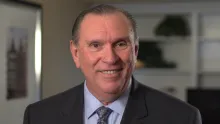
Randy D’Alessandro served as pastor for the United Church of God congregations in Chicago, Illinois, and Beloit, Wisconsin, from 2016-2021. Randy previously served in Raleigh, North Carolina (1984-1989); Cookeville, Tennessee (1989-1993); Parkersburg, West Virginia (1993-1997); Ann Arbor and Detroit, Michigan (1997-2016).
Randy first heard of the church when he was 15 years old and wanted to attend services immediately but was not allowed to by his parents. He quit the high school football and basketball teams in order to properly keep the Sabbath. From the time that Randy first learned of the Holy Days, he kept them at home until he was accepted to Ambassador College in Pasadena, California in 1970.
Randy and his wife, Mary, graduated from Ambassador College with BA degrees in Theology. Randy was ordained an elder in September 1979.
