


Frank Dunkle
This transcript was generated by AI and may contain errors. It is provided to assist those who may not be able to listen to the message.
Please be seated for today's message. Pastor Dallas Andrew. I want to thank Frank Klett for such lovely music. Once upon a time, I played the piano. I was back in junior high. I've really not touched the piano much since then, but I certainly would love some day to get back into it. But as Frank could tell anybody, Caroline as well, it takes an awful lot of practice to be able to play like he just did. So we could admire that and maybe someday take it up ourselves if we want to pay the price. Brethren, it was on July 4, 1776 that one of the greatest documents mankind has ever seen was written and accepted and adopted by the Continental Congress meeting in Philadelphia. It was a slap and a face to the British Empire. It provoked a war that lasted five years. Officially, that war didn't come to an end until 1783 at the Treaty of Paris. That was two years after the surrender of Cornwallis. As you and I take a look at the news this weekend as we listen to the radio, as we talk among ourselves, one word probably will come up in our conversations, and that word is patriotism. What does God think about patriotism? Should we as Christians be patriotic? If we are to be patriotic as Christians, how so? Could we look into the Scriptures and see if any of the men and women of God were patriotic? And perhaps a big question would be, maybe the biggest question, was Jesus Christ Himself patriotic? The term patriot comes from the Greek word pater, meaning father. A patriot is generally defined as one who loves, supports, and defends his fatherland, the country of his nativity or of his residence. Patriotism represents the qualities and the conduct of a patriot. The ideas of patriotism originally was an attachment to the surrounding land, a love for the climate, the scenery, the agriculture, and the native people.
To our way of thinking today, when we think of patriotism, we think of love of country, and rightfully so. So today I want to ask the question, what is Christian patriotism? What is Christian patriotism? By asking the question you find an answer, can Christians be patriotic? Absolutely.
Should we be patriotic? Absolutely. We love our country. But let's take this one step at a time. I would like to just give you a very brief survey of some, not all, but some biblical characters, well-known characters, that were patriotic. I'm not going to turn to these various verses, just to give you some for instances. For example, Moses. Moses was a very patriotic person. You remember the instance where God was about ready to destroy the Jewish nation. Now, they had not crossed over into the Promised Land. They had not yet taken possession of the land, but they were a nation that was wandering into wilderness. They were a nation, nonetheless. God was all set to kill them, to take their lives. But Moses pleaded with God, and God didn't do that. Moses loved his countrymen. He loved the nation. Nehemiah was one that was taken into slavery. But he had such concern for his native land, which he was not living in, he had such concern for his native land that he mourned over what had happened, he wept over what had happened, and he prayed and he fasted for his native land. He even gave up a very comfortable position of being one of the king's officials to go back to the Holy Land and help reestablish the temple and the temple service. Esther and Mordecai would be good examples of people who were patriotic. Not only did they love their fellow Jews, countrymen, again, they loved all of the Jews throughout the empire. And worked to save their lives. Daniel was a young man who was taken captive into Babylon. He served through two parts of two world-ruling empires. He fasted, he prayed, in sackcloth and ashes for the restoration of his nation, which had gone into captivity. Daniel was a patriot. The Apostle Paul, again, I'm not going to turn to these, but in the book of Romans, a couple of quotes, Paul said, Brethren, my heart's desire and prayer to God for Israel is that they may be saved. I think that comes very close to what we want to think about as Christian patriotism.
Here's a man of God who was praying to God for his country to be saved, for his country to come into a relationship with God the Father and Jesus Christ. That is the true nature of what a Christian patriot should be.
And such was the case that in Romans 9, again, I'm not going to turn here, but in Romans 9, Paul says this, I have great sorrow and continual grief in my heart, for I can wish that I myself were accursed from Christ for my brethren, my countrymen, according to the flesh, who are Israelites. Now, you talk about patriotism. Here's a man. We think about patriots. We think of, if you're old enough to know who Audie Murphy is, the World War II veteran who got into the military service.
I think Audie Murphy was 16 years old, I believe. He became the most decorated veteran of World War II. He had a pretty substantial film for after World War II, but by the time he was wounded and had to take him off the field of battle, he had gotten battlefield promotions and rose to the rank, I think, of lieutenant, maybe captain. But he was only 19 years old when a wound caused him to leave the service. He had garnered the most medals of anybody in World War II. We tend to think of that kind of a person as a patriot.
Yet, here's the Apostle Paul willing, as he says here, to give up his eternal life for his countrymen. That is true patriotism. That is true love for your countrymen. So, yes, can a Christian be a patriot? Absolutely. Should we be patriots? Absolutely. But what does that mean? How do we do that? What's the proper way for us to be a Christian patriot?
Now, I asked the question, was Jesus Christ a patriot? Of course, I would say the answer there is yes. In the book of Luke, Christ said, oh, Jerusalem, Jerusalem, how often I wanted to gather your children together as a hen gathers her brood under her wings, but you are not willing. Jesus Christ had a special love for his countrymen. A special love. Now, you understand Jesus Christ loved everybody. Those two ideas are not exclusive to one another. They're at odds with one another. You can love your mother in a way you don't love your father. You can love your son or your daughter in ways that you don't love the other child, but you love them very much.
You have a special love for your son. You've got a special love for your daughter. You've got a special love for mom, a special love for dad. Very unique situations. One is not excluding the other. Jesus Christ had a tremendous love for his country. He wanted Israel, he wanted the Holy Land, to really represent something to the people. As a matter of fact, on one occasion when Jesus Christ came near to Jerusalem and saw the city, he said he wept over it. Because he wanted Jerusalem, he wanted Israel to be a shining light to the rest of the world. Now, in John chapter 15, again I won't turn here, but in John 15, Christ also said, "...and greater love has no one in this, than to lay down one's life for his friends." Jesus Christ was the ultimate patriot laying down his life for his countrymen.
But this is now where we begin to bridge a larger, more transcendent love that Jesus Christ had. As I said earlier, as you are well aware, Jesus Christ loved everybody and does love everybody. Yes, Jesus Christ was a patriot. He had a special attachment to his homeland. Nothing wrong with that. A very special love. But, Jesus Christ loves everybody, wants the best for everybody. And now we're starting to get into some of the thoughts we should have as Christian patriots. Let's take a look at 1 Timothy chapter 2.
1 Timothy chapter 2. For this is good and acceptable in the sight of God our Savior, who desires all men to be saved, and to come to the knowledge of the truth. Desires all men to be saved. Not desires the people in that country we don't like for them to be dead.
Not that, well, we need to go over there and just chop them off at the knees. No. Who desires all men to be saved. Herbert Armstrong had an interesting philosophy. He said that when he thought about his enemies, the way he would pray for his enemies is he would pray that God would shine his light of truth upon them. And to some degree help them to see more and more of the Word of God, the truth of the Word of God, maybe even conversion.
And in that way, he said, that way no one likes having people putting things on you. We don't like having enemies hurting us. But at least in this way, if we're praying that God would enlighten them, that not only are we benefited, but the other person who is doing the wrongs are being benefited as well. Matthew 5. Here we've got the Sermon on the Mount. This is the heart and the core teaching of Jesus Christ.
Matthew 5. Now, I'm going to get into some things today. I may step on a few toes. That's okay. That's one of my titles. One of my titles is Mr. D. Toe's step or honor. Here in Matthew 5, the teachings of Jesus Christ, in my Bible, I've got a red letter Bible. This is all in red lettering.
Matthew 5. 44. But I say to you, love your enemies. Bless those who curse you. Do good to those who hate you. And pray for those who spitefully use and persecute you.
Now, while I say that I might be stepping on some toes, this last week, the four pastors here in Michigan, four United Church pastors, got together over in Brighton. We had lunch together. We talked about a great number of things. One of the things that concerns us is that we look at the church. More and more, we're seeing where people want to take up weapons and their own defense. We're seeing more and more where people, and use deadly force, we're seeing more and more where people are wanting to get fairly deeply involved in a political process.
And that really concerns us, because when we think about the persecution we'll have as we approach the end of the age, where will our faith be? Will our faith be in the fact that we've got an AK-47 under the bed?
Will our faith be in our President, in our Senate, in our Congress, that they're going to always do the right moral thing? For those who feel that the use of deadly force is okay, you're welcome to your feeling. The United Church of God and our teaching, and our church teaching on this is of long standing. We have not changed this. I've been a minister in the church now for 32 years. We've not changed our teaching on this one bit.
Oh yes, we've changed on things like Petra or makeup. Those things come and go. Those are not doctrines, those are teachings. To me, that's a lesser valued item. But something about like this, where Christ says to love your enemies, bless those that curse you, do good to those that hate you, pray for those who spitefully use them, persecute you. I don't see where we can sign up for the military, take up arms, and go to war.
I don't see where somebody comes into our house and we are fully within our Christian rights of blowing the person's head off. I just don't see that. Now, if you've got a discussion, I'll be happy to engage you in that. Where you can show me through scriptures that taking up deadly force is biblical for a New Testament, New Covenant Christian. If you can do that, I'd be more than happy to talk with you.
You turn now to Philippians, one of the key scriptures for the whole sermon we're going to come to right now. Philippians chapter 3.
Philippians chapter 3. Philippians chapter 3.
You know, it was interesting when we and the ministry were having lunch there, I think it was on Wednesday. One of the ministers, and I won't name the name, but one of the four of us as church pastors here in Michigan said, he felt that too many of our people, and I don't say that this is the majority, but too many of our people view themselves as Americans first and Christians second.
And I think that's becoming more and more prevalent.
Now, all of us need to do some soul searching to understand where we individually are coming on that issue. But notice what it says here in Philippians chapter 3 and verse 20.
For our citizenship is in heaven, from which we also eagerly wait for the Savior, the Lord Jesus Christ.
Brethren, our citizenship in the kingdom of God trumps every other citizenship.
Now, I love my country. And as you're well aware, I am a son of an immigrant.
My dad came here when he was six years old. He didn't know a word of English. He was immediately placed in school, and he immediately flunked kindergarten because he didn't know a word of English.
Later on, when some of the other men would not sign up during World War II, when World War II started, some of the other fellows who used to put up my dad for being an Italian, they had to be drafted. My dad volunteered.
He volunteered and served in the U.S. Navy with distinction.
So, it's not like as though I'm not appreciative of what our men and women in arms have done for our country. I'm very appreciative. But, you know, in those cases, those individuals were not called by God to understand the truth as you and I understand the truth.
They'll have their opportunity. But you and I understand something far greater, that our citizenship is in heaven first, in the kingdom of God first. Our name is written in the Lamb's Book of Life first.
We are patriotic to the degree that we can be according to what the Scriptures have to say. And then, as the Apostle Peter said, if there's a difference between what men say and what God says, we must obey God rather than men. Acts 5.
Now, let's take a look at Matthew 6 for a moment.
Matthew 6.
And in verse 33, Matthew 6.33, But seek first the kingdom of God and his righteousness, and all these things shall be added to you.
Again, priority. Seek first the kingdom of God. Not seek first. He didn't say here seek first for a better Rome. He didn't say seek first for the Holy Land to be, for Israel to be restored.
He said seek first the kingdom of God and his righteousness.
So there we have our priorities. Our first priority as a citizen is of the kingdom of God.
Doctrinally, our first priority is whatever the Scriptures have to say.
Now, here we are in a time where there's an awful lot of discussion right now in this country about the political process. I'm not going to get into that. Even though I'm sorely tempted to get into that. You know, just as you have your opinions, I've got my opinions. My opinion is worthless as the next guys when it comes to that sort of thing.
As I told a group over in Ann Arbor earlier today, I have not been satisfied with our current President or the President who preceded him, either Mr. Bush or Mr. Obama. I've got qualms to pick with both. Both, though, do have areas that I feel they have set good examples in.
But do I vote for them? No. For the simple reason, God says that it's up to him to put people in power.
And there, in the Bible, it's also very clear, and I'm not going to turn to the Scriptures, that God at times will put the least into power. And yet, when the typical American goes to the ballot box, what does the typical American want to do? The typical American wants to vote for the, quote-unquote, best guy. Well, God might not want the best guy. God might want the worst guy because he has something in mind. Now, do you really want to put yourself in a position where you're voting against what God wants? Or, as I've had this conversation with a number of people, I'm drifting a little bit from a subject here, but if, you know, the political party you're voting for, you're voting for a certain man, but you're voting for a certain party, well, what if that party really wants more war, more killing, and dropping more drone bombs on people? Or what if that particular party really is high on abortion and gay and lesbian rights, as we've seen recently? You know, when you put your vote behind that person or that party, you own that vote. And before God, you have to be responsible for that vote. So, again, something for you to deeply consider. But our real power is not in the ballot box. Our real power is in the prayer closet.
Our real power is kneeling next to our bed and coming before God in prayer. I was relating to the church in Ann Arbor earlier today. I said, you know, there was a time a few years ago I would not have, just would not have a cell phone. And it got to the place where over in Ann Arbor people said, you know, maybe we should take up a collection and get him a cell phone. And when I heard people were thinking about that, I thought, they must think I can't afford it or something. Well, I can afford it. I just didn't want one. Now, I've come a whole hundred and eighty degrees. I don't have a landline in my house. I mean, I've got a line coming in, but I don't have a phone. I've never had a landline that I've used in my home. And I've been there now six years. I use a cell phone. That thing does everything but make my breakfast. So I make calls with that thing. It's my alarm clock. I tell it what time to wake me up in the morning. If it's dark outside and I don't have a light, I turn that thing on and let it glow so I can see where to put my key in the keyhole because it'll glow my cell phone. Any number of uses for that thing. I've got a calendar on there. I've got a calculator. I can calculate my tips at a restaurant. I can do all sorts of things with my cell phone. We are attached to our little electronic goodies. But you know something? Prayer outdoes all of that. I don't care how smart a phone you have. With prayer, you can call God at night. You can call God. You don't have to worry about roaming charges. You don't have to worry about weekend rates or weekday rates or if you're in a foreign country or what the code is for the foreign country. You can dial God up anytime you want to. When you dial God up, your prayer is not going into the Oval Office. I don't care who the participant is, who the occupant is, Republican or Democrat. As powerful as that office is, when your prayer goes to God, it's going to the location you see in Revelation 4 and 5. A tremendously awesome place where the Great God lives. You have access to Him 24-7-365. And you, in particular, every one of you, have special access to Him. You are His kids. He loves listening to you. He wants you to come and talk with Him. Now, we talk about power.
You know, if Spielberg or George Lucas were to have some movie where your communication goes to some alien planet, and you can have these guys come and do whatever. Oh boy, that's a lot of power. Your power goes to the Great God on high. Let's look at Hebrews 4.
Hebrews 4.
In verse 16, talking about this great power that we have, not the power of the ballot box, but the power of prayer, Hebrews 4.16, Let us therefore come boldly to the throne of grace, come boldly to the throne of grace, that we might obtain mercy and find grace to help in time of need.
Now, we don't want to be reaching for our 1911 model Colt 45. I know what that is. My father used to own one of those. He used to have it down in our basement. Every once in a while I'd pull that thing out and look at it and load it up. I never shot the thing, but it's a pretty good weapon. My dad enjoyed having that, because that was designed one bolt to stop a man.
You hit somebody with that, and square in center mass, that person's going down. Probably not getting back up. But that's not what God says we should be reaching for. God says when we are having issues and troubles, we need to get on our knees and come boldly to the throne of grace, that we might obtain grace to help in time of need. Again, I'm concerned about those who want to put all their nest eggs in the idea of taking care of themselves. Beware. Beware. I hope you've got an awful lot of bullets. I hope you've got bulletproof vests. I hope you've got one of those shields like on Star Trek, because you're going to need it if that's what you're going to trust in.
Let's go back to some basics. We were talking earlier, and I want to get into this more now, about the beginning of the history of our nation. We love our nation, but we need to go back to what the real roots of our nation is. Let's go back to Genesis 17. Genesis 17. Verse 1, When Abram was ninety-nine years old, the Lord appeared to Abram and said to him, I am Almighty God, walk before me and be blameless.
Everything God does, He does for a reason. Every word in the Bible is there for a reason. There's a reason God announces Himself by this name, Almighty God. In your center reference, you might have the Hebrews showing it's El Shaddai. El Shaddai is the name of God that signifies that He's the all-bountiful blesser, the God of all bounty who blesses His people. God was about to bless a Brahm here, whose name is going to be changed at this point to Abraham, the all-bountiful blesser.
Today, you and I take for granted the tremendous bounty, the tremendous blessings that we have in this nation. I take it for granted, too. We all do, to too high a degree. There are many times that you and I sit back and say, Oh, wow, look what God has given us.
And we're so very thankful, but we're probably not that way as much as we should be. Verse 2, And I'll make my covenant between me and you, and will multiply you exceedingly. And the Brahm fell on his face, and God talked to them, saying, Ask for me, behold, my covenant is with you, and you shall be a father of many nations. Go back and take a look some day. Go to a library. Take a look at a world history book around 1950 or so, 1960.
Back in those days, they used to show the British Empire in red. Brethren, back in those days, every fourth person on this planet, every fourth person on this planet, was either a part of the British Empire or was an American.
That says an awful lot. Take a look at the landmass. Take a look at which part. It wasn't like Antarctica that we were in control of. Take a look at where we had control. The choice places on Earth. That was given to us. Why? Because we're so smart? Because we had this great military? Because we were so shrewd? No, that was given to us as a result of what God had promised to Abraham.
Verse 5, No longer shall your name be called Abram, but your name shall be called Abram, for I have made you a father of many nations. I will make you exceedingly fruitful, and make nations of you, and kings shall come from you. And that was now verse 7. And I will establish my covenant between me and you, and your descendants after you and their generations, for an everlasting covenant to be God to you, and your descendants after you.
Verse 7 is a reference to Jesus Christ. We're looking at a lot of things here in verses 1-6 that talk about nation-building, and the bounty that the all-bountable blesser is giving to us as a nation. But verse 7 talks about the tremendous spiritual bounty that we have, because we, through Abraham, comes Jesus Christ, the Savior of all mankind. So we have to remember where all of this bounty, where all of this goodness that we enjoy as Americans come from, doesn't come from the Minutemen, doesn't come from the Doughboys of World War I, doesn't come from the GIs or the Sailors of World War II, or Vietnam or whatever, came from God.
We need to be clear on that point. Over in Deuteronomy chapter 9, Deuteronomy chapter 9, now, lest any misunderstand again, sometimes you've got to qualify and re-qualify. I'm certainly thankful for what our men in arms, the women in arms, have done. Again, they have not been called by God to understand the truth.
They saw their duty as to the best of their ability, and they did it. We certainly appreciate that. I appreciate what my father did as a part of the armed services. But certainly we are called upon to do something different. We've been given different knowledge. Deuteronomy chapter 9, verse 1, Here, O Israel, you are to cross over the Jordan today and go into dispossessed nations greater and mightier than yourself.
The city is great and fortified up to heaven. A people great and tall, the descendants of Anakim, whom you know, whom you have heard, said, Who can stand before the descendants of Anak? Well, here, there is a quotation from the spies that went into the Holy Land. They were talking about these giants, these guys who were eight, nine feet tall, you know, tremendous looking warriors. Verse 3, Therefore, understand today that the Lord your God is he who goes over before you as a consuming fire. He will destroy them and bring them down before you. So you shall drive them out and destroy them quickly, as the Lord has said to you.
Now, God, because of the hard-hearted nature of mankind, because Israel would not follow God the way God wanted them to follow Him, God said, Well, you know, if you just have to have an army, then at least listen to what I say to you. It's not God's desire. Certainly, it's not God's desire today, as we see from the writings and the discussions of Jesus Christ. God allowed people in the Old Testament times, David and so forth, to do that sort of thing. But even in David's case, David wanted to build the house for God. And God says, No, David, you can't do that. As great a man as you are spiritually. You can't do that because you are a man of war. You are a bloody man. You can't build my house.
Deuteronomy 9.4, Do not think in your heart, after the Lord your God has cast them out before you, saying, Because of my righteousness the Lord has brought me in to possess this land. It is because of the wickedness of these nations that the Lord has driven them out from before you. It is not because of your righteousness or the righteousness of your heart that you are going to possess their land, but because of the wickedness of these nations that the Lord drives them out from before you. That they may fulfill the word which the Lord has brought to your fathers to Abraham, Isaac and Jacob.
So God here is wanting them to get back to a sense of reality. Don't think you've got this great nation because you are such a great people. You've got this nation because of the promises to righteous Abraham, Isaac and Jacob. Brethren, we need to understand that same thing when it comes to the United States of America today. Which brings me now to three points I want to discuss with you regarding the essence of Christian patriotism. What I'm going to do is have a running analogy between what our founding fathers did and what we need to be doing as Christians.
Point number one is that our founding fathers made a bold declaration. Our founding fathers made a bold declaration. We're going to see that we as Christians are to make a bold declaration as well. Let's compare the two. I'd like to read to you a portion of a speech that was given by Patrick Henry. From your United States history, you remember the name Patrick Henry. A politician from Virginia. He gave a very famous speech. He gave a number of very famous speeches.
This particular one came before the Virginia Provincial Convention. Here's how Patrick Henry concluded his speech. Three million people, let me break in for a moment. That's what the general population of the colonies was at that point. Just three million. Three million people armed in the holy cause of liberty and in such a country as that we possess are invincible by any force which our enemy can send against us. Besides, sir, we shall not fight our battles alone. There is a just God who presides over the destiny of nations and who will rise up friends to fight our battles for us.
Battle, sir, is not to the strong alone. It's to the vigilant, to the active, to the brave. Sir, it is not now too late to retire. Sir, it is too late now to retire from this contest. There is no retreat, but in submission and slavery. Our chains are forged. Their clanking may be heard on the plains of Boston. The war is inevitable. Let it come. I repeat it, sir. Let it come. It is vain, sir, to extenuate the matter. Gentlemen, many may cry, peace and peace, but there is no peace.
The war has actually begun. Our brethren are already in the field. Why stand we here idle? What is it that a gentleman wish? What would they have? Is life so dear, or peace so sweet, as to be purchased at any price, the price of chains and of slavery? Forbid it, Almighty God.
I know not what course others may take, but ask for me. Give me liberty, or give me death. Very famous. You've all heard that. Early in the summer of 1776, at a meeting at the Colonial Congress on July 2, 1776, the colonies voted to announce and declare that they would accept nothing less than absolute freedom from England. That was on July 2. Two days later, on July 4, after making some minor adjustments to the text, the final wording was ratified and signed by 56 members.
And that is why today we celebrate the 4th of July. After the Declaration was signed, couriers took copies of the signed document of George Washington, who was with his troops in New York. On July 9, the Declaration was read before the militia troops were out in the fields. Now, I want you to understand something about all of this. In the colonies at that time, only one-third of the colonists wanted an American nation. Only one-third. One-third were loyal to England.
The big political party at the time in England were called the Tories. And so the American patriots called those loyal to England Tories. That was one-third. One-third of the colonists didn't care one way or another. They simply wanted to live their lives. They didn't want any part of any revolution. So here we have only one-third of the citizens of what was to become the United States of America really cared about the conflict that was upon them. Now, there's going to be some analogy here that we see as we go down the road.
So I said that our founding fathers made a bold declaration. They were fighting a tremendous empire. The British Empire was one of the mightiest empires in the world at that time. The United States didn't have a standing army. The United States didn't have a navy. And here we're going up against one of the greatest military machines the world to that point had ever seen. With only one citizen in three behind the cause. Of course, if you know your American history, you realize that one of the things that Washington had to continually fight was all through the Revolutionary War, our troops were not getting paid.
These are mostly farmers, settlers. They were not professional soldiers, but they believed in what they could have. And for a month upon month upon month, they got no pay at all. And they died, and they bled, and they shivered, and places like Valley Forge. We owe them a great deal. Let's take a look, though, at what we as Christians are to make a bold declaration about. Romans 6. Romans 6. You know, as you're training in Romans 6, it got so bad in the Continental Army that at one point, the soldiers are so fed up with not being paid that they got word among themselves.
And I forget how many thousand it was, but if thousands of soldiers were going to march on Washington, D.C. Or actually, it was Philadelphia. They wanted to march on Philadelphia, I believe, because that was the capital of the time, I believe. They wanted to get their pay. Who could blame them? They didn't have shoes. The snow was up in some places past their knees. Would you want to walk in, live in conditions like that?
The only thing that stopped them was George Washington. Romans 6. We as Christians are to make a bold declaration. Our founding fathers did. We do, too. We are not fighting against the British Empire. We are fighting against the Empire of Satan the Devil. Much more powerful than the British Empire ever was. Romans 6, verse 3. Or do you not know, as many of us as are baptized into Jesus Christ, we're baptized into His death.
You know, the colonial militia, the soldiers who became the Continental Army, they vowed a vow to give their lives. Well, we as Christians do the same thing. It's called baptism. Verse 4. Therefore, we were buried with them through baptism into death, that just as Christ was raised from the dead by the glory of the Father, even so we should also walk a newness of life.
For if we have been united together in the likeness of His death, certainly we are also to be in the likeness of His resurrection. Knowing this, that our old man was crucified with Him. Crucifixion. A form of death. A very hard form of death. You know, it's a very hard way for us to crucify our human nature.
It goes slowly. It's very hard to die. But that's what the Christian does. Knowing this, that our old man was crucified with Him, that the body of sin might be done away with, that we should no longer be slaves of sin. The colonists didn't want to be slaves to the British Empire. We make a bold declaration that we don't want to be slaves to Satan the Devil.
We drop down to verse 11, same chapter, Romans 6. Romans 6, verse 11, Likewise, you also reckon yourselves to be dead indeed, to sin, but alive to God in Christ Jesus our Lord. Therefore, do not let sin reign in your mortal body, that you should obey it in its lusts. Talking about rulership here. Do not present your members as instruments of unrighteousness to sin, but present yourselves to God as being alive from the dead, and your members as instruments of righteousness to God. For sin shall not have dominion over you, for you are not under the law, but under grace.
So, here is a bold declaration we're making. We're boldly saying that we are not going to be a part of Satan's empire anymore. We are separating ourselves from that empire. Galatians chapter 2. Galatians chapter 2. Verse 20. I have been crucified with Christ. It is no longer I who live, but Christ lives in me. In the life which I now live in the flesh, I live by the faith in the Son of God, who loved me and gave himself for me. In a real sense, brethren, what we have here is a pledging of our allegiance. We are pledging our allegiance to Jesus Christ.
Not to any sovereign nation over and above Christ. Now, there's nothing wrong with us as Americans pledging the allegiance to the flag. Not at all. But here we see where our first priority is. Our first allegiance. Our first allegiance is to God the Father and Jesus Christ. For those of you who are sports fans, it was interesting that last weekend, I think it was, we had the U.S. Open.
I think it was at what they call Congressional Country Club or whatever that was there in the Washington, D.C. area. And, of course, in the spirit of things, since they knew this next coming weekend was the 4th of July weekend, they wanted to have something patriotic there on NBC as they're covering the U.S. Open Golf Championship. And one of the things they did at NBC is they had, and I forget enough, it was a young boy or who, but somebody was reciting the Pledge of Allegiance. And when the whole thing was done, and as you're hearing the pledge, you're seeing all these various patriotic symbols, you're seeing soldiers and flags and this and that and the other, all very patriotic. But NBC left three words out of the pledge. Three words. It couldn't have been three words to save time. You don't save time, air time, it's cutting out three words. The three words they left out was, under God, indivisible. Why did they do that? Now, they apologized. They apologized a couple of times. They apologized on air during the tournament, and they apologized later. But they never did say that I'm aware of why they cut out under God. Well, I think all of us appreciate the fact that today the media is very liberal, and God just gets in their way. And they just don't want God anywhere around. So we need to understand that we need to make a bold declaration, and we need to understand where our society is heading. The second thing of the three, we've got three points here. Number two, our founding fathers paid a very high price as patriots, and certainly we as Christian patriots need to be paying a very high price as well. In the Revolutionary War, 7,200 Americans, now remember there were only three million Americans total in the colonies, only one million of which agreed to having or wanted to have an American nation. So understand these numbers I'm about to quote to you. 7,200 Americans were killed in battle during the Revolutionary War. 8,200 were wounded. 10,000 died from disease and exposure. Nearly 3,000 died at Valley Forge alone. An additional 6,500 died in prison after being captured, and 1,400 soldiers were listed as missing in action. Roughly about 25,000. That's a lot of numbers for back in those days. 25,000. They paid a very high price. I probably read to you at times gone by, but I'd like to just re-quote this because this is accurate, and this is what happened to many of the 56 men who signed the Declaration of Independence. They paid a tremendously dear price. Of the 56 men, five were captured by the British and tortured before they died. Twelve had their homes ransacked and burned. Two lost their sons in the Revolutionary Army. Another two sons were captured. Nine of the 56 fought and died from wounds of hardship during the war. Carter Braxton of Virginia, a wealthy planner and trader, saw a ship sunk by the British Navy. He sold his home and properties to pay his debts and died in poverty. At the Battle of Yorktown, the British General Cornwallis had taken over Thomas Nelson's home for his headquarters. Nelson quietly ordered George Washington to open fire on his own home.
The home was destroyed. Nelson died bankrupt. John Hart was driven from his wife's bedside as she lay dying. Their 13 children fled for their lives. His fields were destroyed. For over a year, he lived in forests and in caves. Returning a home only to find his wife had died and his children had vanished. A few weeks later, he died from exhaustion. These people paid a tremendous price. Brethren as Christians, we too must pay a price. If we're going to be patriots, if we're going to be Christians, if we're going to be the kinds of people that really serve the best interests of our nation, the best interest of our nation is not that you and I have become a SEAL Team Six. None of us in this room is going to be able to accomplish that anyway. The way we serve our nation is we are solid Christians who believe in God, who believe in prayer, and who put God first. If we do that, if we do what God has called us to do, then we are the ultimate Patriot to lead people back to our God. In the book of Joshua, Joshua said, you know, ask for me in my house, we'll serve God. He asked the people, which way are you going to turn? And they said, oh, we're going to follow God. Sure, we're going to follow God. Let's take a look at Judges 2 and see the result of that. You know the result, but let's look at it anyway. Judges 2. Verse 11, Then the children of Israel did evil in the sight of the LORD, and served all the Baals. And they forsook the LORD God of their fathers, who had brought them out of the land of Egypt. And they followed other gods, who among the gods were the people who were all around them. And they bound down to them, and they provoked the LORD to anger. They didn't live up to the high standards that God was asking them to live up to. They didn't want to pay the full price. But brethren, we are as Christians to pay the full price. We've counted the cost of following God and Jesus Christ. And now it is up to us to pay the full price. Let's take a look at some of the scriptures that deal with this over here. One of them is over here in Ephesians 6.
Ephesians 6.
Verse 12, For we do not wrestle against flesh and blood, but against principalities, against powers, against the rulers of darkness of this age, against spiritual hosts of wickedness in heavenly places. Now, we're not fighting the British Empire. We're not even fighting the Russians. As Christians, we are fighting Satan. We're fighting Satan's Empire. This is the empire that we are doing battle with. And make no mistake, we are doing spiritual battle. Here it talks about a spiritual armor we should be putting on, verse 13 and following. Our battle is spiritual. We are not to take up physical arms as Christian patriots. We are to take up spiritual arms. We are to do what no other people have been called to do. You've got such a special calling. You and I have got such a special calling. There's so few of us. You take all of the Church of God fellowships. There are just so few of us in all of the Church of God fellowships. We must be doing our job. 1 Peter 5 And verse 8 If we want to be good patriots, Christ-wise, Christian patriots, we need to understand 1 Peter 5, 8 Be sober, be vigilant, because your adversary the devil walks about like a roaring lion seeking whom he may devour. A colonial militiamen, a colonial soldier, had to be sober. He had to be vigilant during battle. Otherwise, he would lose his life. We need also to be sober and to be vigilant to understand who our enemy is and what we're really facing. But there's another wrinkle here, and this is what gives me a little bit of pause when I see certain attitudes that are prevalent in the Church these days. Let's look at Matthew 24 in the prophecy of the end of the age. Because we are going to turn on our own. There may be people that you go to the feast with, that we fellowship with, that when the time comes, will save their neck and not worry about yours or your family. Remember back in the colonial days, you had one-third of the population who were actively working against the Americans who wanted a nation. The Tories were actually working hand in hand with the British. Our own countrymen. Well, the same thing is going to happen at the end of the age with Church members. Matthew 24, verse 9. This section of Scripture is talking about people in the Church. Then they will deliver you up to tribulation and kill you, and you will be hated by all nations for my namesake. Then many will be offended and will betray one another and hate one another. Some who have been offended. Well, you know, that person really didn't like me in Church. That person that really shook my hand like they should or didn't talk to me or blah, blah, blah. People get offended. It works on them. They begin getting bitter. That becomes something that's very deep inside them. Then they're willing to betray one another and to hate one another. Verse 12. And because lawlessness will abound, because people in the Church will not love the law of God like they should. Why? Well, I can take up arms. I can do all the voting. I can do all the things of the world. Because the things of God are in second and third and fourth place in their lives. And because lawlessness will abound, the love of many will grow cold. Again, that's talking about Christians. The love of many will grow cold. But he who endures to the end shall be saved. Understand, brethren, that times are going to come with those people that you've had maybe in your house. Or me and my house will not be the friend we thought they were going to be.
That's why we must, each of us, have our own relationship with God. And we must not look to other people. Friendships are wonderful. But our friendship with God and Christ trumps everything. We must be strong there. Luke 9.
Luke 9.
Then he said to them all, if anyone desires to come after me, let him deny himself.
It's like the pastor said, who I was having lunch with the other day, too many people view themselves as Americans first, Christians second. Not denying self. No, we're going to accept the things that society says. We're going to accept the way society thinks. Because it just seems right that I should be able to have a gun and put it under my pillow. Or I should be able to bring a gun to services. Because you know we're living in dangerous times. What if somebody walks into church? Well, at least I'm packing.
If anyone desires to come after me, let him deny himself and take up his cross daily. His cross daily. The cross was an instrument of death. Slow, lingering death. And every day we have to make sure that the human nature in us is in the process of dying. It's a slow, lingering death. But we need to take up our cross daily and follow him. For whoever desires to save his life will lose it. Whoever loses his life for my sake will save it. For what profit is it to a man if he gains the whole world and is himself destroyed or lost?
So point number two was we have to be willing to pay the high price as a Christian. As a Christian patriot. Last thing, number three. Our founding fathers did reap a great reward. It was an all-negativity. Yes, they made a bold declaration and they paid a price. They paid a dear price. Just like we have made a bold declaration with our baptism. And we have paid a price and are continuing to pay a price. But we also reap a tremendous reward. The reward that the Americans reaped was a brand new nation. Such a beautiful nation. A nation the world had never seen before. We'll never see the likes of again. Not everybody who signed the Declaration of Independence met with a horrible end. Two signers of the Declaration of Independence became presidents. Ten became congressmen. Nineteen became judges. Sixteen became governors and dozens of others held other offices.
They were faithful. They were diligent. They paid a price. But they reaped great rewards. And point number three for us, we as Christians also will reap a tremendous reward. Let's take a look at just a few scriptures here before we conclude. Over here in John chapter 8.
John chapter 8.
Verse 32.
John 8.32. And you shall know the truth and the truth shall make you free.
The truth shall make us free. Not any politician. Not any set of weapons.
Not any type of economic system, no. The truth of God will make us free. Same chapter, John chapter 8. Verse 36.
Therefore if the Son makes you free, you shall be free indeed.
No matter what our circumstance, when God makes us free, we are truly free.
Now remember when this was written.
This was written in a time when people owned one another.
Where Paul wrote to Christian masters about how to treat their Christian slaves. Now to us today, that's inconceivable. It is utterly inconceivable. That's sort of a situation.
And yet God didn't try to upset the whole of society back in those days. It simply would not have worked. Paul couldn't have overturned the Roman Empire on his own. And God, for whatever God's reasons was, didn't want that to happen at that point. So here we see where freedom, regardless of our circumstance, if we are in Christ, we are free.
We are free.
Tremendous beauty in that statement. Romans chapter 8. Romans chapter 8.
Romans 8, 18.
Yes. Just as the colonial soldiers went through all sorts of privations, many of them dying, those who survived had a tremendous country to look forward to. In our case, we too might go through some tremendous privations. But even if we do die, we have the resurrection to look forward to.
And on the other side of the resurrection, we have all eternity.
In the family of God.
In an atmosphere that you and I, our minds just can't wrap ourselves around it. We can't wrap ourselves around an age where every being has the ultimate love for every other being.
Our mind, you know, we don't live in that kind of an atmosphere.
We can technically kind of envision it, but it's not in our heart envision that. Yet, we're going to be in a situation where love is going to be true love, good love, God love, creative love.
Last scripture is over here in Matthew 25.
Last scripture for today, Matthew 25.
Talking about the great reward as God the Father and Jesus Christ come to you individually, knowing what it is that you've had to work through in this age.
Knowing all of your circumstances, knowing all of the trials and tribulations, knowing all of your weaknesses, but also knowing the fact that you are a success.
Because in the world tomorrow, when you're standing before God in Christ, as a Christian, your sins forgiven, you are there to be blessed.
You're not there to be thrown into any lake of fire. You're there to be blessed.
And God the Father and Jesus Christ will walk up, as we see here in Matthew 25 and verse 21, and here's what they will say to you.
Well done, good and faithful servant. You are faithful over a few things. I'll make you a ruler over many things.
Enter into the joy of your Lord.
Enter into the joy of your Lord.
That's what we look forward to as a Christian patriot.
Right on this weekend, let us rejoice in the tremendous country that we live in.
Let's remember, though, that we have an obligation as Christians, as patriots, to be the best Christians we can be, to set an example for those around us.
When you and I do that, when we make that bold declaration to make that war against Satan, Satan's empire, when we say we are willing to pay whatever price is necessary, then God will say to us, fine, then you will reap the tremendous reward, being in my family for all time.
Let's think about those things. Let those things encourage us.
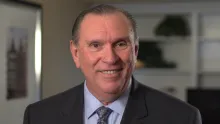
Randy D’Alessandro served as pastor for the United Church of God congregations in Chicago, Illinois, and Beloit, Wisconsin, from 2016-2021. Randy previously served in Raleigh, North Carolina (1984-1989); Cookeville, Tennessee (1989-1993); Parkersburg, West Virginia (1993-1997); Ann Arbor and Detroit, Michigan (1997-2016).
Randy first heard of the church when he was 15 years old and wanted to attend services immediately but was not allowed to by his parents. He quit the high school football and basketball teams in order to properly keep the Sabbath. From the time that Randy first learned of the Holy Days, he kept them at home until he was accepted to Ambassador College in Pasadena, California in 1970.
Randy and his wife, Mary, graduated from Ambassador College with BA degrees in Theology. Randy was ordained an elder in September 1979.
