

Jay Ledbetter
This transcript was generated by AI and may contain errors. It is provided to assist those who may not be able to listen to the message.
We'll offer the sermon. Once again, Mr. D. Rather than today, I've used the Nelson Bible Illustrated Dictionary and the preacher's outline in sermon Bible commentary and source material for the message. I'd like to get back to the book here, back to the book of Deuteronomy. We have spent three sermons to this point in Deuteronomy chapter 5, and we're going to spend a fourth sermon in Deuteronomy chapter 5.
Let's turn over there. I don't know that I've ever done four sermons on any one chapter before. So this is history-making, I believe, for me. The three sermons that came before this one were sermons that went through the Ten Commandments showing the principles, the eternal principles, behind each of the ten. We went through verse 21, which covered the Ten Commandments. It is my desire to cover verses 22 through 33 today, the balance of the chapter. Before I get into that and what this is all about, it's been a while since we've been here in Deuteronomy. Let me give you a little bit of a background again. If you wanted to sum up what the book of Deuteronomy is about, the book of Deuteronomy is a series of messages, three different sermons, preached by Moses as he was preparing the children of Israel for the second generation of Israelites to enter, to conquer, and to possess the Promised Land. The book of Deuteronomy was written at the end of the 40 years' wilderness wanderings just before they were to enter the Promised Land. Now, there are a number of purposes for the book. One of the purposes is historical in nature, to show what had happened, when those things happened as they were about to enter the Promised Land and the history surrounding all of this. There certainly are doctrinal purposes behind this book, and certainly that's one of the reasons why I wanted to go through it with you. One of the great doctrinal purposes of the book of Deuteronomy is to teach God's people how to live successfully. It was true back in Old Testament times. It's true today. We want to know how to live successfully. The book of Deuteronomy will teach us that. The book of Deuteronomy also has a spiritual purpose to stir God's people to rededicate their lives to God. To rededicate ourselves to God, to recommit and renew our commitment to God. And again, that is true for us, whether we're new in the faith or old in the faith, whether we live in Old Testament times and New Testament times, all of God's people need to rededicate themselves to God, to renew our commitment to God. And of course, there's what they call a Christ-centered purpose in terms of the book of Deuteronomy. One of the great lessons, and we'll touch on that today, is there was a need for a mediator between the Israelites, or man, and God.
Some of the special features of the book, the book of Deuteronomy is called the Book of the Second Law, the repetition of the law. It's also known as the Great Book of Spiritual Preparation. Do you feel you have a need of spiritual preparation before you enter the kingdom of God? Well, they are about to enter the Promised Land, which by type would be the same thing that we're trying to do.
As I've said, the Book of Deuteronomy is a book of revealing how to live a victorious Christian life. It's a book of rededication, renewal. It's also a book about hope. A book about hope.
Now, I may mention that Moses gave three sermons. The first sermon goes from chapter 1, verse 1, through almost the end of chapter 4. In that section, the next sermon, Moses makes the point of what God had already done for Israel. We're now in the midst of his second sermon, which goes from the end of chapter 4, all the way through chapter 26.
In this particular sermon, God tells Israel what he expects from them. What he expects from them. So that being the case, now let's take a look. Let's get into the Bible here, Deuteronomy chapter 5, verse 22. We're going to take a look at the reasons God gave his law. We took a look in those other three sermons about the eternal principles behind each law. But why did God give his law to begin with? What are the purposes? As we look at verses 22 through 33, I would submit to you that I see at least four different purposes here. You may see others. I see four major purposes why God gave his law.
Number one.
God gave mankind the Ten Commandments himself.
That's the key word. I would underline himself. God gave man the Ten Commandments himself to point to a full and victorious life.
He wanted mankind to realize he wasn't about to get something second or third hand. This is not something that just comes from anybody. This is coming directly from God, directly from him.
He's not only going to speak the word, he's going to write the word. He's going to get a number of his senses involved.
So here in verse 22, let's take a look at chapter 5 of Deuteronomy, verse 22.
These words, the Lord spoke to all your assembly in the mountain from the midst of the fire, the cloud, the thick darkness with a loud voice, he added no more. And he wrote them on two tablets of stone and gave them to me.
You know, the voice of God himself spoke thundering from that cloud. And it had to have been something that was a terrifying sight. Here's this cloud thundering, lightning, the earth shaking, the sound of a trumpet going, blaring and blaring and blaring. You know, I don't know how many of you have been through an earthquake, but when you're standing someplace and your feet are being rocked by what's happening to the earth under you, that's quite an experience. I've been through a couple of earthquakes.
And when you have something like that and you see all these various trappings that God has here, you know, this is a mountain from the midst of the fire.
I'm sure it was, you know, ear-splitting sound, a tremendous light show, a tremendous show of power. And God has a flair for the dramatic. He's a great teacher. He's our dad, and our dad knows how to teach his kids. And one of the things he wanted to do with his kids is say, you know, you may think you're powerful, you're nothing compared to me. I've got this tremendous power here, and I'm going to let you in on seeing just a little bit of this power. You know, we understand the power of the atom, nuclear power, just a little bit of nuclear energy can empower an atomic submarine for so long a period of time. God created that. God is more powerful than that. So here you've got this voice of God himself speaking the Ten Commandments.
He wanted to be no question about the source of this law. It's his law. It comes from him. And he wants his people to understand this. And because of all the drama involved, he wanted this to be deeply edged in their consciousness. His power, his greatness. So he gave his law in such a spectacular, dramatic way that it was going to be imprinted on their minds for all time.
But he also did something else at the end of verse 22. And he wrote them on two tablets of stone. So not only did we hear God's voice, but God wrote these on two tablets of stone that he gave to Moses. Once again, he wanted this to be not something that down the road people say, well, you know, my memory is not what it once was. You know, I remember there was a lot of smoke, a lot of fire, a lot of sound. Beyond that, my memory is getting hazy. You know, we've got record here, literally chiseled in stone by the hand of God.
There couldn't be any question in the minds of the Israelites who their God was, how powerful he was, and the fact that he wanted them to live by this law of his. Now, let's put a marker right here in Deuteronomy 5. Let's go to Isaiah, chapter 40. Isaiah, chapter 40.
Isaiah 40, verse 8, The grass withers, the flower fades, but the word of our God stands forever. The word of our God stands forever. We talked about the eternal principles of the Ten Commandments earlier, and three separate sermons. Now we're taking a look at the purpose behind of what God did. We turn now to Psalm 119, a beautiful psalm that deals with the law of God, Psalm 119. Obviously, the word of God is founded on the law of God. Psalm 119, verse 105, Your word is a lamp to my feet. It lights the way, a light to my path. We live in a world of darkness. We live in a world where anything goes, where people have their own moral standards, changing values to fit the needs of the day. God says, no, there are eternal values, and my law, my word, will be a light to your feet as you walk through life, a light to your path so you'll know what path to go down, the proper path, a path that will give you the kinds of victorious living that you'll want and you'll desire. 2 Timothy, chapter 3. 2 Timothy, chapter 3. In verse 15, Paul writing here that young Timothy says, And that from childhood you've known the holy Scriptures. The holy Scriptures. We've covered this before, but let's just reiterate. The Scriptures are holy. They're separate. They're unique. They've come from God. They're source is God, which makes them very special. They're holy writings. And those writings are an enabler. They enable us to be wise toward salvation. If all we ever had was the Old Testament, we would have an understanding about salvation. That's all Abraham had. He didn't even have what we've got in the Old Testament. He had part of the Old Testament. He had part of the verbal history of the people of God. David and so forth. They didn't have all that we've got, and yet they're going to be in the Kingdom of God. They had a portion, they had a certain knowledge of these Scriptures, of the principles of God, that would make them wise for salvation. Verse 16, all Scripture is given by inspiration of God. Those Ten Commandments, each and every one of them, were inspired by God, and each one of them are profitable for teaching, for doctrine, it says. Doctrine means nothing more than teaching. We looked at those in three sermons several weeks ago. What is each of those commandments? What are they to teach us? What are some of the eternal principles? They are to reprove us or convict us. We've just passed through the Passover in the Days of Unleavened Bread. We need to be convicted about our life. Where are we with our walk with God? Where can we improve and change and be more at one with the great God? They're also for correction. We have to be convicted first, and then we make a change. That's where correction comes in. In the Bible, the Word of God, the law of God, tells us how to get our feedback on that right path. It will light that path for us. And of course, we have instruction in righteousness. Each and every one of God's Ten Commandments is a point in righteousness. Each and every one is a portion of the very heart and core and mind of God the Father and Jesus Christ. Verse 17, that the man of God may be complete, thoroughly equipped, thoroughly rigged out for every good work. So the first reason that God gave His law is that God wanted to reveal that law Himself.
And show that it is God giving mankind a law that will lead to successful living. That was very important in His heart and His mind. The second reason, let's go back over here to Deuteronomy 5 again. We see a second reason in verses 23-25. Let's just read this section here, verses 23, 24, and 25. So it was, when you heard the voice from the midst of the darkness, while the mountain was burning with fire, that you came near to Me, all the heads of your tribes, your elders. And you said, Surely the Lord our God has shown us His glory and His greatness. And we have heard His voice from the midst of the fire. We have seen this day that God speaks with man, yet He still lives. Now therefore, why should we die? For this great fire will consume us. If we hear the voice of the Lord our God anymore, then we shall die. So there's something very important here that God wants to show mankind. He's shown them that He loves them, that He Himself is giving them this tremendous law of life. But He's also revealing here in these verses, point number two, that there is a great gulf between Himself and mankind. There is a great gulf between Himself and mankind. As I said earlier, God's holy presence when it came down on that mountain, Mount Sinai, was probably the most spectacular, terrifying vision that any human being had ever witnessed in their lives. The thunder and the lightning, the flaming fire that engulfed the whole area, just a tornado of fire, a cloud of deep darkness, bellowing out smoke like a huge volcanic eruption, the earth shaking and quaking, almost knocking people over, maybe even knocking people over with the violence of the shaking and quaking, and the constant blast of a loud trumpet. These people understood something. They understood, you know, if we get too close to this, we're going to die. We can't just walk up and shake hands with this great God. There is a separation between us and Him. There is a gulf between He and us. And that was good for mankind to realize that. It was very good for mankind to realize that. That that great gulf exists. Now, one of the things that we're going to see as we progress in Deuteronomy 5 here is that God had a remedy for that gulf. We'll get to that a little bit later in the sermon. But let me give you a little bit of a quiz. This one-question quiz, you can answer this in your mind. Can you think of another section of Scripture in the New Testament where a gulf is discussed between, you know, God the Father and mankind? Can you think of another place, and I'm going to give you a little more of a hint, it's in the Gospels, or even more of a hint. Well, that's good enough. In the Gospels, where a great gulf is discussed. Let's take a look at Luke 16. Put a marker there in Deuteronomy 5. Luke 16, because there's a gulf that is discussed here. And there will be many people in the world who will misunderstand this section of Scripture.
Let's make sure we understand this section of Scripture.
Luke 16, verse 19.
The parable of the rich man Lazarus. Chapter 16, verse 19. There was a certain rich man who was clothed in purple and fine linen and fared sumptuously every day. So at the very beginning of the parable, we're going to take a look at the prime characters. We've got this rich man who's got, you know, the great life. Verse 20, 21. But there's a certain beggar named Lazarus, full of sores, who was laid at his gate, designed to be fed with the crumbs which fell from the rich man's table, where the dogs came and licked his sores. So the second major party in this parable is the Lazarus, the poor man.
Okay, verse 23. Well, verse 22 again. So it was that the beggar died, and was carried by the angels to Abraham's bosom. The rich man also died and was buried. Now, verse 22 would be a section of scripture that a lot of people in the world would use and talk about, while we die, we go to heaven. Right? The beggar died, and was carried by the angels to Abraham's bosom.
But, as we understand, when you take all the Bible together, you know, just take one part by itself in isolation, the Bible doesn't talk about dying and going directly to heaven. So what do we have here in verse 22? The beggar died, but it doesn't say when. It doesn't say when he's carried to Abraham's bosom. It doesn't say when, does it?
Let's put a marker there. Got markers all over your Bible now. But put a marker over here. Let's go to Matthew chapter 24.
Matthew chapter 24. Let's start here in verse 29. Immediately after the tribulation of those days, the sun will be darkened, the moon will not give its light, the stars will fall from heaven, and the powers of the heavens will be shaken. So we're taking a look here at the Great Tribulation. Then the sign of the Son of Man will appear in heaven, and then all the tribes of the earth will mourn, and they will see the Son of Man coming on the clouds of heaven with power and great glory. So here we see the Second Coming of Jesus Christ. And He will send His angels with the great sound of a trumpet, and they will gather together His elect from the four winds from one end of heaven to the other. So here we see the angels bearing up the saints at the Second Coming of Christ.
Chapter 25, verse 31, we see the same thing. Matthew 25, 31, when the Son of Man comes in His glory, all the holy angels with Him, then He'll sit on the throne of His glory. So we go back now to understand what's taking place there in Luke 16. Luke 16, and I didn't put a marker in my Bible.
Verse 22, the beggar died, was carried by the angels to Abraham's bosom. Well, this is talking about this man being resurrected at the Second Coming of Christ.
Abraham's bosom shows an intimate relationship with God. And truly, the saints, when we're resurrected in the First Resurrection, the Second Coming of Christ, we will be having that tremendous relationship. We are the bride of Christ. In your notes, you might want to jot down Galatians 3, verse 29. Abraham's seed, heirs of the promise.
So this verse does not talk about dying and going to heaven. Because the big issue here, the Bible doesn't say when this resurrection takes place. But when you put all the pieces together from all over the Bible, we realize that the dead are in their graves until the time of— at least the saints are in their graves until the time of the resurrection. But notice at the end of verse 22, Luke 16, verse 22, it says, the rich man died and was buried.
It doesn't say he goes anyplace immediately. Again, the whole issue of when is not addressed here. People want to think that, you know, because of the next verse says, and being in torment in Hades, he lifted up his eyes and saw Abraham afar off and Lazarus in his bosom. Well, the Bible doesn't say he died and immediately went to hell.
Much like with the beggar dying, the time element is not discussed here. It just, you know, in the process of time. This man awakes in verse 23.
Being in torment in Hades.
What is Hades? Hades is the grave. He's resurrected from his grave, and he sees there is what?
There is a gulf between he and that beggar. The beggar is in Abraham's bosom. The beggar is in the kingdom of God. He's not. He's tormented regarding that.
Verse 24. Father Abram have mercy on me and send Lazarus the tip of his finger in water and cool my tongue, for I am tormented in this flame.
What flame are we referring to? By analogy here, we're referring to the flame of the lake of fire.
Again, this is, you know, obviously the people are going to burn immediately, very quickly. God is using some poetic license here to tell the story. But the flame, he's being tormented, and he'll be tormented just for a split second. But the idea here is he realized at his resurrection, at his judgment, that he was not going to be in Abraham's bosom. He was not going to be in the kingdom of God. He was going to be in that lake of fire. Verse 25. But Abraham said, Son, remember that in your lifetime you received good things and likewise Lazarus evil things. But now he is comforted, and you are tormented. So here we see two different people with two different situations in life. You and I, we make choices. Every day we make choices. And those choices are going to lead us into the kingdom of God, or not. If we are right now being called, and I particularly believe everybody in this room right now is in some stage, whether even the kids, of being called.
You can speak for yourself. I can certainly speak for myself. I know I have been called. I know that if I don't make the wrong choices, I'm not going to be in that kingdom. You know, I'm very capable of making the wrong choices, and so are you. But we're also very capable of making the right choices. And God will give us the power to help us as we make those right choices.
Verse 26, besides all this, between us and you, there is a great gulf fixed. A great gulf fixed. Now think about what was happening there in the Old Testament in Deuteronomy 5. God wanted people to realize there was a gulf between what and who He was with His tremendous power and authority, His brilliance, His righteousness. There was a gulf between His immortality and human beings who are weak and immortal, temporal, physical, and not immortal. There's a great gulf. Here we're seeing the same thing. Besides all this, between us and you, there is a great gulf fixed so that those who want to pass from here to you cannot, nor can those from their past to us. So this great gulf is eternal life. It's immortality. Then He said, I beg you therefore, Father, that you would send Him to my Father's house. For I have five brothers that they may testify to them, lest they also come to this place of torment. They need a miracle. Send somebody from the grave. Abraham said to him, they have Moses and the prophets. Let them hear them. Interesting, isn't it? God says, you don't need to have miracles. This is true for the New Testament church too. How many people have I talked to over the years? Well, we just don't have the miracles in the New Testament church like we should have. We just don't have the power we should have. People walk away. Is that the proper response? Well, maybe we don't have some of the miracles that they had back in those days, but we have other kinds of miracles. I've witnessed all kinds of miracles in my lifetime. People being healed, prayers being answered. Does everything have to be some earth-shaking, tremendous display? Or can God speak to us in a still, small voice? We always have to have a mountain rumbling and burning, or can we have God in the quietness of our home as we ask for God's inspiration on our personal Bible study. He shows us things we've not seen before. Isn't that miraculous? Well, He leads and guides our mind. So, anyhow, it's interesting here that the rich man wanted some miracle. He wanted Lazarus to go to the family and preach. And Abraham says, wait a minute, they've got the Bible. They've got the Ten Commandments. They've got all they need. We don't need to have miracles. We've got the Word of God. If all you're into things is because of sensationalism, you're barking up the wrong tree. Verse 29, Abraham said, they have Moses and the prophets, let them hear them. And he said, no, Father Abraham, but if some goes to them from the dead, they will repent. But he said, if they do not hear Moses and the prophets, neither will they be persuaded, though one rise from the dead. So a tremendous discussion there, and this is a parable that Jesus Christ gave, that we need to study the Word of God. We've got what we read there in 2 Timothy. We've got what we need to be complete people, to be thoroughly equipped, to be wise on this elevation. And God gave us His law to do just that.
Now, referring to this gulf a little more, let's go to Romans 7. Romans 7. And verse 12, Romans 7, 12.
Verse 14, for we know that law is spiritual. So holy, just, and good, and spiritual. Now, by contrast, if we go to Isaiah chapter 64, let's take a look at this gulf from another view.
We've got God whose law, and God's law is nothing more than an expression of who God Himself is. Isaiah chapter 64, verse 6.
Isaiah 64, verse 6. But we are all like an unclean thing, and all our righteousness are like filthy rags. For God is holy, just, and good. Our righteousness are as filthy rags. There is a tremendous gulf between who and what God is and who and what we are. A tremendous gulf. But we have God to thank because He has got a plan of salvation by which this gulf is crossed. 1 Corinthians chapter 15. The resurrection chapter. 1 Corinthians chapter 15. Let's take a look at this. Starting here in verse 50. 1 Corinthians 15 verse 50.
Now this I say, brethren, that flesh and blood cannot inherit the kingdom of God, nor does corruption inherit incorruption. So once again, we're looking at this gulf. It was there at the giving of the law. It has always been there between God and man. It has got to be some way to span that gulf. Verse 51, Behold, I tell you a mystery.
We shall not all sleep, but we shall all be changed. In a moment, in a twinkly of an eye at the last trumpet. For the trumpet will sound, and a dead will be raised incorruptible, and we shall be changed. So here we have a, you know, we're combating this gulf. God is helping us to beat this thing. For this corruptible must put on incorruption.
This mortal must put on immortality. That gulf is now spanned. Because we had dedicated our, you know, what is the book of Deuteronomy about? Recommitting ourselves, rededicating ourselves, living life victoriously. Because we've been doing that with God's help. Because we've got the sacrifice of Jesus Christ. Because we have Him as our Savior, our Advocate. We will be resurrected. We will span that gulf. Verse 54, So when this corruptible is put on incorruption, and this mortal is put on immortality, then shall be brought to pass, saying that it is written, Death is swallowed up in victory.
Death is swallowed up in victory. Verse 57, But thanks be to God, who gives us the victory through our Lord Jesus Christ. That gulf is taken care of. So God wants to point out, very dramatically, that there is a gulf between mankind and Himself. And that there's a need for us to have a, to deal with that. Let's go back now to Deuteronomy chapter 5 and take a look at point number 3. Point number 2 was that there's this great gulf between God and mankind.
God wants mankind to make sure they understand that. When you and I examined ourselves for a Passover, we wanted to see and verify and come to grips with the fact there is that gulf, but then also realizing that something we see here in point number 3. The third thing we've got here, if we go to Deuteronomy chapter 5, verses 26 and 27, we see a third purpose for God giving us law. Verse 26, For who is there of all the flesh who has heard of the voice of the living God, speaking from the midst of the fire, as we have and lived?
Verse 27, You go near, the people telling Moses, You go near and hear all that the Lord our God may say, and You tell us all that the Lord our God says to you, and we will hear and do it. So what is the idea here? The idea here, point number 3, is God shows man His need for a mediator. God shows man His need for a mediator. Now, in this case in Deuteronomy chapter 5, it's Moses. But as you and I are very well aware, there is a greater one than Moses that is typed here. It's Jesus Christ.
So here you've got these terrifying events happening. People are witnessing the awesome power of God, His glory, His majesty. They're actually hearing the booming voice of God. Their feet were shaking. Their hearts were pounding. Their heads were probably splitting with headaches because of all the things that were happening. At the same time, the people realized, you know, we just can't walk up to this God and shake His hand.
We need somebody to go up there for us and to be a go-between. We need a mediator. The people realized there was a tremendous difference between God's nature, which was so awesome, and their nature, which was so frail, between God's awesome power and their helplessness, between what God is like and what man is like.
They sensed the need for a mediator. And in verse 28, God says, They are right in all that they have spoken. God wanted to bring them to the place where they saw that need for a mediator. We have need for a Savior, a mediator. So God, in giving His law, there are certain important points that He's showing here. Keep your mark there in chapter 5. Let's go to Deuteronomy 18. Deuteronomy 18. Here's a prophecy about another mediator that was to come. Deuteronomy 18, verse 15. The Lord your God will raise up for you a prophet like me from your midst, from your brethren, Him you shall hear, according to all you desired of the Lord your God in Horeb in the day of your assembly, saying, Let me not hear again the voice of the Lord my God, Lord, let me see His great fire, any more lest I die.
And the Lord said to me, What they have spoken is good. I will raise up for them a prophet like you from among their brethren, and I will put my words in his mouth, and he shall speak to them in all that I command him. And I shall be that whoever does not hear his words, hear my words, which he speaks in my name, I will require of him.
So that whole section there is a prophecy about the coming of Jesus Christ. To be our mediator, to be our go-between, to be the one who goes to God on our behalf, to be our advocate. And God wanted people to realize that they had such a need. 1 Timothy 2 1 Timothy 2 1 Timothy 2, verse 5 For there is one God and one mediator between God and men, the man Christ Jesus, who gave himself a ransom for all to be testified in due time. There you've got it.
The tremendous mediator, Jesus Christ Himself. The book of Hebrews talks eloquently about this. We're not going to go through all the scriptures there in Hebrews, let's look at one of them. Hebrews chapter 8 Hebrews chapter 8 and verse 6 Hebrews 8-6 But now He has obtained a more excellent ministry, as much as He is also a mediator of a better covenant, which was established upon better promises.
So once again, a discussion about Jesus Christ as a mediator, a go-between, a buffer. So this is something that God wanted the Israelites and all mankind to realize. That He was giving the law Himself, first person. It's that important that God's going to come down to mankind and mouth these wonderful and life-giving words. But they also need to realize there's a gulf between that great God and we as human beings.
But then next we understand there's a remedy. We've got a mediator to help us with that gulf. His name is Jesus Christ. Let's take a look now, go back to chapter 5 of Deuteronomy. Look at the last point that I've got for you here.
We see this in Deuteronomy 5 verses 28 through 33, the balance of the chapter. Another reason God gave His law was to show His tremendous love for mankind. To show His tremendous love for mankind. God loves people. His love focuses on what's best for His people. He's our designer. He's our creator. He's our sustainer. He realizes the best way for us as His product to live, to work, to function. And so He gives us His great law, which helps us to live victoriously. Chapter 5 of Deuteronomy verse 28. Then the Lord heard the voice of your words when you spoke to Me, and the Lord said to Me, I have heard the voice of the words of this people which they have spoken to you.
They are right in all that they have spoken. They are right. God the Father longs to meet the need we have for a mediator. Remember what we read during the Passover service? Brian McGuire read it for you here. I read it over in the Detroit area. How that with fervent desire, Christ said, with fervent desire, I have come to eat this Passover with you. With fervent desire. These were not sinless people. These were not perfect people. One of them was going to be... These were not even converted people. One of these people was going to take and have Jesus Christ betrayed, have Him tortured.
And yet Jesus Christ, in that gathering, said that He had a fervent desire to be there for them, and to be there for you and for Me. And we're seeing here in verse 28 that God has a fervent desire to give man a mediator, to help man span that gulf between what we are and what God is. And that is an act of tremendous love on God's behalf. Verse 29, Deuteronomy 5, 29. Oh, that they had such a heart in them, that they would fear Me and always keep all My commandments, that it might be well with them and with their children forever. God longs to have mankind have this heart to obey Him, to take these Ten Commandments seriously, to realize this law of God is a beautiful law that gives life.
It sheds light on our path, helps us to know which way to go. And so, one sense you've got God here, and I feel, it's an outburst of emotion here. Oh, that they had such a heart in them! You know, God's not sitting here like some Philadelphia lawyer. I wish they had a heart. I'm sure there's some passion involved here. Think about the people you love. Think about times in your life where maybe the people you love have not loved you back the way that you would like, or maybe you've not loved others the way you would like.
And you've probably said some of the same thing, Oh, I wish that my husband, Oh, I wish that my wife, Oh, I wish that my kids, Oh, I wish that this other person would have the heart of them to really love Me. We don't say those kinds of things with dispassion.
We're emotional when we say those kinds of things. And God says the same thing here. Oh, that they had such a heart in them! That they would fear Me always and keep all My commandments. That I might do well with them. Let's go to chapter 28.
Verse 1, Now it shall come to pass, if you diligently obey the voice of the Lord your God, to observe carefully all His commandments, which I command you today, that the Lord your God will set you high above all nations on the earth. You'll be a tremendous example to all around you. And all these blessings shall come upon you and overtake you, because you obey the voice of the Lord your God.
Blessed shall you be in the city, and blessed shall you be in the country. Wherever you live, wherever you travel, you're going to be blessed. Blessed shall be the fruit of your body, the produce of your ground, the increase of your herds, the increase of your cattle, and the offspring of your flocks. We don't have that today.
You know, we have, from time to time, Mary and I will go over to the Weckerleys, we'll have dinner or lunch or whatever, just fellowship with them. And their one daughter, Melissa, is a teacher, and she deals with people who have got various brain traumas and so on and so forth. And she's got her master's in that, and she's a teacher. And I get to talking with her and asking her how things are going in a class, and she discusses with me what's happening with these kids. And, you know, it really tugs on your heart to hear about these little kids who, you know, most of us in this room don't have issues like that, but they, in their young lives, do.
The fruit of their bodies is not the best, and it's not their fault. They were born that way because of society, the way people before them have lived, decisions, wrong decisions they've made. But if we follow the law of God, then the fruit of our body won't have to deal with those sorts of things. Not only that, but the produce of our ground, the increase of our herds.
I mean, there's an effect if we put all the laws of God together. You know, Mr. Hab will be able to tell you, and the Vreeland clan tell you, you know, in farming, if you follow the laws of God with your farming methods and so on and so forth, you're going to be blessed. Richly blessed. Verse 5, Bless shall be your basket and your kneading bowl. Bless shall be when you come in. Bless shall be when you go out.
You know, a discussion there about how you're living your life, decisions you make, because those decisions will be predicated on the Word of God. The Lord will cause your enemies who rise up against you to be defeated before your face. They'll come against you one way and flee before you seven ways. The Lord will command blessings on you in your storehouses and in all to which you set your hand.
He'll bless you in the land which the Lord your God has given you. And on and on and on it goes. I can read most of the rest of this chapter. Of course, there's some curses, too. We're not going to get into that, but if we don't follow the law of God, we can be cursed. Let's go back to chapter 5 of Deuteronomy. So God longs to have man at the proper heart in Him to obey this law. Verse 30 and 31.
Deuteronomy 5, verse 30 and 31. Go and say to them, return to your tents. But after you stand here by Me, and I will speak to you all the commandments and statutes and judgments, which you shall teach them, that they may observe them in the land which I am going to give them to possess. So once again, God's going to give them all the laws they need to succeed. Every one of them. All these various principles.
We don't have to be in the dark. We don't have to be stumbling around in life. Well, I'm just trying to find my way. Well, God will show us the way. God will show us the way. Now, let me turn over here. You don't need to turn there if you don't like, but over here in John 6. Some again we read every year at Passover. John 6, verse 35. And Jesus said to them, I am the bread of life. He who comes to Me shall never hunger, and he who believes in Me shall never thirst.
Never hunger, never thirst. Spiritually speaking, we will have a life that is satisfactory in God's sight, in our own. Verse 48 of John 6. I am the bread of life. Your fathers ate the manna in the wilderness and are dead. This is the bread which comes down from heaven, that one might eat of it and not die. I am the living bread, which came down from heaven. If anyone eats of this bread, then he will live forever. And the bread which I shall give is my flesh, which I shall give for the life of the world.
So once again, we're seeing how Jesus Christ says, you know, in God the Father, if you follow these laws, you will have life and blessing.
Do it around me, chapter 5, verse 32. Therefore you shall be careful to do as Lord your God has commanded you. You shall not turn aside to the right hand or to the left.
Don't make decisions on your own, and thinking these are godly decisions, if you're going to wander from my law. Here is my law. Stay in that path. And there's plenty of latitude within the law of God. You know, the law of God is not a straitjacket. The law of God is a beautiful law with very large parameters that we can live within. But God says, you know, there's a point by which you can go past where you should, and there's trouble there. Don't go there. Stick to the law. Stick to the parameters of the law.
Verse 33, you shall walk in all the ways which the Lord your God has commanded you, that you may live, that it might be well with you, that you may have prolonged days in a land which you shall possess.
So don't turn aside one way or another. Just follow these laws. By doing so, you'll be living large, living successfully.
Book of Joshua, Chapter 1.
You know, it fell upon Joshua to take over the reigns of Moses. Tough, tough shoes to fill. Tough act to follow.
Joshua, Chapter 1, Verse 8.
So think on this. Meditate on it. Analyze it. Study it. Think about the ramifications. Think about the application.
Application is so important. You know, years ago, before I was a minister, full-time in a church, I was in sales. And one of the things that I sold was pressure-sensitive tape. I used to work for Tuck Tape, Tuck Industries. They're in New Rochelle, New York. It was their home office, and I covered the state of Michigan, selling things like masking tape, electrical tape, all sorts of duct tape, salt. You know, if it had glue on it, I sold it. And, you know, it was my responsibility, since I worked with a number of paper companies in the Detroit area, I was their manufacturer's representative. I'd go to their, I'd have meetings with their sales force, instruct them on my tape line, and then I'd go to end users. I'd just, you know, what they'd call smokestacking. I'd jump in my car, and I'd help them find some smokestacks, which meant there were factories. And they'd probably have some sort of either bundling tapes, like a strapping tape or something like that, somewhere, or various applications. But I'd go and ask, what are your applications? Talk to either a warehouse manager, or a purchasing agent, or something like that. What are your applications? Well, Randy, we've got this application. We're your tape work here. We're putting a whole new line on. We've got these little parts. We'd like to have a long, remember one application, there's a long line. They want to put tape, and have these little parts on this tape as we kind of move along assembly lines. I said, well, that's interesting. I sell an awful lot of tape to you doing that. That'd be great for me. I said, but can you guarantee that that line's not going to have grease and oil? I said, oh, no, we can't guarantee that. I said, well, you know what? I can't guarantee my tape will work either. Tape and oil doesn't go hand in glove. So there's got to be certain parameters. But here we've got Joshua saying, you know, there's an application here. If you apply yourself, God's telling Moses, Moses and God are telling Joshua, if you apply yourself to this law, you're going to be successful. You're going to be prosperous. Last scripture for today will be getting out early. Last scripture for today is over here in Revelation, Chapter 22. I don't think anybody minds getting out early, do we? Revelation, Chapter 22 and verse 14. Blessed are those who do His commandments. They may have the right to the tree of life. They may enter through the gates into the city. The Gulf is no more because we have accepted Christ as our mediator, as our high priest, as our Savior. We have been resurrected, and we are now because of keeping this law of God as a good Christian in an unleavened way. Now we are going to be able to walk into this kingdom, rhetorically speaking, and literally speaking. So, brethren, today we've taken a look at the end of Chapter 5 of Deuteronomy. We've seen four specific reasons or purposes that God gave His law. He gave it because He Himself wanted to make sure mankind got everything the way they should get it. It wasn't second hand, it wasn't third hand, it wasn't partially correct. God gave it Himself to the people of Israel. Number two, God wanted people to realize there was a gulf between them and He. Number three, He wanted people to realize there was a need for a mediator. And number four, He wanted people to realize His tremendous love for them. He was going to give them this tremendous law. He was going to give them the mediator. He was going to give them everything they need to be successful in life. So with that, I can promise you next time we get together for Deuteronomy, it will not be Chapter 5.
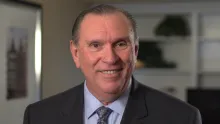
Randy D’Alessandro served as pastor for the United Church of God congregations in Chicago, Illinois, and Beloit, Wisconsin, from 2016-2021. Randy previously served in Raleigh, North Carolina (1984-1989); Cookeville, Tennessee (1989-1993); Parkersburg, West Virginia (1993-1997); Ann Arbor and Detroit, Michigan (1997-2016).
Randy first heard of the church when he was 15 years old and wanted to attend services immediately but was not allowed to by his parents. He quit the high school football and basketball teams in order to properly keep the Sabbath. From the time that Randy first learned of the Holy Days, he kept them at home until he was accepted to Ambassador College in Pasadena, California in 1970.
Randy and his wife, Mary, graduated from Ambassador College with BA degrees in Theology. Randy was ordained an elder in September 1979.
