


Ken Loucks
This transcript was generated by AI and may contain errors. It is provided to assist those who may not be able to listen to the message.
Well, hello again. You know, I mentioned in the announcements about the Santa Rosa wildfires.
Clearly, there's, you know, we're just barely coming out of that, and there's additional fires that began in Santa Cruz, and you know, hopefully with some of the rains and the weather turned, we'll see an end to this for this season. But, you know, there will be a lot of lessons learned from these wildfires, things that we can do better, you know, how we rebuild and the way we rebuild and so forth. And over the coming months, those lessons will begin to come out.
But I'd like to turn our attention back a few months. It seems like it was an eternity ago, because so much has happened in the months of September and October, and Las Vegas Massacre, and so forth. But in August, we witnessed some of the most devastating floods in U.S. history with the Hurricane Harvey in Texas. And if you recall, back in August, that area received 50 inches of rain in just a couple days. And I remember, I don't know if you saw this photo, but it's a remarkable photo of this freeway. And this freeway is literally just an ocean, of water with waves going through. And you could see it before and after, and it was this, you know, sort of like the 880. You can imagine the 880, you know, kind of four or five lanes on both sides, big, medium, big signs, completely covered in water. 50 inches of rain is about twice the annual rainfall we received here in Oakland, and they received it in the matter of, you know, just just a couple days. And the effects of that flood were just devastating, if you recall, seeing the images. And in fact, for the Feast welcome video, they had a few images of the flood waters that hit that area. What I found interesting, as I was following the news on that and began to read more about it, what I found interesting was that just how frequent flooding is in Houston.
And in fact, I had a chance to listen to an interview on Kate QED Radio. It was during the, it was on the Here and Now program. It's during the day at around 11 o'clock. And it was an it was an interview with a gentleman by the name of Samuel Brody. Dr. Brody is a professor in the Department of Marine Sciences at Texas A&M University in Galveston. And he wrote a book six years ago titled Rising Waters. And in this book, he predicted catastrophic floods in Houston.
He described the fact in this interview that Houston is the number one place in the United States to die from a flood. That's just a fact. And in fact, the chances of dying in Houston from a flood are so great that that Houston is three times more deadly than the second most dangerous place to die in a flood in the United States. It's just a very, very flood-prone, dangerous area.
And this was before anything with Hurricane Harvey. It's just a very, very dangerous place in terms of flooding. And he went on to describe why that was. He said, fundamentally, the issue is that Houston is this large metro area that has allowed itself to pave over so much of its land. It's a large plain, very, very flat, and it's paved over so much of the land that it has all these what are called impervious surfaces. The water cannot actually go into the ground.
And so the water has to find a place to go, and so in this large plain, it's going to seek a place to go. And it doesn't really have any place to go because it's just this huge plain. And so this issue has been known for years and years. And so a number of years ago, he received a grant from the National Science Foundation to conduct research on how this issue could be addressed in Houston. And he conducted all sorts of interviews and did all sorts of research. And he co-authored this paper, and it eventually became this book called Rising Waters, which was published six years ago. And it had a whole series of recommendations that the city of Houston could go ahead and implement to reduce the risk of flood deaths. And unfortunately, very few, if any, of those recommendations from six years ago were implemented. And what he was describing is that hopefully now, after this hurricane and after the flooding, the devastation that we saw, perhaps the city will take action to address the fact that they are such a dangerous place to die in a flood.
So in actual fact, the warning signs for this devastation were there.
Studied, researched, well-documented, well understood by city planners, well understood by city council leaders, and no action was taken. Here in Northern California, we live under constant threat, it seems, of fires, but actually of earthquakes. I mean, this is earthquake country.
I think probably everyone in this room has experienced an earthquake of some sort of another. My first memory of an earthquake was in 1970s in Southern California. I was sleeping in a camper with my grandfather. It was the Silmar quake of 1971, and he couldn't get out of the camper because the camper was bouncing around so much that he couldn't actually get out of bed. And my mom running across the house, broken glass and everything, and then she realized I was in the camper with my grandfather, and I was safe in there. So I think everyone has experienced an earthquake. We should, here in Northern California, we should be prepared for an earthquake.
All of us should have water. We should have food. We should have a radio with spare batteries. We should have candles. We should have something to, you know, we should have supplies to be able to go through at least three days with no electricity, no water, no ability to move around, stuck in place. We should have tennis shoes in the back of our car, in our trunk, because when it comes, you're not going to be driving, so you're going to have to have proper shoes to walk. You're going to have to walk a long ways, probably back to your house. You should have an emergency plan in place to be able to know how your family members are going to get in contact with. And I'm looking at you like, yeah, you better go do that. But we should, right? Because we live in this area. And we have heard, and I remember when my wife and I got married, we went to an earthquake planning session, and they said it's not an issue of if, it's an issue of when. We have the big one. The big one is like an 8.0, right? And that big one's going to come, and it's probably going to come in the next 30 years. I remember, what, it was 28 years ago, right? And we haven't had it. And if you listen to experts, they'll tell you it's going to come. And we have to be ready, and it's going to be big, and it's going to be bad. And we need to be prepared, because that's it. The warning signs are there. So if we extend the analogy of these floods or this earthquake spiritually, we know that we have to be prepared for some thing that's going to come. And that's some thing we just celebrated through the fall holy days. We celebrated the day of the Lord.
Now, that's not the time to celebrate, because that's a terrible time for the earth, but we celebrated the fact that Jesus Christ is going to return. He's going to establish order on this earth, and he's going to usher in a thousand years of peace. But the time leading up to that is going to be really rough. It's going to be rough physically, and we're going to have to be prepared for that. If you turn with me to Luke 21, in verse 36, we have an admonition given to each of us. Luke 21, 36, very famous scripture. In Luke 21, 36, it says, Watch therefore, and pray always that you may be counted worthy to escape all these things that will come to pass and to stand before the Son of Man. Can you imagine if somebody said, watch you therefore, and pray always that you might be accounted worthy to escape the terrible earthquake that's going to come and sweep through Northern California.
Watch therefore, and pray that you would be worthy to escape the fires that are going to sweep through Northern California, or the floods that are going to sweep through Houston.
You would want to escape that, right? We would like to escape this terrible time ahead, and we'd like to be in that day we celebrated during the Feast of Trumpets and, of course, the Feast of Tabernacles. This word, watch, is a Greek word that literally translates without sleep. That's what that word, watch, means. It's Strong's number 69. It's a word here that I struggled to pronounce.
Agronypt, I think, is my best take at it. It's spelled A-G-R-Y-P, like Egypt. A-G-R-Y-P-N-E-I-T-E.
Agronypt. And it literally comes from two words, which means sleep and without. Without sleep. That is, you're just vigilant. In Mark, which is a parallel passage, it translates this word take heed. So it comes from this notion that pay attention, take heed, be alert, it's coming.
Now, we can sit around, you know, if you were thinking about this in terms of a fire or an earthquake or a flood, right, it does it. You wouldn't say, okay, I'm going to sit here by my radio and I'm going to listen to see if a fire is coming, right, or I'm going to listen on the hurricane progress, right, or I'm going to wait to hear an announcement on an earthquake. You wouldn't do that, right? You know, if you were in Texas when Hurricane Harvey is coming into Corpus Christi, right, your job to watch for that hurricane is not to sit in your home and watch CNN, right? Your job is to get out of dodge, right? It's, okay, I'm going to pack up my stuff, I'm going to make sure my house is ready, I'm going to, you know, turn off the water, I'm going to make sure everything is set, I'm going to board up the house, I'm going to make sure my car has got gasoline in it, I'm going to make sure I've got my supplies for three or four days, right? That's what you do. You would take heed, the hurricane's coming, and so, you know, be ready for it. That's what you would do. You wouldn't just sit there and watch CNN, and, you know, as we think about world events, we just don't sit here and watch CNN and say, well, that's prophetic, and that's prophetic. I mean, that's important to do, but we take heed to ourselves and make sure that we are prepared for that day and what it will mean. In popular culture, Luke 21 36 would be called Judgment Day, right? Unfortunately, our Schwarzenegger kind of turned that word into a whole series of movies and things, but, you know, I mean, this is what we're talking about, right? We're talking about Judgment Day. This is Judgment Day. Watch, therefore, and pray always, that you may be accounted worthy to escape all these things. It's not a fire, it's not an earthquake, it's not a flood, it's the big day. It's the ultimate day of reckoning and judgment, and we want to be counted worthy to escape those things. We just finished the Holy Day season, and the Holy Day season is, the Fall Holy Day season, is really all about judgment.
And as we finish this Holy Day season, as we go through this long period of the six months until we come to the Spring Holy Day season, I wanted to share this concept of judgment with you in this sermon, because we are going to be judged. Judgment is woven into these Holy Days, and judgment really completes the picture that I've been sharing with you over the last few months of grace, and of hope, and character, and our response to the resurrection of Jesus Christ. Because ultimately, after all these things happen, we're judged based on what we've done.
And so today, I want to cover a key principle that's found in Ecclesiastes.
We're going to look at Ecclesiastes, and we're going to look at a fundamental human principle of judgment that we see there, and we're going to tie that into a parable that Jesus shares of Lazarus and the rich man. And I talked about Lazarus and the rich man briefly in a sermon I gave on heaven, and we're going to go into some detail on that parable.
So we're going to talk about Judgment Day in terms of this principle in Ecclesiastes, and then as well as the parable of Lazarus and the rich man. So the title of this message is Judgment Day. And let's take a look at Ecclesiastes 8 verse 11 to get us started on this.
I talked a little bit about Ecclesiastes 8 verse 11 during the Feast of Tabernacles, because that principle is an interesting principle in terms of the eighth day. But let's look at it as it applies to us. Ecclesiastes 8 verse 11 says, Because the sentence against an evil work is not executed speedily, therefore the heart of the sons of men is fully set in them to do evil.
This is a fundamental principle of human nature in terms of judgment.
Because the sentence against an evil work is not executed speedily.
So let's call this the principle of evil from delayed sentencing.
Evil from delayed sentencing. That is, evil is going to come from the fact that there is delayed sentencing. So if the sentence was executed speedily, there might be less evil in the world. That's the principle at work here.
I shared this sort of principle at the Feast, but if you think about how many people hear speed, how many people drive a button? Don't raise your hands, please. Do not raise your hands. Okay? Everybody. You know, it's pretty common, right? We drive above the speed limit.
You know, some people are actually good. Some people do drive the speed limit.
Some people drive two miles an hour above or five. You know, some people say, you know, as long as you're five miles, you know, you're under five miles an hour of the speed limit, you're fine. Nobody's going to bother you. Some people actually drive more than five miles over the speed limit, and that's probably dangerous to be just completely honest. You're probably risking yourself and others by driving above the speed limit like that. But the fact is, people do drive above the speed limit, and you can drive above the speed limit for years and never get a ticket, because it's just kind of how the system works. There's not somebody around, and you know, you're in a hurry, and so forth. In France, they actually have a system of cameras that they've installed. Okay, so in France, you better not drive above the speed limit, because if you do, you're going to get a ticket. Even if you're two miles above the speed limit, you are going to get a ticket. And unfortunately, that happens to me, because you really have to pay attention. So if you rent a car in France, many of the cars will actually tell you what the speed limit is in the car itself. So the car will actually know what the speed limit is, and I watch that thing like you just can't believe, because if you go from 90 kilometers an hour to 70 kilometers an hour, and you don't know it, you're going to get a ticket. And typically, you know when you get a ticket, because there's this flash of light as the flash goes off, because it records your license plate, the make and model of the car. And if you're renting a car, you are going to get a letter about two months later. And that Avis company or Hertz company is going to be very pleased to charge you a fee to administer the fee that you have to pay for the, you know, the speeding ticket. So just a word of warning if you go to France. So in France, they have this regulator thing that keeps you... I actually put it on. It's like a cruise control, except it doesn't allow you to go above the speed limit. So that's what I do. Now, anybody who's been pulled over before, when you actually speed and you look in your rearview mirror and you see that police car and those lights are going, what does that feel like in your stomach? Doesn't it feel terrible?
I mean, I'm like, oh, and you know you're wrong. You're like, oh, caught, right?
And then you go, I'm not speeding again. I'm not going to speed again. You know, and you get the ticket and you got to go to traffic school. And you know, it's like, you know, these tickets, I don't know, you know, it's like three, four hundred bucks, right? And you say to yourself, I'm not going to speed, right? I can't believe how stupid I was. I was speeding. I shouldn't have. And then a little time goes by, two miles above the speed limit, five miles... And you're speeding again, right? This is this principle of delayed judgment. And the bizarre thing about this is that in France, you would think... Because France had a huge issue with traffic mortality. That is to say, people were dying in car crashes. And so the government had to put in all sorts of things. They put in speed bumps all over the place. They put in cameras all over the place. They're really trying to reduce the number of traffic fatalities. And you would think with all these cameras that the people speeding in France is down. But it's not.
People are actually driving faster now in France because people buy these little devices that they put in their car. And it detects when there's a camera. So they slow down right before the camera. And then they speed up after the camera. I mean, this is human nature. This is Ecclesiastes 8 verse 11, right? So let's keep reading here. Verse 12, though a sinner does evil a hundred times, and his days are prolonged, yet I surely know that it will be well with those who fear God, who fear before him. But, verse 13, it will not be well with the wicked, nor will he prolong his days, which are as a shadow because he does not fear before God. So the writer here, Ecclesiastes, very likely Solomon, is saying, even though the sentence of evil is delayed and it causes people to do evil, the fact is a day of judgment will come. And when that day of judgment comes, it's going to be a problem. And some people just reading this might think there's a contradiction because it talks about a sinner doing evil a hundred times and his days being prolonged. But I think what we think about the spiritual application here, the fact is that yes, the physical days are prolonged. You'd think, well, why does this person get away with this? Why do bad things happen in this way? Or good things happen to bad people and so forth? Adam and Eve took of the apple, or the fruit, I should say, in the Garden of Eden, and they died 900 years later.
Okay, I mean, you know, none of us wouldn't mind living an extra 800 years or so, right? We'd consider that a big blessing. Well, you know, God said, in the day you eat this fruit, you're going to die. Well, they died nearly a thousand years later. So the physical life is short, but the spiritual eternal life that we heard about in the sermonette, that's what matters. And that is what is going to be available. So if we think about this principle, we see that the effects of our decisions, you know, cause us to, you know, have these issues. So let's look at this parable in Luke 16. And let's think about this principle here in the case of Luke 16, because we're subject to this ourselves. I gave you the example of speeding, or getting a speeding ticket, but spiritually, you know, we do things that we know we shouldn't do, and then we get caught, and then we go, oh, well, you know, I shouldn't have done that. I don't know why I was doing that. And then if time goes by, and, you know, we're not, as it were, caught, or we don't suffer some negative impact of our behavior, then we continue to do the thing that we shouldn't do. So that is a problem for us as human beings. So let's look at Luke 16, and let's look at this parable of Lazarus and the rich man and think about this in terms of Judgment Day. Luke 16 contains three distinct parables, and they all discuss, or three distinct stories, I should say, and they all discuss basically a single theme around contrasting material wealth with our lasting true rewards. So basically, you know, the reward we get in this life, which might come, you know, again, if you think about Ecclesiastes 8, cheating on an exam. This is a very common thing if you're in school. You know, you cheat on an exam, you get a higher grade, your GPA goes up, GPA goes up, and then when you go apply for a job, you say, yeah, I got a very high GPA, and then you get a better job because of that. And, you know, this is a very common thing, right? People get away with these things. So you have sort of this material wealth today versus an everlasting reward.
So if we look at the story here in verse 19, it says, there was a certain rich man who was clothed in purple and fine linen and fared sub-suously every day. Look 16 verse 19.
Interestingly, the rich man is not named in this story. And as I shared in a previous message, the position of the United Church of God, as is the position of many Bible scholars, including the Expositor's Bible Commentary, that this parable is not a parable that you're going to get, you know, very detailed theological instruction on what is happening in the future.
You know, these are broad principles that are going to be brought out in this parable. I just want to read you the quote. I read this in a previous sermon, but just since we're here, I want to read this. This is from page 991 from volume 8 of the Expositor's Bible Commentary. It says, while the parable does contain a few doctrinal implications, the Expositor must keep in mind that one cannot build an eschatology on it. That is, a whole series of doctrines on individual points here. That is, you can't build a theology about death, judgment, and the final destiny of mankind on this story. So there are principles that are consistent with, obviously, the Bible, and we're going to go through those. So let's read this story here in a little bit more detail. So there's this rich man who's not named. He's clothed in purple and fine linen, and he's living well every day. Did he do evil every day? We don't know, but he's living very, very well. And there was a certain beggar named Lazarus, full of sores who was laid at his gate.
So this beggar is named Lazarus, and he's laid at his gate and desiring to be fed with the crumbs which fell from the rich man's table. Moreover, the dogs came and licked his sores. So the implication is that they knew each other. The beggar would be there looking for something from this rich man, and this rich man, really, by implication, gave him nothing. As I think about the story, I'm reminded of my travels in India. When I would stay in India, a lot of times I would walk to work. I found that better to walk to work. And as I would walk to work, I would leave my apartment, and I pretty much knew the beggars on the way to work because they were the same people. There was a woman. She would have her blanket out in front of her, and she might be selling things, or she might not be selling things. There were different people along the way. And I always kept change in my pocket because as you go through there, you knew these people, and this was basically the way that they lived. And so I knew, as it were, I didn't know their names. I didn't necessarily stop and talk to each one. It's a little problematic because when you stop for a long period of time, then all the young children run up to you because they think that there's money involved, and so you don't want to attract a crowd. But I knew who these people were in that sense, just like this rich man likely knew who Lazarus was. So the teaching here is that this rich man held back from helping this man because of his love of money, because that's the context here. We can see that in verse 14, just to remind everybody. It says in verse 14, Now the Pharisees who were lovers of money also heard all these things, and they derided him. And so the context here is this material wealth. And so he didn't provide for him. And so the rich man who was a lover of money ignored the law, and the prophets. Again, this is the implication. If you look in verse 16, it says, The law and the prophets were until John. Since that time, the kingdom of God has been preached, and everyone is pressing into it. And it is easier for heaven and earth to pass away than for one tittle of the law to fall.
So the implication here, as you go into this parable, is that the law and the prophets need to be observed. And the law and the prophets have certain things to say about how we take care of our brother. They have certain things to say about how we consider material wealth. So the Pharisees would have been very well aware of the law in regard to how you should take care of your brother. Let's look at a few things that the Pharisees would have known. Okay, let's look over at Deuteronomy 15 in verse 7. And of course, there are implications for us.
We always struggle, I think, each of us individually with the decision on giving money to people who are begging. I don't know if you remember, there was always this man who would be right out here at the corner of Broadway as we were leaving. Always a smiling individual.
And then he kind of traded with this other woman who would be there. And you know, you think, well, should I give them money every Sabbath? And what should I do? We all kind of struggle with that. But we should keep in mind these scriptures because they apply to us, certainly as well as to the Pharisees. Deuteronomy 15 verse 7, if there is among you a poor man of your brethren within any of the gates in your land, which the Lord your God is giving you, you shall not harden your heart, nor shut up your hand from your poor brother. But you shall open your hand wide to him and willingly lend him sufficient for his need, whatever he needs. Beware, lest there be a wicked thought in your heart, saying the seventh year, the year of release, is at hand, and your eye be evil against your poor brother. And you give him nothing, and he cry out to the Lord against you, and it becomes sin among you. You shall surely give to him, and your heart shall not be grieved when you give to him, because for this thing the Lord your God will bless you in all your works, and all to which you put your hand. For the poor will never cease from the land. Therefore I command you, saying you shall open your hand wide to your brother, to your poor, and your needy in your land. This is a principle for us. This is a principle for us as we consider our material possessions and how we share. In this case, the rich man lived this lavish life. Clearly the scraps from his table would mean nothing to him. Right? We heard these stories, if you think about, uh, Hearst Castle, right? Of William Randolph Hearst taking, you know, hundred dollar bills and lighting his cigar, right? I mean, these, these, you know, money means nothing at that level of wealth, just to give a little bit to this man who is in need. Look over in Proverbs 28. Again, these are things that the Pharisees would have known. Proverbs 28 in verse 27 says, He who gives to the poor will not lack. That's interesting, isn't it? He who gives the poor will not lack, but he who hides his eyes will have many curses. The rich man was cursed.
So, giving to the poor is something the Pharisees would have known they needed to do.
Look over in Ezekiel 16 verse 49. Ezekiel 16 and verse 49. I've read this verse in the context of a message I gave on homosexuality when I asked the question, what was the sin of Sodom?
What's the sin of Sodom? And many people will say, well, there's sexual immorality. And indeed, there was sin in the city because of sexual immorality. There's no doubt that's mentioned in many parts of the Scripture. But Ezekiel 16 verse 49 is very specific about the sin of Sodom. And it mentions not sexual immorality, but something we're talking about. Ezekiel 16 verse 49. Look, this was the iniquity of your sister Sodom. She and her daughter had pride, fullness of food, and abundance of idleness. Neither did she strengthen the hand of the poor and needy. This was one of the sins that is pointed out by the sin that was going on in Sodom, is they were not generous towards the poor. So the rich man, like the Pharisees, knew the truth about what they should be doing in regard to this beggar Lazarus. And they chose to ignore it, just like the rich man chose to ignore it. And he sinned willingly and openly in complete disregard to God's law. And he put himself at risk of losing his eternal life.
This is what the parable is describing. Let's go back to the parable then in Luke 16 verse 22.
So Jesus now has set up this he set this up. This rich man has willingly sinned, ignored God's law, he's ignored what Lazarus needs are, and he may have done many other things as well, consistent with Ezekiel's sorry Ecclesiastes, such that now things are going to go very badly for the rich man. And they're going to go much better for Lazarus. So continuing in verse 22, so it was that the beggar died and was carried by the angels to Abraham's bosom. The rich man also died and was buried. So the rich man in verse 22 is in hell. We know the definition of hell is Hades. There's many definitions. This is one is Hades. It's the grave. So he is in the grave.
And being in torments in Hades, or hell, the grave, he lifted up his eyes and saw Abraham afar off and Lazarus in his bosom. Then he cried and said, Father Abraham, have mercy on me and send Lazarus that he may dip the tip of his finger in water and cool my tongue, for I am tormented in this flame. But Abraham said, Son, remember that in your lifetime you received your good things and likewise Lazarus evil things. But now he is comforted and you are tormented. And besides all this, between us and you, there is a great gulf fixed so that those who want to pass from here to you cannot, nor can those from their pass to us. So what we see now is Christ has fast forwarded to the end. He's fast forwarded. He's gone through the whole plan of God here. So he's gone past the time of his return. He's gone past the time of his crucifixion, his resurrection, his second return, the first resurrection of the saints, the second resurrection, which we call the rest of the dead in Revelation 20, which I've described. He's gone all the way past that and he's now at the very, very end as this third resurrection or as the Bible describes it, the resurrection of death and Hades, as I've mentioned before. And he's now at that time. He's fast forwarded through that time.
And Lazarus, who was last in this present world, has lived a life that has led him to being in God's kingdom. He's now, as is described here, in Abraham's bosom.
And he has received eternal life. So Lazarus is part of God's kingdom now in this parable.
The rich man, however, has died, was buried, and has now been resuscitated in his grave.
The rich man is resuscitated in his grave in this third resurrection, which we use that term in the United Church of God, but the Bible uses the term the resurrection of death and Hades, as I've described in Revelation 20 verse 14. And he's in his grave and he's resuscitated. He's awake and he's looking up and he's seeing as he looks out of his grave, he sees this rich man.
And he realizes that something bad is about to happen.
And so if we look in verse 24, we see this bad thing that's about to happen here. It says here that he's asking that he would just dip the tip of his finger in water and cool his tongue because he's tormented in this flame. And this often gets people confused because this is where people start thinking that, you know, basically there's an everlasting hell and Dante's Inferno and so forth. But if you look at this word flame, the Greek word here for flame is the word flox. It's spelled P-H-L-O-X. P-H-L-O-X. It's Strong's 5395, if you want to look that up. And this word is used seven times in the New Testament. This word flox. And in all but six usages, that is, in all usages except here, it is paired with another word called in Greek per, P-U-R, which means fire.
So in all usages except here, the word flame and fire are put together. Flame and fire. But in this case, this word flame is not put together with the word fire. It's just used alone. I'm going to quote here from Vine's Expository Dictionary on New Testament Words, Volume 1. Flox, 53-9-1.
Again, to the Latin, fogulio, which means to shine. So this word flox here that we read as translated flame in my Bible is actually a word which means to shine. It is used apart from pure or fire in Luke 16 verse 24. With pure, it signifies a fiery flame, literally a flame of fire.
But without, well, it just means to shine. So the word here literally means to shine. So what he was describing here is he's in this torment, in this shining. So he's been resuscitated from his grave and there's this incredible light that's just shining on him. This incredible light. And he's just, you know, just this light.
And there's probably a great deal of heat that's coming at him. We can imagine the situation in Daniel 3 verse 22. We don't have to turn there, but we know the story where Shadrach, Meshach, and Abednego are going to be thrown into the furnace. Nebuchadnezzar has condemned them to that. And as these men are throwing these three guys into the furnace, the men throwing them in the furnace are actually burned alive because the heat coming off that fire is so great. And if you read any of the stories of the Santa Rosa fires, I mean, you know, these fires just overrun, right?
Many of the people who died in these Santa Rosa fires were people over 60 years old. And they talked about the fact that these people could literally just not outrun the flames. They were overcome. These flames were moving so quickly that they were just overcome by the flames. I had an opportunity when I was a young person to be in Syria on an archaeological dig, and there was a wildfire right near where we were.
And I went out, along with several of my colleagues, and we fought the fire. And we were literally on the fire line. And you've got a shovel, and you're shoveling dirt on this fire, trying to stop the fire. There's a fire line. And when that wind shifts, and it shifted on me, that wind shifted and blew straight at me, you just run for your life, because that fire is going to just sweep over you.
So this man here is in this grave, and there's this bright light, and there's all this heat from the lake of fire. The lake of fire is there, and there's all this heat coming off, and he has this vision of Lazarus there before him. And so, as is described, there's this great gulf, and he's like, you know, please help me. Give me some relief from this heat, and this brightness, and what's going on right now.
Give me some relief. And what's happening is, you know, as Jesus is describing the story, he's saying, well, I'm sorry, but there's this incredible gulf between us, right? Because all this human history has occurred. All the things have taken place. You had your opportunity.
You had your opportunity in your life. You put your focus on material wealth, and living lavishly, and ignoring God's law, and this is Judgment Day. This is what's come in your life. And so, he's painting a picture of these consequences, right? He's describing the consequences of sin. He's telling the Pharisees, this is the consequences of sin.
This is what's going to happen. So, if we continue in verse 27, then he said, so now, Lazarus is, excuse me, the rich man, is now realizing what's going on. He's realizing this is going to be the end. And so, he says in this parable, he says, I beg you therefore, Father, that you would send him to my Father's house. For I have five brothers that he may testify to them, lest they also come to this place of torment. You know, this is the end for me.
I'm going to be thrown into a lake of fire. This is going to be the end of my existence. And so, I realize my mistake, right? I'm looking in the rearview mirror, and I see the lights, and I have this terrible feeling in my stomach, and I've realized I've sinned, and it's too late for me, but maybe it's not too late for my family. Go and tell them the consequences of sin. Tell them what will await them if they continue to behave the way that they're behaving. And so, it says in verse 29, Abraham said to him, they have Moses and the prophets.
Let them hear them. So, he's saying, you know, look, they know. They have an opportunity to hear the law preached. They know what's being said, and they should be listening to them, not to me. Now, you know, some people, you know, you might look through this and say, well, okay, there's a big time gap, but you know, the fact is when we die, we lose consciousness, right?
Just like if, you know, people go into operations. If you've ever had an operation, they tell you to count backwards, right? 10, 9, and you're gone. And when you wake up, you're like, what happened? Right? And you've been asleep for hours, right? It's just instantaneous. So, this man died, and the next thing he knows, there's this bright light shining on him, and there's this terrible heat.
He has no idea all the time lapse that has occurred. And, you know, in this story, again, this is why it's important to understand from expositors, that, you know, Jesus doesn't go and say, well, actually, see, I need to tell you, a lot's happened since she died, you know, like, you know, this is what happened.
There was his first resurrection, there's a second resurrection, and everybody had this time. And, you know, he doesn't go into that. He just, you know, he says, that's not the point of the parable, is to go through all this theological discussion. Jesus is trying to make a point here for the Pharisees. So, he doesn't correct him on that.
And so, he says, verse 30, and he said, no, Father Abraham, but if one goes to them from the dead, they will repent. So, he's thinking, you know, if somebody goes to them from the dead and says, I've seen it myself, I've seen this, please, you know, don't. And then in verse 31, he said to him, if they do not hear Moses and the prophets, neither will they be persuaded, though one rise from the dead.
And so, you know, this is foreshadowing Christ's own death and resurrection, right? That even if somebody were to be resurrected from the dead and say, look, don't speed. If you speed, you're going to get in trouble. They're going to keep speeding because that's what Ecclesiastes 8 says. It says, delayed judgment causes people to do evil. Even if somebody comes back from the resurrection and says, look, if you don't follow God's law, you're going to be in for the lake of fire.
If you know what you should do and you don't do it, you're going to lose your eternal life. This is what we talked about with eternal life. You have to make decisions today.
Even if somebody comes back and says that, people aren't going to listen because that's the principle. People don't listen. But Jesus says to them, to the Pharisees, you have the law and the prophets. Listen to the law of the prophets. Follow what's in God's law. And if you do well, as we know, you will be rewarded, which was the principle from Cain and Abel. And this presents a huge problem for Protestant and mainstream Christianity, because what Jesus is talking about is the importance of the law and the prophets. He says law and the prophets in verse 16, the law and the prophets were until John. In verse 17, he talked about how not one little tiny ink spot can be changed in the law. The law is important. And in verse 29, they have Moses, which is another way of saying they have the law, and the prophets. Let them hear them. This creates a problem that he would put such an emphasis. You can read commentaries. He's putting a huge emphasis on the law.
And of course, you know, we understand the law being the Ten Commandments. We understand the law and the statutes, you know, clean and unclean meats and tithing and the Holy Days and all these types of things that love towards God and love towards your neighbor. The Pharisees had the law, but they refused to follow it. Just like this rich man understood the truth about what he was supposed to do with Lazarus, he was supposed to be generous. He was supposed to do many parts of the law, and he refused, and it led to him being thrown into the lake of fire. This is the point. Even if Jesus is resurrected, they're not going to remember. Let's go back to Ecclesiastes 8.
Go back there. Because this is really the lens that we should look at our lives through. It's the law and the prophets. We have the law and the prophets, even if somebody is resurrected and comes back from the dead and says, this is what you're supposed to do. Jesus makes it clear that's not what's going to cause people to do the right thing. People are going to do the right thing when they listen to what God is telling them. And again, we're talking about people who have God's Holy Spirit. We're talking about us at this point. When we listen to what God is trying to tell us to do, and we follow it. Because that's what character is all about. We do the right thing. Not because there's a miracle. You know, when I was in Africa, the thing we talked a lot about at the leadership conference is that everybody in Africa wants a miracle. Everybody's looking for a miracle. And if they can see somebody's doing a miracle, they're going to go follow that person. Because they're looking for a miracle. Because they want a miracle. They want to have money. They want to have their health issues solved. They want to live a better life. They're looking for that miracle. Right? Everybody's looking for some sort of miracle. But God and Jesus Christ here, they're saying it's not about a miracle. It's not about a resurrection. It's about doing what the law and the prophets say you're supposed to do.
Ecclesiastes 8 verse 11, because the sentence against an evil work is not executed speedily, therefore the heart of the sons of men is fully set in them to do evil. That applies to us.
We're those people. If we don't listen to what's in the law and the prophets, if we're not praying, if we're not studying, if we're not connected to God, we're going to keep speeding. That's our human nature. We have to follow what's in the law and the prophets, because we're subject to this same problem. Judgment begins with the house of God. It begins with us. And God is looking to see the decisions we're going to make. Are we going to listen to the law and the prophets? Are we going to read what's in there? Are we going to follow those instructions? Or aren't we? And we can go down the list. The Pharisees were lovers of money. We can be lovers of money. We can be more focused on this current life than we are on the next. This is why we talk about going to the feast.
It can be a trial. I had the opportunity to counsel with somebody recently, and they're really considering what's the right thing to do in terms of the Sabbath.
What they should do. These are hard decisions. In this country, we typically have Saturdays off. But everybody has that. Not everybody is in that situation. These are tough decisions that people have to make. But God is looking to see where the focus is going to be. Is it going to be on this life or is it going to be on the next life? The desire to be in charge. That's another thing.
We want to be in charge. We want to have control. We want to direct what's going on. We don't want to allow ourselves to be subject to what other people might do. But God says He's going to protect us. God says He's going to guide us. He's going to lead us. The early church was all about this. What did Jesus have to constantly talk to His disciples about? Who's going to be in charge?
The mom comes in. One of the disciples tries to have a coup d'etat. Put my two kids, one on your right, one on your left. What's going on? We're subject to the same thing. We have issues of pride.
A lot of times it's pride. I don't need advice. I'm a very intelligent person. I'm a very capable person. I know what I need to do, and I'm going to do it. And I don't need advice. Now, we would never say that, but that's how we behave. Instead of saying, this is a big decision, I should probably go get some advice on this. Or if we go get advice, we go talk to somebody who we know is going to agree with us. I'd like to talk to you about this. Oh, you should definitely do that. I knew I needed to do that. Thank you very much. We should go to people who are going to disagree with us.
That would be much better. Because again, we don't have to take the advice, but if we go to somebody who's going to disagree with us, then we would actually get some real input. This is in the Leadership Conference in Africa. We talked about this with men and women, and we talked about the fact that wives need to be of a position where they actually tell their husbands, you know, that's not a good idea. And that's a big thing in Africa, because men have a very, very powerful position vis-a-vis women. And for a woman to speak truth to her husband is a big thing in Africa. We need to be able to speak truth. Maybe it's the less of a thing here, I don't know. I'm looking at some of the wives. Well, I don't have any problem telling my husband.
But we need to be, you know, we need to be getting opinions on things.
Young people often think that there's something better outside of the church. There's another good thing that people do. They go, yeah, you know, people, oh, you know, the church, I'm constrained. You know, there's so much out there in the world, and I need to go discover it.
Right? Like, really? You know, I mean, there's a lot of stuff out there. That's true.
But let's learn from lessons, right? People think, I want to go discover that. Well, okay.
But the grass is not always greener out there. These are things that people do.
There's a very famous French philosopher. You might have heard the name Voltaire.
He once wrote, those who walk on the well trodden path always throw stones at those who are showing a new road. And what are we called? We're called followers of the way. We're on a new path. We're on a different path. We're walking on this path over here, and everybody's walking on the well trodden path, because that's what Jesus said. Why is the gate that leads to destruction? Right? Everybody's on that path. You know, everybody's on the big freeway, and we're over here on this little path, and they're like, what are you doing over there? You know, you don't need to do that. You know, why would you think that? There's many roads to heaven. You don't have to, you know, do that. I'm on the road to heaven, and so forth. People are going to throw stones at us.
This parable and this principle speaks to us in this room. We can't be looking for a miracle. We can't be looking for a sign. We just need to look in what the book says. We just need to look in what the book says. We've celebrated the Feast of Trumpets, which is about Jesus Christ returning to judge the world, right? We celebrated the Day of Atonement, which is really about a sentencing of Satan being put away for a thousand years. We've celebrated the Feast of Tabernacles, which is now where people in the millennium have an opportunity to live by God's law in the same way that we're living by God's law. We are their teachers who are guiding them as it were almost kind of a trial run. We're kind of guiding this limited population of people. Then we come to the eighth day where there's like 10x, 30x, 50x number of people. There's 50 billion people who are all going to be living courting this way. We're judging them. It's all about judgment, but judgment begins at the house of God. After the Feast, we've got this glow. How long is that glow going to last? We've all been reminded. We've all been reminded, but as time goes along, we're going to fall into this Ecclesiastes 8 model. It's like, you know, we're going to make a bad decision and nothing's going to happen. Nothing's going to happen. We're going to think, that was okay. Then we're going to make that same bad decision. Nothing's going to happen, but eventually something bad is going to happen in this life and certainly in the next. That's the principle that we are subject to here in Ecclesiastes. I hope this is helpful. I hope that as you think about this parable, I mean, obviously this parable is a little bit complicated. If you've got questions about this parable, let's talk about it after church. But I think this parable in Luke 16 is a very good way of describing this fast forward to the end. It says, don't be deceived. Judgment day is coming. You make decisions which are contrary to God's law in this life, and you're going to find yourself waking up in a pit with a giant light shining on you and a lot of heat, and you're going to realize you made a bad mistake. You made a lot of mistakes in your life.
And that's what this parable is here to tell us. Don't be deceived by Ecclesiastes 8. I hope that's helpful.
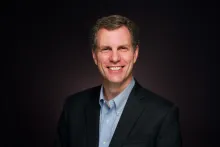
Tim Pebworth is the pastor of the Bordeaux and Narbonne France congregations, as well as Senior Pastor for congregations in Côte d'Ivoire, Togo and Benin. He is responsible for the media effort of the French-speaking work of the United Church of God around the world.
In addition, Tim serves as chairman of the Council of Elders.
