
Steve Shafer
This transcript was generated by AI and may contain errors. It is provided to assist those who may not be able to listen to the message.
I want to pick up a little bit on Mr. Blaine's sermonette. A little bit here. I just got to talk about... I mean, you watch the news today. I don't know how you watch the news. We watch a little bit of it. A little bit goes a long ways, right? So you don't stay tuned too long. Of course, it's always the same stories over and over again. But you know, you look at what's happening right now, and even just here in the United States. And I thought, just think about the times we're living in right now. Where things are going, and where we are. I think we can all realize that we are living in very monumental times. When you look at what's going on in the United States right now, and in the world as well. It seems like the whole world's upside down right now. And lives could be turned upside down, but something could happen anywhere in the world, or even here. They could really upset our lives just in a moment of time. So we are living in times of great uncertainty. When people are divided, you look at the vision we have in this country. I've never seen it quite this bad. I think it has been times maybe, you know, when Alexander Hamilton had a duel, and Alexander Hamilton shot Aaron Burr and killed him. I know it's quite that bad yet, but it's almost at that point. It seems like it anyway. But in my 76 years of life, I don't think I've ever seen the citizens of the United States is divided against one another in some way. I think it's as bad as they are today. Horrible division. Even to the point, and you see, as you watch this news, it just gets you. They're divided against one another, even to the point of where sometimes they will fabricate information just to try to pin something on the other party. They use even fabricated information. But you have to ask, why is that? And who's behind it? Who is the God of this age? And who is the God of this world? And who is the God of confusion? There's a lot of confusion today. Well, we all know the answer to that, I don't have to tell you. But let's end my introduction here. Let's see what Christ said of the Pharisees who thought they were righteous. Let's go to John 8. We're all very familiar with this scripture. This is what Christ thought of the Pharisees, who thought they were very righteous John 8 verse 44, just one verse, John 8 verse 44. Here's what Christ said of them. He said, you are of your father the devil, and the desires of your father you want to do. He was a murderer from the beginning and does not stand in the truth, because there is no truth in him. And when he speaks and why, he speaks from his own resources. For he is a liar and he's the father of it. He's the father of lies. He's the instigator, the originator of lies.
Now, in what way was Satan a murderer from the beginning?
Well, he influenced Eve to buy into a lie, didn't he? We could say he murdered the truth by fabricating false information to Eve and got her to buy into it. And by so doing, he destroyed Adam and Eve's relationship and their relationship with their children. He set out to fabricate information to destroy relationships by turning them against one another. And the first family did not do too well, did they? Even to the point of turning against each other, even to the point where Cain ended up murdering his brother Abel. Wow!
The division then, at that time, became so great that it turned to violence. And what do we see happening today? We see division so great in our country right now, in other parts of the world as well, like in France, that it's turning to violence.
That's the country we're now seeing. That's the country we're now seeing. Why is it happening? Because Satan is the god of this age. Satan is the god of this world. And what is Satan? What is his name and what is his game, as you want to put it that way? Satan is the destroyer. Let's read that for ourselves in Revelation 9.
Revelation 9, let's begin in verse 1. We're talking about these seven angels that sounded, leading up to the time of Christ's return. Then the fifth angel sounded, and I saw a star falling from heaven to the earth. Now, what's that? Who might that be? Just quote Luke 10.18, where Christ said, to them, I saw Satan fall like lightning from heaven. Of course, that happened in the past, but it will happen again just before Christ returns. Fifth angel sounded, and I saw a star falling from heaven to the earth. And to him was given the key to the bottomless pit. And he opened the bottomless pit, and smoke arose out of the pit like the smoke of a great furnace. So the sun and the air were darkened because of the smoke of the pit. And then out of the smoke, locusts came upon the earth. Because this is all symbolic language, as we know. And to them was given power, as the scorpions of the earth have power, with these locusts. Could they be demons who up to this point had been confined to the bottomless pit? Who does it say their king was? Revolution IX brought the king to the top. And they had a king over them! Who's that? The angel of the bottomless pit. Whose name in Hebrew is Abaddon, but in Greek he has the name Apollyon. Abaddon means destroyer. Apollyon means destruction. So Satan is a destroyer who is out to cause destruction. And who is it that Satan would like to destroy more than anybody else? He wants to destroy relationships, and most of all he wants to destroy relationships with people in God's Church. But he wants to destroy relationships. And he looks at relationships around the world, even in or out of God's Church. There's a lot of relationships being destroyed. He's pretty good at his game.
And most of all he wants to destroy God's people, if he can. Now, can Satan and his demons destroy anything they wish? Or can they destroy only what God wants to destroy, or allows him to destroy? Are there some things that they are commanded by God not to destroy? Revelation 9. Going back to Revelation 9, verse 4. They were commanded not to hum the grass of the earth, or any green thing. Or any tree. But only those men who do not have the seal of God on their foreheads.
Which now leads me to the subject of the sermon. How can we receive God's protection in the times we are now living in? Because why? Because God's people, we need protection.
How can we make sure we have the seal of God on our foreheads? That's my title. My title is a form of a question. My title is, Do We Have the Seal of God?
Now, first of all, then, what is a seal? And more specifically, what is a seal as it is used here, as in having the seal of God on our foreheads?
I can't even pronounce the Greek word that's translated seal here. It's phrajis, S-P-H-R-A-G-I-S in Greek. But the meaning of the Greek implies a stamp as a mark of genuine ownership or a private mark for security and preservation.
So, a seal of God would then imply some kind of a seal from God that would indicate we are owned by God. And that we belong to God, and we're under God's protection. That our lives are then sealed under God's protection to be preserved, in our case preserved beyond death through the kingdom of God. Regardless of what happens. Now, this may sound like a silly question, but I think it's followed through the details to understand it more clearly. Why on our foreheads? Why is that even mentioned? Why is it specifically said that we see the seal of God on their foreheads? Let's go back to Ezekiel.
Interesting old prophecy here in Ezekiel that I'm going to tie into it symbolically and spiritually, because I'm going to look at all this spiritually, not physically and spiritually. Ezekiel 9, verse 1.
Ezekiel 9, verse 1. Then he called out in my hearing with a loud voice, saying, Let those who have charge over the city draw near, each with a deadly weapon in his hand. Or who have charge over the city draw near. He said, deadly weapon in his hand. The city here, of course, being the city of Jerusalem. Why would they be drawing near the city of Jerusalem with a weapon in their hand? And they're coming to the city of Jerusalem here in his prophecy with a weapon in their hand. My margin says, with a destroying weapon. So they're coming there and the city of Jerusalem is in danger of being destroyed.
Would everyone in the city be destroyed? Or would certain people be protected and spared? 2. CQ 9 verse 2, And suddenly six men came from the direction of the upper gate, which faces north, each with his battle axe in his hand. Now think about this word. This prophecy is not focusing in, not just on the city of Jerusalem, but it's focusing in on a particular building within the city of Jerusalem. We're about to enter into the courtyard of that building from the direction of the upper gate, which faces north.
Why is that significant? Why is the direction this gate faces significant? I'm going to look at this personally and try to think spherical terms. In what direction is God's throne located?
I'll hold your place here for a moment. We'll come back in a moment. Let's go to Isaiah 14. We're all familiar with Isaiah 14, and most of us are. Let's go to Isaiah 14. Let's begin in verse 12. Prophecy of Satan, or Lucifer.
Isaiah 14 verse 12, How are you following from heaven, O Lucifer, son of the morning?
Now the Hebrew word here, it's translated Lucifer, is halel, H-E-Y-L-A-L, which has God's name in it. It means bright morning star of God. Lucifer, the Greek equivalent of Satan's Hebrew name, which is halel, which means morning star of God. See, halel was originally created as a great archangel to bring light, to teach God's ways.
How are you following from heaven, O halel, son of the morning? How are you cut down to the ground?
You who weaken the nations, for you have said in your heart, I will ascend into heaven. I will exalt my throne above the stars of God, above all the other angels of God. I am a great carob. I will also sit on the mount of the congregation on the farther sides of the north. I will ascend above the heights of the clouds. I will be like the most high. I will be right up there next to the most high. I will be second in command over everything.
So, halel, who became Satan, the ever-serve of God, wanted to be seated at God's throne, above all the other stars or angels of God. And where is God's throne? It says here on the farther sides of the north, wherever that is. For our original question was, in Ezekiel 9-2, as these men with a battle axe in his hand, are about to enter from the direction of the upper gate which faces north. And I said, why is the direction of this gate faces? Why is that significant? Because that is the direction from which God's throne is located. God's throne is located on the farther side of the north. Let's go back to Ezekiel 9. Ezekiel 9, verse 1, again. Let's go over this again.
When he had called up my hearing with loud voice, saying, Let those who had charge over the city draw near east with a deadly weapon in his hand, and suddenly six men came from the direction of the upper gate which faces north, each with his battle axe in his hand. So they are coming to destroy, and they are about to enter the courtyard of the temple of God. As we're seeing as taking this. Take us now into the courtyard of the temple of God. So now this should get our attention. Why? Because today we don't have the temple of God, and Satan wants to destroy us. I want to put this in a spiritual realm.
Who or what can protect and save us from that destruction? Again, do we have the seal of God? What happened next? If we go back to verse 2 again. Suddenly six men came from the direction of the upper gate which faces north, each with his battle axe in his hand. And one man among them was clothed with linen, and he had a writer's inkhorn at his side.
And went in and stood beside the bronze altar. See, this is very interesting. He said he stood beside the bronze altar.
A little background to understand what this is saying. The bronze altar was the altar near the entrance of the temple, forgiving burnt offerings.
That bronze altar also contained a bronze labor, filled with water for cleansing all who approached the temple. They all had to be cleansed first from the bronze labor. But I want you to think of something else. Go back and understand what I was saying here, and know a little bit about the temple and the nomenclature. That labor was made of highly polished bronze. I'm quoting Ezekiel 38a. It depends on what you read in Old King James or New King James. But it says Ezekiel, not Ezekiel, Exodus 38a, from the bronze mirrors it was made that labor was made from the bronze mirrors of the serving women who assembled at the door of the Tabernacle meeting. Or the Old King James says, the bronze looking glass. It was so highly polished bronze it was like a mirror, like a looking glass. As you approached the temple, you had to approach this bronze labor, this bronze altar in labor, where you had to be cleansed by washing yourself before you could approach the temple. And as you approached that labor, you could see yourself. You saw your reflection. It was like a mirror. The spiritual application is clear. Before we become members of the temple of God, we must first come to see ourselves as God sees us. We've got to see ourselves.
And that's not a pleasant sight sometimes to see. But it should lead us, as it did for all of us over here. God doesn't always show you all of yourself right off the bat. If you have God's spirit, you get to see yourself more and more. But what it does is it leads you to repentance.
We come to see ourselves as God sees us. It leads us to repentance. It has a positive effect. It humbles us. What about this one man among them who was clothed with linen who had a writer's inkhorn at his side? What was he going to write? And where was he going to write it? And even more important, what was his purpose? This man with his inkhorn. Ezekiel 9 verse 2 again, And suddenly six men came from the direction of the upper gate, which faces north, each with his battle axe in his hand.
And one man among them was clothed with linen and had a writer's inkhorn at his side. And they went in and stood beside the bronze altar made of looking glass or mirrors. Now the God of Israel had gone up from the carob, where it had been, to the threshold of the temple. So the glory of God all of a sudden comes in. So now the glory of God enters the scene. And where does God's glory enter the scene, instead of going through this scenario here?
It enters the scene at the very threshold of the temple. Now you're starting to think about that. We're the temple today. Where's God's glory? God's glory is in his temple. We should be reflecting the glory of God in our lives. Today is the spiritual temple of God. With God dwelling in us, we must reflect his glory, and his glory must be in all of us. Verse 3, Now the glory of God of Israel had gone up from the carob where it had been, to the threshold of the temple, and he who called to the man, to the man, excuse me, and he called to the man, the man clothed with linen, who had the riding in corn at his side, and he called to the man clothed with linen, who had the riding in corn at his side.
What did God then say to him? Verse 4, And the Lord said to him, Go to the midst of the city, to the midst of Jerusalem, and put a mark on the foreheads of the men who sigh and cry over all the abominations that are done within it. My original question here was, why in Revelation 9-4 is the seal of God written on our foreheads? Because behind our foreheads, of course, is our mind, the essence of what we are and who we are. Our minds, our intellect, our reasonings, our feelings, our emotions, everything is right there.
Behind our foreheads, right there in our minds, which is a marvelous creation, makes us what we are, enables us to be able to change and to become like God, to think and reason, to make decisions, to set a course of action for our lives, to follow those actions in that course. It gives us a mind that can receive God's Spirit, can receive the mind of Christ.
Now, what about the others? What does Ezekiel hear God say to them? Ezekiel 9, verse 5, to the others, he said, in my hearing, go after him through the city and kill. Do not let your eyes spare and have any pity. And you think about God saying this, but wait a minute. Can this be God saying this? Artily slay old and young maidens and little children and women, and do not come near anyone on whom is the mark and begin at my sanctuary. Don't call anyone who has the mark.
Do not come near anyone who has the seal of God on their foreheads. Spare them. Now, I've got two questions here. First question, which has two follow-up questions. The first question, why was he told by God to utterly slay old and young and murderers, or, excuse me, maidens, and little children and women? And why was he told to not let your eye spare and or have any pity? Why would God of love give that kind of a command?
I can think of two possible explanations. It doesn't give, so you have to think for yourself. But I can think of two possible explanations. First one, can first explanation can be given in the form of a question. I'll just give this question. Why did God allow Satan to destroy Job's seven sons and Job's three daughters? And everything else that he had. When Job was a righteous man who feared God. What did Job learn from Job? What did Job learn from that? Well, it tells us what he learned in Job 42, the first two verses. Job answered the Lord and said, I know that you can do everything and that no purpose of yours can be withheld from you. So what does that tell us? It tells us no matter what happens and how bad it is, how many innocent lives might be lost that God allows. There is nothing that can happen that can ever thwart God's purpose. God is sovereign over all things. He knows what he's doing. He knows why he does it. It's not for us to question God. He has a plan. He's going to carry that out. And no matter what happens, including the loss of innocent lives, nothing can thwart God's purpose. That was that lesson. Another reason, because before it's over, many innocent lives will not be spared. Many isn't old, young, maidens, little children, women will lose their lives during the time Satan comes to the earth to pour out his wrath. A lot of innocent people are going to die. Quoting Paul in Romans 9, what should we say then? Is there unrighteousness with God? He says, certainly not, or God forbid. No King James. And then Paul goes on there in Romans 9, verses 14 to 16, to say, for he says to Moses, I will have mercy on whoever I will have mercy. I will have compassion on whoever I will have compassion. So then it is not of him who wills, nor of him who runs, but of God who shows mercy. God can show mercy on whoever he wants to. I mean, why'd he call us? Why'd he call me? Why'd he call somebody? I can think of people a lot better to call me. Why didn't God call my sister? She's the smart one in the family. She's got more character than I do. She's got more willpower. She was straight A student college. Valedictorian. I struggled. Why? Why didn't God call her? She's an extremely righteous woman.
Why'd he call me? Well, God will give mercy to whom he calls mercy. Maybe it shows the glory of God. But let me ask the second question now regarding Ezekiel 9.6. When it comes to not coming near anyone on whom is the mark, where was he to begin? Ezekiel 9 verse 6. Again, only slay old and young men, maidens, and little children and women, but do not come near anyone on whom is the mark. And where was he to begin? Begin at my sanctuary.
Now, remember, they are now standing before the bronze altar made of mirrors or looking glass. They're approaching the temple and they're saying, they're approaching God's sanctuary, which stay as God's church. Within God's sanctuary, within God's church, where were they to begin?
Verse 6, the latter part of verse 6. So they begin with the elders who were before the temple. They begin with the elders. Now, this is not referring to ordained elders. It's not what this is referring to. Although all of us who are ordained elders were included in this group of people talk about here. But it's referring to all who have been long-time members of God's church, to those who are well-grounded in the truth. We're not newcomers. And by the way, I'm going to, this may seem negative right now, but it's actually a positive thing. It's going to turn into a very positive thing, as we'll see in a moment. But now that we know a seal is a sign that God owns our lives and that we are then sealed under God's protection and that we are sealed under our foreheads, because something that happens in our minds that makes us members of God's temple and that has to do with sealing ourselves as God sees us, now that we understand all of that, what is it specifically that seals us to be under God's protection? Let's go to Ephesians. Ephesians 1, verse 1. We'll be the first seven verses here and we'll get to the answer here, just a little bit here in Chief Jesus chapter 1. Call an apostle of Jesus Christ by the will of God to the saints who are in Ephesus and the faithful, those who are faithful in Christ Jesus. Grace to you and peace from God the Father and our Lord Jesus Christ. Blessed be the God and Father of our Lord Jesus Christ who has blessed us with every spiritual blessing in the heavenly places in Christ, just as he chose us in him before the foundation of the world, that we should be holy without blame before him in love, having predestined us, as it should be, to sonship by Jesus Christ to himself according to the good pleasure of his will, who are predestined to become a part of the purposes of God's hassles. How about a predestined purpose here? Not predestined to become members of God's family, to share eternal life within his part of God's family, to the praise and glory of his grace by which he made us accepted and beloved. In him we have redemption through his blood, the forgiveness of sins according to the riches of his grace. Verse 11, in him we also obtain an inheritance being predestined according to his purpose. Not that God predestined us who's going to be lost and who's going to be saved, but our purpose is predestined. God has a purpose he's going to carry out. It's going to come to pass, and that is a predestined purpose for our lives, for all he calls and for all mankind. Being predestined according to the purpose of him who works in all things according to the counsel of his will, that we who first trusted in Christ should be to the praise of his glory. In him, verse 13, you also trusted after you heard the word of truth, the gospel of your salvation, in whom also having believed you were sealed. My question is, what seals us? You were sealed with the Holy Spirit of promise. We are sealed with the Holy Spirit. Is God's Holy Spirit that seals us as being God's possession and as being under God's protection?
Then Paul tells us this, going forward to Ephesians 4. Ephesians 4, verse 30, do not grieve the Holy Spirit of God by whom you were sealed with the dead redemption. If God's Holy Spirit seals us, and if we have the seal of God, then what must our attitude be? First, what must our attitude not be? What mustn't we be if we have God's Holy Spirit and we're sealed by God's Holy Spirit? What things are totally contrary to God's Holy Spirit that we must put away from us at all costs? Verse 31, let all bitterness, wrath, anger, clamor, evil speaking put away from you with all malice. See a lot of that in the world today, right now, don't we? In our political arena. Should not be in God's Church.
What does malice mean? Malice is a desire to harm someone, which harm someone's reputation, which can stem from an attitude of bitterness. So at all costs, we must put away those feelings and attitudes towards anyone. On the positive side, what must we be instead? Verse 32, be kind to one another. Be tender-hearted, forgiving one another, even as God and Christ forgave you. See kindness, tender hardness, and forgiveness all bring healing. Those things will all bring healing to any relationship. They will heal broken relationships, and they will force Satan's attempt to divide and to turn us against one another. They will seal our hearts to the mind of Christ, to the heart of God. Do we have the seal of God? Now, this ties right in with Wayne's Sermonette. What period of time are we now in? We're now in our countdown period to Pentecost. And we are in our spiritual countdown to becoming the bride of Christ, that Christ returns, and try to prepare for that. How long do we have to prepare? Well, we have until the end of our physical life or until Christ returns, whichever happens first. But, the period we're now in is in our countdown to Pentecost, which could end when? Yeah? It could end any time. Well, life could end at any time, which means what? Verse 31, that all bitterness, wrath, anger, clamor, evil speaking, put away from you with all malice, and instead be kind to one another, tenderhearted, forgiving one another, even as God in Christ forgave you. And what else? Chapter 5, verse 1, Be imitators of God, as dear children, imitate Jesus Christ, imitate God the Father, and walk in love, as Christ also has loved us and given himself for us, and offering a sacrifice to God for a sweet-smelling aroma. Now, that wasn't beyond this part of the sermon, but, and the look in this room right here, this little room, it's a perfect depiction of what I'm going to cover now, and it's very, very positive. Those who do these things, I just mentioned here, verse 32, and verses 1 and 2 of chapter 5, those who do these things are called what? What are they called in God's Word? Those who put away bitterness and wrath and anger, and instead are kind and tender-hearted, forgiving, and imitators of God, who walk in love, will be called what?
They'll be part of an extremely special group of people, not only now, but a special group of people that's come through history.
What is that special group called, and what is their purpose? The book of Isaiah was written in the time leading up to the fall of ancient Israel. Israel fell to Assyria around 721 BC, but it contained prophecies concerning Judah and Jerusalem, as well as Israel. Let's turn there. Let's turn to Isaiah chapter 1. Let's turn to Isaiah 1. So we'll see about some group of people that are called something here in a moment. Isaiah chapter 1, beginning in verse 1, the vision of Isaiah the son of Amos, which he saw concerning Judah and Jerusalem in the days of Uzziah, Jotham, Ahaz and Hezekiah, kings of Judah. This was right before and during the fall of Israel, which occurred in 721 BC, and just after that. But it pertains to Israel, as we'll see here in a moment, as well. Because by this time, you know, the kingdom was divided, Judah and Israel. Here all heavens and give here all earth, or did we come by divided after this time? I should say, 721 has to be became divided. Here all heavens and give here all earth, for the Lord has spoken, and I have nourished and brought up children they have rebelled against me. The ox knows its owner, the donkey, its master's crib. But Israel, so now this brings Israel in the picture, too. It's talking about Israel as well as Judah and Jerusalem. But Israel does not know why people do not consider, alas, inflammation, a people laden with iniquity, a brood of evildoers, children who are corruptors. They have forsaken the Lord and evoked to anger the Holy One of Israel. And they've turned away backward. So verse 3 then makes this prophecy for the modern day people of Israel as well. And of course, when you look at this, what it says here, it actively portrays where we are as people of the United States today. Most people in the United States do not really know where we came from. Don't know who we are. Don't know who we descended from. And they do not consider that God is our owner and our creator. So it's now verse 9. Unless the Lord of hosts had left us a very small remnant, we would have become like Sodom and would have been made like Gomorrah, where only Lot and Lot's family escaped being destroyed. But here in this prophecy, a small special group who continued to follow God are called what? They are called a very small remnant. And you look at the little churches of God today like this congregation here, and you see, oh, look at all the people here we have in this area. Thousands, tens of thousands. We've got a room here of what? 80-20 people. A very small remnant.
I'd like to quote what the introduction to the prophets says in the New Jerusalem Bible. I picked this Bible up. I can't remember exactly when I did pick it up. You don't see too many of the New Jerusalem Bible. Special translations also got a commentary. It was published in English in 1966. And Evelyn's been reading through it. It's interesting translation. It's a good translation. It's also got a commentary as well as a translation. Here's what it says in the New Jerusalem Bible. It says an introduction to the section of the prophets. It gives a special commentary here introducing that section. It gets published in 1966, and it contains a commentary on various sections as well as being a translation, a good translation. Here's what it says in that introduction of prophets. A remnant will be allowed to survive. It talks about a remnant. The course of history itself will distinguish these perspectives. Crisis is going through history now, God's Word. Crisis exceeds crisis, and the survivors of each successive crisis are called the remnant. There, the population of Israel suffered to remain after the fall of Samaria. Of course, Samaria was the capital of Israel after the division of the kingdom. Continuing in this section of the introduction of prophets from the New Jerusalem Bible, they are the population of Judah after Shannacharib's invasion. They are the exiles in Babylon after the fall of Jerusalem. They are also those who returned to Palestine after the exile. But whatever the crisis, these survivors are always considered as a promised shoot. The nucleus of a sacred nation divinely assured of its great future. And these survivors are the remnant.
I thought that was fascinating. In fact, Emma's the one that showed it to me. She read that and she was fascinated with what it said. And she said, maybe you could work this into a sermon. I said, yeah, maybe I can.
See, those of us who have been in God's church for a number of years have gone through and have survived many crisis situations, haven't we? And some haven't. But we have. Today, we are the remnant, a part of it. In this prophecy of Isaiah 1.9, as it still is today, the small group who continue to follow God and hold on to God's truth, are the remnant. The other ones who don't allow anything to get discouraged. And again, like what Emma was saying, we need to encourage one another. We need to uphold one another, build each other up. Because Satan is out to try to discourage us and get us to not be a part of that remnant any way he can. He wants to get us to leave. And many have fallen to that influence. But as we just read in the New Jerusalem Bible's introduction to prophets, the survivors of each successive crisis are the remnant. And what is their purpose? Their purpose is to be the promising chute, the nucleus of a sacred nation, divinely assured of its great future. And that divine nation, that great future, is the soon-coming Kingdom of God. They're all going to be a part of it. Now, throughout history, there's always been a remnant who held fast to God's truth, even through all horrible trials and even death. And you'd get old summer on that. That's one of a couple of examples. Let's go back to Ezekiel 6.
Ezekiel 6, verse 1, The word of the Lord came to me, saying, Son of man, set your face toward the mountains of Israel, and prophesy against them, and say, O mountains of Israel, hear the word of the Lord God. Thus says the Lord God to the mountains, and to the hills, and the ravines, and to the valleys. Indeed, I, even I, will bring a sword against you, and will destroy your high places, saying this to ancient Israel. Coming down to verse 8, Yet I will leave a remnant.
So you may know, so that you may have some who escape the sword among the nations, when you are scattered through the countries, and then those of you who escape will remember me among the nations, where they were taken captive. There's a remnant to continue to teach God's way, God's truth, to continue to build people up, to courage, to help them, to encourage them, to strengthen them. Say, don't don't give up. Hold fast. There is a future. You're going to be part of a great nation in the future. There's thoughts about there always going to be a remnant. Let's go now to, into the future of Revelation 12. Let's go to Revelation 12.
It talks about two different types, two different groups of people who are going to be a part of that remnant. It's the time leading up to Christ's return. Revelation 12. Verse 12.
Rejoice, O heavens, and you who dwell on them, but woe to the hands of the earth and the sea, the devil has come down to you, having great wrath, because he knows he has but a short time left. Don't know when that's going to happen, but it's going to happen sometime before Christ returns. And when the dragon, verse 13, saw that he had been cast to the earth, he persecuted the woman who gave birth to the male child who went after God's church, God's people.
But the woman was given two wings of a great eagle, and she might fly into the woman's to her place where she is nourished for a time and time and half a time from the presence of the serpent. Who will go to this place of protection or be under God's protection during this time of great tribulation? Will they be a part of a remnant who are still following God to the very end?
They're going to be part of that remnant. God is going to have to protect their lives somehow this time. What happens next? Verse 15, so then the serpent spewed water out of his mouth like a flood after the woman, after God's people. The night caused her to be carried away by the flood, but the earth helped the woman, and the earth opened its mouth and swallowed up the flood which the dragon has spewed out of his mouth.
Why will the woman, why will the true church of God, why will she not be completely destroyed by this flood? Why will the earth help the woman? The earth helped the woman, and the earth opened its mouth and swallowed up the flood which the dragon has spewed out of his mouth.
And the dragon, verse 17, was enraged them with the woman, and he went to make war with the rest of her offspring who keep the commandments of God. Who are these people? They keep the commandments of God, and they have the testimony of Jesus Christ. The old King James says, arrest here, but the old King James says, went to make war with a remnant of her seed. Now, is either part of the remnant?
There's two parts here. Some that are going to be protected, and some who are saying they're going to have to go after. But they're going to be a remnant. They're still holding on to God's commandments, and they still have the testimony of Jesus Christ. Why will this end time remnant, mentioned here in verse 17, why will they have to endure more of the wrath of Satan?
It doesn't say. I guess it would be because they need further refinement. God hasn't given up on them, but they need further refinement. In conclusion, then, I begin by asking, do we all realize the times we're now living in? We are very close to the end of this age, when all things will be fulfilled. At least, that's my feeling.
I think most of us could agree with that, with what's happening around the world, and even here in the United States. So, in the days ahead, we will all need the seal of God. And all of them need God's protection, God's Spirit in us to let us know we are a special remnant. It's holding fast so the God can protect us. Now, when we were baptized and had hands laid on us, we were sealed with the Holy Spirit of promise, Ephesians 1, verse 13, which in turn put us under God's grace and favor, and under His guidance, and under His protection.
But in order to receive the promise of eternal life in the kingdom of God, we must first all be refined so we can become imitators of Christ. That takes refining for all of us. All of our lives we're going through during that refining process. To do that, what proof, to end it with what Mr. Stewart said, to do that, to be fully refined, go through that refining process, what fruits must we all manifest in our lives?
What fruits will reveal that we indeed have the seal of God, the seal of God's Holy Spirit? Let's end with Galatians 5. Galatians 5, verses 23 through 26.
Galatians 5, 22. But the fruit of the Spirit is this. This is going to show those who are going to be sealed by God and be under God's protection because they're manifesting the fruits of God's Holy Spirit. If who the Spirit is, love, joy, peace, long suffering, kindness, goodness, faithfulness, gentleness, self-control. There is no law against that. That's the total fulfillment of law of God to have those fruits and bear those fruits. And those who are Christ have crucified the flesh with his passions and desires. And if we live in the Spirit, let us also walk in the Spirit, let's walk and demonstrate those fruits. And let us not become conceited, provoking one another or ending one another, but still let's build each other up and encourage one another because those are the manifestations of those who have the seal of God. Do we have the seal of God?
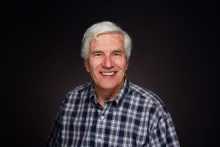
Steve Shafer was born and raised in Seattle. He graduated from Queen Anne High School in 1959 and later graduated from Ambassador College, Big Sandy, Texas in 1967, receiving a degree in Theology. He has been an ordained Elder of the Church of God for 34 years and has pastored congregations in Michigan and Washington State. He and his wife Evelyn have been married for over 48 years and have three children and ten grandchildren.
