
Steve Shafer
This transcript was generated by AI and may contain errors. It is provided to assist those who may not be able to listen to the message.
Again, if you watch the news at all, we realize the times are living in. Very unusual, very monumental times that we're now living in. I'm just amazed when I see the world what's happening. Times of great uncertainty with all the things that are going on around the world.
A time when people are divided. I mean, have you ever seen division like we have today? People are so divided today. I'm talking right here in the United States and around the world as well.
Tremendous division, especially right here in the United States right now after the election of Donald Trump, has been extremely divided. I've never seen quite this kind of division in 76 years of my life. I don't recall any of this kind of division where the citizens of the United States of America are divided against one another the way they are right now. And it looks like there's no end in sight. You know, it's so divided that one side sometimes, maybe one side or the other side, both are guilty, but sometimes even one side will fabricate information against the other.
But why is that? What's behind all this? Or is it just who is behind all this? All you have to do is ask who is the God of this world, the God of this age. And we all know the answer to that without me having to tell you. Let's take a look here. I've got a really long introduction today. But what did Christ say to the Pharisees who thought they were righteous?
Let's turn to John 8 in my introduction here. Just one verse here in John 8 I want to read where Christ is talking about the Pharisees. John 8, verse 44, he says, he speaks very plainly. Of course, this is why they hated him. He said, You are of your father the devil and the desires of your father you want to do. And then it says, He was a murderer from the beginning and does not stand in the truth because there is no truth in him. And when he speaks the lie, he speaks from his own resources, for he is a liar and he is the father of it, the father of lies.
Which leads to an interesting question. He was a murderer. In what way was he a murderer from the beginning? Well, he influenced Eve to buy into a lie, didn't he? He murdered the truth by fabricating false information and getting people to buy into that false information. And we see that happening today, the same sources behind it. And by so doing, by murdering the truth and fabricating false information, he destroyed the relationship of that first family, Adam and Eve, and their family destroyed that relationship, didn't he?
And what did he do? He turned them against one another. And again, we see the same pattern today. The family is being destroyed and turning against one another. Of course, in that first family, they got turned against one another, even to the point where Cain murdered his brother Abel. That's how violent it became. The division turned to violence, which is what's happening today. We have divisions so divided, it's turning to violence in many of our cities. And in some cases, people are murdered. They die because of the violence.
And how is it going to go? Is it going to lead to a revolution? I don't know. Scary. But what was described, what happened to that first family, division and violence and division and so on, is exactly what we're now seeing happening right here in the United States of America and in other places around the world as well. And it's happening because Satan is the god of this age. He is the god of this world.
What is Satan's name? What is he? Let's turn there and read it. Let's go to Revelation, still in the introduction here. Revelation 9, verse 1. Revelation 9, verse 1 talks about these angels are going to sound and different things are going to happen leading up to the return of Christ. Revelation 9 is talking about the fifth angel sounding, the fifth trumpet.
When the fifth angel sounded, says, I saw a star fall from heaven to the earth, and to him was given the key to the bottom of his pit. But he saw a star fall from the earth to heaven, I mean fall from heaven to the earth, I should say. Well, who might that be? Well, I'm just going to quote Luke 10.18. If you can read my notes, Luke 10.18 says, And Christ said to them, I saw Satan fall like lightning from heaven.
Of course, that's talking about something that happened in the past, but it's going to happen again just before Christ returns. I saw a star fall from heaven to the earth, and to him was given the key to the bottomless pit. And he opened the bottomless pit, and smoke arose out of the pit like the smoke of a great furnace. So the sun and the air were darkened because of the smoke of the pit.
This is all talking in symbolic language here. Then now the smoke, as it is in verse 3, locusts came upon the earth, and to them was given power as the scorpions of the earth have power. Who were these locusts? Could they be demons who up to this point have been confined to the bottomless pit?
What does it tell us here? Do they have a king over them? Who is their king? Dropping down to chapter 9, verse 11. And they had a king over them. These aren't locusts, these are something else. Locusts are symbolic of demons. And they had a king over them, the angel of the bottomless pit, whose name in Hebrew is a badon, but in Greek he has the name Apollyon. Badon means destroyer. Apollyon means destruction. So Satan is the destroyer who is out to cause destruction.
And what's the number one thing he wants to destroy? He wants to destroy relationships. He wants to destroy our relationship with God, and he wants to destroy our relationship with one another. And he does pretty well at it. He's pretty good at it. He's been doing that for 6,000 years. Let me ask this question, leading up now to my specific purpose statement for the sermon. Can Satan and his demons destroy anything they wish, or can they only destroy what God allows them to destroy? Now, there are some things they are commanded by God not to destroy.
Revelation 9, let's go back just a little bit to Revelation 9, verse 4. Pick up where we left off in verse 3. Revelation 9, verse 4, they were commanded not to harm the grass of the earth, or any green thing, or any tree, but only those men. When it comes to harming men, it says, you can only harm those men who do not have the seal of God on their foreheads, which now leads me to the subject of the sermon.
How can we receive God's protection in the very dangerous and uncertain times we're now living in?
How can we make sure we have the seal of God on our foreheads? The title of my sermon is in the form of a question. That is, do we have the seal of God?
Let's break this down a little further. First of all, let's ask this question. What is a seal? More specifically, in this particular case, what is a seal as is used here as having the seal of God on our foreheads? What's that talking about? The Greek word translated is seal here in Revelation 9-4, and I can't pronounce it. It's fraud-jeez or something. S-F-R-A-G-E-C-E. That's the way they pronounce it. They're actually spelling it in English. S-P-H-R-A-G-I-S. Fraud-jeez or something like that. But the meaning is important. The meaning of the Greek implies a stamp as a mark of genuine ownership or a private mark of security or preservation. So a seal of God would then imply some kind of a seal from God that would indicate we are owned by God. We belong to God. And God is going to protect what he owns in very uncertain and dangerous times. That our lives are then sealed under God's protection to be preserved. In our case, to be reserved for the time of Christ is going to return to bring the kingdom of God on the earth. We're going to be reserved for that future kingdom that God's going to bring. Now, this might seem like a silly question, but it says it could be on their foreheads. Why on our foreheads?
Let's go back to Ezekiel. Let's go back to the book of Ezekiel. Interesting passage here in Ezekiel 9. I'm going to read some of this from Ezekiel 9 that ties in here. It's interesting. Ezekiel 9, God called Ezekiel. He says, then he called out in my hearing, Ezekiel says, God called him with a loud voice, saying, Let them who have the charge over the city draw near, each with a deadly weapon in his hand. Now, what city would that be? In this case, I'd be talking about the city of Jerusalem.
Why would they be drawing near the city of Jerusalem with a deadly weapon? My margin says a destroying weapon. They were drawing near the city of Jerusalem with a deadly weapon, with a destroyed weapon, because the city was about to be destroyed. That was a good setup to destroy the city of Jerusalem.
Now, would everyone in the city be destroyed?
Or would certain people be protected and spared? Verse 2, and suddenly six men came from the direction of the upper gate, which faces north, each with his battle axe in his hand. So now, we're focusing not just on the city of Jerusalem, but we're focusing in on a certain building within the city of Jerusalem. We're about to enter into the courtyard of that building from the direction of the upper gate, which faces north, we're told here.
Now, let me just ask this. The details are interesting to look at and ask questions about, although it doesn't always give them to us right here. So, the upper gate, which faces north. Why is the direction that this gate faces, why is that significant? Is there any significance to that?
Why does it give us that detail? What difference does it make? Well, let me ask this question. In what direction is God's throne located? So, hold your place here and turn to Isaiah 14. Most of us are familiar with Isaiah 14. Let's turn back there and look at a couple of verses.
Isaiah 14, verse 12, prophecy of Satan's fall.
How are you fallen from heaven, O Lucifer, son of a morning? Now, this is a Greek translation of a Hebrew word here, a Hebrew name. Lucifer is the Greek equivalent of Satan's Hebrew name. In Hebrew, his name is Halel, H-E-Y-L-E-L, which means Morning Star of God. All the archangels, the three big arch, El in their name, God was a part of their name. Satan's original name was Halel, or Morning Star of God. Halel was originally created to be a bright morning star of God. He means bright.
How are you fallen from heaven, O Lucifer, or Halel, son of the morning? How are you cut down to the ground, you who weaken the nations? For you have said in your heart, I will send into heaven, I will exalt my throne above the stars of God, above all the other angels of God, and I will also sit on the mound of the congregation on the Father's sides of the north. I will send above the heights of the clouds. I'm going to be like the Most High.
So Halel became Satan, the adversary of God. He wanted to be seated at God's throne above all the other angels of God. And where is God's throne? It says, on the Father's sides of the north. Wherever that is, but that's what it says. But my original question was, in Ezekiel 9.2, as these men with his battle axe in his hand are about to enter from the direction of the upper gate, which faces north, my original question is, why is the direction this gate faces, why is that important? Because God's throne is located on the Father's sides of the north. That's where God's throne is. Which, if you think about it, probably ties in here. Let's go back to Ezekiel 9. Pick up where we left off. Ezekiel 9. Again, I call him, hearing with a loud voice, saying, Let those who have charge over the city draw near, each with a deadly weapon in his hand. And suddenly six men came from the direction of the upper gate, which faces north, each with his battle axe in his hand. So they're coming to destroy, and they're entering the city of Jerusalem, and they're about to enter the courtyard of the temple of God. They're about to enter the courtyard of the temple within the city of Jerusalem, with a battle axe in their hand.
Now, this is important to pay attention when you think about it spiritually. Why are they coming in the courtyard of the battle axe? Because they're about to destroy the temple. They're out to destroy the temple.
Think about this spiritually. Who are we? Where is the temple today? Who is the temple? We're the temple of God today. And Satan is not to destroy us. Satan is ours and wants to destroy us. Who or what can protect us and save us from that destruction? Again, do we have the seal of God? I think this will be very important in the years ahead of us. What happened next? Suddenly six men came from the direction of the upper gate, which faces north, each with his battle axe in his hand. One man among them was pulled with linen and had a writer's ink cork on his side. And they went in and stood beside the bronze altar. He had an acorn by his side. And then by the bronze altar it says. That's what's interesting to understand, the configuration of the courtyard, the temple, and what was outside the temple before you entered the actual temple building.
The bronze altar was the altar near the entrance to the temple, and that was used for giving burnt offerings before you entered the temple. But here's the thing that's really interesting. This bronze altar also contained a bronze labor, which was filled with water for cleansing all who approached the temple. They had to give a burnt offering, and then they had to be cleansed, and this brown labor was filled with water, and they had to be cleansed before they got into the temple.
Now, it's very interesting what that labor was made of. Quite significant. That labor was made of highly polished bronze. And back in those days, they didn't have mirrors like we have. Their mirrors were bronze, highly polished bronze, so highly polished that when you could look, those things would be like a mirror. You could see your reflection in that. So this labor was made of highly polished bronze from the bronze mirrors of the serving women who assembled at the door of the tabernacle of meeting, Exodus 38, verse 8. You can look that up. That's what it says. And that's the New King James, I think it says mirrors. The Old King James says, looking glass. Does anyone who approached this bronze altar as they approached the entrance of the temple would see their reflection in this highly polished bronze labor made of looking glass or mirrors? Think of that spiritually. Spiritual implication is clear. Before we can become members of the temple of God, we must first come to see ourselves as God sees us. We've got to see ourselves. When they approached the temple, they could see themselves. We need to see ourselves, but not outwardly. We need to see ourselves inwardly.
And when we do that, sometimes when God opened our mind to begin to see ourselves as we really are, that was not a great sight to see, was it? It should drive us to deep repentance. We realize how short we come to the image of God. When we first began to see ourselves, and God opened our minds to understand, I want you to see yourself as I see you. What about this one man among them who was pulled with linen who had a writer's ink corn at his side?
What was he going to write, and where was he going to write it? Even more important, what was his purpose? Zeko 9, verse 2, again, and suddenly six men came from the direction of the upper gate, which faces north, each with his battle axe in his hand. One man among them was pulled with linen and had a writer's ink corn at his side, and they went in and stood beside the bronze altar. Now the glory of the God of Israel had gone up from the carob where it had been to the threshold of the temple. So now we have something else that enters the scene here. Now we have the glory of God entering the scene.
Where does the glory of God enter the scene here in this scenario, we're reading here in Ezekiel 9.
He enters the scene at the very threshold of the temple.
And that's where God's glory is today, at the threshold of his spiritual temple, the people of God.
He's at the threshold and in his temple. And today we are the spiritual temple of God, with God drawing on us, and we must then reflect His glory, and His glory must be reflected in us and in our lives.
We must appear different from other people, because we have God in us. We have Jesus Christ in us. We have the glory of God in us, and we should reflect God's glory in our actions, our lives, our conversation, and what we say and how we act.
Now the glory of God of Israel had gone up from the carob where it had been to the threshold of the temple. And He called to the man, full with linen, who had the rider's inkorn, at his side. What then did God say to this man, who had the rider's inkorn? And the Lord said to him, verse 4, Now this is strange when you read this. People puzzle a little bit and say, well, how could this be?
Go through the midst of the city, through the midst of Jerusalem, and put a mark on the foreheads of the men who sigh and cry over all the abominations that are done with it. It's not that verse I'm talking about, it's the next verse. But my original question here was, why in Revelation 9, 4 is the seal of God written on their foreheads? Because behind our foreheads is our mind, which makes us unique above all of God's creation. It's where we can think, where our intellect is, where our emotions and our reasons are, where we can be creative, where we can make decisions and act on those decisions. It's where God's character can be written in our minds and in our hearts. For it can be motivated to sigh and cry over all the abominations that are done that we see done in the world today. We can have feelings about that, emotions. We can react to that in a positive way. It makes us want to be more like Jesus Christ and have His compassion, His love, His mercy.
What about the others who didn't sigh and cry over all the abominations that are done? What does the equal hear God say to them? Verse 5. Now this is the part, verse 5 and 6, the part that's hard for people to understand. And to the others, He said in my hearing, Go after Him through the city and kill, Do not let your eyes spare, nor have any pity. Autily slay old and young, men and maidens, and little children and women, but do not come near anyone on whom is the mark.
Don't come near anyone who has a seal of God on their foreheads. Now this can raise some questions. First question. Why was He told by God to utterly slay old and young, maidens and little children and women?
And to not let your eyes spare, nor have any pity. How could a God of love give that kind of a command? It's pretty hard to understand. It doesn't tell us the reasons here, but I can think of two possible explanations. You could probably think of maybe others, or you could put your mind to it. But the first reason could be given in the form of a question, of a situation, an example that we all are familiar with. Why did God allow Satan to destroy Job's seven sons and three daughters?
And everything He had. When it says He was a righteous man who feared God, why would God allow that to happen to a righteous man, a righteous person who feared God?
Who feared God and shunned evil, it says.
Well, I'm going to go through the book of Job. You can go through that yourselves. Long book, 42 chapters. But what did God learn from what happened to Him? Let's just look at that from Job 42, the first two verses of Job 42. Here's what Job learned. Then Job answered the Lord and said, I know now that you can do everything, and then no purpose of yours can be withheld from you. In other words, what he's saying is, Job, I know it's not right, it doesn't seem fair to you. You lost all your children, everything you had, being a righteous man. But no matter what happens, this is the lesson. No matter what happens in this world. Know how many innocent wives babies die prematurely, or die by some terrorist destruction. No matter what happens, including the loss of innocent wives, nothing can thwart God's purpose. He has a plan for everybody, everybody's going to have an opportunity to fulfill that plan and purpose. Nothing can thwart God's purpose, no matter what it is, no matter how unfair it looks like, no matter how many innocent wives might be lost. Second reason is because before it's over, many innocent wives will not be spared. Many innocent, old and young maidens and children and women will lose their lives during the time Satan comes, to the earth to pour out his wrath. It's going to destroy many innocent wives, but God keeps track of them. He knows who they are. He's going to preserve those wives for future resurrection. He's going to give everybody a chance, which is a wonderful part of God's plan.
In quoting Paul in Romans 9, Paul said, What shall we say then? Is there unrighteousness with God? He says, certainly not, or God forbid, in the old King James. Then it goes on in Romans 9, verses 14-16, He says, For he says to Moses, I will have mercy on whoever I will have mercy, I will have compassion on whoever I will have compassion, so then it is not of him who wills, nor of him who runs, but of God who shows mercy. God can show mercy to whoever he wants to, but in the future all those that are not subject to that mercy and compassion now, and maybe their lives are lost, they will come to understand that in the future. They're going to have their chance. They're going to come to know God, and have that opportunity to build God's character.
We all ask that question ourselves, why did God call me? Why didn't he call this person? I ask, why didn't he call my sister? My sister is so much more righteous than I am.
She's smarter, she's more successful, got better grades than school. I would have picked her. Why did God call us? Called the weak of the world to show the glory of God.
Now, second question regarding Ezekiel 9 verse 6, when it comes to not coming near anyone, whom is the mark, where was he to begin?
Again, Ezekiel 9 verse 6, begin at my sanctuary, latter part of verse 6, begin at my sanctuary.
Remember now, they are standing before the bronze altar, made of looking glass or mirrors, and they are approaching the temple. They are approaching God's sanctuary, it says here, which today is God's church. God's church is a sanctuary, where His people are. And within God's sanctuary, within God's church, where were they to begin? The latter part of verse 6 says, so begin with the elders, over before the temple. So they begin with the elders. This is not referring to ordained elders, it's not what I was talking about. And there's a positive side to this, too, so we'll get to that positive side in a moment. But this is not referring to ordained elders, although all of us who are ordained elders are a part of this group, just like all of you, all of us. It's referring to all those who have been long-time members of God's church and those who are well-grounded in the truth, who are not just newcomers.
But now that we know a seal is a sign that God owns our lives and that we are sealed under God's protection, and that we're sealed on our foreheads because something that happens in our minds makes us different, makes us members of God's temple, because something that happens in our minds that has to do with seeing ourselves as God sees us, because it brings us to repentance, so we can have that seal of God. Now, if we understand that, what specifically then seals us to be under God's protection? Let's go to the book of Ephesians in the New Testament. Let's go to Ephesians 1. Because we're told the specific answer. I think you already know the answer, but we're told what it is here in Ephesians. Let's start in verse 1. Read the first seven verses first. Paul, the apostle of Jesus Christ, by the will of God, to the saints who are in Ephesus and faithful in Christ Jesus, grace to you and peace from God, our Father and the Lord Jesus Christ, blessed be the God and Father of our Lord Jesus Christ, who has blessed us with every spiritual blessing in the heavenly places. Now, sometimes we may say, I don't have what this person has, but we've got every spiritual blessing. That's the blessings we have. Sometimes we have to go through a lot of trials and losses and sickness and different things, but we have tremendous spiritual blessings. We understand God's purpose. We understand what the future is. We understand the part that we're going to have in that future.
Verse 4, just as He chose us in Him before the foundation of the world, that we should be holding without blame before Him in love. Having predestined us to, as it should be, sonship, to be a part of His family by Jesus Christ to Himself, according to the good pleasure of His will, to the praise and the glory of His grace by which He made us accepted in the beloved in Christ. And then verse 7, in Him we have redemption through His blood, the forgiveness of sins, according to the riches of His mercy. That's part of the spiritual blessings we have.
Going on down to verse 11, in Him we also have attained an inheritance being predestined according to the purpose of Him who works all things according to His consul of His will. Now people have a misconception of predestination. We're not predestined to be saved or lost, as some people think. We have been predestined to be called to a specific purpose. We have a purpose to fulfill. And that purpose was predestined. God was going to create a family, and He had a process by which He was going to create that family, having firstfruits.
So the predestination is a purpose that God has for all the mankind that we've been called to now, according to that purpose.
Then we who are... Verse 12, that we who first trusted in Christ should be to the praise of His glory. Now here's the verse I want to get to, verse 13. In Him you also trusted after you heard the word of truth, the gospel of your salvation, in whom also having believed, you were sealed... My question is, what are we sealed by? You were sealed with the Holy Spirit, I promise.
You were sealed with the Holy Spirit. Is God's Holy Spirit that seals us as being God's possession, and as being under God's protection?
And Paul goes on later in the book of Ephesians to tell us this, going back to Ephesians 4, verse 30.
Do not grieve the Holy Spirit of God.
Follow it. Follow it. Bear its fruit. Bear the fruit. Don't groove by not producing the fruits it's supposed to bear in our lives. In our relationship with one another and with others. Do not grieve the Holy Spirit of God by which you were sealed for the day of redemption.
But if God's Holy Spirit seals us, and if we have the seal of God, then what must our attitude be?
First, what must our attitude not be? What mustn't it be?
What things are totally contrary to God's Holy Spirit that we must put away at all costs?
Verse 31, let all bitterness, wrath, anger, clamor, evil speaking be put away from you with all malice. Those things should not be a part of our thoughts or attitudes. What is malice? What does malice mean? Malice is the desire to harm someone or to harm someone's reputation, which can stem, of course, from an attitude of bitterness. That's why don't ever allow yourself to get into a bitter attitude, no matter how unfair something is, how unfair it may seem to us. Don't ever let that kind of attitude come with you, because that's what destroys Satan.
At all costs, let us put away these feelings and attitudes toward anyone. What must we be instead? Verse 32, be kind to one another. Be tender-hearted, forgiving one another. That's how you counter bitterness. Try to be kind instead. Be forgiving. Even as God in Christ forgave you. Whether the other person is having forgiveness or not doesn't matter. We have to own it. Forgiveness has to be something we do, regardless of what the other person does.
Because kindness, tender-hardness, and forgiveness, those things, what do they do? They all can bring healing. They can all restore a broken relationship.
They will heal broken relationships, and they will force Satan's attempt to divide us and turn us against one another. And they will seal our hearts. Do we have the seal of God?
Now, what period are we now in? I'm talking about this right now, in God's plan, in this particular time. What spiritual period are we now in? We are now in our countdown to Pentecost, spiritually speaking. We are in our spiritual countdown to becoming the bride of Christ at Christ's return.
How long do we have to prepare for that? We have either to the end of our lives, which for me is not very much to more time, or to when Christ returns, whichever comes first.
But what period are we in? We are in our countdown to Pentecost. When could that countdown period end?
Could end at any moment, couldn't it? Which means what?
Verse 31, What else? Chapter 5, verse 1, Instead, be kind to one another, be tender-hearted, forgiving one another, even as God and Christ forgave you. And what else? Chapter 5, verse 1, Be imitators of God as dear children, how to imitate Jesus Christ. Imitate His mind, imitate His love, have His compassion, have His mercy, have His forgiveness.
And walk in love, verse 2, as Christ also has loved us and given Himself for us, and offering a sacrifice to God for a sweet-smelling aroma. Look at the sacrifice that Christ went through for us, even when we were still against Him, didn't understand Him and didn't know Him.
Now, I want to get to this smaller group of people we have today here, it ties into my sermon. Those who do these things, verses 31, 32, verse 1 and 2 of chapter 5, those who do these things are called, they have a special name that they're called. What are they called?
Those who put away bitterness, wrath, and anger, and who instead are kind and tenderhearted and forgiving and imitators of God and who walk in love, they're going to be part of a special group of people.
What is that special group of people called?
And what is their purpose? What is the purpose of a special group of people? They're a very special group and they have a very special purpose, extremely important purpose.
Book of Isaiah was written in the time leading up to the fall of ancient Israel. Israel fell to Assyria around 721 B.C. But it contained prophecy concerning Judah and Jerusalem as well as Israel. Let's turn back to Isaiah, chapter 1.
Isaiah, chapter 1. I'll begin in verse 1 of Isaiah 1.
The vision of Isaiah the son of Amos, which he saw concerning Judah and Jerusalem in the days of Uzziah, Jotham, Ahaz, and Hezekiah, kings of Judah.
But we'll see here in verse 3 it pertains to Israel as well. I'll think about this, apply this to our times we're living in right now, and to the people of the United States of America as being the sons of Abraham, Isaac, and Jacob. I have nourished and brought up children and they have rebelled against me. The ox knows its owner. The donkey knows his master's crib. But Israel, my people, they do not know and they do not consider. Alas, as we become a sinful nation, the people laden with iniquity, they become a root of evildoers. Children who are corruptors, in many cases, not all. Of course, a lot of God-worried children, but there's a lot of children who have been corrupted because the family has been destroyed. They don't have a father or they don't have a mother or they don't have a father or a mother. They become corruptors and they have forsaken the Lord because they have no one to teach them God's truth and God's way and God's Word.
They have forsaken the Lord and provoked to anger the Holy One of Israel and they have turned away backward. Verse 3, I should say, makes this a prophecy for the modern-day people of Israel as well.
As it actually prophesies where we are today in the United States of America. It's Christ who described where we are.
We do not know or consider that God is our owner, that He's our Creator, and this is God's Word that we need to follow. Let's go down to verse 9. Notice verse 9. Isaiah 1, verse 9. I want to get to what is this special group of people called? What do we call?
Unless the Lord of Hosts had left to us a very small remnant, we would have become like Sodom and we would have been made like Gomorrah. We're only Lot and Lot's family escaped being destroyed. But here in this prophecy, a small special group who continue to follow God are called what? They are called a very small remnant.
I want to quote here for a moment what the introduction to the prophet says in the New Jerusalem Bible. A while back, I don't remember now where we got this or where we got it, but we got a Bible called the New Jerusalem Bible. It was originally printed in France. It was a French translation from the original Hebrew and Greek. But it was translated into French back about 1957. In 1966, it was translated from French to English for the first time. And it's called the New Jerusalem Bible. I have a copy of that English translation. But again, it was originally translated from the original Hebrew and Greek, so it's very accurate. But it's interesting what it says here. This is not just a translation, but also in each section of the Bible, it also has a commentary leading into that section. In the section where the prophets are, it's the same arrangement we have. In the introduction to the prophet, it has a three or four page commentary.
Now, those of the Ben-God's church... excuse me, I'm going to quote this first. I would like to then quote what the introduction of the prophet says in the New Jerusalem Bible. Again, published in 1966 in English for the first time from French. Here's what it says, The course of history itself will distinguish these perspectives. Crisis succeeds crisis. And the survivors of each successive crisis who get through that crisis, they are the remnant. They are the population of Israel suffered to remain after the fall of Samaria, which is the capital of Israel after the division of the kingdom.
Continuing, They are the population of Judah after Sennacherib's invasion. They are the exiles in Babylon after the fall of Jerusalem. They are also those who returned to Palestine after the exile. But whatever the crisis, these survivors are always considered as a promising shoot. The nucleus of a sacred nation, divinely assured of its great future.
These survivors, in other words, are the remnant.
Now, those of us who've been in God's church for many years, have gone through and survived many crisis situations.
Probably the thing we didn't know ahead of time, what kind of a crisis situation we'd have to survive.
Today, we are the remnant.
In the prophecy of Isaiah 1.9, as it still is today, the small group of people who continue to follow God and hold on to the truth, no matter what the crisis is, whatever kind of trials they go through, how hardship, losses, they are the remnant, a special group. And not everybody survives, as we know some didn't survive, maybe gone back into the world and gone their own way.
The survivors of each successive crisis, they are the remnant, as it says there in that introduction to the New Jerusalem Bible and the introduction of prophets. What is their purpose? Their purpose is to be the promising shoot, the nucleus of a sacred nation, divinely assured of its great future. And that divine nation, that great future, is this incoming kingdom of God. That's an issue we're going to be a part of. The future to be a shoot to train others, help them.
You know, throughout history, and you can go a whole sermon on this, and you can go through the Bible, you can do your own research, throughout history there has always been a remnant. I'm just going to go to two places, one past and one future. Let's go back to Ezekiel 6. Ezekiel 6, I'll begin in verse 1. The Word of the Lord came to me, saying, Son of man, set your face toward the mountains of Israel and prophesy against them. And say, O mountains of Israel, hear the word of the Lord God. Thus says the Lord God, to the mountains, to the hills, to the ravines, and to the valleys, to everybody, no matter where you are, or how small or how big you are, as far as where you live. Indeed, I, even I, I will bring a sword against you, and I will destroy your high places. Verse 8, Yet, even though I'm going to do this destruction because you forsaken God, and you have to understand that, yet I will leave a remnant. I'm not going to start with, but God always has a remnant. So that you may have some who escape the sword among the nations when you are scattered through the countries, then those of you who escape will remember me among the nations that are carried away captive. I always want to have some remnant that remember me, that remember my laws, my commandments, and understand me, that know me, that know my truth. So they're going to pass that on to the next generation. There's always going to be a remnant. We are that remnant today.
There'll always be a remnant. There'll always be a remnant in the future. Let's go to Revelation 12.
Revelation 12, verse 12. And I'll begin in the second sentence. It says, Woe to the heavens of the earth and the sea. Why? Because the devil has come down to you having great wrath because he knows he's only got a short time left.
Are we nearing that time now? I don't know. Could be. Verse 13. Now when the dragon saw that he had been cast to the earth, he persecuted the woman who gave birth to the male child and they were to persecute God's church. But the woman, the church, was given two wings of a great eagle that she might fly into the wilderness to her place where she has nourished for a time and a half a time from the presence of the serpent. Now who will go to this place of protection or be under God's protection during this time of great tribulation that's going to come to the earth in the future before Christ returns?
They're going to be a part of the remnant who are still following God to the very end. What happens next here is prophecy. Verse 15. So then the serpent spewed water out of his mouth like a flood after the woman, that he might cause her to be carried away by the flood, but the earth helped the woman. And the earth opened up its mouth and swallowed up the flood, which the dragon had spewed out of its mouth, its army, whatever it is.
And the dragon was enraged with the woman, with the remnant of God's people, with the remnant of God's people who were still there trying to hold on to God's truth. He became enraged with it. He went to make war with it, says here, and the new king gave the rest of her seed. The old king, James, says, the remnant of her seed. He went to make war with the remnant of her seed, who are doing what? They're still striving to keep the commandments of God and they have the testimony of Jesus Christ.
So there will always be a remnant who keep the commandments of God and have the testimony of Jesus Christ. Of course, that raises a question, which we don't have the answer to, but why will this end time remnant here, verse 17, I should say? Why will they have to endure more of the wrath of Satan? I guess it's they need further refinement. They need further refinement to gain more of the mind of Christ and Christ's attributes.
In conclusion, and I began by asking, do we all realize the times we're now living in? I don't know. Certainly seems like we're very close to the end times. When all things will be fulfilled, I think we all kind of agree in that area. I don't know when that's going to be and when it's going to all come to a conclusion, but we can see we're approaching that time.
We're very close to it. Look what's happening around the world and even our own country. We do know this for sure. In the days ahead of us, we will all need the seal of God. Now, when we were baptized and had hands laid on us, we were sealed but the Holy Spirit of promise, as we read in Ephesians 1, verse 13, which in turn put us under God's grace and favor and under His guidance and under His protection.
We're owned by Jesus Christ. We're bought and purchased by His blood. But in order to receive the promise of eternal life and the Kingdom of God, we must first all be refined so we become imitators of Christ, so we imitate Him. We follow His example. We try to develop His mind, His attitude, His love, His compassion, His forgiveness in us.
And to do that, what fruits must all of us manifest in our lives? What fruits will reveal that we have the seal of God's Holy Spirit? One last scripture. Let's go to Galatians 5. Galatians 5, very familiar scriptures, begin in verse 22. This is what should be manifested in our lives if we have the seal of God. The fruit of the Spirit is love, joy. If you're not being in a joyous situation, we can have the joy of God because we know we have an official calling and a special purpose.
And our future is guaranteed if we hang in there and don't give up. That should give us spiritual joy, peace, long suffering, kindness, goodness, faithfulness, gentleness, self-control. And such there is no law. And those who are Christ have crucified the flesh with His passions and desires. But to death, all those things that are contrary to God's Spirit. And if we live in the Spirit, if we're living by God's Holy Spirit, then let us also live that way. We said we're trying to live in it.
Let's also walk that way. Let that be an example of our lives that people can see reflected in us in the way we live. And let us not then become conceited or provoking one another or envying one another. These are then the manifestations of those who have the seal of God. So do we have the seal of God?
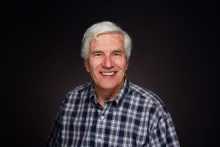
Steve Shafer was born and raised in Seattle. He graduated from Queen Anne High School in 1959 and later graduated from Ambassador College, Big Sandy, Texas in 1967, receiving a degree in Theology. He has been an ordained Elder of the Church of God for 34 years and has pastored congregations in Michigan and Washington State. He and his wife Evelyn have been married for over 48 years and have three children and ten grandchildren.
