

Greg Thomas
This transcript was generated by AI and may contain errors. It is provided to assist those who may not be able to listen to the message.
Well, I was happy to have with you once again. I appreciate the invitation to speak as your guest speaker today in Cleveland. Special thanks to all of you for doing that. Again, I wanted to just do something different to kind of mix it up a little bit. So this is one of the modules that I give at ABC under a few days in which I focus on various types of leadership. And this falls under the area of personal leadership. As a matter of fact, you'll see some of the points that I bring out dovetail very nicely with Mr.
Skipper's sermon today. So it does have scriptures. We'll be turning it up. Scriptures will be talking about the theme of this particular module, which goes anywhere from 45 minutes to an hour, depending on how long-winded I am that day. And this module is entitled, Doing All Things Through Christ. First of all, an icebreaker. And the icebreaker is this. How many squares do you see on the screen? How many of you think 16? Okay. That's all right. How many of you say 20? All right. Well, the truth is there are actually 30 squares.
There are 16 small squares, the obvious ones. Then there are four corner groups. I don't see my pointer here. There are four corner groups of four. And then there's the outer perimeter. The whole outer perimeter is an extra one. Then there are four corner groups of nine squares. If you put nine squares together, you get four of those. There's one center bottom of four, and there's one left center group of four and one right center group of four.
And the moral of the story here is that things are often deeper, and they're more complex than what they first seem to be. And that's why we need to study God's Word. If we think that we can just read through the Bible once in our lifetimes and get it and absorb all that exists in God's Word, then we're selling ourselves short, and we're not gleaning out of the Word of God, all the richness that is there to literally change our lives.
And it's out-of-the-box creative thinking that allows you to see things and people as they really are, including the Scriptures, rather than just a first impression, which is a snapshot. And that's one reason why many people who take a look at this for the first time count four horizontally and four vertically and multiply it and say, ah, there are 16 squares, where in reality there's almost twice as many as 16 squares in that picture.
All right, Philippians 4 and 12, if you'll turn there with me, we're going to talk about doing all things through Christ. And here's what Paul wrote. He said, I know how to be abased and I know how to abound.
Everywhere and in all things I have learned both to be full and to be hungry, both to abound and to suffer needs. So like many of us in our lifetimes, Paul knew what it was like to live in poverty, and he knew what it was like to live in comfort. As a small child, I certainly very well remember what it was like to live in poverty. My mother was a single mom with three small children, and this was before there were government programs. There were not government programs back in the mid-50s to help single women who had three children.
We were very fortunate, and at the double home that we lived in, my grandmother owned. I can't imagine how many months my grandmother probably went and told my mother, don't worry about rent this month. But you see, back then you didn't have government, you had family.
And when you fell on hard times, you could depend on family to help you during times of need. So Paul, he knew what it was like to be hungry, he knew what it was like to live in poverty, and then he also knew what it was like to have a full belly, to be comfortable, have nice clothes, and live well.
He knew both extremes, and he said he had learned that he can do all things through Christ who strengthens me. So no matter what he experienced in life, he could do anything he needed to do, not because he was so great, not because he had the skills and abilities to do it, but he could do it through Christ, who gave him the strength to do the things he was incapable of doing on his own.
Philippians, going back a couple of chapters, chapter 2 and verse 5, he said, look, each of you not only for his own interest, but also for the interest of others. Let this mind be in you, which was also in Christ Jesus. So what kind of mind is Paul talking about? What are some of the characteristics that Jesus Christ had that we can learn from to help us to develop the mind of Jesus Christ?
So again, what kind of mind did and does Jesus Christ have? Well, there are some first steps. If we ever want to have the mind of Jesus Christ, there are some first steps that are very important. John 14 and verse 23, we don't have a chance unless we receive a very special gift, a gift that is offered to us upon repentance of our sins and baptism and through the laying on of hands, and that is the gift of God's Holy Spirit. It's only that Spirit that enters us, that can guide us, that can direct us, that can prod us, encourage us, help us to develop the mind of Jesus Christ.
Without that Spirit, we don't have a chance. Jesus answered and said to him, if anyone loves me, he will keep my word, and my Father will love him, and we, he talked about he and the Father, we will come to him and make our home with him. And when you were baptized and received God's Spirit, Jesus Christ and God the Father made their home inside of you.
Think how powerful that is. Think of the opportunities that reside in you to do wonderful things because you don't have to be limited by your own abilities, because you don't have to do things alone, because you can tap into that powerful source and do things that are far beyond what we can do humanly and of ourselves. So the first thing, the first step, obviously, is humility through repentance and realizing that we were heading in one direction and it was wrong, it was carnal, it was a direction of sin, and in repentance, conversion, we turn around and we head in a different direction. We walk towards God and his way of life.
And through that repentance and baptism, which pictures outwardly the washing of the sins from ourselves and coming out of that water, the resurrection that we all look forward to, the resurrection from this human flesh and immortality that we all long for someday, that God will give us his Holy Spirit and make his home within us. Then there's Ephesians 4, verse 29.
The Holy Spirit has a purpose in us. That purpose is to help us to grow. That purpose is to help us to develop the mind of Christ. And when we ignore the things that we should do, when we cut ourselves off from God because we stop praying, we stop studying his word, we begin thinking we can do everything on our own, we grieve God's Spirit because it's a spirit that wants to induce change. It's a spirit that wants us to be a new creature in Christ, not the same old, same old, not the same person, but something new and beautiful and refreshing. That's what God's Spirit wants to do within us. And when we deny it, when we ignore the opportunity that we have to draw closer to our Father and our God, then unfortunately we can grieve the Holy Spirit. Let's take a look at some characteristics of the mind of Jesus Christ because these are characteristics that we should adopt. First of all, Jesus was positive and forgiving. John 8, verse 1. If you'll turn there with me. John 8, verse 1.
We're all very familiar with this scripture.
This they said testing him that they might have something of which to accuse him. But Jesus stood down and he wrote on the ground with his finger as though he did not hear them. So in other words, it's a nice way of saying he kind of ignored them. He sat down and he just wrote something on the ground. And that's kind of the million dollar question. What is it that Jesus wrote on the ground? So when they continued asking him, he raised himself up and said to them, Who is he without sin among you?
Let him cast the first stone at her. And again he stooped down and wrote on the ground. It is thought, speculated, that perhaps he began to write down the names of some of those individuals and a sinful characteristic they had. You know, Matthew, Theth, Luke, right, covetousness, Aaron, whatever, idolatry. It is thought that maybe they all looked down there and were convicted of the heart and decided to just kind of slink away their tail between their legs and slink away.
That's one of the theories, philosophies of maybe what he did here. It says, When those who heard it, being convicted by their conscience. So something that was written on the ground is what convicted them of their conscience. It convicted their conscience one by one, beginning with the oldest, even of the last, and Jesus was left alone and the woman standing in the midst. And when Jesus raised himself up and saw no one but the woman, he said to her, The woman, where are those accusers of yours?
Has no one condemned you? And she said, No one, Lord. And Jesus said to her, this is where he's extremely positive and forgiving because he knew what the sorrow that was in her heart. He says, Neither do I condemn you. Go and sin no more. He does say, You're permanently defiled. You're spoiled. Who would want to marry you now? Who would want to have anything to do with you now? He doesn't say that.
And he doesn't poo-poo her sin. He doesn't liberalize her sin away and say, Oh, it's okay. But he says to her, you know, go and sin no more. Otherwise, get on with the rest of your life. Do big things. Do positive things. Because we worship a God of second chances. So clean up your life and go and do something wonderful with your life. And you can think about it. And in essence, she was spared from a stoning. So she was in a small degree. We could say that she achieved salvation symbolically through this act of what Jesus did, because if he hadn't been there, she would have been stoned.
And now she has an opportunity for a new life. She has an opportunity to do it all over again, just like when you and I were first called and the blinders fell off and we came to a knowledge of God's truth and God's way of life.
So the first characteristic of it is the mind of Jesus Christ is it is positive and it's forgiving. It's not negative and self-righteous. It's negative and judgmental. The second quality that is of the mind of Christ, it's a can-do approach to life. Mark 6 and verse 35. Turn there with me. Mark 6 and verse 35. Mark 6 and verse 35. Now when the day was far spent, Jesus has been preaching, they as far spent, the disciples came to him and said, this is a deserted place and already the hour is late.
Send them away. That means everybody who's been listening to your preaching, send them away that they may go into the surrounding country and villages and buy themselves bread. For they have nothing to eat. Verse 37. But he answered and said to them, not a problem. Give them something to eat. Now you might say, well, that was easy for him to say. He's Jesus Christ. But what it highlights is that he had a can-do. If he looked at opportunities, he didn't look for obstacles.
And he went and literally performed a miracle so that those individuals could eat. He wasn't overwhelmed by barriers. Mountains didn't get in the way of his life. Mountains were something to be overcome. They were something to be climbed and overcome. They weren't barriers to him. He had a very can-do approach about every challenge that he ran into in his lifetime. How about us? Are we that way? Another characteristic of the mind of Jesus Christ. Let's go to John chapter 18 and verse 33.
We want to notice that Jesus Christ is very confident, yet he's humble. In his discussion here, he has a one-on-one discussion with Pilate. And he kind of shocks Pilate. Pilate knows what a zealot is like. You know what a zealot is like? The zealot is like the individuals in France who the French authorities had to take out. The other zealots are like, you come and get me. I want to die. That's what zealots are like.
And Jesus Christ didn't come across as a zealot. As I mentioned to someone earlier today, the difference between Islam and Christianity is that in Islam, people want to die for Allah. In Christianity, we want to live for Jesus Christ. That's the big difference between the two religions. But anyway, picking it up here in John chapter 18 and verse 33.
Notice he's confident. He's not denying it. He's not hiding who and what he is.
That's a rhetorical question. And when he said this, he went out again to the Jews and said to them, I find no fault in him at all. You see, Jesus wasn't arrogant. He's confident. He wasn't cocky. He wasn't a zealot. He wasn't arrogant. He was very confident about what he believed, but he was also very humble. So that's another quality of the mind of Christ, a good one for us to emulate. John chapter 2 and verse 1, let's go to the first miracle of Jesus Christ. John chapter 2 and verse 1, one that was totally unplanned for him. John chapter 2 and verse 1, it says, Jesus said in her woman, what does your concern have to do with me? My hour has not yet come. So Jesus says, this has nothing to do with me. I'm very sorry that they're out of wine, but it's not time. This isn't the place or the time for me to do a miracle. And it has, you know, I have no business, no involvement in this at all. And then you know what he does? He proceeds to listen to his mother, and he does what she instructs the servants. The point is that he immediately changed his mind. He makes a statement that says that my hour hasn't come, your concern has nothing to do with me. And then what does he do? He goes ahead and does it. He was open to change. He was open to new ideas. He wasn't so rigid and fossilized in his thinking that he was closed-minded. And he immediately changes his mind and performs his very first miracle. Very powerful miracle at that. Let's now go to John 17 and verse 20. John 17 and verse 20. Another quality that Jesus Christ had is he was relationship-oriented. John 17 and verse 20. Relationship-oriented. This is his intercessory prayer before his arrest. He says, I do not pray for these alone. I think we read this during the Bible study. I do not pray for these alone, but for all those who will believe in me through their word, that's you, that's me, that they may all be one as you, Father, are in me and I in you, and that they may all be one in us, that the world may believe that you stand. So he's a relationship-oriented. It's not just about you, 12. It's about all of those generations that will follow you who will read the words that you wrote down in these Gospels and who will respond to that word. It's about them, too. And generation after generation after generation after generation, I'm going to pray that they may all be one in us. That is, in the Father and in the Son and in those original disciples who all were pulling together to do something wonderful and beautiful. And that is to preach the Gospel of the Kingdom of God to the world. So Jesus Christ was all about relationships. He was about family. Matthew 4, verse 23, another quality of the mind of Christ. Matthew 4, verse 23.
It says, And Jesus went about all Galilee teaching in their synagogues, preaching the Gospel of the Kingdom and healing all kinds of sickness and all kinds of disease among the people. So he was mission-driven. He knew what he wanted to do. He was passionate about what his calling was, driven by a very beautiful and powerful mission. So that also is part of the mind of Christ. All of these are qualities that are very good for us to emulate and grow in. So what affects our thinking process? What stops us from the full maturity of having the mind of Jesus Christ? Well, and this was touched upon a little bit by Mark in his sermon, which I appreciate. There are a number of influences. The first one is certainly genetics. We are born with a propensity towards a personality. I have three daughters, and I can tell you that all of them were born. They came out of the womb with different personalities. And as the smallest child, same parents, as the smallest children do their DNA, they had different personalities. That's part of the plan. But also there's environment. That environment can affect us as we grow up. For example, if we're bullied, I mean, they're beginning to understand that more and more. If we're bullied as young kids especially, it may permanently affect our lives, how we think of ourselves and how we fit in in this world. If we have parents who split, if we get into negative situations, all of this is part of the environment. You know, who we admired as teachers, what kind of people they were, as our peer group, religious leaders when we were children. All of this is part of the environment. As Dr. Shad Helmstetter has said, by age 18, we've been told no 148,000 times. How do you think that limits us a little bit? No! No! How many different ways can you say no? Wouldn't that be great to practice? No! No! No! No! But 148,000 times we have been told no. In contrast, he wasn't able to figure out how many times we've been told that's okay. Or yes, by the time we were 18. But here's what behavioral science has discovered. 70% of our self-image, that means how much confidence we have, what we think of ourselves and our role in this world, 70% of that is programmed by age 6. Think how young that is. And 95% by age 14, that's just early teens, entering your early teens, 95% of what you feel about yourself is formed through genetics and through environment. There are basically two polar opposites, and none of us are exclusively reactive thinkers or creative thinkers, and I'll show what that means in a minute. All of us lean towards one of these two extremes. Some of us may even fall somewhere in the middle. But here are the two extremes. And again, this is through the study of behavioral science. About 80% of the general population are reactive thinkers. And here's the qualities of reactive thinkers, the good, the bad, and the ugly. First of all, they're resistant to change. They find incredible creative reasons why they can't do things. Very good at making excuses. They're poor listeners, kind of people who will cut you off and interrupt you in the middle of a sentence. They avoid responsibility. It's always someone else's fault. They feel they have no control over things. The dog made my own work.
They tend to have lower self-esteem, and they are devastated by failure. When they fail at something, they take it deeply, they take it personally, and it stunts them. They are devastated by it. And that's about 80% of the human population. Creative thinkers are about 20% of the general population. They tend to be more open to change. They have a can-do orientation. Rather than limitations, they see opportunities. They tend to be good listeners. They accept responsibility. They're the first one to say, hey, you know what? I messed up. I apologize. I'm sorry. I shouldn't have said that. I told you I'd do something and didn't do it. I'm sorry. I messed up. They accept responsibility. They feel in control of things and events. They don't feel like their lives are out of control. They don't feel like events are out of control. They feel like they're in control. They tend to have a higher self-esteem, and they certainly make mistakes, but they look at them as just stepping stones for growth, for change in their lives. So what does this mean for leaders? What does it mean for a minister? For a pastor of a church? What does it mean if you're a supervisor at work? What does it mean for you? Well, it means that up to 80% of the people we meet have a fundamentally negative orientation due to human nature, painful experiences of the past, baggage they're carrying with them, and a poor self-image, and they will instinctively spend a lot of energy on their part trying to keep others from seeing the weaknesses they see in themselves and trying to hide those weaknesses. And usually this is done by finding something wrong with someone else or an organization or people, in other words, blaming everyone else except accepting our own responsibility and accountability for things the way that they are. And whether you're a supervisor at work or what your role is, that's 80% of the people that we're going to meet on the street. Now, knowing that, and again, that is just, that's secular, I realize that, that is behavioral science. Let's see an event in the Scripture that literally confirms what behavioral science has discovered. Let's take a look at Numbers, Chapter 13. If you'll turn there with me, let's go to Numbers, Chapter 13.
And let's read the event of the spies going into the Promised Land.
I just love it when a science spends millions and millions of dollars to discover Biblical qualities and principles that have been there for 2,000 years plus. Numbers, Chapter 13, Verses 1 and 2, it says, And the Lord spoke, saying, So God says, I want you to get the cream of the crop, the leaders, and I want you to choose them, and I want you to send them out, one man from each tribe. So Moses sent them from the wilderness of Puran, according to the command of the Lord, all of the men who were heads of the children of Israel. So now let's pick up the story here in verse 17 and read some of it. It says, And he said to them, And go to the mountains and see what kind of land it's like, whether the people who dwell in it are strong or weak, few or many. I want you to notice he's neutral. It's one way or another, and I want you to discover this. He doesn't preprogram to think one way or another. He's kind of neutral on this. Whether the land they dwell in is good or bad. Whether the cities are inhabited, like the camps or strongholds, or whether the land is rich or poor, or whether there are forests or there are not, be of good courage and bring some of the fruit of the land. Now, the time of the season of the first ripe grapes. Let's continue. So they went out and they spied out the land of the wilderness of Zin, as far as Rehav, near the entrance of Hemath. And they went up through the south and came to Hebron, Haman, Shechai, and Temai. The descendants of Anak were there. Now, Hebron was built seven years before Zoan in Egypt. They came to the valley of Eshgol, and there they cut down a branch with one of the cluster of grapes. They carried it between two of them on a pole. They also brought some of the palm granites and figs. The place was called the Valley of Eshgol because of the cluster which the men of Israel cut down there. And they returned from spying out the land after 40 days. So, 12 men, they go to spy out the land, 12 leaders, and they come back after 40 days. Verse 26, now, they departed and came back to Moses and Aaron and all the congregation of the children of Israel in the wilderness of Peran and Kaddish. And they brought back word to them and all the congregation, and they showed them the fruit of the land. Then they told them and said, we went out to the land where you sent us. It truly flows with milk and honey, and this is its fruit. Look at these grapes the size of softballs. Isn't this awesome? But then things take a bad turn from there. Reactive thinking is immediately going to kick in to approximately 80% of the 12 that were sent there. Nevertheless, the people who dwell in the cities are strong. The cities are fortified and very large. Moreover, we saw the descendants of Anak there. It means giants, big people. Probably some of them were all the way up to probably 5'2". The Amalekites dwell in the land of the south, the Hittites, the Jebusites, the Amorites dwell in the mountains. There are people everywhere. The Canaanites dwell by the sea along the banks of the Jordan.
Well, it's time for a couple of creative people to hopefully break the overwhelming negativity that is beginning to encircle the congregation. Then Caleb quieted the people before Moses and said, Let us go up at once and take possession, for we are well able to overcome it. But the men who had gone up with him said, We are not able to go up against the people, for they are stronger than we. And they gave the children of Israel a bad report of the land, which they had spied out, saying, The land through which we have gone as spies is a land that devours its inhabitants. Think about that. Really? You just told me all of these different tribes exist there. Did the land literally open up and swallow people whole? What does that mean? Oh, it gets better. And all the people whom we saw in it are men of great stature. There we saw giants. The descendants of Anak came from the giants. And we were like grasshoppers in their own sight. Really? Do you know how big someone would have to be for you to have the size and comparison of a grasshopper to a human being to their size to someone who was a giant? What's happened here? Well, perception is reality. They've convinced themselves that they can't do it. They've begun to invent reasons why they can't do it. This land that has all of these different peoples they just mentioned suddenly devours its inhabitants. They just kind of disappear en masse. Suddenly there are people that must be 200 feet high. Because in our own sight, that tells you something about their own sense of self-worth, we were like grasshoppers in our own sight. And so we were in their sight. Oh, really? Did you sit down and have a meal with one of them? And they said, yeah, you know, to us you would appear to be about the size of a grasshopper. Do you think that happened? Of course it didn't happen. But the perception is reality, and they have convinced themselves they cannot do it. And then they have invented reasons to reinforce a self-fulfilling prophecy that we cannot do it. So how many spies were there? There were 12. From their thinking, what do the majority see? The majority are reactive thinkers, and all they see are obstacles. Can't do it. Is what they see really true? You know what? In their eyes it is, because perception is reality. They convinced themselves. They have a new reality. They have a different reality than Caleb and Joshua have. And they all saw the same things, didn't they? But they have different realities, different perceptions. What effect does this have on others? Unfortunately, brethren, it spreads like a cancer. It overwhelms the congregation. And pretty soon, even though Caleb tries to interject, he quiets the people down, he tries to stop that drumroll of negativity, eventually it just overwhelms the whole... We know the story of their refusal to enter Canaan. We know the sad results of this. So let's continue. Let's go to Numbers, Chapter 14, and I'll read verses 1-9. At ABC, I have students read these scriptures to the class, but we won't do that today. Numbers, Chapter 14, 1-9.
So all the congregation lifted up their voices and cried, and the people wept that night, and all the children of Israel complained against Moses and Aaron. And the whole congregation said to them, If only we had died in the land of Egypt, or if only we had died in this wilderness, why has the Lord brought us out to this land to fall by the sword, and our wives and children should become victims? Would it not be better for us to return to Egypt? So they said to one another, Let us select a leader and return to Egypt. Then Moses and Aaron fell on their faces before all the assembly, the congregation of Israel. But Joshua, the son of Nun and Caleb, the son of Jephana, who were among those who had spied out the land toward their clothes. And they spoke to the congregation of the children of Israel, saying, The land we pass through, the spy out, is exceedingly good land. If the Lord delights in us, then he will bring us into this land and give it to us, a land which flows with milk and honey. And then verse 9, Only do not rebel against the Lord, nor fear the people of the land, for they are our bread. Their protection has departed from them, and the Lord is with us. Do not fear them. To put this in 21st century vernacular, they say these people are toast. They're bread. We're going to eat them alive. They don't have a chance against God's people. So approximately, what percentage are positive that the land can be conquered, and what percentage are negative? It happens to be, obviously, you can't get, you know, it's 80-20 when you're only talking about 12 people, but it's 83% are reactive thinkers, or negative, and 17% of the 12, very close to the 20, are Caleb and Joshua. How does the thinking of Joshua and Caleb differ from the others? They're creative thinkers. They can do. They don't look for obstacles. They saw the exact same events, same things as everyone else did, but because they're positive, they interpreted it in a whole different way, a whole different meaning. That's how their thinking differs. Is what Joshua and Caleb see really true? Sure it is. Perception is reality. That's their reality. And what effect does this have on the others? It has a little bit of influence, but it is very hard to overcome. When 80% of people are negative, it's very hard. It's an ongoing uphill struggle to overcome against negativity. As a matter of fact, it's a never-ending battle, the truth be told. A never-ending battle. So what does this mean for the disciples of Jesus Christ, who want to have the mind of Christ? Well, since reactive thinkers, far outnumber creative thinkers, they have the ability to overwhelm others. Or they have the ability to overwhelm a culture like a church organization, like a national organization. They have the ability to maintain a negative environment, and it's very hard to break that because it's so overwhelming. We can recognize this reality. I mean, you can't make any improvements until you realize that this is reality, that this is the truth. And then you can work energetically in maybe an uphill battle. You may be swimming against the tide. But then, when you understand the reality of the situation, you can work energetically to create and maintain a positive can-do environment.
Our little test for you. I want you to write this down in your notes. Please put the spaces in that. What does that say?
Give you a minute to do that while I have some of this vodka.
This may actually tell you a little bit about your thinking perception. Because depending on your perspective, it either says, leadership is nowhere, or leadership is now here.
Same spelling. It's just where your mind put those spaces.
We need to understand, brethren, that the plain truth that particularly converted people have to understand is, I love this statement by Dr. Daniel G. Amen. He's been on PBS a number of times. He's an award-winning physician, psychiatrist. He studies the human brain. He does brain scans. He made a statement that I thought was very powerful. He says, you must learn the grit of the ants that invade your brain. Our thoughts lie to us continually. Ants, as he defines them, are automatic negative thoughts. We might call that carnality. It's probably a great way to define it. But the truth is that you and I constantly have self-talk. We are talking to ourselves, and most of that self-talk is a lie. That self-talk tells you that you're not smart enough. It tells you you're not good enough. You're too old. You're ugly. You're not graceful. You're not smart enough to do this. You're not talented enough to do that. And you know what? All those are a lie. But that's what our self-talk does. And what Dr. Aiman tries to teach people is to challenge those thoughts. Because we do tend to lie to ourselves constantly. It's a very important principle. And the reality is that God literally gave us a filter through the power of the Holy Spirit so that we could learn the filter or stop negative things from entering our heads, the ants. And there are positive things that we can allow to go through to pass through that filter. And those are the kinds of things that we should be dwelling on. Those are the kinds of things that Caleb and Joshua dwelt on, the good things that they allowed to pass through that filter. Whereas the other spies allowed the wrong kind of things to pass through that filter. Those ants automatic negative thoughts to affect their thinking. Let's go to Galatians 5 and verse 16.
Galatians 5 and verse 16. We want to talk about the right filter. These are negative thoughts and attitudes that should be filtered out. They should be replaced. That filter is our minds, our brains, and that Spirit of God that He has given us. Galatians 5 and verse 16.
But I say, then, walk in the Spirit, and you shall not fulfill the lust of the flesh. For the flesh lusts against the Spirit, and the Spirit against the flesh, so that they are contrary to one another, so that you do not do the things that you wish. But if you are led by the Spirit, you are not under the law, meaning, of course, the penalty of the law, the consequences of sin. Now, the works of the flesh are evident. They are adultery, fornication, uncleanness, lewdness, idolatry, sorcery, hatred, contentions, jealousies, outbursts of wrath, selfish ambitions, dissensions, heresies, envy, murders, drunkenness, revelries, and the like, of which I told you before, just as I told you in times past, that those who practice such things will not inherit the kingdom of God. These are the ants, the automatic negative thoughts that come natural to you and me. This is the default. If we don't stop it, if we don't make an effort to stop those thoughts immediately, when we should be able to perceive, when we're turning negative, when we're getting too much inside of ourselves, when we're allowing that to make us negative or our perception warped, stop it and get rid of those ants. Again, these are negative thoughts and attitudes that need to be filtered out and replaced. And what should they be replaced with? These are just two different translations of the scripture we just read. Well, what should be passing through that filter, what we should allow to pass through, are obviously different kinds of thoughts. And those are in Galatians 5, just a few verses ahead of that. Chapter 5 and verse 22. I'm sorry, after it, not before it. Verse 22, but the fruit of the Spirit is love, joy, peace, long-suffering, kindness, goodness, faithfulness, gentleness, self-control against such there is no law. So these are the thoughts and attitudes that should be in pass-through mode, that we dwell on, that we allow in our heads instead of the ants. That the ants will just pull us down.
So what does Paul mean here in Galatians? What is he saying in contrasting these two principles? Well, everything you see in here, we need the filter correctly. Because if you don't filter it, the default is you're going to listen to it, and you're going to accept it as truth. Remember what Dr. Amann said? Most of what we say to ourselves is a lie. And that's true. We're very good at deceiving ourselves. So everything you see in here, you need to filter correctly. And if it shouldn't go through the filter, then we need to reject that thought immediately and replace it with something different. If it's something that's positive, if it's something that fits within the fruits of the Spirit, those are the kind of things we should be immersing our lives in. Those are the kind of things that should be surrounding us. Catch the negative carnal thinking and allow the positive to pass through. Another thing that Paul, a good principle that Paul has here that's applicable to the 21st century, is everything that you read, frankly, everything that you sense through all of your senses, but everything particularly you read, especially the unfiltered Internet, you should filter correctly. The problem, and I don't have a problem with the Internet, I'm on it every day, but one problem that the Internet has spawned is that 50 years ago, you had to actually achieve something to have an opinion that would be read around the world. Now, any imposol, and every imposol, has an opinion on everything, and they post it, and anybody can read it. So that's how much the world has changed in 50 years. And everything that you read, you need to filter correctly. If you read it in the Cleveland Plain Dealer, you need to filter it correctly. I can only read so much of the daily rapes, I mean, murders and thefts and so on. To me, that just creates ants in my head, reading that over and over again every day. Sometimes I'll read the first couple sentences, and I'll move on. I'll catch myself and move on, because we have to be careful what we read. Everything you meditate on, you should filter correctly. Don't allow it to turn negative. Don't allow your thoughts that are lying to us to put those ants in our heads and tell us we can't do something that we absolutely can do. We have the power of the Holy Spirit within us. Who said we can't do it? So why should we lie to ourselves and convince ourselves we can't do it when we have all the tools and the potential to do virtually anything? Especially if we seek God's will and we do it according to His will. So let's catch the negative carnal thinking and allow the positive to pass through.
Another thing that's very important about doing all things through Christ is learning to be passionately positive. It comes easier to some of us than others. Again, because of genetics and because of the environment we were raised in. If we were raised in an environment and we were surrounded by Eeyore's, and if you know who Eeyore is, Eeyore is the character in Winnie the Pooh, okay, I can't. But if we're surrounded with that kind of an environment growing up, then it's going to influence our thinking. It's going to influence who and what we think we can do.
So in contrast to that, start each morning with a positive meditation. Study and prayer. Have gratitude. Expect the best. Because you know what? It's a self-fulfilling prophecy. I can guarantee you that if you wake up in the morning and you expect the best, most days you're going to receive the best. Because that's how you determined the day was going to be. If you wake up each morning and it's woe with me, then again, that's also a self-fulfilling prophecy.
Most certainly your whole day is going to go by, and yes, woe will be upon you. So we need to start the morning with positive meditation and study and prayer. Associate and socialize with positive can-do people. Hopefully that includes our congregation. Because we want to do big things. We're here in a church building because we had a can-do approach to doing things, and that's why we have a building of our own. We've grown tremendously over the last few years because we have a can-do approach to preach the gospel, and we believe God is still calling children.
And God has responded, and they have responded, and that's why we have new brethren with us. So we want to have a congregation that is positive and can-do, that dwells and has creative thinking, not reactive thinking. Seize control of the negative cultural messages that surround us every day, listening to the news, even the radio.
I mean, if you listen to the kind of music in which the basic genre of that music are women, are ignorant playthings to be abused and disposed of, then don't be surprised if your attitude towards women is putrid and unbiblical. Right? If it's going in here, if we're listening to junk all day, it's eventually going to affect our minds.
If we're listening to music that promotes violence and promotes rebellion against anyone that has any authority, and then we wonder why we're restless, we wonder why we can't keep a job because we keep popping off and getting fired all the time, well, it's because we're allowing junk to enter our ears and in our heads, and it's becoming a self-fulfilling prophecy, and it's changing who and what we are. So we have to control and filter out the cultural messages that are all around us. As much as possible, surround yourself with positive music. Music that lifts you up and inspires you and motivates you. Positive reading material.
When you get done and you close that, you say, you know, that was satisfying. I learned something new about the world, or I learned something new about myself, or the story relaxed me and it took me in a positive way to another world I've never been to through my mind. And I feel fulfilled because I did that. That's the kind of reading we should be focused on. TV, we have to be selective in what we watch on television. The things that we see should be things that are positive.
Things that build us and make us better people are hobbies. We should have hobbies. They should be hobbies that give us enjoyment. Our friends. We need to make sure that we have friends that we can love and count on. People that pull us up when we're down and encourage us when we're discouraged.
Hopefully, those friends are right here in God's Church. Average people with positive approaches can achieve great things because all they see are possibilities. You can take an average person, doesn't have that high of an IQ, maybe doesn't have that many gifts, but if you give them a positive approach to things, they're going to do great things because they don't think they're limited. And the reverse is also true. As a matter of fact, you can take a genius. And if they have a persistently negative attitude, they're not going to get far because they're going to perceive everything is stressful, everything is a problem, everything is an obstacle, and they're going to be mediocre.
Their lives are going to be mediocre. And here's the key. When we wake up in the morning, we can absolutely choose to be positive or negative. In reality, our attitude is one of the few things in life we have control over. I might get a test in two months that says I have a disease. I have no control over that. I might lose my job. I might lose all of my clients. I don't have much control over that. The economy may collapse tomorrow.
I may get home and find out that while we were here enjoying Sabbath services, the whole economy collapsed, the banks fell, money is frozen, and that we are on the verge of society in chaos. I can't control that. But the one thing that I can control, brethren, is how I react to things. And when I wake up in the morning, the one thing I can control is I can choose that this is going to be the best day of what's left of my life. Or this day is really going to be bad.
It's going to be a miserable and horrible day. And again, it's a self-fulfilling prophecy. If you believe you can, you're right. And if you believe you can't, you're right. So what are we going to choose? Again, perception is reality. And that's why the glass is half full or half empty.
Because it's all in our perception of whether there's something there or something missing. That's perception. And that perception is our reality. But we can determine to replace our thinking filter if it's flawed. We can determine to stop grieving God's Spirit and be committed to drawing closer to God through prayer and study. And allowing God's Spirit to be stirred up within us. Remember what Paul wrote to Timothy? You stir up the gift of God that you received by laying on of your hands. And allow that Spirit to be stirred and to become that filter that coaches us, that prods us, that encourages us and strengthens us so that we can begin to stamp those ants out of our heads and out of our thinking.
Philippians 4 and verse 8, Paul wrote, The things which you learned and received and heard and saw in me, these do when the peace of God will be with you. So Paul said that he tried to set the example for the congregation at Philippi of meditating and living a positive life and dwelling on good things. How about when things go wrong? Anyone here ever have something go wrong in their lives? Wait, I'm going to get my fourth foot up. All right, setbacks certainly occur for all of us. We've all had setbacks. We've all had things go wrong. I remembered of a saying, one of my favorite things by Winston Churchill.
He said, success is the ability to go from failure to failure without losing your enthusiasm. I listen to, I subscribe to something called Audible, which are audiobooks. A lot of times when I'm driving a long time or in the summertime I'm sitting out in a lawnmower. I'm listening to a talking book. There's a three-part series on Churchill by, I think, the gentleman's name is William Manchester. Each one is like 48 hours long. I know Winston Churchill better than Winston Churchill. Half of this stuff has probably been made up. But nonetheless, I can tell you this. He was a man who made a lot of mistakes in World War II.
He was a leader. He made a lot of mistakes. He cost the lives of tens of thousands of good British soldiers through dumb military mistakes. So he was a man who struggled and he made errors. But he got up every day and he continued with one goal in mind, and that was to do nothing less than save Western civilization.
Which is a pretty big goal, isn't it, when you're fighting tyranny? So, yes, we're going to have setbacks and we're going to make mistakes. We're going to sin and we're going to do things that are harmful to ourselves. But we should never lose our passion for God's way of life. That's why God has repentance.
That's why we can always go back to the throne of grace and say, I messed up again. I'm sorry, Father. I haven't done it right. I need to change. I need to clean up my aunt. I need to go in a more positive direction. Please help me. Please guide me. You absolutely will run into rough spots in your life and you're going to have seasons of obstacles and challenges. I look back in my life. That's why I call them seasons. There have been periods of my life that went very well and there have been periods of my life, sometimes years, when I was in a rut.
When I struggled with mediocrity, I struggled with things. But then that season ends and is replaced by another season. The important point is not to lose your enthusiasm as you struggle, as you face setbacks, as you make mistakes. Don't give up on your goals. Don't give up on the gifts and the chosen path that God has given you in this life. How can we face our challenges through Christ? Well, the first thing we can do when we face a setback, when we've made a mistake, when we're struggling with something, is we can do what we can do.
Meaning, part of that means also going to God, but it means using the skills and the talents and the abilities that God has given us. In other words, we have to do our part. We have to do what we can and we have to leave the rest to God. Some of the things that we sometimes can do is sometimes we can ask for forgiveness. If we hurt somebody, right? We can do that. Sometimes we can go up to someone and we can try to, we can tell them we did wrong. We might even be able to make up for something that we did. That's something that we can do.
We can certainly pray about it. We can apologize to people. And then ask God for the desire and the ability to conform to His will. Because sometimes we have these issues lingering with us and we really lack the will and the desire to overcome those things. And we can even ask God for the will and the desire to tackle those little issues that we haven't, that we know that are there, that we've been neglecting or putting together. We've been putting off for a long time. Philippians 2, verses 12-13, through the New Century Version.
The second thing we can do is after we've done our part, whatever that may be, and even however small that may be, leave the rest in God's hands. Believe it in His hands with confidence. Leave it in His hands with faith. Leave it into His providing hands with prayer. Say, Father, please will you intervene? Please will you make a difference? Ephesians 3, verse 20. Now to Him who is able to do exceedingly above all that we ask or think according to the power that works in us. So you think you're asking for help? God can give us help even far above and beyond what we think we need. He can intervene in a way that is so magnificent that we didn't even consider that as an option, or that we didn't even realize God has a way to do it. That's the kind of God that we worship. Verse 21. To Him be glory in the church by Christ Jesus to all generations forever and ever. And the final point, as we conclude this module, is to take some time and be honest with ourselves. There's an old saying that denial is not a river in Egypt, and there are a lot of us, to varying degrees, who oftentimes live in denial. Denial of because perception is reality and our perception is distorted, and that has distorted reality. Develop goals to address your weaknesses. Just don't let them lie there. Don't grieve the Holy Spirit. Develop goals to address your weaknesses. If they're serious, please get professional help. There's nothing wrong. There is no shame in going and getting professional counseling for something regarding a marriage issue, a drug issue, or something that you've been struggling with. No shame in that at all. The real shame is doing nothing when you could have done something.
Discover a great passion that inspires you and motivates you, rather than being willing to die for it or live for it. What is that inside you? Have you ever taken the time, and this is part of knowing yourself, to discover that one thing that really excites you, that ignites your enthusiasm? Maybe it's a hobby. Maybe it's just something you've always wanted to do, and you've never done it, but you've read a hundred books, and you could talk about it for hours, but yet you've never stepped out and done it. Discover what that great passion is in your life that inspires you, something that if you had nothing else going for you, it would give you a reason to get up in the morning. It would be so powerful that it would just push you and inspire you and motivate you. Brethren, growth comes from reinventing ourselves, and that includes reinventing ourselves daily. Reinventing ourselves isn't something we just talk about during the spring holy days. Alright, once a year, for the next seven days, let's focus on growth, and then we can all go back to being what we were. No, that's not what being a new creature in Christ is all about. We need to be reinventing ourselves daily, and that's why we go back to the throne of grace daily.
Start with the right habits. Stagnation comes from accepting the way things are. Don't just look at the way things are. Look at the way things could be. And in our lives, just a few more changes would take us to a whole level, new level that we've never been at before. It might transform our life. And, of course, regular self-appraisal and yearly personal evaluation is essential to growth and development, and it's a reason for the annual Passover and why we continue to celebrate it in the days of Unleavened Bread. But let's not exclusively limit it to that period of time.
Final Scripture, and this is the end of our module today, Philippians 1 and 6. Paul and Timothy bond servants of Jesus Christ to all the saints in Christ Jesus, who are in Philippi, with the bishops and deacons, grace to you in peace from God our Father and the Lord Jesus Christ. I thank my God upon every remembrance of you, always in every prayer of mine, making requests for you with joy. Powerful gift to the Holy Spirit, his joy. And he said, I'm always praying for you. That's what he told his congregation. Always praying for one another. Verse 5, for your fellowship in the Gospel from the first day until now, being confident of this very thing, that he who has begun a good work in you will complete it. Now, that's a can-do attitude. That's creative thinking. That's a positive approach. He, speaking of God, who has begun a good work in you will complete it until the day of Jesus Christ, until Jesus Christ returns. Have a great Sabbath day. Thank you for braving the cold today. And in spite of with the wind chill, it was actually below zero this morning when most of you got here. Thank you so much for attending services today. And I wish all of you a wonderful Sabbath. Thank you.
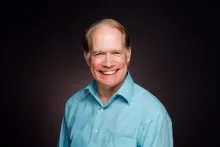
Greg Thomas is the former Pastor of the Cleveland, Ohio congregation. He retired as pastor in January 2025 and still attends there. Ordained in 1981, he has served in the ministry for 44-years. As a certified leadership consultant, Greg is the founder and president of weLEAD, Inc. Chartered in 2001, weLEAD is a 501(3)(c) non-profit organization and a major respected resource for free leadership development information reaching a worldwide audience. Greg also founded Leadership Excellence, Ltd in 2009 offering leadership training and coaching. He has an undergraduate degree from Ambassador College, and a master’s degree in leadership from Bellevue University. Greg has served on various Boards during his career. He is the author of two leadership development books, and is a certified life coach, and business coach.
Greg and his wife, B.J., live in Litchfield, Ohio. They first met in church as teenagers and were married in 1974. They enjoy spending time with family— especially their eight grandchildren.
