
Greg Thomas
This transcript was generated by AI and may contain errors. It is provided to assist those who may not be able to listen to the message.
Well, thank you once again. Happy Sabbath, everyone! I thought I would start off by reading to you a few statements. Someone sent me this email. This is a retired man's perspective on life, a retired man's perspective. He says, you can tell a lot about a woman's mood just by her hands. If they're holding a gun, she's probably pretty upset. It's a retired man's perception. She says, go on out of the days when girls cook like their mothers, now they drink like their fathers. Retired guy's perspective. You know that tingly little feeling you get when you really like someone you just met? That's common sense, leaving your body. It's a retired man's perception. He said, I decided to change calling the bathroom the John and renaming it the gym. I feel so much better telling everyone that I went to the gym this morning. And finally, he says, everyone has a right to be stupid. Politicians just abuse the privilege. So that is a retired man's perception. Well, today I would like to talk about something that's dear and dear to my heart. And it was kind of inspired by Frank in advance sending me Rabbi Gold's little video there, because I was inspired by the things that he had to say. And I don't often talk about what I do most of the time for the majority of my living. Obviously, I'm a part-time pastor and I'm happy to serve you in that way. But before I was a pastor, I had a different career, which I continue to maintain. And technically, my title is leadership consultant. And what that basically means is that I'm a troubleshooter. I'm someone that companies use to do a variety of things. First of all, I do corporate training. I teach individuals or teams about how to communicate more effectively. I teach productivity skills. I help them to overcome obstacles that they may have. I do pre-employment testing. So before an employer hires someone, I test them so the employer knows in advance what their strengths are, what their training needs are. I do personal coaching with individuals. I do coaching with departments and teams to help them to have better teamwork and to do things in a lot of better ways.
So primarily, what I do is very similar to what I consider to be Christian principles. And that is that I teach and train people how to be better leaders.
And particularly, personal leadership. How to be a better personal leader. And I want to mention why this is just so essential in our world today.
The human race finds itself at a crossroads. The problems that we face on this planet are more complex than ever before. From ethical questions regarding human cloning to genetically modified foods. To Al-Qaeda and ISIS and the wars that are engaged through a large part of the Middle East, the terrorism that is creeping in to the Western nations from climate change to growing the global shortages of food and fresh water. Human kind faces unbelievable challenges, greater challenges than we've ever had before in human history. Even within the United States, a new national culture, and you could see this creeping in for a long time, but it's produced by non-Christian values that are dedicated and determined to destroy the family, destroy the workplace, our government, our entertainment, and every thread of our social fabric. There is not a dysfunction or perversion that is no longer glorified and called heroic because someone has outed themselves or decided to promote their brand of perversion in order to draw attention to themselves. And unfortunately, as I say, it's woven into our entire culture. And it's not going to get any better. It's not going to go away. As I've said in the past, you can expect polygamy to be endorsed and ultimately to become legal in the United States, where a man will have three or four wives at the same time. You can expect child pornography to no longer be a crime because eventually they will say, well, it's only looking at pictures. It's not really hurting anybody. So what we see occurring today is just the tip of an iceberg, of an agenda to destroy the very fabric of Western civilization, to destroy the biblical foundation, though as flawed as it may have been in many ways and though it wasn't perfect, but at one time at least was a foundation that was built on the principles of the Ten Commandments and there is an agenda to tear all of that apart.
Albert Einstein once said, the world we have created is a product of our way of thinking.
Nothing will change in the future without fundamentally new ways of thinking.
And that's a very powerful statement by Dr. Einstein. So I'd like to talk today and perhaps into my next sermon whenever I'm scheduled on the topic of leadership because I may not get through all of this today. The thing that I want to emphasize is that the qualities of leadership must start within each and every one of us as individuals and it begins as a basic philosophy of life. You see, in reality, there are two primary ways of thinking and I'll talk about that in a little more detail. We are either creative thinkers or we are reactive thinkers and depending on whether we're creative thinkers or reactive thinkers, we have a particular mindset. We have a basic philosophy of life that colors everything we think, how we approach people and problems, and it's going to influence our future either in a positive way or in a negative way.
Leadership is a war of creative thinkers versus reactive thinkers. Did you ever notice in our secular culture that we have a tendency to look outside of ourselves for leadership? That's what people do. People look to this politician. He's going to solve all of our problems if only we elect him. Tomorrow morning, the day after he's elected, the sun will come out, the birds will sing, everyone will have a job making a hundred grand a year. All diseases on earth will be eliminated. Everyone will be happy if only we put this party in office. If only we elect this charismatic individual as president or governor or mayor. And people tend to look outside of themselves for leadership. Brethren, that's a trap. Is it a time we look inside ourselves to see how we can be better leaders and we can be the kind of people that we need to be to prepare for the world tomorrow? I'd like to talk a little bit about something called personal leadership, and I'll give you a sterile definition, but I think it's important to say this, and this ties in a lot with what Rabbi Gold said in his little video. Personal leadership is the ability to visualize a goal, to embrace the values of that goal and maintain a positive perspective in a self-disciplined environment until the goal is attained. That's just a different way of saying what Rabbi Gold said. You have to have a goal. You have to have a purpose. You have to have a reason, something you're aiming for. You have to accept rules, the rules of the game, those are called values, that are required for you to be able to reach that goal. You have to have a positive perspective about it. You won't achieve anything with a negative perspective, and you have to be self-disciplined. You have to be committed to that goal. You have to be engaged in achieving that goal, and you have to continually march towards that goal and overcome any obstacles that are boldly thrown in front of you. I'm here to boldly tell you today that some of the leaders who will change this world forever are sitting here today. You are the leaders that Christ is presently training and that the future generations are counting on. Today I hope to begin perhaps a series of sermons to help you accept that reality, that you are being trained for something important, something essential, something that is going to change this world forever in a positive way.
And are we up to that challenge? Do we understand that it is an awesome challenge and opportunity that each and every one of us are being given? So as we discuss the subject of personal leadership today, I hope you will never forget that it is an inside job. Leadership is an inside job. It's inside out. It has to start right here between our two ears. It's not going to happen outside until it begins to happen on the inside. Leadership is not about power or authority.
Many people who have formal titles, and I know a lot of them because I work with a lot of them in my career, titles like CEO. Doesn't that sound important? Chairman, president, prime minister.
Many individuals who are called leaders, frankly, couldn't lead a group of policemen to a donut shop.
So they have the title, but that doesn't mean they understand anything about leadership. Leadership isn't about titles. It's not about control. It's not about power. What leadership is, is constructive influence to inspire others and to get things done. It's not anything more complicated than that. Most leaders do not have formal titles because titles are not necessary to effectively lead others. Titles are not necessary to change what's going on between our two ears.
So I'd like to talk a little bit about thinking. How we think and how that affects everything about us. This is something that I emphasize a lot to my clients. Changing how we think. Changing our perspective on life. Because there is cause and effect. And if we think one way, the effect is pretty well predetermined. And it's not pretty. However, if we think another way, and we call that creative thinking, we'll talk about that again in a little more detail, then the results are a lot more positive. The results are very encouraging. The results mean that we are fulfilled, that we have good families, that we are good examples in our community. It means that we are good examples in our church, in the workplace, in everything we do. And the ultimate results are very positive.
Harry Truman once said, quote, he said, men make history and not the other way around. In periods where there is no leadership, society stands still. I would go a step further to what former President Truman said. I would say when there's no leadership, society actually goes backward.
You see, we are coming full circle. To me, I think about this often, and it just amazes me.
Who did Paul primarily talk to throughout his ministry in James and Peter and John? Well, they preached the Gospel and they primarily talked to people who had little or no understanding of the Ten Commandments, of God's value system, and they basically lived like, to borrow Frank's term, Neanderthals. Okay? They were pagan gentiles who were not brought up in a Judaic understanding of the Ten Commandments or the Torah or God's law, and that was the world then. Well, over the course of human history, because the teachings of Christ eventually, at least most of them, his ethical teachings were accepted by the Catholic Church, and it grew in numbers, and then it became the predominant religion of the Roman Empire, and it grew and grew, and then you had the Protestant Reformation. So you got to the point in which the majority of people in the Western world at least accepted the basic tenets, the morality of the Ten Commandments of God's law.
People understood you shouldn't lie. You shouldn't steal. You shouldn't commit adultery.
So that occurred over thousands and thousands of years. It took it to that point so that that would occur in Western culture. And then what happened? Well, then what happened was America, and aside from a lot of the good things that occurred in America and in Western Europe, there was a rejection of God in every way of life.
To throw God out of our schools, we don't want to have prayers at our high school before our high school football games or graduation ceremonies. We don't want God mentioned in our schools. We want the Ten Commandments out of the classrooms. We want them out of our courthouses. So basically, Western culture rejected God. And we find ourselves today virtually right back to the kind of culture that the Apostle Paul faced when he began to preach the gospel to the world.
We're almost back at that point of coming full circle where people are thoroughly paganized and have little or no understanding of the Ten Commandments, of God's values, of the Bible, of the stories, even the biblical characters. I mean, some people think that the Epistles were the wives of the Apostles. That's just a level of ignorance that exists in our world today. So we've almost come full circle in our culture, back to the time very similar to what Paul faced when he would go into these Gentile pagan cities and begin talking about Jesus Christ and the gospel message and who and what God has in plan for humankind.
Well, thankfully, we're not without biblical examples to follow to understand what the right mindset is and the right approach that we should have towards our own personal leadership and the way that we attempt to influence others in a positive way. Today, I would like to discuss some common leadership traits that are demonstrated by two great individuals in the Bible.
Two leaders I would like to focus on today. One is Moses, who had the most significant influence in the entire Old Testament, and of course, Jesus Christ, the Son of God, who had the most significant influence in the New Testament and beyond. In their own ways, each one changed history, the history of the world, because of their leadership, because of what they taught, because of the influence that they had. Think about Moses, who led two million people as slaves out of Egypt, and think about today how their descendants dominate much of the world's most successful businesses and governmental structures.
The descendants of Moses, if you just look at one tribe, Judah, and the influence of people who are of Jewish descent in the United States alone, the businesses that they own. Phenomenal for just being a few percent of our total population.
On a greater level, Jesus Christ started a mission and an organization that has lasted over 2,000 years, and it is in the process of changing the world. His message outlasted, outlived the Roman Empire, and hundreds of other kingdoms and political philosophies that have risen and fallen over the course of time. His leadership, that is Jesus Christ, was so powerful that about one in four people on earth today claim to follow His teachings and philosophy. One in four people on earth claim. They say, I am a Christian, meaning they are stating that I follow the philosophy of this individual.
Now, just think what an achievement that is for someone who basically acted as a physical CEO for only three and a half years and departed the scene, the kind of influence that he has had in history. Both of these great individuals modeled leadership principles that you and I can learn from. They were great leaders, first of all, because they were first great followers. They were great leaders because first they learned everything they knew about leadership from being good followers. Take Moses, for example.
We think of Moses as someone who led the children of Israel out of Egypt. But before he led the children of Israel out of Egypt and gave them the Ten Commandments, as God had spoke Himself, God, and gave written and stoned to Moses to give to the people, before that he first was a follower from the very time when he saw that burning bush and he went up and he listened to it. And the bush had taken your shoes off because you're standing on the holy ground, and he did.
So from that moment on to many, many years later when he would go up to Mount Sinai and say, God, what do you want me to do now? What do you want me to teach now? What do you want me to write now? What do you want me to say now? Before he was a great leader, he first taught himself, he disciplined himself, to be a good follower.
Let's take a look at just a few seconds at Jesus Christ. He led his disciples. There's no doubt about that. But he was first a devoted follower of his father. He said himself, he said, I do nothing of myself. He often commented that he constantly sought the father's will. It wasn't his will that it was important. It was the father's will that was important. So Jesus Christ, though he was a tremendous leader, and we still see his influence in our world today, first, before he was a great leader, he submitted himself and was willing to be a great follower. I'd like to give you another stale definition. This is the definition of followership, and here's what it says. Followership is the individual desire to serve others and support a team in its task to complete a mission.
Are we willing to be followers, or do we have to be a loose cannon? Are we willing to submit and be part of a team, or do we always have to try to take charge and control every situation and every event? Continuing this definition, followers seek to perform their tasks well, maintain cooperative working relationships, provide constructive dissent, share leadership functions, and support leadership development. So that's what a follower does. And as I said, rule number one is if you want to be a great leader, if you want to learn how to strengthen your personal leadership skills, it all begins by becoming a good follower. Because by becoming a follower, you learn a lot about empathy, you learn a lot about self-discipline, you learn a lot about providing constructive dissent rather than destructive ideas or trying to tear everything down or tear everything out.
I can tell you, and I'll share this with you, something that's just very personal. To me, obviously, I've been a pastor about five years, but for many, many, many, many, many, many years, I was an elder before I was ever a pastor. And I learned a lot through followership. Though I had many pastors who were flawed and human beings, and some of them who were quite selfish, I tied and attempted at times to provide constructive feedback. But at the end of the day, they were going to do what they were going to do. And I have to tell you this, that virtually everything that I do, I learned by observing previously what didn't work and said, nope, that doesn't work. If I ever get in that position, I won't do things that way. Because the end result of the way that was handled, that was said, the way that person was humiliated, the way that person was ostracized or isolated, the end results were negative and not restorative and healing. Therefore, I will not do that. I promise myself. So by being a follower, you can learn a lot just by observation, just by seeing how things are done, just by observing the way things are handled and the approaches that are taken to various situations. So that being said, I'd like to get back to talking about thinking processes. There are two primary thinking processes, and both Moses and Jesus Christ shared one. It's called being creative thinking. Also sometimes called, if you Google the term, proactive thinking. If you look at the general population, about 20 percent of people who are creative or proactive thinkers have these behavioral characteristics. Here's what they are. They're more open to change. They have a can-do oriented personality. Yep, we can do that. It's going to be hard. We can do that. They are good listeners. They accept a responsibility. They feel like they're in control of things. They have a higher level of self-esteem. They make lots of mistakes, but they always look at the mistakes they make as an opportunity for growth. And the key is that great leaders have worked to overcome reactive thinking, which is another type of thinking, and they've worked very hard to develop within themselves a mindset, an attitude, a habit of becoming a creative or proactive thinker, because I can tell you that it's not natural.
Only 20 percent of the general population are creative thinkers that I just described.
80 percent of the general population are what we would call reactive thinkers. And here's some of the behavioral characteristics of reactive thinkers. Resisted to change. They don't like anything to change. They create excuses to avoid doing things. They're poor listeners. They'll often cut you off in mid-sentence before you finish something. They attend to avoid responsibility. They feel they have no control over situations. They have lower self-esteem, and they are devastated by making a mistake. They look at it as a failure. That's how they define it within themselves, and they are just devastated when they do something wrong. So what factors establish the way that we think? Because every one of us in this room either is primarily a creative thinker or a reactive thinker.
What are some of the things that establish our thinking process? Well, first of all, it's genetics, and no one can deny that much of our personality is wired, is coded within our DNA. So when we came out of the womb, we were predetermined, pre-wired to have a particular tendency. No doubt that that's a big part of it. But also a big part of it is environmental. Dr. Shad Helmstetter in his book, What to Say When You Talk to Yourself, he says this, by age 18 we have been told no 148,000 times.
Now that can affect our self-esteem. That can affect whether we have a can-do philosophy towards life, or whether we're always looking to make a mountain out of the molehill to say, oh, I can't do it because of this. Nope, can't do it. It's an obstacle. It's too big. Can't go there. Can't do that. Dr. Helmstetter says that 70% of our self-image is programmed by age 6, and 95% of our self-image is programmed by age 14. Think about that.
So basically, we all fall primarily in the one of those two categories of thinking.
Again, one is reactive thinking, and that's about 80% of the general population.
The second is creative thinking. These are people who are open to change, have a can-do orientation. They're good listeners. They accept personal responsibility. They're usually the first ones to apologize if they do something wrong. They feel in control of things. They have higher self-esteem. They look at mistakes as opportunities to grow. That's the qualities of creative thinking or proactive thinking. Dr. Helmstetter says something else. Again, and this can influence a factor of our thinking process. And this is a reality. This man is not religious. He has no bones to pick. Quote, leading behavioral researchers have told us that as much as 75% of the thoughts that enter our heads are negative and counterproductive. And let me tell you one other thing about them that behavioral scientists have understood. Most of them are lies. Usually what our mind tells us about ourselves, about other people, or about situations, is a big, fat, bold-based lie. Mr. Thomas, that can't be true. Why, I'm talking to me! I wouldn't lie to myself, would I? You betcha! Sure, you lie to yourself. And I lie to myself. And we all, because of those negative thoughts, lie to ourselves. Dr. Daniel Amen, who has a lot of shows and PBS, calls them ants. Automatic negative thoughts. And his famous phrase is, we have to stomp out the ants in our heads. You know, think of ants like little creatures that walk on the kitchen counter. We have to stomp out. We have to get rid of those ants in our heads, those automatic negative thoughts.
So where do they come from? Well, let's go to Ephesians chapter 2 and verse 1, and let's remind ourselves of where these thoughts and ideas, where reactive thinking comes from.
Paul himself is writing to the congregation at Ephesus chapter 2 and verse 1.
Paul says, and you he made alive. He's talking to the church. They once were dead in their sins. They once did not have a Savior. They once were lost and condemned for eternity. But then they accepted the preaching of the good news of the gospel, and they accepted Jesus Christ as their personal Savior, and they began to live God's way of life, and it changed everything about them.
And you he made alive who were dead in trespasses and sins, in which you once walked according to the course of this world, according to the prince of the power of the air, the Spirit, who now works in the sons of disobedience, among whom also we all once conducted ourselves in the lusts of our flesh. What did Rabbi Gold say when we're born? What's that natural inclination?
I give me comfort, change my diaper, feed me now, or ahhhh!
And that doesn't change as much as we'd like to think by the time we're 40, or 60, or 70.
The Spirit, who now works in the sons of disobedience, among whom we all once conducted ourselves in the lusts of the flesh, fulfilling the desires of the flesh and of the mind. Selfishness. I'm comfortable. I don't want to change. I don't want to hear what you have to say. Your opinion isn't important. After all, I know it all. Between me and God is all knowledge. God knows all there is to know, and I know the rest. So I don't need to hear what you have to say.
I don't need to change. I don't need to be different. That's human. That's natural. I could say it's natural of this world because, as we use the metaphor that I've used in the past, the moment we were born, all of us were connected to a spiritual Wi-Fi network.
It's open access. You didn't even need the password. And that open Wi-Fi network, radiated by this prince of the power of the air, says, be selfish. Get your own way. Don't put up with anybody's baloney. It's okay to be violent. It's okay to raise your voice. It's okay to demand things. It's okay to think about self continually. Those are the ideas and thoughts that are emanated silently but pervasively over the entire world through this spiritual Wi-Fi network emanated by the prince of the power of the air. Fulfilling the desires of the flesh and of the mind and we're by nature children of wrath just as the others. At one time, he says, you too got angry. You lost your cool. You blew a cork. You thought the way to solve every problem was to be louder than the person you're talking to. And if that didn't work, maybe to give them the old five knuckles sandwich. That's what it took to get their attention. Children of wrath just as the others. But God, who is rich in mercy because of his great love with which he loved us, even when we were dead in trespasses, made us alive together with Christ. By grace you have been saved. I'm going to read verses one through four through the translation God's word for today. I think it does such an awesome job translating these verses. I really like this because it strips away any nicety. It just tells it like it is. Quote, you were once dead because of your failures and sins. You followed the ways of this present world and its spiritual ruler. This ruler continues to work in people who refuse to obey God. All of us once lived among these people and followed the desires of our corrupt nature. We did what our corrupt desires and thoughts wanted us to do. End of quote.
Pretty powerful the way that is translated. So what does this mean? It means that 80 percent of the general population, that means 80 percent of the people that you will meet in the workplace, 80 percent of your neighbors, 80 percent of your relatives, have a fundamentally negative orientation in life. There are reactive thinkers and they have a negative orientation due to having a poor self-image and because of that they will spend tremendous energies trying to keep other people from seeing their own weaknesses, seeing the weaknesses that they see in themselves.
It's a great cover-up and this is usually done by finding something wrong with someone else or with the circumstances. But brethren, here is absolutely the bottom line.
Everyone in this world is following one of two princes. Every one of us, everyone who breathes, whether they know it or not or acknowledge it or not, are following one of two princes.
One is either the prince of the power of the air or the other is the prince of peace. This is the title of Jesus Christ in the book of Isaiah. So which one, which of those two princes, because we all choose whether we want to or not, whether we know it or not or we acknowledge it or not, we all choose one of those two princes. Which prince have you chosen to follow? Which prince rules over your life and over my life? Let's go to Numbers 11 and verse 4.
Numbers 11 and verse 4. I'd like to look at an example of creative and reactive thinking in the same group of scriptures. To give you a little bit of background, this was in the second year after Israel had left Egypt and we know, of course, who have read the scriptures that God had personally intervened many times already to protect the nation. First of all, being able to get them out of Egypt was a miracle. God had plague after plague hit the powerful, the world-dominating Egyptian empire to weaken it to the point where Pharaoh said, go away, get lost. It was a war of attrition and that in itself was a miracle. Then he should have died when they were basically pinned against the Red Sea and God performed a miracle. Then later they needed food and God provided manna for them to eat. So they didn't have to go out and search for food every day and spend most of their day trying to find enough food to eat each and every day. God had performed miracles over and over and over again. So with that background, let's pick it up here in Numbers chapter 11 beginning in verse 4. It is now the mixed multitude, a very interesting phrase. What the mixed multitude was were people who were not native Israelites. Many of them were Egyptians who had just decided to come along for the ride. Maybe they were thrill-seekers. Maybe they wanted to see how far this would play out. But they had mixed themselves in with the believers and were going to start trouble right now, right here and right now. And it hasn't changed in 3,000-4,000 years. It hasn't changed at all because almost every church congregation has tears. And tears are those who grow up among the true believers who are primarily negative, who are primarily waiting for a moment to try to cause division, to try to cause problems, to sow doubt and discord among the church of God. And today, in New Testament parlance, we call them tears. But at this time, in this essence, they were called the mixed multitude. Some translations call them foreigners. They were native Egyptians who were among them yielded to intense craving. In other words, they wanted meat. They weren't into vegetarianism. They wanted meat. So the children of Israel also wept. So it starts out with the mixed multitude and pretty soon it ripples throughout the entire congregation. So the children of Israel also wept again and said, oh, will give us meat to eat. We remember the fish which we ate freely in Egypt.
What? Let's see. Do you remember the feeling of that whip cracking your backside because you weren't moving fast enough? Freely in Egypt? You didn't have anything free in Egypt. What do you mean that we had freely in Egypt? You got up when they told you to get up. You get to go to bed when they told you you could go to bed. You worked like a dog all day in a hot sun. You only stopped to drink water when they told you you could drink water. You only stopped to eat lunch when they told you you could eat lunch. You only stopped working when it got too dark to work. So what's with this freedom that you had in Egypt? May I remind you that you were slaves in Egypt?
Yes. The cucumbers, the melons, the leeks, the onions. Wait a minute. Weren't you just unhappy because there wasn't meat? So you start rattling off all these vegetables.
You're contradicting yourselves. The cucumbers, the melons, the leeks, the onions, and the garlic. But now our whole being is dried up. Well, is that really true? You seem to have enough energy to wine continuously. You're being fed with manna every day. You needed water. God performed a miracle and you had water. Is that maybe a slight exaggeration? The truth is, no. It's just the natural consequence of having reactive thinking. There is nothing at all except this manna before our eyes. Now the manna was like Coliander's. It's a very small little seed in its color. It was like the color of the delam, kind of a yellowish color. The people went about and gathered it, grounded in millstones, beat it on the mortar, cooked it in pans, and made cakes of it. The taste was like the taste of pastry prepared with oil.
And when the dew fell on the camp in the night, the manna fell on it. Verse 10, Then Moses heard the people weeping throughout their families, everyone at the door of his tent, and the anger of the Lord was greatly aroused. Moses also was displeased. He was displeased at the way the people were reacting. How just some little bit of negativity from a few people that really weren't even with the program had rippled about like a metastasized cancer and infected the entire congregation. Verse 11, So Moses said to the Lord, Why have you afflicted your servant? And why have I not found favor in your sight, that you have laid the burden of these people on me? So even Moses is getting down. It's even affecting Moses. Did I conceive these people? Did I beget them that you should say to me, Carry them in your bosom as a guardian carries a nursing child to a land which you swore to their fathers? Where am I to get meat to give to all these people? For they weep all over me, saying, Give us meat that we may eat. I am not able to bear these people alone, because the burden is too heavy for me. If you treat me like this, please kill me here and now if I found favor in your sight, and do not let me see my wretchedness. I think it'd be very fair to say that Moses was depressed at this moment in time. He was at his breaking point.
So the Lord said to Moses, Gather to me seventy men of elders of Israel, whom you know to be the elders of the people, meaning those who were supposed to be the wise ones, the most seasoned, the most experienced managers, and the officers, those who naturally could lead, over them and bring them to the tabernacle of meeting, that they may stand where you are. Now we won't go into the next scriptures, but God wisely and compassionately spreads out the burdens that Moses has to these other seventy, so that not all is on Moses' back, that the responsibilities and the burdens of this great people are shared among the seventy and don't always fall on Moses' shoulders. Let's drop down now just a couple of chapters. The number is chapter 13. Last scripture we'll probably have time to cover today. Numbers chapter 13, beginning in verse 1 and 2. What we just saw in Numbers 11 was the effects of reactive thinking. It was negative, it spread, it was a distorted mindset these people had deceived in themselves. They're thinking they were free in Egypt. They're complaining about not having meat, but yet all of the things they rattle off that they miss are vegetables. They're talking out of both sides of their mouths. They're contradicting themselves. They're complaining. And again, those are all qualities of reactive thinking.
Take a look at another example. Numbers chapter 13 verses 1 and 2. And the Lord spoke to Moses, saying, Send men to spy out the land of Canaan, which I am giving to the children of Israel. From each tribe of their fathers you shall send a man, every one a leader among them. So God gives a special instruction to Moses. He says, We're going to have twelve spies go into the land that I've promised you. And they're going to check out the land, and I want them to bring back a report of how things are in the promised land. And I want you to choose the brightest and the best.
That's why God instructed that you shall send a man, every one a leader among them. So that's exactly what Moses does. And that's why the east twelve of all the people that lived in these tribes were the twelve that were chosen. Then Moses gives them basic instruction beginning in verse 17. Then Moses sent them to spy out the land of Canaan, and said to them, Go up this way into the south, and go to the mountains, and see what the land is like, whether the people who dwell in it are strong or weak, few or many, whether the land that they dwell in is good or bad, whether the cities they inhabit are camps or strongholds, whether the land is rich or poor, whether there are forests or not, be of good courage. Don't be afraid. That is creative, proactive thinking.
Go there and explore. Go and discover. And don't be afraid. Be of good courage. God is with you, the same God who brought us to this point with miracle after miracle after miracle after miracle is sending you out as spies to see what the land is like and bring back some fruit of the land. Now the time was in the season of the first ripe grapes, so they went up and they spied out the land from the wilderness of Zinn as far as Rehab near the entrance of Hamath. They went up through the south and came to Hebron. Ehemen, Shechii, Telmai, and the descendants of Anak were there.
Now Hebron was built seven years before Zoan in Egypt and they came into the valley of Eshkol and there they cut down a branch with one cluster of grapes and they carried it between two of them on a pole. And it must have been pretty good-sized grapes. The need for two people to carry them on a pole. Just imagine a grape the size of a golf ball. And these must have been incredible grapes that they had. They also brought some of the palm granites and figs and the place was called the Valley of Eshkol because of the cluster which the men of Israel cut down. And they returned from spying out the land after 40 days. So they spent 40 days there. Now they departed and came back to Moses and Aaron and all the congregation of the children of Israel in the wilderness of Peran at Kaddish and brought back word the word of the Lord to them and to all the congregation. So they're not just going to speak to Moses. Everyone can hear what they're saying. What they say everyone is going to observe and hear. And they showed them the fruit of the land. Then they told him, we went to the land where you sent us. It truly flows with milk and honey. That's proactive. That's a can do. That's positive. And this is his fruit. Not only don't take me just for my word's sake, take a look at this honey over here. Take a look at these grapes the size of golf balls. Imagine how much dino these things would make in the season.
I mean, is life good or what? Verse 28, nevertheless the people who dwell in the land are strong. Uh-oh, the tide is turning. The cities are fortified and very large. Moreover, we saw the descendants of Anak there. The Amalekites dwell in the land of the south. The Hittites, the Jebusites, and the Amorites dwell in the mountains. And the Canaanites dwell by the sea and along the banks of the Jordan. So even though the first words have come out of their mouths, positive, is creative, suddenly the reactive thinking automatically kicks in. But, but, but there's people in this land. What did you expect? God didn't say He was sending you to a desert.
He told you that He was sending you to a land that already had people in it. It already had crops growing. It already had land that was cultivated until it was a land that already had cities. Who do you think does that stuff? Grasshoppers don't do that stuff. People.
Do that stuff. So again, notice how the reactive thinking starts. Are any of these Canaanites as strong as Egypt was? Any of these peoples that were mentioned, are they the most powerful nation on earth like Egypt who had been plundered as Israel left it on their way out two years earlier? Of course not. They're little tribal peoples. They're little villages. We wouldn't even call them nations today. They were so small in number and geography. Yet the same people who had confronted Pharaoh in Egypt and were successful in bringing down the greatest nation on earth and winning their freedom now suddenly are afraid of a group of people living in a different land. Notice what happens in verse 30. Then Caleb quieted the people before Moses. Caleb is one of only two who is a creative or proactive thinker. He quieted the people before Moses and said, Let us go up at once and take possession for we are well able to overcome it. Caleb says, We gotta have a can-do attitude. I've been there. I saw the same thing that they all saw. And I say we can do it. But you know what? Reactive thinkers don't listen well. And it was very easy to cut Caleb off and overwhelm what he had to say with more negative comments. Verse 31, But the men who had gone up with him said, Oh, we are not able to go up against the people, for they are stronger than we. And they gave the children of Israel a bad report of the land, which they had spied out there, saying, The land through which we have gone is spies, is a land that devours its inhabitants. And all the people whom we saw in it are of great stature.
Again, this is typical of reactive thinking. First of all, did you see the earth open up and swallow people? What do you mean it's a land that devours its inhabitants? Secondly, everyone you saw was great stretch. Everyone that you saw there, you didn't see anyone five foot tall. You didn't see anyone five-five. Everyone you saw in it were of great stature. Verse 33, And we saw the giants, the descendants of Anak came from the giants, and we were like grasshoppers in our own sight.
You talk about a self-esteem problem. In our own eyes, we were these puny, little, helpless grasshoppers, and they looked like praying mantises, hungry ones, too.
And so we were in their sight. Well, obviously, when you react that way, when you cower in fear, when you look like you have no self-esteem, you are easy prey. So all the congregation lifted up their voices. Notice all the congregation. Ten people, ten people, caused an entire congregation of two million people to become negative and have a mindset that was reactive thinking.
The whole congregation of Israel complained against Moses and Aaron, and the whole congregation said to them, If only we had died in the land of Egypt, if only we had died in this wilderness, why has the Lord brought us out of this land to fall by the sword, that our wives and children should become victims? You see, one of the qualities of being a reactive thinker is always having a victim mentality. The world is against me. My spouse is against me. My employers against me. My children are against me. The world is against me. God is against me. Everything is against me. I'm just an innocent bystander here, and all of these bad things happen to me, continuing, would it not be better for us to return to Egypt? So they said to one another, Let us select a leader and return to Egypt. Notice, again, they want someone from the outside. They don't want to change. They don't want to do anything internally in their own lives. They want to select someone else to take them back to Egypt. Again, brethren, this is another example of reactive thinking. The first group returns with the evidence of a successful journey. There are samples of large fruits that are brought, and a report that says the land flows with milk and honey, and then the reactive thinking kicks in. Even Caleb can't stop the tidal wave of negative, reactive thinking. Whenever the Israelites come up to an obstacle, and this was true of their entire history, they would panic, they would whine, they would pine for Egypt, they would blame Moses, and they would end up blaming God. The interesting thing about the percentages is, if you take a look at 10 of the 12 spies, that was 83% of those spies who went and searched out the promised land. You remember, I mentioned earlier, the general population, it's 80%. It happened to be 83%.
Only two were creative thinkers.
Brethren, all 12 of the spies saw the exact same thing. They were in the same land. They saw the same people. They saw the same geography, but they came to far different conclusions.
Here were the same people who reputedly built the great monuments of Egypt, who were witnesses to the great miracles that God had performed so that they could get to where they were at this point in human history, and they had convinced themselves that it was impossible to get to the promised land.
Amazing. It shows you what the power of thinking does. The 10 versus the 2. Same things, same observations, different thinking, different results. Brethren, my time is up today. I will continue this sermon, part two, the next time I have an opportunity to speak. Be sure to have a wonderful Sabbath, and we hope to get a chance to chat with all of you.
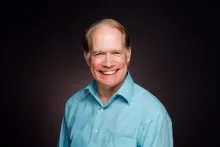
Greg Thomas is the former Pastor of the Cleveland, Ohio congregation. He retired as pastor in January 2025 and still attends there. Ordained in 1981, he has served in the ministry for 44-years. As a certified leadership consultant, Greg is the founder and president of weLEAD, Inc. Chartered in 2001, weLEAD is a 501(3)(c) non-profit organization and a major respected resource for free leadership development information reaching a worldwide audience. Greg also founded Leadership Excellence, Ltd in 2009 offering leadership training and coaching. He has an undergraduate degree from Ambassador College, and a master’s degree in leadership from Bellevue University. Greg has served on various Boards during his career. He is the author of two leadership development books, and is a certified life coach, and business coach.
Greg and his wife, B.J., live in Litchfield, Ohio. They first met in church as teenagers and were married in 1974. They enjoy spending time with family— especially their eight grandchildren.
