

Paul Moody
This transcript was generated by AI and may contain errors. It is provided to assist those who may not be able to listen to the message.
In the discussion about the Passover in the Days of Unleavened Bread mentioned in 1 Corinthians 10 and 11, we have a very frank and an honest warning to Christians about examining our spiritual condition. In verse 12 of chapter 10, 1 Corinthians 10 and 12, we read, "'Wherefore, let him who thinks he stand take heed lest he fall.'" So that's a warning to us. And I think the thrust of that verse is echoed throughout the New Testament and a number of scriptures. In verses 1 through 11, which we covered the other day in the sermon, we're given one of the strategies for correcting ourselves during the Days of Unleavened Bread, and that is, don't forget the example of ancient Israel. Don't forget what they went through, because their example has been written for us. What is the biggest lesson that ancient Israel offers us in light of the Days of Unleavened Bread? When you stop and think about it, I think truly the events that occurred to Israel provide an abundance of lessons, as we've already learned. In fact, there are four books of the Bible that are used to cover this 40-year period in the scriptures.
We find them under the harshest of conditions and bondage in Egypt. Probably during this time, even though they talk about having leeks and melons and onions, garlic, that's not the most appealing food for most of us. They apparently had fish, but they had minimum of food and water. They had long hours of hard labor.
We know that their children eventually were killed, and they really didn't have freedom at that time. Then God performed a series of miracles. There were ten plagues that brought the mightiest nation on earth down to its knees and humbled it at that time. There was eventually the parting of the Red Sea. Israel could at last say, we're free! They had achieved freedom. God gave them the Ten Commandments, and He gave to the motherwalls that were to guide them and help them to be a prosperous nation. They were actually led for 40 years by the Rock, as 1 Corinthians 10 tells us, who was Jesus Christ. They had food provided for them for 40 years, closed and were out for 40 years, their shoes didn't wear out for 40 years. They entered into the Promised Land. So, there are many lessons that we can learn from it. Let's go back, though, to Numbers 11.
Let's notice one problem that these people had. Numbers 11 will begin in verse 4.
We find now the mixed multitude, who were among them, yielded to intense cravings.
I think this is the place in the King James Version where it talks about they lusted a lust. They were lusting. So, the children of Israel also wept again and said, Who's going to give us meat to eat? Okay, we've got all this manaba. We want meat. Nothing like a good T-bone steak. We want filet mignon. We'd like to see some sea bass.
We want food, some meat. Why, we remember the fish that we ate freely in Egypt. Cucumbers, the melons, the leeks, the onions, and the garlic. But our whole being is dried up. There's nothing at all except this manna before our eyes. Every day you get up, here's this manna lying out there. We want something beside manna.
So, what you find, they began to think that it wasn't so bad back in Egypt. It hit pretty good back in Egypt. It's funny how you tend to begin to forget the bad things and you begin to remember the good. In chapter 14, we read this the other day, but let's notice in verses 1-4, Numbers 14.
All the congregation lifted up their voices and cried, and the people wept that night. And all the children of Israel complained against Moses and Aaron, and the whole congregation said to them, If only we had died in the land of Egypt, or if only we had died in this wilderness, why has the Lord brought us into this land to fall by the sword, that our wives and our children should become victims? Would it not be better for us to return to Egypt? And so they said to one another, Let us select a leader and return to Egypt. Now, notice, they wanted to go back into slavery. They wanted to go back into slavery. Despite all of the cruel slavery, the beatings, the death, the brutal labor, lack of food, despite the miracle of freedom that God wrought for them, the promise of liberty and a better land, they actually said, We want to go back. Now, I think you might find that shocking, or you might think, This is unbelievable. How could these people want to do that? Eventually, they got what they wanted. Eventually, Israel ended up in slavery. In fact, many times they went into slavery. Both spiritually and physically, they ended up in bondage. Now, before you and I cast stones at Israel and beat up on them too much, we need to consider the fact that they were human. And guess what? We're human. And we're really no better than they are. We're no worse than billions of others. We're no better than billions of others in society. The history of humankind has always been of a people longing for freedom, but ending up with a round-trip ticket back into slavery. And that's exactly what the Israelites did. Let me illustrate what I'm talking about here by an incident in a situation that some of you were alive and may remember. Others of you may have read about it in a history book. This was Thursday, August 23, 1973. A serveges credit bank in Stockholm, Sweden was rocked that day by submachine gun fire. The party has just begun, announced a 32-year-old prison escapee. His name was Jan Erich Olsson. The party, indeed, continued for five and a half days, as Olsson held four bank employees hostage in an 11-by-47-foot vault late in the evening of August, or until the evening of August 28.
Later interviews with the four hostages yielded some surprising results. Results that have been confirmed in numerous other hostage situations in the years that followed, even though the captives themselves were not able to explain it, they displayed a strange association with their captors. They identified with them while fearing those who sought to end their captivity. The hostages even came to see their captors as protecting them from the police. Following the release of the hostages, one of the women became engaged to one of the captors. Another of the hostages started a defense fund to provide legal counsel for the hostages. All was done in the face of the fact that the hostages, I get this, the four hostages were bound with dynamite, so they strapped dynamite around them, had guns fired at them, had nooses placed around their necks, and were generally mistreated. Such bonding to one's captors or abuser is no longer considered unusual by professionals who negotiate with hostage takers. Studies of other hostage groups seem to bear this out. So they've done a lot of studies with groups like hostages, cult members, civilians who are imprisoned, physical or emotionally abused children, concentration camp prisoners, prisoners of war, incest victims, battered women. They've gone back and they researched the Russian Revolution, the French Revolution, people moving from communism into capitalism, and they find that many of these same traits are present. This is what has been known to be called the Stockholm Syndrome, because this took place in Stockholm, in Sweden. Now, you think, well, that's an interesting story, but could this happen to you and me? Could it happen to us? Does it happen? Or has it already happened to you? Now, before you say no, we want to hear the rest of the story, because we haven't heard it all yet. Have we gone back into captivity? In other words, have we escaped captivity, gone into freedom, and gone back into captivity again? The Bible says that it's absolutely possible for you and for me to do so. Now, we don't have a gun stuck to our head. The threat to us is the pleasure of sin, the wealth of society, the concerns and opinions of others, and their influence that would lead us back into captivity. In John 8, let's notice something that Jesus Christ says here, beginning in verse 34. In John 8, Jesus answered them, and he said, Most assuredly I say to you that whoever commits sin is a slave to sin. You and I have been slaves to sin in the past. We also have been slaves to the devil, slaves to our own nature.
And a slave does not abide in the house forever, but a son abides forever. Therefore, if the son makes you free, you shall be free indeed. So, brethren, you and I have been made free. God has freed us from the domination, the cruel hold that sin, the grip of sin, that it has had on us, the domination of sin. We at one time were slaves of sin. We today, though, are the sons of God. Now, in Luke 21, and you'll read over here in verse 34, let's notice.
Luke 21, verse 34, we find that we are warned, especially at the end time, to constantly be on guard. That we must focus. It says, Take heed to yourselves, lest your hearts be weighed down with what? Corrusing, drunkenness, the cares of this life, that that day come on you unexpectedly. For it will come as a snare on all those who dwell in the face of the earth. Watch, therefore, and pray always, that you may be accounted worthy to escape all these things that will come to pass and to stand before the Son of Man. So, brethren, it is possible for the true servants of God to begin to corrouse, to be overcome by the cares of this world. And we are told to watch and pray that this not happen to us, so that we might be able to escape here at the end time. Now, in 2 Peter 2, verse 19, we find a warning here from Peter. You remember, Peter wrote his books, and he said, the reason he wrote these books was so that we would be reminded and not forget the message, the warnings that had come. And he didn't want us to forget. Well, here in 2 Peter 2, beginning in verse 19, notice what can happen to true Christians, what can happen to us. It says, while they promise them liberty, so those who come along promising God's people liberty, and I want you to think, worldwide Church of God, there were those who came along saying, we promise we're going to give you liberty. We're going to show you a liberating way of life to live. You've been in bondage. And what we call liberty, they call bondage. So it says, they promise them liberty, and they themselves are slaves of corruption, depravity. For by whom a person is overcome, by him also is brought into bondage. So when something overcomes you and dominates you, then you are in bondage to it. For after they have escaped the pollutions of the world through the knowledge of the Lord and Savior Jesus Christ, and are again entangled in them and overcome, the latter end is worse with them than the beginning. For it would have been better for them not to have known the way of righteousness, the way of God's law and commandments, than having known it to turn from the Holy Commandment delivered unto them. But it has happened to them according to the true proverb, a dog returns to its own vomit, and a sow having washed to her wallowing in the mire.
So not a pretty picture. So you find that there are those who come along as false teachers who will promise people liberty, promise them a better way of life, and yet they return them to bondage, and the end result is worse. We should not deceive ourselves. The Bible very clearly brings out that it is possible for us as human beings to deceive ourselves, to be let off into deception. We are told to be sober-minded, we are warned to be on guard, so that we are not even tempted to go back into slavery, the slavery of sin.
I think the Stockholm analogy is a good analogy for us, because it shows how slowly we can fall in love with the captive, with our captors, and actually fear the freedom that God offers us. How many people who started in the Church of God are still with us today? Where are they? Where did they go back to? What teachings, what beliefs do many of them hold today? Why is it that we as humans have a proclivity to return to various forms of slavery when we have actually, by God, been granted freedom? God has given us freedom. Why do we as Christians return to sin, in some cases, have a desire to that way of life?
After we've been freed from the sinful life and its ugly penalties, you and I have been freed from Satan's control and from sin. Most important, how can we prevent from going back into slavery? Let's go over to Luke 14 again. Luke 14, beginning in verse 31. Luke 14, 31. Notice the warning we've been given by Christ. It says, What king going to make war against another king does not sit down first and consider whether he's able with ten thousand to meet him who comes against him with twenty, or else while the other is still a great way off, he sends a delegation and asks conditions of peace.
So likewise, whoever of you who does not forsake all that he has cannot be my disciple. If you and I don't want to be in slavery, brethren, we have to be willing to forsake everything and follow Jesus Christ. We have to forsake all. Now you find, when you go and you read, and I looked this up yesterday, there are all kinds of websites that you can go to to study the Stockholm Syndrome. It's interesting what they bring out. There are long-term psychological studies that have been done on this.
They give a characteristic of a set of symptoms that people have. Notice, one, the captive begins to identify with their captors. At least at first, this is a defensive mechanism. Based on the often unconscious idea that the captor will not hurt the captive if he is cooperative. So you cooperate with him. He says, Sit over there in the corner. Yes, sir. I'll sit over there in the corner. You'll put your hands above your head. Yes, sir. I'll put my hands above my head. So you cooperate.
And even positively, be supportive. The captive seeks to win the favor of the captor in an almost childlike manner. Then the captive often realizes that actions that are taken by the would-be rescuers are very likely to hurt him. They're going to come in with guns blazing. How do they know that they're shooting the captors? And you're not going to get shot. So you might be the one hurt. Attempts at rescue may turn a presently tolerable situation into a lethal one.
If the bullets of the authorities don't get you, then quite possibly those of the provoked captors will. They may turn their guns on you and start shooting.
Now, we've had a recent example of something like this. You know, that occurred on the high seas, Somalian pirates, who captured the captain of an American vessel. Of course, he didn't cooperate. He was just the opposite. He didn't go along with them. But there are many who do go along with them. Long-term captivity builds even stronger attachments to the captor as he becomes known as a human being with his own problems and aspirations.
So over a period of time, the one who is the captain begins to talk to the captor. What's your problem? What's going on here? Well, we've got this grievance. We've been mistreated. We've been abused. This is why we're doing it. And after a while, they begin to say, Yeah, you have been mistreated. And they begin to sympathize with them, particularly in political or ideological situations. Longer captivity also allows the captive to become familiar with the captive's point of view.
And the history of his grievance against authority, he may come to believe that the captor's position is just. Another classic case of this, if you'll remember, was Patty Hearst. Patty Hearst was captured. You know, the Hearst family. She's captured. Two months later, she robs a bank with her captors. She's captured. And she's sent to jail. Now, later on, I think it was President Carter suspended her sentence, and President Clinton pardoned her. So, you know, they recognized. But when she robbed the bank and she had a gun and she held it on people, they had nothing else they could do but to go ahead and sentence her.
So, dealing with the Stockholm Syndrome is a problem when a victim becomes a recovering survivor. He or she may still be sympathetic toward or may still identify with a perpetrator. This recovery process, however, should always be done away, as it says here, from the former abuser or captor to be present. In other words, if the person is present with the captor present, it can be dangerous, and they can revert back to the same feelings. Now, brethren, God has granted us freedom in order for us to move from eternal slavery to eternal freedom. And I cannot emphasize enough that there is no one who can take your freedom from you.
No one can take that from you. God will not take away these freedoms from you. It's entirely up to us how much or how little freedom we have.
Now, you and I can ignore the freedom that God has called us to, and we can return to slavery. We hold the key. Not another human being, not Satan, not even God is going to take that from us. I think a major reason why sometimes we slip back into slavery of Satan's way of life and we desire to go back is because we have not fully realized the magnitude of the freedoms that God offers us, that God gives to us, that He wants us to observe. We don't take advantage of them. So what I want to show you today is, number one, what are those freedoms that God gives us? And the danger that we have if we don't take advantage of these freedoms, if we don't use them, is God intended. And if we do, the power that they give us for real change, to truly change and to have real righteousness and peace. God wants us to have a freedom mentality, not a bondage mentality. Now, look at Israel. You could say this about Israel. God took Israel out of Egypt, but you couldn't take Egypt out of Israel. See, they still had the same mentality they had when they were in Egypt. God wants us to relate to Him as sons and daughters, righteous, free, moral, and agent. Not as slaves of sin, not as slaves of Satan the devil. God wants us to be free in every way and to take responsibility for freedom of action and being. Now, the freedom that God gives is contrary to what many theologians say today, is not a license to sin. Let's notice over here in Galatians 4. The book of Galatians might be a good place to start. Galatians 4, begin in verse 3 here. Chapter 4, verse 3. Notice. And I'm in Ephesians. It doesn't read the same. Verse 3, Even so we, when we were children, were in bondage. So rather than before God called us and used church, all of us were in bondage. How? Well, we were under the elements of this world. Again, the Greek word stoichiia, for elements, the fundamental, the elementary things of this world and society around us in culture. But when the fullness of time came, God sent His Son, born of a woman, born under the law, to redeem those who were under the law. You and I had been under the penalty of the law. Christ came and He was placed under that penalty in the sense that He bore all of our sins. Our sins were placed on Him. That we might receive the adoption as sons. God didn't want us to stay as slaves in bondage, but that we would actually become His children. And because you are sons, God has sent forth the Spirit of His Son into your heart, crying, Abba, Father! Therefore, we are no longer a slave. You're not a slave any longer, but a son. And if a son, then an heir of God through Christ. See, Israel came out of Egypt. They were no longer slaves, but they still had a slave's mentality. You and I, once God brings us out of this world, out of slavery, are no longer to have that slave mentality.
But then, indeed, verse 8, when you did not know God, you served that which by nature are not gods. And now, after you've known God, or rather are known by God, how is it that you turn again to the weak and beggarly elements? See, this was a problem in the churches in Galatia. They were going back to their old ways, to which you desire again to be in bondage. God had delivered them from bondage, and they were wanting to go back in the bondage. So why would you and I ever want to return the bondage? Hopefully we don't. We need to focus on the type of freedoms that God has given to us. So let's notice, number one is the freedom of vision. Freedom of vision. Now, you might not think that vision is a freedom that God has called us to. The first step to freedom in staying free is not going back to becoming a slave. It's to take advantage of the freedom of vision. A slave mentality is on the here and now. A person who is a slave, all he can think about is right now. He focuses on the immediate, and when that gets done, he focuses on the next project. After that's done, he's off to another project, and he does not have a vision for something greater. Now, I thought that's exactly what Mr. Cowan painted this morning. He painted a beautiful picture of the vision that God has called us to. That God is creating Himself in us. He's creating other members of his family, and God wants to share eternity with us. You see, that's the greater vision. That's the calling. Remember the book of Proverbs says, without vision of revelation, people turn to lawlessness. Now, King James says, without vision, the people perish. But that's not exactly the correct rendition. Without vision of revelation, without seeing the revelation that comes from God, what God reveals in His Word, and without that vision, then people will return to lawlessness, to a wild way, an undisciplined way of living. We become enslaved again in this world. Satan the devil wants all of us to focus only on now. Now, how do we just focus on now? Well, we focus only on our job, only on what we're doing right now, and we forget about the eternal values and things that we should be focusing on. Let's notice in Hebrews 11. We know that Hebrews 11 is the faith chapter beginning here in verse 1. But it's a clear vision. It shows a clear vision that what helped the servants of God avote to endure and to remain faithful.
They had faith in what God had promised them, what God said He was going to do. And so we read here in verse 1, Now faith is the substance or the foundation of things hoped for, the evidence of things not seen. So faith is the foundation on which we build everything. Now in verse 6, Without faith it's impossible to please Him, for He who comes to God must believe that He is, and that He is a rewarder, those who diligently seek Him. Remember in Hebrews chapter 3 it says, With many of them God was not pleased. Why? Well, they didn't have faith. But notice, Noah had faith, as verse 7 says, By faith Noah, being warned of things not yet seen, moved with Godly fear, and prepared an ark for the saving of his household by which he condemned the world and became heir of the righteousness which is according to faith.
Now Noah had been warned of what was going to happen. And he believed God, and he took action. He built an ark. He had 120 years to do that. Okay, what have you and I been warned about? Have we not been warned that the end is coming, that there is going to be a national captivity, that there is a place of safety, that God is going to take us, and he is offering us salvation now, that we are the firstfruits, that it doesn't matter what man does to this body, to this life, to the flesh, that God has said that he will resurrect us and give us eternal life.
And so we keep our eyes on the future, on the calling, on the promise that God gives to us. And so the same thing was true of Noah. Noah looked to the future into God's promise that God would protect him. That God would help him go from one world, the old world, into a new world. And you and I are going to have the opportunity to be in a new world, the world tomorrow, the millennium.
Notice verse 8, Now notice in verse 13, And truly, if they had called to mind the country from which they had come out, they would have had an opportunity to return. But now they desire better. That is a heavenly country. And therefore God is not ashamed to be called their God, for he has prepared a city for them. Brethren, God has prepared a city for us. The New Jerusalem is the home of the bride. That's where we will reside.
And so God has that city prepared for us. So we need to keep our minds, our vision on that. I tell you what, if you keep your mind simply on what's going on today in the world, you'll get tremendously discouraged. I mean, look at the financial situation of this country. Look at the moral situation in this country. I mean, any aspect, look at the educational debauchery we see in this country. I mean, look at marriages.
Anywhere you want to look in society, if our hope is now, and if we think that this is it, then we will become extremely discouraged. We have to look beyond that. We have to look to the future, to the vision that God has called us to. In verse 35 of this chapter, we find a group of people here who, even though they look to the future, they still suffered in this life.
Women received their dead race to life again. Others were tortured, not accepting deliverance that they might obtain a better resurrection. Still, others had trials of maulkins and scourgings, yes, and of chains and imprisonment. They were stoned, they were sewn in two, they were tempted, they were slain with a sword. They wandered about in sheepskins, goatskins being destitute, afflicted, and tormented. How many of us have read Isaiah and the wonderful accounts he writes of the future, the millennium? What it's going to be like, the lamb lying down with the child? There's not going to be war anymore. Isaiah was spread-eagled, and Manasseh the king had a soul, whether he did it or somebody else, and sold him in two.
That's what he got in this life for what he was doing. But Isaiah is going to have a tremendous position in God's kingdom, and he will live forever. What occurred in this life won't amount to a hill of beans, as we heard this morning. These are the little things.
Now, I don't want to be sold in two. You have parts of my body hacked off, or boiled in oil, things that have happened to the servants of God down through the ages. And yet, these are nothing compared to living for a million years, a billion years, for all eternity.
You'll forever be in the family of God with God's people. And maybe the one who killed Isaiah in the future, when he is called and his eyes are open, Isaiah will be able to go out and put his arms around him and say, You know, I forgive you.
You didn't know what you were doing. But now you have a chance. You better repent, buddy. And you're in change. And you'll see him come into the family of God and be able to share eternity with that person. You see, that's the attitude that God's looking for. In Revelation 21, beginning in verse 1, we see again this vision that Abraham, Isaac, Jacob, Noah, Enoch, all of those men had. They look forward to the city, to the future.
It says, now I saw chapter 21, verse 1, Revelation. I saw a new heaven and a new earth, for the first heaven and the first earth had passed away. And there was no more sea, and I, John, saw the holy city, new Jerusalem, coming down out of heaven from God, prepared as a bride adorned for her husband. And I heard a loud voice from heaven, saying, Behold, the tabernacle of God is with men, and He will dwell with them, and they shall be His people, and God Himself shall be with them, and be their God.
And God will wipe away every tear from their eyes, and there shall be no more death. Nor sorrow, nor crying, there shall be no more pain, for the former things have passed away. And He who sat on the throne said, Behold, I make all things new.
Then verse 7, He who overcomes shall inherit all things. So you and I are going to inherit the universe. That's what that implies. All things we will inherit. So, brethren, we need to make sure that we keep the vision in front of us. Israel kept looking back. They came out. They crossed the Red Sea. Three days' journey into the desert, as we read some of these accounts the other day, they began to complain, grumble, and gripe. From the Red Sea onward, they kept looking back. Those who got caught up in the Stockholm Syndrome get so focused on the immediate problem on their life and what might happen to them, what's going on, that they lose vision of anything else. That's all that they can think on. Brethren, when we are free and God has freed us, we need to keep our eyes absolutely focused on the vision. We need to constantly remind ourselves of the bigger picture. Let me read you, some of you may have read this, the story of Satan and society. This is a write-up. Satan's Convention. So what if you attended Satan's Convention? Satan called a worldwide convention. In his opening address to his evil minions, he said, Well, we can't keep Christians. Now you have to realize this wasn't written by me. This was written by someone else. We can't keep the Christians from going to church. We can't keep them from reading their Bibles and knowing the truth. So let them go to church. Let them have their conservative lifestyles. But steal their time so they can't gain that relationship with Jesus Christ. How do we do this? Shout of the minions. Well, keep them busy and non-essentials of life and invent innumerable schemes to occupy their minds. Tempt them to spend and spend and spend and spend and borrow and borrow and borrow and borrow. Well, we live to see that, haven't we?
Persuade the wives to go to work for long hours and the husbands to work six, seven days a week, ten, twelve hours a day, so they can't afford their empty lifestyles. Keep them from spending time with their children. As their families fragment, their homes will offer no escape from the pressure of work. Overstimulate their minds so that they cannot hear that still, small voice. Tice them to play the radio or cassette players whenever they drive. Keep the TV, VCRs, CDs, PCs going constantly in their homes. Fill the coffee table with magazines and newspapers. Pound their minds with news twenty-four hours a day. Invade their driving moments with billboards. Flood their mailboxes with junk mail, mail order catalog, sweepstakes, every kind of newsletter, promotional, offering free products, services, and false hope. Even in their recreation, let them be excessive. Have them return from their recreations exhausted, disquieted, and unprepared for the coming days.
How many times have you said you had to take a vacation when you returned from vacation? You were worn out. Don't let them go in nature to reflect on God and his wonders. Send them to amusement parks, sporting events, concerts, movies instead. Keep them busy, busy, busy. And when they meet for spiritual fellowship, involve them in gossip and small talk so that they leave with troubled consciences and unsettled emotions. Crowd their lives with so many good causes that they have no time to seek the power of Christ. Soon they will be working in their own strength, sacrificing their health, their family, for the good of the cause.
So you can become, and how many times have we said that a person can even become so involved in the work of God that they forget to pray and study? That's something that we in the ministry have to look out for. You can become so involved with people, their problems, their needs, that you begin to let down in other areas. And this is exactly the way the convention ended. They all went out and got busy, and we've seen the results of that. Philippians chapter 3 and verse 12. Philippians chapter 3 and verse 12. Let's notice here. Not that I am already attained or already perfected, but Paul said, I press on that I may lay hold of that for which Christ Jesus has also laid hold on me. Brethren, I do not count myself to have apprehended, but one thing I do. Forgetting those things which are behind and reaching forward to those things which are ahead. That's what we need to be striving for. I press toward the goal of the prize of the upward calling of God in Christ Jesus. So you and I need to forget what's behind and look to the future. Look to the calling of God. No one can take away the vision that God has called us to, the kingdom of God. I gave a sermon to you during the first holy day about, seek you first, the kingdom of God and His righteousness, and how we need to put that first. No one can take away our vision. Brethren, we need to have that vision just like somebody taking a branding iron and putting a brand on a cow's rump. We need to have that vision branded in our minds, in our hearts, in our being, so that it never fades away from us. That we don't allow anything to get in the way of that vision, that calling that God has called us to. We can allow the vision to fade, to dwindle, and when it does, we are on the path back to slavery. Okay, another freedom that we don't want to forget about is the freedom of forgiveness. The freedom of forgiveness.
Satan would like for us to focus on our sins. He wants us to think that our situation is hopeless. We'll never be able to overcome. If you ever come to the point where you thought, well, you know, I'll never be able to overcome that problem, or this fault, or this weakness, whatever it might be.
Satan wants us to think that God is always angry with us. That God's always looking down and saying, you stupid individual, why don't you do this or do that? He's always angry at us. And that He will not forgive us this time, or that He's unwilling to forgive us. Satan wants us to begin to believe that God's the enemy, and He's on our side. Just like the Stockholm Syndrome. Whereas we know that Satan is the adversary, Satan is the enemy, he's the one who's against us.
Because what is Satan trying to do? What's his aim? What's his priority? What's his purpose? His aim and purpose is to keep us out of the kingdom of God and to destroy us. What is God's purpose? To help us into the family of God, as we learned again this morning. So, Satan wants us to simply say, it's hopeless. I might as well just give up. I might as well quit. Well, God says something quite a bit different. He grants us the freedom of forgiveness. Brethren, we have a freedom to be able to repent. We have the freedom to be forgiven by God.
We can leave our sins behind us. We can leave Egypt over there on the other side of the Red Sea. We don't have to go back into that. We don't have to be held captive any longer. In Jeremiah chapter 31 and verse 34, we read here something about the millennium, but it certainly applies through all ages. Jeremiah 31 verse 34, No more will every man teach his neighbor, and every man his brother, saying, Know the Lord, for they all shall know me, from the least of them to the greatest of them, says the Lord. For I will forgive their iniquity, and their sin I will remember no more.
When God forgives us of our sins, he forgets. He blots it out. It's covered. It's buried. It's as if it didn't occur. That's his attitude. You see, God's nature is one of grace. His nature is one of forgiveness. God wants to forgive. He wants to purge us. In Hebrews chapter 9 and verse 11, beginning here in verse 11, we read, But Christ came as a high priest of the good things to come, with a greater and more perfect tabernacle not made with hands, that is not of this creation.
Not with the blood of goats and calves, but with his own blood, he entered the Most Holy Place once for all, having obtained eternal redemption. For the blood and bulls and goats and the ashes of a heifer, sprinkling the unclean, and sacrifices for the purifying of the flesh, how much more shall the blood of Christ, who through the eternal Spirit offered himself without spot to God, in other words, without sin, cleanse your conscience from dead works?
Brethren, our consciences can be clean from dead works to serve the living God. So you and I can be forgiven from those dead works. For this reason, he is a mediator of a new covenant by means of death, for the redemption of the transgression unto the first, that those who are called may receive the promise of eternal inheritance. So you and I can have that promise. As long as you and I have a desire to obey God, to serve God, it's never too late for us to go to Him.
It's never too late for us to confess our sins and to ask for forgiveness. And God will forgive us. Now, we can't be like the Catholics. I'm not talking about that, who simply think they can go out and do anything, come and confess, and say, well, I've sinned, and he said, bless you, and they go through all of this. We're not talking about that. But when a person truly realizes, and you and I realize that we have sinned, then we can be forgiven.
Our sins are forgotten, and God will cleanse our conscience. How important is it for us to have a cleansed conscience, a pure conscience, a clean conscience in mind to be able to go forward, where you don't have to always be beating yourself, condemning yourself, always feeling guilty? God frees us from the past sins, if you and I will take advantage of it. Isaiah 53, verse 5, Isaiah describes this. Isaiah 53, verse 5, when he wrote that he was wounded for our transgressions, he was bruised for our iniquities, the chastisement of our peace was upon him, and by his stripes we are healed.
But I want you to notice, especially, the chastisement of our peace was upon him. You and I can have peace, contentment, free from worry and frustration.
Christ suffered so that you and I might be healed mentally, physically, and emotionally in every way. So, brethren, we don't have to carry around the scars and the pain. I know they're not easy to get rid of, but we can be forgiven. Many times we say, I know God has forgiven me, but we have difficulty forgiving ourselves of some things that we've done wrong. Well, we need to ask God to remove that from us and help us to move forward. Or at least, that's not such a burden on us, that we feel hopeless and helpless, that God will lift it and be able to move us forward. So, we have a freedom that many in the world did not have. How many millions of people go to bed every night feeling guilty about things they've done, feeling just helpless or hopeless, and many turn and go off into all kinds of situations. And yet, we know that God is there and He's willing to forgive us. Okay, another freedom that you and I have is freedom of truth. One of the main weapons that Satan and his other captors use against us is to convince us of a lie, to believe a lie. Now, you say, well, Satan could never convince me of a lie. Well, you were convinced all your life until God called you lies.
Satan was able to ensnare Adam and Eve and convince them that they should take in the garden of the tree of the knowledge of good and evil, that that was better than the tree of life. You take of this tree, it'll make you wise. You'll be like God is. You'll know the difference between good and evil and all of this. Yeah, yeah! And so, you know, they took of that tree. And mankind has bought into that lie ever since, and his ability held captive to that lie. And before God called us, brethren, you and I were captive to the tree of the knowledge of good and evil.
You see, we didn't understand the tree of life and how to have eternal life and the calling of God. Are we allowing the truth of God to continually free us? Are we dealing with truth in our actions and how we live? And what do I mean by that? Well, John 8, verse 31.
John 8, verse 31. Notice, Jesus said to those Jews who believed him, If you abide in my word, you are my disciples indeed. And you shall know the truth, and the truth shall make you free. So does God's truth that frees us.
So how does it free us? Well, it frees us from slavery to sin. It frees us from the wrong way of life. It gives us the right values, the right principles. It helps us to know how to think, how to reason, how to look on things. What is truth? Well, John 17, 17 says, Thy word is truth. We know the truth on how we're supposed to live our lives, don't we? The question is, do we do it? We know the truth on how to relate to God, how to relate to one another, how to solve problems, how to face this world. We know the truth about the society we live in. We know the truth why this world is so divided, so confused, why there are thousands of different religions out there, different philosophies, different cultures, different approaches. We know the real truth about good and evil, right and wrong. We just need to take advantage of that truth. If we know the truth, we are to live our lives according to that truth. And we are to hold on to those values that God reveals to us, the right ways. We're here today because we believe in a right value, a right principle, the Holy Days. We believe in the Sabbath. We believe in keeping the Ten Commandments. We believe in loving one another, loving God with all of our heart and soul, and so on. Notice what happens when you ignore the truth. Back here in 1 Samuel 8, 1 Samuel 8 and verse 4, Samuel was faced with a situation he didn't know how to handle. The people of Israel came to Samuel and said, We want a king. We want to be like all the other nations. Notice here in verse 4, This is going to be judge after you pass from the scene so that we'll know and then we'll be ready for him. They didn't do that. We want a king. But the thing displeased Samuel when they said, Give us a king to judge us. So Samuel prayed to the Lord, and the Lord said to Samuel, Heed the voice of the people, and all that they say to you. For they not rejected you. It's not a problem with you, Samuel. You've been a good judge. But they have rejected me that I should not reign over them. According to all the works which they have done since the day I brought them up out of the land of Egypt, even to this day, with which they have forsaken me and served other gods, so they are doing to you also. So what was Israel's problem? Well, they had been serving all of these gods down through the years. If you'll remember the book of Judges, Joshua Judges, they'd go into captivity. God raised a judge up to deliver them from captivity. They'd serve God for a while. That generation would die. Another one would come along. They'd go back into captivity. They'd come out of captivity. They'd die. Back in, back out, back in, back out. They'd just over and over and over again, constantly.
So God is telling Samuel here, they're not rejecting you. In other words, they are forsaking the truth. They're forsaking me. What you find is that they forsook God as their king, director. They wanted a human king. Verse 9, God says, you warned them. You tell them what kind of king he's going to be. Verse 11, say to them, this will be the behavior of your king. He's going to take your sons and he will employ them. Now we're going to have a government. They're going to hire hundreds and thousands of people. He'll appoint your captains in verse 12. He's going to rule over the people. He'll take your daughters. Verse 14, he'll take the best of your fields. He'll take a tenth of your grain. Now they're going to be taxed. They're going to have these types of taxes. Verse 16, he'll take your male servants and female servants. The finest of your young men. Verse 17, he'll take a tenth of your sheep. In verse 18, he'll cry out in that day because of your king. He'll say, why did you give us this king? In verse 19, nevertheless, the people refused to obey the voice of Samuel. Samuel laid all this out before them and said, this is what's going to happen. God has revealed to me the future. This is what's going to take place. They didn't believe. They didn't believe the voice of Samuel. They said, no, we will have a king over us. So they wanted a king.
So when you ignore the truth, what happens? You go back into bondage. Isn't this exactly what Israel did? You can count almost on one hand the good kings that Israel and Judah had, and the rest led them into idolatry and rebellion, and they were constantly in warfare under slavery, taxation, and back and forth.
Well, brethren, let's go over to John 16. They refused to hear the truth of the matter. They refused to listen to Samuel. Now, maybe you would think, well, if I'd been there and I'd heard Samuel, I'd say, Samuel, I'm glad you told me this. We're making a grave mistake here. We won't appoint a king. Thank you for pointing this out.
They didn't care. They wanted a king. If you ever come to the point in your life, sometimes you wanted something so much, you knew it was wrong, you were going to do it anyway, you're just going to go ahead and do it. Well, that's where they had come to. Now, in John 16, in verse 7, Christ said, Nevertheless, I tell you the truth, it's your advantage that I go away, for if I don't go away, the Helper will not come to you, but if I depart, I'll send him to you, the Holy Spirit. And when he comes, he'll convince the world of sin, righteousness, and judgment. Now, notice in verse 13, Howbeit when he, the Spirit of truth, has come, he will guide you into all truth. So what is one of the functions of God's Spirit in our life? To reveal the truth to us, to give us understanding, so that we understand the right way. For he will not speak of his own authority, for whatever he hears he will speak, he will tell you of things to come. So, brethren, you and I need to realize that God's Spirit is there to reveal the truth to us, to guide us into all truth. Let me read from a write-up. This was taken from a write-up by David Wilkinson. Some of you may be familiar with the name. He said, I recently read a book on modern media, written by Neil Postman. His book, Amusing Ourselves to Death, was first published in 1985, one year after 1984, the year that popularized as the title of George Orwell's futuristic novel, with its dark vision of society controlled by fear. Now, some of you may have read George Orwell's book. In Orwell's novel, Big Brother rules everything with a ruthless iron hand. Postman reminds us that there was another novel written, slightly earlier, with an equally chilling but quite different vision of the future, Brave New World. Some of you may have read Brave New World by Audius Huxley. In Huxley's novel, there's no need for Big Brother, because people have come to love the technologies that strip away their capacity to think. Now, ask yourself today, how many people are really thinking, and really think about the problems? Postman writes, what Orville feared was those who would ban books. What Huxley feared was that there would be no reason to ban a book, because there would be no one who'd want to read one. Orwell feared those who would deprive us of information. Huxley feared those who would give us so much that we would be reduced to passivity and egotism. Orwell feared the truth would be concealed from us. Huxley feared that the world would be drowned in a sea of irreveillance. In other words, so many facts, so much information that you can't take it in. Orwell feared we would become a captive culture. Huxley feared that we would become a trivial culture. So far, which one of these do you find dominating our society? Be aware of the modern media's ability to create passivity. This passivity comes because we're constantly being presented with information that seems to demand a response. We get instantaneous news about atrocities in Bosnia, civil wars in the Congo, or financial meltdown. But there's nothing for us to do about what we think we know. The whole world is brought by the media into our living room in living color. Because of the mass media, we know a little about a lot of stuff. One Sunday edition of the Los Angeles Times contains more information, more raw data about our world than George Washington received his entire lifetime.
Now, this isn't the only article I've ever read that. I've been reading a book titled, The Glorious Cause and the Rise to Rebellion. And in the glory, I think it's The Glorious Cause, they mention the same thing. That one newspaper today, Sunday edition, contains more information than all of these men who helped form our government ever were exposed to in their lifetime.
We get it every day, every week. Look at the tens of thousands of books that are published annually. All the information that we're bombarded with constantly. Since there's a difference, though, Washington was expected to act on what he knew. We expect not to act. We are perpetual spectators.
The sheer volume of information we receive numbs us. We become passive, even when we're faced with situations where we can make a difference. Sometimes Norm and I sit there and we watch the news and we see things that are going on, people protesting. And she's asked me more than once, what's the difference? It's not going to make any difference. You see what's going on. There are tea parties, thousands of them going on around this country today. Is it going to make a difference? Is it going to sway anything in this country? I doubt it. It says every day you and your children are being told that if you use the right deodorant, the right shampoo, wear the right jeans, drink the right beer, if you do all these things, life is glorious. It's wonderful. You'll have girls dropping at your feet. You know, boys will come and swoon over you. You're being brainwashed that happiness, joy, and fulfillment are going to come with what you have on your face or in your stomach. Now, that's the life there ever was, one. Some of the most miserable people in the world and some of the most prominent suicides are people who had it all. They wore the right jeans, the right deodorant, right perfume, right shampoo, whatever, if their lives were a tragedy. So, brethren, what we need to realize then is that you and I have the freedom of truth, of knowing really what is the truth. You see, we can go through all. We can cut down to the core through all of this information. The average person is sitting out there and he reads all these books. He sees all these churches. He sees all this information being thrown at him. He asks himself the question, who's right? What is right? And yet, we know because God has revealed His truth to us. Okay, another freedom that we have that so many lack is freedom of choice. Freedom of choice. Various articles about the Stockholm Syndrome mention that one of the traits of those who start to identify with their captors is they feel they have no choice. They don't have any choice. They must do this in order to survive. They must give in to the demands. In order not to go crazy, they must stop thinking of the demands as unreasonable and try to make them seem sense. Now, isn't that the way Satan would like for us to do, to think that we have no choice? Now, what does the Bible say? God says, I set before you today life and death, right and wrong, good and evil. Choose life! You and I have a choice. Sometimes, you know, we might think, well, you know, this habit is so strong. Do I really have a choice here? Yes, we do. We can choose to put sin out of our lives. We can choose to forgive another person. We can choose to ask our mate, please forgive me. I'm sorry, I did such and such. We can choose to study the Bible. We can choose to pray every day. We can choose to come here. If we know what God requires of us, we have choices to make.
We can choose to focus on the kingdom of God. I mean, those are all choices that we have. And then let's look at one last freedom that God gives to us, and it's what I call the freedom of help. One of the biggest problems that people face in coming out of prison or captivity or an abusive relationship is the fear of freedom.
I've known women who've been battered and abused in an abusive marriage. And you'll say to them, look, we will help you. We'll get you into a shelter. And we'll help you afterwards. We'll set you up in a home. But where am I going to get my food? Where am I going to get a car? Who's going to take care of me? Who's going to look after me? And they have all of these fears. And there's this fear, you know, if I go out here, I know my husband's beating me and abusing me and putting me down. But how can I live without him being there? And they don't think that they can cope. Now, they don't think there is anyone there to help them. Now, God, brethren, is there to help us all the time. And this is one thing about God's Church, too. You know, as a minister, and I think I can speak for every one of us here who's in the ministry, we're here to serve you and to help you. And I think every one of us will turn around. You would be willing to give the shirt off our back and be willing to help one another.
And there's going to come a time in the future when we're all going to have to look to each other for help, because, you know, times are going to get tough. And we may come to the point where we don't have foodie, a place to live, and we will have to help and serve and give one another. In Philippians 2, we find here, beginning in verse 12, that God is there, and God is willing to work with us and to help us.
Verse 12, Therefore, my beloved, as you have always obeyed, not in my presence only, but now much more in my absence, work out your own salvation with fear and trembling. For it is God who works in you both to will and to do his good pleasure. So God is there to help us. He will work with us, and he will help us to do. He will give us the will, the desire, the passion, the zeal to do what is right. But you and I are warned not to be fearful and unbelieving. That you and I can come to God now. You'll hear the song that we heard, special music, this afternoon. The veil has been ripped in two, and you and I can come into the Holy of Holies now. Through our prayers, we have access to God through Christ. So, brethren, let's not take it for granted that we stand. Let's realize that God has given us these freedoms to ensure that you and I can escape from captivity and to ensure that we never go back into captivity. Israel fell victim. They wanted to return to Egypt. They eventually did have to go back into captivity many times. Now, not everyone who became a slave or a hostage or became a victim of this type of thing developed what is called the Stockholm Syndrome. I was going to cite to you the example of John McCain. Here was a man that we all know. If you want to read an inspiring story, go read his life. He was taken captive five and a half years, held in prison, abused, about every bone in his body, broken. And yet he would not yield. He knew what was right. He kept his eyes focused on the fact that he might one day be liberated. He was not going to cooperate with the enemy. How many hundreds of American soldiers, sailors, airmen went through the same type of torture and Hanoi Hilton and other places and came out with their heads held high because they were not going to give in. They had a vision. They didn't believe their captors. They knew what America was like. They knew what their country was like and what they were fighting for. And they were not about to capitulate. But, brethren, we know what our country, our God, our calling, the kingdom of God, the resurrection, eternal life. We know what that is like and what we're fighting for. And so, no one can take our freedom from us. We're not going to, and neither should we succumb to, propaganda or do just necessarily anything to save our lives and become so focused on the now that we forget the future. So, use the freedoms that God has given us, a vision, truth, choice, help, forgiveness, so that we can move forward. And let's not make the mistakes that Israel made. God, through Christ, has indeed made us free. Let's make sure that we stay free and that we use the freedoms that God has given to us to continue to grow and to overcome.
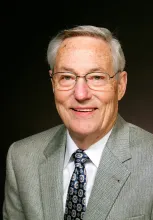
At the time of his retirement in 2016, Roy Holladay was serving the Operation Manager for Ministerial and Member Services of the United Church of God. Mr. and Mrs. Holladay have served in Pittsburgh, Akron, Toledo, Wheeling, Charleston, Uniontown, San Antonio, Austin, Corpus Christi, Uvalde, the Rio Grand Valley, Richmond, Norfolk, Arlington, Hinsdale, Chicago North, St. Petersburg, New Port Richey, Fort Myers, Miami, West Palm Beach, Big Sandy, Texarkana, Chattanooga and Rome congregations.
Roy Holladay was instrumental in the founding of the United Church of God, serving on the transitional board and later on the Council of Elders for nine years (acting as chairman for four-plus years). Mr. Holladay was the United Church of God president for three years (May 2002-July 2005). Over the years he was an instructor at Ambassador Bible College and was a festival coordinator for nine years.
