

Robin S Webber
This transcript was generated by AI and may contain errors. It is provided to assist those who may not be able to listen to the message.
Thank you very much, Sylvia. Seeing you and Steve here today certainly, while he's watching up here, could not help but think of our many happy years in Garden Grove, all the years that we had down there with all of you. Certainly appreciate your lovely hymn to God and encouragement to all of us to bow the knee. So thank you very much. While I mention Garden Grove, it's not where we've been, it's where we're headed. That's where a Christian looks. That's where a Christian directs their attention. We leave our tomorrows behind, and we hopefully have a better day tomorrow with Jesus Christ as the Lord of our life. So that's why I want to bring this message to you today. It's often said that we are to bring meat in due season, and we certainly want to do that when it comes to God's festivals and holy days. But I'm not going to be speaking about that in particular right now, God's holy days. But I also like to apply that principle when it comes to the holidays that we come up to and pass through, lest we take these three-day weekends and come and go and only take time off, rather than to think of their meaning in our national consciousness as well as our spiritual well-being. And thus, I'd like to bring this message to you today. I'd like to share the title right up front so you know where I am going. It is simply this, The Dream Come True in You.
The dream come true in you. Incredible that 50 years ago, there was a man who stood before a massive audience on the National Mall in Washington, D.C. He stood before one of the revered sites, at least in the National Psyche, which is the Lincoln Memorial. And he shared the now famous words, I have a dream. Susan and I had the opportunity last night, amazing what you can do with computers these days, and simply type in YouTube. And it was like we were transported back to those early years in our living memory. For when that occurred, I was a young teenager, and it brought me right back into the 60s, which was a time trip, as it were. But it was meaningful, and we had an opportunity to hear the words of Dr. Martin Luther King and understand the times that we were in then, and to be able to move that forward to the times that we are in now. And do I dare say even more challenging times in the future when we understand biblical prophecy? But I'd like to just share a couple of excerpts to bring you into what the dream was about. And you know, so often, if I can mention this to the young people here that have perhaps studied the famous speech of I Have a Dream, or any of us that are acquainted with it, unfortunately, most people just read the last five or six paragraphs, and they don't really read the full speech, which is an incredible compilation of everything from Isaiah to Shakespeare. And then to come forward to that famous line at the end, free at last, free at last, thank God we are free at last. I would really challenge you, those that enjoy literature or want to know a little bit more about how to bring forth the speech. It is a masterful speech, much along the lines of the Gettysburg Address and the format, the rhythm, and the style of the speech. But allow me to just share a few excerpts. I say to you today, my friends, that in spite of the difficulties and frustrations of the moment, I still have a dream. Further on down the speech, it says, it is a dream deeply rooted in the American dream. I have a dream that one day this nation will rise up and live out the true meaning of its creed. We hold these truths to be self-evident, that all men are created equal. Later on down the speech, he says, I have a dream that my four little children one day will live in a nation where they will not be judged by the color of their skin, but by the content of their character. I have a dream today. As Christians, I believe it's more than a dream. I believe it's more than just something that we read in history books or listen to on YouTube. I believe it's God's desire and should be our personal reality every day to what might come our way in regards to all people that enter our lives, that we judge them not based on the color of their skin or their last name or what it sounds like or what they look like. But let's jot this down if you want to in your notes. But by the content of their character. You know that. I know that. We know that in a sense America has grown over the years, and yet I do at the same time say that we face perhaps the greatest challenge yet ahead. The greatest challenge yet ahead. Race and ethnicity has always been a part of the American experience for good or for ill, how we challenge it, how we deal with it.
In 2013, it has not evaporated. It has become different. It has become challenged.
And that's why I said that in the future, because at a time when I was growing up, we often talked about America being a melting pot. E. Puri plus Unum from many, one. But now we have a Balkanization in America. Even as there is in sense advancement, there is also separation. There is the hyphenated American. There is the aspect of this part of the population, this part of the population, this part of the population. And I recognize that there is what we call historically a Balkanization that is occurring in America. Rather than what I grew up with and what I came to understand being a melting pot, America now is more described as a salad bowl, a mixture of putting all the components together. But they remain the same.
Thus, we have a challenge. Thus, we come to understand as there has been progress in relationships in America, there remain great gulfs and probably increasingly deeper gulfs as individuals begin to put a hyphen in their name and or begin to think of themselves separate rather than what our national motto is from many, one. You know that. I know that. We know as Christians that we are not to look at the outside or the cover of a book, but we are to look at that content of character inside. But let's be blunt. May I? Let's be blunt. We often play old tapes, and we can lower ourselves. We can hold back. And even Christians do this. They go back to playing old tapes that they're used to or what they came out of. If you don't believe me, let's go to Galatians 2 for a second. And this is the story of Jewish Christians and their conduct with Gentiles of that time in the first century AD.
Galatians 2. Let's pick up the thought in verse 9.
And it says here, And when James and Cephas and John, who seemed to be pillars, perceived the grace that had been given to me, Paul speaking, they gave me and Barnabas, the right hand of fellowship, that we should go to the Gentiles, and they go to the circumcised, and they desired only that we should remember the poor, the very thing which I also was eager to do. Now when Peter had come to Antioch, I withstood him to his face, because he was to be blamed. For before certain men came from James, he would eat with the Gentiles, those that were different, those that were, do I dare say, others. But when they came, he withdrew, and he separated himself, we might say segregated himself, fearing those who were of the circumcision, and the rest of the Jews also played the hypocrite with him. So that even Barnabas, and when you say even Barnabas, knowing that Barnabas loved everybody, and never met a stranger, and wanted the best for everybody, it says even Barnabas was carried away with their hypocrisy. You might say they're sham, but when I saw that they were not straightforward about the truth of the Gospel, I said to Peter before them all, if you being a Jew live in the manner of Gentiles and not as Jews, why do you compel Gentiles to live as Jews? Paul confronted him. Here was Peter, the man that the revelation had come to, that God was working outside of the box. He was working outside of the limitations that sincere believing people thought that God was working in, that when that vision came to Peter and Jaffa, he came to recognize that there was no man to be called unclean. But here he is going back and playing the old tapes. He's going back and under the peer pressure of worrying about what other people are thinking, he separates himself from that which he knows is actually better. That challenge remains with you and me today as Christians, especially when the squeeze plays of life come upon us, whether at the office, for you young people at school, or for we and our neighborhoods that we can draw back. We cannot practice what we preach. We cannot practice or give out that which we know better. So today, let's talk about this subject. The question that I want to bring to you today is the big question is, how did Christ deal with other people not like him? How did Jesus Christ deal with other people not like him? That's going to be my goal this afternoon. And why is that?
Because we're not just talking about social correctness. What we're talking about is, how do we internalize the love of God for others that we do not think are like us? And we're going to do this through three different phases. Number one, we're going to look at the prophecies foretelling of Christ. Number two, we're going to look at some of the actual preaching of Jesus Christ. And number three, then, the day-to-day practice of Jesus Christ. Because the one thing about Jesus Christ is, more than anybody else, he practiced what he preached. Now, why are we going through this subject again today? My goal is to strengthen your resolve as a Christian and as a witness to the values of the kingdom of God, to treat all people with dignity that is, do them, and why. Let's just deal with a very fundamental value and a very basic principle. Let's get it right from the beginning and then build. Are you ready? That is simply this. All people, and we are a composite of all people in this congregation, race, ethnic group, etc., etc. Let's understand this. Number one, we are all made in God's image. We are all made in God's image. If I said nothing else, I could sit down and somebody would probably want me to right now. Be the best sermon ever. Short. We are all made in God's image. It should just be left there, but I do have a few more notes to be able to share with you today. Thus, the title of this message is, The Dream to Come True in You. Number one, let's talk about prophecies depicting what Christ would bring. Now, before we go to prophecies, we're going to go to the New Testament and work our way back. Join me if you would in Luke 3. Come with me if you would. Let's open up our Bibles here on the Sabbath day. Join me if you would. And let's go to the Gospel of Luke in Luke 3. Let's pick up the thought if we could in verse 4. And of course, this is centering on the ministry of the cousin of Jesus, John the Baptist. Luke 3 and verse 4. Well, let's pick up the verse in verse 3. And they went out into the region around Jordan preaching a baptism of repentance for the remission of sin, speaking of John the Baptist, as it is written in the book of the words of Isaiah the prophet. So here's a quotation about prophecies that would relate to John the Baptist and to Jesus Christ. The voice of one crying in the wilderness, prepare the way of the Lord and make straight his paths.
Every valley shall be filled and every mountain and hill brought low. The crooked places shall be made straight, the rough way smooth, and all of flesh shall see the salvation of God. And this was the message that John the Baptist brought, echoing the words of Isaiah. It's interesting when you go back and you explore Isaiah and look at all of his writings. It's been often said that Isaiah was the prophet with the new mind. That's one way you might label him. I'm sure he had other labels. We talked in the Bible study about not just pigeonholing one item or one person, but we could say Isaiah so often in his writings talked about the world of new.
A new name, a new song, new people, new and new. God is interested in new, not same old stuff. And so here's Isaiah, this prophet with a new mind. And here we have in verse 4 notice it says this, preparing the way. It's as if it's a heraldry. As a herald goes out with a trumpet to announce that a king is coming and that couriers would go before the king to clear the road. But what John was doing was not, he was not a road surveyor. He was sent before Christ to help to prepare hearts, to prepare hearts to receive what God had in store for humanity.
Now, when you see this language that is used here, it says, every valley shall be filled and every mountain and hill brought low, and the crooked places shall be made straight in the rough ways, made smooth. This is not, in that sense, just speaking of geography or topography, it's not talking about the leveling of the earth's system. This is speaking of a matter of jubilee, a matter of release, a matter of a new start, a new way of looking at things.
Humanity, of and by itself, gets into debt when you understand the concept of jubilee. God has to come and release us from it. This is talking about a leveling of society to where there is a leveling, to where all of humanity is going to be able to understand or have access to the ways of God. So we need to understand that. It's very interesting if you look at verse 6. There are other accounts of John the Baptist and the Gospels, but here it is of note in verse 6 that something appears that does not appear in the other renditions. Notice if you would, and all flesh shall see the salvation of God. If you're daring enough, if you want to do this and use your Bible as a workbook, circle the word all. All. And then join me after you do that. One more instruction. Join me if you would in Isaiah 52. Let's pick up the thought if we could in verse 10 because this is a messianic prophecy of the kingdom and the inhabitants thereof that God was preparing. In Isaiah 52 in verse 10, notice what it says, The Lord has made bare his holy arm, and in the eyes of all the nations, and all the ends of the earth shall see the salvation of our God.
Now, what had happened at this point in the first century world, the Jews could have looked at this as far as all nations and might have thought of it as being the diaspora or the dispersed ones, the Jewish community spread out throughout the Mediterranean Basin. Well, they're in all those nations. They're in Egypt and they're over in Atalia and they're in Greece and they're over in Asia. But God was speaking about... I don't even like to use this phrase...
not a bigger box, but a wider realm of us thinking. A world without boxes, a world without limitations, a world that looks at the content of a person's character rather than what they are wrapped up in on the outside of their persons. Now, why did Luke do this and others did not? Because Luke was a Gentile. I think that was mentioned earlier in the Bible study. Luke as a Gentile, one who was invited in that sense by God into a church. Back then, perchance, Luke may have been a... what we call a proselyte. It might have been before Christ came. It might have been one that was looking from the outside in at the window, looking into the synagogue, but not able to go into the synagogue. Not able to go into the synagogue, perhaps, because of being a circumcised man. And so, it was like he was always near, but perhaps could not get all of the way in. We might use this phrase, which you and I would understand in America, that perhaps Luke as a Gentile had been used to riding in the back of the bus. He was thrilled at this social order that is now being manifest in the family of God, brought clear by the prophecies of Isaiah, by the words of John the Baptist, and to understand what was going on. But it's very interesting. Then, when you come back to Luke 3 and verse 7, notice what further transpires. Then he said to the multitudes that came out to him, he said to the multitudes that came out to be baptized by him, brood of vipers, who warned you to flee from the wrath to come. They're worthy of repentance. And don't begin to say to yourselves, we have Abraham as our father, for I say to you that God is able to raise up children to Abraham from these stones. And even now the axe is laid to the root of the trees. Therefore, every tree which does not bear good fruit is cut down and thrown into the fire. So then the people ask him, saying, what shall we do then?
And it continues. He's basically saying here, through this message, it's not who your daddy is, it's not the outside of your wrapping, it's not the cover that you are bound in, but it's the content. It's the content. God is no longer interested in washing the outside of the dish. He wants to have individuals that worship him, bend their knee to him, not just simply on the outside, but from the inside out. And it's not who your daddy is. It's not going to be about your racial stock. It's not going to be about your ethnicity. It's going to be about the content of your character. It's going to be about what you're doing and your relationship with God. What's amazing too is that all Jerusalem came out to see John, and what's interesting is that they came out and John was baptizing Jews. He was baptizing people that were covenant people. Things were happening here. We need to understand that. And to that audience in that day and age, it had to be like an earthquake in itself. What I'd like to do now is turn to Luke 4. Join me if you wouldn't. I look for, pardon me, let me get my notes here a second. Skip to page. There we go.
Let's go to another aspect here. Let's go to point number two. Preaching that depicted what Christ considered essential. We're going to look at Christ preaching.
Prophecies we've seen of Isaiah. Now we're going to talk about Jesus. Join me if you wouldn't look for 16. Luke 4.16 is his first recorded sermon and it's before the hometown crowd to the people of Nazareth. Let's read this. So he came to Nazareth where he had been brought up. And as his custom was, he went into the synagogue on the Sabbath day and stood up to read. And he was handed the book of the prophet Isaiah. And when he had opened the book, he found the place where it was written. The Spirit of the Lord is upon me because he has anointed me to preach the gospel to the poor. He has sent me to heal the brokenhearted. Notice, to proclaim liberty to the captives and recovery of sight to the blind, to set at liberty to those who are oppressed, to proclaim the acceptable year of the Lord. He was, again, speaking in the realm and in the spirit of Jubilee, of release. Not simply same old stuff, but in ancient Israel every 50 years there was a Jubilee to be... boy, could we use that now in our country? A Jubilee, a starting over. So he's proclaiming this. Then he closed the book, gave it back to the attendant, sat down, and the eyes of all those who were in the synagogue were fixed on him. Jesus must have been a magnetic personality. They were fixed on him. And he began to say to them today, this scripture is fulfilled in your hearing. So all bore witness and marveled at the gracious words which proceeded out of his mouth. And they said, is this not Joseph's son?
Don't we know him? Hometown boy? And he said to them, you will surely say, this proverb to me, physician, heal yourself. Whatever we have heard done in Capernaum, do also here in your country. And then he said, as surely I say to you, no prophet is accepted in your own country.
They're saying, well, you know, this is this is Yeshua. This is Joe's boy. We knew Joe. We remember when this guy was a carpenter and the boy would come along with him and help build houses.
But they were still marveling. They thought, you know, this is okay. But now let's notice, as Paul Harvey would say, the rest of the story. But I tell you, many widows were in Israel in the days of Elijah. And when the heaven was shut up three years and six months, and there was a great famine throughout all the land, but to none of them was Elijah's sin except to Zarephath in the region of Sidon, to a woman who was a widow. The first example he's speaking of people, remember what we're talking about, the invitation in the Bible study. The first individual that he's using that God is working with is, number one, a woman understanding the culture of that day. Number two, she is a, are you ready? A widow, which was at the lowest standard of society. And number three, from Sidon, she was most likely a Phoenician outside the covenant people. You ever heard of baseball? Three strikes. This is the example that Jesus, he's preaching about the others. Now, notice, let's go a step further. Notice, and let me draw you down. And many lepers were in Israel in the time of Elisha the prophet, and none of them was cleansed. Except, notice, Naaman the Syrian.
Now, how were those words? And how were they received? So all of those in the synagogue, when they heard these things, were filled with wrath, rose up, thrust them out of the city, led them to the brow of the hill on which their city was built, and that they might throw them down over the cliff. Then passing through the midst of them, he went their way.
What got to that audience that was looking from how they were wrapped on the outside, rather than the content of their character, was Jesus' affiliation and representation of the others. People not like them. People that they had not included in their box. See, even sincere, religious people like you, like me, can have issues if we're not careful to allow God's Spirit to expand and take away the boxes that man has devised, or you or I have devised, or culture has devised, and to recognize what God is doing. Interesting.
And here, Christ was in the middle of all that. It almost cost him his life, standing up, saying it like it is for people that need to be talked about. Number three, Christ practiced what he preached in his approach to all. Christ practiced what he preached in his approach to all.
Let's come to understand and appreciate that the book of Luke's construction is under the guidance and the direction of the Holy Spirit. We that are in the Church of God community believe that all of Scripture is by inspiration of God. All Scripture is, as it were in the Greek, God breathed. What we notice, there's a building to a point of how Christ brought salvation to humanity. From the River Jordan, in speaking of the baptism of repentance, to Nazareth, where he introduces the Jubilee, and now to the city streets. You will find there is a consistency in the Bible. You know, today it's interesting that Christians, can we talk, Christians are lampooned. Christians are spoken of as being archaic. Christians are spoken of being, well, in the Middle Ages. Christianity, when understood, as God wants us to understand it, is radical.
It's revolutionary. It's appealing. It's all for all humanity. Oh yes, there are times when people that say they practice the way, do not know what they're practicing. Or, in their stumbles, create a bad reputation for that which you and I believe in. But, you see, we are not only to have a dream, we are to experience that dream today by the way that we treat every, every, not every other, not like the old soup plantation where you pick from every other item to put on your tray, but every individual that comes into our life that we treat them with dignity. Why? Why? Start it out with that, because they are made in the image of God. Let's take this a little bit further down the line. Join me if you would in Luke 7. Luke 7.
In Luke 7, let's pick up the thought here. Remember how Jesus, the construction of Luke, remember how Jesus in the very beginning in his sermon in Azareth related to Naaman, the Syrian general, and the one that was healed? Well, here we have that representation in the New Testament mode in Luke 7. It's not a Syrian general, but there is a relationship developed with the what is the centurion who has a servant. Now, when he concluded all his sayings in the hearing of the people, he entered Capernaum, verse 1, chapter 7, and a certain centurion's servant who was dear to him was sick and ready to die, which is of note itself because in the Roman society, slaves, doulos, pawn servants, were not looked upon as people.
But this is already saying something about this centurion, about the content of his character.
Not his last name, most likely a gentleman from Rome. So when he heard about Jesus, he sent elders of the Jews to him pleading with him to come and heal his servant. And when they came to Jesus, they begged him earnestly, saying that the one for whom he should do this was deserving. For he loves our nation. He's even built a synagogue for us. Then Jesus went with them. And when he was already not far from the house, the centurion sent friends to him, saying to him, Lord, do not trouble yourself, for I am not worthy that you should enter my roof. Therefore, I do not even think myself worthy to come to you. But say the word, and my servant will be healed. For I am also a man placed under authority and having soldiers under me. And I say to one, and he goes, and to one another come. And he comes, and to my servant do this. And he does it. When Jesus heard these things, he looked at the outside of the man to see what his color was. No, it says, he marveled at him and turned around and said to the crowd that followed him, I say to you, I have not found such great faith not even in Israel. And those who were sent returning the house found the servant. Wow! What we do is we have an expansion of the thought over Naaman the Syrian, because remember Naaman kind of had an attitude issue. Remember he didn't want to bathe in the Jordan. He says, are there not great rivers that rush out of the mountains of Syria? I've got to go into that pig hole. Yes! But here there's no coercion. Here's the content of the character. Jesus is now just not talking about what happened 700 years before, but he is, do I dare say, daring. It is his expression. It is the way that he is. He's colorblind.
He loves people. He's looking at the content of their character and thus rewards accordingly.
Jeremy Wood in Luke 10 verse 28. Luke 10 verse 28. Interesting story here about the man, the lawyer. Verse 25 stood up and tested him, saying, teacher, what shall I do to inherit eternal life? And he said, well, what is written in the law? What is your reading of it? And so he answered and said, you shall love the Lord your God with all your heart, with all your soul, with all your strength, and with all your mind, and your, notice, your neighbor as yourself. And he said to him, you have answered rightfully, do this and you will live. But he, the lawyer, wanting to justify himself, said to Jesus, one of the great, great questions out of the Bible, who then is neighbor?
I don't really have time to go through the whole story. I ask that you do.
But again, Jesus daringly, notice please, he steps out. He does not step back. He is not quiet. He immediately goes into expression of something that would have been anathema, speaking to the religious audience of his day, speaking about one who was the Samaritan. Remember the story? The man that's going down to Jericho and he's taken by robbers, he's left for dead, he's on the path, there's nobody around. Remember how the priest person comes by and goes, oh excuse me, dodges. The other person comes by and dodges. And then he says, but then there's one who's a Samaritan. There's one of the others, and he's the one that stops and goes above and beyond. And then Jesus asks one question at the end. Good Jewish rabbi, because the answer is always in the question when you understand how Jews teach. Who then is neighbor? You and I forever have called this story, what? The good Samaritan. The entire world has labeled something that's not even mentioned in Scripture. It is so obvious the content of the character of the individual that Jesus uses. Why is it important for you and I to understand? Let's understand that as Christianity spread, it went from being simply Jewish Christians to Greeks to Latins. We know that these pages in the Bible would be written in Greek. I want to share something with you.
Looking at others' cross-side is not just a Jewish problem. It's not just a Christian problem. It's a human nature problem. It's a worldwide problem. The Greeks had it just as bad as the Jews. And those are two people. They were always bucking up against one another. The Greeks had a superiority complex as well. The Greeks thought of anything other than those that spoke the Greek language to be, are you ready for this? Bar-bar. Bar-bar. And that's where we get the word barbarian. Those that were not in the Hellenistic realm were known to be barbarians. The word bar literally means those that have beards. Thus, the Greeks would look at all the other, especially the Semitic people and the Arian people of Persia as being barbarians, those that wore beards.
It was not said endearingly. It was used as a schler. Thus, all of humanity has to come to a grip, as were the words that were spoken 50 years ago, that we are not to judge people by the color of their skin, but by the content of the character. You can, in one sense, have biblical truth as the Jews did. You can have intellectual truth, as did the Academy at Athens, as did a Plato, as did an Aristotle, as did a Socrates, and yet be remiss and adrift from the very basic principles that God wants us to uphold. I want to share a thought with you as we begin to conclude. Join me, if you would, in Leviticus 19. In Leviticus 19, that's why it's so fundamental to look at these basic stories of the Bible. To be spiritual, you have to read spiritual stories like the Good Samaritan, like the example of the Centurion. We need to read these stories, but there are also very basic principles, even back in the New Testament. I want to share a new Old Testament. Pardon me, Leviticus 19.
Because, again, let's understand something for those of you that are new coming to the Church of God community. We look at the Bible as one book. It's the only man that's divided it.
There's an Old Testament and a New Testament. God didn't tell them to do that.
That's it. The Old Testament is the gospel in bud. The New Testament is the gospel in full bloom, but it derives from the same stem from the same God. That's why it's important to understand the instruction in Leviticus. Join me, if you would, there, please. In Leviticus. We're going to take an Old Testament principle and we're going to apply it in our communities here in San Diego and Riverside County. In Leviticus 19, you're probably already there, and join me, if you would, in verse 33. Did I say... Oh, I mean, Exodus. One second, please.
Let's read it slowly. And if a stranger, somebody not like you, someone that we might call an other, dwells among you. In verse 33, it says, if a stranger dwells with you in your land, you shall not mistreat him. Verse 34, the stranger who dwells among you shall be to you as one born among you. In other words, no barrier. And you shall love him as yourself. Now, why is that? For you were strangers in the land of Egypt. I am the Lord your God. He always reminds us that all of us in that sense are apart from God, have been others to other people.
We are all part of this quilt. You shall do no... Notice verse 35 now. You shall do no injustice in judgment, in measurement of length, of weight, or volume. You shall have honest scales, honest weights, and an honest ephah, and an honest hen. I am the Lord your God who brought you out of the land of Egypt. Therefore you shall observe all my statutes and all my judgments and before them I am the Lord.
What is being spoken about here? God is taking them back to the Nile River and the merchants and the traders that were on the Nile. And those old Egyptians could see one of the others coming, one of the Semitic people, one of the Hebrew, one of the wanderers.
That's what Hebrew means. It means wanderer. One of those people, because you could tell the way they walked, the way they dressed, perhaps uncouth compared to Egyptians. In other words, they saw them coming. And so they would change the weights. They would change the scales for advantage. For advantage. And God says, you remember you were in Egypt. You remember I delivered you from that society. You are not to be like them. Now, what does this mean to you?
Thus, let's lift this up to a new covenant reality that you and I as Christians who all stand before that common cross of Jesus Christ and His sacrifice and that pool of blood. We do not come with our superiority. We do not say, well, look at me on the outside.
Look at my birthday package. Look how I was born. Look who I am. We all stand in that pool of blood. We all stand in that pool of humility. And we all recognize that that one man, as is translated sometimes, one blood or one man, died for each and every one of us.
He died for us because God had a purpose from the very beginning. He made man in His image and after His likeness. And there's nothing else that is mentioned in the Bible that is enough to respect every individual, whether they are black, yellow, brown, fill in the rainbow. That is our responsibility as Christians. Now, as we've seen in America, as we've seen progress, I dare say, especially with the economy the way it is, with society the way it is, these issues are not going to go away.
You and I, as we go out these doors today, we are going to be in a target, rich environment of wanting to be in our part of the rainbow, of not showing the due respect that God has given every human being. Whether they have accepted that call, know that call at this point, you and I, as members of the church, understand that God has a purpose for every human being in His time and in His way. And thus, we respect that individual, whoever they look like, wherever they're from, whatever their last name is, because God gave His Son for them.
In the course of His famous speech, Martin Luther King spoke in a biblical narrative of never being satisfied with the norm of human nature. Part of his address is spoken in a tone and with an accent of the prophet Isaiah, in which he longs for a better tomorrow and says this, No, no, we can never be satisfied until justice rolls down like water and righteousness like a mighty stream. Was Martin Luther King a perfect man? Absolutely not. Most great men have great vices. All human beings have vices. But for a moment in time, which was probably the apex of his life for a brief moment before a quarter of a million people on that national wall on that day in Washington, he spoke truth. He spoke from his experience, a unique experience that his people have experienced in America that from whence I come from have not. And as he said that he longed for a day when the little black child and the little white child might hold hands together and be brothers and be one and to develop a nation better than that which we came into. I hope and pray that each of us, as we walk out this door today, consider ourselves as to how we pray for people, how we refer, how we speak of, how we talk about other people, how we remain open for all people, whether it's a church, whether it's at work, school, you that are young, at play, and in our homes. My recommendation to all of us as we now begin to dismiss simply this, let's allow the dream to become true in us starting today. Because remember, as Christians, we look forward to the world tomorrow, but we begin living it today.
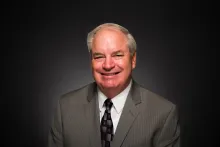
Robin Webber was born in Chicago, Illinois, in 1951, but has lived most of his life in California. He has been a part of the Church of God community since 1963. He attended Ambassador College in Pasadena from 1969-1973. He majored in theology and history.
Mr. Webber's interest remains in the study of history, socio-economics and literature. Over the years, he has offered his services to museums as a docent to share his enthusiasm and passions regarding these areas of expertise.
When time permits, he loves to go mountain biking on nearby ranch land and meet his wife as she hikes toward him.
