
Robin S Webber
This transcript was generated by AI and may contain errors. It is provided to assist those who may not be able to listen to the message.
Well, as we begin this message, I would like to ask the congregation to please join me in 2 Peter 3. I'd like to focus our attention on verse 18. As you're turning there, I'd like to develop a framework and discuss what 2 Peter 3.18 is all about.
A simple part about this is that this is simply, or are simply the last words of Peter that are recorded and are given to us by God. There is 1 Peter and there is 2 Peter. And this is most likely written towards the very end of Peter's life. And it's a lesson, and it's an encouragement, and it's an admonishment that this man that had lived this way of life for so many years wanted to leave for the people that would be behind. He says, But grow in the grace and the knowledge of our Lord and Savior, Jesus Christ, and to him be the glory, both now and forever. Amen. Or so be it.
It's very interesting that when it was all said and done, he encouraged the members of the body of Christ to grow, to develop, to stretch, to be more than they were when God's message had first come to them.
He said, To grow in the grace and the knowledge of our Lord and Savior, Jesus Christ. Not in what we're about, not in the life that necessarily we would frame for ourselves, but where the Lord Jesus Christ would lead and would guide us. And not only in knowledge. God has not called us simply to read a spiritual almanac. But notice what he said, but to grow in the grace and knowledge. To grow in grace means that we grow in relationships. It means that we grow in relationships with not only God, but with our fellow man.
Now, when we state that, we recognize something because whenever we grow and whenever we take that leap of faith, we recognize two things happen. Two things. I'm glad it's not three or four because two is enough. And that is simply that when we grow in the grace and knowledge of our Lord and Savior Jesus Christ, there is always going to be, number one, a human risk. It's hard to stretch. It's hard to go into new frontiers. It's hard to move beyond our own personal comfort zone. And then, number two, there is always going to be a spiritual challenge, a human risk, and there's going to be a spiritual challenge because God, first and foremost, is about the Spirit.
It's about the real world that He's drawing us to, moving us towards, wants us to become a part of. Now, as I mentioned then that 2 Peter 3.18 are the last recorded words that are left for us of Peter, let's understand something. This is not just metaphysical. This is not just spiritual theory. These are not just nice words to come at the end of a chapter for what else might you say if you're concluding with a conclusion, row in the grace, knowledge, da-da-da-da-da. Is that no? This was his life's experience, and it's something that Peter himself had had to go through. This message in this verse is for real people in real time that are needing to take human risk and spiritual challenges to become more like Jesus Christ.
What I'd like to do this afternoon, then, is to take this verse and to couple a story with it. Otherwise, it just remains a verse. It just remains a thing, and that's why the great stories of the Bible are left for us. Let's look at real people in real time, desiring to follow a real God. If you'll join me over in Acts 10.
We're going to pick up a story here of Peter and how he had to grow in grace and in knowledge. For those of you that are either here or at home or are going to be hearing this message in the days, the weeks, and maybe even the years to come, I'd like to give you a title for this message. The title is simply this, The Jew, The Gentile, and You. Allow me to repeat it. The Jew, The Gentile, and You.
Because as we move into the message, because it's more than a story, there's a message in it. As we move into the message of Acts 10, I want you to see yourself in this. So that then, beyond this story, we can go back and couple ourselves with the admonition of God through Peter to grow in grace and knowledge and to move beyond that, which is simply natural. To move beyond that, which we have always thought, well, will always be. And to recognize that whenever we follow God the Father and Jesus Christ, He will take us into new territories and new ways that are best for us.
In Acts 10, in verse 1, we begin the story. And allow me to develop a little framework, allow me to go back for a moment. This is probably about 10 years after the founding of the church at Pentecost. So we're probably about a decade into the mission of the church. And there was a certain man in Thezerea called Cornelius, and he was a centurion of what was called the Italian regiment. And he was a devout man and one who feared God with all of his household.
And he gave alms generously to the people and prayed to God always. There is already so much in those verses that I'd like to share a little bit with you. We find that there was a certain man. And there comes a time in the different books of the Bible when all of a sudden God's visitation comes upon an individual. And there is that certain moment, there is that certain time, and there is that certain man and or woman that is going to be visited by God.
And they're going to be given something to do. And this man was a certain man in Thezerea. Thezerea was the local capital of that area. That is where the seat of the Roman government was, about 35 to 50 miles northwest of Jerusalem. And this man's name was Cornelius, a centurion, which was a man that was over 100 Roman soldiers. Centurion and or centurion, meaning 100, of what was called the Italian regiment. So this was not a native regiment. These were not temple guards or mercenaries. This was a regiment of Italians. In fact, it's very interesting when you look at the name Cornelius. That comes from a very famous Roman family line out of Italy called Cornelii.
So most likely, what I'd like to share with you as we're developing the story, is that this individual was a prominent man. He was a prominent individual. Most likely, he was a part of the bodyguard that was looking after the local Roman governor. But that was his, shall we say, Italian side of the story. Because we also recognize it says that he was a devout man.
Now, devout is a term that is used in the Bible with other terms that are synonymous with being a postulite and or a God-fearr. This was a man that was attuned to the ways of God to the Jewish community. He was a Gentile, but he believed in the one God.
And he was a follower of Judaism as much as he could be. Not only that, but all of his household. And notice what it mentions. It says that he gave alms generously to the people. Here was a man of the conquering race who gave alms to those that had been conquered. Now, this is very important because as Luke is writing this story under the auspice of the Holy Spirit, we recognize two things already here, and that is he is a man that gives alms and he is a man that is praying.
Three of the great tenants of Judaism are simply this. Prayer, fasting, and the giving of alms. And here already incorporated in the story, we find quite a fellow. Now, it's interesting when you think about it, and I would make this suggestion in looking at this story, speaking of the Gentile, that it is plausible, even though we cannot prove it, but it's plausible that this could even be the gentleman that is mentioned in Luke 7.
Remember the centurion who had the servant who was ill and came to Christ, and ultimately that servant was healed. Now, there's no technical connection with that, but sometimes God plants something back here to later on develop over here. And sometimes in the life of a story or in our own life, sometimes something will happen to us and we kind of move out of the mainstream, and then all of a sudden God brings us back into the picture.
It doesn't mean that that man was not being a righteous individual. Most likely he was doing just exactly what he was doing. He was praying and he was giving alms, and we'll find out later on he was also doing something else. And about the ninth hour of the day, that's three o'clock in the afternoon, he saw clearly in a vision an angel of God coming in and saying to him, Cornelius.
And when he observed him, he was afraid and said, What is it, Lord? And so he said to him, Your prayers and your alms have come up for a memorial before God. Now, it's very interesting and it's very important to understand something.
We must recognize when the book of Acts is being written, that it is written by the Holy Spirit through the man Luke. But what Luke is doing, especially with the professional background that he came out of as a doctor, he is writing everything succinctly and for proof's sake.
Not only to how salvation came as he shows in the book of Luke, but how salvation was spread as he will show in the book of Acts. And you notice that he saw clearly. It wasn't like, I don't know if I saw it. It was kind of foggy. Maybe I'd just eaten too much or this or that. And it was kind of like this. Whenever God's Spirit and or God's servant give a message, it is clear. It is loud. It is succinct. It is something that you can put your hands on.
And so we find what is being mentioned here is a very tight case of what is happening. God is revealing something to the centurion, saying to him, Cornelius. And when he observed him, he was afraid as you and I would be. Let's put ourselves in this man's shoes, or should I say, in his sandals. And he said, What is it, Lord? And so he said, Your prayers and your alms have come up for memorial before God. Now, that's very interesting. Just that very thought that sometimes we pray and we say, Well, did it go anywhere? Did anything happen with that?
And to recognize that here, Cornelius is encouraged that his prayers have gone somewhere.
And that something has been built up in heaven. Now, praying is not only an activity. It's not only an event. It's a process. It's like building something because prayer is about building a relationship with God. And here was a devout Gentile who was praying to God, and it was coming up before God. And now there's going to be an answer. And it says, Now, send to Joppa and or Joppa, and send for Simon, whose surname is Peter. And he's lodging with Simon a tanner, whose house is by the sea. And he will tell you what you must do.
Now, it's very interesting when you look at this, the Simon that's being talked about here is Simon Peter. And we're beginning to get a few hints. Now, you're going to have to stay with me because we're going to build towards something. And when it's all done, you'll see the picture clearly. There's a hint here that the angel is giving Cornelius. Go to the man. His name is Simon. I've shared with you, you know him as Peter. And it says that he is by the sea at Joppa, which is going to be very interesting. And it says that this, this man that we're going to find as Simon Peter, the Jewish Christian who is a Jew, is with a tanner. Now, what does a tanner do?
A tanner is an individual that takes animals that are dead, that at times are ritually unclean.
And here is Peter, a good Jewish Christian, who is staying with Simon, the tanner, who deals with things that are dead. But I'll just wet your curiosity with that. But we might call this as that God is pre-positioning Peter for his activity. Just as much as sometimes the things that we're going through in our life, the individuals that we come into contact with, the places that we are, we say, oh, we chose that, we did this. We came to that conclusion, not realizing that times that God is prompting our thoughts or guiding our steps towards the next step of how he's going to use us.
And when the angel who spoke to him had departed, Cornelius called two of his household servants and a devout soldier. This was probably another individual that was in the way, that was an advocate of Judaism up to that point when you see the term devout. This was a devout soldier from among those who waited on him continually. And so when he explained all of these things to them, he sent them to Joppa. Now, one thing that's very interesting as we roll back for just a moment, showing Cornelius' attitude, one thing that I'd like to share with you on this is simply this.
At face value, what tremendous spiritual reflexes this man had.
And I remind you a little bit of the other centurion in the book of Luke, Luke 7, who when asked that, okay, fine, oh, that's it, that's what I'll do. And to recognize that here was a Gentile Roman centurion who that when the angel came down, he basically just said, yes, sir, and went into action. Have you ever noticed how most good attitudes in the Bible are usually within one or two verses? And there's whole chapters and books that are in the Bible of people that don't want to do what God asked them to do. And not only that, but think of this for a moment, here's a Roman centurion. He's talking to the angel. The angel's talking to him, but that's not going to be enough, because now the angel points him with God's message to a man. And that's going to take faith. It's one thing to hear from an angel and say, yes, sir. It's another thing, then, to go to one of God's servants and to learn at their feet. And so the next day, no time goes by, the next day as they went on their journey and drew near the city, Peter went up on the house top to pray about the sixth hour. And then he became very hungry and he wanted to eat, but while they made ready, he fell into a trance and saw heaven opened and an object like a sheep bound at the four corners, descending to him and let down to the earth. And in it were all kinds of four-footed animals of the earth, wild beasts, creeping things, birds of the air. Now, when I always think of this, and I've more than not gone over this verse many a time, I think of a blanket coming down from heaven in a bundle. And so I always kind of get the, and you know Peter's up here about to eat, I always think of a picnic opening up. But when I look at this, they say, what kind of a picnic would this be with wild beasts and creeping things? Whenever you notice throughout scripture about creeping things, it's not normally a positive, it's a negative. But then notice what happens.
And a voice came to him, Rise Peter, kill and eat. But Peter said, Not so, Lord, for I have never eaten anything common or unclean. What is being spoken of here is simply this. Peter says, I have never eaten anything that is not prescribed within the Bible that is considered clean for the chosen people to eat. Neither, speaking of common, have I eaten anything that has been sacrificed to an idol. Have you noticed something about Peter? Has he changed much since the Gospels? You know, in talking with God, he's always doing a bargain or he's doing a deal. He's still in this kind of framework. You know, even with God's Spirit, we're still having to work on that. I'm watching your faces because you know what I'm going to say. We're sometimes still having to work off that old man or that personality that just doesn't go away. Now, here's Peter, a good Jewish Christian, having been raised in the scriptures, saying, I'm going to be the modern-day Daniel. I remember what happened to Daniel. The king wanted him to eat, to use the old King James English, he wanted him to eat those vittles, and Daniel stood up. He was a champion of Israel. And he said, oh, not I. But the difference in this is we're not dealing with the sovereignty of Nebuchadnezzar. We're dealing with the sovereignty of God. And therein lies the difference. So Peter, who wants to be a, at that time, modern-day Daniel, is about to be moved into a lesson. And a voice spoke to him again the second time. What God has cleansed, you must not call common. And now this was done three times.
And the object was taken up into heaven again. Now it's going to be very important. I want to share a thought with you as we're studying the Scripture together today. It is going to be essential, and God knows exactly what he's doing, with whom he's doing it with and how he does it, in the vision that comes to Peter, it is going to be essential down the line that in the vision that what was within the blank that came down from heaven does come from heaven. Because God is going to ask Peter to stretch in a way that no Jew has ever had to stretch before, or a Jewish Christian up to that point. And it's very important, stay with me, the direction and the source of where this vision comes from. Now it's done for three times, which is very important because in the Bible, three equals the concept of completeness or finality. Verse 17, join me as we go forward. So we've met the Gentile, we've met the Jew. Now while Peter wondered within himself what the vision which he had seen meant, behold the men who had been sent from Cornelius had made inquiry for Simon's house and stood before the gate. And they called and asked whether Simon, whose surname was Peter, was lodging there. Now Peter's up there on the rooftop, because he'd gone to the rooftop, because that was often an eating center. It's cool up there. And so the people would go to the rooftop and eat. And you know Peter's up there and he's been given this vision and he's had this discussion with God and seems to be going nowhere and he's pondering. No, it's all right to ponder. It says that Mary pondered. It's one of the great lines out of the book of Luke. And so he's meditating on what does all of this mean? And they called and asked whether Simon, whose surname was Peter, was lodging there. And while Peter saw or was pondering about this, about the vision, the Spirit said to him, Behold, three men are seeking you. Arise therefore and go down and go with them, doubting nothing, for I have sent them. Very interesting. The vision that came down from heaven three times. Peter saying, What does this mean? Help me, Lord! What what's this all about? And then all of a sudden three men show up at the door. Then Peter went down to the men who had been sent to him from Cornelius and said, Yes, I am he who you seek, and for what reason have you come? No, God doesn't always tell us everything at once.
But you know, there's that verse that comes out of the Old Testament that says, A wise understanding have they who keep my commandments. Those that obey God are those that will learn about God. And the more that you obey, the more that you'll learn. And the first step, the best step that Peter took was to go from above and to go down below. And now you're beginning to see a spiritual reflex in Peter that is pleasing to God. It's not that bulking, bulking individual that we so often think of and perhaps even see ourselves in from time to time. And they said to Cornelius the Centurion, and he's a just man. Isn't that nice when your servants say that kind of thing about you? He's a good guy. He's a just man. And one who fears God and has a good reputation among all the nation of the Jews was divinely instructed by a holy angel to summon you to his house and to hear words from you. No, this is so different than what was normally going on back in that day. Jews had nothing to do with Romans. In fact, they were considered dogs. The Jews looked upon the Gentiles as dogs, as others, as somebody that you didn't associate with. And Romans, why would they have anything to do? They were in a sense in antiquity that master race that had conquered the entire world. And he's inviting this man from a conquered people to come to his house to hear from him. And then notice what Peter did then.
And then he invited them in and lodged them. Now, it's very interesting within the Jewish community, a Jew could take in a Gentile. Interesting how the mind works. A Jew could take in a Gentile into his house, but a Jew could not go into a Gentile's house. Are you with me? Amazing how we get these rules of comfortability, how we zone ourselves, and how we wall ourselves in and gain our safe lines. Then he invited them in and lodged them. And on the next day, Peter went away with them, and some brethren from Jaffa accompanied him. Now, what's very important in all of this that maybe you've never seen before is simply this. Where is all of this occurring? This is occurring in Jaffa. Why is this so significant to our story of the Jew, of the Gentile, and of you?
Almost 800 years before this, there had been another man of the Covenant people who was in Jaffa, who was given instruction by God to do something, to go to the Gentiles. His name is Jonah. Jonah was told, Jonah, I've got a job for you. You are to go to the Gentiles.
Young man, head east, you are going to preach a message of repentance.
Now, nearly 800 years later, here's another man of the Covenant people, and now under the new Covenant, a Jewish Christian, and he's told, you're going to go to the Gentiles. Now, this is the St. Peter that we know that had problems standing still and didn't always go in the right direction. This was the man that had deserted Christ in the one moment that he needed him the most on that last evening, along with the others. This was the man that was always in a tussle with his Lord and his Master. Christ would say one thing and he'd, you know, argue, or want to do it his way. And now we're at Jaffa. Jaffa is the crossroads of relationships.
Jonah didn't understand completely what he was doing. He was probably one of the greatest preachers of all time that he himself did not understand the message. He did a good job at it, of course, because none of us survived. But Jonah couldn't see himself.
Now, at Jaffa, God is asking Peter, the man, the follower, the Christian, not to see things as a man will, but to see things as God will see, that God is about to stretch him in a way that no Jew had ever been stretched, much less a Jewish Christian, especially after the first ten years since the day of Pentecost. Jaffa is a crossroads. May I make a comment to all of you? Each of us experience Jaffa. Each of us come to a crossroads in the decisions that come our life with the things that we know that God wants us to do and is instructing us as whether we will be a Jonah or whether we will be a Peter, whether we will do what God asked us to do, or whether we head out to the sea and try to get away, thinking that somehow God is someplace not able to see what's happening on his planet. And another thought as we look at this is to recognize we don't get the lesson right the first time. God is going to come right back and right to the spot. You think about what you're going through, because remember I said I was going to bring you into the story. The title is The Jew, The Gentile, and You. That God will continue to bring us back to that spot of challenge, of human risk, of daring that can only be bridged by his Spirit until we get it right.
We'll never outrun God. And a year might go by, two years might go by, 800 years might go by, not for you, but a nation. And God will bring us right back to the starting block until we get it right. And the following day they entered Caesarea. So they made tracks, because this is about 35 to 40 miles away. And now Cornelius was waiting for them and had called together his relatives and close friends. What an amazing attitude! You notice this responsiveness, this openness of this man named Cornelius. And as Peter was coming in, Cornelius met him and fell down at his feet and worshipped him. But Peter lifted him up, saying, Stand up, I myself am also a man.
And as he walked with him, he went in and found many who had come together. And then he said to them, you know how unlawful it is for a Jewish man to keep company with or go to one of another nation. This is the other side of what I was talking about. Others of another nation might come in, but those of that nation, the covenant people, could not go in to the Gentile community. But God has shown me that I should not call any man unclean. He was beginning to understand something incredibly powerful. Let's understand that what Peter, as a Jewish Christian, was observing was something that his people had observed for 1500 years, and understanding that they'd been a covenant people, that they had been separated, and on and on and on. As you can go back to the Old Testament and find out. You know, we've only been a nation for 200 to 230 years, and we know what we are steeped in, shall we say, culturally. So this was something that was a long time standing. But now, Peter understood that what had come to him on that patio above that building was not simply to go and preach a gospel of repentance, but a gospel of acceptance.
A gospel that God has a family so much bigger than we can ever imagine, and that Peter was learning and coming to learn a very cardinal lesson that it's not our job to choose God's family.
It's our job to accept that family. That God is the Father. He's calling the family. He knows what he's doing. And we down here below are just instruments in his hand. Verse 29, Therefore I came without objection as soon as I was sent for, and I asked him, For what reason have you sent for me? And so Cornelius said, Four days ago I was asking until this hour, and at the ninth hour I prayed in my house, and behold a man stood before me in bright clothing. Now, what's very interesting is you look at verse 30. Important. Remember what I told you the three tenants of Judaism were? Praying, giving alms, and now you notice one more thing.
Fasting. This man was fasting until this hour, and at the ninth hour I prayed in my house, and behold a man stood before me in bright clothing, and said, Cornelius, your prayer has been heard.
That should not shock us, brethren, when we have an attitude like Cornelius where prayer is not just simply an event, but an activity, and a process, prayer upon prayer, that God is the direct object of our communication. And he does hear things. He does. You know, it's interesting that the very name Cornelius means horn.
It's a sounding fourth, and God was going to sound forth something through this man, Cornelius, that the church would never forget again. An exciting message.
And that message came, send therefore to Jophan called Simon, whose surname is Peter, and he's lodging in the house of Simon, a tanner by the sea, and when he comes, he will speak to you.
So I sent to you immediately, and you have done well to come. Now therefore, we are all present before God to hear all the things that are commanded of you by God. And notice what is mentioned here.
You know, positivity reaps positivity.
This was a very great step in the church, and two men were coming together with witnesses in this room.
Cornelius needed Peter, but I submit to you that Peter also needed Cornelius. This was daring stuff, because after this, the church would never be the same. Until this point, the church had only in a sense been around Jerusalem and in Samaria, and with Jewish Christians.
And now the church under the direction of the Spirit, under God, and under Christ, was about to take an amazing step. And these men were positively encouraging one another.
The truth that Peter would give to Cornelius, and the attitude. You know, it's almost sometimes, I can tell sometimes in a sermon, where it might not only be what I'm saying to you, but as I receive from you your acceptance and your excitement and your enthusiasm of what is being said, there's a spiritual energy that begins to develop. That the two parts come together are so much greater than just the two parts alone, because there's a blessing on it. And that's what was happening in this household. Then Peter opened his mouth and said, in truth, this is it! I've got it! In truth, I have come to see and I perceive that God shows no partiality. No partiality.
He's not a respecter of persons. In truth, he is now going to be calling not only the Jew, but the Gentile. Now think about this for a moment. There's a reason why all this is occurring, and a reason why this is put in the book of Acts. There's a reason why the vision came clearly to Cornelius. There's a reason why the message came down three times from heaven. There is a reason why the witnesses were there with Peter and Cornelius in the room, because what? In the mouth of two or three witnesses, let every fact be established. See where we're going on this?
And to recognize something beautiful and very wonderful that only some had sensed to this point. One of the reasons why I'm bringing this out today is simply to recognize the weekend that we're on. This is a weekend devoted to the remembrance of a great movement in our country. On Monday is the birthday of Dr. Martin Luther King. And we are a better nation because of the courage that that man had. Many black men, many white men, white women, Jew and Gentile, 30 or 40 years ago, that began to step out and to allow this to be a different country. To allow us to understand that God is not partial. And if God is not partial, neither should we be partial. 30 or 40 years ago, the country had to begin to stretch.
We'd been familiar with one way. We had to learn a better way of learning together to be better citizens, one towards one another, no matter what background that we came out of. Couldn't help but think and reflect on some of the words of Dr. Martin Luther King when he gave that famous I Have a Dream speech on the National Mall in 1963. It's interesting what he said because it's biblical in its foundation. And it's a very long speech. Most of you have only either memorized or heard parts of it, and I'm only going to go a line or two. But he said, I have a dream that one day this nation will rise up and live out the true meaning of its creed.
We hold these truths to be self-evident that all men are created equal.
Now, that was written in 1776, but we recognize the challenges in 1776 between the different parts of our country. So what was stated and what was the reality of our country for so many years was not the same. He goes on further in the speech to say, I have a dream that my four little children will one day live in a nation where they will not be judged by the color of their skin, but by the content of their character. This dream was becoming a reality to Peter in the house of a gentile in Caesarea nearly 2,000 years ago. It also needs to become a fact and a reality in our houses and in our homes and our lives today. And then notice what it says because we're going to lead back into the Bible then. Dr. King saying, I have a dream. And the beauty of the speech and what makes it a great speech, not only the content is the rhythm. Because again, just like that vision comes down three times, there's a rhythm in this, like the hammer hitting the anvil. I have a dream. I have a dream. And I have a dream that one day every valley shall be exalted, every hill and mountain shall be made low, the rough places will be made plains, and the crooked places will be made straight. And notice then, and the glory of the Lord shall be revealed, and all flesh shall see it together. Dr. King quoted that out of Isaiah 40. You might want to jot that down if you're taking notes and look at it later. Out of Isaiah 40 verses 3 through 4. That there would be an abasement and there would be an exultment. That there would be a leveling, playing field for all of God's people.
And this is something that is layered throughout human history as God visits humanity at this day in the church. Later on, what we understand in the millennium and the time in the future, when God is going to create an equality within the human framework that's never been there before.
It is very interesting when you think about who is writing the book of Acts.
It's Luke. And Luke is a Greek. Luke is a Gentile. Is there any wonder then why he is reading or writing about this story of this man, this horn, this Cornelius? There's note that goes out that God shows no partiality. It's very interesting when you look at Matthew's writings and Luke's writings.
You can look at Matthew's writings and you can look at Luke's writings when it's discussed in John the Baptist. And in Matthew's writings, it's written in the sense that, yes, this is going to come about. There's a way in the wilderness and the low places will be made high and the high places will be made low. But it's only in the book of Luke, written by a Gentile under the auspice of the Holy Spirit, that says then in quotes out of Isaiah 52 in verse 10, and all flesh shall see his face. You see, for Luke, who was a man that at one time proverbially had to write at the back of the bus, who most likely was a devout person or a proselyte, to be integrated and involved within the church community fully as a partner, was something that he could never forget. In fact, all of his writings are tinged with that. When you go through the book of Luke or you go through the book of Acts, let's go back to the book of Luke, you'll see the story of the Samaritans. You'll see the story about women. You'll see the story about the lepers, the untouchables, because he had been an untouchable. He was a man that had only been given the leftovers. He was a proselyte that could only look through the window into the synagogue. That's why when he goes through the book of Acts, he is never but fascinated with how salvation was spread not only to the Jew but to the Greek as well. Let's go back to Acts 10 then.
In Acts 10, let's complete the story of the Jew, the Gentile, and you. We notice then that Peter says, God has shown no partiality. God is calling everybody to Him, but in every nation whoever fears Him and works righteousness is accepted by Him. And the Word which God sent to the children of Israel preaching peace through Jesus Christ, well, He is the Lord of all. He's not just the Lord of an ancient physical covenant people, but now He is Lord of all. That the Word you know which was proclaimed throughout all Judea began from Galilee and after the baptism which John preached, how God anointed Jesus of Nazareth to the Holy Spirit and with power who went about doing good and healing all those who were oppressed by the devil, for God was with Him. And we are witnesses of all these things which He did both in the land of the Jews and in Jerusalem whom they killed by hanging on a tree. Him, God, raised up on the third day and showed Him openly. And not to all of the people, but to witnesses chosen before by God who ate and drank with Him after He arose from the dead. And He commanded us to preach to the people and testify that it is He who was ordained by God to be judge of the living and the dead. Now, it's very important to understand something that's being spoken here because of the walk that now God is asking Peter to take. God will be judge of this.
God is the judge of the quick and the dead. God will be the judge of what I am doing here as well in the household of this Gentile. To Him, all the prophets witness that through His name, whoever believes in Him will receive remission of sins. You know, it's interesting that there's an allusion here to the prophets. And you find that in the sense that even back in the book of Isaiah, back in the book of Isaiah, it said that God's Word would go to the ends of the earth.
And so, with that messianic thought that comes out of Isaiah, the Jewish Christians before this thought always thought that, yes, God's gospel, this Word of the life and the death and the resurrection of Jesus Christ will go to the ends of the earth. But to this point, they did not understand who would receive it. Who would receive it as it goes to the ends of the earth. They understood... are you with me? They understood the parameters, but they did not, did not understand the constituency, that it would be Jew-engentile. Now, God was asking Peter to become flexible and to allow God, not man, to draw the boundaries, to draw the lines. I found in my lifetime that I have come upon a number of people and myself included, because we're all a part of the human condition, that we're very good as far as what I call the box game. Putting people in boxes, safe boxes, boxes that we make, not them.
And then when we make them and we put them in there, then we feel more comfortable.
And it's always good as long as we have the pencil, because then we can draw the lines and we can create the distances and we can choose the players. But when we become Christians, and we become followers of what is in the book of Acts called the Way, we throw away our boxes.
And we put down our pencils, and we allow God to begin to write His story and express His parameters in our lives. That's why this is called the Jew, the Gentile, and you.
Now, while Peter was still speaking these words, the Holy Spirit fell upon those who heard the Word and those of the circumcision who believed were astonished. Here are the Jewish Christians there watching this. In a Gentile house, and the Holy Spirit falls upon these individuals because of the guests of the Holy Spirit had been poured out on the Gentiles also. For they heard them speak with tongues and glorify God. What astonished them even more is that when you go back to the original Pentecost, the Jews first of all had to be, remember Acts 2.38-3, they had to be baptized first, and then they would receive the Spirit. That's how it always been done. Now, here are these Gentiles. Those have been on the outside looking in. You know what? They received the Holy Spirit even before they have the baptism of water, of which I'm assured through the account that they did, as I'll show you in a moment. There's a reason why this is going on. As we follow God, which will always be a human risk and a spiritual challenge, let's understand something. God says that He will never make a way, but that He'll never put us, excuse me, I'm going to back up and rewind for a moment, 1 Corinthians 10.13, that God will never lay something upon us, but that He will not make a way. Let's remember this. Peter is going someplace that no Jewish Christian man had ever dared to go before. Sounds like something out of a television series. He was going into the New Frontier, and He had cooperated, and cooperated, and cooperated. But now God wanted to claim what was being done for Himself. This was not going to be of man. This was going to be from God. Just as that vision came down from heaven, it is God who sent His Spirit down, even before man touched this Gentile man. God put His stamp of approval. There's a reason why this is going to happen. Sometimes you say, well, why is God allowing this or doing this in my life? Or why did it happen this way? Well, the reason why it happened this way is not always just for today, but it's for a reason tomorrow. Notice in what happens then. And they heard them speak with tongues and glorify God. Then Peter answered, Can anybody forbid water that these should not be baptized to have received the Holy Spirit just as we have? And He commanded them to be baptized in the name of the Lord, and they asked Him to stay a few days. So what we see is the baptism of the Spirit was given first, and then the baptism of water, the baptism of repentance was given. So we find that, yes, in that sense, just as all of you have been, most of you have been baptized, excuse me, we recognize that we see the two steps here. But God did specifically something for this special occasion to the Gentiles. Now, let's begin to conclude and understand a few things.
Why did this happen the way it did? This was not just happening for those that were in this room in Fezzeria. It was for the hometown crew. Those that Peter was going to have to go back. You know, have you ever gone through an event in your life, maybe something neat on a Sunday or a Monday or Tuesday or this or that, but then, you know, you're in the middle of the event and it's exciting, and you understand, and it's very rewarding, and you know that it's right, and that's not what troubles you. What scares you is going back and maybe having to tell somebody else what you did, because they're not going to understand, because Peter was going to have to go back and explain it to the hometown crowd. All the Jewish Christians that were wondering where this guy was going. You know, because after all, this was the same Peter that, you know, the guy that got out of the boat, look where that led him, he got him right into the drink. This was the man that had, you know, by impulse, had taken the sword and cut off the man's ear, Malchus. This had been the man that, along with them, but they forget it. You always remember what other people do, not yourself. This was the man that had run out of the Garden of Gethsemane. So why would God, in that sense, pick Peter? And that's why we come to chapter 11, verse 1. Now the apostles and the brethren who were in Judea heard that the Gentiles had also received the word of God. And when Peter came up to Jerusalem, because God not only gave him opportunity and responsibility, there was also an accountability to go back to Jerusalem and to share the good news. Some might not have received it as good news at first, but to share the good news and also share what he had done. And when Peter came up to Jerusalem, those of the circumcision contended with him. No, there's always one person that, you know, one thing about Peter. Have you ever thought about this before? You know, I was talking about the boat issue. All of us have boat issues. Maybe you didn't realize that. You know, if he was Peter didn't have faith. Look, God out, saw the master, started walking towards him, and look, he took his eyes off of the master and sank and almost drowned and had to be saved. No faith!
And yet, what were the other 11 doing on the boat? They never even got out of the boat.
They never took the human risk. They never took the spiritual challenge.
Have you always recognized that it's those that will do nothing that are the biggest complainers?
So they're saying, what's Peter doing? Saying, you went into the uncircumcised men and ate with them. It wasn't about relationships that God was now extending His love and His grace to those that had not had it. They were back into the rules.
See, if we just abide by rules, we're not going to go anywhere. Rules are important. Please understand.
But rules are never an end to themselves. Rules point to a relationship.
Rules without a relationship are like a postcard without a stamp. They're not going to go anywhere.
So we must always look at the direct object of what God is doing with the commandments, the statutes, the judgments, and also the laws and the commandments of Jesus Christ.
What are they pointing towards? They're pointing towards God. They're pointing towards man. They're pointing that God wants all of humanity to be saved.
Now, notice what happened, sir. Very important. Verse 4. And we're almost done.
Essential. But Peter explained it to them in order from the beginning, saying, I was in the city of Jotah.
See, people always want to get to the last chapter. Have you ever noticed that about a book?
They want to go right to the end, or they want to get into the middle. They don't want context.
One thing, when you are asked what you are doing and what you're about in your spiritual walk with God, put it in order. Start with the beginning. Don't go to the middle. Don't go to the end.
Go to the beginning. And to recognize that from the very, very beginning, the vision was clear to Cornelius. It came three times to Peter. But even with that vision being clear, you know, God clearly tells us what to do in His Word. It's another thing to do it.
But the best part of this story is at the end. Notice what happens at the very end.
Notice what happens at the very end. Come with me then in verse 18, after Peter told his story.
Notice what the community in Jerusalem did. When they heard these things, they became silent.
They were listening. God was moving their hearts. Know when the mouth is open, the ears are closed.
You ever notice that? Or is that just my anatomical complexion?
They listened. They became silent. See, so often God is speaking to us. But if the roar of self is louder than the words of God, we're not going to hear Him.
We've got to be quiet. We've got to hear what He's saying. And then God, and then they glorified God, saying, then God has also granted to the Gentiles repentance to life. From that step forward, it was now not only Cornelius and Peter, but the whole church would take a human risk and a spiritual challenge. Because up to this point, 10 years after Jesus Christ, the church could basically be considered to be under the cloak of Judaism, which was an established state religion of the Roman Empire.
Once they made this move, the rest would be history. And greater and more persecution would come, but it was worth it. So whether individually, congregationally, organizationally, communally, God will ask all of us at times to take a human risk, to move towards a spiritual challenge, to grow in grace and knowledge. One last thought. Come back with me, please, to the very beginning of the story. And perhaps this is the most powerful point that I can leave with each and every one of you, as to why God used these two men, the Jew and the Gentile, and how He might be able to use you. Remember how I told you how Luke was just astonished how the Holy Spirit had come, and the work and the spread of the church? There's a very valuable lesson in this of the Jew and the Gentile. We find that here, chapter 10, and verse 10, verse 2, we find that the Gentile is praying.
We also find in verse 3, about the ninth hour of the day... no, excuse me. Let me go down here. Verse 9, pardon me, the next day as they went on their journey and drew near the city, Peter went up to the housetop to pray about the sixth hour. The key to this entire story, friends, is simply this.
The Gentile was praying. The Jew was praying. The very foundation of the book of Acts is about prayer. I want to share something with you. Prayer brings people together that you never thought would come together or stay together. Join me in Acts 1, played in verse 14, and we conclude. Because it's built upon this premise. You can't just go into the middle of the story of Acts, because Acts is like a jigsaw puzzle that is connected from the very beginning.
In Acts 1 and verse 14, as they were obeying Christ and staying in Jerusalem and waiting for that comforter to come, notice verse 14, and they all continued with one accord in prayer and supplication. Who? With the women and Mary the mother of Jesus and with his brothers.
Who else? Verse 13. All the disciples. Let's remember something. In Matthew, Mark, Luke, and John, these were people that did not get along together with one another. Just a few days before that they were at loggerheads over who was going to be the greatest. Who would take over? Mark. And they looked at the brothers of Jesus like James as being, Johnny, come lately. No gooders. People that had not done what they had done, much less these women, when you think of women and how they were treated back in the first century A.D. Here were what up to this point were what you might call the 11 rascals.
Women and the family of Jesus that had not necessarily been there for him when he needed them the most. People that didn't really like one another, couldn't picture themselves together in the same room. What brought them together? What kept them together? What will keep you together in the human risk and the spiritual challenge that God is giving you? What will keep us together as a congregation? What will allow us to serve effectively in the body of Christ? Right here.
Prayer. Prayer kept them together in that upper room in the upper loft, and it brought together the Jew and the Gentile. And I submit to you, as we learn the lessons found in the book of Acts, that prayer will also bring people into our life and keep them there that we could never imagine.
But God has something in store for us. If only we will be tools in His hand.
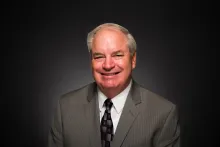
Robin Webber was born in Chicago, Illinois, in 1951, but has lived most of his life in California. He has been a part of the Church of God community since 1963. He attended Ambassador College in Pasadena from 1969-1973. He majored in theology and history.
Mr. Webber's interest remains in the study of history, socio-economics and literature. Over the years, he has offered his services to museums as a docent to share his enthusiasm and passions regarding these areas of expertise.
When time permits, he loves to go mountain biking on nearby ranch land and meet his wife as she hikes toward him.
