

David Dobson
This transcript was generated by AI and may contain errors. It is provided to assist those who may not be able to listen to the message.
As I mentioned, brethren, that the Feast of Tabernacles is around the corner, just almost a week away. And, of course, God tells us it's important to be in the right frame of mind when we go before Him with the right spirit. In 2 Corinthians 13, let's turn there. Verse 5, it says, Examine yourselves as to whether you are in the faith. Test yourselves. Do you not know yourselves that Jesus Christ is in you unless, indeed, you are disqualified? But I trust that you will know that we are not disqualified. So we have to examine ourselves as we go to this Feast, whether we stay in the home or not. We're going to all be keeping the Feast of Tabernacles because this is a feast that has to do with a spiritual state of mind. It's a time of rejoicing. And I know, as maybe a person can't go a certain year because of circumstances, but you always have that next year to prepare to go to the Feast. And one way to get in the right frame of mind is to examine a book that prepares us for this coming Feast. Did you know that there is a book in the Bible that is traditionally read during the Feast of Tabernacles? In the Bible, there were five books assigned to be read at different Feasts and special days during the year. They were all in one Old Testament scroll called the Festival Scroll. Remember that in ancient days, the Bible consisted of 49 books or scrolls. And out of those 49, you had 22 that were the Old Testament, and you had 27 that were of the New Testament. Because the books that we know of were not yet circulating at that time, so you'd use these scrolls. And we had, as a result, one of those scrolls in the Old Testament that actually had five of the books that we know of. It was called the Megaloth. I'd like to read to you from the book From Ancient Tablets to Modern Translations by David Ewart. And he mentions, quote, another section in the writings, which was a section beginning with the Book of Psalms, was called the Five Scrolls Megaloth. The song, because it included, this was the five scrolls all put together. The first one was the Song of Songs, and that was read during Passover. Secondly, the Book of Ruth, which was read during Pentecost. Then the Book of Lamentations of Jeremiah, that was read in the ninth day of the month of the anniversary of the destruction of Jerusalem. That's why it's called Lamentations. And then you have the Book of Ecclesiastes, which was read during the Feast of Tabernacles. And finally, the Book of Esther, which was read during the time of Purim, another special day. Now, from all we know, Ecclesiastes was written by King Solomon, and he actually wrote three of the books in the Bible. So I'm going to begin here. Let's see. Yeah, we have the first slide with King Solomon as the Queen of Sheba visited him. In his youth, he had a good beginning. He was close to God. As a matter of fact, God visited him twice, and he asked what he wanted. Solomon asked for wisdom to be able to guide his people. And he was given great wisdom and riches.
And so in his youth, it was a time when he wrote the Song of Songs. In that book of the Song of Songs, it talks about the author Solomon, and it says in verse 6, verse 8, It says, there are 60 queens and 80 concubines and virgins without number.
And so he would eventually have a thousand women, but at this time, he had 60 queens and 80 concubines and many others that were preparing to become more concubines.
And then in his middle age, he was still following God, and he wrote many of the Proverbs that we have in the book of Proverbs. Notice in 1 Kings 4, verse 32, it talks about the life of Solomon. 1 Kings 4, verse 32, it says, he spoke 3,000 Proverbs. He actually composed, and his songs were 1,005, of which one of them was the Song of Songs. And so we have the book of Proverbs, full of godly wisdom. But then, in his senior years, he wrote the book of Ecclesiastes. And here we can see, let's see, we can get this right. There, okay. And he wrote about his past glories, but now realizes all is fleeting, and he was a frustrated man. The Bible includes books about every stage of life we go through. And God placed this book of Ecclesiastes in the Bible to give us the wisest man's perspective of the world, but after having left God. It is the best of this world's philosophy books, but from a secular perspective.
It's interesting that much of today's philosophy agrees with his conclusions. There are a group of philosophers of the 20th century that were called the philosophers of despair because they were so pessimistic. Their philosophy just led them to that conclusion. They were headed by the likes of the French philosopher Albert Camus and Jean-Paul Sartre. And they concluded there is no real meaning in life, so it's best just to enjoy it as best as you can. They're called existentialists because they just want to be living the moment, the existence of this moment. And they're very influential. If you go to the universities to study philosophy, a lot of that is going to come from the likes of these men. They advocated humanism, which is the worship of the human being and its environment. That's why they become fanatics about the environment and just about humanity. They advocated socialism and communism and also atheism. And a lot of the U.S. universities still teach this and teach about evolution instead of creation. And a lot of foolish things like that. So judgment is still out for Solomon, but it's very doubtful that he ever repented.
If he did, the Bible does not record his repentance.
And it does record evil kings that repented, like King Manasseh. One of the worst kings, but he did repent after being punished. And that's recorded in the Bible, Manasseh's prayer of repentance. Whereas Solomon's prayer of repentance, we can't find it.
Solomon is not found in the chapter in Hebrews 11, where it talks about the men and women of faith. Although the Prophet Samuel and David, his father, are included in Hebrews 11, but not Solomon.
And in the history of the life of Solomon found in the books of 1 Kings and Chronicles, in the book of Chronicles, it is silent about what happened to Solomon. But in the book of Kings, it does talk about his sins, his falling away from the faith, and falling away from God. Let's read it in 1 Kings 11. This is toward the end of his life.
In verse 4, it says, For it was so when Solomon was old that his wives turned his heart after other gods, after other religions, and his heart was not loyal to the Lord his God, as was the heart of his father David. For Solomon went after Ashtoreth, the goddess of the Sidonians, and after Milcom, the abomination of the Ammonites. Solomon did evil in the sight of the Lord, and did not fully follow the Lord as did his father David.
Then Solomon built a high place for Chemos, the abomination of Moab on the hill that is east of Jerusalem, and for Malach, the abomination of the people of Ammon. And he did likewise for all his foreign wives who burned incense and sacrificed to their gods. So the Lord became angry with Solomon, because his heart had turned from the Lord God of Israel, who had appeared to him twice, and had commanded him concerning this thing that he should not go after other gods, but he did not keep what the Lord had commanded.
And so it's very sad. God had to separate himself, and what spirit God had given him of wisdom and of relationship with God, the Holy Spirit, eventually it just petered out. And Solomon became more carnal. Notice what it says in verse 9. It says, so the Lord became angry. I read that one. Verse 40 now, and 42, it says, so Solomon therefore sought to kill Jeroboam.
But Jeroboam arose and fled to Shishak, king of Egypt, and was in Egypt until the death of Solomon. And then it goes on. It says, now the rest of the acts of Solomon, all that he did and his wisdom, are they not written in the book of the acts of Solomon? And the period that Solomon reigned in Jerusalem over all Israel was 40 years.
Then Solomon rested with his fathers and was buried in the city of David, his father. And Reoboam, his son, reigned in this place. There's no indication of any repentance. He continued to burn incense, to chase men, try to assassinate men. So he did not end well at all.
So let's turn to the book of Ecclesiastes, because God says it has an important lesson as we go to the Feast of Tabernacles. It tells us here in chapter 1, verse 1, it identifies who is the speaker, the words of the preacher, the son of David, king in Jerusalem. And this is the son of David we're talking about. Verse 2, it says, vanity of vanity says the preacher, vanity of vanities, all is vanity. And so he begins talking about his conclusion about life.
He had aged, and he was pretty bitter about things. Didn't turn out like he had thought. He had all these women trying to please them and get them out of his hair to the point where he started apostasizing and going against God. Ecclesiastes helps us to look at the world as something temporary and not lasting and not set our hearts on the physical things of this world, because it's not going to last. There is a great danger where we can just let the world absorb us as it did Solomon.
Even with all of his wisdom, his worldly wives finally won over him. Notice in Mark chapter 4 and verse 18, this is the great danger. This is what happened to Solomon. In verse 18, talking about the people that received the knowledge of the truth and the Word of God, it says, Now these are the ones sown among thorns. These people receive God's Spirit, but they are in a worldly environment.
They're allowing others to shape their own thinking and ideas. He says, they are the ones who hear the Word. Yes, they're attentive to the truth of God. And the cares of this world, the deceitfulness of riches and the desires for other things entering in, choke the Word, and it becomes unfruitful.
People become worldly. They start losing that spirit that they had at one time because of their surroundings. And it can happen to anyone. We can let the world encroach upon us to the point where, just like the weeds, will strangle and suffocate the good plants and fruits. And we know weeds do not produce good fruits.
So one of the reasons why we are to dwell in temporary dwellings, can you imagine? Here we are, 21st century. And yet, we're still keeping God's feasts. Every year, we go to this feast for eight days to worship our God, to leave the things behind, and to be able to focus on that coming kingdom. That's what we want to be citizens of. That's what our hope and our vision is all about. So we are to dwell in temporary dwellings because we're passing through this world and society. To not love the society of this world because it can become very absorbing. And it's attractive, and all of these lusts and all of these attractions and things can get us off track. And we have to break its grip on us. And so, during the feast, it's a wonderful time to get spiritually purified. Being among brethren, listening to God's Word every day, be able to look at that coming kingdom because the messages have to do with that. Notice in 1 John chapter 2. 1 John chapter 2.
In verse 15.
It says, That doesn't mean you have to despise physical things, but he says, Love, this is kind of a lust of it. The power, the influence, the riches of it, the lust after everything. If anyone loves the world, the love of the Father is not in him. God can't work in a polluted mind, in a contaminated world, where a person is being contaminated. For all that is in the world, that's what society is based on. The lust of the flesh, selfish desires, in other words, the lust of the eyes, the society around us, and the pride of life.
Yes, that pride that a person has. I'm going to do things my way, not God's way. Is not of the Father, but is of the world, and the world is passing away. It's not going to last that long. And the lust of it, and all these evil desires, they're going to disappear one day.
But he who does the will of God abides forever. That's lasting. And so the feast is this glimpse that we have of a better world, and being able to taste a little bit of that wonderful time of peace. And where all the brethren, people converted, are going to be surrounding all of us. So Solomon, in his book of Ecclesiastes, examined four great areas of life. And yet, when he examined these four great pillars that compose our lives, he found them all passing, insignificant, unsatisfying, and became frustrated.
So let's look at the four areas that Solomon examined. Of course, he had this great wisdom, and he was able to analyze society for what it was. But now in his old age, in Ecclesiastes chapter 1 and verse 8, Ecclesiastes 1, verse 1 through 8, he examined the area of time. Time is what governs all of us, from the time we're born to the time we die. It is inexorable. It can't be stopped. And so he examined, and he noticed that nothing escapes from it except God, who is above and superior to time.
Time does not govern God. God is the creator of time. Notice what it says here in verse 1, the words of the preacher, the son of David, king in Jerusalem. Vanity of vanity, says the preacher. Vanity of vanities. All is vanity. I want to pause here because this word vanity in the Hebrew is hebel. H-E-B-E-L. And according to the word study dictionary, it refers to the vanity and ultimate emptiness and meaninglessness of all things in this life, whether they seem good or bad at the time.
Whether you're having a great time or you're having a terrible time, it's all passing. It's all ephemeral. It's not going to last. And so this is what Solomon begins saying. You think this life is fantastic and going to go forever? It's not. He goes on to say in verse 3, for what profit has a man from all his labor in which he toils under the sun?
One generation passes away and another generation comes. And that's what happens. That we have a generation. Everybody's young. But then eventually that generation ages and starts dying out, replaced by another generation. So time is going to catch up to every generation. There's no way to stop it. And he says, one generation passes away, another generation comes.
But the earth abides forever. What God creates, that lasts. But not us. The earth is going to continue spinning. After we die, it's not going to stop. Nothing's going to perish. But only our lives will. Verse 5 talks about the daily rotation of the earth. The sun also rises and the sun goes down and hastens to the place where it arose. The wind goes toward the south and all of these effects of the climate.
And he says, verse 8, all things are full of labor. Man cannot express it. The eye is not satisfied with seeing nor the ear filled with hearing. That which has been is what it will be. And that which is done is what will be done. And there is nothing new under the sun. And life is going to continue on. And the decisions we make are going to determine where we will eventually end up in our lives. And what is done? You can't undo it. You have to go forward from the present to the future.
And so when Solomon realizes that he can't control time, no matter how powerful he is and rich, he can't add another second to his life.
In Ecclesiastes chapter 2 verse 3, Here's the specific purpose statement that we use for. The purpose of what we're going to talk about. Here's Solomon's specific purpose statement. Verse 3, he says, I searched in my heart how to gratify my flesh with wine while guiding my heart with wisdom. He analyzed everything, the effects of wine on people, and how to lay hold on folly and the foolishness.
He analyzed the foolishness. Some people, they're party animals. The only way they can get a high is to go out and just party, party, party. Maybe you know some people like that, but you know what? It says here, he analyzed that, and that wasn't wise at all. To see what good for the sons of men to do under heaven all the days of their lives.
So he analyzed, he became a kind of a philosopher of life. In verse 14 of this chapter, he says, the wise man's eyes are in his head, but the fool walks in darkness. Yet I, myself, perceived that the same event happens to them all. So just because you're wise and you have a well-ordered life doesn't mean that you're going to get away with things. There are all kinds of bad things that can happen, as well as somebody that's pretty dumb and does dumb things and sometimes can get away with it. And so nobody controls time and the effect that it has.
He goes on to say, so I said in my heart, as it happens to the fool, it also happens to me. And why was I then more wise than I said in my heart, this also is vanity. For there is no more remembrance of the wise than of the fool forever, since all that now is will be forgotten in the days to come. And how does a wise man die as a fool? You're all buried. And even if it was a great person, after a while, you forget about them. Life goes on.
So time is inexorable. It will control things, and we cannot control the passing of time. He goes on to say, and he became disillusioned with life. And then in chapter 3, the great chapter on time that we have, verses 1 through 8, it says, to everything there is a season, a time for every purpose under heaven.
So everything in our cycle of life, from being a small child to growing up, growing old, there's going to be a time to experience all of this. And of course, anybody who's back likes the music of the 60s, you know that famous musical group, The Birds, they sang this chapter, basically.
It's called Turn, Turn, Turn. Maybe we could have put it on, but it just goes through it. It says, to everything there is a season. A time for every purpose under heaven, a time to be born, and a time to die.
So time is going to go on. Nobody can stop it. A time to plant and a time to pluck what is planted. A time to kill, talking about war, and a time to heal when the war is over. You lick your wounds. A time to break down, you break things up, you have to move on, and a time to build up, build the new stage of a person's life. A time to weep, there's a time of sadness, and a time to laugh and see about the positive and good times.
A time to mourn and a time to dance, a time to cast away stones, and a time to gather stones. And so it's just going through what stages of time a person goes through. And then he finally goes here in verse 11. It says, talking about God, he has made everything beautiful in its time. Also, he has put eternity in their hearts, except that no one can find out the work that God does from beginning to end. So despite where human beings, God put in us the desire to live eternally. And no animal has that.
Only human beings have that. And so, of course, when we reach the end of our lives, there is this certain sadness, because we would like to be able to continue. And God has a plan for us to continue on. He's put it in our hearts, and one day it is going to be fulfilled.
In verse 14, it says, I know that whatever God does, it shall be forever. See? God is not ruled by time. He's the Eternal, the one who was, is, and will be. Yahweh is the name in Hebrew. Nothing can be added to it, and nothing taken from it. God does it that men should fear before Him, and realize how much greater God really is. Verse 15, that which is has already been. It's happened in the past, and what is to be has already been. And God requires an account of what is past.
So we will be judged by God according to what we did in this life. Whether we try to please Him or not, and follow Him to the end. In verse 19, everything eventually comes to an end. It says, for what happens to the sons of men also happens to animals. One thing befalls them. As one dies, so dies the other. Man is not anything special as far as dying. People get run over by truck, just like a dog gets run over by truck, and they're both dead.
Surely they all have one breath. Man is no advantage over animals for all his vanity. All go to one place, all are from the dust, and all return to dust. Who knows the spirit of the sons of men which go upward, and the spirit of the animal which goes down to the earth. He's asking there because you mentioned it in Ecclesiastes 12, that when a person dies, his spirit goes up to God.
But it's not conscious. It's going to be stored there until that resurrection takes place. And then in chapter 8, verse 8, it says here, No one has the power over the spirit to retain the spirit, and no one has the power in the day of death. There is no release from that war, and the wickedness will not deliver those who are given to it. It doesn't matter how many people got away with it. Eventually, it will catch up with you.
In chapter 9, verse 11, it says, I returned and saw under the sun that the race is not to the swift. And what he's saying here is it's not always the person that's the fastest who wins the race, nor the battle to the strong.
It doesn't matter. Sometimes the smaller army wins, nor bread to the wise. People are wise and still are not able to put bread on the table, nor riches to men of understanding. They don't always prosper nor favor to men of skill. But time and chance happen to them all. So circumstances affect all of us. For man also does not know his time when he's going to die, like fish taken in a cruel net, like birds caught in a snare. So the sons of men are snared in an evil time when it falls suddenly upon them.
So we're always just hanging by a thin thread of life. We do not control time. It controls us, no matter how rich, powerful, or strong you are. And there's a poem that I read back in high school days that reminds me of this fleeting of life, and also people thinking that, yes, they're going to be famous forever, and it's going to continue on like that.
It's called Ozymandias by Percy Bish Shelley, this British author. And he's talking about the ruins of the Egyptian kingdom of the Pharaoh Ramesses II, which was a great builder. And he said, I met a traveler from an antique land who said, and I'm going to put this now. These are actually from Ramesses II, the ruins, who said, Two vast and trunkless legs of stone stand in the desert, near them on the sand, half sunk a shattered visage lies, a visage of a face, whose frown and wrinkled lip and sneer of cold command, as a king would do, yell out the instructions, expect everybody to obey him.
Tell that it's sculptured, well those passions read in that king, which yet survive, stamped on these lifeless things, the hand that mocked them, and the heart that fed, and on the pedestal of those two trunkless legs, these words appear.
My name is Ozymandias, king of kings. Look upon my works, ye mighty, and despair. Yes, Egypt had a great kingdom at that time. And as you look around now, nothing beside remains, round the decay of that colossal wreck, boundless and bare, the lone and level sands stretch far away. Yes, this man thought that his was going to be the exception, that his kingdom was going to last. It didn't. And this is Solomon's conclusion in chapter 9, verse 10.
It says, whatever your hand finds to do, do it with your might, for there is no work or device or knowledge or wisdom in the grave where you are going. So take advantage of every day. Do your best, and don't waste or squander time. It's very precious. So Solomon here, he just said basically to enjoy life and be able to do what you can because it won't last.
Yet that's not the right conclusion. What does time represent to us when we do follow God's ways to the end? Not like Solomon. Romans 8, verse 18.
Romans 8, verse 18. As we go to the feast and think about these things, it says, verse 18, For I consider that the sufferings of this present time are not worthy to be compared with the glory which shall be revealed in us. For the earnest expectation of the creation eagerly waits for the revealing of the sons of God. So we're looking forward not to this society. It's not going to last. But we're looking forward to that coming kingdom. And the feast reminds us of this. Let's go real quickly to the second area that Solomon examined. Ecclesiastes 2, verse 4. He examined man's work during life. It says in verse 4 of Ecclesiastes 2, And then verse 10, it says, Then I looked on all the works that my hands had done. As he aged, he looked back, And on the labor in which I had toiled, And indeed all was vanity, and grasping for the wind, There was no profit under the sun. And so he was frustrated again. He thought work is going to give me meaning in my life. It's going to be something lasting. And yet it wasn't. It all eventually will crumble.
His fear was that he was going to have a fool for a son that was going to squander all that he had. Notice verse 18. It says, And so he's going to take over everything that Solomon did, and he might squander it and ruined it. Just like what happened with Rehoboam. He was a fool. The third area was pleasure. That's another important aspect of a person's life, not only the time and the work.
And what did he say in chapter 4 and verse 6? He said, Better a handful with quietness, than both hands full, together with toil and grasping for the wind. Then I returned, and I saw vanity under the sun. There is one alone without companion. He has neither son nor brother, yet there is no end to all his labors, nor is his eye satisfied with riches. But he never asks, For whom do I toil and deprive myself of good? This is also vanity and a grave misfortune. So Solomon defined what today we call a workaholic. A person that his main goal in life is work, work, work. Yes, Solomon had concubines and wives, and yet it was not ultimately fulfilling. It was the wrong way to go about it. Notice in chapter 7, verse 28. It says, Of which my soul still seeks, but I cannot find one man among a thousand I have found, but a woman among all these I have not found. So he went about it the wrong way. He thought multiplying women was going to multiply the blessings. And no, he ended up being controlled by them and frustrated. And yet Solomon in his middle ages, when he wrote Proverbs, actually wrote Proverbs 31, that righteous woman. But Solomon compromised with God's laws, and he tried to have it both ways. And it didn't work out for him. So he multiplied wives and was under a curse. He never really enjoyed the love of one woman, faithful, loving companion like so many of us do, because we follow God's ways. And then the last area was what Solomon examined the system of justice and government in the world. Notice in Proverbs 3, verse 16. I mean, Ecclesiastes 3, verse 16.
He said, Moreover, I saw under the sun, when he analyzed with wisdom, with logic, what was going on, in the place of judgment, wickedness was there, and in the place of righteousness, iniquity was there. He was a king. And yet he couldn't stop all the corruption going on around him. And even he was guilty when he left God.
I said in my heart, God shall judge the righteous and the wicked, for there is a time there for every purpose and for every work. So he saw this corrupt system in chapter 4, verse 1 and 2. It says, Then I returned and considered all the oppression that is done under the sun. And look, the tears of the oppressed, but they have no comforter. On the side of their oppressors, there is power. But they have no comforter. So yes, they talk about being servants of the people, but actually most of the officials are serving themselves first. And the oppressors continue. You see the oppressive system of government, and they want more power and more riches to come in so they can bring more of their own people that same type of power and riches. Verse 2, his conclusion, Therefore I praised the dead, who were already dead, more than the living who are still alive, yet better than both is he who has never existed, who has not seen the evil work that is done under the sun. So power tends to corrupt, and absolute power tends to corrupt absolutely. And we're seeing that in our days with what's happening in Russia with a now more demented type of a leader there. In chapter 7, verse 13, he says, Consider the work of God, for who can make straight what he has made crooked? In the day of prosperity be joyful, but in the day of adversity consider. Surely God has appointed the one as well as the other so that man can find out nothing that will come after. Nobody can control his life. Nobody can control the ultimate destiny we have in this life. We don't know what can happen from one day to the next, so we have to live every day close to God. Certain of our faith and being faithful to the end. Be that tomorrow or tonight, but let's remain faithful.
God added at the end the right conclusion of this book. It was added after Solomon wrote and finished here in Ecclesiastes 12, verse 8. He ends up vanity of vanity, says the preacher. All is vanity. That's what happens when a person leaves God. You can have everything else, but there's an emptiness inside. In verse 9, this was added. This is called an epilogue. This is an addition. He was talking in first person. Now comes the third person. Moreover, because the preacher was wise, he still taught the people knowledge. Yes, he pondered and sought out and set in order many proverbs. And then in verse 13, this is the conclusion, the right conclusion God put. Let us hear the conclusion of the whole matter about time, about work, about pleasure, and about justice and man's government. What can we do? Fear God and keep his commandments. For this is man's all. This is the greatest thing a person can dedicate themselves to. For God will bring every work into judgment, including every secret thing, whether good or evil. So, as we prepare for this Feast of Tabernacles, where we have a glimpse of this much better coming kingdom, and we dwell in temporary dwellings because we know we're only pilgrims passing by on this earth. And so we need to prepare ourselves spiritually. The desert of the world is all around us. And we have few oases to refresh ourselves, which are the Sabbath and the different feast days. So let's remember the lesson of Ecclesiastes and the Feast. We're dwelling in booths. We're pilgrims. It's something much better is coming. We have God's Word about it. So don't make the same mistake as Solomon. That's the great lesson of Ecclesiastes and Solomon.
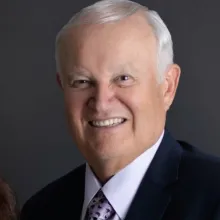
Mr. Seiglie was born in Havana, Cuba, and came to the United States when he was a child. He found out about the Church when he was 17 from a Church member in high school. He went to Ambassador College in Big Sandy, Texas, and in Pasadena, California, graduating with degrees in theology and Spanish. He serves as the pastor of the Garden Grove, CA UCG congregation and serves in the Spanish speaking areas of South America. He also writes for the Beyond Today magazine and currently serves on the UCG Council of Elders. He and his wife, Caty, have four grown daughters, and grandchildren.
