
Mario Seiglie
This transcript was generated by AI and may contain errors. It is provided to assist those who may not be able to listen to the message.
All right, it looks like everyone's settling down. We can begin the message for today.
This message begins right after the Feast of Tabernacles, as the following day was slowly being carried out. And I remember watching people as they were all leaving in taxis back to the airport. And finally, I felt a little more relaxed. Eight very intense days. And so things were winding down. And I really enjoyed watching people having such a wonderful time when people ask me, how am I feeling? I'm saying, how can I feel differently? I love to watch people enjoying themselves. And everybody seemed to be having a wonderful time, not only in the physical sense, but also in the spiritual sense. That's what makes the feast so unique. And you can go to a beautiful resort. You can lay out on the beach. You can eat to your heart's content or drink what you need. And yet, there's always that missing part, which is the spiritual. Well, in God's way of life, we are able to experience the maximum pleasures and enjoyment in the physical sense. And then that is balanced with the spiritual nutrition. Every day, receiving messages and being able to hone in on God's word. And we can meditate on God's word and watch how it is carried out.
And so what happened? Here I was, sitting back, watching everybody leaving and having such a wonderful time. Can you imagine? I never thought in my wildest imagination that we would be at a resort there in Puerto Vallarta that basically was exclusive. So the 740 people were the only ones in the hotel. They were all members of the church. And the whole hotel staff was there to serve the people. It was just ongoing activities and entertainment. And food. Just in the morning and way into the night. And that was just repeated with the services. And so I had a sense of fulfillment to watch people. And I consider myself as I was there at the free coffee station, drinking my food, and I was there at the free coffee station, drinking my favorite Frappuccino coffee. I was sitting there and I'm thinking, it doesn't get much better than this, does it? And then it was like a little voice said, yes, but remember what Solomon said. This will also pass. All of these enjoyment and joy and joy, and I was thinking, well, what's the best way to do it? And I was thinking, is going to pass and you're going to get back to the reality of life. And so that's what I was thinking, that even the enjoyment that you have, the Bible has a way to balance it, to focus it in the right way. I watched The Brethren with the wonderful shows that we had. We had over a thousand little baby turtles that everybody was able to take in their hands and place on the beach and watch them all running to the water, which is always one of the big attractions, the companionship that we have, children playing to their hearts content and peace. And yet, everything is passing. Everything physical is not going to last. It is not in vain that in the Bible there is one book that is read during the Feast of Tabernacles. It's one of the first books that we have read during the Feast of Tabernacles. It's one of the five books in what is called the Festival Scroll in Hebrew, Megillot. And of all the different scrolls of the Old Testament, there was one that had five books for the different feasts that were to be read during the Feast of Tabernacles.
And I'm not going to go into each one of these books. Maybe later in another time I can go over those five. But I want to center on the one that was read during Sukkot, which is the Feast of Tabernacles. And that book was Ecclesiastes. And it has great meaning because after the feast, what did my mind go to? It went to Ecclesiastes. The lessons learned there, which are very important. God had that in mind that we can enjoy ourselves enormously, but it is still passing. And so Ecclesiastes read through the Feast of Tabernacles. And so Ecclesiastes, written by King Solomon, we can see several reasons between the connection of this book of Ecclesiastes and the Feast of Tabernacles. One of those reasons, it is a book that tells us that all pleasure is temporary. No matter how wonderful the sensation is, it's not going to last. Solomon experienced it all. And he said it doesn't last. It doesn't ultimately satisfy one. During the feast, we are to live in temporary dwellings, leave our homes, and temporary dwellings is symbolic of something that is passing, that is ephemeral, that is not going to last very long. And the second reason, in this feast, it says that we should keep our second tithe to enjoy this feast above all. Notice in Deuteronomy 14, Deuteronomy 14 verse 25, this is the law that God establishes about keeping a tithe to keep his feasts during the year, and in particular, the Feast of Tabernacles, which of course is eight days long and is the most expensive one, because we are to leave the feast of Tabernacles. We are supposed to leave our dwellings and go to a place that is temporary. Deuteronomy 14 verse 25, God says about this tithe, then you shall exchange it for money, take the money in your hand, and go to the place which the Lord your God chooses. This is what we're talking about. If the journey is too long, they were to not be bringing cattle with them and sheep and all of that. They were supposed to convert it into money, as we do today. It says in verse 26, and you shall spend that money for whatever your heart desires. For oxen, that's talking about beef and steaks or sheep. A lot of people like lamb. For wine, so people can have wine or beer or a similar drink, it says, for whatever your heart desires. You shall eat there before the Lord your God. Notice this is in the tithe to give to God or give it to the church or to whatever it is. No, you are supposed to spend it. You shall eat there before the Lord your God, and you shall rejoice you in your household. The key word is rejoice. And so God wanted us to have this physical and spiritual high every year to be able to leave the commonality of our homes and go to a place and experience something better, to enjoy things that we normally would not be able to do.
And of course, Solomon was one that was able to experience just about every physical sensation that existed. Notice in Ecclesiastes chapter 1, Ecclesiastes chapter 1, verse 17, this is what he set his life to do. He says, and I set my heart to know wisdom, which is the right application of principles, godly principles, and to know madness and folly, which are the wrong ways. He wanted to just check it out, see what results came from the different lifestyles. And I perceived that this was also his grasping for the wind. And so he realized that even with all of these experiences that he had, they were fleeting.
They did not satisfy. He went on to say in chapter 2, verse 1, I said in my heart, come now, I will test you with mirth. Therefore, enjoy pleasure. So he said, I'm going to have the best available in life. I've got the money. I have the power. I have the means. And so I'm going to enjoy and see how high that sensation can go. But he said, this also was vanity.
The word vanity means it's something fleeting. It's passing. It's temporary. So he said the sensations do not last, no matter what they are. In verse 2, he said, I said of laughter, madness, and of mirth. What does it accomplish? So you can have a lot of good belly laughs, but afterwards, that's not going to reach maximum satisfaction. That's going to endure in time. Have you ever had people that made you laugh? Have we just specially good? Maybe telling jokes, giving funny stories. I remember one fellow who was a Mexican in the Spanish apartment back when I was a student, and he was a master of humor, of good humor.
And he could whip out stories, it seems like, in an instant. And he had a name for every one of us that was funny in the Spanish apartment. And he was a lot of fun to be around. But guess what? That didn't last. You eventually had to go back to work. And so you can just have a bit of pleasure and enjoyment, but it's not lasting. He goes on to say in verse 3, I searched in my heart how to gratify my flesh with wine while guiding my heart with wisdom.
So he didn't get drunk, but he wanted to taste the best wines and enjoy the feeling and the flavor. And of course, people can become connoisseurs, which means great knowledge of different wines, and people can make a hobby out of that. Well, Solomon did. In how to lay hold on folly, till I might see what was good for the sons of men to do under heaven all the days of their lives. So he actually conducted experiments, social experiments, and he'd say, okay, we're going to have this type of enjoyment here. People would come. He would watch them. What would happen as a result? Remember, God gave him riches, wisdom beyond any man before him or any man after him except for Jesus Christ.
So he could understand what was going on. Verse 4, I made my works great. I built myself houses and planted myself vineyards. I made myself gardens and orchards, and I planted all kinds of fruit trees in them. Now, that's certainly something that does have a little more lasting pleasure. Have you ever planted a tree, watched it grow, be able to take of the fruit? Maybe times it takes years of careful care for it, and then you're finally able to enjoy the fruits.
It reminds me, it was about five years ago that I planted a miniature pear tree. You know, here in Orange County, your houses are like this, so you only have little patios. You have a big tree, but there was a miniature pear tree. And so I took care of that pear tree, and boy, the first three years or so, it wasn't anything. I thought, this is a failure.
But I kept at it, and the Bible tells you about three years given strength. And in the fourth year, I gave these little pears, and I'm thinking, I hope this isn't continuous this way. And then, finally, this year, we had normal sized pears, and I was able to enjoy that. It took years of work. So it says here that he planted gardens, and I made myself, verse 6, water pools from which to water the growing trees of the grove.
So he had a paradise around him, parks, and all kinds of clever machinery to bring the water in and to just watch. Probably it was something that eventually the hanging gardens of Babylon were patterned after some of Solomon's vineyards and parks that he did right there in Jerusalem.
In verse 7, he says, I acquired male and female servants. So he didn't have to do much work. He had all kinds of people serving him, cooks and chambermaids and all kinds of servants. And he had servants born in my house. So he spent decades with these people, and they had families, all of them, serving King Solomon. Yes, I had greater possessions of herds and flocks than all who were in Jerusalem before me. All the previous kings never had that. I also gathered for myself silver and gold and special treasures of kings and of the provinces. He had jewelry, he had all the money, and the world. He says I acquired male and female singers. He had musicians who would play on a daily basis and compositions. So again he experienced music, art, labor, architecture, just about every maximum trade possible. He says the delights of the sons of men, which has to do with the dancers, and musical instruments of all kinds. So I became great and excelled more than all who were with me in Jerusalem. Also my wisdom remained with me. Whatever my eyes desired I did not keep from them. I did not withhold my heart from any pleasure, for my heart rejoiced in all my labor. And this was my reward from all my labor. So he had great satisfaction. Then I looked on all the works that my hands had done, and on the labor in which I had toiled. And indeed all was vanity and grasping for the wind. There was no profit under the sun. So he was frustrated because nothing was of lasting value. He knew that it was just the next thing that would happen. He would lose that feeling of maximum excitement and pleasure, and that it was not lasting.
So what happened? Well, King Solomon, in his old age, left God's way of life. And according to Jewish tradition, and certainly this was the last book, it seems, at least from everything we read, Solomon wrote three books in the Bible. Proverbs, which is when he was a younger man, he was still close to God, he had great wisdom, and he compiled this book of Proverbs. It doesn't mean he wrote every one of them, but he was the editor and main author of them.
And then, during... well, in his early youth, before the book of Proverbs, he wrote Song of Solomon, or Song of Songs, which talked about romantic love. He was there experiencing that. He wrote that book, then Proverbs, and at the end of his life he wrote Ecclesiastes, which, as we see, is a man that just was not satisfied with life. What happened to Solomon? The Bible explains it. Let's go to 1 Kings 11. 1 Kings 11, verse 1, we find out why Solomon became so frustrated with life.
Even having all the maximum pleasures possible, he still felt frustrated and bitter about things. Notice in 1 Kings 11, verse 1, this is toward his senior years, it says, Notice here that we don't have the mention of race as the problem here. We're talking about a different religion, these pagan religions.
That was what God was saying. Don't mix, don't get married with people that have other religion, he says, because they will turn away your hearts after their lives. God's. Verse 3, and he had seven hundred wives, princesses, and three hundred concubines, and his wives turned away his heart. For it was so when Solomon was old that his wives turned his heart after other gods, and his heart was not loyal to the Lord his God, as was the heart of his father David.
So Solomon turned away from God. And so listen, you can start in the church. It doesn't mean you're going to last in the church. You have to continue persevering. And Solomon did not do that. Verse 5, it says, It says, for Solomon went after Astorath, the goddess of the Sidonians, and after Milcom, the abomination of the Amorites. It says he actually started worshiping idols.
It says his wives were always pushing him to do that because they had these idols. And he was so frustrated that he yielded to them just to keep order and harmony in the palace. Solomon did evil in the sight of the Lord and did not fully follow the Lord as did his father David.
Then Solomon built a high place for Chemosh, the abomination of Moab on the hill that is east of Jerusalem, and for Malach, the abomination of the people of Ammon. And he did likewise for all his foreign wives who burned incense and sacrificed to their gods.
So the Lord became angry with Solomon because his heart had turned from the Lord God of Israel, who had appeared to him twice during his life. God intervened and actually spoke with Solomon in the dreams that just were like reality to him. God spoke to him. And had commanded him concerning this thing that he should not go after other gods, but he did not keep what the Lord had commanded.
Therefore the Lord said to Solomon, Because you have done this and have not kept my covenant and my statutes, which I have commanded you, I will surely fear or tear the kingdom away from you and give it to your servant. And so Solomon started receiving God's punishments, and God removed himself from the blessings. And so enemies started appearing, and God says, I'm not going to protect you anymore like I did before.
Goes on to say in chapter in verse 40, it says, Solomon therefore sought to kill Jeroboam, who was the one that was trying to take over his throne. But Jeroboam arose and fled to Egypt, to Shishak, king of Egypt, and was in Egypt until the death of Solomon. Now the rest of the Acts of Solomon, all that he did and his wisdom, are they not written in the book of the Acts of Solomon? And the period that Solomon reigned in Jerusalem over all Israel was 40 years. Then Solomon rested with his fathers and was buried in the city of David, his father.
And Reoboam, his son, reigned in his place. So it doesn't mention that he repented. That's still an open case. We don't know. But the Bible certainly doesn't explain that Solomon repented of what he did. And so this book of Ecclesiastes reflects a mind that has lost that spirit, that God was there working with him. And he just became a very analytical, secular type of a person, analyzing life in the physical sense of things. Notice in Ecclesiastes 7, verse 27. Ecclesiastes 7, verse 27.
This is one of Solomon's conclusions after having lived this long life. Here's what I have found, says the preacher, adding one thing to the other to find out the reason, which my soul still seeks but I cannot find. One man among a thousand I have found. And what he's talking about is being worthy, being faithful. But a woman among all these, talking about a thousand, I have not found.
Truly this only I have found that God made man upright, but they have sought out many schemes. And certainly with a thousand women, we talk about gossip, column, every week, all of these women trying to fight for his influence and acceptance. And he never really found that true love, even with all of these wives he had.
Notice what he says in chapter Ecclesiastes 9, verse 9. This is the conclusion. He would have liked to have followed this. It was too late for him in the end. Ecclesiastes 9, verse 9, this is his advice. He says, He says, He concluded, multiplying wives is not going to bring the satisfaction. He says it's better to have one wife, to be there with her, and live joyfully with the wife whom you love. And so he got to the right conclusion. Too bad he learned that lesson too late for his own life.
With one wife, you can become one flesh. You can have that spiritual union between the two, the mental, the emotional. You dedicate it exclusively to the person that you will love. That's what God wants us to do. Sometimes a person didn't have that experience before conversion, but he can have it after conversion. So the point is that although one experiences the maximum level of pleasure, it is still a passing, momentary feeling. I remember the comment of an athlete years ago. He was not only a football player, but he was also a baseball player. He played, sometimes, both sports. He was so good. Dion Sanders. He won two Super Bowls, and he actually got to the World Series at one time.
I remember, and I have here a little bit about Dion Sanders. It says, in 1997, at the prime of his success, he drove his car off a cliff, ready to die. Thankfully, it plunged 40 feet, and he survived with very little injuries. He says, Sanders recounted the suicide attempt in his autobiography, Power, Money, and Sex, how success almost ruined my life. Amazingly, he survived what he said was a 30-40 foot drop without any significant injuries. He decided his life was worth living. I finally just got on my knees and gave it all to the Lord. No one had told me that life would be tough moving from one team to another. Sanders said, going from the enemy's team to being one of his soldiers to God's team. That's a tremendous turnabout. He managed to find at least God and religion at the end, but it showed. People who have had maximum success, many times they just say, well, is there anything else? There's an emptiness that's produced. Tom Brady said, after three Super Bowl rings and everything else, and yet he said, is that all there is? Does that flush of emotion and triumph? And then one week later, it's gone.
We see in Hollywood actors and actresses with multiple divorces. They have so many sensations that it finally dulls their feelings, and so they have to look for more extreme sensations.
We have extreme sports. People just want the maximum amount of adrenaline and a feeling of euphoria, and so they're always seeking that high. And you know what? Afterwards, there's always a low, and there's an emptiness there. This past century, we have what is called the existentialist philosophers. The French philosophers developed this idea that life is absurd, but just try to enjoy it to the maximum. Try to exist as you can, and it became a very pessimistic way of looking at things. They thought there are no absolute values or lasting meaning in life. Also called the prophets of despair. In Spanish it would be this is peracion, which they don't find lasting feelings.
So we go back to Ecclesiastes chapter 1, verse 8, another one of Solomon's conclusions. After he had experienced about every sensation imaginable. Ecclesiastes 1, verse 8, it says, All things are full of labor. Man cannot express it. The eye is not satisfied with seeing, nor the ear filled with hearing. It doesn't matter what you see, what you hear, it's not lasting. And you never feel completely satisfied. We just had the feast experience, eating and enjoying the physical things. But after eight days of that, you're ready to go back home. Because if you stay much longer, you're going to have excess luggage when you go back. And I'm not talking about suitcases, right?
In chapter 5, verse 10, Solomon said, He who loves silver, or money, will not be satisfied with silver, nor he who loves abundance with increase. This is also vanity. This is something that doesn't satisfy. One of the Vanderbilt ladies back in the previous century, who was one of the richest women on earth, and what was her great contribution to history and to society, what did she say? She said, You can never be too thin, and you can never be too rich. Vanity or vanities? That's pretty vain.
But those were the goals.
Of course, at the end of Ecclesiastes, God's not going to end the book with Solomon's ideas. Basically, in verse 8 of Ecclesiastes 12, this is the last mention of this phrase, vanity of vanity, says the preacher. All is vanity. And then this epilogue, this ending is added to it in the third person. So Solomon quit speaking in the first person, and it says verse 9, And moreover, because the preacher was wise, he still taught the people knowledge, yet he pondered and sought out and set in order many proverbs. The preacher sought to find acceptable words, and what was written was upright words of truth. The words of the wise are like goads, and the words of scholars are like well-driven nails given by one shepherd. And further, my son, be admonished by these of making many books, there is no end, and much study is weir as some to the flesh. You can become a professional student. Never get out into the practical part of life. So just because you're an avid reader, you also have to put things into practice. Verse 13 and 14 is a conclusion. This is the proper conclusion. This is God speaking. After everything that one has experienced, what are the most important principles? Let us hear the conclusion of the whole matter. Fear God and keep His commandments, for this is man's all. That is the main purpose that's going to satisfy a person more than any physical thing. For God will bring every work into judgment, including every secret thing, whether good or evil. I know because I could have become someone with the pessimism of Solomon. I could have grown up, never known the church, lived my life physically, having a career, enjoying the finer things of life, and not knowing the true meaning. I never found that in the previous religion I was in. But thankfully, God called me at a very young age, and I started fearing God and keeping His commandments. And guess what? My life has been filled with great satisfaction, not from the physical, as much as in the spiritual. Doing things God's way, trying to apply it as perfectly as you can, that's going to bring out the best results in a person's life. So with the Feast of Tabernacles, we also learned that the physical, even the best pleasures we can have, are temporary and will leave dissatisfaction. Peter said it in 1 Peter chapter 1 verse 17.
1 Peter chapter 1 verse 17. Peter says, But with the precious blood of Christ as of a lamb without blemish and without spot, he indeed was foreordained before the foundation of the world, but was manifest in these last times for you, who through him believed in God, who raised him from the dead and gave him glory, so that your faith and hope are in God.
Since you have purified your souls and obeying the truth through the spirit and sincere love of the brethren, love one another fervently with a pure heart, having been born again, not of corruptible seed, but incorruptible through the word of God, which lives and abides forever, because all flesh is as grass, and all the glory of man as the flower of the grass, the grass withers and its flower fails all. But the word of the Lord endures forever, and its flower falls away, I should say.
So we see what is lasting. God's word, God's spirit in us, working, giving us the spiritual satisfaction of things. You know, we're more than just flesh and blood. We also have a spirit, and God's spirit working with us brings that lasting satisfaction that we are looking forward to the next feast. If we had the feast every month, it would be so expensive, and we would not enjoy it as much.
But every year, God wants us to pause, to live in temporary dwellings, and realize the world and all of its pleasures and all that it provides is not going to satisfy us, because we have this lasting spirit, that spirit in us that wants spiritual things. We want to live forever. We don't just want to live on this planet and get old and get sick and eventually just peter out. We want that spiritual body that will live forever. We want that. Notice what the Apostle Paul said in 1 Timothy 4, verse 8.
It says, for bodily exercise prophets a little, or for a little while, but godliness is profitable for all things, having promise of the life that now is, and that which is to come. So yes, it's wonderful to have the physical things, but if you have the spiritual things, boy, that makes a combination that is going to give us such satisfaction in this life that we would have not otherwise.
So the feast is a wonderful time, but guess what? It's a poor substitute for the coming kingdom of God. How much greater is that going to be? The flesh is enjoyable, but it is a poor substitute for that spirit, that bodily spirit being that we will one be. In Romans chapter 8 and verse 18, we see the comparison between the two things. That is why we have to realize that what we receive in this life, these pleasures and different blessings, they are a means to an end.
They are not an end to themselves. That's why people get so frustrated because when they do pile up money or pile up awards or pile up success, guess what? If it's not accompanied by the God's Spirit working in you, it's going to be frustrating. There's a vacuum inside us that only God's Spirit can fill. No fleeting pleasure can fill that void inside of us. In Romans chapter 8 and verse 18, this is what encouraged Paul. Drove him forward despite all the trials and difficulties and pains that he was going through.
In verse 18 he says, Children. And right now it's just a poor imitation, what we're living in this life, from what will be in the future. Notice in verse 28, he says, The purpose he is calling us to do. We have to accept. God invites, but he's not going to push the doors open and barge into our lives. We have to open the doors. He knocks, he invites, but we have to be willing to accept. And so let's be finishing here with, we have two more scriptures in Revelation 21.
In a way, the Feast of Tabernacles is a foretaste of the kingdom of God and also the coming of God the Father to be with us. Right now, God the Father and Jesus Christ are only in spirit at that Feast of Tabernacles. But it's as close as we can get to living in an ideal place with brethren together. And it says in Psalms, or Psalm 133, how beautiful and wonderful it is for brethren to dwell together in harmony. In Revelation 21, in verse 1, and it's interesting that it talks about tabernacling, God tabernacling with man.
Verse 1 says, Now I saw a new heaven and a new earth, for the first heaven and the first earth had passed away. Also there was no more sea, because all the humans have been judged and have either been transformed into spirit beings or been thrown into the lake of fire, and that's been the second death, and all that's left are the ashes of those people. Verse 2, it says, Then I, John, saw the holy city, the new Jerusalem, coming down out of heaven from God, prepared as a bride adorned for her husband.
One of the most beautiful scenes that we can ever see in our lives is when we see that bride at that wedding and watch her come at the beginning of a new marriage, a new beginning for these two people. Well, it's also a new beginning for human beings that have been transformed into spirit beings. Verse 3, And I heard a loud voice from heaven, saying, Behold, the tabernacle of God is with men, and he will dwell, the term again, he will tabernacle with them, and they shall be his people. God himself will be with them and be their God. So here God's going to have a personal relationship with each one of us. He is going to be our Father.
And whatever Father we had physically, if they make it into the kingdom, they will be another human being, that we have that relationship with them. But the greatest will be God the Father and Jesus Christ. And God will wipe away every tear from their eyes, which means there is a personal conversation in which he will explain every part of our lives, because he says he has the hairs on our head counted.
He knows everything. And he knows how to decide when to do things at the right time, at the right place, and for the right reason. There are many things that we don't understand. There are things that happen that only God the Father will be able to say, this is why it happened, my son or my daughter. And for you to make it into the kingdom, these things happened. You didn't understand it at that time, but I will explain it. He says, as a result, there shall be no more death, nor sorrow, nor crying, no matter what a person suffered in this life.
There shall be no more pain, nor, it doesn't matter what kind of painful sickness a person may die of, for the former things have passed away. Everything that was physical, these endorphins that give us these physical highs, they were just chemicals. They were just hormones. Those are poor substitutes for the spiritual highs that don't have to do with hormones. They have to do with a immortal spirit being that we will become.
He says, there shall be no more pain, for the former things have passed away. Then he who sat on the throne said, Behold, I make all things new. So now we go into the next stage, the spirit being stage, and he will reveal everything that he has prepared for that next stage.
And he said to me, Write, for these words are true and faithful. God has committed Himself. In verse 7, He says, He who overcomes shall inherit all things, and I will be his God, and he shall be my son. That's the relationship. God is working. As we draw closer to God through prayer, through Bible study, when we pray, we're speaking to God. When we study the Bible, God is speaking to us. When we meditate, it is with God's Word that we focus, and yes, to calm us, to tranquilize and help us to get over trials. Meditation is the way that we think of how to apply God's principles to our lives. And then occasional fasting when we go through difficult trials, that we need to get closer to God.
And so, to end the message, now that we're back from the feast, 1 Corinthians 2, verse 9, 1 Corinthians 2, verse 9 and 10. This is where I get the title of the sermon. Paul says, But as it is written, I has not seen nor ear heard nor have entered into the heart of man the things which God has prepared for those who love him. God has a plan ahead. The Feast of Tabernacles was just a minor imitation, a poor imitation of what that coming kingdom is going to be about, of that coming New Jerusalem. But we had a foretaste, and yet if we want to put all of our focus on the physical pleasures and on the physical things of life, we're going to end up like Solomon. He thought that was the ends of his life. That was the goal of his life. No, it's a means to an end. We are to enjoy the good things in life, but with God, walking with God every day. So I has not seen nor ear heard the things that God has prepared for those who love him. And that's what this sermon was all about.
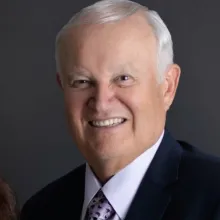
Mr. Seiglie was born in Havana, Cuba, and came to the United States when he was a child. He found out about the Church when he was 17 from a Church member in high school. He went to Ambassador College in Big Sandy, Texas, and in Pasadena, California, graduating with degrees in theology and Spanish. He serves as the pastor of the Garden Grove, CA UCG congregation and serves in the Spanish speaking areas of South America. He also writes for the Beyond Today magazine and currently serves on the UCG Council of Elders. He and his wife, Caty, have four grown daughters, and grandchildren.
