
Robin S Webber
This transcript was generated by AI and may contain errors. It is provided to assist those who may not be able to listen to the message.
Well, I know we all appreciate what the hymn choir just shared with us with a beautiful hymn, a beautiful meaning. I always preach the music that is shared and understand that we were able to honor Dr. Hoover and Mrs. Hoover, I believe it was last week, and two weeks ago, how time flies. And I have not been able to be...we, my wife and I have not been able to be back for three weeks. We were in Bakersfield last week, and as with all the congregations, we appreciate you sharing us with all of your sister congregations, and it just takes us time to get around. And little Bakersfield only sees us about every three months. When we do get up there, it's like no time has lapsed. We're very, very close with our Bakersfield brethren, having been their pastor once before. And what a warm and delightful little church. And I initially brought this message to them because they are warm and they are delightful and have the emphasis on little, that is for the moment. So I shared this message with them last week, and it's a message that I think will be relevant to all of us as we proceed on this day. The title of my message is simply this. I'd like to jot it down, get it right into your mind, and hopefully later into your heart with what we're going to be talking about today. The title of my message is simply this. The enormity of the day of small things. The enormity of the day of small things. Why did I choose that title and where are we going? Well, allow me to share here for a moment. In our world, the world that you and I live in, that bigger, brighter, and prettier, more, not less, new and improved, tend to attract people, attract us by our human nature. Bigger, brighter, more beautiful, more, not less, is very satisfying to human nature. If you don't believe so, just give yourself the pinch test and see if you're alive or not, because we are, by nature, drawn to those factors. Every day and every way, besides our natural draw, this is pummeled into our hearts and into our minds by external, as well as internal messages that we receive that solidify this natural way of thinking. But what do the Scriptures say about this? As that anthem comes out of the New Testament, what sayeth the Scriptures about bigger, about brighter, about more beautiful, about more, rather than less? A question I have for you as I begin to draw you into this message is simply this, is bigger always better? Is bigger always better? Is prettier, truly more beautiful? Are numbers more important than singular resolve? Is immediate always more rewarding than waiting?
Remember that. Listen again. Is immediate always more rewarding than waiting? How does God operate towards fulfilling His ageless purposes with covenant people? Because it's all wrapped up into this. This understanding the enormity of the day of small things that God has down through the ages had covenant peoples, plural. He had people under the Old Testament. They were the first fruits unto Him. He has people in and under the New Covenant. They are first fruits to Him. All of these apply whether of old or whether today, today, here in June of 2014.
One last question. With what pair of spiritual lenses would God have us view our personal destiny in His hands? Because when I offer that title, many of you that are familiar with the Scriptures are already beginning to maybe wander towards a verse that you might think might batch it. You might think, well, those are days of yore, days of old. But again, allow me to repeat. With what pair of spiritual lenses would God have us view our personal destiny in His hands? The greatest transmitter on earth has the initials of W-I-I-F-M. You might want to jot that down. W-I-I-F-M, which simply transmits this. What's in it for me? W-I-I-F-M. All of you are out there listening. You're already either turning me off or turning me on or just kind of putting me on mute. I'm not sure. I'm watching some faces out there. Whenever we hear a message, we're saying W-I-I-F-M. What's in it for me? Well, allow me to try to keep you into this message as we go forward. So how do we do that? Why am I bringing this message? You call it the enormity of the day of small things. You already see that there's a contrast. It's speaking of enormity of largesse, and yet it's coupled with this phraseology of a day of small things. To understand the enormity of the day of small things, it takes educating and training our hearts towards understanding what God is doing, what God is doing. And not only what God is doing, but then how are we going to respond? How are you and I going to respond to the sovereign, loving God as He reaches down into our lives? What is our role in all of this? Well, let's go to Zechariah 4 and verse 10. Zechariah, one of the last books in the Old Testament. Zechariah 4 and verse 10.
And let's just read one verse, and then we're going to build upon that verse. Zechariah 4 and verse 10. It speaks to this, For who has despised the day of small things? Now, this is a question.
Now, this was a question that was asked nearly 2,500 years ago. But recognizing that God's Word is a living book for living people today, the question comes down to you and to me. Who has despised the day of small things? Here we find what might be called an indicting question.
But the question is going to lead us to spiritual realism. Where does this question spring from? We're going to use the Bible to explain the Bible. Join me if you would in Jeremiah 25. Join me if you would there in Jeremiah the prophet. Jeremiah 25. Let's pick up the thought in verse 11 if we could. Jeremiah 25 verse 11. Jeremiah prophesying on behalf of God Almighty towards Judah. And this whole land shall be a desolation and an astonishment. And these nations shall serve the king of Babylon for 70 years. And then it will come to pass when 70 years are completed, that I will punish the king of Babylon and that nation, the land of the Chaldeans, for their iniquity, says the Eternal, and so I will make it a perpetual desolation. And so I will bring on the land all my words which I have pronounced against all that is written in this book which Jeremiah has prophesied concerning all the nations.
So God said that His people, Judah, would be taken into captivity by another people, and it would last for 70 years. God made a statement. Judah had to be corrected. They had turned their nose up at God's truths. They had profaned the Sabbath. They had not tithed to their God. They had fallen astray. They had gone the way of the Gentile kingdoms around them. And God, when He calls the people, there is tremendous opportunity. But with opportunity comes responsibility. With responsibility comes accountability. And God held them accountable. That day of visitation was going to be upon them. And God said and prophesied that it would be 70 years. Now, join me in Jeremiah 29 verse 10. Jeremiah 29 verse 10. For thus says the Lord, same God, same God, after 70 years are completed at Babylon, I will visit you and perform my good word toward you and cause you to return to this place. For I know the thoughts that I think toward you, says the Eternal, thoughts of peace, not of evil, to give you a future, to give you a hope. Wow, this is the same God that just a few chapters before was saying, you're going down. The nations of this earth are going to take you captive. You're going out for 70 years. Yes, you are going to be punished. Yes, you are going to be corrected. But I have a future for you. I love you. I'm your God. I want the very best for you.
Then you will call upon me and go and pray to me, and I will listen to you, and you will seek me and find me when you search for me with all your heart, and I'll be found by you, says the Eternal, and I will bring you back from your captivity, and I will gather you from all the nations, and from all the places where I've driven you, says the Eternal, and I will bring you to the place from which I cause you to be carried away captive. God was making a call. God said, this is how it's going to be. God has the ability, being sovereign, to make it happen. He says, this is going to be it, 70 years, and then after 70 years, you're going to come back. Let's shut this down if you're taking notes to stay in the message. God made a statement, and God made a promise.
God made a statement, and God made a promise, and He said, I will do it. Now, we get all overawed sometimes when we have ballplayers like Babe Ruth. And for some of you that are younger here, don't think that I grew up with Babe Ruth. Mr. Helgadet. Sort of. But we all know the Bambino, as he was affectionately called. You know, one time he came up to home plate, and he was a lefty, for the you that are left-handed. That's why he hit so many home runs.
And, you know, he called it. He called his shot. He says, it's going out right there. According to Americana lore, the Babe, as he was called, called his shot and says, it's going out. And, of course, we know the rest of the history. It went out. And that's why they named a candy bar after him. Not really. It's named after something else. And we can be amazed what a human being can do and deliver within two or three minutes. But God said, after 70 years, you're going to be coming back. Now, join me in let's understand a little bit more of the story.
Now, let's go to the book of Zechariah. Zechariah 1. And picking up the thought in Zechariah 1, which will lead us then to Zechariah 4 verse 10, if I have not lost you. Zechariah 1 and verse 12, it states this, Then the angel of the Lord answered and said, O Lord of hosts, how long will you not have mercy on Jerusalem and on the cities of Judah, against which you were angry these seventy years? And the Lord answered the angel who talked to me with good and comforting words. So the angel who spoke with me said to me, Proclaim, saying, Thus says the eternal of hosts, I am jealous for Jerusalem and for Zion with great zeal.
I am exceedingly angry with the nations at ease. For I was a little angry, and they helped. Yeah, I used them. When I was upset with my people, they had turned against me, but they did it with an evil intent. Therefore, verse 16 says the eternal, I am returning to Jerusalem with mercy, and my house shall be built in it, says the eternal of hosts, and a surveyor's line shall be stretched out over Jerusalem.
God said that. His people were not only going to return. Jerusalem would be rebuilt, and not only that, but the temple would go up. Now, with that background, Zachariah 4 and verse 10 becomes more clear. Here goes the question again. For who has despised the day of small things? Here God had called it. God delivered. They went into captivity. Seven years later, they come out of captivity.
God fulfills their promise. They come back to Jerusalem. I have a question for you. What is not to like about this situation? But knowing human beings, just give them an inch, and there'll be something that they'll find out. Zachariah 4 and verse 10. For who has despised the day of small things?
What we find here in Zachariah 4 verse 10 is you might want to jot it down. There was genuine, general disappointment. There was genuine, and there was general disappointment at the human level. You say, how could this be? Let me give you a few factors here. Number one. Number one, as they began to see this temple rise up and emerge, there were those that were old enough, that were perhaps in their 80s, late 80s, maybe even in the early 90s, that remembered the grandeur and the lustre of the initial temple built by Solomon.
In their mind, this was a motorboat next to the Queen Mary. They remembered what Solomon's temple was like. If it had been standing at the time of Herodotus, perhaps it would have been one of the seven wonders of the ancient world. They looked at it, and perhaps in their minds they had to be saying, you've got to be kidding. Number two. They remembered by reading Scripture that the glory of God had come down upon the temple of Solomon, and that's recorded in the Chronicles and in the Kings. That that cloud and that fire came down, and the cloud, the Shekinah presence, displaying the literality in that sense of the presence of God came upon that temple.
This temple had no such experience. This temple was not big. It certainly wasn't physically better. And number two, it seemed to lack the presence of God. Number three. As the hole gets dug deeper, so often we think, well, after 70 years, that means that everybody came back. Everybody came back. When you read the Scriptures, you come to understand that only 10% and or a tithe of the people of Judah came back from Babylon. Basically, even during the time of Jesus' time, there were actually more Jews either in Babylon and or in Alexandria, which is a whole different story.
Only a tithe of the Jews came back. So basically, then, you have these phrases if you want to jot them down. This is it! Where's God? And where is everybody?
Have you ever asked yourself about that where we are today as an assembly today?
In the Church of God community?
At times, we might ask ourselves, well, where is everybody?
I remember at times when there were 10 times as many people that were right here in LA and Pasadena than there are today.
I remember, as we were talking about in the announcements, when there was a time when I was the pastor of that building that we were just talking about. And here we are today.
Now, I'm sure none of these thoughts have ever gone through any of your minds. Maybe I'm the only one that has a little human nature or has some inquisitive notions of asking, where is everybody? What is God doing? Where has God gone? Where is that presence of God? You here in Los Angeles are a little bit different. We have a fairly large congregation. Many are gone today, and we have a very large congregation with senior citizens, teenagers, young adults, scores and scores and scores and scores of people. Your experience is very unique today. Your experience is very unique. You come along with me to Bakersfield, verse Frank. You come along with me to Redlands. You come along with me to places in Kansas or Nebraska or in other places. And behold, the day of small things. The question then, what is God doing? What is God doing? Where is God going? And what can we learn from this story, which is very, very important? I believe what happened with these individuals is that they had gotten ahead of God. And our human nature, you know, there's something about human nature that we don't like, but it usually gets ahead of God. God had a purpose that was being worked out here, even in this state. And let's understand a few things. Notice what it says here in Zachariah 4 and picking up the thought in verse 11. No, verse the rest of it. For who was despised today of small things? For these seven rejoiced to see. There was some rejoicing going on, but it wasn't down here. The plumb line in the hand of Zerubbabel. They are the eyes of the Lord. I know sometimes we have kind of like our Bible study that we just had where we kind of get off on things. Everybody says, who are these seven? We need to know who these seven are. It says right here, who the seven are. They are the eyes of the Lord. That's who they are. It is the complete vision of God and his sovereignty and his care and his love and his concern that he's looking down on each and every one of us and he knows exactly what's going on. And he was rejoicing. He had made a statement. He had made a promise. The Jewish people were special to them. They were a part of the covenant people of Israel. He had restored them. He had changed the mind of a bestial king, Cyrus, and allowed this remnant people, this small scattered little people, to come back. And he rejoiced! He was excited! I get just get excited about how excited he was.
They are the eyes of the Lord. God knows exactly what's going on down here. He's not blind. Which scan to and fro throughout the entire earth. The reason why God rejoices, he recognizes what was going on here is a type of everything that he's done from time immemorial. That he starts small. Bigger is not better. Prettier is not necessarily more beautiful. An assembly is not necessarily more important than two or three gathering in my name. And we'll talk about that a little bit later as we go along. Now, let's go and what happens is sometimes we can look at what is happening for the moment with our own eyes and say, this is it? Where is everybody? Where's God? And what's going on? We need to perhaps understand Zachariah 4 in a little bit different manner, and we're going to deal with that the rest of this message. Let's go back a little bit further into the story and understand what God was performing then. And that what was occurring then was a prototype of what was yet to occur and will yet even further occur as that ultimate temple of God is built and delivered and added to it. The first thing we have to ask ourselves when we look up here in verse 10, it mentions this Zerubbabel. We need to ask ourselves, who is Zerubbabel? Who is Zerubbabel? Is he a static figure in time? Are we to only understand this scripture based upon what happened in the early the shadowy side of the fifth century? BC? What does Zerubbabel ultimately picture? Or is there a greater type? Is this Zerubbabel a lesser type of a greater type that you and I know intimately? Let's understand a few things about Zerubbabel. Number one, Zerubbabel was of the line of David. We're going to begin to paint a picture here for all of us. Zerubbabel was of the line of David. You can find that in Matthew 1 in verse 13. I'll let you go to there later. He was of the royal line. He was of the seed of David.
It's very interesting that there's another individual that was of the seed of David that was of the royal line. Let's consider that Jesus of Nazareth is a son of David. A son of David. And let's go to Luke 1.32. In Luke 1.32, I think you'll find this an interesting thought. Luke 1.32, with this intro of what was to come about in the rest of this gospel, and Luke 1 in verse 32. We'll find something else. He was not only of the royal line, but something else.
It says, prophesying of him, he will be great, and he will be called the son of the highest, and the Lord God will give him the throne of his father, David. Notice verse 33, and he will rule over the house of Jacob forever, and of his kingdom there will be no end.
Fascinating thoughts as we begin to consider Zerubbabel being but a type of something yet to come along. For those of you that are new to the Scriptures and opening up God's Word and understanding that time in Scriptures is what we call a term dualistic. And or you might want to use this more friendly Anglo-Saxon phrase, layered. That the Bible is layered. That there are types and there are anti-types when we begin to understand Scripture. Types and anti-types. And then beyond that, to recognize if you want to jot this down, there can in the Old Testament be what we call lesser, which points to the greater. So many of the characters and the personalities that are in Scripture, be it in Abraham, be it in Moses, be it in Isaac, the son of promise, and be it a David, or be it a Zerubbabel, are but types of Christ. It's been said that the New Testament is concealed in the Old Testament and that the Old Testament is revealed in the New Testament. After all, they're by the same author, God, who has a purpose that has never changed, that is fascinated at the enormity of the day of small things. Number two, let's notice what it says here as we go back to Zechariah. It says in Zechariah 4, come with me there, Zechariah 4, another point that I want to bring out here.
In Zechariah 4, let me pick up the thought here. Let's go to verse 6. Let's center on that for a moment. When you look at this, it says, The capstone. Other translations use the word plummet. That would be the final piece. I know recently we saw the building arise on the ruins of what happened at 9-11, and we saw that Liberty Tower go up. And then, if you were following on internet or whatever, you saw it finally cacked. The top was put on. That would be like the plummet. That would be like the capstone. And it says here, before you shall become a plane, and he shall bring forth the capstone. He's going to, in other words, complete it. This temple. One thing that we want to understand if we look at what was occurring here, pointing to the future and to our future, because we're included in this. Join me if you would in John 2. Speaking of Jesus, that greater Zerubbabel in John 2, verse 11. Notice what it says here.
John 2, verse 18, pardon me. So the Jews answered and said to him, What sign do you show to us, since you do these things? And Jesus answered and said to them, Destroy this temple, and in three days I will raise it up. And then the Jews said, It's taken 46 years to build the temple. And will you raise it up in three days? But he was speaking of the temple of his body.
Not a physical structure. Not one made out of brick and mortar or stone or ivory. Jesus referred to himself as the temple. He was speaking of his own body.
Now Zerubbabel did the best that he could with what was at hand with the tithe of the people. But join me if you would in 1 Corinthians 3. In 1 Corinthians 3, speaking of that greater Zerubbabel.
And we pick up the thought here in verse 9. For we are God's fellow workers. You are God's field. You are God's building. According to the grace of God, which was given to me as a wise master builder, I have laid the foundation and another man builds on it, but let each one take heed how he builds on it.
For no other foundation can anyone lay than that which is laid, which is Jesus Christ.
Now if anyone builds on this foundation with gold, silver, precious stones, wood, hay, and straw, each one's work will become made clear, for that day will declare it.
And it will be revealed by fire, and the fire will test each one's work of what sort it is.
And if anyone's work which he has built on it endures, he will receive a reward. Therefore, we find that Zerubbabel, this man of the 5th century B.C., was allowed by God to build this temple. But to understand that today, God is building something differently.
And it's not done yet. The foundation is laid. It's Jesus Christ. But sometimes we can look around and we can kind of wonder what's going on, and that's why I'm giving this message. If we go back again to Zechariah 4, which is going to be our anchor thought, Zechariah 4.
And let's pick up the thought again in verse 7.
Speaking of this, But who are you, O great mountain? Before Zerubbabel, you shall become a plain, and he shall bring forth the capstone with shouts of grace, grace to it.
Again, to recognize that when you think about it, that Jesus, Jesus himself, is that chief cornerstone. That's what Paul says in Ephesians 2, 19-22. You also look at here where it says grace and grace to it. You know, it's kind of interesting. You think about it for a second that even as small as it was and Jerusalem was being rebuilt, it probably looked like one big rehab happening just like New Orleans did a couple years ago after Hurricane Katrina. But can you imagine you've got to kind of get into it? It's being called empathetic into the scriptures that when that capstone was being put on, that, you know, the finishing touches that the audience all gathered around said grace, grace to it. They were very involved in it. They were excited. They finally began to understand that they were experiencing God's favor. Join me if you would in John 1, 17. In John 1, verse 17, and a parallel over here in the Gospels.
When it was saying grace, grace to it, which was a physical temple, a physical temple, to recognize what it says in verse 17 of John 1, For the law was given through Moses, but grace and truth came through Jesus Christ.
And therefore, to recognize that Christ is the foundation and He is that source of God's grace. And that is the temple that God is building today. Now, so far in this story, and maybe you've never come this far into Zachariah, but let's look at another figure here, because when you go back to Zachariah 4, it mentions at the end of Zachariah 4 that there are two anointed individuals that stand before the Lord. One is a rub-a-bell, and the other is this man that is named Joshua. Let's understand who Joshua is in Zachariah 3, join me if you're with there for a moment, in Zachariah 3 in verse 1. In those... I'm in Matthew, pardon me.
Zachariah 3 in verse 1. Then he showed me Joshua the high priest standing before the angel of the Lord, and Satan standing at his right hand to oppose him. And the Lord said to Satan, The Lord rebuke you, Satan. The Lord who has chosen Jerusalem rebuke you. Is this not a brand plucked from the fire? Now Joshua was clothed with filthy garments and was standing before the angel. And then he answered and spoke to those who stood before him, saying, Take away the filthy garments from him. And to him he said, See, I have removed your iniquity from you, and I will clothe you with rich robes. And I said, Let them put a clean turban on his head. And so they put a clean turban on his head, and they put the clothes on him. And the angel of the Lord stood by. A couple thoughts about this. Joshua was the high priest at the time. Zorubba Bull was the ruler. Joshua was the high priest. But let's understand this comes together differently when we go into the New Testament. Might want to jot this note down just out of interest. Jesus, that term, New Testament Greek, comes from the Hebrew word, Yeshua, and or Joshua. Speaking of salvation. Not only that, but if you join me if you would for a moment in Hebrews 8. In Hebrews 8 here we can kind of get our mind and our eyes on this Old Testament high priest. But again, let's draw our attention as we look at this type and anti-type, this lesser and this greater in Hebrews 8. Now, this is the main point in verse. One of the things we're saying, we have such a high priest who is seated at the right hand of the throne of majesty in the heavens. And he ministers a sanctuary, and of the true tabernacle, which the Lord erected, and not man. For every high priest is appointed to offer both gifts and sacrifices. Therefore, it is necessary that this one also has something to offer.
And it goes on talking about the true tabernacle. Brethren, what I kind of want to begin to share with you in this day of perhaps not greater but lesser, perhaps not more but what God is doing, is to recognize that God is no longer building a physical temple. Be it Solomon's, be it the one that Zerubbabel built, be it the Herodian temple. The temple that you and I are a part of is the true tabernacle. And when we think about it, when we think about it, that Jesus Christ brings together both the roles of Zerubbabel and Joshua to recognize that he is indeed clothed with righteousness and clothes us with righteousness and does that for us. We also recognize that Satan tried to accuse Joshua. It says here, though, that God defended him in Zechariah. We know that also Satan tried to accuse and try to destroy Jesus, but we also recognize that Christ defeated Satan.
Also, if you want to couple this together, let's go to Zechariah 4 again just to kind of get our mind on the words of the Bible, especially after we just gave the Bible study we did before church, Zechariah 4.
Verse 14. So he said, these are the two anointed ones who stand beside the Lord of the whole earth. It's very interesting when you think about it. Speaking of Zerubbabel, speaking of Joshua, that they were called the anointed ones. And it is very interesting when you consider that the name of not only Yeshua or Joshua or Jesus, but so often we say Jesus Christ. Some of you may not be familiar with that, but the very word Christ means anointed. He's been anointed not by man, but by God. And he is the one that is still building that temple today, piece by piece, not by lumber, not by stone, but by hearts, by minds, by lives surrendered, by people that understand that God has a plan and that it's on time and that it's on pace, and that at times we as human beings want to look at where we are right for the moment and don't recognize that God still has more business to deal with. Join me if you would in Haggai, which is actually, some of you may not be familiar too much with the minor prophets, but Haggai is actually a parallel to Zechariah. And Haggai has something very interesting to mention here. And actually, I became more acquainted with Haggai just through this individual study that I'm actually sharing with you. And Haggai too, and it's going to sound very similar now to Zechariah, very much like if you have you ever read 2 Peter and you read the book of Jude and they sound very familiar going back and forth? Well, listen to this. In the seventh month, on the 21st of the month, the word of the Lord came by Haggai, the prophet, saying, Speak now to Zerubbabel, the son of Shiltel, governor of Judah, and to Joshua, the son of Jehoshotak, the high priest, and to the remnant of the people, the remnant of the people, not the mob, not the multitude, not the crowd, but the remnant of the people. Who is left among you who saw this temple in its former glory? And how do you see it now in comparison with it? Is this not in your eyes? It is nothing. Yet now be strong, Zerubbabel, says the Lord, and be strong, Joshua, son of Jehoshotak, the high priest, and be strong, all you people of the land, says the Lord, and work, work, for I am with you, says the eternal of host.
God says there are some things that don't change.
And yes, you may remember how things were in the past, but bigger is not necessarily better. Beautiful is not necessarily prettier. More does not necessarily trump less. And the one thing that God will always say is you keep on working. You keep on moving. You keep understanding my sovereignty in your life and my great love for you and the statements that I have made. Brethren, not just simply for Judah, not just simply for Israel, but the Israel of God today, for you. That when you were baptized, when you began to become a part of this temple, that God is developing and building to His honor and to His glory, He said that I will never leave you nor forsake you. And Jesus said as that greater Zerubbabel, that if I have begun a good work in you, I will put on that capstone. I will finish. I will be there at the end. That is what I will do.
This is the enormity of the day of small things that cannot just simply be lost on the early side of the 5th century BC. That portrays what God is yet to do in the future, not only with us, but with others.
It didn't look too great. It didn't look too wonderful.
They didn't like it. The people themselves thought, this is it.
This is what our life has been about. This is what we've been waiting for. This is what we've been striving towards.
And they themselves, the people of God, in a sense, wanted to reject what God was doing. This reminds me of the Messianic words in the book of Isaiah 53.
When it says about that one that God would choose as his temple, Jesus Christ, he says that there is nothing that when we look upon him, that we would want, and that he was rejected of men.
It didn't please the eyes. It didn't have the wonderment of big.
It didn't have the dazzle of beauty.
Jesus, a Galilean, looked very, very normal. You couldn't pick him out of a crowd.
He was a Jew.
He spoke with a Galilean accent. Hundreds of thousands of people spoke with a Galilean accent at the time. There was nothing, as was said, what good can come out of Galilee?
And yet, that one, if you'll join me for a second in 1 Peter 2, join me over in 1 Peter 2. Astonishing verse. What was rejected of men was selected by God. 1 Peter 2, and let's pick up the thought in verse 2. 1 Peter 2 and verse 4, Coming to him as a living stone, rejected by men, but chosen by God and precious. 2 And you also as living stones.
And God is not called the mighty and the profound and the wise of this world. He's called the weak. He's called the base things.
But He's called us to be built upon a spiritual house, a holy priesthood, to offer up spiritual sacrifices, acceptable God through Jesus Christ. God does His part. And when we are selected of God, we are to do our part. What is our part? What is our part? Mr. Ebert says right here that we are to offer up spiritual sacrifices, and our life is to be a sacrifice. Our mind is to be a sacrifice. Our heart is to be a sacrifice. How we live in marriage is to be a sacrifice. How we relate with our children, young or old, is to be a sacrifice.
How we deal with one another in this faith community is a sacrifice. We push the old man away and allow the new man, Christ, to live in us.
That is our work. That is our work.
That work goes on whether there is one or whether there is 300. In my years in ministry, I have pastor churches with 1200 people, and I have pastor churches with 25 people.
You might say I've had a white scope in my lifetime.
I want to share something with you. May I? It is never the size of the audience.
It is the size of our God and the size of His message that makes all the difference.
It is never the crowd. Christianity is not about a crowd. Narrow is the path. Narrow is the way. And oftentimes in this lifetime, it will be, as was with Judah, a remnant people that come back. I remember when I was a young boy growing up in San Diego, first time I was listening to the World Tomorrow Telecast. And it kind of came at a very special time in my family's life, with circumstances that had occurred. And not only did we hear a voice on that radio that was loud and clear on the World Tomorrow Telecast, but my mother had been reading a book that had a profound impact upon her, and I've read it since over the years. And it was called One Man's Destiny. One Man's Destiny. And it was the story of Abram, and how Abram followed the call of God. And when the freeways were crowded, going into Ur of the Chaldees, there was only one car going out. Think of the 210 freeway over here, about five o'clock. Wonder if all the traffic was going one way, jammed. You don't even have to imagine that. It happens every day, doesn't it? Happens out in Riverside County, too, and we're 75 miles east of you.
And you only saw one car going the other way. And you say, oh, wait a minute. Everybody's going this way.
And one little vehicle, putt, putt, putt, going that way. That would have been Abram. That was the call of God. And behold, the day of small things. You think of Noah and his family. And behold, the day of small things. You think of Joshua and Caleb, not going along with the crowd, and not going along with the multitude, but standing up, knowing that they were laying their life down on the line. And behold, the day of small things. Elijah in the cave, going, God, is this it? Is this all? Look what I have done.
And what did God have for a man? Who can tell me? What did God tell him in that day of small things?
You know, you will not flunk this. Trust me. This is what I say. What did he say? Do you not know that there are yet 7,000 that have not bent the knee to Baal?
Sometimes we think that we're just going it alone. And God has a view, those eyes of God that rejoice in this, the day of small things, and your work, and your living sacrifice, and your love for him, and your love for Christ, and your emulating of his son's example in your life. Behold, the day of small things. You say, nothing's going to come out of that. How can anything come out of that? That's probably what they were saying when they first got onto the hill there with the robe of Elohim. Nothing's going to come out of that. You can't get something out of nothing.
You can't get something out of nothing.
Ask Sarah about getting something out of nothing. Ask Hannah about getting something out of nothing. Ask Mary, the mother of Jesus, getting something out of nothing. Being alone, being vigilant, believing in the promises of God, petitioning to God, even when perhaps others in the community had estranged themselves from God. And behold, the day of small things.
What about the man that was healed by Jesus?
A man that was blind since birth. And then he said, I was blind, but now I can see.
And in that story, a count in John 9, a beautiful story. You can read it later. We know that his parents basically, as the kids say today, dissed him like, Who are you?
We know that his neighbors didn't believe the report and were estranged from his neighbors. And then his church, the synagogue, because they were in disagreement with the healer, put him out. They put him out of the house of the Lord.
And then we read that rich account at the end. That as that man had been cast out of the house of the Lord, that Jesus Christ, the Lord of the house, the temple himself, came to him and said, Who do you say I am? And he said, You are the Son of God. One man, maybe in an alley, maybe apart from all people. And yet his testimony comes down to us to this day of the enormity to behold the day of small things.
Join me if you would in Matthew 13, verse 33, as we begin to conclude.
In Matthew 13, verse 33.
Now, let's actually pick up the thought in verse 31. Pardon me. For those of you that have ink, in verse 33, 31. And another parable he put forth, him saying, The kingdom of heaven is like a mustard seed which a man took and sowed in his field, which indeed is the least of all the seeds. It's teeny-weeny-tiny.
It's a speck.
Do I dare say, to repeat, it's a tiny thing? It's a small thing. But when it has grown, it is greater than the herbs and becomes a tree, and so that the birds of the air come and nest in its branches.
God always starts with small. He always starts with nothing. And he keeps us small as a people.
He keeps us as a remnant people. He calls us an elect. He calls us first fruits.
First fruits are not normally as delicious or as wonderful or as big or as beautiful as the fruits that will come along.
And he does that for a purpose. He keeps us small. He keeps us humble as individuals and as a people for a purpose. That, as the apostle Paul states in the book of Corinthians, 1 Corinthians 1, says that no flesh, no flesh should glory. That all honor, all glory should go to God.
Join me if you would in Haggai one more time. We've spoken about how we see this seed that is going to develop until it becomes a great tree that is going to dominate the landscape. Well, that leads us right back into Haggai, that parallel account of Zechariah. Haggai 2, and let's complete the thought here.
When it says, verse 6, For thus says the Lord, Once more it is a little while, and I will shake and earth the sea and the dry land, and I will shake all nations, and they shall come to the desire of all nations.
And I will fill this temple with glory, says the Lord of hosts.
Let's understand, this is dualistic, this is prophetic, that even as the Jews are going, Hmm, you got to be kidding me, this is it. God says there's more to come, and He's going to shake the nations, and they shall come to the desire of all nations. Is He speaking about a physical temple? Is He talking about a triple whammy? Salami? Salamonic? I almost said it. Salamonic temple? No. The desire of all nations, if you want to jot this down, is a name for Jesus Christ. It is Messiah. It is when He lands at Jerusalem. It's already by His own self-proclamation that He is the temple.
And all the nations are going to come.
The silver is Mine. The gold is Mine, says the Eternal. The glory of the latter temple shall be greater than the former. Notice what it says. The glory of this latter temple shall be greater than the former. This is not, brethren, speaking of the Herodian temple, which is often called the Second Temple. This is talking about the divine temple of Messiah coming back to this earth. In all glory and honor and sovereignty to fulfill His promise that He will return and that He has a future for you and for me, no matter what we're going through right now, no matter how personally lonely we might be right now as we look around and we say, where is everybody? Is this it?
That the eyes of the Lord are not only into the future, seeing this beautiful moment when His Son is extolled before all the nations of the earth, but His eyes are still on you. Join me if you would, and let's conclude in the book of Hebrews. Hebrews 11. And the Hebrews 11, pardon me. Let's go to... Pardon me.
Find it here.
Let's go to Hebrews 12.
I want to share this verse with you because I believe it is the contemporary parallel to what was spoken in the book of Zechariah when God said that there... These seven rejoice. These seven rejoice for what God is doing. And God's ways are not our ways.
God's ways are not our ways. Our ways, humanly, is that bigger is better.
Prettier is more beautiful. More is much better than less.
But this is what God says.
Verse 22. But you have come to Mount Zion.
And this is speaking not of that which is earthly, but that Jerusalem which is above.
But you have come to Mount Zion and to the city of the living God.
If you want to do a fascinating Bible study, sometimes just go through the number of scriptures that remind us that God is alive. And so often, it talks about the living God. He knows exactly what He is doing. The heavenly Jerusalem. And to an innumerable company of angels. To the general assembly and church of the firstborn who are registered in heaven. To God the judge of all. To the spirits of just men made perfect. And to the mediator of a new covenant. And to the blood of sprinkling that speaks better things than that of Abel.
Next time you don't think anybody is watching you.
Next time you want to have a crowd.
Next time you want to have some company, go to Hebrews 12. And notice the eyes of the Lord are still upon a remnant people.
That the eyes of the Lord in the heart of God says, I have a future for you. It's coming to pass. I have stated it. I have promised it. I know exactly where you are. Appreciate the moment of time that we are in. Brethren, many of you have known Susie and I for 40-45 years.
Some of you almost 50 years.
I haven't been a part of the Church of God community for all that time. Some of the things that I mentioned earlier, some of the opportunities I've had in the past.
When I look where I have been, me and my Susie, and look where we are, and look where we are today, I can honestly and I can sincerely tell you that I believe that these are the golden years.
That this is the best time of life.
God's Word, as we've been discussing in our Bible study earlier, is more open than ever. Each and every one of us is taking a personal responsibility for the salvation that God has offered to us. We have come to recognize that a church is not about buildings. Buildings will come and buildings will go. Just go across the Arroyo.
Buildings will come and buildings will go.
Presidents of church organizations will come and they will go. So will chairman. I mentioned that in the general conference. We will come and we will go.
What God has developed in building in us today is a faith and an appreciation for His love. That is not based upon big. Is not based upon humanly better. Is not based upon pretty.
But is based upon what it says in Psalms 46 and verse 10.
Be still.
It's hard to be still when you're in a crowd. Maybe that's why we don't have the crowds we used to.
Be still.
And know that I am God.
I hope as a congregation here in Los Angeles, next time somebody directs your attention to Zachariah 4 and makes the statement and says, What does that day of small things mean to you?
That you're going to be able to have a discussion.
That you're going to be able to have a good talk. And that you're going to be able to point out that there is indeed an enormity to the day. For small things.
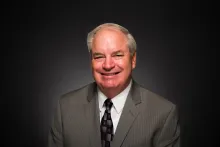
Robin Webber was born in Chicago, Illinois, in 1951, but has lived most of his life in California. He has been a part of the Church of God community since 1963. He attended Ambassador College in Pasadena from 1969-1973. He majored in theology and history.
Mr. Webber's interest remains in the study of history, socio-economics and literature. Over the years, he has offered his services to museums as a docent to share his enthusiasm and passions regarding these areas of expertise.
When time permits, he loves to go mountain biking on nearby ranch land and meet his wife as she hikes toward him.
