
Robin S Webber
This transcript was generated by AI and may contain errors. It is provided to assist those who may not be able to listen to the message.
Bigger, brighter, and prettier. More, not less. Our natural attractions to the human mind, and are extremely satisfying to human nature. And, of course, to be ours here, now, right now, not waiting, but now, having all of this ourselves. Bigger, brighter, more beautiful. Let's just leave those three words out there hanging for a moment for you to think about. Maybe also the immediate.
Every day and every way we are pounded with not only numerous external but also internal messages, solidifying this natural pool of human nature. And we are attracted to bigger, brighter, and prettier. Not smaller, but bigger. But what do the scriptures say about this, to you and to me on this God's holy Sabbath day? Is bigger always better? Is prettier, truly more beautiful? Is being enveloped in crowds more important than your and my singular resolve? The big question, and hopefully we can also equally supply a big answer this afternoon. The big question is, how does God operate towards fulfilling His ageless purpose with covenant peoples? Plural. Both those under the Old Covenant and those under the New Covenant. With what pair of spiritual lenses would He have us view our personal destiny?
Our personal destiny. In other words, W-I-I-F-M. What is in it for me? What's in it for me? In this ageless purpose, this destiny that God says He offers to those that will follow Him in faith.
Let's squarely look at Zechariah 4. Join me if you would for a moment. That's going to be kind of the keynote scripture of today. Zechariah 4. Zechariah 4. Let's take a look at this. This will be on the marquee of our minds and our hearts today. Okay. Zechariah 4 and verse 10. For who has despised the day of small things? Who has despised the day of small things? Now, this is a question, but it is also an admonition. God sneaks in an admonition with this question through the prophet Zechariah.
Here we do find this indicting question. My question to all of us this afternoon as I draw you into this message is simply this. How can we use this small verse to develop spiritual realism as to what God not only performed with a small remnant people of old, but what He's performing in our lives today? God's word is the same yesterday, today, and forever. So what we're reading in Zechariah, which was written about 25-2600 years ago, is as relevant today in the life of those under the New Covenant as it was of those under the Old Covenant.
And that's what we want to explore today, because after all, the Bible is a living book. And we do worship a living God. It's very interesting when you look at the book of Zechariah, if I can just fill in a little background here for a moment. Zechariah is written somewhat in what we call an apocalyptic style of literature, again, just like the book of Daniel, just like the book of Haggai, just like Zechariah, just like the book of Revelation. Apocalyptic literature was written to a remnant people who were no longer surrounded by crowds, but were alone, or small, or few, in number. Challenges had come their way as a people.
There were only a few that were remaining. God needed to offer hope, and He needed to offer encouragement as those people that were faithful, that little flock, as Jesus talks about, as to what would be their lot as they gave everything to their God and understand that they had a purpose working down here below, even if it came down to two or three people, that God's purpose was going to stand. And that is, we go from the Old Testament to the New Testament, there are types, there are anti-types, there are forerunners, and there are after-maths that, to a degree, are connected.
That's what we're going to kind of explore today. So I just kind of, again, want to what is the literature about, and how is it framed, and who is it for? You know who it's for? It's for us today to recognize that what was occurring in the book of Zechariah is exactly the same work of God in us that is occurring today here in 2021.
So today, the title of my message is simply this for you that are note takers, either here or at home. The enormity of the day of small things. The enormity of the day of small things. I want to offer this to you, and of course I'm drinking it in as I'm preparing it to educate and to train, most of all, our hearts.
To educate and to train our hearts towards understanding what God is doing, even when we think that maybe He is quiet, or gone away, or is silent, or doesn't care. What is God doing? And therefore, then how do we respond? With that stated, let's understand the story behind the verse, and some background is required here. Join me if you would in Jeremiah 25. In Jeremiah 25, to kind of frame Zechariah and what's going on there.
In Jeremiah 25, and Jeremiah is written sometime before this, probably 80, 70, 80 years before, but notice what it says in Jeremiah 25. Here, Israel had already gone into captivity in 721 to 718 BC. That's the northern kingdom. And now Judah is slowly being taken into captivity. It didn't just happen overnight. There were actually three waves of removal from the land from about 604-605 BC down to 586 BC, which we normally spotlight because that's the destruction of the temple.
But it was ordained. It was prophesied that something would happen. In Jeremiah 25, and let's pick up the thought in verse 8. Allow me to read it to you. Therefore says the eternal of hosts, because you have not heard my words. Behold, I will send and take all the families of the north, says the Lord, and Nebuchadnezzar, the king of Babylon, interesting the words that follow, my servant, and will bring them against this land, against its inhabitants, and against these nations all around, and will utterly destroy them and make them an astonishment, a hissing, and perpetual desolations.
Moreover, verse 10, I will take from them the voice of mirth and the voice of gladness, the voice of the bridegroom, and the voice of the bride, the sound of the millstones, and the light of the lamp. And this whole land shall be a desolation and an astonishment, and these nations shall serve the king of Babylon for 70 years. Then it will come to pass, when 70 years are completed, that I will punish the king of Babylon, and the nations the land of the Chaldeans, for their iniquity, says the Lord, and I will make it a perpetual desolation.
So, take a look at that, and to recognize that there is a prophetic rendering towards the covenant people, the same people that God had made covenant with, that I will be your God, and you will be my people. God did not break his promises. God is true to whatever he says, but the people rejected God. They did away with his law, and or they kept a part of his law, but went the way of the Gentile kingdoms that were around him. God is not going to be mocked. God stated that there was going to be this brought upon Judah for 70 years, that they would go into captivity, that they would be taken to Babylon. He said 70 years. Now, this is during the time of Jeremiah and Jeremiah's prophecies, but also when God... this is what's encouraging. Jeremy, if you would, in Jeremiah 29, and this might be a very familiar verse to all of us, but we put into context with what we saw in Jeremiah 25, that God says, I'm going to have to correct you. I'm going to allow a king from afar to come and take you, because you just don't get it. The living God has called you to be his people, and for him to be their God, and you've rejected that. Now, in Jeremiah 29, is that the end of the story? No, not at all. In Jeremiah 29, verse 10, and some of us will be familiar with this verse. It's a very encouraging verse. For thus says the Lord, after 70 years are completed at Babylon, after those 70 years that were prophesied in Jeremiah 25, after 70 years after completed at Babylon, I will visit you and perform my good word toward you, and cause you to return to this place.
For I know the thoughts that I think toward you, says the eternal. Thoughts of peace, not of evil, to give you a future and to give you hope. Then you will call upon me and go and pray to me, and I'm going to listen to you. And you will seek me and find me when you search for me with all of your heart. And I will be found by you, says the eternal, and I will bring you back from captivity, and I will gather you from all the nations and from all the places where I've driven you, says the Lord, and I will bring you to the place from which I cause you to be. That's why one thing that we always have to do, whether it be a book, whether it be a movie, or whether we read a Bible, always keep on reading. And especially when it comes to our Father above and His Christ, there's always good news at the end of the story.
We worship a God that is always the God of return, the God that is our Father that is always on the porch, waiting for we as individuals, or waiting for a nation that He selected and called out. The front porch light is always on. The porch is there, and there's somebody waiting for us to return. This is the story of the Scripture. Now join me if you wouldn't, Zechariah 1. Let's go to Zechariah. This will be the end of the first villain, Zechariah 1.
And let's pick up the thought if we could in verse 12. In Zechariah 1 and verse 12.
Here is the fulfillment that occurs when they come back from the land. This is during the time of the Persian Empire, the second beast, that second image of the beast of Daniel 2 and Daniel 3. Cyrus, in a sense, in a sense in a typology, which is interesting, but a type of Christ, he was prophesied. His name was even prophesied. And he releases the people of God to go back to where they had come from 70 years before. Now we take this thought in Zechariah 1 and verse 12. Let's take a look here. And it says this, Then the angel of the Lord answered and said, O Lord of Host, how long will you not have mercy on Jerusalem and on the cities of Judah, against which you were angry these 70 years? That's almost three human generations. And the Lord answered the angel who talked to me with good and comforting words. And so the angel who spoke with me said to me, Proclaim, saying, Thus says the Lord of Hosts, I am zealous for Jerusalem, for Zion with great zeal, I am exceedingly angry with the nations at ease. For I was a little angry, and they helped, but with evil intent. Therefore says the Eternal, I am returning to Jerusalem with mercy, and my house, key word, key phrase, my house shall be built in it, says the Eternal of Hosts, and a surveyor's line shall be stretched out over Jerusalem. It's going to be built up again.
Foundations are going to be laid, and my house will be built. And again, proclaim, saying, Thus says the Eternal of Hosts, my cities shall again spread out through prosperity. The Lord will again comfort Zion, and will again choose Jerusalem. The Exmarks the Spot Jerusalem Exmarks the Spot within the Spot And that's the house of God. Now with that back framing, join me if you would in Zachariah 4. In Zachariah 4, let's understand some of the response now as people were coming back to Jerusalem.
Moreover, the word of the Lord came to me saying, The hand of Zerubbabel have laid the foundation of this temple.
His hand shall also finish it, and then you will know.
We played that for special music several weeks ago. Then you shall know that the Lord of Hosts has sent me to you.
For who has despised the day of small things? For these seven rejoice to see the plumb line in the hand of Zerubbabel.
Why does God make this comment for who has despised the day of small things?
It's been 70 years. It's almost been three human generations.
70 years is up. They're now back in Jerusalem.
Sometimes we kind of plan God's whole purpose and story for Him the way that we want it, rather than the way that He desires and what He is establishing the lives and the hearts of the people.
Perhaps they thought to a degree that they were going to go back like nothing had changed.
They were going to go back and just start all over after three human generations.
And they had probably the biggest challenge. There were a couple of challenges. Number one, their biggest challenge, you might want to jot this down, you need to recognize only a tithe of Judah, a tithe. Ten percent of the people went back to Jerusalem and its environs from Babylon.
Only ten percent. Just think of that as a tithe of people. Not everybody went back. Sometimes when we read the story, oh, all the Jews went back. They didn't. Only one out of ten people.
How does that work out? Why? Well, when you've been in a country for almost three human generations, you don't really go back to, quote unquote, your mother country. We find that in America.
You don't go back. A lot of time and a lot of distances come up along the way.
And you can imagine taking that trecca through from Babylon over to Judah. And you're going, well, where is everybody? Where is the crowd? Bigger, better, brighter, more.
Often makes us feel safe, doesn't it? But is that what God is working out and doing below?
Another thing that is being brought out here simply this. As they began to build as the Rub-a-Bell. And Jonathan, we're building the temple. People are watching it go up.
And they're saying, because we just read about the house of the Lord, and everybody's looking, this is it. This is it. See, some of those people were probably old enough, maybe the oldsters that were carried across the desert, unless they were carrying the youngins, is that some of them might have remembered the awesome size of the Solomonic temple.
If Herodotus had lived maybe 500 years before he did, maybe the Solomonic temple would have been one of the wonders of the ancient world. And they remembered, they were all struck by the beauty and how glorious it was with the combination of Israelite and Phoenician architecture that went into that temple and how big it was. But more than that, they remember, and they had read the scriptures, that the Shekinah presence had come down, the cloud had come down and inhabited that facility, that house of the Lord. He'd made his home there.
This temple didn't have that.
No crowd.
No fireworks from above.
It's smaller, and this is it.
And so, guys kind of doing an attitude check out here. Who has despised the day of small things? Is that where you're going to leave it? And is that all? And people were asking, where's God? Where is everybody? Is this it? Have you ever been that way, as situations come up?
Where's God? Where is everybody? Because we all love a crowd. I'm going to share later on that there's a very, very big crowd that we need to be aware of. What happens here is they had gotten ahead of God. Because it says here, it says, but heaven rejoiced. These seven rejoiced to see it, they are the eyes of God. As people were going, it's kind of genetic coming down through the human species.
Notice what God says here. He says, but heaven rejoiced. It was not the Solomonic Temple.
And there were only 10% of the people that come back, but heaven rejoiced.
These seven rejoiced to see, and they are the eyes of the Lord.
Why was God rejoicing? And what did those eyes share with him? See, God had fulfilled His promise, this promise, but it was only a stepping stone to the future. Notice verse 11. Then I answered in verse 11, and said to him, what are these two olive trees at the right of the lampstand and its left? And I further answered and said to him, what are these two olive branches that drip into the receptacles of the two gold pipes from which the golden oil drains? And then He answered me and said, do you not know what these are? And He said, no, my Lord. Oh, he's going to be honest when God is asking. And so He said, these are the two anointed ones who stand beside the Lord of the whole earth.
That's going to be really important. You might want to jot that down. These are the two anointed ones. Now, again, framework and backing up before we move forward, because there are types and there are anti-types. I gave a message recently on the two witnesses and alluded to Zachariah. Let's understand that there is a whole cadre of witnesses down through the ages that will culminate right in the ultimate two witnesses. So a part of this typology can apply to the future. But what was it saying then? What was it saying then in 516 BC? That's what we need to figure out.
Let's go back further into the story and understand what God was and is performing.
In one sense, you may want to jot this down. Two cast characters that we're now going to put here as the two witnesses are Zerubbabel and also then Joshua.
Let's talk about Zerubbabel. And ask ourselves, is he simply a static figure in time, or is he a typology of something that comes along later? That's a question we need to ask that I hope will inspire you to understand your part in all of this of building the temple. Who does he represent?
Number one, Zerubbabel is mentioned here. Zerubbabel would help lay the foundation of this, what is normally called the Second Temple. And he would complete it. Very important. It's one thing to start a building project. I see Paul down here used to be an estimator for big jobs, right Paul? It's one thing to kind of start. It's always good, the starting day, as long as you get paid later. The starting day, it's one thing to start a project, it's another to finish it, right? We've all been there with home remodeling and or other projects that we have on the job. Zerubbabel at that time was the governor, and he was the one that would start this.
Let's notice something about Zerubbabel, Matthew 13 and verse 1.
He was the governor, but it's a very interesting linkage here. In Matthew, who was... Did you ever ask yourself who was Zerubbabel related to? In Matthew 1 and verse 13.
Take a look. Speaking of the line of Christ through Matthew, down to Matthew, in Christ's stepfather. Notice what it says here, verse 13. Zerubbabel begot Abahud, Abahud begot Alakim, and Alakim begot Israel.
What we find here is Zerubbabel, maybe he never realizes, he was of a kingly line, going back to David.
And Cyrus had allowed him to be governor of this puppet kingdom now, called Judah, and allowed under him for the people to go back to rebuild Jerusalem, and ultimately to build this temple. If you look at Luke 1 and verse 32, and Luke 1.32, again, talking about the lines, in Luke 1.32, speaking of notice, Jesus, he will be great and will be called the Son of the highest, and the Lord God will give him the throne of his father, David. So what we notice here, just to kind of tickle your imagination for a moment, this Zerubbabel is not just somebody, he is of the kingly line, and he has been commissioned to rebuild, and or to build anew this, the second temple. Now, let's understand something about Zerubbabel. Zerubbabel would help lay the foundation of the second temple, and like I said, complete it under tremendous odds, under tremendous negative pressure, not only from the Jews that had returned going mermermermermermermermer, but also from all the different peoples that were in the environment. Like, I thought they moved out of the neighborhood 75, 70 years ago. What are they doing back? Who let them in? It's already crowded here. It's ours. And it says that Zerubbabel, in verse 7, let's go back here. Let's go back to Zachariah 4. I'm going to go back and forth a little bit. Zachariah 4 verse 7, notice, Who are you, O great mountain? Before Zerubbabel, you shall become a plain, and he shall bring forth the capstone with shouts of grace, grace to it.
What this is saying in apocalyptic literature and in imagery, they're going to be like a mountain of upheaval and resistance against what God is going to do. God said, I'm going to bring you back after 70 years, and I am going to restore you. Jerusalem is, after all, dear brethren, where heaven touches earth. This is where the activity begins and spreads out. And it's going to happen with shouts of grace, grace to it. Now, when you look at those verses, it says here that He would help lay the foundation and He would lay the capstone and finish it. Any opposition, any resistance, any mountain of trouble, any mountain of worry that was ahead of these people would be brought down flat because God was behind this. And the crowd would shout grace to it. Now, what does this have to do with us today? Thank you for asking that question. Have you ever thought about it this way?
Jesus, the Christ, is also a builder. He's a builder. In Matthew 15 and verse 18, you can just jot that down. It said, I will build my church. That isn't a maybe. He speaks with all the confidence as the Son of God, of Messiah. I will build. See, God the Father and Jesus are in the construction business. But what they're doing today, it's not the construction business of mortar and bricks and stone, but flesh and hearts. It's not dealing with a physical building. It's not even dealing with a physical organization. It's dealing with something much more intimate. And if you'll join me, if you would, in Ephesians 2 verse 19. In Ephesians 2 and verse 19, join me if you would there, please.
Let's notice what it says here. Now therefore you are no longer strangers and foreigners, but fellow citizens of the saints and members of the household. Remember, the tabernacle and the temple were the home, the house of God. But now it says you are of the household of God. Having been built on the foundation of the apostles and the prophets, Jesus Christ, remember what this rebel bell did with the capstone, Jesus Christ himself being the chief cornerstone, in whom the whole building being fitted together grows into a holy temple.
Notice, in the Lord, in whom the whole building being fitted together grows into that holy temple, to whom you also are being built together for a dwelling place of God. A dwelling place. Think about this. Just allow the scriptures to sink in for a dwelling place of God in the Spirit. The rebel bell is a type of Jesus Christ. The rebel bell was called to fulfill God's will.
The Jews were to return to Jerusalem and said, my house shall be built.
Here is one of the same line of David, Jesus Christ, just as the rebel bell. And Jesus is a builder. God the Father is the ultimate architect, but he's commissioned Jesus to be the builder. And he said, I will build my church.
You might say, where's the big building? We're St. Peter's. We're St. Sophia's in constant...
where am I going to look? I want bigger and brighter and paintings and this and that. Let's go big!
That's not how God goes big. The big is simply this, dear friends, is that God has called you to be a part of this family. And his temple is inside of you today. We're going to look at some of those scriptures in a moment. It's interesting that Jesus is the foundation and the source of God's grace when he went to Zachary. He says grace and grace. Join me if you would just for scripture John 1 verse 16. The Gospel thereof, John 1 16, as we build this scriptural trail. In John 1 16 it says of this, speaking of Jesus, John looking back now 60 years from when he's writing this and having been there at the beginning where it says, and of his fullness, and of his fullness we have all received, and grace for grace. For the law was given through Moses, but grace and truth came through Jesus Christ. God the Father's foundation of grace, of laying this temple today, comes through the life, the death, the sacrifice.
The resurrection, the ascension, and the exaltation of Jesus Christ, and that tabernacle which is above.
Another thing I'd like to share with you. Join me if you would in John 2. Same Gospel, John 2. Speaking of tabernacles, speaking of temples. This was misunderstood by the covenant people of that day. We cannot go further unless we understand what Jesus is saying here in John 2. Verse 18.
So the Jews answered and said to him, what sign do you show to us since you do these things?
And Jesus answered and said to them, now stay with me please on this. Destroy this temple, and in three days I will raise it up.
As we know as we go through the story, this phraseology was taken and mentioned again and again.
To the Jews it seemed as if Jesus himself was threatening the temple.
That he was threatening the temple somehow which was the holy spot of God. And here what they did not understand was that he was referring to himself as the temple.
He was referring to himself as the temple.
This showed me again in 1 Corinthians 3. These are very important verses for the point that I'm going to bring out at the end. 1 Corinthians 3. And picking up the thought in verse 9. For we are God's fellow workers, you are God's field. Look, now notice, remember that Rubblebel had to build the temple, the second temple on the holy mount. You are God's field. You are God's building. According to the grace of God, which was given to me as a wise master builder, I have laid the foundation and another builds on it, but let each one take heed how he builds on it. For no other foundation. Remember how Rubblebel laid out the foundation and the plumb line? For no other foundation can anyone lay than that which is laid, which is Jesus Christ. Now, if anyone builds on this foundation with gold, silver, precious stones, wood, hay, straw, each one's work will become clear, for the day will declare it, because it will be revealed by fire, and the fire will test each one's work of what sort it is. If anyone works which he has built on it endures, he will receive a reward.
Long ago, the Solomonic Temple was put into ruins by the Chaldeans. Jesus himself was, in a sense, made ruins for you and me. He was murdered, killed, in that sense, placed in the earth, in that sepulchre nearby. Jesus, in that sense, was, by the Father, raised from the ruin of death.
His body is the temple. His life is the foundation upon which we are to build, to be a holy people unto God.
It's still Joshua now. Are you with me? First character over here. Second character. Now, we're going to realize we're going to bring them all together here.
Joshua was the high priest at that time. In a sense, the first typology of these two olive branches and these two witnesses, these two anointed ones, you have the rumble bell, who is the governor, and now we're going to deal with Joshua, who was the priest. In Zechariah 3, back to Zechariah 3, let's talk about Joshua here a second. In Zechariah 3. Joshua, the high priest, standing before the angel of the Lord, and Satan standing at his right hand to oppose him. So this high priest is being opposed by Satan. Sounds familiar?
And the Lord said to Satan, The Lord rebuke you, Satan, and the Lord who has chosen Jerusalem rebuke you. Is this not a brand plucked from the fire? Have you ever been in a fire, and yet there are maybe even your fireplace, like in the movies, somebody's tossed away a letter that is precious, and you go to save it. You go and you reach, even with thinking that you might get burned, but yet you pluck it out. Is this not a brand plucked from the fire? Now Joshua was clothed with filthy garments and was standing before the angel, and then he answered and spoke to those who stood before him, saying, Take away the filthy garments from him. And to him he said, See, I've removed your iniquity from you, and I will clothe you with rich robes.
And I said, Let them put a clean turban on his head. And so they put a clean turban on his head, and they put the clothes on him. And the angel of the Lord stood by, and then the angel of the Lord admonished Joshua, saying, Thus says the Lord of hosts, If you will walk in my ways, and if you will keep my command, then you shall also judge my house. And likewise have charge in my courts, and I will give you places to walk amongst those who stand there.
What is the typology here? And any scripture can have more than one handle on it, but I simply suggest this to you, that this Joshua is a typology of Jesus to come, who is the ultimate high priest. Jesus took our sins upon him, filthy garments.
And yet when we go to Isaiah 61, we hear about this robe of righteousness that then we are given.
Let's just think about that for a moment. You can judge us down Isaiah 61 in verse 10 about the robes of righteousness. It's interesting that Satan tried to accuse Joshua, but God defended him in Zechariah 3. Satan tried to destroy Jesus, but Jesus defeated Satan. Let's look at that in Hebrews 2 and verse 14. In Hebrews 2 and verse 14, I'm going to build on that thought. In Hebrews 2 and verse 14, Inasmuch then as the children have partaken of flesh and blood, he himself likewise shared in the same that through death he might destroy him who had the power of death. Notice that in the past tense. Had. He no longer has sway over us. Satan no longer has the ultimate last word. Through Christ he has been defeated. The power of death that is the devil. And to be released those who through fear of death were all their lifetime subject to bondage. Interesting.
Here we have this gentleman named Joshua.
That was Jesus' name. In Hebrew it would be Yeshua.
Joshua. In Greek, Jesus. What does Yeshua mean? Give me just one or two words. This is the interactive part of services. What does Yeshua mean? It means salvation. It means Savior. Right, April?
Okay, so we're recognizing that there's a rescue going underway. Back in Zachariah, it says this, that we notice this term of the anointed ones who stand before the Lord. Let's look at that real closely. Zachariah 4. Zachariah 4 and verse 14. So he said these are the two anointed ones who stand beside the Lord of the whole earth. Let's think this for a second. We're going to build. We're doing a little construction here today. Joshua and the rubber bow are spoken as the anointed ones who stand before the Lord.
Who stands before the Lord today? Who is the ultimate witness that is at his right hand? Who is the one that has been anointed king under governor, under God the Father? Who is the high priest that we are going to be talking about on the Day of Atonement?
What you find that in this story of the building of a temple, you find the governor, you find the the king line, you find the high priest, and what you're finding the typology moving forward to our day now is simply this. That Jesus Christ is the Lord of heaven and earth. Jesus Christ is the Lord of our own personal lives, and he is our high priest. What you have is the ultimate witness. Jesus is the ultimate witness of God the Father and his purpose and plan, and now you find this combined in one called Jesus the Christ. In Haggai 2 and verse 1, in the seventh month, on the 21st of the month, the word of the Lord came by Haggai, the prophet, saying, speak now to Zerubbabel, the son of Shiltiel, governor of Judah, and to Joshua, that's thy priest, son of Jehoshadak, the high priest, and notice to the remnant of the people. One thing we need to understand, brethren, if we're going to be honest with God and honest with the Bible and know what we've been called to, that the covenant people of God, as you look down through scriptures, sometimes they are a multitude, and sometimes it's a big crowd, and sometimes it goes down to dozens, sometimes it goes down to ones, sometimes it comes to an individual that stands up, a stand-up individual like a Zerubbabel, a stand-up high priest like Joshua, and the one Jesus Christ who stands up for us eternally before God the Father as the ultimate witness of the entire gospel. Who is left among you who saw this temple in its former glory? And how do you see it now in comparison with it? Is this not in your eyes as nothing? You now be strong, Zerubbabel, says the Lord, and be strong, Joshua, son of Jehoshadak, the high priest, and be strong all you people of the land, says the Eternal, and work, for I am with you, says the Eternal of Host, and according to the word I covenant with you when you came out of Egypt, so my spirit remains among you, and it says, do not fear, don't fear, for thus says the Eternal of Host, once more it is a little while, and I will shake heaven, shake earth, the sea and the dry land, and I will also shake all of the nations, and they shall come, I love this verse, they shall come to the desire of all of the nations, and I will fill this temple, this temple, not a temple made of stone, not a temple made with mortar, but a different temple with glory, says the Lord of Host. Did you realize that one of the messianic names of Jesus of Nazareth is simply this? The desire. This is a long name, sounds like a British royal line. The desire of all the nations, but this is a different time. This is not the second temple, this is not the Herodian temple, this is the temple of where only God is going to dwell with man, and man is going to know God through this great king priest known as the desire of all of the nations.
The one that was rejected, the one that was not understood by those that were around him, just as much as the Covenant people back in the early 500 BC thought this is it, they wanted to reject what God was doing. God had kept His promise after 70 years. Most of us, if we live that long, would forget any promise we made 70 years before, but God is eternal, and He remembered His promise, made it happen, dealt with the mind and the heart of a beast king called Cyrus to have his people return, and He was with them, but they didn't realize it. They didn't see it. Maybe sometimes, like, perhaps we haven't seen it after we've been in this way of life on this pilgrimage for 40 or 50 or 60 years, and we might be saying this is it. Where is everybody? This wasn't the size of proud that we started out with. But has God changed? Or did they change? And do we take it as a matter of faith, locked in our hearts, that God, holy presence, His, we are that temple.
1 Corinthians 3, 1 Corinthians 6, know you not that you are the temple of God.
The enormity of the day of small things is incredible.
Just think this through for a second.
God is not always dealing crowds. I'm going to tell you what team you're on. You're on God's team. 2 Corinthians 3, 1 Corinthians 6, at the beginning of time, Abel alone, you might want to just jot down the names and you can see the stories later, Abel alone gave the acceptable offering. He worshiped God alone. Noah was alone on an ark.
Oh, he brought the family along because the earth was going to have to be replenished again. But it said Noah alone found grace. But for Noah, he found grace.
What about Joshua and Caleb?
There was no crowd around them. The crowd was facing them, and the crowd, are you with me? The crowd was not happy. But they worshiped something bigger than that which is bigger, brighter, and more beautiful. They were not alone.
David, shepherd boy, went down alone into the valley of Olaf to face the mountain in front of him. That he said, God's going to make a plane between me and thee. You're coming down, buddy. You have defiled. You have blasphemed the God of Israel. I'm not alone down here. The Lord is my shepherd. He's with me. Not when everything is going great, but in the most sensitive moments of life, when the mountains of worry, the mountains of challenge that are more than nine feet tall. Oh, no, no, no. David recognized that he was not alone. These were the heroes that people like Zerubbabel and Jonathan and Zechariah and Malachi looked to. Jonathan and his serpent, David's buddy, the king's son, big army in front of them. And what does Jonathan say in 1 Samuel? He says, simply this, 1 Samuel 14, 6, The Lord saveth, whether by many and or by few. How many of you would like the many if you're going into a battle? I'd like to have, you know, I'd like to have a, I want a crowd. Jonathan, it tells you why they were buds.
David and Jonathan, he says, the Lord saveth, whether by many or few. The battle, he understood what David understood. It's not our battle, it's God's battle when we invite him to take the lead. Elijah was alone in a cave.
There was no more flash and show like being on Mount Carmel with all the the crowd watching as God used him to defeat the the priest of Baal. He was able to do that, and they thought, oh no, no, no, no, no, no, no, no. Jezebel is still around. She didn't go down. So he got into the cave.
And God comes to him, He says, Elijah, what are you doing in there? I made caves for mushrooms and bats. It's time to get out. There are still 7,000. There's a crowd out there, maybe not 7 million, but there's 7,000 that have not yet bent the knee to Baal. What about the blind man that we discussed the other night on the Bible study a couple of weeks ago? The young blind man.
That Christ touched and brought his sight back.
And he was pummeled by the cloud, by his neighbors, by his family, by his church. He got kicked out of church because he was not going to let go of the story that Christ had given him. And so he was kicked out of the house of the Lord. But the Lord of the house, Jesus, went and found him. And he said, who do you say that I am? And he came to recognize then that the one that had touched him was not just a good man, was not just a prophet.
But he'd come to understand that he was the Son of God. That's who we worship. That's the foundation of this temple that God the Father is having us founded on, to build upon, to develop. Christ was alone at the end, nailed to a piece of wood. And even in that moment, he knew that he was not alone. He spoke to his Father and said, if everything is going on, you can do what I'm doing right now because he was nailed to a piece of wood. He said, into your hands. The crowd was against him. Just a few people were down there, his mother and John.
He says, into your hands, I commit my spirit because you have a work that is being done down here below. And I am that's a rub-a-bell. I am that Jonathan, personified, united in one.
And I am your tool.
I remember years ago, I'm going to finish up in about five minutes, I remember years ago that he's living at Mamesa. We're talking about our stories the other night, Bible study.
My brother had died in 1959, age 13, and my mother, who'd been a very religious woman, was, as we all are, when somebody, our children die, you can't describe it, you don't want to be there.
And my mother began, put her in a great wonder, what is this all about? And there were two things that happened at that time. This goes back my my 16, 62, 62 years.
My mother was reading a book, and it was called One Man's Destiny.
One Man's Destiny.
And it was the story of Abram, who left Ur.
Now he had some family with him, but he left all the multiple thousands behind in Ur.
It was a kind of a lone family venture as he took off, and left the repository of civilization.
Abram was my mother's hero.
And she looked at that as a GPS of how to follow God. At that same time, we began to hear this rather staggering dynamic voice coming over a radio, and put it together.
That was the beginning of the greatest adventure that my family, myself, and all of you have different stories of how God called you out of a crowd.
And God gave you the courage, and you had the faith, and you had the wherewithal, to understand that God was doing something new, that wherever you were, that he wanted you, in that sense, to be a part of this temple that he is building today, which is spiritual in nature.
Why does God call us sometimes alone? Why does he put mountains in front of us? Join me if you would in 1 Corinthians 1.
Verse 26. Why does he have us keep on leaning on him, bringing him our hopes, our dreams, our joys, even our fears, when we're not in a crowd?
Paul answers it here.
He's called the base things of the world, the things which are despised God has chosen, and things which are not, to bring to naught the things that are that no flesh should glory in his presence. If there is any victory, it is in victory in God's calling, and it is in victory of the one that he has given us to live his life in us.
Let's go to Philippians 1.
Philippians 1. Philippians 1. Verse 3. I thank my God upon every remembrance of you, always in every prayer of mine, every prayer of mine, the center of every prayer of mine, making requests for you with all joy, for your fellowship in the gospel from the first day until now, being confident of this very thing that he who has begun a good work in you will complete it until the day of Jesus Christ. He will complete it.
Jesus of Nazareth, now exalted as the Son of God at the right hand of God, that ultimate ultimate Zerubbabel, who not only began the temple but completed it.
With that background, look at this in verse 6, that he has begun a good work will complete it. If he has begun it, he will complete it until the day of Jesus Christ.
When God gets his hands on your heart and you give it to him and your life and your being, he's just simply not going to let go. Even if you try to run away from him, he's got his touch. He's got his hand on you. And even if you get loose for a little bit, just like that prodigal son, God's on the porch. He's got the front porch light on.
And when he sees you, he comes running. He says, I know the future. I know, remember, Jeremiah, I know what I have in store for you. And you are not alone.
It's important to understand that. So where does that leave us? Where does that leave us?
Whatever God gives us to do this lifetime may not be like Sarobo Bell, may not be like Jonathan, and may not be laying out a building. But to recognize that whatever he gives to us in a day, a week, a month, a year in our life, even if it is little, even if it is small, even if there is not a crowd around, even if it's not bigger, brighter, prettier, and immediately, whatever we have, we give it to him. And whatever we have, no matter how small it is, he can take whatever is small and make it big. And we know that. That's one of the great examples Jesus gave when the little boy was introduced to Jesus. And he gave him what he had. He gave him his lunch, a few pieces of bread, and a few fish. What he did have, he gave. And the rest is history. Never think that you being alone right now, that you're really alone. Never think that you need a crowd. Because the crowd is up and happened. God the Father, and Jesus Christ, and the heavenly host. And recognize if we are faithful, over little, God promises that we will be rewarded. Talking about the temple.
Imagine what that must have been like on that day of the inauguration of that second temple that Zachariah built. And then think in the future, when we're resurrected, and we that have been called to be a remnant people, we that are firstfruits, are going to be given a great reward that mentions in Revelation 3. It says that we are going to be pillars in the temple.
And it says there will be no more going out or coming in. Can you imagine that saying, we're going to be stuck with God. Isn't that great? Just think of that for a moment. No going out, no coming in. But we have to have that realization now that we are not alone.
That God rejoices looking at what you were doing. That you have voluntarily submitted yourself to be a part of his building material to develop the ultimate temple of God now, which is then going to become the tabernacle of God in the future. It's amazing. It's extraordinary. This, which we talk about the day of small things.
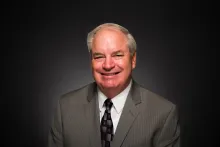
Robin Webber was born in Chicago, Illinois, in 1951, but has lived most of his life in California. He has been a part of the Church of God community since 1963. He attended Ambassador College in Pasadena from 1969-1973. He majored in theology and history.
Mr. Webber's interest remains in the study of history, socio-economics and literature. Over the years, he has offered his services to museums as a docent to share his enthusiasm and passions regarding these areas of expertise.
When time permits, he loves to go mountain biking on nearby ranch land and meet his wife as she hikes toward him.
