
Jorge de Campos
This transcript was generated by AI and may contain errors. It is provided to assist those who may not be able to listen to the message.
Good evening, brethren! I hope you're having a good week. We continue this Wednesday night Bible study with covering the epistles of Paul, and today we're going to cover from the Jerusalem Conference all the way to when Paul wrote 1 Thessalonians. It is important to understand why there was a need of a Jerusalem Conference. In Acts 15, starting in verse 1, we can see that a number of certain men which had come from Judea started creating problems and raising up a number of issues, saying that as we read in verse 5, in Acts 15 verse 5, says it's necessary to circumcise them in the words of Gentiles and command them, the Gentiles, to keep the law of Moses. In other words, specifically they were talking about those sacrifices and those sacrificial acts. And Paul was saying, no, that's not required for the Gentiles. We are made right by Christ's sacrifice. Those sacrifices only point to Christ. So let's just put this into context by looking at a map. And Paul was in Antioch when this situation in Acts 15 came up. This was after his first missionary trip.
Now, what happened in his first missionary trip? He went to Cyprus. From there, he went to what we call southern Turkey. He went into Perga and then to Antioch of Presidia. So there's a second Antioch. This is the Antioch where it was basically his own base. And then in the area of Galatia, he went to Antioch of Presidia, then to Iconium, then Lustre, and the Durbic, and then all the way back to Antioch. So we see this situation in Acts 15 where people are hearing that Paul is preaching to the Gentiles that they don't need to be circumcised and they don't need to have those sacrificial ritual offerings, those ritualistic laws. And so this became an issue with the Jewish community that became members of the church. So let's see where this first came up as an issue, which was during his first trip when he was in Antioch of Presidia. And that we see in Acts 13 verse 38 says, therefore, there be now to you, brethren, that through this man, that's Jesus Christ, he preached to you the forgiveness of sins, and by him Christ, everyone who believes is justified here with my right of God. From all things, you know, it was from all things that we've done wrong that made us sinners. So we justified who made right, we forgiven through Christ, through him. Things that you could not be justified by the law of Moses. It was the law Moses. The sacrifices were there to, they thought to justify people. But no, the sacrifices Paul was explaining only pointed to the real sacrifice, which is Christ, our real Passover, our Passover land is Christ. So we read a little later in verse 42. So when the Jews went out of the synagogue, the Gentiles begged that these words might be preached to them the next Sabbath. You see, the Gentiles will keep you in the Sabbath here. And verse 44, on the next Sabbath, almost the whole city came together to hear the word of God. And when the Jews saw the multitudes, they were filled with envy. And now you see a carnal spirit, a carnal, a wrong carnal attitude, envy, and contradicting and blaspheming the apostle, being spoken by Paul. So we can see at this time what was happening. Jews were coming in, which were originally just Jews, but now in Acts 15, were Jews that had come into the church. So once again, let's look at this map. What do we have? We have Paul preaching in Antioch, and there we can see Jews raising up this issue. This issue then became an issue that created the situation. These Jews came to Antioch after Paul's first mission. When these Jews came to Antioch, not instructed to come to Antioch by the church, but they came and started clear, pausing the vision, saying that the Gentiles needed to be circumcised and needed to observe the ritualistic portions of the law. So let's continue now in Acts 15. So as I was saying in chapter 15, verse 1, certain men came down from Judea and taught the brethren, unless you're circumcised according to the custom of Moses, you can't be saved.
Now, they came down because Jerusalem is an higher level of altitude, and so they came down to Antioch. And so, saying that unless you're circumcised according to the custom of Moses, it basically wasn't just circumcision, it was the whole ceremonial law. As we see in verse 5, it says, circumcised them according and to command them to keep the law of Moses. So it wasn't just circumcision. Therefore, we're now reading in verse 2, therefore, when Paul and Barnabas had no small dissension and dispute with them, they determined that Paul and Barnabas and certain others of them should go up to Jerusalem, to the apostles and elders, about this question. And so, they being sent on their way by the church, they passed through Phoenicia and Samaria, describing the conversion of the Gentiles, and they caused great joy to all the brethren. So, if I just briefly share that screen again, you will see in the hour, they came down from Antioch and they came towards Jerusalem and they passed through Samaria.
All right, so let me just accept a few people more that are just coming. So, as I was saying, they came down to Jerusalem and as they explained to the people what was happening, how God was also calling Gentiles, they were very excited. And so, we see, yeah, in verse 4, and when they came to Jerusalem, they were received by the church and the apostles and the elders, and they reported all things that God had done with them. All the great work of conversing and bringing Gentiles to repentance. But, yeah, is the same problem that was developing that people came into the church and they're bringing some of their concepts, which were not 100% clearly understood, and they were trying to bring those understandings into the church. And it says, some of the sect of the Pharisees who believed.
So, these were people that had been Pharisees that come from the sect of the Pharisees, but now they believed. In other words, they came into the church and they probably, very probably, they were baptized in the church. And they start saying, it is necessary, it is required to circumcise them, in those Gentiles, and to command them, the Gentiles, to keep the law of Moses, those ceremonial laws.
Now, the apostles and elders, verse 6, came together to consider this matter.
And then in verse 7, it says, and when there had been much dispute. So, the whole situation became, let's call it, quite heated up. It was quite a dispute. And this is in the church of God, in the early New Testament. This is in Jerusalem, the Jerusalem conference, which was in AD 49. So, we're actually talking, Christ died in AD 31. So, that was some 18 years after Christ's death. And so, they had this, let's call it, dispute, as it says there, a dispute. And then it got resolved, as we see there, that there resolved a decision that the Gentiles don't need to keep that ceremonial law, nor do they need to be circumcised. So, this is specifically applicable to the Gentiles. And so, those ceremonial laws pointed to Christ, which is the ultimate sacrifice. Circumcision pointed to changing our hearts. And therefore, we see that there was this misunderstanding about this law, which had been added because of transgressions. So, the law of ceremonies that pointed to Christ was added. Why? Because of sin.
You and I need Christ's sacrifice. We need what those ceremonies pointed to, which is Christ, because of sin. We need Christ's sacrifice. So, the ceremony law, once again, pointed to Christ. And the Gospel is not talking about God's law, the Ten Commandments. It's talking about those ceremonial laws which were added because people transgressed or broke God's laws. You can read that in Galatians 3, 19. I'm not going to go there now, but this was the basic issue.
Now, how is that applicable to today? What is that meaning to today? The meaning and importance here is that we have some very interesting principles here. Number one, Yahweh's Paul that was going to the Gentiles. And Paul had a credibility issue with a number of people in Jerusalem. Why? Because many years before, he had been killing Christians. Some, let's call it, 15, 16, 17 years before he had been killing Christians.
And therefore, they didn't trust him. There was a credibility issue. That's why Peter, you know, had to be the one that God first opened the door to the Gentiles. And we see that in Acts 10. We're not going to go there now, but when you look at Acts 10, there was the situation with Cornelius and that dream or that vision that Peter had with that large sheet with all types of unclean animals. And Peter said, what does this mean? So that opening of the door to the Gentiles was first initially done through Peter because there was, he had the credibility. But later on, you and I know, Paul was called for this job of going to the Gentiles, whilst Peter had a job to go to the Israelites, as well as other apostles had different jobs to do. So, Paul had to go to the Gentiles. That was his responsibility. And therefore, because there was a credibility issue, and because people are bringing into the church a misunderstanding about the physical sacrifices, my question again is, what is that similarity or what is that principle for today?
Well, the principle for today is that when people come into the church, they bring with them, their baggage, or they continuously get infected by the baggage of this world.
You see, it's easy to people come to the church and listen to ministers of other religions, and they bring those wrong ideas, albeit just a little bit wrong. Maybe they have a lot of truth, or greater or lesser degree of truth, but you start listening to these people, and exactly these ideas or these thoughts come back into the church. We have to be careful of that. So, that is one issue. Be careful with baggage that comes from the world. And secondly, we have to trust Christ as the leader in the church that he knows what he's doing.
And today, you see a number of instances where people don't have trust in the leadership of the church. Am I talking about that the leaders today in the church need to be dictators and autocrats? No, but there needs to be a submission, a willing submission to the guiding, gentle, as it should be, leadership in the church, just like the wife should submit to the husband.
It's not that the husband is dictating or positively saying, wife submit to me. No, that is wrong. But there needs to be that willing, voluntary submission. And that principle is applicable to the church as well. So Yah is two points. One is do not bring baggage from your old background where you came from into the church. Be careful to separate it, to put it aside. And secondly, make sure that you are careful to be submissive to the authority in a godly and rightful way.
And so the authority, the gentle leadership, should I say, rather than authority, the gentle leadership that should be in the church, we need to submit to it. Now you may think, well, that I am harboring too much on this point. But indeed, brethren, there is a spirit of independence out there. And that is basically a spirit of that I don't need to be part of an organization.
I can just be any way. But brethren, we need to be part of God's church. And God's church, obviously, yes, we know it's a spiritual organism. But God's church, as a spiritual organism, as Christ as appointed, lead us to do a work. And we as a work, to do a work, we need to be working together, putting the shoulders one on another to serve and do the work.
So that's what we need to do. We need to have that willingness to cooperate. So these are problems that can creep into the church, and Satan has not changed. Satan will continually follow those sort of tricks. So that's one thing we have to be careful about. So talking about doctrines coming into the church, in the early church, there were basically two types of problems that crept into the church. One was from, let's call it, an extreme right-wing Pharisees, an interpretation of God's law, which had become pharacycho, which had become self-righteous. There was one extreme on one side.
And then there was the other side, as Gentiles started coming into the church, and more and more Gentiles started coming into the church. They brought with them their, let's call it, extreme on the other side, which was more liberalism. Oh well, we are forgiven by grace, and before there is this liberal grace only.
All you need is to believe in Christ, you're already saved. And those two attitudes can easily creep into the church today as they crept into the early church. That's why, in Paul's letters, later on, we see that he was not only struggling or combating or defending the fife against this extreme right, let's call it, pharacycho self-righteous approach. But as we can see in his latter letters, he was also working against these ideas that came from paganism, liberalism, and things like that.
So those two doctrinal issues were creeping into the church, and he was continuously fighting that in the early church, and it's nothing different today. We see in people coming to the church from the world, and they bring with them their worldly ideas, wherever they are, whatever they are, and we have to be careful not to follow those worldly ideas.
On the other side, there's also some people that are super strict in thinking that that super strictness is going to justify them, and therefore we have to look at these episodes of Paul with that understanding to really see how Paul brought that balance time and time again into the early church.
So this we have to be careful with. So now, at the end of Acts 15, at the end of Acts 15, we see the outcome of that conference, and the outcome of that conference was, as we can see starting in... let's look at it...
this we can see here in verse 19. We see that James started talking, and then James said in verse 19, therefore I judge that we should not trouble those from among the Gentiles who are turning to God, but that we write to them to abstain from paganism, basically. Paganism, that's what he's talking about. To abstain from those pagan ideas, and what those pagan ideas were at that time? They were idols and sexual immorality. And brilliant today, there's a lot of idolatry and sexual immorality. And you may say, what do you mean? There's not that much idolatry. Oh, yeah, there is a lot of idolatry. For one, people make of themselves an idol, and their ideas become an idol. But there is a lot of idolatry in this world, not the way it was in the old days, but well, some of it is still in some of those churches. But people have made a lot of other idols today modern, let's call it idols. Let's just leave it at that. And sexual immorality, there's so much sexual immorality in today's world. Such sexual deviation from the truth, it is just shocking. And from things strangled, and from blood. So there were a number of things they did there at that time, related to paganism. And James was the leader of the church in Jerusalem, from what we can understand. And he's like, for instance, being the chairman of the council or something like that. And so he then put that directive. And for Moses, he has that throughout many generations, those who preach him in every city, being readiness in regards every Sabbath. So we have all the other laws that haven't changed. They haven't changed. You all know the Ten Commandments, you know the instructions, you're getting that every Sabbath. So there's no deviation on the Sabbath. And that instruction, it says, it pleased the apostles and elders with the whole church to send, therefore, chosen men of their own company to Antioch.
So that is back to Antioch, to let's call it Paul's, where he would start from, to Antioch, with Paul and Barnabas, namely Judas, who was also named Bar-Sabbas and Silas, leading men among the brethren. And then they wrote this letter, explaining to them, and it says, the apostles and elders and brethren, to the brethren who are of the Gentiles. So it's actually addressing, as we see, brethren, we are of the Gentiles.
And in Antioch, Surah and Cilicia greetings. Since we heard that some went out from us, in other words, they were Christians, they had been converted, they were of the faith, they had been baptized, but they were in headquarters in Jerusalem, but they were of this sect of the Pharisees, as we saw a little earlier on. And he says, since we heard that some who went out from us have troubled you with words, unsettling your souls, unsettling your faith, saying that you must be circumcised and keep the law. It was saying that you, Gentiles, have to be circumcised and keep the ceremonial law, to whom we gave no such commandment. We did not give the instruction for them to go there to the Gentile areas where you Gentiles are, and we never told them to go there and say this. So they went of their own volition.
So since this has happened, says this Leria, it seemed good to us, being assembled with one accord, to send chosen men to you with our beloved Bar-Nabaz and Paul, men who have risked their lives for the name of our Lord Jesus Christ. We have therefore sent Judas and Silas, who will also report the same things by word or mouth. So these men are reporting to you the same thing. First, for it seemed good to God's Spirit, to all His Spirit, and to us, to lay upon you no greater burden than these necessary things. In other words, that you leave paganism and not start keeping the ceremonial laws, or more specifically, that you abstain from foods offered to idols, from blood, from things strangled, and from sexual immorality. So basically, all these things are referring to things that they were doing at that time related to paganism. So if you keep yourselves from these, you'll do well. Farewell. So this then became the structure. And then after a little while, after a little while, we can read there in verse 35, Paul and Bar-Nabaz also remained in Antioch, teaching and preaching the word of the Lord with many others also. Then after verse 36, after Sundays, so after a period, Paul said to Bar-Nabaz, let us now go back and visit our brethren. And so it's like me sometimes says, okay, now something goes into my mind and says, hey, it's time to go and visit the brethren in Angola or in Brazil. And he says, all right, let's go and visit our brethren. In this case, they went in every city where we have preached the word of the Lord and see how they're doing. How they're doing? How can we help them? So it's like a ministerial visit, or as we know, was an missionary trip. Now Bar-Nabaz was determined to take with them John, called Mark, but Paul insisted they should not take with them the one who had departed from them in Pamphylia and had not gone with them to the work. Then again, there was another little argument, not only a little argument, because he says that the contention became so strong. So yeah, we have Paul and Bar-Nabaz arguing whether they should type John, Mark, or no. And so the contention became so sharp that they parted from one another, and they went in different directions. Not that they left the church, but they decided then on the second trip, so I'm going to share a map here again, and there now is a map of this second trip, and you can see they were in Antioch. So Paul decided to go up and into what we call Turkey, while John Mark, we can see, went this way down to Cyprus. So they went in basically, let's call it, two different missionary trips, one to Turkey and another one to Cyprus. So that's basically what happened. So continuing here.
So we have, so Bar-Nabaz took Mark and sailed to Cyprus. That's at the end of verse 39 and verse 40. But Paul chose Silas or Sylvanas, as it's in other places sometimes referred to, and departed, being commanded by the brethren to the grace of God. And he went through Syria and Cilicia, strengthening the churches. So Syria and Cilicia. So back to showing this map again.
We can see here, there is Cilicia. And so he went through this northern part of Syria and Cilicia. And then he went through the areas where they had been before. And then they went further. They wanted to go to other areas, but God's Spirit then led them to go to Europe, across from Asia to Europe.
So let me stop sharing the screen here. All right, so. And this is how the second missionary trip started, which was around about the year 50 to the year 53. So that's how the secondary missionary trip started. So let's go now to chapter 16. Then it came to Derby and Lystra. And behold, a certain disciple was there named Timothy. So there he met Timothy there in Lystra and Derby. So I'm going to share the screen again very briefly. So you can see where that is around this area. And then Timothy joins them. You can see they met Timothy, and that's where Timothy joins them and goes with them. All right. So let's continue reading. Timothy, the son of a certain Jewish woman who believed that his father was Greek. He was well spoken of the brethren with Lystra and Iconium. And Paul wanted to have him to go with him. And he took him and circumcised him. Why did he circumcise him? Because he was Jewish. His mother was Jewish. The father was not Jewish. So when he was young, the father had a right to say, no, he's he's Gentile. I don't believe in circumcision. So he wasn't circumcised as a child. But now he was called, he was in the church, and he was Jew. So Paul was not necessarily against circumcision.
He was saying that circumcision was not required for Gentiles. That's an important point. So Paul was circumcised him because he was Jew. And so because of the Jews who were in that region, for they all knew that his father was Greek. So and as they went through the cities, they delivered to them the decrease to keep, which were determined by the apostles and elders at Jerusalem. In other words, they gave that letter and they said, yeah, you Gentiles, you don't need to keep the ceremonial law. You Gentiles don't need to be circumcised. And that way the churches were strengthened in the faith and increased in number daily. So there we can see that they're going through. And when they had gone through Persia and the region of Galatia, that's let's call it that central area of Turkey, Galatia, they were forbidden by the Holy Spirit to preach the word in Asia. In other words, to go further east. So they were led by God's Holy Spirit to go to Europe. Let's see how that happened. After they had come to Mysore, they tried to go into Bithynia, Bithynia, but the Spirit did not permit them. How God through His Spirit does that, quite often is through circumstances. Circumstances in our lives lead us in different directions. And therefore, later on, you and I can say, well, God's Spirit led in this way to not permit this to happen. How? Because at that time there were circumstances in our lives that led us in a specific direction. So passing Mysore, they came down to Troas, and then a vision appeared to Paul in the night. A man of Macedonian stood. A Macedonian is, let's call it, in Europe instead of being in Asia. So that's today's life. Lord and Greece. A man of Macedonian stood and pleaded with him, saying, come over to Macedonian and help us. So God allowed this vision, as it is, to lead Paul.
Now understand, God is doing work through His men, His leaders, and He's guiding them. When I come across and I go into different countries and you have people that are not even obeying God's laws, or they're not keeping the Sabbath, and they say they had visions, and they saw God's throne, and things like people have told me, and they saw this, and they saw these eyes, whatever it is, and things like that, that is not from God. That is not from God, because nowadays we read, nowadays we get instructions through Christ. We read that in Hebrews chapter 1, writing verse 2 and 3. Now God speaks to us through His Bible, through that. But God may, to some of the leaders occasionally, guide them in some ways to give them specific instructions. Yeah, we have. Paul had a vision in this case. But generally speaking, that is not the case. We've got God's Word and the book of Revelation to guide us. So when I come across people that are not even keeping God's early days, and they're telling me they've seen God's throne, and they've seen God, and this, that, and that, to me it's a red flag, a big red flag.
Anyway, so we see YAH as we see YAH in verse 10. Now after He had seen the vision, immediately we sought to go to Macedonia, concluding that the Lord had called us to preach the gospel to them. Now look at it. Look at this. After YAH, it was they. You see that in verse 6, now when they had gone, and in verse 7, after they had come to miss you. But now in verse 10, it says, immediately, or they'd seen the vision, we sought. So the the pronounia changes from thy to we.
And then we see concluding that the Lord had called us to preach the gospel. So what does that mean?
That means that look, the writer of the Book of Acts, joined them. At that time, Luke joined them on this mission trip. You see, so on this mission trip we have Luke, Paul, and Silas, Silvanus, and also Timothy. So we have these four people, at least on this trip. They probably, surely, they must have been possibly a caravan with other people, maybe some ladies and things like that, to help with the cooking, and all that. It was an organized thing. So we see there now they move and it says here in verse 11, sailing from Trowas and we ran straight course to Samothrace and the next day to Neapolis and from there to Philippi, which is the foremost city of that part of Macedonia, that's northern Greece, a colony.
And we were staying in that city for some days, so they went to Philippi. So let's share that screen again. So we can see they came across here and they went across there through that island and then they went to Philippi and they stayed there a few days. So now they left, let's call it Asia. This area is also referred to as Galatia and that's why we got the Gospel, the letter to the Galatians. It's this area in Malaysia. But then they left what we call today Turkey or Asia and they went into southern eastern part of Europe. All right, so that just gives you a little brief idea. So they went into Philippi and then verse 13, and on the Sabbath we went out of the city to the river side where prayer was customarily made and we sat down and spoke to the woman who met there. So there were a number of people that were gathered together there.
And now verse 14, a certain woman named Lydia Curtis. She was a seller of purple from the city of Phaya Tyra. Phaya Tyra is a city in Malaysia. She was probably a sales lady going out and traveling and selling this purple material, maybe cloth, maybe thread and things like that to make things. And so she was a seller of purple, purple things. Purple was a very special color, very rare, and therefore was a good business that she had. And the Lord opened her heart to hear the things spoken by Paul. And when she and her house household were baptized, she begged us saying, if you have judged me to be faithful to the Lord, come to my house and stay. And so she persuaded us. So there is a number of people, us, a number of people that stayed in her house. So she must have been a successful business lady with a lot of successful resources. And she was baptized there at that time, and they were in for the pie.
And then we get to verse 16. I'm building up, I'm building up to the point of us getting to where the first epistle or first letter of Paul was written, we're getting to that point. So we're building that up. So now it happens as we went to pray that a certain slave girl possessed the spirit of divination met us, who brought our masters with a much profit by fortune telling. So there was some evil spirit there, and this person was making a business.
And then we see this girl followed Paul and us and cried out saying, these men are the servants or the most I got who proclaim to us the way of salvation. So she was kind of going around and saying things and becoming a little bit of a pain. Let's call it just that way, a pain in the neck. And this she did for many days, but Paul, greatly annoyed, turned and said to the spirit, to the demon, I command you in the name of Jesus Christ to come out of earth. And he, this demon, came out that very hour. And where a master saw that their hope of profit was gone, they seized Paul and Silas and dragged them into the marketplace to the authorities. And they brought them to the magistrates and said, these men being Jews, exceeding trouble our city, and they teach customs which are not lawful for us, being Romans, to receive or observe. So Yah is this whole city being impacted. So they ended up going to jail.
So we know the story about the the Philippian jailer, and then he was baptized as well.
So we know that story. And so we're going to move forwards a bit. And then, and then the situation led that they left.
Well, they, at that moment, they're in jail. And Paul says, you know, how can you keep me in jail? How are you doing this?
When, when you know that I'm a Roman. So he, he stood up for his citizenship there.
Now, anyway, so, so they left him. It says at the end of verse 40 of chapter 16.
And so they went out of the prison and entered the house of Lydia. And when they had seen the brethren, they encouraged him and departed. Verse chapter 17 verse 1. When they had passed through the polis and polonia, they came to Thessalonica, where there was a synagogue of the Jews.
So now they came to Thessalonica. Now let's get back to that map to get an idea of where we are.
They, they left Philippi and then they went out west to Thessalonica. You can see Thessalonica.
All right.
They went to Thessalonica. There was a synagogue. Then Paul, as his custom was, went into them for three Sabbaths, reasoned with them from the scriptures, explaining and demonstrating the Christ had, that Christ, the Christ had to suffer and rise again from the dead, saying, this Jesus whom I preach to you is the Messiah, is the Christ.
And some of them were persuaded, and a great multitude of devout Greeks, and not a few of the leading women joined Paul and Silas, or Sylvanas. But the Jews, who were not persuaded, became envious. You see, again, this thing of envy. Why? Because there's this big group that's not part of them developing, and, and yeah, they're teaching you don't have to, to the Gentiles, that you don't have to keep the ceremonial law. And they said, well, this is a problem, and they became envious. Now note here, one thing, they preached for three Sabbaths, and there were a lot of Gentiles. Now, why did they do that for three Sabbaths?
Couldn't they have done other days of the week if the Sabbath was done away?
You know, for three weeks, that's 21 days. And the Jews, they were not allowed to do that. Now, you take the Sabbaths out of that, they had another 18 days. They could have preached to them, but no, they taught them on the Sabbath. So Sabbath is not done away, and we can see clearly, Yah Paul in Thessalonika was not doing away with the Sabbath.
So we see Yah in the Jews who were not persuaded, became envious, and some of the evil men from the marketplace and gathering a mob. So now, this becomes a riot. There's a mob here. Set all the city in an uproar. Can you imagine? This thing was just becoming an uproar and attacked the house of Jason and sought to bring them out to the people. But when they did not find them, they dragged Jason and some of the brethren to the rulers of the city crying out, these have turned the world upside down, have come here too. So we can see that there was now a situation here that the people were being treated very badly, and particularly Paul was being treated very badly. And so, and Jason as offered them, and saying that he's another king, Jesus, and they traveled the crowd and the rules of the city when they heard these things. So when they had taken security, it was maybe bail, they paid bail to get out of jail from Jason and the rest, they let him go. So verse 10, then the brethren immediately sent Paul and Silas away by night to Berea. So we see here that Paul and Silas were sent further west to Berea. So as they leave Thessalonika, they go a little further west to Berea. So Paul was pretty rough, and people in Thessalonika, and we're having a real hard time there, because the city was upside down, and there was a lot of opposition.
So here we see the brethren in verse 10, then the brethren immediately sent Paul and Silas away by night to Berea, and when they arrived, they went into the synagogue of the Jews. And those were in Berea, and those were more fair-minded than those in Thessalonika, in that they received the word of all readiness and searched the scriptures daily to find out if these things were really so. So what do we have here? Paul now leaves, and then he goes into Berea. But then look at it in verse 15. But when the Jews from Thessalonika learned that the word of God was preached by Paul at Berea, they came there also and stirred up the crowd. So they started creating more grief there, as we can see. They started creating more trouble. So we learn from this that Paul was only about three weeks in Thessalonika when persecution began quite intense, and he had to live Thessalonika for his own safety. Then he went down from Berea. We can see then he went to Athens, as we read now in verse 14. Then immediately the brethren sent Paul away from Berea, because these people from Thessalonika, they were so aggressive that Paul had to be sent, and he went by sea. He says, and the brethren sent Paul away to go to the sea. But both Silas and Timothy remained there. So we can see that Paul went to Athens, right? But the others remained in Berea. So let's just look at that again in the map. So we can see Paul went down by sea to Athens, but the others stayed still in Berea and somewhere in Thessalonika as well. So let's just continue. Now, while Paul, verse 16, waited for them in Athens, then we hear the story, how we spoke, in Athens, in the Apogas, in Mars Hill, you know, and then we see further then we see, or we'll pick it up now in chapter 18, after these scenes, Paul departed from Athens and went to Corinth. So we see Paul went to Corinth, where he started a church after seven months of difficult labor. So he stayed there in Corinth for a while. He stayed in Corinth for a while, and he sees there, and he found a certain Jew named Achille, born in Pontus, who had recently come from Italy with his wife Priscilla, because Claudius had commanded all the Jews to depart from Rome, and he came to them. So because he was of the same trade, of the same trade as Paul, so Paul was also working as a tentmaker, so he stayed with them for, by occupation, the wet tentmaker.
Any reason, in the synagogue, every seven. So again, Yahweh see in the synagogue every seven.
And when Silas, now we read verse five, when Silas and Timothy had come from Macedonia, so they had come from northern Greece, Macedonia, they came down to meet Paul. Paul was compelled by the Spirit and testified to the Jews that Jesus is the Christ. But when they opposed him and blessed him, he shook his garments and said, Your blood be upon your heads, I'm clean from now on, I'll go to the Gentiles. So he says, Hey, I need to be preaching to the Gentiles, not to the Jews. So he departed from there and entered the house of a certain man named Justice, one worshiped God, whose house was next door to the synagogue. Then Christmas, the ruler of the synagogue, believed on the Lord with many of his household, and many of the Corinthians, hearing, believed, and we were baptized. Now the Lord spoke to Paul in the night by vision, Do not be afraid, but speak, and do not keep silent, for I am with you, and no one will attack you or hurt you, for I have many in the city. So he stayed, look at the art, in verse 11, he stayed and continued there a year and six months. So he stayed there in Corinth for a year and a half, teaching the word of God among them. And verse is when he wrote first Thessalonians and second Thessalonians. This is the period when he wrote these letters, these two letters. And so if we now just briefly start looking at first Thessalonians, let's look quickly to first Thessalonians.
First Thessalonians, because that was his first episode, because now he wrote to the Thessalonians. Understand, the Thessalonians had had this great persecution, and now he was worried about how they were doing. Now, as we read first Thessalonians, I am going to jump in to chapter 3. To chapter 3, verse 1 and 2, because it says, Therefore, when we could no longer endure it, we thought it good to be left in Athens alone and sent Timothy, our bride and minister of God, and our fellow Lord in the Gospel of Christ, to establish you and encourage you concerning your faith. So one possibility what he could have done was when he was in Berea and things kind of boiled up, and he decided to go to Athens, and then from there he went to Corinth and stayed in Corinth for a year and a half, it's possible that when he was in Berea, that's one possibility, he then was worried about how the brethren were in Thessalonica and he sent Timothy, our bride and minister of God, and our fellow labor in the Gospel of Christ, to establish you and encourage you concerning your faith. So he sent Timothy back to Thessalonica to help them. And there we read in 1 Thessalonians, chapter 3, verse 3, that no one should be shaken by these afflictions. Yeah, they were having a lot of afflictions. For you, yourselves know that we are appointed to this. We all appointed to to have trials and difficulties. So, Timothy went back to Thessalonica. Now, when Timothy came back, he brought good news about Thessalonica. And that's why, in the beginning of the letter of Thessalonians, Timothy came back from Thessalonica to Corinth. And now we see in the introduction of the first epistle of Paul to the Thessalonians. It says, Paul, Sylvanas, which is Silas, and Timothy. Why Timothy? Because Timothy had come back from Thessalonica and brought good news. And he says, Grace to you and peace from God our Father and the Lord Jesus Christ. We give thanks to God always for you, making mention of you in our prayers, remembering without seizing your work of faith, your labor of love, and patience and hope of the Lord Jesus. And then he says, how nice! We heard the good news that you are doing well, even though you're going through trials. So, my intent today, briefly, was just to bring Paul's life, Paul's early life, up to this point where he wrote the letter to the Thessalonians. And then in the next study, we're going to start studying this first epistle to the Thessalonians. But with this background, it gives you an idea how this letter was written, how the situation developed, and therefore, we'll continue with this study, looking at Thessalonians, first Thessalonians, next week. Thank you so much for your participation today.
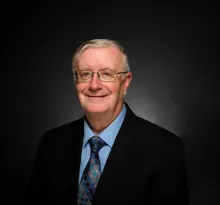
Jorge and his wife Kathy serve the Dallas (TX) and Lawton (OK) congregations. Jorge was born in Portuguese East Africa, now Mozambique, and also lived and served the Church in South Africa. He is also responsible for God’s Work in the Portuguese language, and has been visiting Portugal, Brazil and Angola at least once a year. Kathy was born in Pennsylvania and also served for a number of years in South Africa. They are the proud parents of five children, with 12 grandchildren and live in Allen, north of Dallas (TX).
