
Jorge de Campos
This transcript was generated by AI and may contain errors. It is provided to assist those who may not be able to listen to the message.
Good evening, brethren. We are so far in our study about the Epistle to Thessalonians. We covered a purpose why Paul wrote it, and in summary, he wrote it to encourage the brethren in the area of Thessalonika to strengthen them under the persecution that we were going through.
He also corrected some of his understanding, some errors, particularly regarding Christ's prophetic return.
And then tied to that, there was some laziness in the church as well. Some were deciding not to work because Christ's coming was very short, and so he addressed that. And he also addressed the the danger that some were allowing some pagan practices to get back into the church.
So they were allowing some old habits creeping in. So he was addressing those things. The letter, as we mentioned, was written about 20 years after Christ's death. So in the years about 51-52 AD. And as we let's look at the first Thessalonians, just as a brief review, in chapter one verses two and four, after an introduction asking for God's grace and peace on the brethren, Paul thanks for their work of faith, for their labor of love, and for their patience, for patience, and the hope of hope in Christ, all within the understanding of our great election. Not just calling, but election as well. So then he went in verse five, he then mentioned that, you know, rather explained that the gospel was not just preached, but also came in power by God's early Spirit, and with much assurance, with much conviction. Now we did also talk a little bit in the previous study that we talked about that God's Spirit is the Spirit of power, and obviously God has got an enormous amount of power. You know, we just can't even begin to comprehend the power he has, but he only gives us a certain segment of his power, and that is power and attributes and gifts as required, but particularly to help us to change ourselves.
In other words, you and I do not have power to change other people. So we have God's power to help us in the process of sanctification. That's why the Bible talks about it, the sanctification of the Spirit, and that is power for us to transform, for us to use, to transform ourselves into, from our natural human nature into divine nature, to be partakers of the divine nature. So when we were reading there in verse 5, we then also highlighted two points, because it says that the gospel does not come only in word, but also in power and power of the Holy Spirit. And we talked about two things about God's Word, the Bible, and God's Holy Spirit, and we said that those are two convicting agents. Convicting is more than just convincing.
You and I can't really convince anybody. I mean, we can try, but you know, a man convinced against his own opinion is of the same opinion still. So you really can't convince somebody, but convict is even more. And the two convicting agents that makes us really know and know that that is truth, and that's what we need to do, are God's Word and God's Holy Spirit.
Those are the two convicting agents. You and I can turn our faces blue to try and convince somebody and we'll not succeed, because the only two convincing agents are the Bible, God's Word, and God's Holy Spirit. We read God's Word, we see God's instruction, and God's Holy Spirit preaches our minds to say, George, put your name there, we've got to do this. We've got to become better people. We've got to change. We've got to be careful of what we say. We've got to be careful of our attitudes.
We've got to be careful we don't have a root of bitterness, and so on and so on. So these are just things that God's Word and God's Holy Spirit work together to convict us. So we then refer to two scriptures, John 6, 63, because there it equates God's Word, the Bible, with Spirit, and John 16, verse 7 and 8, because there it says God's Holy Spirit is a convicting agent.
And so God's Word is compared to God's Spirit, so God's Word is also a convicting agent. And so we therefore showed that the miracle of God's Holy Spirit, God's power of His Spirit, is to convict us. And therefore it's like a a catalyst. Think about it, if you when you when you were at school, you had those chemical projects, and then you put two things together and nothing happened, but then you put a catalyst and then things would happen.
So the Holy Spirit is like a catalyst. It's like a spiritual catalyst, or it's like an agent that makes us to be convicted, if obviously we work on it and we want, because we've got three moral agents. So then in verse 7 of 1 Thessalonians chapter 1, Paul encourages the brethren in Thessalonians by showing that they had become an example. And we went into that, we explained how that word example is like a mold that is used to mold, to create a replica, mold, an example that could be replicated like a stamp.
And then in verse 8 it says, because of the example, God's word, the word of the Lord, was preached, and preached in a way that it sounded forth, in other words, it blasted. The effectiveness of that preaching was so effective, and why? Because of their example. So let nobody ever underestimate the value of our example to other people.
Then in verse 9, then he said how it had turned, that because they threw that, they turned that example of they turning from paganism to God's way, and specifically to serve God. They were served like Christ's serves, in what is that, dolu, or dolus, couple, service, like a slave. And then in verse 10, it says that it remains, then in the concluding of that chapter, to be patient, to be patient for Christ's return. And this is kind of putting the foot on the door for a subject that he wants to bring in, it's like reading into the subject that he wants to talk about, about Christ's coming.
So today we're going to proceed from there, and we're going to start in chapter 2. And then as we read in verse 1, it says, for yourselves now brethren, that our coming to you was not in vain. So we came to you on this missionary trip, second missionary trip, and we didn't come to you in vain. Why? Because there were fruits. There were fruits, fruits that you changed from paganism to God, and you become an example that is sounding forth, is trumpeting.
It's actually such a powerful example to the whole society around that time. And so that Paul's visit to them was not in vain. And then in verse 2 he says, for even after we had suffered before and were spitefully treated at Philippi, as you know, we were bold in our God to speak to you, the gospel of God, in much conflict.
In other words, they had problems in Philippi. You remember they were thrown into jail, and there's the story about the jail that was converted. You can read that in Acts 16 verses 23 to 27. And so then from there they went to Thessalonica, and there was this whole situation, a lot of conflict, and that conflict only grew in Thessalonica. As we know. And then as we read here in verse 2, he says, as we suffered before you and were spitefully treated at Philippi, as you know, we were bold in our God to speak to you, the gospel of God.
You see, it's the gospel of God. It's the gospel of the kingdom of God, but it is God's message.
It's the message that came from God. The message that comes from God is that he's going to establish the kingdom of God on earth, and he's going to make us members in that kingdom, in that royal family, in that family of God. And that was the gospel that Christ proclaimed, because Christ was sent to preach, to proclaim, that gospel of God. So yes, therefore it became the gospel that Jesus Christ preached, which was man-under than the gospel of the kingdom of God. If you know, you and I turn very briefly to John 12 verse 49. John 12 verse 49. There we see that Christ only spoke what he was told to speak by the Father. John 12 verse 49. We read, for I have not spoken on my own authority. I am not ad-libbing and saying, I'm doing this, I'm doing that. No, he says, but the Father who sent me, Christ was sent by the Father, was a different being, a different being of the God-kind, and he was sent by the Father. And he gave me a command.
What command? That I should, what I should say and what I should speak.
And therefore, what Christ said was according to the Father's guidelines.
So, here we see, Christ only said what he was told to say. Obviously, it's not every single word, but it's the message, the information. That's what he had to give to us, to mankind, because that's the message that he received from the Father to give to us. Now, if we read in Mark chapter 1, Mark chapter 1 verse 1, Mark chapter 1 verse 1, the beginning of the gospel of Jesus Christ, the Son of God. Obviously, it is the gospel of Jesus Christ, the Son of God, but he only spoke what the Father told him to speak. So, obviously, the gospel of God. So, and then you read a little bit further in verse 14 and 15, still in Mark chapter 1. Now, after John, John the Baptist, was put in prison, Jesus came to Galilee, preaching what? The gospel of the kingdom of God. There was the gospel of Jesus Christ that he taught. It was the gospel of the kingdom of God. There was the gospel of God, the Father, that the Father told Christ to preach, to teach. And then he's saying, the time is fulfilled, and the kingdom of God is at hand. Why is the kingdom of God at hand? Because, of course, we can say, well, because Christ the King of the kingdom of God is dead. But it's more than that. Yes, that's true. But it's more than that. It's because Christ is now, as now, suffered. He's now come as a human being. He's humbled himself. He's died. He's suffered. Okay, he hadn't died yet, but this was the job that he was fulfilling. And therefore, the gospel of the kingdom of God is now a fact. Well, it's always fact, when God says, but the price that had to be paid is now paid. He gave up his eternal life in the form of God, and he emptied himself, and he became of the form of a human, as you and I read in Philippians chapter 2, verse 6. So, the kingdom of God is now at hand. Yes, the King is near, but the gospel, the kingdom of God is now at hand, because the door, the key factor that is required for us to be redeemed by Christ's blood, was now in the process, so be executed, and therefore it was at hand, was nearby. So, that is an additional meaning that we can read from that. So, now continuing in 1 Thessalonians chapter 2, verse 3. And then we read, For our exhortation did not come from error or uncleanliness, nor was it in deceit. So, our persuasion, our insistence, our enthusiasm in preaching the gospel, our commitment, our assurance, like you said, in preaching the gospel, not only in the Word, but in the God Spirit, and with a lot of assurance. So, his assurance, his persuasion, his as he says here, exhortation, did not come in error or uncleanliness or in deceit.
In other words, this is the truth. There's no error. This is the truth.
Now, I know sometimes people leave, they come, they get cold, and then they get cold feet, or whatever. When they see the truth, they don't stay the path, because they can't understand the truth, or they don't want to understand the truth, or they outright reject it. But this is the truth, not error. See, those people were fighting Paul, they were in error.
But Paul was preaching the truth, not in any error. That's what he says here.
Do not come from error. But also, understand that that basically means we need to be able to discern the truth. You see, when the truth comes, we need to be able to discern. One thing that has always happened to me, and maybe has happened to a lot of you, as well, I don't know, but it's possible, is that when you hear God's word, it just rings true.
You know, you just say, hey, this is right, because it is like God's Spirit touching you in your conscience, and you hear people speaking the truth, and you say, that just rings true. Sometimes we might not have all the facts, but we say that rings true. That is an amazing blessing. It's happened to me a lot of times. Something I don't know, and when I was first coming into the church, I didn't know a lot of things here in the Bible. I was just learning. But, you know, it just rang true. And this is it, you know. It's a miracle from God. But also, we need to be careful that we don't get sidetracked with tweaks. Tweaks. Really, one of the biggest problems, there's a lot of big problems that people can have, but one of those big problems is getting entangled in tweaks. Tweaks. What do I mean by tweaks? I mean little things that just kind of deviate you from the trunk of the tree. You need to focus. I need to focus.
We need to focus on the trunk of the tree. We need to focus on what is valuable and not on a lot of little technical tweaks that sometimes we don't fully understand them. And sidetrackers. You've got to be careful of that. See, a lot of the tweaks that people throw at us are quite often based on human reasoning apart from God, or possible implications, but they don't fit into the rest of the direct statements from the Bible. So if people take, let's call it, doubtful scriptures that could read this way or that way, be careful. Always think of it like making a puzzle. You know, when you take a puzzle, you have this piece of the puzzle and you don't know and you're not sure at the beginning, does it fit yeah or does it fit there? And what do you do with that piece of the puzzle?
You put it aside and wait for other pieces to make the picture clearer, and then you take that doubtful piece of the puzzle and then you say, it could fit yeah or it could fit there, but based on the shape and this and that, it has to fit yeah. So sometimes there are some structures that we can say, well, this could be this or could be that, but when we start learning other things, then we say it can only fit here. You see, but you leave the scripture and the Bible and the direct statements to guide you. Not you say, oh well, this could be this, so therefore I'm going to reason, and this means that I don't have to give to seven. Quite a lot of people do. Take some doubtful structures and they use that doubtful structure to say, well, therefore I don't have to give to seven. We've got to take the basic plain structures that you're about to keep to seven and those that are doubtful, then you've got to weigh it with the utter information and it says, ha ha, that's what it means. And there's many like that, like cleaning and cleaning meats and things like that, as you know, but they are even other areas which are called twigs, which entangle people and if you start following the twig sooner or later, you're gonna fall off or break that twig and fall off the tree.
And you don't want to separate yourself from the vine. So, so the YHWH is both saying He was not in era. The other one was, nor was it in uncleanliness, meaning now in verse three of chapter two, there was no impure way of life.
YHWH is an example. You know, the example is a rotten apple will spread to other apples around them like a rotten. We have to be very careful. We have to be very careful with the filth of the world that He's around us, the filth of the world that He's around us.
The other day, I think it was this Sunday, I went to our grandchildren to see a movie, and I was amazed, disgusted during the trials. There was only absolute junk junk. I had to walk out with my grandchild because it was just so evil, those trailers. And, brethren, this is what people of the world are being fed into their minds. No wonder people go to schools and shoot people and do things because they are fed junk, uncleanliness, unclean foods, spiritual foods. So we have to be careful. And so we've got to be careful and keep our lives clean. Nor was it in deceit.
I'm still reading from verse 3. Paul was real. He was a real fake. He wasn't he was not deceiving anybody. But the word decidia in this context is more along the lives of not deceiving people by mishandling God's word. Read, for instance, 2 Corinthians 4, verse 2. 2 Corinthians 4, verse 2.
And yeah, we read, but we have renounced the hidden things of shame, not walking in craftiness, nor handling the word of God deceitful. We have to be careful that when we handle God's word, we handle it in its purity.
And we have to be careful with that. So there was no falsifying of God's word in the preaching that Paul was doing. It's like saying false ways. You read in Proverbs, God hates false ways.
And you say, oh well, you know, false ways is just, let's think about it, just just a little example of a bigger thing. For instance, do you cheat in Texas?
Well, that's by some symbols or analogy. He's a false way. And things like that. So you've got to be very careful. Are we truthful in every little thing? Because a false way, as you know, as you can understand, if people were cheating, they were only cutting it off, maybe a fraction of a pound or whatever. So it was only a little bit of cheating. Not a big cheating, but it is cheating. And he says God hates false ways. So yeah, God hates that. But by principle, looking at God's scripture, we're going to go with the pure word of God, not watering down the truth. So, as we can see, Paul is saying, look, the preaching that I did with you was in truthfulness, was not in any error, was not unclean, there was no deception, and it bore the right fruits.
And now we continue reading in verse 4. But we, but as we, have been approved by God to be entrusted with the gospel, even so we speak, not as pleasing men, but God.
You see, Paul was not preaching to please men. He was preaching to please God. He was speaking the truth. And, but yeah, in this verse, there is a nugget of information that I want to dig a little deeper. And this is approved by God to be entrusted with the gospel. With the gospel. Wow! That is a goldmine of information. Let's look at this a little bit in greater detail. Approved. That means that our hearts have been tested, have been proved.
It's the same Greek word 1381, 1381 as nokimatsu, which is to test, to examine, to prove, to scrutinize, to see whether a thing is genuine or not. So we have been scrutinized. We have been approved. You have been re- we have been recognized as genuine after examination.
It was we have been deemed approved by God to do what? To be entrusted with the gospel. So God had tested Paul, and God had tested or scrutinized his heart to determine if Paul was a faithful servant of God. So he was approved.
God may be passing us sometimes through some of those tests.
And then he says entrusted. Entrusted is the Greek word 4100, peace to all, to entrust a thing to one, that is, his fidelity, to be entrusted with a thing.
So God tested Paul and approved him so that God placed his own trust on Paul to preach the gospel. He says with the gospel, even so we speak.
God's ministers have received God's sacred trust to preach the gospel of the kingdom of God.
The gospel, as a great value, is a pearl of great pride, that it must not be distorted or polluted like Satan's ministers do, like false pastors. God entrusted Paul, and therefore, by extension, God entrusts today's ministers of Jesus Christ with the gospel.
And therefore, God's ministry have an enormous responsibility.
And therefore, God's ministry must be approved by God. And God's always testing us all the time.
And so, for one to be a minister, for one, it's not our choice. It's not our, well, let me do a resiliya and apply for this job. You see, God calls us and he entrusts us the gospel. He trusts us with the gospel. Now, it is very similar in a concept that God calls us as members of the church to be in his church, in his body, in his spiritual body.
God has called you and I to serve in the kingdom of God.
Now, why are you called today? Have you considered that? Why has God called you instead of calling somebody else with your neighbor next door? Now, if God has called you for salvation, which obviously he has, but if it was just for that, then why is he discriminating you from somebody else?
Because in the end, he wants everybody to be saved.
You see, it's a calling and a selection.
Many are called, but few are chosen. So, it's a calling and with it there is a selection, a choosing, or put in other words, an election. You know what elections are. This is all the politics. You know what an election is. Well, we are elected by God.
We are selected by God. For what? To serve as kings and priests and lords and teachers in the kingdom of God. And that will start in the world tomorrow, in the millennium.
And thereafter, for eternity. So, God has called us now to train us for a special job, for a special mission. Think about it. It's a special mission.
God is selecting his eighteen. Yeah, selected. Calling, selecting. Oh, who am I? I'm nobody. Yes. But God says he's called the weak and the frail. But he knows those are the ones that have enough courage and tenacity to stick with it till the end. Because the road from here to the end is not an easy road. He says the road is narrow, the door is tight, there are many setbacks, there are many sufferings. You will wonder, why doesn't God do this? Why doesn't God do that? Why doesn't God heal me? Why doesn't God intervene? Because he's training us for a special mission. If you analyze some movies or films about the training that forces those special forces of the Marines or something like that, some special forces, a very important, they are put through huge, painful, stressful exercises. Why?
To prepare for the mission. Otherwise, they won't survive. They won't survive. They have to go through difficult training, and then only a few make it.
You see, many are called, but few are chosen. And even less, we made it painful till the end.
You and I are called not just to be saved. You are called, and I, we are called to be trained to be trained for a special mission for God, to be the first fruits, to be the kings and the king of kings, and to be the lords and the lord of lords. And that's only a few. It's only a few. Brethren, if indeed the first fruits, as described in Revelation 14, is only 144,000 people from the time of Adam to Christ's coming, that is a mighty small number.
The door is tight. The calling is high. The election is very high. Yes, and we have to pause those tough discs. Tough. Tough.
And we have to stick to it till the end. Like we say in South Africa, South African language, we have to fast-fight. We have to hold fast and bite hard till the end like bull-bogged tenacity, and don't let go. Don't let go. And as I mentioned, you watch these movies of foes where they train people for top missions. Those people go through trials, difficulties, but that is there for them to survive and to succeed, not for them to fail. And God wants you to succeed. And so, the gospel of the kingdom is a high calling.
I think sometimes we don't fully understand what it is, because, oh well, we think just, yeah, and we say, well, it's governing in the world tomorrow and all this. Yes, it is.
But you and I will be in the top echelon of God's government for eternity.
That is a very high calling.
So, you and I are called, chosen, and we will remain faithful to the end. Likewise, the ministry is also called. The ministry involves a calling and a selection process.
And that's why I say one does not choose to be a minister.
Let me look at some examples here to prove that. The first one I wanted to start by looking at Hebrews chapter 5. In Hebrews chapter 5, I was talking about the high priest, and in the context, the high priest that is talking about is Christ. So, in Hebrews chapter 5, verse 4, it says, And no man takes this honour to himself. No man takes the honour of being the high priest to himself. But he who is called by God, just as Aaron was called by God, to be thy priest. And look at it. In verse 5, Christ does not glorify himself to become a high priest. He was chosen. He was called by God. And he was said to him, By the Father, You are my son. Today I have begotten you. And you is given him this job. You are a priest forever after the Order of his neck.
Jesus Christ himself was called and chosen by God the Father for that job you were sent to do that job and you will complete it and at the end you will hand it all to the Father and say, Mission accomplished. Look at Ephesians chapter 1. Ephesians chapter 1, verse 22 and 23.
Ephesians chapter 1, verse 22 and 23. And he, now you're going to read the context. He was he when he asked talking about Christ.
Are they a part of him? God put all things under his feet, which is Christ. He the Father put all things under Christ's feet and gave him Christ to be the head over all things to the Church. So Christ is the head of the Church and that was an appointment, a position, given to Christ by the Father, by God, to the Church, which is Christ's body, the fullness of him who falls all in all. So here we have, he Christ is the head of the Church and Christ now in turn has delegated that down to others. Look at Ephesians chapter 4, verse 11. And he, now it's talking about Christ, himself gave same, some to be apostles, some prophets, some evangelists, and some pastors and teachers. A pastor is a teacher, a pastor is a teacher, a pastor is a teacher. So Christ, as the head of the Church, has put some in authority, in positions of authority in the Church as it has been necessarily throughout the years.
And then he says in verse 12, for what purpose is he doing that? For what purpose has he delegated these positions of authority for the equipping of the science, for the work of ministry? Now the work of ministry, the word is the occurrence. In other words, is the work of serving for the edifying of the body of Christ. Here it was for the building of the Church. You see, so Christ has delegated the position of authority that he received from the Father, he's delegated portions of it to those under him. For what reason? For the work of serving, for these people to be able to serve. And likewise, for instance, a pastor delegates to other people in the Church to do certain things. For what reason? For the purpose of serving others below them. Like for instance, somebody's responsible for teenagers and young adults to serve the teenagers and young adults. It's just a cascading of delegation of authority delegation of authority for service, for the building, for the work of serving, of ministry, of ministry, of serving. And that is with the purpose of building up the Church, of the Philippines, of mentoring these people. So these people grow until the final outcome, the outcome, the desirable outcome, is that all come to the unity of the faith and of the knowledge of who Christ is, what is His personality, what is His goodness and kindness and love, the knowledge of the Son of God so that we reach the goal to be a perfect man, a perfect person, a perfect son or daughter of God to the actual measure, in other words, to the full standard measure of the stature of the fullness of Christ. That is the goal. So God has established a ministry. The ministry is there to serve, and then that gets delegated down all the way from the Father to get delegated down for, as it says, for the work of ministry, for the ministry, the work of serving, the work of these deacons of serving. So you see, there is an authority from the top down.
Look in Ephesians chapter, yeah, we're really Ephesians. So let me look in John 15. John 15. John 15 verse 16. Let's look in detail how this actually developed. John 15 verse 16.
It says, yeah, you did not choose me. Christ is telling his apostles in that message after the foot washing, after changing the symbols of the bread and wine to the new symbols of the new covenant, just before he was betrayed, on the night that he was betrayed, he told his disciples, you did not choose me, but I chose you and appointed you.
Christ chose the apostles. You know, you read the story that he prayed about it and he did it and he chose the apostles and appointed. Why? Because the father delegated all the authority to the son and to the son did it and prayed and asked for wisdom in the sermon of what to do. That's what ministers do today, right when they ordain people, they pray, they're fast about and ask for wisdom through his spirit. It's the same thing. And he says, you do not choose me, but I chose you and appointed you, that you should go and be fruit and your fruit should remain.
And whatever you ask of the father, in my name you give it to you. So now we have Christ chose the apostles. Then look at Acts chapter 9, verse 15. Acts chapter 9 verse 15.
And he says, But the Lord said to him, Go, for he is the chosen vessel of mine.
So what is it? The situation here is Ananias is baptizing Paul. After Paul is going in the street, he was blind because he wanted to kill more Christians. And then Christ intervened and basically called him and woke him up from his blindness. And then the Lord said to Ananias, Go and baptize Paul because he's a chosen vessel of mine, to bear my name before the Gentiles and the children of Israel, etc. So the point is, the Lord said to Ananias that Paul was a chosen vessel. You see, Christ chose Paul. Christ chose the apostles. And so Christ also chose Paul as an apostle to the Gentiles.
And then in turn, look at Acts 13 verse 2. In Acts 13 verse 2, in Acts 13 verse 2 says, And as they ministered to the Lord and fasted, the Holy Spirit said, Now separate to me Barnabas and Saul, for the work to which I have called them. Basically, Paul at that time now was called to be a minister, was ordained a minister. So previously he was called to be in the church. He was trained. Now he was ordained to be a minister.
And so then, having fasted and prayed and laid hands on them, they sent them away. Here it was. They were ordained and as ministers of Jesus Christ.
You see, that comes from God through Christ, through His ministry.
You see, it was either servants that laid hands on them.
You see, now look at Acts 14 verse 23. Acts 14 verse 23.
He says, So when they had appointed elders in every church, so what happens? Now Paul went to these other congregations and under inspiration and prayer and fasting. What they do? They appointed elders of church. So we can see God appointed Christ. Christ appointed apostles. The apostles then under the inspiration of God's Holy Spirit ordained Paul, Saul became Paul. And then Paul worked with others and ordained other ministers. And that baton has been passed on from age to age through that chain of authority. There is a linkage. There is a linkage all the way to the primitive church to today, to God's ministers today by laying of hands.
And so we have here. God's ministers are set apart by God. Look at 1 Timothy chapter 2. 1 Timothy chapter 2. 1 Timothy chapter 2 verse 27. 1 Timothy chapter 2 verse 27.
Oops. Big apart. 1 Timothy chapter 2 verse 7. I was reading 2-7. I was reading 27. 1 Timothy chapter 2 verse 7 says, and it's talking about some designing to be teachers of the law, understanding neither what they say nor the things which they affirm. I'm reading 1 Timothy chapter 1. I should be reading 1 Timothy chapter 2 verse 7. I apologize. Well, it says, For which I was appointed a preacher and an apostle. I'm speaking the truth in Christ and not lying, a teacher of the Gentiles in faith and truth. So he says, Paul, he was appointed a teacher and an apostle. He was appointed. Paul did not appoint himself. He did not say, Oh, well, now I'm a minister. Now look at Galatians chapter 1.
Galatians chapter 1 verse 15 and 16.
Galatians chapter 1 verse 15 and 16.
Well, when it pleased God who separated me.
What do you mean separated?
Separated, there is the Greek word 873, afforees you, afforees you, set apart for a purpose.
Set apart for a purpose. Paul was set apart for a purpose from his mother's womb.
And called me through his grace. He was called later, as we know. So, you see, and then he says to reveal this unto me that I might preach.
You see, he was separated. He was selected. He was set apart for that purpose, for that training. And then later he was called and he was selected and given God's Spirit to do that job to preach Christ among the Gentiles.
And he didn't confer with the Holy Spirit. He got that instruction from Christ himself.
Look at Acts chapter 20 when he was saying goodbye to the ministry in Ephesus, Acts chapter 20 verse 24. Acts 20 verse 24. But none of these things move me, nor do I count my life dear to myself, so that I might finish my race with joy. And the ministry which I received from the Lord Jesus to testify to the Gospel of the grace of God.
You see, he received a responsibility to minister. Again, the word here is diaconia, which is serving others, to serve to others. From the way you receive this ministry, that is a spiritual service, a spiritual service to testify the Gospel of the grace of God. You receive that ministry. He didn't take it upon himself. And then in verse 28, he's talking to the elders and he says, Therefore, take heed to yourselves and to all the flock, among which the Holy Spirit has made you overseers to shepherd the church of God, which he Christ has purchased with his own blood.
So, he says, to God's Holy Spirit, you have been made leaders, overseers, ministers to shepherd the church. And look at Titus chapter 1. Titus chapter 1.
You see, it's so full, so clear. Titus chapter 1 verse 5.
For this reason, I left you in Crete, that you should set in order the things that are lacking and appoint elders in every city, as I commanded you. You are to appoint elders. You are to appoint ministers as necessary, as needed.
So, there's a clear chain of authority. Look at verse 7 and 8, and it says some of the characteristics that they have. And then in verse 9 says, holding fast the faithful Lord, as he has been taught, that he might be able by sound doctrine, both to exhort and convict those who contradict by sound doctrine, holding to the truth, as he was taught. And then, look at Romans chapter 10. Romans chapter 10. Romans chapter 10 verse 15. 10 verse 15. And it says, how shall they preach unless they are sent?
It's not because they decided by themselves they're going to preach. They sent. They given that responsibility by God through Christ as the head of the church, through his ministry, with the guidance of God's only Spirit.
They sing, appointed by God, not self-appointed. And then look at 1 Peter chapter 5. 1 Peter chapter 5. 1 Peter chapter 5. Verse 1, through 4, And the elders who are among you, the elders who are among you, are exhort. I am a fellow elder, and witness of the sufferings of Christ, and also partake of the glory that will be preached, shepherd the flock. 2 Peter chapter 5. You see, the elders, the ministers, are to shepherd the flock, not by compulsion, or by willingly, not by dishonest gain, but eagerly, not as being lords over those entrusted to you, but being examples, not being lords. God's ministers are set apart by God. Why? Because they have to convey, teach God's message accurately.
And they are not lords. They need to help you, to guide you. Look at 1 Timothy chapter 1, 1 Timothy chapter 1 verse 12. 1 Timothy chapter 1 verse 12.
1 Timothy chapter 1 verse 12.
And I thank Christ Jesus, our Lord, who has enabled me, because he counted me faithful, putting me into the ministry.
Jesus Christ put Paul into the ministry. And verse 13. Although I was formerly a blasphemer, a persecutor, and an insolent man, violently arrogant, as it says in my margin, but I obtained mercy because I did it ignorantly in unbelief. God had to open up Paul's mind. Imagine his track record was killing Christians.
Imagine today there is a minister out there for a pure future potential minister that is killing Christians in the church, and he's now ordained a minister. Imagine what people would say in the church, you are mad! But Christ did that to Paul. Christ did that to Paul. So going back to 1 Thessalonians chapter 2 verse 4.
1 Thessalonians chapter 2 verse 4.
We said, we have been approved by God to be entrusted with the gospel. Even so, we speak, not as pleasing men, but God who tests the horrors. He didn't do it for gain. He didn't do it for getting anything. In verse 5 he says, for neither at any time did we use flattering words. You know, we are not honey-tongued. We're not sugary. We're not syrupy. We are not pleasing men.
Nor a cloak of covetous. We didn't wincha for the money. He worked. He worked. He worked. And in verse 6, nor did we seek glory from men, neither from you or from others, that we might have made demands as apostles of Christ.
You see, no, we don't do that. But we were gentle among you, just as a nursing mother cherishes her own children. You know, I gave a sermon along these lines some time ago, and I had one person that wrote to me a huge, long letter in tiny print complaining to me that, yeah, but ministers have been lording over again. I'm doing this wrong. I'm doing it wrong. Reverend, we as ministers need to be gentle. As a nursing mother cherishes her own children. But just because some ministers in the past do not, does not mean now that we can just respect the ministry.
On the other side, the ministry is not out there demanding it.
Just like a husband doesn't demand from the wife or submit to me. Now, that's wrong.
But the example from husband and wife is that the husband is such a good husband that the wife willingly wants to submit to him because he's such a serving, sacrifice-giving, life-giving husband. So the wife just willingly wants to submit to him.
That's how we need to have it in the church as well. So, brethren, next time I will continue from this point onwards. Thank you so much and I hope that this deep study into some of the teachings of Paul may have been rather instructive.
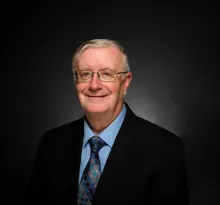
Jorge and his wife Kathy serve the Dallas (TX) and Lawton (OK) congregations. Jorge was born in Portuguese East Africa, now Mozambique, and also lived and served the Church in South Africa. He is also responsible for God’s Work in the Portuguese language, and has been visiting Portugal, Brazil and Angola at least once a year. Kathy was born in Pennsylvania and also served for a number of years in South Africa. They are the proud parents of five children, with 12 grandchildren and live in Allen, north of Dallas (TX).
