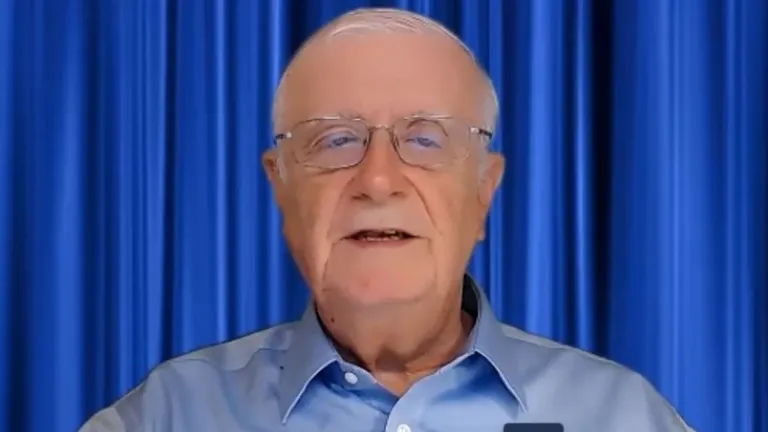

Jorge de Campos
Paul had to suffer. Paul encourages us to be spiritually circumcised. He went through trials and sufferings. He counted all that he lost physically as dung. We have to seek God's Righteousness. We have to know Christ, the power of the resurrection and suffer as Christ did.
Paul had to suffer. Paul encourages us to be spiritually circumcised. He went through trials and sufferings. He counted all that he lost physically as dung. We have to seek God's Righteousness. We have to know Christ, the power of the resurrection and suffer as Christ did.
This transcript was generated by AI and may contain errors. It is provided to assist those who may not be able to listen to the message.
Well, good evening, brethren. Paul seems to have written this epistle primarily to thank the brethren in Philippi for supporting him in physical goods and tithes. We get that from the section in chapter 4 of Philippians from verse 10 through verse 16. Paul would not accept tithes from any congregations, as it is the example in Corinthians that he would not accept from them, because he took that burden from them, quote-unquote, so that they would have maybe one less thing to complain about it. Obviously tithing is not a burden, it's a blessing, but for those people maybe they would see it that way.
The epistle to the Philippians is a very positive epistle. There is little in the way of it being corrective. However, there were a few problems in the congregation, and we can see a few points where we see that he took or used a few verses to address a few things that could be implying that he was addressing a few problems.
For instance, in Philippians chapter 2 verse 3 and 4, where he talks about, let nothing be done through selfish ambition or conceit, it could be implying that there was a bit of rivalry and personal ambition. There also in chapter 4, where in verse 2, where he says, I implore Eudia and I implore Syntyph to be of the same mind in the Lord.
So there could have been some little strivings there between a few people. We also see in Philippians chapter 3 verses 1 through 3 that there was some pressure from Judaizers, people that were imposing or making a statement about being justified by ceremonial law, by physical works. And it could also be a little bit of a tendency of people against God's law, as we can see in verse 18 and 19 also of chapter 3.
So there were some people that could have been against the law because it says whose God is their belly and whose glory is in their shame. So there could have been a few problems in the congregation, but overall the letter is a very, very grateful and positive letter. Paul states in Philippians, starting in verse 6 in chapter 1, as I mentioned before, that it is God that will complete his work, he's doing in us.
And yes, we are part of God's work. Quite often we think God's work is preaching the gospel, which he is, and that is one of the missions of the church, but an additional mission is to prepare the people. And so God's work is also very active in preparing us, in making us better people. So the point is that God has got a plan for you and I, and he wants you and I to be moulded to that responsibility that he has in mind, because as we read in Isaiah 64 verse 8, he's the master potter, so he's working with us.
And so, yeah, we see an important point that sometimes we don't see it or some people don't see it, or if they do it, maybe the way we speak, sometimes it gives the implication or the understanding to others, that maybe we don't see it quite correctly. And this is, it's not our righteousness. It's God working everything in us. It's God, as it says here, that wants us to be his children and he's moulding us to be his children.
And so it is God's righteousness that is imputed or credited in our, let's call, bank account of works, quote unquote. It's God's righteousness. That is the one that counts. It's not our righteousness. It's not our works. Paul explains that also in Romans chapter 3, towards the end of Romans chapter 3 and in chapter 4. And so it is important for us to understand that it's God that is working in us, but we do have our parts to do. And this is important for us to understand that it's our part to do, but it is with God's help, with God's Holy Spirit.
We must never forget that it's God's Holy Spirit working in us that gives us that drive and the motivation to do what is right. And we are so grateful that God has called us and is working in us. But we have to make our effort. We got to do our part. That's why a little later, still in Philippians chapter 1 verse 27, it says that our conduct must be worthy of this good news of what Christ is doing in us.
Our conduct must be worthy of that. So it is very important for us to indeed consider this point that God is working in us and we have to make an effort by our conduct. Being worthy of this great news, of this great plan that God has for us. And so we have to use God's Holy Spirit by being together in spirit, using God's Spirit, being one.
And I believe it's a thing that quite often we fail. When we look back at the history of God's people, quite often, yes, it is doctrine. People deviate from doctrine. But it is also at times that some people stop attending because they feel they have not been treated properly.
We have not at times acted in a kind and loving and gracious way with others. We have sometimes offended people and we've got to look at that. We've got to be careful.
So God's plan and the good news about his plan is that we are to be like Jesus Christ. And therefore, yes, God, through his Spirit, is helping us. But we have to use God's Spirit. We got to use it. We got to do our part. We got to have a mind like Christ's mind. And that's what Paul mentions in Philippians chapter 2 verse 2. He says that let us be like-minded as Christ, striving together for this great goal. We need to have the same love as Jesus Christ did.
We need to be of one accord. In other words, we need to be united in and working together and not allow little things to cause problems amongst people. We got to treat one another properly in a gracious way. You see, God has got a lot of love and kindness and mercy and forgiveness and compassion towards us. You know, God is very gracious. But are we sometimes gracious towards others in return? And that is a key to unity.
To be one with the Father and Christ, we need to be gracious. And we can only be gracious if we are really humble, if we are growing in humility. And that's why in Philippians 2 verse 3, he says, you know, let nothing be done through selfish ambition or conceit, but in lowliness of mind.
In other words, we got to be humble. And then he says, but let each esteem others better than himself. And that's what I would term it as. Let's treat others better than ourselves. How are we treating others? It's very important. And then a little later in verse 12 and 13 says of Philippians chapter 2, God's work to prepare us in addition to preaching the gospel that, as I mentioned, is part of the mission of the church. And we have a part to do. We have our part to do. Some people say, oh, well, there's nothing I can do to help God's work.
Well, there's a lot that we can do to help God's work by changing ourselves and becoming more like Christ and treating others better. That is a big job. That is a big job.
And then it says a little later there in verse 14, do all things without complaining. It says do all things without complaining. Be patient. Be contented with what we have. Be humble. That is the opposite of pride or arrogance or boasting that I've done this or I've done that. Or even inner dislike for others. Not to use the word hatred because that's too strong. And so we got to do everything without complaining.
And then it says, and disputing. In other words, and without disputing. Without profitless human reasoning apart from God, we got to do everything in a in a godly way. And then it goes on in verse 15 says, it says that you may become blameless and harmless children of God. We need to imitate God and Christ. As I mentioned, they suffered graciously for us. We need to suffer graciously for others. And that's why then even a little later in verse 17, yes, and if I'm being poured out as a drink offering on the sacrifice and service of your faith.
You know, brother, Paul was poured out as a drink offering on the sacrifice and service of our faith. Paul wanted the Philippians and apply to us as well, benefit to us. He wants the Philippians. God wants, wanted the Philippians and the lesson is to us as well to present ourselves, particularly as as God's people, a living sacrifice to Jesus Christ. And the ministry pour themselves for that sacrifice and service of the brave.
That's why we're reading Romans 12 verse 2. Let me just read it there very briefly. Romans 12 verse 2.
Romans 12 verse 2.
It says, I beseech you brethren, by the mercies of God, that you present your bodies a living sacrifice. We are to offer God a sacrifice.
You know, in Old Testament, the sacrifices was bulls and goats. A far bigger and greater sacrifice is us living a godly life.
These are not just things that we do, but things that we say, and that is a living sacrifice.
And don't be conformed to the society, but be changed by changing our minds.
That we may prove what is that good and acceptable and perfect will of God.
Therefore, Paul's drink offering was poured on them. Paul's sacrifice on top of it was like a drink offering poured on serving the brethren.
Serving this sacrifice of the brethren. And the brethren themselves have to sacrifice themselves and serve one another.
And so this whole thing, it just builds the unity in the body.
And so Paul explained the eye in Philippians, crushed humility and willingness to give his all for us.
And now we have to do our part without complaining and disputing, as we saw in verse 14 of chapter 2.
And so, as he now moves on to chapter 3, he gets to the, let's call it, to the very crux of this epistle, which is how to be like Christ.
In other words, by showing, by his own example, how he had to suffer and how he suffered, we also have to suffer.
We also need to be poured as a drink offering. In a sense, just like crushed suffered, we have to also be a drink offering. We also have to suffer.
You know, it's a thing that Christ suffered, we have to suffer. Quite often we don't think of that, but we do, we have to.
So let's start in verse 1 of chapter 3. Finally, brethren, it's not that he's closing and coming to a close of the letter, but it's finally, or moving forwards after explaining how Christ sacrificed for us and gave himself for us, and we need to do that. He's saying, as part of that, look at it in a positive way and rejoice. Rejoice!
That's what it says. Finally, brethren, rejoice in the Lord. For me to write these same things to you is not tedious, but for you it is safe.
So this advice and encouragement, maybe, or warning or instruction is for our good. Yes, it was, in this case, in the context of the Philippians, it was for their safety, for their good, for their well-being, but it is for us as well. You see, so this point that Christ suffered and Paul was poured out as a drink offering, and we all have to suffer.
We need to look at this finally with this point and say, hey, look at it in a positive, because the end result is going to be good, because you and I are going to be better people, and we're going to become like God. We're going to demonstrate grace. We ultimately, through this, we're going to be treating others better, and we'll become better children of God, just like He wants us to be.
And so, and that's what it means that we need, we all need to walk worthy of this good news, of this good news of Christ, that Christ is gracious to us, and He suffered.
If we suffer with Him, we'll be glorified with Him, and we'll become more and more like Christ is. And so now, as we read in verse 2, beware of dogs, beware of evil workers, beware of the mutilation. And so, as we walk in this walk, we need to be careful that not everybody around us is quote-unquote, is doing the right thing. I mean dogs and evil workers, as He are now connecting them, beware of dogs, beware of evil workers, and beware of the mutilation.
False ministers, quite often, are referred to as dogs. And we can look at a few scriptures for instance. Yeah, Isaiah 56 verse 11, Isaiah 56 verse 11, where it's also talking about dogs, Isaiah 56 verse 11, and it says, yes, there are greedy dogs, which never have enough, and they are shepherds who cannot understand. They all look to their own way, everyone for his own gain from his own territory. And so he's talking about people that there are in a sense false ministers looking for own gain.
In fact, when we look at Revelation chapter 22, beyond Revelation 22 verse 15, it's got a very telling scripture. We're talking about those that will not be in the kingdom. Revelation 22 verse 15, it says, but outside are dogs, and sorcerers, and sexually immoral, and murderers, and idolaters, and whoever loves and practices a lie. And so those false ministers are outside. So he says, look, beware, beware of dogs, beware of false ministers, those that, as it says, are evil workers, and beware of mutilation. Now, Adam clock commentary puts it the following way when it's talking about mutilation.
It says, circumcision was an honoring thing, for it was a sign of the covenant. But as they now had rejected the new covenant, their circumcision was rendered un-circumcision, and is termed a cutting by way of degradation. End of quote. They were concerned with justification by works, rather than justification by God's grace through what Christ has done for us.
And this is the point, as now we get into Philippians chapter 3 verse 3. It says, for we are the circumcision who worship God in the spirit, rejoice in Christ Jesus, and have no confidence in the flesh. And so we need to be spiritually circumcised, not in the flesh. That is what is important.
We are the spiritual Israel of God. So in Romans chapter 2 verse 28, Romans chapter 2 verse 28, we see it says, For he is not a Jew who is outwardly, nor is circumcision that which is outward in the flesh, but is a Jew who is one inwardly, and circumcision that is of the heart, that is in the spirit, not in the letter, whose praise is not from man, but from God. And so we are spiritual Jews.
And Christ, even in John 4 verse 24, talks about that people will then be worshipping God in spirit and truth. So therefore, when you are in Philippians chapter 3 verse 3 talks about we have no confidence in the flesh, it's basically talking about that justification is not by works of the flesh.
Or put it in other words, we are not resting in our own abilities and achievements, apart from God. In other words, we are not resting in what we can do by our own natural abilities and talents in the flesh. Or in other words, physical righteousness is not what necessarily we're looking at. In other words, through obedience to set among your laws. That is not what we're looking at for justification. Justification is Christ's sacrifice. And so that's what it says. We have no confidence in the flesh. Then it goes on in verse 4 and through 6 because in these three verses Paul is now describing how he was a Jew.
In other words, his credentials, his achievements in the flesh. And he was basically saying that if you want to brag about the flesh, well, look at me. Physically speaking, what Paul is saying is you could not find anything wrong with Paul, outwardly speaking, in the words of the flesh. And let's just read, therefore it says, though I might have confidence in the flesh. In other words, I could have confidence in flesh because why?
Because if anyone else thinks that he may have confidence in the flesh, I more so. Because I was circumcised on each day. I am of the stock of Israel, of the very tribe of Benjamin, a Hebrew of the Hebrews concerning the law of fantasy, concerning zeal, persecuting the church, concerning the righteousness which is of the law, blameless.
So he had, let's call it, physically speaking, a sterling record. But we cannot rest in our own abilities and achievements. And that's what Paul is saying. He could not rest on his own abilities and achievements, apart from God. You see? So outwardly Paul was blameless. So if anyone has anything to brag about, about the flesh, in other words, to self-goreify himself about the flesh, then Paul is saying, I can. I can do that. I can boast about the flesh. But look at Romans chapter 3, Romans chapter 3 verse 21. It says, But now the righteousness of God, apart from the law, is revealed, being witnessed by the law and the prophets, even the righteousness of God through faith in or of Christ Jesus, to all and on all who believe. For there is no difference. For all have sinned and fall short of the glory of God, of the glory of God, being justified freely by His grace through the redemption that is in Christ Jesus. We are justified freely by God's grace through the redemption, through the buying back of us from sin, from death, by Christ Jesus, whom God set forth as a propitiation, in words, as a mercy seat, who God set forth as a sacrifice to pay for our sins, by His blood, through faith, to demonstrate His righteousness, because in His forbearance, God has passed over, in words, as close His eyes, passed over the sins that were previously committed. Why? To demonstrate at the present time God's righteousness, His righteousness, that He might be just and the justifier of one who has faith in Jesus.
So, verse 27, where is your boasting, then? How can I brag? How can I brag? Oh, I'm very righteous. No, it's excluded. By what law of works? No. Not ceremonial works. No, no, any works. There's nothing you and I can do to make us right with God. But it's by the law of faith, by the law of this law of trust, that God trusts Jesus to do a job. Jesus trusts in the Father, the Father would resurrect Him. We have to trust in God and in Jesus. So it's like from faith to faith, it's the law of faith.
And look at also Romans chapter 2 verse 13, because the question is, does this law of faith then nullify God's law? No. No.
You see, because since now that you and I know that we are forgiven, gratis, by God's grace, provided we repent, of course, and we make a change, that we want to change, provided that, provided we repent, God gives us that gracious gift of forgiveness.
But now that I know that I have been forgiven, and you know, we all know that we've been forgiven, upon repentance, it gives you and I greater incentive to try to please God and obey Him.
To try to please God and obey Him. Therefore, Romans 3 verse 31, it says, do we then make, void the law through faith? Certainly not. On the contrary, we establish the law.
You see, because we have been forgiven, gratis, we now are motivated, incentivized to please God. We want to please God. And therefore, faith establishes the law.
And that's why it says we are justified by faith. That's present tense. That is present tense. Now, when we look at Romans chapter 2 verse 13, when we look at Romans chapter 2 verse 13, it says, for not the years of the law are just in the sight of God, but the doers of the law will be justified. That's future tense.
And so, we now, upon repentance, we made right with God. We justified. But now, we are, quote-unquote, motivated. We owe God the return to say, yes, you're forgiven as gratis. We said we're not going to do it again. Now, we owe God the responsibility to obey Him. That's why faith establishes the law. And that's why it says here in Romans 2 verse 13, the doers of the law will be justified, because now we have to do the law so that ultimately, at the end of our lives, or when we die, or when Christ comes back, whenever that probation period is for you and I ends, we would have then proven to God that we want to obey Him. And that's why it says in verse 13, we now have to do the law and will be justified. That's future tense. And so, the two don't contradict. You know, it's a beautiful relationship between the law and faith that people don't understand, because in the end, God's law is God's character. Yes, God's law shows us what sin is, but God's law is outgoing concern and love for others, for God and for others, and God is love. So, God's law is God's character. So, when we apply and love God's law, we demonstrate love, outgoing concern, for our fellow men. So, let's go on now with Philippians chapter 3 verse 7.
And so, he now says, but what things were gained to me, these I have counted lost for Christ. And so, whatever to me was gained, all these physical things that I did, like he said, yeah, circumcised on each day of the stock of Israel, of the tribe of Benjamin, and Hebrew of the Hebrews, concerning the law of Pharisee, etc., etc. All the things I did, that's what he says, that were gained to me, I have now counted them as lost. The word gain, yeah, in Greek, is a word which implies like a financial accounting, like a profit, imputing or a credit into a bank account. And loss is also a financial transaction type word, yeah, in Greek, which is like a business loss. And so, what things were gained to me, they actually now are a loss. They're useless. They're useless. All these things that he refers from verses 4 to verse 6, they are lost. And so, Paul says, I did this, I did that, I was this, I was that. All this is useless. In our context, if we say, oh, I gave up my heart of the Lord, and I did this, and I did that, and I did the other, all this boasting, all this self glorifying is useless. Because it's not our righteousness, it's God's righteousness. And that's what you read in Romans chapter 4. In Romans chapter 4, when it's talking about Abraham, and it says, was Abraham found?
What it says, what then shall we say? That Abraham, our father, has found according to the flesh. For if Abraham was justified by works, he has something to boast about, but not before God. So there's nothing to boast, nothing to brag about any good things we've done. Like Abraham had nothing to brag, but he believed God when God said, you know, through your son Isaac, you will have many nations, and all the nations will be blessed through the seed, through Isaac. And he believed that. And even later, when God said, well, go and offer Isaac, and he was prepared to do that, and God said, no, no, don't do that. But now I know, and I know that you trust me. I know that you trust me. Therefore, that was imputed to Abraham as righteousness. That's why it says in verse 3 of Romans 4, says, Abraham believed God, and was he trusted God, and it was accounted to him, again, a financial transaction, kind of a sense accounted to him, for righteousness, was attributed to him as God's righteousness. And that's why he says a little bit later, and he says in verse 5, at the end of verse 5, says, his faith is accounted for righteousness, just as David also describes the blessedness of the man to whom God imputes righteousness apart from works. Blessed are those whose lawless deeds are forgiven, and whose sins are covered. Blessed is the man to whom the Lord shall not impute sin, because you impute righteousness, because the sins are forgiven. How? Back crushed sacrifice. And so, yes, as we showed earlier, we got to do our part with God's help. And as we see a little bit later in Romans chapter 10, verse 1, where Paul is describing the Israelites, and then he says, God's desire and prayer to God for Israel is that they may be saved. For I bear them witness that they have a zeal for God, but not according to knowledge. You know, and you could put that into today's terms about so-called Christians and say, they have a zeal for God, but not according to knowledge. In verse 3, he gives it all. He says, for they are ignorant of God's righteousness. They are ignorant of God's righteousness. Seeking to establish their own righteousness, self-righteousness, they have not submitted to the righteousness of God.
He says, there's nothing to brag, nothing to boast, nothing to glorify. All glory is God's. Let's continue now reading in verse 8 of Philippians chapter 3.
So, what was happening? We were people that were treating Paul as an enemy. Because think about it.
He was one of the most zealous Jews of his day, and then one day he switched, and he became a Christian. And therefore, to those Jews, those Pharisees, now he becomes the enemy.
And Paul says, I count all things loss. Yes, I've lost these friends, I've lost this relationship with these people, with the society. I count of loss, he says, for the excellence of the knowledge of Christ Jesus.
You see, so, and then he says, I have suffered the loss of all things and count them as rubbish.
Now, the word rubbish in Greek is a word that means dung, refuse, filth, really dung, excrement of animals.
And so, that is something that is worthless and detestable, just like, you know, all these things are just like a pile of manure.
And whatever these previous gains of the flesh are aware, we need to count them as loss.
And so, continue now in verse 9. And found in him, not having my own righteousness, which is from the law, but that which is through faith in or of Christ, the righteousness which is from God by faith.
So, the righteousness that is from God by faith. So, your own righteousness, our own righteousness, is when you and I do things our own way.
And when people, for instance, tend to obey by, quote-unquote, obey by their own power and their own efforts.
And that was the approach of the Jewish community at that time.
And they were not doing it by Christ living in them.
And so, we have to be righteous, but not self-righteous.
We've got to have God's righteousness.
I mean, if you look at Isaiah 64 verse 6, it says, all our righteousness is like filthy rags.
And the word filthy is a Hebrew word which implies monstrous rags, very filthy rags.
So, when we try to earn righteousness by our own efforts, it's nothing. It's useless.
But what it is, it's God's righteousness through faith.
That's what it says. We've got to have God's righteousness through faith.
As it says in verse 9, that we're not having our own righteousness, which is from the law, but that which is through faith of Christ, in Christ, the righteousness which is from God by faith.
And so, God's righteousness is through faith.
In other words, faith must be mixed into this equation.
It must, our living God's way, must be motivated by faith.
In other words, faith is the engine that drives us to obey.
Faith is the engine that drives us to obey.
And we obey with the help, with the power of God's Holy Spirit.
That is the power, that's the energy that makes that engine turn.
So, it's faith in Christ and in God, and we need God's power to drive, to help us to move forwards.
And so, once again, because we have been forgiven, we try to please God, and therefore faith establishes the law.
It is by faith, therefore, that it's Jesus Christ living in us, that's His power, His Holy Spirit, that we do the same things as Christ.
It's not our own efforts, but it is that we are submitting to God's righteousness, to God, and letting Him work in us.
And that's why it says here that we need to grow in the knowledge of Christ.
It says that, I count all things lost in verse 8, for the excellence of the knowledge of Christ, Jesus our Lord.
We need to grow. We need to grow in the knowledge of Christ.
And that's why we read, for instance, in 2 Peter 3 verse 18, it says, We ought to grow in the grace and knowledge of our Lord and Savior Jesus Christ.
In other words, we have to grow in the grace of Christ, and we have to grow in the knowledge of Christ.
In other words, we need to know Christ, we need to live like Him, and so we understand how He did things and how did He do things.
He suffered. He was humble. That's what Paul described in Philippians chapter 2 in the first few verses.
He was humble. He gave Himself. He became a human being. He died on a cross for us.
That is the knowledge of Christ. He has to get to know how He did it so that we do it like He did.
And that process of Christ doing that was an act of grace towards us from Christ. And so we need to grow in the grace of Christ. That means we have to become also like Christ is gracious towards others.
And that's why I mentioned earlier on that we need to learn better how to treat others, because that's part of this growing in the grace of Christ and in the knowledge of Christ.
We need to know Christ and live like Him, live and be gracious like He was. And that is to know Him.
So look at Philippians chapter 3 verse 10. That I may know Him. You see, that's what it is. That we may know Christ. And therefore learn how to be like Him. And then it says verse 10, and the power of His resurrection.
And as a result of this experience, we are understanding better the power of His resurrection.
For one, in analogy, we were baptized. We were baptized. And at the end of baptism, we came out of the water and symbolically in that analogy, we've been resurrected from our past sense to a new life, to a new man.
And so we came out of that watery grave. In a sense, it was a resurrection, in analogy, symbolically, from the dead, the death, the dead, the dead sense that we had.
And so, in a sense, in analogy, we have experienced a symbolic example of the power of the resurrection.
But a day will come, or the day will come, at Christ's coming, when we will be resurrected in power.
When God's Holy Spirit will change us to a spirit being immortal. And that's why it says in verse 10, that I may know Him and the power of His resurrection and the fellowship of His sufferings.
You see, there's a partnership, there's a fellowship, there's a partnership. Like Christ suffered, we have to suffer. We have a communion or a fellowship, a living like Christ lived, which implies suffering. He suffered, we suffer.
We need to be conformed to His death. How? By mortifying the deeds of the flesh. That's why it says being conformed to His death. Yeah, in verse 10. So, now continue in verse 11.
If, by any means, I may attain to the resurrection from the dead. And that's the end goal. That's what we are aiming for.
To be resurrected, to have a spiritual body. Verse 12.
Not that I have already attained or I'm already perfected, but I press on. That I may hold on. That I may lay hold of that for which Christ Jesus has also laid hold of me. So, we haven't gotten there yet. We haven't gotten to the spiritual maturity that we should have.
But we press on like a sprinter. We keep pushing like a man running that final dash at the race. Pressing on, pushing, pushing, pushing. Or like a man on a marathon coming, just driving to finish before that time that they got to complete before that time lapses.
So, we need to press on. We've been chosen by God and we need to press on.
Verse 13. I do not count myself to ever pre-ended, but one thing I do, forgetting those things which are behind and reaching forward to those things which are ahead.
So, we don't cling to our past achievements, but we are to strive forward to God's kingdom. Again, with God's help with His Spirit. Verse 14. I press toward the goal for the prize of the upward call of God in Christ Jesus. I press forward for that high calling. It's a high calling we have, brethren. And then verse 15. Therefore, let us, as many as are mature, have this mind.
And if in anything you think otherwise, God will reveal even this to you. We have to have this mind. We have to have this attitude. We have to have this approach to push on. If we don't, and if we don't get it, let's pray and ask God to reveal it to us. You see, as we read, for instance, in Psalm 19.14, it says, Let the words of my mouth and the meditation of my heart be acceptable in your sight, O Lord, my strength and my Redeemer. Let's pray and ask God to reveal what is lacking. David also says in Psalm 5, verse 8, says, Lead me, O Lord, in your righteousness, because of my enemies. Make your way straight before my face. Help me to see what I need to do. In chapter 27 of Psalms, verse 11, says, Teach me thy way, O Lord, and lead me in a plain path because of my enemies. So God will teach us the way to go. Verse 16, Nevertheless, to the degree that we have already attained, let us walk by the same rule and let us be of the same mind. We have attained up to a certain point. We have grown up to a certain point. We have learned. We've been in the church. We have grown up to a certain point. Some are more, some less, but we all have grown. We all have some degree of maturity. So let's keep moving forwards. Let's keep pushing forwards. Now, verse 17, Breathe, join me, join in following my example, and note those who so walk as you have us for a baton. So follow my examples this fall. Follow those in the congregation that are setting a good example. Learn from them. Talk to them. Say, hey, how did you overcome this? How did you manage this? How did you? And imitate those that are mature, that are following Christ. Not that we follow those people, but we follow their example, how they're striving.
And so those that are following the right pattern, that are producing the right fruits. So talk to them and learn from them and learn from each other. And verse 18 and 19, it says, For many walk, of whom I have told you often, and now I tell you, even weeping, that they are the enemies of the cross, Whose end is destruction, whose God is their belly, and whose glory is in their shame, who set their mind on earthly things. There are some that are not walking the right way. Those are following selfish interests. They set their minds on fleshly things.
And you probably have seen people in the church that came. They had their mind on earthly things. And then after a certain amount of time, they actually left and fizzled away, unfortunately.
And so we need to make sure we don't have the wrong goal. Make sure we are having the correct goal. Verse 20, For our citizenship is in heaven, from which we also eagerly wait for the Savior, the Lord Jesus Christ.
In Philippi, as I mentioned earlier on, there were many citizens that were of a Roman citizenship, and that they had special privilege. And this was therefore particularly meaningful to them. But the example is meaningful to us as well. Our benefits are in the kingdom of God. We are the citizens of the kingdom of God, of the kingdom of heaven.
And we need to set our minds on that. That's what we got to do. And we therefore, we got to wait. Wait for the Savior, the Lord Jesus Christ. We got to wait for Christ's coming and for this government, his government, to be established here on earth.
Who will then transform our lowly body that may be conformed to his glorious body, according to the working by which he is able even to subdue all things to himself. You see, we know, for instance, when Christ prayed after the Passover ceremony, he said in John 17.
He said, glorify me with the glory that I had with you before the world began. And so, Christ was glorified. And you and I will have the same type of body.
In Romans 8, Romans 8 verses 14 through 17, but particularly at the end there of Romans 17. But in that section of Romans 8 verses 14 through 17, he's talking about, we are led by God's Holy Spirit, we are the children of God, and then we have received God's Holy Spirit, we really are his children. And then at the end of verse 17 says that if we suffer with him, we'll also be glorified together. Just like Christ was glorified with the glory that he had before, you and I will be glorified with the same glory. And that's what it says also in 1 John 3 verse 1 to 3. He says, what love God has for us, that we are his children, but we're not yet like we will be, because we'll see him like he is and we'll be like him when he comes back at his return. And if you and I have this hope, we will purify ourselves like Christ is pure. And that is the hope we have, brethren. This is the hope we have. Yes, there are sufferings. Yes, there is pain, but there is a wonderful hope. You see our human body, our physical human body, was never meant or never designed to be our perpetual, quote unquote, eternal home for life eternal. This human body, as we know, it grows old, it's subject to wear and tear, like some people are, and either knee replacement or whatever it is, can get sick. Our immune system can get compromised. People can get in an accident and suffer for the rest of their lives and obviously die of old age or even murdered. So our human body is just something temporary. But the spirit body is not like that. But it's only if we are resurrected into God's family at Christ's coming, then we'll live forever and we'll be immortal, like Christ is now immortal, and we'll have the glory like Christ is glorious. Brethren, we've got such a great hope. Let us just work on ourselves with the help of God's Holy Spirit to become more and more like Christ is. And yes, we'll have to suffer, but the reward, the hope is so great. May God help you and help me and help us all to remain faithful till the end.

Jorge and his wife Kathy serve the Dallas (TX) and Lawton (OK) congregations. Jorge was born in Portuguese East Africa, now Mozambique, and also lived and served the Church in South Africa. He is also responsible for God’s Work in the Portuguese language, and has been visiting Portugal, Brazil and Angola at least once a year. Kathy was born in Pennsylvania and also served for a number of years in South Africa. They are the proud parents of five children, with 12 grandchildren and live in Allen, north of Dallas (TX).
