

Jorge de Campos
This transcript was generated by AI and may contain errors. It is provided to assist those who may not be able to listen to the message.
Well, good evening, brethren. Last week we covered how the New Covenant is so much more glorious than the Old Covenant. In the Old Covenant, the Israelites were not offered salvation or eternal life. So why is the New Covenant more glorious? Well, the New Covenant is more glorious because in the New Covenant we have the promise of God's only spirit, of us being begotten sons of God. There is forgiveness of sins. There is the promise of eternal life. There is the hope of the resurrection. And there's the ability in this life to repent, change, through God's power, the power of his spirit. And therefore we're talking about a spiritual element which is crucial and makes the difference in this New Covenant. We studied up to, up here, 2 Corinthians chapter 4, verse 4. However, to pick up the context, let us review a few points starting from verse 1 of chapter 4. It says, therefore, since we have this ministry, this ministry of the New Covenant, which is much more glorious, as we have received mercy, we do not lose heart. We don't surrender. We don't give up. We keep going on and on and fighting and striving to overcome in spite of difficulties and trials. We ought to keep coming on. And so it then goes on in verse 2, but we have renounced the hidden things of shame. You know, brethren, regrettably, many people do things wrong and then to hide those things, they lie. They give false witness. They paint the story. They just give a slant to the story. And that is very subtle. That is basically the intent of hiding or concealing. But it says here in verse 2, we have renounced the hidden things of shame. We have changed. We stopped. And so it says, not walking in craftiness. And that is in subtlety to hide these wrong things, not handling the Word of God deceitfully. In other words, we're not peddling the Word of God. In the previous study, we covered in 2 Corinthians chapter 2 verse 17, where it says, for we are not, as so many, peddling the Word of God. We are not adulterating the truth. We're not twisting it. There's a very interesting scripture in 1 Thessalonians chapter 2. 1 Thessalonians chapter 2. Let's go there. And I'm going to read verse 3 and 4. 1 Thessalonians chapter 2 verse 3 and 4.
For our exhortation did not come from error or uncleanliness, nor was it in the sea. So again, the same sort of concept. And then it says, but as we have been approved by God, we, as God's people, and we as God's ministers, have been approved by God to be entrusted with the Gospel. That is a very, very high responsibility that we, as God's ministers, we have been entrusted by God with His good news.
With the Gospel. In other words, that's a sacred trust that we receive from God.
And we, as God's people, and particularly the ministers of God, of Jesus Christ, we have an enormous responsibility to ensure that we do not break this trust that has been given to us by the Father.
So let's continue then. Oh, sorry, yeah, but continue in verse 4. Second, first Thessalonians chapter 2 verse 4. It says, to be entrusted with the Gospel, even so we speak, not as pleasing man, but God who tests our hearts. God is testing our hearts. Now, why are so few so few people in the church? Why are we so few? Well, because it's few that God is called. It says many are called, but few are chosen. So proportionate to the whole world, in fact, it is few, even though God calls many, but even less are chosen, and even less, less are entrusted. So why are so few? Because God has decided to allow mankind to go through the bitter lesson of experience. You know, mankind has had to experience every form of government, every possible form of religion, religion, or religious deception.
Why? Because we have to learn by experience. That is the best teacher. So continuing where we were reading in 2 Corinthians chapter 4. Now we read in verse 3, but even if our gospel is veiled, our gospel, even if the good news of this, of the kingdom of God, through what Christ has done, is veiled. Now, remember in 2 Corinthians chapter 3 verse 16, we read, nevertheless, when one turns to the Lord, the veil is taken away.
So even if we haven't repented, that's what it says, and then we are there. But we have renounced it as we. And even if our gospel is veiled, is veiled to whom? Those who have not repented. It is veiled to those that are unrepented.
That it says, it is veiled to those who are perishing. Why are they perishing? Because they're not repenting. They're not changing. You see, God could have forced his way. God could have said, right, this is where we're going to be, and you all have to follow this way in a very strict, let's call it, approach or menu. So he could have forced his way. But he knows that if he would have done that, in the end, the outcome would be less people in the kingdom of God. God knows better, and he knows that through the better lessons of experience, that we learn the hard way. He knows that ultimately, at the end, there will be more people in his kingdom, because he wants everyone to come to repentance.
So there's a basic framework in which or under which everything hangs.
There's, it's like a big structure, and that framework has God's plan and his purpose. His purpose is to have many sons and daughters in his kingdom, and he has a plan, a framework, and that framework, which obviously, as we know, is explained by God's holy days, but that framework is based on some very important principles. Number one, free moral agency. God will never take from us free moral agency.
We have to learn and learn ourselves through ourselves with the help of God's Holy Spirit, but we have to learn. We have to have our hearts tested so that our minds and our hearts are completely close to God. It is absolutely vital, and so that is one of the basic tenets of God's plan, free moral agency. Another very important tenet that people do not understand is that this today is not the only day of salvation. God is working with people in his own time. He's got a timetable, and therefore today, today, in this age, God is not trying to save more souls.
This is important for us to understand, because that is the kind of thinking that the Protestant world has. We've got to preach the gospel now. We've got to preach the gospel now to save more souls.
Now, obviously, God wants everyone to be saved. He wants everyone to come to repentance. We know that in Romans 2. It says that very clearly. God's grace and mercy and patience is so that we all come to repentance. But we do not preach the gospel to the whole world to save more souls.
This is important for us to understand. Matthew 24 14, let's just turn today and read it carefully. Matthew 24 14 says, in this gospel of the kingdom, the kingdom of God, there's good news of the kingdom of God that Christ will come. Christ will rule. Christ will be the king and the Lord, and he's going to rule. We're going to have God's kingdom on earth, ruling on earth, over human beings, which have to then develop and grow. This good news of the coming kingdom of God to come and rule on earth, this good news, right, it says, yeah, will be preached in all the world. It does not say, it does not say to save more souls. The gospel of the kingdom will be preached in all the world just before Christ's coming, and the purpose and the outcome is not designed to save more souls. Oh yes, the final outcome is there, but the purpose why the gospel is being preached today is as a witness to all nations, so that when these things come, they can't say well, but nobody told us, and then the end will come. Brethren, the end is very, very near. The end is very, very near. So let's continue now in 2 Corinthians chapter 4 verse 4, and says, verse 3 says, our gospel is veiled. People don't get it, don't understand it. Those that are perishing, because they're not repenting, they don't understand this gospel, because the gospel is being preached as a witness. Yes, it will be ultimately, when Christ comes, he will be ruling to save mankind, but that's why Christ is coming to save mankind. But in the meantime, these people that that the minds are veiled, their minds are veiled, because the God of this age, the God of this world, is blocking it, is causing the people not to see like a veil. With the way the society is structured, with things the way things are, he is blinded.
People who do not believe, really people in the world, don't really believe in the true God, who Christ is, the power of God, what God is doing through his power. They don't believe in these important things. Ah yeah, they got a bit of this and a bit of that, but they don't understand and don't believe that they gotta change, that they gotta completely repent, that they gotta obey God.
For instance, they gotta keep the Sabbath, they gotta keep God's Holy Night. Oh no, they have different ideas. You see, so they do not believe, and because of that, their mind is veiled. Therefore, the light of the Gospel of the glory of Christ, the light, that understanding of what the good news of the glory of Christ, of Christ's glory, who is the image of God, should shine on them, should reflect on them. And so, the God of this world, the world's philosophies, the world's way of life, is preventing people from understanding this.
Now, understand that in Colossians 1 verse 13, understand, and let's look at Colossians 1 verse 13. Colossians 1 verse 13, it says, He has delivered us from the power of darkness. You see, the light does not shine on them. Why? Because they blinded. The light doesn't shine. It's in complete darkness, but Christ has delivered you and I from the power of darkness. In other words, from Satan's power, he has opened your mind, and my mind, and that is a miracle coming from God. He's called us, but it requires us to respond to that calling. It requires action from you and I to respond, and as we respond, as we start acting and living, we understand more and more and more, and so God has delivered us. But yes, you have to, you and I, we have to do our part. And he has conveyed us, he has transferred us, he has transported us, quote-unquote, into the kingdom of the son of his life. Oh, what do you mean that? You mean that he has taken our mindsets, our way of thinking, into the submission to the laws of the kingdom of God? That's what it is, a kingdom, you know, it includes laws, a constitution, the laws, living God's ways, a way of life. He has spiritually, in our way of life, in our way of you know, way of thinking, in our way of being, is taken us out of this dark world into this kingdom of God, not yet the kingdom on earth, but it is under the king's rules, under the king's authority. He is now our king. He is now our president, let's call that, and we are ambassadors for Christ. Our kingdom is God's kingdom. It is not this nation that you are in, or that nation that you may be in, it's God's nation. That is our kingdom. And so he has conveyed us, spiritually speaking, into the submission of that rule, into his rule, which is the kingdom of his son, of his love, God's love for him. In normal, we have redemption. We have our bodies are brought back from death through his blood, through he giving his life, his blood. His sinless life regave for us as a sin offering for us the forgiveness of sins.
That is a blessing, and that is good news. And that is good news that mankind did not understand until Christ did it. And that's why Paul and others had to preach the gospel of Jesus Christ, which is what he has done, which is part of the gospel of the kingdom, but a key part, a crucial part. Christ, verse 15, is the image of the invisible God, the firstborn of all creation. The word firstborn sometimes triggers a few people, traps people going, they're thinking into the wrong direction. But if you read that in verse 18, it's talking about the firstborn from the dead, protocos, from the dead, the first one, first human being Christ that died and was resurrected, and therefore was the firstborn from the dead. Of all creations, of all human beings, he was the firstborn that came from the dead. So what he means is that you and I are being transformed, are being changed by being conveyed transported into this spiritual, rural government, that we have been transformed through the power of God's Holy Spirit that Christ sent us once. He sat at the right hand of the Father on the Day of Pentecost. He sent us his Spirit. He founded or initiated the Church of God through the power of his Spirit. And through that, we are being transformed into the same image because of Christ. And Christ is the image of the Father, into the same nature, into the same character. We are being transformed to be Christ-like. We are being changed into the spiritual image of God daily, daily. We are becoming more and more like God in our thinking and in our actions. Hopefully, right, that's what we should be doing. We should be moving into a new way of life. See, the world religion carries a little bit of baggage and in this world.
What we follow is a way of life. It's a way of life. That is what is godliness all about, is to become like God. It's a way of life. We are in the process of becoming like God. We're becoming children of God. And so continuing now, it says in verse 4 of chapter 4, 2 Corinthians, whose minds the God of this age has blinded those who do not believe lest the light of the good news of the glory of Christ, which is the glory that we are to inherit, that should be in us, it should shine in us, he is the image of God, and that light should shine on us.
And then this is the wonderful ministry of the new covenant, compared to the ministry of the old covenant. And so Paul goes on and says, we, for we, do not preach about myself, about ourselves, but we preach about Christ Jesus, the Lord. He is the author. He is the curious. He is the supreme authority. We do that. And we preach ourselves as bone servants of Christ and of the brethren, for Jesus' sake, for the sake of his family, of his purpose, of his goal, why he's doing it, and for his glory and honor. Verse 6, for it is the God who commanded light to shine out of darkness. Well, this is another important point. I've confused some people. I've seen some people got confused about that. It is the God who commanded light to shine out of darkness.
Who has shown in our hearts to give the light of the knowledge of the glory of God in the face of Jesus Christ.
You see, God the Father commanded physical light to shine. Well, this is confused, people. Obviously, it was Christ who created everything, right? In Colossians chapter 1 verse 16, we were there a moment ago. We were reading Colossians chapter 1. We read verse 13 through 15 that he is the image, verse 15, of the invisible God. Christ is the image of the visible God. In verse 16, for by him, that's by Christ, all things were created that are in heaven and on earth, visible, invisible, where the thrills of dominion or principalities or powers, all things, everything on earth and in heaven, visible and invisible. That means human beings. That means animals. Everything was created by Christ. And in heaven, which means angelic realm, angels and thrones and dominions and principalities or powers in the angelic realm were created by Jesus Christ. He says all things were created through him, that is Christ, and for him. What do you mean through him? It's like if you are the owner of a business and the owner has a manager and the owner gives commands or instructions to the manager to do certain things, the manager is then, let's call it, the chief executive officer, the one that does and speaks what the owner commanded him to say. And that's exactly what Christ has done. He has spoken what the father commanded him to say. Look at John chapter 12. John chapter 12 verse 49 and 50. John chapter 12 verse 49 and 50. It says, for I have not spoken of my own authority. Christ saying, I have not spoken of my own authority, but the father who sent me gave me a command.
What I should say and what I should speak. It's the father that commanded and Christ spoke. Under authority, Christ is a being under authority, under the authority of the father, and he did what the father told him to do. And he says, and I know that his command is ever lost in life. The father's command, intent, the final purpose is ever lost in life for all of us. Therefore, whatever I speak, Christ said, just as the father has told me, so I speak. And so the father commanded and Jesus Christ spoke, and it was so. We read that, for instance, in Genesis chapter 1 verse 3. Genesis chapter 1 verse 3. And he says, yeah, God spoke. And he says, then God, Elo'im, spoke, which means plural, the father and then the son. At that time was the the highest and the word, God and the word. They spoke, said, obviously, who did the speaking was Christ, as we see him, who gave the command to speak was the father. So God said, in plural, they said, let there be light, and it was light. But the spokesman, the one that actually did the speaking was Christ. And so God said, there's two eternal beings, the father and the son, two separate beings. But one is in complete submission to the other, as we'd say, a man under authority. So it's in complete submission to the other. So the father commanded and Jesus Christ spoke. So going back now to 2 Corinthians chapter 4 verse 6, for it is the God, the father, who commanded light to shine out of darkness. Yes, but it was Christ that spoke it under the instruction of that command, as we've seen. And it is God therefore commanded light to shine. It is the same God who has shown, caused it to shine in our hearts to give the light of the knowledge of the glory of God in the face of Jesus Christ. You see, the father commanded, Jesus Christ spoke. And just like the father commanded light, and Christ spoke for light to appear, the father shone his spiritual light in our hearts, the light of the knowledge of the glory of God. And we ought to have that glory fully. Yes, we ought to have that glory fully, not at the same degree as the father and as the son, but we have to have the glory of the family of God, as children of God.
And that is now shining through Jesus Christ's face. That's what it says, of the glory of God shining through or in the face of Jesus Christ. So it's just like Moses in the Old Covenant, the glory of God was shining in his face. Now through Christ, it shines in our hearts. It is through Christ that we receive, that we understand knowledge, true knowledge. It is through Christ that we're going to be coheres of what he's going to inherit. It is through Christ that we receive mercy and redemption and forgiveness of sins. Verse seven, but we have this treasure. It's this knowledge, this knowledge of what God is doing through Christ. This is a treasure. This is a diamond. We have this treasure in earthen vessels. In other words, you and I are a physical body, just like a jar of clay. When it says earthen, it means that it's frail. We have a frail body. Like clay, it is easily broken. It's the body, physically. The clay is cheap. It is replaceable. It's like baked clay.
God is going to replace it with a special, spiritual body.
It's not a body made of crystal that if you break it, oh, brokenness, special crystal. It's clay. It's temporary. It's frail.
And that also brings to mind that salvation is a result of God's power, of God's only Spirit. And so you and I have this treasure.
And in this case, Paul is talking about the ministry. He says, but we have this treasure, this wonderful good news, which is a precious treasure in our frail human bodies, that the excellence of the power may be of God and not of us. In other words, it's not anything that I've done or you can do to have eternal life. It is what God is going to do. So when we have this frail body, we realize very clearly it's not because of me or you. We are nothing. We are a piece of dust. So what do we have here? We understand that salvation, eternal life, is a result of God's power. And so this is a wonderful treasure we have. We understand that the strength does not come from us, comes from God. And as we read in 1st Corinthians chapter 1 verse 29, 1st Corinthians chapter 1 verse 29, it says, that no flesh should glory in his presence. Yeah, we're nobody. So we can't glory. There's nothing for you and I to glory. And as we read in Zechariah 4 verse 6, it says, not by power, not by might, not by my power, not by my might, not by my strength, but by the power of God, God's Holy Spirit that God gives us, that helps us to be sanctified. The sanctification of the Spirit helps us to be different, to be sanctified. And so that's what we realize. It's not us. So continue reading now in 2nd Corinthians chapter 4. You know, read verse 8 and 9. We are heart-pressed on every side, yet not crushed. We are perplexed, but not in despair, persecuted, but not forsaken, struck down, but not destroyed. You know what Paul is saying? Yeah, we are. We have this ministry, which is a treasure, which is a golden treasure. Right? And because of this, we are persecuted. We are, like he says, we have hard, hard troubles on every side, but not crushed.
You see, just look at 1st Corinthians chapter 10 verse 13. 1st Corinthians chapter 10 verse 13. In verse 13, we read, No temptation has overtaken you, except such as is common to man, but God is faithful, who will not allow you to be tempted beyond what you're able, but with the same temptation, the same trials, the same stresses, the same difficulties, will make the way of escape that you may be able to bear it.
To bear it. So, continue reading in verse 8 and 9 of 2nd Corinthians chapter 4. It says, persecuted, but not forsaken, struck down, but not destroyed. We see we are very troubled, we are hard-pressed, but we're not crushed, we're persecuted, but not neglected by God. And continuing on verse 10, always caring about in the body the dying of the Lord Jesus Christ.
In other words, Paul in his life was in continuous daily danger. He confronted death many times. And then he says, always caring about in the body the dying of the Lord Jesus. In other words, he was in daily situations of death, that the life of Jesus may also be manifest in our body, because he could see that Christ was intervening for him daily. For we who live are always delivered to death for Jesus sake, that the life of Jesus may also be manifested in our mortal flesh.
So, yeah, many times they try to kill him. They try to kill him. But he got away from it, showing that Christ was with him. You see, because he preached the truth of Christ, he was consistently or constantly threatened with death. But he was willing to pay the price, so that we and as brethren, we would have this gospel, we have this good news, so that you and I could have eternal life. Look at verse 12. So then death is working in us, but life in you.
You see, Paul was willing to confront death for us to have life. Yes, many in the New Testament, early New Testament ministry, died for the gospel. Eleven out of the twelve apostles died. Paul and Barnabas were martyred. You know, Stephen was martyred too, was stung to death. So, death is working in us, but life in you. Verse 13, and since we have the same spirit of faith, we have this absolute trust, according to what is written, I believed and therefore I spoke. Now he's quoting Psalm 116, verse 10. In other words, the man at the trial, he says, I believe, and because I believe, I'm gonna say it.
He was confident God would deliver him, and he didn't doubt. He believed before he spoke. He was not muzzled. He spoke the truth. He was not muzzled. We also believe, and therefore speak. Verse 14, knowing that he who raised up the Lord Jesus will also raise us up with Jesus and will present us with you. He was sure.
He had no doubt that if and when he would die, and he did die, of course, but when he died, that he knew that God would resurrect him through Christ, through God's power, through God's only Spirit, God would resurrect him. For all things are for your sakes, even at all for our sake, for the sake of the church.
Then he says, that grace, it was that the understanding of the good news of the light of this glory of God should shine on us. This grace, this gracious gift, he says, that grace, having spread through many, may cause thanksgiving, may lead to a lot of us being super grateful. We need to be grateful, and that gratefulness has to abound, because what God is doing for us is really worthy every bit of gratitude and thanksgiving.
Gratitude for what God is doing through Christ to the glory of God, as it says here at the end of verse 15. Therefore, therefore, we do not lose art. Now this is the second time he says this. He said so also in verse 1. In verse 1, he says, therefore, since we have this ministry, this wonderful treasure that we've received, we do not lose art. We don't surrender. And he says, now we are hard-pressed, we are challenged, but we've got this hope of the gospel, of the light of Christ shining in us. Therefore, we don't give up.
This is a precious ministry, this New Covenant ministry. It's a glorious ministry, far better than the Old Covenant ministry. You see this physical body, this earthen vessel, with this great treasure, which is the gospel of Jesus Christ, which is part of the gospel of the kingdom of God. And as we are physical bodies, we do get old. We do get old because he says, therefore, we do not lose art, even though our outward body, our outward man, is perishing. Physically, this earthen vessel, this body, this physical body, as we get older, we start adding more aches and pains, but inwardly, inside, inwardly, is being renewed day by day. Inwardly, we should be stronger, spiritually speaking, day by day. Yes, Paul wore himself out in the ministry. Look at 2 Corinthians chapter 11. Second Corinthians chapter 11, starting in verse 24. He says, from the Jews five times I received forty stripes minus one. Three times I was beaten with rods. Once I was stoned. Three times I was shipwrecked. At night and day I have been in the deep. In journeys, often, in perils of waters, in perils of robbers, in perils of my own countrymen, in perils of the Gentiles, in perils in the city, in perils in the wilderness, in perils in the sea, in perils among false brethren, in awareness and toil, in sleeplessness, often, in hunger and thirst, in fastings, often, in cold and nakedness, besides the other things.
You see, he wore himself out physically in the ministry. Look at 2 Corinthians chapter 6. Second Corinthians chapter 6 verse 4. But in all things we commend ourselves as ministers of God in much patience, in tribulations, in needs, in the stresses, in stripes, in imprisonments, in tumults, in labours, in sleeplessness, in fastings. And let's jump to verse 8. In honor and dishonor, by evil report and good report, as deceivers yet true, and was ever false accused, as unknown yet well known, as dying, and behold, we live as chastened, and yet not killed. Verse 10, as sorrowful, yet always rejoicing, as poor, yet making many rich, and as having nothing, yet possessing all things. Paul could have lost art. Paul could have become discouraged. Paul could have said, this is unfair, but he didn't get discouraged. He didn't lose art. Why? Because he was being renewed spiritually in inward man day by day. Spiritually he was being renewed daily. And so what did we have? A new creation was taking place. And so continue, yeah, read in 2 Corinthians chapter 3 verse 18. But we all, as we read before, with unviable face, we all as in the mirror, the glory of the Lord, are being transformed into the same image from glory to glory, just as by the Spirit of the Lord. We're being transformed into the image of Christ, into God's nature, into God's character, into being Christ-like, being changed into the spiritual image of God daily. We're becoming more like God. It's a way of life, as I mentioned before. We are in the process of becoming more like God. And in Galatians chapter 2 verse 20, in Galatians chapter 2 verse 20, we read, Galatians chapter 2 verse 20, read, I have been crucified of Christ. It is no longer I who live, but Christ lives in me. And the life which I now live in flesh, I live by faith of the Son of God who loved me and gave himself for me. Christ lives in us. He gave himself for me, for you, for us. He says, yeah, he gave himself for me. He gave himself for you, for us. We are to become Christ-like. We are to be renewed daily by prayer and Bible study and occasional fasting, by living God's way, by dying daily. Our physical passions allow that to die because our growth, our spiritual growth must be constantly occurring every day. And so now Paul summarizes in verse 17 and 18. He says, he says, yeah, 2 Corinthians chapter 4 verse 17, for our light affliction. Well, after we read these things where he went through, it surely was not light affliction, but he calls it light affliction because to him it was like nothing compared to the glory that is to come. To him was like a wayless feather, even though it was intense pressure. But he was looking at living forever in glory versus this affliction. And to him this is nothing. To him this was a light affliction. The resurrection, the kingdom of God, the glory beyond far outweighs our current trials. In Romans chapter 8 verse 17 and 18, Romans 8 verse 17 and 18, it says, if children then heirs, heirs of God and joint heirs of Christ, if indeed we suffer within, there may also be glorified together. For I consider that the sufferings of this present time are not worthy to be compared with the glory which shall be revealed in us.
It's not to be compared. Let's continue reading in 2 Corinthians chapter 4 verse 17, for our light affliction which is but for a moment is working for us a far more exceeding and eternal weight of glory, while we do not look at the things which are seen, but at the things which are not seen. You see, he's not looking at the physical, he's not looking at the material, but he's looking at God which is not seen. He's looking at Christ which I can't see today. He's looking at God's holy spirit, at God's power, at the future spirit world, because that is real. It can't be destroyed. It's eternal. Our physical can be destroyed, even though we can see it today. It's temporary. And that's why I say while we don't look at the things which are seen, but the things which are not seen, for the things which are seen are temporary, but the things which are not seen are eternal. Brethren, endurance in this Christian race, in this life that you and I are in, is based on being able to look beyond the present to the coming kingdom of God. Life is only temporary for a season, but we have the power of God. We have God's only spirit. We have Christ with us. We have the angelic realm that he puts around us to protect us. And therefore, we need to look forward beyond to the future.
If we look at this life today, we become discouraged.
But understand that trials, yes, are necessary to make us better people, to make us like God, to develop godly, holy, righteous character, in other words, to grow in the grace and knowledge of our Lord and Savior, Jesus Christ.
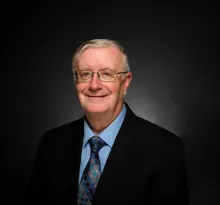
Jorge and his wife Kathy serve the Dallas (TX) and Lawton (OK) congregations. Jorge was born in Portuguese East Africa, now Mozambique, and also lived and served the Church in South Africa. He is also responsible for God’s Work in the Portuguese language, and has been visiting Portugal, Brazil and Angola at least once a year. Kathy was born in Pennsylvania and also served for a number of years in South Africa. They are the proud parents of five children, with 12 grandchildren and live in Allen, north of Dallas (TX).
