Essentials of Salvation
Given on
by
Given in
Downloads
Downloads
To download a file, right-click (or long press) a link above and choose Save As.
Salvation means deliverance, preservation, and safety. In the Bible it refers to the transformation from physical life to eternal spiritual life.
Transcript
This transcript was generated by AI and may contain errors. It is provided to assist those who may not be able to listen to the message.
Today I want to talk about the essentials of salvation. Now, you might ask, why do I want to hear anything about salvation? I would like for you to turn to Romans 2, verse 7. Romans 2, verse 7. As you're turning there, I'll briefly give you a little overview of the book of Romans. The book of Romans is the foundational book with regard to how a person is justified before God. And it's a book about faith. It's a book about just about anything you want to name, covering the basic doctrines of repentance from dead works, faith in God, baptism, laying on of hands, judgment, resurrection, and going on to perfection. All of that is contained in the book of Romans. In chapter 1 of Romans, the Apostle Paul takes the nations to task, the Gentiles, saying, this is where you've gone wrong. Then in chapter 2 of Romans, the Apostle Paul takes the Jews to task and says, this is where you have gone wrong. I want to focus, and we're breaking in somewhat on the thought here, but I've asked the question, why would you want to hear anything about salvation? And Paul writes in Romans 2.7, to them who by patient continuance and well-doing, seek for glory and honor and immortality eternal life. So are you seeking for glory, honor, immortality, eternal life? And if you don't gain eternal life when all is said and done, your life shall have been in vain. You shall have lived here your 70, 80, or 90 years. Some may even live to be 100 or more. And then, is that all there is to it? Is that all there is to human existence? If you already had eternal life and mortality, you would not have to seek for it. But Paul says to those who seek for it, but then there is the opposite, but unto them that are contentious do not obey the truth, but obey unrighteousness, indignation, and wrath, tribulation, and anguish upon every soul of man that does evil of the Jews first and also of the nations. Will you be satisfied with anything less than glory, honor, immortality, and eternal life in the Kingdom of God? Would you settle for anything less? If you settle for anything less, you're settling for death. I believe that one of the greatest weaknesses in all of our lives is our refusal to obey Matthew 6.33. Probably just about everybody in here could quote Matthew 6.33, seek you first the Kingdom of God and His righteousness, and all these things should be added under you. But we tend to let the trials, tribulations, distractions of this life throw us off track. And Satan hates you, and he would like to see you thrown off track and destroyed.
Let's look a little bit more at this word, salvation. The Greek word soteria, and there's a branch of theology called soteriology that studies the process of salvation. This Greek word soteria that is translated to salvation in the New Testament means deliverance, preservation, and safety. There are many kinds of deliverance and preservation, but when the New Testament speaks of salvation, it is basically referring to deliverance from a state of mortal, temporary, physical existence into a state of spirit existence in the family and kingdom of God. Salvation begins with God, and when we talk about God, salvation, and spiritual things, we need to establish our methodology. How are we going to arrive at our knowledge of God and of salvation and of eternal life? When scientists seek to learn the truth, to know the truth, they use the so-called scientific method to try to discover the truth.
But they search only for physical truths, ever learning, never able to come to the knowledge of the truth. There are four basic ways that humans receive knowledge. One is through the five senses. This is known as empirical knowledge. The second way is through human reasoning, as we say, putting two and two together. A third way is experiential knowledge, that is, knowledge that is gained through experience. Knowledge gained through experience depends also upon the five senses and human reasoning, where you experience something and you, quote, learn from it.
You know, in the arena of life, it would be much better if we could learn the lesson without having to experience the test. You know, students, they often complain if you give a pop test, a test that is unannounced. They want to prepare for the test. You know, in the world of experience, the test is given first in the lesson afterward. Of course, it'd be good if we could reverse that and we could learn the lesson first and then we would be able to deal with what life throws at us much more ably. There have been four basic systems that have tried to explain the great questions of life. Now, these four basic systems, one is false religion. Of course, Satan introduced false religion in the Garden of Eden when he seduced Eve. Another system, and I might add that the great methodology of false religion is deceit. What I'm saying here up front is very important to what we're going to be saying at the end because how are we going to arrive at our conclusions? Our conclusions to a large degree is going to depend upon our methodology. And I'm comparing and contrasting to some degree what the world uses to arrive at its conclusions as opposed to what we should be using. These great questions of life, which we'll talk about in just a moment. So, false religion led by Satan has tried to answer the great questions of life, and their principal methodology is deceit. Philosophy has tried to answer the great questions of life. Thousands of books have been written. The principal method of philosophy is human reasoning apart from the Word of God. The third great system that has tried to answer the great questions of life is science. The methodology of science is the scientific method. And, of course, it employs empiricism, experimentation, observation, measurement, testing of data, analyzing the data, then drawing conclusions and applications. Then the great system that does answer the questions of life with regard to salvation is true religion. And the methodology of true religion is revelation. Now, the scientific world rejects revelation. The Word of God reveals to us the answers to the great questions of life. God is the Spirit, and He is invisible. Now, we cannot know about God apart from revelation. The Bible is the revelation of God to humans. So, let's go to 1 Corinthians 2 and verse 9. Now, as we go through these scriptures today, we really need to engage our thinking caps, as I used to say. Be a little bit more with it than some of these people were here. This person calls in and says, All our office phones went dead. I had to contact the telephone repair people. They promised to be out between 8 a.m. and 7 p.m. When I asked if they could give a smaller time window, the pleasant gentleman said, Would you like us to call you before we come?
Another one. I was at the airport checking in at the gate when an airport employee asked, Has anyone put anything in your baggage without your knowledge? To which I replied, If it was without my knowledge, how would I know?
The stoplight or in the corner buzzes when it's safe to cross the street. I was crossing with a coworker of mine when she asked if I knew what that buzzer was for. I explained that it signals blind people when the light is red. A poll she responded. What on earth are they doing driving?
So we really need to engage because we will be, your thinking will be challenged, and hopefully we're laying the foundation here, so that the things of God are known by revelation. The only system on the face of the earth that can truly answer the great questions of life. Now, of course, there's a great knowledge to be gained from many other things, from empiricism, sense knowledge, from human reasoning, from experience, and many other things. But in 1 Corinthians 2, verse 10, we have reportedly landed a person on the moon, and there are people in here who work for NASA. And the human mind, as it says in Genesis chapter 10, well, it's chapter 11, where God says that nothing shall be refrained from them, which they imagine to do. So the human mind has great capability.
How is God going to reveal Himself to us? He doesn't speak to us audibly, but He has left us His revelation. We call it the Bible. And do we really believe what the Bible says? Christ states in John 1717 that the Word of God is truth.
And I want us to turn now to John 663. We've never heard this scripture before, have we? John 663. In John 6, verse 63, so John 1717 says, Our Word is true. Now, John 663, Christ has told them that He is the bread of life, that if you're going to have eternal life, you have to drink of His blood and eat of His body. Speaking figuratively, that we must eat and drink of that true bread that came down from heaven. That is Christ. He is the living Word.
Man shall not live by bread alone, but every word that proceeds out of the mouth of God. So in John 663, it is the Spirit that quickens, that makes alive. The flesh profits nothing. The words that I speak unto you, they are spirit, and they are life. So here we see that the Spirit is equated with life. And if you want spiritual life, then you eat and drink of this Word. And if you really want to arrive at the truth, then our methodology must be based on the Word of God.
So our methodology today will be based on deductive logic from the Word of God. The simplest form of deductive logic is called a syllogism. A simple syllogism consists of a major premise, a minor premise, and a conclusion. Perhaps the most famous syllogism is the one, all men are mortal, John is a man, therefore John is mortal. Of course, the validity of syllogistic logic depends upon the validity of the major and the minor premises.
Did you follow the rules? So we're going to examine the essential elements of salvation using the Word of God as the basis of our major and minor premises as we draw our conclusions. The prophet Isaiah admonishes us. If you turn to Isaiah chapter 1 verse 18. Isaiah 1 verse 18. Now, there are four great enemies of faith that are identified in the New Testament, and those four enemies of faith are anxious care, fear, doubt, and human reasoning. It's human reasoning apart from the Word of God. Obviously, if we're going to arrive at the truth, and the only way spiritual things are known is through revelation.
Now, that's according to the Bible. Then we have to engage our minds and reason from the Word of God. Isaiah was inspired to write in Isaiah 1.18, Come now and let us reason together, says the Lord. So let's reason together. Let's reason from the Word of God, from the revelation of God to man. Though your sins be as scarlet, they shall be as white as snow. Though they be red like crimson, they shall be as wool. So, ever present in the Word of God is that hope of redemption, that our sins can be covered.
They can be removed from us as far as the east is from the west. Now, let's go to Acts 18, Acts 18 and verse 4. Maybe we would stop at Acts 17.1 as well. There are similar scriptures, probably four or five places in the book of Acts, that talk about the Apostle Paul reasoning with them.
In Acts 17 and verse 1, when they had passed through Amphibulus, Apollonia, they came to Thessalonica, where there was a synagogue of the Jews, and Paul, as his manner was, went unto them, and three Sabbath days reasoned with them out of the scriptures. They met on the Sabbath day, and Paul reasoned with them out of the scriptures. Of course, this is after the ascension of Christ back to the heaven, the day of Pentecost, the establishment of the new covenant church, and here Paul is preaching to the Gentiles, and when did they meet?
They met on the Sabbath. And in Acts 18 and verse 4, as I said, there are quite a number of places in the book of Acts, and he reasoned in the synagogue every Sabbath and persuaded the Jews and the Greeks or the non-Jews. So we're going to reason from the scriptures. Now, we've seen in recent years a trend among so many people in the various scattered branches of the Church of God, some who attend, some who no longer attend, that they have somewhat made God over into their own image.
They've developed a belief system that is based on human reasoning apart from the Word of God. For example, people say such things as, I don't believe God is going to send anyone into the flames of Ganna fire or to speak plainly in the hell fire. I don't believe anyone's going there. God is too merciful for that. Is that what the Bible really says?
They speak for God when He is not spoken and make God over in their image, and thus, by speaking for God where He is not spoken, make themselves into God, committing idolatry, and becoming their own God. The warning in Revelation is that no man would add to or take away from the Word of God. A few examples along these lines might help us here with regard to how God is and how He administers things and how human beings sometimes respond. If we go to Exodus 34.7, on the way to the Promised Land, the Israelites, by the time that Moses sent out Joshua and Caleb and the others that went with them, the eight others, the ten spies, to spy out the Promised Land. By the time they got back and what they did, they had tried God's patience ten times. Now, in Exodus 34, you see both sides of the coin, as it were, with regard to God and how He views certain things.
Let's start in verse 5. Well, let's start in 4. Exodus 34.4, He hewed two tables of stone like unto the first, and Moses rose up early in the morning, went up unto Mount Sinai as the Lord had commanded him, and took in his hand the two tables of stone. And the eternal, the Yahweh, descended in the cloud and stood with him there and proclaimed the name of the eternal. And the eternal Yahweh passed by before Him and proclaimed the eternal, the eternal God, merciful and gracious, long-suffering, abundant in forgiveness, in goodness and truth. So that's, you know, God's principle characteristic of all characteristics. God is love, and He is merciful. Verse 7, keeping mercy for thousands, forgiving iniquity and transgression and sin, and that will by no means clear the guilty, visiting the iniquity of the fathers upon the children, upon the children's children, unto the third and the fourth generation. So we see both sides here of God's love, His care, His mercy, but at the same time we see that He does not excuse the guilty unless they repent. Now we go to Psalm 50. Psalm 50 is a very interesting psalm. This is not our purpose today to explain it, but the first part of it pictures the coming of Christ and what He's looking for in His people, also the sacrifices that He wants. And then beginning in about verse 16, there's like a sudden shift and a warning in Psalm 50 in verse 16. But under the wicked, God says, What have you to do to declare my statues, or that you should take my covenant in your mouth, seeing you hate instruction, and cast my words behind you? You saw a thief, you consented with him. You've been partaker with adulterers. You gave your mouth to evil, your tongue-framed deceit. You sat and spoke against your brother, you slander your own mother's son. These things have you done, and I kept silence. Well, you might recall the verse in Ecclesiastes that says that because sentence is not executed speedily against an evil work, therefore the hearts of men are continually set on evil. So people then begin to think that God is just like them. Notice what he says.
Now consider this. You that forget God, lest I tear you in pieces, there be none to deliver. Whosoever offers praise glorifies me, and to him that orders his conduct right, will I show the salvation of God? So we're talking about the essentials of salvation. And here it says, Whosoever offers praise glorifies me, and to him that orders his conduct right, will I show the salvation of God? God says here that sometimes we begin to think that God is just like us. Further, notice 2 Peter chapter 2 verse 4. 2 Peter chapter 2 is very much like the epistle of Jude.
2 Peter 2 and the book of Jude catalogs the centers through the ages, and what happened to them. 2 Peter chapter 2 beginning with verse 4.
And if God spared not the angels that sinned. So here are the spirit beings led by a great super archangel, Lucifer, who were created perfect and given freedom of choice, and then after they chose to go the way that they did, freedom of choice was taken from them and they became totally set on evil. So if God spared not the angels that sinned, but cast them down to hell, Tartarou, a condition of restraint, they will be judged later and cast into outer darkness, wandering stars forever, never able to influence humans again, and delivered them, under the change of darkness, to be reserved unto the judgment, and spared not the old world, but saved Noah, the eighth person, a preacher of righteousness, bringing in the flood upon the world of the ungodly. So who did God save when he intervened in the course of human events in the noation flood? He saved eight people. The sinners were destroyed, so it shall be at the end of this age. He is going to send his angels forth. There will be a great harvest of those who will be in the first resurrection. He's going to gather the terrors and bundle them up, and they are going to be thrown into a fire. That's what the Bible says. That's not me!
Then he says, in turning the cities of Sodom and Gomorrah into ashes, who was spared out of Sodom and Gomorrah? Well, God was going to spare Lot and his wife. Lot's wife looked back, turned into a pillar of salt. Then Lot and his two daughters escaped, and he fathered children by his two daughters, and they became the mother of Moab and Ammon. So turning the cities of Sodom into ashes condemned them with an overthrow, making them an example unto those that after should live ungodly. And delivered just Lot, vexed with the filthy conduct of the wicked. For the righteous man, dwelling among them, and seeing and hearing, vexed his righteous soul from day to day with their unlawful deeds. So one of the things that talks about in Ezekiel chapter 9 with regard to the writer taking his inkhorn and putting a mark on those who sigh and cry for the abominations that are going on, this world is changing more rapidly than any other time in the course of human history. And obviously it is a time to sigh and cry. There will be people who remain incorrigibly wicked and would be burned in Gehenna fire. Notice in Revelation chapter 9 and verse 20. Revelation 9 verse 20. Here we are in the midst of the woes. And after all of these things, you've had the six seals have been opened, the seventh seal is opened, consisting of the seven trumpets. And here we are with the sixth trumpet being poured out. Notice what the response of human beings is.
Revelation 9.20. And the rest of the men, which were not killed by these plagues, yet repented not of the works of their hands, that they should not worship devils and idols of gold and silver and brass and stone wood, which neither can see nor hear nor walk, neither repented they of their murders nor their sorceries nor their fornication nor their thefts. And turning forward to Revelation chapter 20. In Revelation chapter 20, we see the Bible talks about a second death from which there is no resurrection. In Revelation 20 and verse 14, and death and hell, the grave, Hades, were cast in the lake of fire. This is the second death.
And whosoever was not found written in the book of life was cast in the lake of fire. Why even talk about a lake of fire? Why even talk about that if that's not a possibility? If there is not good and evil, and the rewarding of good was salvation, eternal life, and the family of God, and then punishment of the wicked, this whole God thing is a farcical tragedy beyond credulity. Who would give any credence to it at all? We might as well just go do what we will, please, and forget about God. But God has given us the ability to have a sound mind and reject the notion that the universe and all things therein came into existence through some process of blind chance. To believe in an intelligent, all-powerful Creator God is perhaps the most rational, logical belief one can hold.
In spite of what Bill Maher might say about it being unscientific, to believe in God, it is far more rational and scientific to believe in God than to believe, for example, our solar system with the sun in the center, the earth revolving around the sun, tilted on its axis at 23 point something degrees with the moon revolving around the earth. And all of that just happened by chance. There was no intelligent design or anything behind it, and the creation of human beings with the great mind faculties and capabilities that each one of us possess. So, as we stated earlier, salvation begins with God. Reminds me of this little story here. Recently, there was a young woman teacher of obvious liberal tendencies. One day she decided to explain to her class of small children that she was an atheist. She just didn't believe in God. Then she asked her class if they were atheists, too, not really knowing what an atheist is, but wanting to be like the teacher. Their hands exploded in the air like freshly fired fireworks. However, there was one exception, a little girl named Lucy. She'd not gone along with the crowd. The teacher asked her why she decided to be different. Because Lucy replied, I'm not an atheist. Then asked the teacher, what are you? I'm a Christian, replied Lucy. The teacher, a little perturbed now, on her face, lightly read, asked Lucy why she's a Christian. Well, my mom is a Christian. My dad is a Christian. They helped me understand what that is. So, I'm a Christian. The teacher is now angry. That's no reason, she said, loudly. What if your mom was a moron? Your dad was a moron. What would you be then? Lucy paused, and the little smile said, I guess I'd be an atheist.
As we stated earlier, salvation begins with God. This brings us to what I believe are seven of the most important questions of all time. Number one, does God exist? Genesis 1.1 says, in the beginning, God created the heavens and the earth. And if you don't believe Genesis 1.1, if you don't believe that God exists, then it's all in vain. Why talk about the God thing?
It is reported that 90% of the people in the United States believe in God. Yet, how many are willing to do what he says? Now, I'm just quoting here. If you want to write it down, 1 John 2.4 says, he who says that he knows God and keeps not his commandments is a liar, and the truth's not any. Now, you can profess to know God. Satan confesses that there is a God, and he knows God. The demons recognize Christ during his ministry here, and ask one time, have you come to torment us before the time? Does God exist? John 1.1.
In the beginning was the Word, and the Word was with God, and the Word was God. Now, this leads us to the first article of faith. You know, we, through the years, we've written a booklet on the proofs of God's existence, but the skeptic always has one more question. For example, you'd say creation demands a creator. The skeptic would say, well, who created the creator? We'd say design demands a designer, and they'd say, well, who designed the designer? And the skeptic always has one more question. So, obviously, there is an element of faith and belief that is in the abstract that you cannot prove necessarily physically, though there are physical kinds of proofs. We talk about answered prayer. We talk about it fulfilled prophecy. There's still an element of faith. It leads us to the first article of faith. What is the first article of faith? Hebrews 11, verse 6. Hebrews 11, called the faith chapter in Hebrews 11, verse 6. But without faith, it is impossible to please Him, for He that comes to God must believe that He is. He that would come to God must believe that He is, that He exists. So, the ultimate question, the great question up front, does God exist? This is the first article of faith to believe that God exists. For He that comes to God must believe that He is, and that He is a rewarder of them that diligently seek Him. Not only do you believe that He exists, but He always has your best interest at heart. No matter what happens, He always has your best interest at heart, not willing that any should perish.
But that all should come repentance. The next question, who is God?
As it says in Isaiah in two places, some of this I'll quote if you want to write it down. These scriptures would surely be worth pursuing. Isaiah 63, 16. In Isaiah 64, 8 says that God is our Father. Jesus Christ prayed to our Father who art in heaven. Who is God? God is our Father, and He's our Creator. What is God? That's the next question, number three. John 4, 24. God is Spirit. Now, what is God's purpose? What is His main purpose? I want us to turn to this one, Hebrews 2. Hebrews 2, verse 10. Hebrews 2, verse 10. For it became him, for whom are all things, and by whom are all things, and bringing many sons unto glory, to make the captain of their salvation perfect through sufferings. God's ultimate purpose is to bring sons and daughters into His family. And the reciprocal, the corollary, not reciprocal, but the corollary to who is God, what is God, what is His purpose is to ask those same questions about man. First of all, what is man? So let's turn to Genesis 1.
Let's answer that quickly in Genesis 1, verse 26. 1. God said, Let us make man in our image after our likeness.
Now, we had people who argued in the early 90s that God does not have a form or shape. Yet you read Revelation 1, and you see this picture of one walking among the seven golden candlesticks, and it describes His features similar to that of a man. God sits on a throne. 2. Let us make man in our image after our likeness. Let him have dominion over the fish of the sea, the fowls of the air. Verse 27. So God created man in his own image. In the image of God created he him, male and female, created he them. God blessed and told and multiplied, replenished the earth. So in many aspects, human beings have God-like characteristics. God is spirit. Now in Genesis 2.7, let's read that. The Lord God formed man of the dust of the ground. The substance of man is dust. 16 basic elements, I believe they have identified, in the human flesh, and breathed into his nostrils the breath of life, and man became a living soul. Now the word nayfesh, soul, is used for animal and human life. It simply means one who has life potential, an air-breathing being that has life potential. As we often say, soul is what you are, not what you possess. You are a living soul. You are an air-breathing creature, just as others are, that is, other living beings.
Now, who is man? As we've said, he is created in the image of God. What is man made from the dust of the ground? What is his purpose? Why did God create it? Now we want to go to Romans 8, verse 14. As we go there, I want to say a few things. Romans 8, verse 14. Why did God create human beings? Because, as I said, the principal characteristic of God is love.
And love, for it to be of any effect, has to be shared. So, God wanted to share who he is, what he is, with a family in a family setting. So, he created human beings, and he made it possible for them to receive of his very divine essence and become inheritors of God and co-heirs with Christ. Notice Romans 8, 14. For as many as are led by the Spirit of God, they are the sons of God. For we've not received the Spirit of bondage again to fear, but we've received the Spirit of Huyo-thesia. Now, there's a controversy among some about how this word should be translated. In our paper on the nature of God, it is translated as sonship, which is the correct translation. Sonship, because we have the same essence that he has. Just like if you father a child and you give some of your DNA to that child, he has some of your very essence. If the Father fathers us in the spiritual sense and we are partakers of the divine essence, which the Bible says that we can be, then we have that divine essence within us and we can be no less than sons on the God plane at this time having received the earnest of the Spirit. The Spirit itself bears... well, I'm sorry, let's read the rest of that. The Spirit of sonship whereby we cry, Abba, Father. The Spirit itself bears witness with our spirit that we are the children of God. And if children then heirs, heirs of God. Now, a lot of people overread this, heirs of God. Some people just talk about joint heirs with Christ, which we are. But if you're an heir of God, you're going to inherit to a large degree what He is. Human beings beget human beings. They beget humankind.
God the Father, if He is the one who begets us, would He beget anything less than the God kind? And if children then heirs, heirs of God and joint heirs with Christ. Now, no one has any difficulty with saying, oh, Jesus Christ is God. And He sits on the right hand of the Father, and He makes intercessions for us. And once again, if we're joint heirs of Christ, can we be anything less than on that plane? Joint heirs with Christ, if so be that we suffer with Him, that we may be also glorified together. So these great questions, once again, does God exist? Who is God? What is God? What is His purpose? Who is man? What is man? What is His purpose? We've briefly shown that.
Because God is love, He wants to share His eternal being with humans, He created us in His image. And, as we've said, not of the same substance as that of God. Remember, God is Spirit.
God told Adam and Eve, after He created them, to look to Him for the knowledge of good and evil. But Satan seduced Eve into believing that she could decide for herself what is good and what is evil. Now let's go to Genesis 3. As a result of Eve's being deceived and then Eve giving of the forbidden fruit to Adam and him partaking willingly, I guess Adam decided he'd rather be dead than live without Eve. I don't know what he decided, but anyhow, he also partook of that, which really means that they decided that they would choose for themselves what's wrong and what's right. To decide for themselves what is good and what is evil. To do the kind of things that a lot of people today do in an existential world, of where they become their own arbiters of good and evil, instead of believing what God says. As a result of that, notice what God says. This is Genesis 3.22. The Lord God said, Behold, a man has become as one of us. How did he become as one of us? That is, to take on the paragative to decide good and evil. Now, lest he put forth his hand and take also the tree of life and eat and live forever. Tree of life represents the Holy Spirit, the only thing that can bridge the great gulf between our physical existence and eternal life. Therefore, the Lord God sent him forth from the Garden of Eden to till the ground from whence he was taken. So he drove out the man. And he placed at the east the Garden of Eden caravans and a flaming sword which turned every way to keep the way of the tree of life. So the way to the tree of life was cut off.
But at the same time, in Genesis 3.15, God promised a Redeemer, one who would come and restore access to the tree of life. Genesis 3.15, the first messianic prophecy.
I will put enmity between you and the woman, Satan and the woman, between your seed and her seed. It shall bruise your head. Satan inspired the crucifixion of Christ, thinking that he would thwart the plan of God. But actually, he furthered the plan of God because the Son of God was worthy to pay for all the sins of all the world.
And you shall bruise his heel. I reverse that. He shall bruise your head. Jesus Christ is going to put Satan away, bruising his head. And you shall bruise his heel, Satan inspiring the crucifixion of Christ. There are dozens of what are called messianic prophecies in the Old Testament. These prophecies prophesy that one will come on the scene and pay for the sins of the world. When Christ came on the scene, the Jews rejected him. Not all of them, but many of them, as a nation, they rejected him. Let's notice a prophecy concerning why Christ came in Luke 1 and verse 67. Many messianic prophecies prophesied a suffering Messiah to come on the scene. The Jews were looking for a great political leader, one who would restore the nation of Israel to its great prominence that it enjoyed in the days of David and Solomon. In Luke 1, 67, here's a prophecy by Zacharias, the father of John the Baptist, and his father, Zacharias, was filled with the Holy Spirit and prophesied, saying, Blessed be the Lord God of Israel, for he hath visited and redeemed his people, and hath raised up in horn of salvation to us in the house of David, his servant David. Verse 77, to give knowledge of salvation unto his people by their mission of their sins. So one of the great reasons why Christ came was to restore access to the tree of life, make it possible for us to receive the Spirit of God. Christ said that he would send his Spirit. And the greatest work of the Holy Spirit is to give life unto us. Let's notice 1 John chapter 5 and verse 12. 1 John chapter 5 and verse 12.
1 John 5 verse 12. We're talking about salvation. We're talking about eternal life. We're talking about bridging the gap between mortality and immortality. We're talking about the whole plan and purpose of God. We're talking about why we're here.
In 1 John 5 verse 12. He that hath the Son hath life. He that hath not the Son has not life. That's about as clear as you can possibly get. 1 John 5 verse 12. These things have a written unto you that believe on the name of the Son of God, that you may know that you have eternal life, and that you may believe on the name of the Son of God.
For us to receive the Spirit of God, there are prerequisites. 1 John 16 verse 13. Remember in John 13, Christ institutes the foot-washing ceremony at Passover, and He also institutes the New Testament and the New Covenant Passover. He begins to talk to them about what is going to happen after He departs from them. One of the promises that He makes is that He will send the Comforter, which is the Holy Spirit. Here in John 16 and verse 7, here are three of the main things that the Holy Spirit will do. John 16, 7. Nevertheless, I tell you the truth. It is expedient for you that I go away, for if I go not away, the Comforter will not come unto you. John 14, 28 says the Comforter is the Holy Spirit.
But if I go away, I will send it to you. I lost my place there. For if I go not away, the Comforter will not come unto you, but if I depart, I will send him unto you. And when he has come, he will reprove the world of sin. And that word reprove in the Greek is elencho, and it means convict, to lay a weight upon a person's heart and mind. It is through the Word of God, the Spirit of God, that you are convicted. You are convicted that this is the truth. And being convicted of the truth and the critical knowledge, I call it the critical threshold.
I've had discussions, one of the discussions I had with my brother one time. So why do you think that you have, I don't know how you worded it, something like, why do you think you know what salvation and God is all about? I said, well, there is a critical threshold of knowledge that one must possess. And it is through the Word of God and the Spirit of God that you come to have that knowledge. You come to understand once again, who is God, what is God, what is His purpose, who is man, what is man, what is His purpose. And to come to realize that apart from God, you're going to die, that this is all it's going to be to it. Whatever you live, you're seventy, eighty, ninety or so years in the flesh, so much less.
So when He has come, it will convict the world of sin and of righteousness and of judgment. Of sin, because they believe not on Me, of righteousness, because I go to My Father, and you see Me no more of judgment because the Prince of this world is judged. And He goes on to talk about many other things concerning some of the works of the Holy Spirit, but we're focusing on the life part today. In Acts chapter 1, before Christ ascended back to heaven, after three days and three nights in the grave, Christ was resurrected late somewhere, I suppose, after sundown on that Sabbath, after He was crucified on Wednesday afternoon and placed in the tomb. In Acts chapter 1, we see here an account of His ascension into heaven. The disciples gathered there with Him were the disciples. I guess probably the 120, I don't know if all 120, that waited there on Pentecost were there or not. In Acts chapter 1, verse 4, being assembled together with Him commanded them that they should not depart from Jerusalem but wait for the promise of the Father, which said, He, you have heard of Me, for John truly baptized with water, but you shall be baptized with the Holy Spirit not many days hereafter. When they therefore were come together, they asked of Him, saying, Lord, will You at this time restore the kingdom to Israel? And even after Christ had been with them three and a half years of His ministry and appearing to them at least three times after the resurrection, they still didn't totally get it. He said unto them, It is not for you to know the times of the seasons, which the Father has put in His own power, but you shall receive power after the Holy Spirit has come upon you, and you shall be witnesses unto Me both in Jerusalem, Judea, Samaria, unto the uttermost parts of the earth. So they went back to Jerusalem and they waited, and then in Acts 2.1, and when the day of Pentecost was fully come, Pentecost, one of the Holy Days, one of the seven annual Holy Days, if they had not been gathered together on that Holy Day, some say the Sabbath's been done away with, some say the Holy Days are done away with, the very promise of eternal life. Without that, He who hath not the Spirit of God, hath not life. I read it straight out of the Bible.
And the very day that it was given was a day of Pentecost, and when the day of Pentecost was fully come, they were all of one accord in one place. There came a sound from having a mighty rushing wind, and it filled all the house where they were sitting. Verse 4, and they were all filled with the Holy Spirit, and they began to speak in other languages, and the Spirit gave them utterance. Now it was the disciples who were doing the, I mean the apostles who were doing the speaking, and then the people began to hear them in their own language. And the noise of this and the wonder of this spread throughout the area. And then in the midst of this, in verse 15, the apostle Peter gets up and he starts speaking. Some said earlier, well, maybe these people are drunk. Others said, no, the saloons are not open. It's not yet noon. So Peter stands up and says in verse 15, these are not drunken, as you suppose, seeing it as but the third hour of the day is nine o'clock in the morning. But this is that which was spoken of by the prophet Joel. Then he quotes Joel of the pouring out of the Holy Spirit, and I will pour out my Spirit upon all flesh. Then Peter addresses verse 22, you men of Israel, hear these words, Jesus of Nazareth, a man approved of God among you by miracles, wonders, and signs which God did by him in the midst of you as yourselves also know. Then he talks about how that they had crucified the Prince of Life, that this Prince of Life was the son of David. This Prince of Life now sits on the throne of David. You notice that in verse 34, where David is not ascended into heaven, but he himself said, the Lord said unto my Lord, sit you on my right hand until I make your enemies your footstool. Therefore, let all the house of Israel know assuredly that God had made this same Jesus whom you crucified both Lord and Christ. Now when they heard this, they were pricked in their hearts and said unto Peter, and to the rest of the apostles, men and brethren, what shall they do? So they were convicted. They heard the inspired words of God from the Apostle Peter. And just as it says in John 16 verses 7 and 8, that when the Holy Spirit has come, it will convict you of sin. And so they were pricked in their hearts. They were convicted. And they said, what are we going to do? And Peter gives the answer. Acts 2.38. Then Peter said unto them, repent, be baptized every one of you in the name of Jesus Christ for their mission of sins, and you shall receive the gift of the Holy Spirit. So receiving life, that life that bridges the gap between this physical existence and eternal life, is dependent upon repentance. Repent, be baptized. Now you have to repent and exercise faith and sacrifice of Christ for the mission of sins that are past, and you will receive the gift of eternal life. So the question immediately arises, what must you repent of? Well, say the answer is obvious. You must repent of your sins. Notice Romans 6.23. Romans 6.23. That's another basic scripture that you need to put in your memory caps and paste on the refrigerator. They were memorized. In Romans 6.23, the wages of sin is death. You see, if the law of God is not in effect, Jesus Christ coming to the earth to pay for sin once again is a farcical tragedy.
Paul writes in the very next chapter, Romans 7, I had not known sin except the law says you shall not do such and such. The wages of sin is death, but the gift of God is eternal life through Jesus Christ our Lord. But we have seen there is a condition to receiving the gift of eternal life, and that is to repent of sin. So what is sin?
Most of the preachers, let's go to 1 John 3.4. Most of the preachers today that you hear on television or see on television here on the radio, you seldom hear anymore the word sin.
They talk about many other things, but not much about sin. They talk about accepting Christ. Why do you want to accept Christ? Well, apart from the sacrifice of Christ, you're going to die. But you don't hear much about that. In 1 John 3.4, whoso commits sin transgresses also the law, for sin is the transgression of the law. You could go through just about any church you want to name, and you could ask them the biblical definition of sin. And I will tell you, I believe, and I've asked a lot of people through the years, what's the Bible definition of sin? Most people cannot turn here. Some say, but I believe all you have to do is to love your neighbor and to love God. And that statement is true if you understand what the love of God really is. So let's look at Matthew 22, verse 36, where Christ summarizes the Great Commandments. You know, this one came trying to trick him and said, Master, which is the Great Commandment? In Matthew 22 and verse 36, Master, which is the greatest commandment in the law? Jesus answered and said, You shall love the Lord your God with all your heart, with all your soul, and all your mind. This is the first and great commandment. Now, to do that, you keep the first four commandments. The first four commandments stated briefly are, You shall have no other gods before me, you shall not make unto you any graven idol, you shall not take the name of your Lord God in vain. That's the first three. The fourth one is, remember the Sabbath day to keep it holy. Why is the... Let's define what holy is. Holy things have God's active presence within them. The saints are called holy because they have God's active presence within them. Sacred things point to a higher reality. Holy things have God's active presence within them.
So, the first four commandments teach us how to love God. And then he says, the second is like unto it, you shall love your neighbor as yourself, honoring your parents, doing no murder, don't commit adultery, don't bear false witness, don't covet, don't steal. And those things by so doing you love your neighbor. Now, notice verse 40. On these two commandments, these are summarizing, hang all the law and the prophets, all the law and the prophets. But some will say that the commandments have all been fulfilled by Christ and tell you all you have to do is have faith in Christ's righteousness, and that's all you have to do. In other words, if you follow that thinking to its logical conclusion, you would say that you can continue doing whatever you want to do. You just have to believe that Christ died for your sins. Let's go to Galatians chapter 2. Galatians chapter 2. There are many, especially in the book of Romans, and one of my follow-up sermons to this will be titled, Mastering the Book of Romans. Once you master the book of Romans, you shall have mastered much of or many of the keys to salvation. But in Galatians chapter 2 verse 16, knowing that a man is not justified by the works of the law. In other words, you cannot pay for the sins of the past through animal sacrifice. Neither can you pay for the sins of the past through obedience. If you were to start perfectly obeying the law today, that is the spiritual law as summarized by the commandments, 10 commandments, the spiritual law, that wouldn't pay for sins that are passed because of wages of sin as death. Thus, it was necessary, and it is necessary, that Christ died for our sins and for us to exercise faith in the sacrifice of Christ. You're not justified by the works of the law, but by the faith in Jesus Christ. Some argue about what is the faith of Jesus Christ or faith in Jesus Christ. Now, if we didn't have to exercise some faith ourselves and anyone should be lost, then we could all blame it on Christ. So there has to be some decision-making on our part. Even we have believed in Jesus Christ that we might be justified by faith in Christ and not by the works of the law, for by the works of the law shall no flesh be justified. Even perfect obedience does not pay for the sins of the past. Now, but notice, some want to stop there. But if while we seek to be justified by Christ, we ourselves also are found sinners. In other words, we keep on transgressing the law. Is therefore Christ the minister of sin? God forbid. For if I build again the thing which I destroyed, I make myself a transgressor. So there is no way out with regard to whether or not you have to repent of breaking the law of God. The spiritual law of God is immutable and unchangeable. God from heaven spoke the Ten Commandments. Psalm 19 verses 8 through 10 say that the law is perfect. In Romans 7 verse 14 says that the law is spiritual. If the law is perfect, notice this little syllogism. It's not a pure syllogism, but if the law is perfect, as it says in Psalm 19, 8 through 10, and if the law is spiritual, as it says in Romans 7, 14, then is God going to do away with that which is perfect and spiritual?
Let's notice the answer here. James 1, 16 and 17. James 1, 16, and 17.
Now we're going to get down in this last five or six minutes to the nitty gritty. In James 1, 16, Do not err, my beloved brethren, every good gift and every perfect gift is from above, and comes down from the Father of lights, with whom there is no variableness, neither shadow of turning. Even Christ himself kept the Sabbath, and even God and the Word kept the Sabbath after recreation, which we'll see in just a moment. Another argument is that the Sabbath was changed to the first day of the week, based on the erroneous conclusion that the resurrection was on Sunday morning. Now the women came to the tomb early on the Sunday morning, and first day of the week, and found the tomb empty.
Now in Revelation 1, verse 10, some try to use that and say, well, John says, I was in the Spirit on the Lord's day. The proper translation of that is, I was in the Spirit in the day of the Lord. In other words, the setting of Revelation 1, 10 is the day of the Lord. It's the same wording that is used in 1 Thessalonians 5, 2, where Paul says, don't let the day of the Lord come upon you unawares.
Now some want to use the argument that since the law of God was the basis of the Old Covenant, the law of God was done away with with the institution of the New Covenant. This, of course, is one of the most senseless of all the arguments. You and I can make an agreement to do such and such. The agreement would be based on not lying for a week. Let's say I lied. Does that mean that the sin of lying is done away with? Israel agreed to obey God's law. They failed. Does that mean that the law was done away with? Now here is a verse. Let's go to Hebrews 10 and verse 6. In one sense, here's the sum of the matter with regard to many of these arguments. It's amazing how I didn't have... I guess I could have had the opportunity, but I didn't check a lot of the translations. But I do know what the Greek word here is, and it's quite astounding. Even in our literature, we don't yet have it out. It might be in... I don't know if it's in the paper of the nature of God and Christ or not. In Hebrews 8 and verse 6.
But now had he obtained a more excellent ministry, by which also he is the mediator, that is Christ, of a better covenant, which was... and you can check this Greek word in any concordance you want to go to, the Greek word is nomotheiteo. Nomotheiteo. Now, the King James translators translated established. Nomotheiteo means furnished with law. Look it up! Any concordance you want to look.
For now, had he obtained a more excellent ministry, by how much he is the mediator of a better covenant, which was furnished with law upon better promises.
Now, let's look at Isaiah 66.
You know, if God kept arrested the Sabbath, maybe we should go there first. We've got a late start today, but three or four minutes more won't hurt us. In Genesis chapter 2, verse 1, Thus the heavens of the earth were finished, and all the host of them. And on the seventh day God ended his work which he had made, and he rested. Look up the word rested, kept Sabbath on the seventh day from all his work which he had made. God blessed the seventh day sanctified he because that in it he had rested from all his work which God created and made. We have seen from the New Testament that the Apostle Paul reasoned with them out of the Scriptures on the Sabbath. Now, let's go to Isaiah 66, which pictures the time of the millennium when the Kingdom of God is established upon the earth. Isaiah 66.
In Isaiah 66, For as the new heavens and the new earth which I will make shall remain before you, says the Eternal, so shall your seed and your name remain, and it shall come to pass that from one new moon to another, from one Sabbath to another, shall all flesh come to worship before me, says the Eternal. And they shall go forth and look upon the carcasses of the men that have transgressed against me, for their worms shall not die, neither shall their fire be quenched, and they shall be in abhorring unto all flesh. And finally, in Zechariah chapter 14, I wrote a long paper one time which I presented at a Friends of the Sabbath seminar, title, Is the Sabbath and the Holy Days Inextricably Linked Together? And the resounding conclusion is, yes, they are. See, the Sabbath reveals God as not only a physical creator, but also a spiritual creator, and it is holy because He places His presence in it. Zechariah 14, also speaking of the millennium verse 16, it shall come to pass that everyone that is left of the nations, after all the plagues and all the things at the end of this age, everyone that is left of all the nations which came against Jerusalem, shall even go up from year to year to worship the King, the Lord of Hosts, and to keep the Feast of Tabernacles. And it shall be that whosoever will not come up of all the families of the earth to Jerusalem to worship the King, the Lord of Hosts, even upon them shall be no rain. You see, in the millennium, everybody is going to have to at least play church. Everybody may not internalize church, but everybody will be going up to keep the Feast, as commanded. I'm sure there will be feast sites and various worship places that will be set up throughout all the earth. I want to read one more passage. Isaiah 2, verse 1, verses 1 through 4. Isaiah 2, verses 1 through 4. Now, this is the time pictured here that the whole earth mourns to see, yearns to see. I think I mentioned this on the Feast of Trumpets here, up at the North Church building. We were all there. There used to be a statue in the plaza outside the UN building of a man beating the sword in a plowshare, but they said that it was too blatantly religious, so they took that statue and they hid it away some building in the UN. The word that Isaiah the son of Amaz saw concerning Judah and Jerusalem shall come to pass in the last days that the mountains and the Lord's house shall be established in the top of the mountains. Mountains, of course, symbolize nations and shall be exalted among the hills and all nations shall flow onto it. Now, what part of the Bible do you want to leave out? Do you want to pick and choose, or do you want to believe the whole package? And many people shall go and say, come and let us go up into the mountains of the Lord, to the house of the God of Jacob. He will teach us of His ways we will walk in His paths, for out of Zion shall go forth the law and the word of the Lord from Jerusalem. He shall judge among the nations and shall rebuke many people. They shall beat their swords into plowshares and their spears into pruning hooks. Nations shall not lift up sword against nation, neither shall they be war anymore. May God hasten the day when we all learn and come to the knowledge of the essentials of salvation, and not only come to that knowledge, but also repent and receive eternal life.
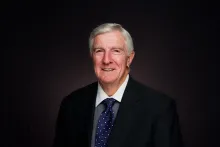
Before his retirement in 2021, Dr. Donald Ward pastored churches in Texas and Louisiana, and taught at Ambassador Bible College in Cincinnati, Ohio. He has also served as chairman of the Council of Elders of the United Church of God. He holds a BS degree; a BA in theology; a MS degree; a doctor’s degree in education from East Texas State University; and has completed 18 hours of graduate theology from SMU.
playlist