
Don Ward
This transcript was generated by AI and may contain errors. It is provided to assist those who may not be able to listen to the message.
Today we're going to examine one of the greatest questions of all time, one of the great questions of life. This question has been asked over and over again in the course of human history. It is a question that young and old people are asking today, but especially young people. It is the question that Pilate asked Jesus, what is truth? So our title would be, What is Truth? Jesus defines truth in his pleading prayer that he gave in John 17, that night that he was betrayed and the mock trial took place.
And in that prayer in John 17, 17, he said, Sanctify them through your word. Your word is truth. So what do you think of when you hear the word truth? Pure, undefiled, holy, separated and apart from sinners. We'll read a verse along those lines later about Jesus, who is now the Christ. However this word is pronounced in whatever language, there is no sweeter sound than the sound of the word truth. Is it the truth? As the old saying goes, God loves the truth. Being a truthful person is one of the greatest virtues of all time.
Just think how much better off the world would be if everybody told the truth. I mean, at the present time we see this special investigator investigating whether or not there was Russian collusion with the Trump election campaign and the Russians. Countlets, millions of dollars are being spent on legal fees. We all know that some have been indicted because they lied. They didn't tell the truth. Of course, this thing of lying and not telling the truth is one that is very ancient, going back to the Garden of Eden.
If everybody would tell the truth, many of the problems of the world would disappear overnight. And billions of dollars, as we mentioned, could be saved. So we ask ourselves, how much do I value the truth? What price would you place on the pearl of great price? Our loving Heavenly Father gave all he could so you and I could know the truth. How much did he give? Well, he gave his only begotten Son that we might know the truth. How much did the Son give? Well, he gave his life. And it says, greater love had no man than this, than he lay down his life for his friends. The politicians of the day continually talk about freedom, but they do not know the way to peace and freedom.
Jesus states in John 8 and verse 32, John 8 is a chapter in which Jesus is debating back in two with the detractors of his day. And he tells them in John 8, 32, you shall know the truth and the truth shall make you free. Now, there was a qualifier that he put before that, and it says that if you continue in my word, if you continue in my word, then you shall know the truth and the truth shall make you free. And I've told the story many times with regard to walking on the campus of Delta State University, my first year there, and over the administration building a quote that said that, the state had decreed that only educated men should be free, but God had decreed that only free men are educated.
The state says that you have to be a free man in order to be educated. I misquoted the quote that only free men can be educated, but God had decreed that only educated men are free.
And what is a true education? The true education is one that knows the great questions of life. And really, you cannot go to the greatest colleges and universities of the world and not be able to take a course that would provide you with this truth. It's just not there. This truth is revealed truth, as we shall see, and it is available to us. The truth will set us free from fear, ignorance, superstition, and the dogmas of man.
So many people live in fear, ignorance, anxiety, and the dogmas of man. So in the eulogy that the president's son gave about his father, he talked about now his father is now once again holding the hand of his beloved wife, and also is reunited with their daughter, who died at three years of age of leukemia. That notion runs in the minds of the highest in the land to those who live in places where you can hardly find a literate person.
That notion that you have an immortal soul. So if we want to be free from fear, ignorance, superstition, and the dogmas of man, we have to know the truth. There's only one way to be set free in mind and spirit, and that is through the truth of God. Young people say, and I hear so many conflicting statements about everything under the sun, but they say, well, how do I know what is truth?
And of course, there are many types of truth. There's truth about physical things, and of course, there are physical laws. There's truth about social things and truth about how best to interact in a social setting. There's economic principles and truth, and there are political matters that are discussed. There's truth about people. You see, with the advent of these things like National Enquirer and Tatler and these People Magazine and other such publications, both print and electronic, people want to know behind the scenes who's doing what and who are they doing it with. It's incredible, and it has given rise to a large degree of this celebrity worship.
But what we want to talk about today is to discuss, look at the Bible, about the highest truth of all, and that is spiritual truth, revealed truth. In this discussion, we will have necessity to discuss some truths that may not be classified as spiritual.
Over the years, I've heard so many young people who grow up in the church state that they just went to church with their parents, and they never prove the truth for themselves. Never prove the truth for themselves. How do you prove the truth?
Perhaps the central question of all questions is to know the answer to, why were you born?
Is there purpose? One of the great questions that philosophers wrestle with through the ages is, is there purpose in the universe? And bringing it down to the personal level, is there purpose for my existence? In other words, why did God create human beings? God created humans in his own image for the great transcendental purpose of becoming his spirit-begotten and spirit-born children in the kingdom of God. Because of God's love and grace, he created humans. Love is the greatest motivating force in the universe, and we have often talked about love. Love is outgoing concern, and love that is not shared is becomes, I guess you would say, really self-love. So God in Christ, when he became Christ, developed a plan whereby they could share who they are, what they are, in a family setting with young people. And not only with young, with anyone who would be willing to surrender their lives and believe, one of the greatest elements to knowing the truth has to do with believing. I think we'll see that as we go along. What was Israel's greatest sin?
Just think about that as we go along. How can young people, or anyone for that matter, believe that they can sit in church services week after week, year after year, in sort of a, I guess you would call it, semi-comatose state of mind, and then just summarily walk away and say, I don't know what the church teaches is true or not.
They never really examined it. And see, there, I don't understand why people are not concerned about answering the great questions of life with regard to what is truth and where can you find truth and how do I know if it is truth.
You see, if we are only the product of some evolutionary process, and if human beings are the height, the greatest pinnacle of the evolutionary process, then axiomatically, by default, then human beings become the greatest measure of what is true or why we're here or is there purpose. And so many people have given up on even believing that there is ultimate truth. The question of whether children are responsible for what they hear is often a topic of discussion and debate among church members and parents.
Through the years, they have often excused their children and others by saying it is up to God to call them. I've heard ministers and others through the years when talking about why their children are not in the church, they parrot the line, it's up to God to call them.
Well, it does say in John 644, no man can come to me except the Father draw him or them. But at the same time, if you are continually exposed to the truth, if you are set in what would be equal to what Adam and Eve experienced in the Garden of Eden, that is, the Tree of Life, and all they had to do was partake of the Tree of Life and stay away from the Tree of the Knowledge of Good and Evil. We have throughout the land and the churches of God, we have the truth preached week in and week out. In other words, to a large degree, it is up to the individual.
And it always is. Recently in the sermon I read here from Ezekiel 14, three places where it says, though Noel, Daniel, and Job be in it, they should only save their own lives. When it comes down to it, we are all individually and personally responsible and accountable to God.
Somehow, some people view God's calling as if it were some kind of mystical, magical event in which God supernaturally flips a switch in a person's mind and they are called. Now, I guess you could say, well, that happened to the apostle Paul.
Paul believed he was serving God by killing Christians. That's a strange belief. When the Bible says, do not murder, or a person could think that they are doing God a service, as it talks about in John 16, the time will come when they will put you out of the synagogue thinking that they do God a service. But is this notion of just mystically, mystically, magically? See, Romans 10, verse 14 says that—let's turn there and read that—Romans 10, verse 14. What I've said so far has been—you should have had a couple pages of notes.
In Romans 10, verse 14, how then shall they call on him in whom they have not believed? How shall they call on him in whom they have not believed? And how shall they believe in him of whom they have not heard? And how shall they hear without a preacher? And how shall they preach except they be sent, as it is written? How beautiful are the feet of them that preach the gospel of grace, and bring glad tidings of good news, good things. But they have not all obeyed the gospel. They have not all obeyed the gospel. Oh, they had their chance. They have not all obeyed the gospel. For Isaiah said, Lord, who has believed our report? So then, faith comes by hearing and hearing by the word of God.
Faith comes by hearing and hearing by the word of God.
How shall they believe unless it is preached? So let's look at Hebrews chapter 3. In Hebrews chapter 3, Paul is basically rehearsing how the nation of Israel responded during the time of the administration of the law covenant. How did they respond? They had cried out to God for freedom from the Egyptians and their taskmasters. Oh, deliver us!
And finally, God does send Moses and Aaron to go to Pharaoh and plead their case. Let my people go that they may go out in the wilderness and do sacrifice. And time after time, Pharaoh hardened his heart, and the ten plagues came.
And even the tenth one in which he said, Pharaoh said, Get up and get out after the death of the firstborn of man and beast.
Then, after they left, he pursued them and would have killed them, except for intervention at the Red Sea.
After they got out into the wilderness, they were tested several times.
And by the time that they had sent out the ten spies, they had tempted God ten times.
So let's notice what it says here. Hebrews 3 verse 8. "'Harden not your heart, as in the provocation in the day of the temptation in the wilderness, when your fathers tempted me, tried me, tested me, proved me, and saw my wonders forty years, wherefore I was grieved with that generation and said, They do always err in their heart, and they have not known my ways, miracle after miracle, deliverance after deliverance.
So I swear in my wrath they shall not enter into my rest.' Verse 17, "'But with whom was he grieved forty years? Was it not with them that had sinned, whose carcasses fell in the wilderness, and to whom swore he that they shall not enter into his rest, but to them that believe not?' So we see that they cannot enter into because of unbelief." That's what the Bible says. After seeing and experiencing all that they did for forty years, verse 1 and 4, "'Let us therefore fear, lest they promise, being left us entering into his rest, any of you should seem to come short of it. For unto us was the gospel preached, as well as unto them, but the word preached did not profit them, not being mixed with faith in them that hurt it.'" Faith comes hearing by hearing, hearing by the Word of God, but there's that element of faith, and faith is inextricably linked to belief and obedience. Now look at verse 11, "'Let us labor therefore to enter into that rest, lest any man fall after the same example of unbelief.'" So you have to consider that factor. The Bible teaches if you hear his voice, harden not your heart. Harden not your heart as they did in the provocation in the wilderness. Harden not your heart. Of course, one way of illustrating this is you can lead a horse to water, but you can't make him drink. You can't make someone believe a gospel. They have to be willing. They have to be willing to read the Word, study the Word, and act on the Word, and begin to seek God and move toward God, and to believe. How can you go through life and just say, well, all there is to it is what my human mind or somebody else's human mind can conjure up. Isn't there more than this? We can have the truth of God served up on, as they say, a silver platter, and we try to do that throughout the churches of God week after week. But you can refuse the truth. It's easy to refuse the truth. Israel proved that. And perhaps their greatest sin, of course, as well, is what the Bible says. They didn't enter in because of unbelief. And sometimes people might say, oh, if God would just speak to us, if we could just see miracles like Israel saw, oh, we would believe. Jesus said, though we send someone from the dead, if they will not hear Moses and the prophets, then they won't believe them. Even those who attend services on a weekly basis and appear to be filled with zeal and the Spirit of God may not be. And, of course, we all have to examine ourselves. And believe me, I've been examining myself, and I find every day that what Paul writes when he says, I know that in me, that is, in my flesh, dwells no good thing. And all of men's righteousness is as filthy rags.
So we have to seek God and submit and humble ourselves before Him and obey Him. Even those who attend services on a weekly basis, do we really believe, I include myself, do we really believe what God says? We're all familiar with the parable of the ten virgins in Matthew 25.
Five wise, five foolish. It appears that all ten were doing the same things. The bridegroom knocked on the door, the ten arose, took their lamps, five had oil in their lamps, and five did not. The five that did not wanted to buy from those who did. Those who did have it said, no, this is not for sale. This is not something that is for sale. You have to go and seek this out for yourself. So they went out to seek it for themselves, they came back, and the door was shut. It was too late.
We could all ask ourselves, what changes do I make in my life as a result of hearing the truth and attending Sabbath services and listening to a sermon? Does it have any impact with regard to convicting me that I should change my life? That I could become more zealous? I could study more, pray more, think more, meditate more, whatever it might be.
And every week, generally throughout the land, the sermon is provided instructions on how to grow in grace and knowledge of our Lord and Savior, Jesus Christ. We and our children live in a virtual garden of Eden. How long will that last? The freedoms that Christians have enjoyed around the world are shrinking rapidly. You read the statistics out of the Middle East in Iraq before the so-called Iraq War, or whatever they want to call it. How many there were then, and how many there are now? Look at Syria, look at Lebanon, look at those nations, look at what was happening in Angola. I doubt that this is the final answer with regard to it, but it's a great reprieve for the time being, that they don't have to have 100,000 to be registered in the land. I think we don't even realize how difficult it is for those, we call them senior pastors, who go to Africa, to India, and other countries around the world to even get the church registered so that you can hold Sabbath services. It's a very difficult job. Indeed, we live in a virtual garden of Eden when it comes to having access to the truth in the tree of life. Let's look at 1 Corinthians chapter 7. 1 Corinthians chapter 7 and verse 10. 1 Corinthians 7 and verse 10.
We're breaking in on the thought. We'll read into it. 1 And unto the married I command, yet not I, but the Lord, let not the wife depart from her husband, and if she depart, let her remain unmarried, and be reconciled to her husband, and let the husband not put away his wife. 2 But to the rest speak I, not the Lord.
If any brother hath a wife that believes not, and she is pleased to dwell with him, let him not put her away. 3 And the woman which has a husband that believes not, and if he be pleased to dwell with her, let her not leave him. 4 For the unbelieving husband is sanctified by the wife, and the unbelieving wife is sanctified by the husband, else were your children unclean, but now are they holy. Holy can mean sanctified, set apart, and they have access. And we have that hymn in the hymnal that says, God is calling children. God is calling children to his holy family. I think we've heard that song before. We might be quick to condemn Adam and Eve for not obeying so they could have access to the tree of life, but what about us? What about our children? What we are professing each week by our appearance here is far more serious than we might think. It is a matter of life and death in the eternal sense. Adam and Eve did not love the truth of God. Eve was deceived, and Adam sinned willingly, as it says in Hebrews 7.14, sin is deceitful. It is deceitful, and the human mind can reason through, and they can justify. The human mind can justify almost any behavior that you want to name. So Jeremiah writes that the human heart is deceitful, desperately wicked, above all things, who can know it? Well, God can know it and does know it, and he lays it out bare in the Word of God. So Hebrews 4.12 says, the Word of God is sharper than any two-edged sword, dividing the thunder, the thoughts, and the intents of the heart of man. Yeah, God can know when he does know what is in our hearts. And we can always harden our hearts, refuse to listen, and even if you listen, refuse to allow it to have an influence or affect, A-F-F-E-C-T, affect on your life.
You can always refuse to partake of the bread of life. You can always refuse to reach out and grab hold of the tree of life. In short, you can always harden your heart.
Let's note the admonition of Proverbs 29.1. Of course, we go round and round and have gone round and round in the church. And you know the big question about whether or not a person is really with it. Is he baptized? And you have to be baptized to be accountable.
In Proverbs 29.1, he that being often reproved hardens his heart, shall suddenly be destroyed, and that without remedy. Oh yes, it's easy to harden the heart. And Satan surely wants you to harden your heart and use any excuse your vain imagination can conjure up, think up, to tune out the truth. And one of the principal strategies, of course, is to sow doubt. And so the question might be asked, how do I know for sure what is the truth? When we talk about God, salvation, and spiritual things, we need to establish our methodology. Researchers have a methodology for coming to their conclusions. In other words, how are we going to seek the truth, and how will we know it is the truth? When scientists seek the truth, they use what is called the scientific method to come to their conclusions about truth. But they search only for physical truths ever learning, but never able to come to the knowledge of the truth. The truth that can lead you to eternal life. The truth that can free you from fear, superstition, ignorance, and the dogmas of man. There are four basic ways that humans receive knowledge. Through the five senses, that is called empirical knowledge. To a large degree, it has to do with sight, sound, taste, hearing, five senses.
Human reasoning, putting two and two together. Experience. Experience as a hard teacher gives a test first and lesson afterward, called experiential knowledge and revelation. True, true religion, though I don't like the word religion, but the truth and the methodology of revelation, which the other three reject. Now, false religion claims to believe the Bible. In most cases, philosophy claims to believe the Bible. The principal method of false religion is deceit and appeal to the emotions. The principal methodology of philosophy is human reasoning, apart from the word of God.
Ever learning, never able to come to the truth, asking more questions than they can answer.
The scientific method is based on observation, empirical knowledge, experiential knowledge, and of course they set up the test in which they have control groups and non-control groups.
They go through the exercise, and some great things have been discovered, especially in the area of medicine, medical science.
Just how complex and wonderful the human body really is.
But as only the word of God reveals to us the answers to the great questions of life, of does God exist?
Who is God? What is God? What is His purpose? Who is man? What is man? What is His purpose?
You'll not find the answers to those questions in false religion, in philosophy, in the scientific method. It's only through revelation.
God is spirit, and He is invisible. Now we go to 1 Corinthians 2, and we see this clearly. It says exactly what I have just said in conclusion, really, in 1 Corinthians 2. And we'll start in verse 9.
1 Corinthians 2 verse 9.
But as it is written, I have not seen nor ear heard, neither has it entered into the heart of man the things which God has prepared for them that love Him. You're not able to discover that through false religion, philosophy, experience, scientific method. It's only through revelation. But God hath revealed them unto us by His Spirit, for the Spirit searches all things, yea, the deep things of God. For what man knows the things of man save the Spirit of man which is in Him, even so, the things of God knows no man but the Spirit of God. Now we have received not the Spirit of the world, but the Spirit which is of God, that we might know the things that are freely given to us of God. So it is through revelation that we know the things of God. As we've already noted in John 17, 17, Jesus Christ says, sanctify them through your truth. Your word is truth. And then in John 6, 63, Jesus says that the words He speaks, they are spirit in their life. So equating the word of God with spirit. So our methodology, what shall we conclude from that? We conclude that our methodology must be based on the word of God.
So at Ambassador College in Pasadena, at ABC in Cincinnati or Milford, Ohio, we have the rock. The word of God is the foundation of knowledge. Is it the foundation of all knowledge? No. There are many things both in the physical world and among living creatures that science can discover that are not, quote, revealed in the Bible, but the answers to the great questions of life have to be revealed according to the Bible. And of course, that gets into the faith realm as well, because the skeptic will always have one additional argument. How do we know the Bible is true?
Well, if I had no other means of determining whether or not the Bible is true, the simple one of nothing else makes sense. Now, in our quest for the truth of God, we have to use reasoning, but that reasoning must be based on the word of God, on spiritual things. Christ says, the words I speak, they are spirit, they're life. So let's notice Isaiah 1, verse 18. Isaiah's plea to the sinful nation that he was sent to. In Isaiah 1, verse 18, come now and let us reason together. What are we going to reason together from? We're going to reason together from the word of God. Though your sins be as scarlet, they shall be as white as snow. And though they be red like crimson, they shall be as wool. Now we go to Acts, where the Apostle Paul is out teaching among the people after his conversion, Acts 17, and the first couple of verses there. What did he do on the Sabbath day, as was his custom? Acts 17, verse 1. Now, when they had passed through Amphibilus in Apollonia, they came to Thessalonica, where there was a synagogue of the Jews, and Paul, as his manner was, went in unto them, and three Sabbath days, reasoned with them out of the Scriptures.
Faith comes by hearing, hearing by the word of God. And obviously, you have to hear a little, there a little, and put things together, and you ask the questions.
Opening and alleging that Christ must needs have suffered and risen again from the dead, and that this Jesus, whom I preach unto you, he is Christ.
The Jews were looking for a Messiah. So how do we know that the Messiah has come? Well, you look back at the prophecies. You look at the Messianic prophecies from Genesis, chapter 3, all the way through, and you see that every one of the qualifications to identify him as Messiah is met. Therefore, he is the Messiah. He was crucified. He rose after three days and three nights in the heart of the earth. Now look at chapter 18. And after these things, verse 1, Acts 18.1, after these things Paul departed from Athens, came to Corinth, found a certain Jew there named Aquila, born in Pontus, lately come from Italy with his wife Priscilla because that Claudius had commanded all Jews to depart from Rome and came unto them. And because he was of the same craft, he was a tentmaker, he abode with them and wrought for by their occupation they were tentmakers. And he reasoned in the synagogues every Sabbath and persuaded the Jews and the Greeks.
Now, as you see, if you reject the Bible and if you reject the Word of God, then all you have to reason from is human reasoning that is based on whatever methodology that they may be trying to employ. So we have to reason from the Scriptures. The simplest formal form of deductive logic is called a syllogism. And when I was teaching onsite at ABC and also at Ambassador, one of the first things I had them to do in fundamentals of theology is to write three simple syllogisms from the Bible. And you cannot believe how difficult that is was for them. Perhaps the most universal, best known simple syllogism is this, that all men are mortal. That is your major premise. All men are mortal. Minor premise. John is a man. The minor premise has to be drawn from the major premise. John is a man. Then the conclusion, which is drawn from both the major and minor premise, therefore, John is mortal. All men are mortal. John is a man. Therefore, John is mortal.
And I would challenge you to see if you can write three simple syllogisms from the Bible. You can send them to me through email or whatever, and I'll send them back.
The simplest formal form of deductive logic is a simple syllogism, consisting of a major, minor premise and then the conclusion. The conclusion depends on the validity of the major premise. But there's another dimension that we must consider when it comes to understanding spiritual truth, and that is faith. And so we go to our often quoted Hebrews 11.6. If you go to Hebrews 11.6, and remember is what should be haunting your mind, is it? Why did Israel not enter into the Promised Land? What does the Bible say? And they entered not because of, blank, unbelief.
In Hebrews 11.6, but without faith it is impossible to please him. See that, and once again, there are two main elements, or many elements, but two main elements of faith. You have to believe, and you have to obey. Faith is inextricably linked to obedience.
We'll have a little more about that as we go along. But without faith it is impossible to please him, for he that comes to God must believe that he is. That's your starting point. If you don't believe that God exists, and if you don't believe that he has a way of communicating with human beings, well, it's all in vain. I mean, you can create all kinds of Oprah land religions, but it'll be a figment of your mind.
For he that comes to God must believe that he is, and that he is a rewarder of them that diligently seek God, or pleases God. You need to diligently seek God. You seek God through the scriptures. Faith consists of believing and obeying. As we've already said, let's look quickly at James 2.17.
James 2.17. See the the Protestant world and one of the main, of course, those who have studied comparative religion and are familiar with Martin Luther, the so-called father of the Protestant Reformation when he nailed the 95 Theses on the Church at Fittenberg. He called the epistle of James a book of straw because he reduced everything down to, it is by faith alone. Well, it is by faith alone if you understand all the elements of faith, but if you just say it is to believe. So at the end, as I was listening to Joel Osteen recently in the radio on the radio on XM Radio channel 128, if you want to listen, at the end of it, he said, now just repeat after me this simple statement.
Now if you have said that simple statement and believe it with all your heart, then you're saved. You're born again right now.
Now we compare that with what the Bible says.
In James 2.17, even as so faith, if it has not works, is dead being alone.
Now the word here for works is ergon, which can mean physical works, but it also, in the context of it, as we shall see, it has to do with obedience because then Abraham is included in it. He is the father of the faithful and he's used as an example, as we shall see.
Yeah, if a man say, you have faith and I have work, show me your faith without your works, just say, well, I believe, show me your faith without your works, I will show you my faith by my works. You believe that there is one God. You do well. The devils also believe and tremble.
During Christ's earthly ministry, the demons would recognize Christ as Messiah and even say, have you come to torment us before the time? But will you know, a vain man, that faith without works is dead, was not Abraham, our father, justified by works, or he could say, obedience, when he had offered Isaac his son upon the altar? See, he perfectly obeyed God and Isaac perfectly submitted to his father, saying you have faith wrought with his works, obedience, and by works, obedience was faith made perfect. They go hand in glove. They're inextricably linked together. If God exists, he must have some means of communicating with us. If God does not communicate with us and instruct us and guide us on the right path, then his existence is meaningless. Oh, yeah, God exists, but he never communicates with us, so we don't know what he's about. But he does communicate with us through his word.
So let's turn to Hebrews 1. Here it says that God does communicate with us, and has communicated with humankind, says, who were created from the Garden of Eden to the present time. In Hebrews 1.1, God, who had sundry times in a different manner, spoke in times past under the fathers by the prophets, hath in these days spoken unto us by his son. The son is the living Word of God, whom he hath appointed heir of all things, by whom also he made the worlds. Today we can hold the living Word of God in our hands. We call it the Bible. You can read it. You can study it. You can meditate on it. You can obey it. You can teach it. You can preach it. God spoke to the prophets by appearing to them through theophanes. Theophanes means a God appearance, dreams, and visions. If God does not communicate with us, then we can think no higher than what humans can think. We can learn no more than what humans can learn. Note what God says about human limitations. Look at Isaiah 55 verse 6. Isaiah 55 verse 6.
There's a great admonition here, great words of wisdom.
Seek the Lord what he may be found, call upon him while he is near.
Let the wicked forsake his way in the unrighteous man his thoughts, and let him return unto the eternal. And he will have mercy upon him, and to our God, for he will abundantly pardon.
For my thoughts are not your thoughts, neither are your ways my ways, says the eternal.
For as the heavens are higher than the earth, so are my ways, higher than your ways, and my thoughts than your thoughts. For as the rain comes down and the snow from heaven, and returns not there, but waters the earth and makes it bring forth and bud, then it may give seed to the sower and bread to the eater. So shall my word, my word be that goes forth out of my mouth, it shall not return unto me void, but it shall accomplish that which I please, and it shall prosper in the thing whereunto I sent it. See, there will always be some who will respond, some who will believe. Now, it seems that the vast majority will not, if you base it on Revelation 13 8, which says, in all the world, wondered after and worshiped the beast. Everyone whose names are not written in the Lamb's Book of Life.
Look at verse 12, for he shall go out with joy and be led forth with peace. The mountains in the hills shall break forth before you into singing, and in the trees the fields shall clap their hands. This is the reward of those who hearken unto the Word. Instead of the thorns shall come up the fir trees, and instead of the briars shall come up the myrrh trees. And it shall be to the eternal for a name, for an everlasting sign that shall not be cut off. We have seen in recent years a trend among so many people developing a belief system that is based on human reasoning apart from God. For example, people may say such things as, I don't believe God is going to send anyone into the flames of the fire. God is too merciful to do that. Yes, God is so merciful. Now listen to this. Yes, God is so merciful that he is not going to continue to let the wicked people and wickedness reign over the earth. Why do we have the human condition that we have? It is because people have rejected God and they have turned to humankind, and Satan is the God of this world, of this present evil age, and God is going to let that go so far, and then he is going to put a screeching halt to it. So for those who would reason that God is so merciful that he's just going to save everybody and let wickedness have its way, they're not really concerned about humankind. See, humankind is where it is because they have rejected God. Look at Revelation 20 verse 4.
Is God going to eventually act? Yes, he is.
Revelation 20 verse 4, and I saw thrones and they sat upon them. That can be you and I if we are faithful to the end, and the judgment was given unto them, and I saw the souls of them that were beheaded for the witness of Jesus and for the Word of God. Why did they die? Why were they persecuted? Because they stood for the truth. They stood for the Word of God, and which not had not worshipped the beast, neither his image, neither had received his mark upon their foreheads, or in their hands, and they lived and reigned with Christ a thousand years.
And he is going, God is going, to cast the incorrigibly wicked into Gehenna fire, and they shall be burned up, and their life potential will be destroyed, and they will be erased from the pages of memory in human history, any history. Matthew 10, 28 is a vital scripture.
We're coming back to Revelation 20 if you want to hold your place, but let's look at Matthew 10 and verse 28. In Matthew 10, 28, fear not them which kill the body, but are not able to kill the soul, the inner being the life potential, but rather fear him which is able to destroy both soul, life potential, and body in Gehenna fire. You can look it up. In Gehenna fire. Now look at Revelation 20, 14. In Revelation 20, 14, in death and hell the grave, in this case, it's the grave, Hades, were cast in the lake of fire. That is, I'm sorry, it's all of those in death and hell, those who came up out of the grave, incorrigibly wicked, were cast into the lake of fire, Gehenna fire. This is the second death. There's no resurrection from the second death. And whosoever was not found written in the book of life was cast into the lake of fire, and they are burned up. No person can speak for God where he is not spoken and make God over in their own image, and thus by speaking for God where he is not spoken, make themselves into God committing idolatry and becoming their own God.
Note the emphasis on my God. My God would not do such and such.
I'm interested in the God that is revealed in this book.
And I hope we all are.
We cannot speak for God. We cannot make God or Christ over into what we want him to be. Now, let's get a brief description of Christ, which would also apply to God. Look at Hebrews 7.26. Hebrews 7.26. Of course, this would be a goal for each one of us.
In Hebrews 7.26, we should read 25 because Hebrews 7.25 is one of the most encouraging verses in the whole Bible. Wherefore, he is able, our high priest, after the order of Melchizedek, wherefore he is able also to save them to the uttermost that come unto God by him, seeing he ever lives to make intercession for them. For such a high priest became us, who is holy, harmless, undefiled, separate from sinners, and made higher than the heavens.
The emphasis, holy, separate from sinners. You see, this can lead to the question of what is sin. 1 John 3.4 says, sin is a transgression of the law. Virtually everybody in here can quote it. 1 John 5.3 says, for this is the love of God, that we should keep his commandments, and his commandments are not burdensome or grievous. So we must not create God in our own image to do so. We're violating the first commandment. You shall have no other God before me. The God is the God that is revealed in this Bible. It is not the God that anybody else conjures up or talks about. It is not Allah. It is not any other God, but this God is called the God of Abraham, Isaac, and Jacob. He is the God.
In the Western world, our idolatry is more subtle and sophisticated than in some places where they worship wood and stone, but nonetheless it exists. It is one of the main sins that God condemns.
One of humankind's chief methods of violating the first commandment is not—it doesn't have to do with placing material goods in place of God, but in placing their perception of truth in the place of God. The truth of God is revealed here. You're not able to have it apart from revelation.
So some love their image of what they have made God to be more than the truth. This is oprahland religion. It is pseudo-spirituality. It is a form of idolatry. Look at 1 Corinthians 10.14. 1 Corinthians 10.14. Paul admonishes them not to sacrifice to idols. 1 Corinthians 10.14.
2 Corinthians 10.14.
1 Corinthians 10.14. Wherefore, my dearly beloved, flee from idolatry. Now look at 1 John 5.14. 1 John 5.14. Flee from idolatry. See, to make up God in your own mind that is not revealed in the Bible has to be a form of idolatry. In 1 John 5 and verse 14.
And this is the confidence that we have in him that if we ask anything according to his will, he hears us. And if we know that he hears us, whatsoever we ask, we know that we have the petitions that we desired of him. If any man see his brother sin as sin, which is not unto death, he shall ask and he shall give him life for them that sin not unto death. There is a sin unto death.
I do not say that he shall pray for it. All unrighteousness is sin, and there is a sin not unto death. We know that whosoever is begotten of God, sins not. And of course, those who are born of God, sins not. But he that is begotten of God keeps himself, and that wicked one touches him not. In other words, he does not practice sin. And we know that we are of God, and the whole world lies in wickedness. And we know that the Son of God has come and has given unto us understanding that we may know him. That is true. We are in him. That is true. Even in his Son, Jesus Christ, this is the true God in eternal life. Little children, keep yourselves from idols.
So all of us need to ask ourselves, am I worshiping the true God as revealed in the Word of God? You know, in Proverbs, two places, it says, there's a way that seems right unto man, but ends thereof are the ways of death.
How can I know if an issue is true or not? There are two main cornerstone scriptures that every person should know. One is here in John 2, 1 John 2, verse 4. I mean, this is one of the great acid tests of all time. In fact, this was one of the scriptures that I heard often quoted by one of my daddy's sisters, who was married to a narratively well guy, yes, you would say. But he quoted this scripture quite often, though he didn't live by it, but anyhow, it means what it says, 1 John 2, 4.
He that says, I know him and keeps not his commandments is a liar, and the truth is not in him. I mean, simple as that. Isaiah 8, verse 20. Isaiah 8 and verse 20.
And Isaiah 8 and verse 20, to the law and the testimony, if they speak not according to this word, it is because there is no light in them. So, brethren, we can look into the Word of God, and we can weigh what is right and what is wrong. You see, if there is no right or wrong, there is no basis for judgment. The Word of God is a living Word. And, of course, we need to develop a love affair with the truth. When we were counsel for baptism, the person that counseled us went to Luke 14, and he went over. He who would come to me, he who would be my disciple, who loves not less, father, mother, brother, yea, even his own life, is not worthy to be called my disciple. Yes, we can overcome Satan, self, and society through the Spirit and Word of God. God of his own will beget us with the Word of Truth. And he has revealed to us the armor that is necessary to fight the good fight of faith, so that we can be more than conquerors through Jesus Christ who loved us and gave himself for us.
So, brethren, we are to be transformed into the image of God.
God has called us to be conformed to the image of his Son. We read Hebrews 7.26, holy, separate from sinners. This transformation is a new creation in Christ, accomplished through the power of God.
But we have to play an active role in that transformation. Our role centers on crucifying the flesh. As I said earlier, the longer I live, the more I discover what flesh is all about.
I know that in me, that is in my flesh, Paul writes, and I say of myself, dwells no good thing.
But we have a new knowing within, and we have the Word of God and the Law of God written on our inward parts. So, brethren, let us rejoice in the truth of God, who has begotten us with the Word of Truth. Let's love it. Let's cherish it. Let's obey it so that we can become and will become living sacrifices, so that truth will be reflected to the world. And we will be free, indeed, free from fear, ignorance, superstition, and the dogmas of man.
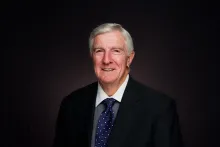
Before his retirement in 2021, Dr. Donald Ward pastored churches in Texas and Louisiana, and taught at Ambassador Bible College in Cincinnati, Ohio. He has also served as chairman of the Council of Elders of the United Church of God. He holds a BS degree; a BA in theology; a MS degree; a doctor’s degree in education from East Texas State University; and has completed 18 hours of graduate theology from SMU.
