

Randy Urwiller
This transcript was generated by AI and may contain errors. It is provided to assist those who may not be able to listen to the message.
Well, thank you again, and also again welcome to this very beautiful Holy Day. Appreciate the offeratory and the two pieces of special music. Very beautiful and certainly adds a lot to celebrating God's Holy Day. We're here because we respond to God's calling and His instruction in Leviticus 23 verses 6 through 8, where it says that we should observe the days of unleavened bread, and on the first day there should be a holy convocation, and on the seventh day there should be a holy convocation.
We are here on that very day. We're also aware of the fact that the Apostle Paul wrote in 1 Corinthians chapter 5 to a Gentile congregation that we should keep these feasts, the days of unleavened bread, with, of course, sincerity and truth, with a new meaning as part of a new covenant observance. A few weeks ago, we looked at the events that occurred in ancient Israel leading up to the very first Passover that occurred around 1446 BC.
You may recall that we reviewed the original events and we gleaned from them some lessons for us today. Well, on this seventh day of unleavened bread, 2019, I'd like to pick up where we left off. I'd like to look at the major original events from the time of the Passover in Egypt all the way through to the seventh day of unleavened bread the day Israel crossed the Red Sea. To help us do this, I'd also like to include the approximate Hebrew days and times that these events occurred, and I hope I don't confuse you by doing this.
Remember that the Hebrew definition of a day does not start at midnight like our culture has here in the western world today. The day begins when the sun sets, separating the end of the previous day and beginning a new day at sunset. So when we say the night portion, or when I mentioned the night event on a particular day, we mean the first half of the day that would have occurred from the period between sunset and daybreak. And when we say the day portion, we mean from about daybreak through, could have occurred through the morning, the afternoon, the evening, all the way until sunset when a new day began.
So I hope that doesn't confuse you. And again, I will mention the Hebrew days on the calendar of the month of Abib and approximately when some of these events occurred during the day. The Passover had occurred about 1446 BC on the night that is the beginning portion of the 14th of Abib. The destroyer, sometimes in scriptures, called the Angel of Death, they're mentioned in Exodus chapter 12 and verse 23, didn't even arrive until midnight as recorded in Exodus chapter 11 and verse 4. So let's take a look at the events that occurred from the Passover to the seventh day of Unleavened Bread that year.
If you'll turn to Exodus chapter 12 and we'll pick it up here in verse 30. The first major event we're going to look at is the 14th of Abib daylight. So the Passover occurred, the sun rose, the death angel had done what the death angel was directed to do by the Lord, and now it was the daylight portion of that day. Israel is going to demand gold and jewel from the Egyptians.
So again, we're taking a look here at Exodus chapter 12 and verse 30. And by the way, if you have a little ribbon or something you can put in Exodus, you might want to do that because we'll be going back and forth, but usually we'll return to the story in the book of Exodus. All right, chapter 12 and verse 30. So Pharaoh rose in the night, he, all his servants, and all the Egyptians, and there was a great cry in Egypt.
There was not a house where there was not one dead. Then he called for Moses and Aaron by night. So we know, of course, that the death angel didn't even strike until midnight. So this would have been perhaps 3, 4 a.m. in the morning. The death angel would have had to do what it was directed to do, and Pharaoh would have had to be notified that beginning at midnight, the firstborn of the Egyptians were dying. So he called them by night. They would have had to travel from Goshen to where Pharaoh was.
And here's what he said, rise, go out from among my people, both you and the children of Israel, and go serve the Lord as you have said. Also take your flocks and your herds as you have said, and be gone. Oh, and bless me also. He knew he was under a curse. He realized that he was under a curse. So he said, I have two commands for you. Get out and stay out, but also bless me as you as you leave the door.
Verse 33, and the Egyptians urged the people that they might send them out of the land in haste, for they said, we shall all be dead. They said, there's not much left of us. We've already experienced all of these plagues, plague after plague. The nation economically is in ruins. The firstborn are dying. We need to get these people out of here, or we won't even survive much longer. We won't even exist. Verse 34, so the people took their dough before it was leavened, having their kneading bowls bound up in their clothes and their shoulders.
Now the children of Israel had done according to the word of Moses, and they had been instructed way back in Exodus chapter 3 and verse 21 to do this. And they had asked the Egyptians for articles of silver, articles of gold and clothing. In verse 36, and the Lord had given the people favor in the sight of the Egyptians so that they granted them what they requested. Thus they plundered the Egyptians, so they ended up taking a lot of wealth, what was left over, those material things like gold and silver and fabrics.
And they were given them by the Egyptians who basically said, here, take whatever you want, just please get out. Now this was payment for the years of slavery in a similar way. When we come out of the world, we bring with us the same talents and gifts and skills that we developed when we were in the world. Whatever skills you developed when you were in the world before God called you, you bring those skills and those talents into the Church of God to be used in a positive way.
Now usually we need to redirect them. We normally need to learn to use them properly in order to serve others, but the point is, is we have earned those skills and talents. We have developed to them the hard way in slavery to this world, and we are blessed to be able to bring those same abilities and skills and talents with us into the Church of God, again, to be used in a positive way.
Just like some of the silver and gold and fabrics they received were repurposed, later on the gold and the silver would be melted down to be used within the tabernacle. In that same way that they were repurposed, we could say they were remodeled to serve God, we too are called to use our gifts and our natural talents now to serve the Church of God rather than instead of just trying to serve ourselves or do things for selfish, self-centered means.
So again, this was when Israel demanded gold and jewel from the Egyptians. The next major event occurs on the 15th of Abib. That is the evening. So the day is beginning. This is the first day of unleavened bread. Israel leaves Egypt by night. And again, this would have been after sunset beginning on the 15th. Exodus chapter 12, and we'll pick it up here in verse 41. And it came to pass at the end of 430 years on that very night the same day. It came to pass that all the armies of the Lord went out from the land of Egypt.
It is a night of solemn observance to the Lord for bringing them out of the land of Egypt. This is that night of the Lord, a solemn observance. And it's because of this that we observe what we call the night to be much observed or sometimes referred to as the night to be much remembered as a night in which Israel came to freedom. And hopefully we look back in our own lives and we rejoice in a solemn way, but we rejoice realizing that we too came out of slavery to sin.
That Satan the devil was our personal Pharaoh who had control of our lives, who had control of our existence until we were freed by Jesus Christ from sin. Continuing here, a solemn observance for all the children of Israel throughout their generations. Now I'll give you a companion scripture you don't need to turn here in Deuteronomy chapter 16 verse 1. It says, observe the month of Abib and keep the Passover to the Lord your God for in the month of Abib the Lord your God brought you out of Egypt by night. So again, I want to emphasize that this occurred on the 15th of Abib after sunset. It got dark, it was night, and that is when Israel left Egypt.
This was a night of celebration. They would have traveled throughout the night and perhaps stopped occasionally to rest and eat some food. But the indication is, and we'll take a look at a few scriptures in a couple of minutes, is that they did not camp. They wanted to get out of Egypt and fast. They wanted to get out ASAP, as we say in our 21st century, and they didn't want to camp.
They didn't want to linger. Obviously, occasionally, they would need to stop and rest and eat some unleavened bread. But the indication from scripture is they wanted to get to the wilderness. They wanted to get out of Egypt in a haste quickly, as fast as they possibly could. Exodus chapter 14 and verse 8. It says, "...and the Lord hardened the heart of Pharaoh, the king of Egypt, and he pursued after the children of Israel, and the children of Israel went out with a high hand." So when they left Egypt, they left with a high hand.
Here you thought, mistakenly, that the high five started in our modern American culture. And a football guy goes, hey! Oh, no, it didn't start there at all. It says they left with a high hand.
Now, in Hebrew, this is the word that's pronounced room that's actually spelled R-U-W-M, and it means to raise, to exalt yourself, to extol, to heave up, or to be proud. And this is being proud in the right kind of way, a proud rejoicing and thankfulness. So they left Egypt excited that after all of those years of slavery, that they were able to leave Egypt, leave the physical bondage and slavery of Pharaoh and the nation of Egypt, and they were able to go into their own land, their own nation.
Other translations say the new King James Version says, with boldness. The new century version says they were leaving victoriously. So they had that sense of victory. You know, we will, we will rock you. That's how they felt when they were leaving Egypt. So I have some questions for us. Do we feel the same way about our precious calling? Do we get this excited when each one of God's holy days come around like this very day we're celebrating?
Or are we so calloused that it has just become another day? Or maybe it's an inconvenience because we have to miss a day of work. Do we really appreciate, enjoy, and with a high hand, the fact that God has called us out of this world and given us freedom because Jesus Christ is our Lord and Savior, because He shed His blood so that our sins could be forgiven, so that He was resurrected from the dead, so that we could be part of the family of God? I think that's a very important question.
How many times in a recent past have we talked here in the Cleveland congregation about that second fruit of this spirit called joy? They were joyful. That's what it means to have a high hand. They were excited. Can people see it in us, in our community, in our workplace? Can people even see it in us today in the way that we're our countenance and our demeanor here on God's holy day?
Jesus said in John chapter 1511, one of the scriptures that was read during the Passover, these things I've spoken to you that my joy may remain in you and that your joy may be, fill in the blank, full. So on this high day, this day that represents part of God's plan of salvation. Are we filled with joy? Are we here today with a high hand? Are we here to rejoice? Are we here to be so thankful that God called us out of this world? Or has it become ho-hum?
Oh yeah, I know that. What's going on in our hearts and how do we reflect that joy when we talk to others within the Church of God? Next major event occurred on the 16th of Abib, the day portion of the 16th of Abib, and that was the arrival at Sukhoth after celebrating that first holy day. So they went from Goshen.
We're going to see that they went to Ramses, which was a store city very close to Goshen, even though, like most of these cities, there's debate over where they're located. And then they would go from Ramses to Sukhoth on their way to the wilderness to try to get out of Egypt, a beeline out of Egypt, and get out of there as soon as possible. Exodus 12, verse 37. Then the children of Israel journeyed. So again, they're not taking time to camp. They're on the march. They want out. Yes, they stop occasionally to eat, to rest a little while.
But they're journeying. Their goal is to get out of the land of Egypt. They journeyed from Ramses, and again, that was a storehouse, according to scriptures, to Sukhoth, about 600,000 men on foot besides children, and that's been estimated to be perhaps two million to two and a half million souls who were part of the nation leaving Egypt. Verse 38. A mixed multitude went up with them also in flocks and herds and a great deal of livestock, and they baked unleavened cakes of dough which they had brought out of Egypt, for it was not leavened because they were driven out of Egypt and could not wait, nor had they prepared provisions for themselves.
We know the instruction even on the Passover was to have your waist girded, have a staff in your hand, and be ready to leave at a moment's notice when you were told it's time to go, it's time to go. So they didn't prepare things in advance. The actual location of Sukkot is unknown. In Hebrew, it is a Hebrew name, and it means to block the approach or to shut off or to cover something up. Again, the indication here in Exodus is that they may not have camped for the night. Ramses was the closest major city in Egypt next to Goshen where the Israelites dwelt.
They wanted to get entirely out of Egypt and get out as fast as they could. They may have stopped occasionally to eat and be refreshed, and that was very important for them in order to continue their journey. There's another statement in here I want to focus on a little while.
It says in verse 38, a mixed multitude went up from them. Now this mixed multitude could have included some Egyptians who just were adventurous and wanted to leave. It may have included some who were part Egyptian and part Israelite. If you remember, Manasseh themselves even had an Egyptian mother. So it may have been people who were part Egyptian, part Israelite. It may have been some foreigners. There may have been other foreigners who were also oppressed by the Egyptians.
And this was a chance to just kind of merge in with the crowd and get freedom by blending in with the Israelites when they left the nation. So it could have been people from other nations. It could have been hangers-on. It could have been adventurers, but frankly, most of them who were there probably shouldn't have been there because the mixed multitude would come back to haunt Israel later on by instigating very negative attitudes within the congregation of Israel in the future.
You know, there's a modern parallel with the mixed multitude, and they're called tares in the modern Church of God. I spoke about that a little bit in a sermon a few months back. But what's the metaphor for God's people today? Well, when we decided to leave this world and come into God's Church, did we do so half-heartedly? Or did we have mixed feelings, mixed emotions?
When God called us and we decided we wanted to be baptized, and we wanted to live God's way of life, did we do it only partly? Did we come into the faith with our whole being? Or again, with mixed emotions, maybe mixed intentions. I've seen people come into the Church of God, unfortunately, with an agenda that they brought with them.
As Jesus replied to a question in Matthew, chapter 22 and verse 36, the question is, teacher, what is the great commandment of the law? And Jesus said, you shall love the Lord your God with all of your heart, all of your soul, and with all of your mind. See, not with mixed emotions, mixed intentions, dipping our little toe in the water just to see if we want to stay in the Church or not. We had to do it wholeheartedly. You know, there's a saying that we use in a corporate training industry, and the saying is like this.
Great minds talk about ideas. Mediocre minds talk about other people. So, as we are here with God's people today, do we realize how important it is not to have mixed emotions, not to be partly in the Church, perhaps one day of the week that they call the Sabbath, and then living with the world the other six days of the week.
It's important for us to be solid. It's important for us to be committed. It's important for us to love God's way of life. Here's the reality. When we are converted, we are composed of two different competing parts. Every one of us has two different competing parts. The first part is what you were given when you received God's Holy Spirit, a new creature in Christ, and it's spiritual.
It's interested in spiritual things. Mr. Lee talked about that, and that is so very, very important.
So that's the first part. The second part is something we've had since we opened our eyes and first went, waah! And that is our carnal human nature, what Paul calls the old man.
That is our carnal fleshly mind and our desires. It's only interested in physical things. It's not interested in the spiritual. And those are two competing things going on within our lives. Let's go to Ephesians chapter 4 and verse 17 and see what Paul said about this old man and how we should be striving, as reminded itself by the days of unleavened bread, and getting leaven out of our homes, and taking in the righteousness of Jesus Christ every day during the feast. Let's see what Paul says about how we should be getting our former conduct, he calls the old man, out of our lives and under control. Ephesians chapter 4 and verse 17, again he's talking to a gentile congregation. He says, this I say therefore and testify in the Lord that you should no longer walk as the rest of the gentiles walk in the futility of their mind. In other words, carnal, selfish, fleshly.
Now why would Paul be writing this to a church congregation? It's because they were still struggling with this, just like you and I still struggle with those two competing parts of our being. Verse 18, having their understanding darkened, being alienated from the life of God because of the ignorance that is in them, because of the blindness of their heart, who being past feeling have given themselves over to lewdness. And I think that's one of the biggest problems we have in our American culture today. We are now, as part of the American culture, we are past feeling. There is no sense of shame anymore in our culture. It used to be there were certain things you didn't say, certain things you wouldn't write, certain things you wouldn't admit to, because you would be ashamed to admit to those things. Now they're held up in our culture. You're a hero if you do these types of dysfunctions and perversions. So we no longer have a sense of shame in our American culture anymore. Anything goes. Everyone's opinion is considered equal. No one has a conscience anymore. And that's something that we struggled with. And Paul was talking about how in Gentile cultures, in the United States now as a post-Christian society, in Gentile cultures, this is a problem that exists, having given themselves over to lewdness, to the work of uncleanness and greediness. But you have not so learned Christ. He says, that isn't what I taught you. You learned something different than these things that I just mentioned. If indeed you have heard him and have been taught by him, as the truth is in Jesus, that you put off concerning your former conduct, the old man, which grows corrupt to the deceitful lusts. And each and every one of us here, if we're willing to admit it, still have a little bit of the old man once in a while, rearing his ugly head up in our lives and saying, I'm back. I'm here. Remember me?
Verse 23. Again, Mr. Lee alluded to this so beautifully in the first sermon. And be renewed in the spirit of your mind that you put on the new man which was created according to God in true righteousness and holiness. So again, it's very important for us to be wholehearted in what we do and not be like the mixed multitude, not be mixed in our emotions and feelings and level of commitment, but to be able in desire to worship God with all of our heart. The next major event was on the 18th of Abib. This was the fourth day of Unleavened Bread. Pharaoh hears that Israel has left Egypt and he has second thoughts. They're gone. But now it's, oh, why did I let them go? Who's gonna build stuff for me? Who am I going to abuse? Well, I'd have to start abusing my own people. So let's go to Exodus chapter 14 and verse 5. Again, this was the 18th of Abib. Pharaoh hears that Israel has left Egypt and it's actually God's influence that changed his mind because God wanted to punish Pharaoh and he also wanted to test Israel. Exodus chapter 14 and verse 5. So it was told the king of Egypt that the people had fled and the heart of Pharaoh and his servants was turned against the people. And again, that's God's influence, turning his heart and his mind. And they said, why have we done this? That we have let Israel go from serving us. So he made ready his chariot and took his people with him. Also, he took 600 choice chariots and all the chariots of Egypt with captains over every one of them and the Lord hardened the heart of Pharaoh, king of Egypt, and he pursued the children of Israel and the children of Israel went out with boldness. We read that earlier. We understand that they went out joyfully. They went out marching in joy and enthusiasm because they were able to leave Egypt. But by this day, during the days of Unleavened Bread, Pharaoh reconsiders. He says, no, I would rather have them destroyed than allowing them to be free. So here's the point of this episode for us today. Satan regrets ever letting you go.
Now, he had no choice like Pharaoh, but Satan wants you back. If there's such thing as a spiritual wanted poster in the dark spiritual post office, your picture is on that poster.
He knows thousands of years of your family heritage. He's been alive for millennia.
Before there were human beings, he knows every weakness we have, every temptation we have, every secret desire that we try to hide from other people. He knows every problem we have. He knows the problems our great great great great great grandfather had. He knows our lineage. He knows our family history. He knows us better than we're willing to admit ourselves. He will do anything, a thought, an opportunity, a temptation, any small opening to bring us into his control once again. Now, we have spiritual protection. We need to stay connected to the vine who is Jesus Christ. So we really have nothing to fear, but we need to open our eyes and realize that as a roaring lion, Satan wants to devour us, and much like Pharaoh, he wants us back again. Satan will never give up on us as long as you live a physical life. So let me ask you a question.
Which one will win and dominate your life?
The new creature in Christ or the old man?
The answer to that question is the one that you feed and nurture.
That's the one that will dominate your life. Ephesians chapter 2 and verse 2. If you'll turn there with me, Ephesians chapter 2 and verse 2. Paul writes here, once again, to the church at Ephesus. He says, in which you once walked according to the course of this world, according to the prince of the power of the air, this spirit who now works in the sons of disobedient, among whom we all once conducted ourselves in the lust of our flesh, fulfilling the desires of the flesh and of the mind, and were by nature children of wrath, just like the others.
So Paul says we have to be very careful. There is a very powerful spirit being the prince of the power of the air. We know what we are like. We know if we're honest with ourselves what we're capable of. And Paul is saying, be on guard, because much like Pharaoh wanted Israel back.
Saint the devil wants you back. He wants me back. But our purpose now is to nurture the new creature in Christ and not to give this enemy a foothold in any way to be able to pull us back into slavery once again. The next major event was on the 19th of Abib during the day portion. This is when Israel entered the Egyptian wilderness. So they went from Sakhoth and now to Ethem. And that word in Hebrew means solid. And this was the very edge of civilization. It was this city on one side of it was civilization, considered civilization, and the other side of it was wilderness and desert.
So we'll pick it up here in Exodus chapter 13 and verse 18. So God led the people around by way of the wilderness of the Red Sea. And the children of Israel went up in orderly ranks out of the land of Egypt. And I want you to notice the importance that God has that we all do things always in an orderly manner.
It wasn't a free fall. You didn't have two million people running in every which direction. You didn't have everyone just doing their own thing. They came out of Egypt marching in an orderly fashion because that is the way that God does. God is not the author of confusion.
Verse 19, and Moses took the bones of Joseph with him, for he had placed the children of Israel under solemn oath, saying, God will surely visit you, and you shall carry my bones up with you. So they took their journey from Sukhoth and camped in Ethem at the edge of the wilderness. And the Lord went before them by day in a pillar of cloud to lead the way, and by night a pillar of fire to give them light, so as to go by day and night. He did not take away the pillar of the cloud by day or the pillar of fire by night from before the people.
This translation here in the New King James can be a little bit muddled, so I'm going to read it in another translation, that basically what it intended to say here is that God provided these things so they could travel 24-7. There was no need to camp. They could travel as much as they wanted to.
Naturally, obviously, had to stop once in a while and rest, but they had the ability to travel day or night. Here's verse 21 in the new international version. By day the Lord went ahead of them in a pillar of cloud to guide them on their way, and by night in a pillar of fire to give them light, so that they could travel by day or night. And why had God done this for them? So that they could get into the wilderness and get out of civilization known as Egypt as fast as they possibly could. So what's the lesson for us today in our Christian journey? Well, just like God was there in the pillar of cloud and pillar of fire, God's presence was among them 24-7.
He was always there for them. And in a similar way, we're not alone in our journey through life. Collectively, we are a church, but individually we're all on our own walk. We're all taking our own spiritual journey through this physical lifetime that we have. And what God wants us to understand is that His presence is among us as individuals, each and every one of us, and as His church. His presence is among us through the power of His Holy Spirit dwelling within us. That's the same spirit that the Father and the Son share that was given to us when hands were laid upon us and we received the gift of the Holy Spirit.
When Jesus was baptized, the Holy Spirit descended on Him from heaven. On the day of Pentecost, tongues of fire descended upon the disciples. So God is there. God is present with us, and He will never forsake us. The next major event I want to mention is the 20th of Abib, which this was daytime, and Pharaoh catches up with the Israelites who are at Pihahirath.
Again, that's Pihahirath. This is the sixth day of the days of unleavened bread that year, Exodus chapter 14, and we'll pick it up here in verse 9. It says, so the Egyptians pursued them all the horses and chariots of Pharaoh, his horsemen and his army, and overtook them camping by the sea beside Pihahirath before Beelziphon. And when Pharaoh drew near, the children of Israel lifted their eyes, and behold, the Egyptians marched after them, so that they were very afraid, and the children cried out to the Lord. So before Pharaoh is literally there, they can see the dust in the distance. They can hear the hooves of the animals. They can hear the chariot wheels. They can see that puff of dust at a distance, and they realize very quickly that Pharaoh is coming after them. And what do they do then? They pray. They cry out to the Lord. But unfortunately, some of their prayers, some of their refrains were very negative. You can pick it up here in verse 11. And they said to Moses, because there were no graves in Egypt, have you taken us away to die in the wilderness? Why have you so dealt with us to bring us up out of Egypt? Verse 12, is this not the word that we told you in Egypt, saying, let us alone that we may serve the Egyptians? For it would have been better for us to serve the Egyptians than that we should die in the wilderness. So this isn't very positive, is it? This is not a sterling example of faith on their part. And there's a lesson for us to learn from that, and that is when we're going through difficulties and trials. We most definitely should not accuse God or accuse others of the difficulties that we are facing. Let's continue to see what happens here. Verse 13, and Moses said to the people, do not be afraid, stand still and see the salvation of the Lord, which He will accomplish for you today. For these Egyptians, whom you see today, you shall see again no more forever, for the Lord will fight for you, and you shall hold your peace. So that's one opinion. That's Moses. He says, stand still. He says the answer is to stand still. God has another answer, verse 15. And the Lord said to Moses, why do you cry to me?
Tell the children of Israel, not to stand still, tell the children of Israel to go forward, but lift up your rod, stretch it out your hand over the sea and divide it, and the children of Israel shall go on dry ground through the midst of the sea. There are a lot of lessons that we can learn from these verses who can apply to ourselves today, and some of them are things that we certainly don't want to imitate in our own lives or as a church. The first thing is what I mentioned a few minutes ago. Just like Pharaoh had regrets and didn't want to let Israel go, he doesn't want us to stay free of control. He would rather destroy us if he can't have us. He'd rather have us destroy ourselves by putting into our heads attitudes and ideas and thoughts and self-destruct rather than having us be part of the family of God. Another thing we can learn from this is Israel cried out to the Lord, and in a similar way we need to be connected with God through prayer and the study of His word, because prayer and study are character traits that build faith. One thing the Israelites certainly lacked was faith. They called on God when they were in trouble, and their prayers weren't very positive. It was, oh God, you're to blame or your servant's to blame. God, there's a big problem here. Why aren't you doing something already? They really didn't have a relationship with God.
Very few, aside from Moses and Aaron and maybe a few others, very few even had God's Holy Spirit at this time. So faith was something they completely lacked. They called on God when they were in trouble, and the difference is we need to have a daily relationship with God through prayer and study. And when we do that, frankly, we'll avoid a lot of trouble and a lot of heartache in our life. That doesn't mean everything will be fine always, but we will actually avoid a lot of problems and a lot of trouble. The typical Israelite lacked the Holy Spirit. They were selfish. They were carnal. They were complainers. They were ungrateful for what God had already done for them. And we don't have the time to go into today, but as you follow their journeys beyond the seventh day of Unleavened Bread, they're continually testing God, the one who would later become Jesus Christ. They are continually saying negative things about Moses and Aaron and God and imputing motives and showing a lack of faith. We have God, Spirit. We should not act this way. And of all people on earth, we should live lives of gratitude because we know what God has already done for us, calling us out of this world. We know that He's already working with us to change our lives through the power of the Holy Spirit, and we know the incredible promises that He has for us. Promise is so rich and so wonderful, it cannot even be described in a human language. That language does not exist to describe the beauty and the joy and the level of fulfillment that God has promised for us within His kingdom and within His family. So we, of all people on earth, should radiate joy and should live with gratitude. Here's a fourth lesson, and I think this is a very important one. There will come a time, at least once, in all of our lives that we will cross, and have to cross, a personal Red Sea. It'll be a trial or tribulation, a sore trial, a difficult tribulation. For some of us, it'll be health, like when I faced leukemia. My wife has faced breast cancer. For some, it's health. For others, it's the sudden loss of a job, and you're at an age that no one wants to hire you anymore, which in our culture today, I think, is if you're older than 30.
Say that tongue-in-cheek. But in reality, if you're 50 or older, most people don't want to hire you today, which is a sad commentary on our culture, I might add. But aside from that, we all are going to face some time in our life, at least once, a personal Red Sea. And we're going to have to demonstrate to God the courage and the faith to face that difficulty, whatever it is. So when we face that personal Red Sea, how will we respond to God? Will we respond like Israel and complain, accusatory, judgmental towards God? Or will we respond like someone who is filled with the fruit of the Spirit?
When we do face our own personal Red Sea, when that time comes, the answer is not to look backward in life. The thing that a lot of church members do, they look backward, they live in the past, they live in, if only you woulda, coulda, shoulda, that's not the answer. All that does is it paralyzes you from doing what you need to do. You know what we need to do? It's not stand still.
Because when you stand still, you expect God to do everything.
And eventually that leads to complaining. What we do need to do is we need to keep moving forward.
So when the time comes and you face your own personal Red Sea, the answer is not to look backward, not to stand still and expect God to do everything for us, but to pray about it, and in complete faith, move forward, and God will remove the obstacles.
I think Sir Winston Churchill had it right when he stated during the Second World War, and he was certainly going through a tough time in the early part of the war. The United States wasn't in the war yet. He was facing the Nazi juggernaut single-handedly. France had fallen, and with a very weakened nation that had not prepared itself for war, he was trying to hold things together. He said, if you're going through hell, keep going. And there's a lot of wisdom in that. Israel crossed the Red Sea all night. They just kept going. Takes a lot of time.
Sea wall on your left and on your right. Two million people just moving forward, not standing still, as Moses suggested, not looking back, oh, Egypt, if only, if only, what if, or would it could've, should've, in my life, no? That doesn't help you at all. What helps us is with faith, to keep moving forward. So again, Israel crossed the Red Sea all night. Let's read about that. This is the 21st of Abib night. God leads Israel through the Red Sea to safety before daylight. This is the evening of the seventh day of unleavened bread that year. Exodus 14 verse 17, And I indeed will harden the hearts of the Egyptians, and they shall follow them. So I will gain honor over Pharaoh, and over all his army, his chariots, and his horsemen. Then the Egyptians shall know that I am the Lord, when I have gained honor for myself over Pharaoh, his chariots, and his horsemen. Remember, of course, that Pharaoh was considered a god in Egypt, so the true god, Yahweh, was going to humiliate and destroy Pharaoh, so that there was no question on who the true god was. Verse 19, And the angel of the Lord, who went out before the camp of Israel, moved and went in between them. And the pillar of cloud went from before them, and stood behind them. So it came between the camp of the Egyptians and the camp of Israel. Thus it was a cloud and darkness to the one, and it gave light by night to the other, so that one did not come near the other all night. Then Moses stretched out his hand over the sea, and the Lord caused the sea to go back by a strong wind all that night. And the pillar of cloud and the pillar of fire both came and parked themselves between the Israelites and the Egyptians. Darkness on one side, and of course we know the darkness is a concept, spiritual concept of evil, as mentioned in the Bible. Light on the other side, the light of God influencing the children of Israel. Let's go to 1 Corinthians chapter 10 and verse 11. I don't have time to go to 1 Corinthians in detail today, but Paul talks about some of the lessons and things we can learn from the example of ancient Israel. He gives some caution and some warning for us. It'd be actually be a very good chapter for you to read in your Bible study as you conclude these days, because we've spent a lot of time looking at ancient Israel, their experiences, and what we can learn from their experiences. I'll just touch base here in verses 11 through 13. Now all these things happened to them as examples, and they were written for our admonition, upon whom the ends of the ages have come. Therefore, let him who think he stand, lest he fall. In other words, be humble, take to heart their mistakes, their errors, and realize that because that old man is in us, we are fully capable of complaining, of lacking faith, of accusing leaders, or accusing God of doing things they're not guilty of.
We are fully capable of doing that. We need to be humble and realize that we're susceptible to it as well. Verse 13, no temptation is overtaking you, except such as is common to man. And I think that's really important for us to remember God isn't picking on you. You say, well, I've got finance problems, Mr. Thomas. Well, so do two billion other people on earth. I've got health issues. No matter what our health issues are, there are other people that have the same health issue we have, and they're suffering too. So God isn't singling us out. God isn't picking on us.
We have afflictions. We have a personal Red Sea that is common to man that other peoples have experienced in the past and are experiencing today. But God is faithful who will not allow you to be tempted beyond what you are able, but with the temptation will also make a way of escape that you may be able to bear it. So when we cross that personal Red Sea, that each and every one of us will have to face at least once in our lives, we know that God is there with us, that he will provide a way of escape. He will give us the strength to be able to bear it just like he provided ancient Israel with a way of escape from Pharaoh who was barreling down on the nation and wanted to destroy the people. God only allows Satan to influence us to a point, and usually that's limited to some physical things that Satan can do to us. And God put a barrier between the devil and us through giving us spiritual protection, just like he had the pillars, those two different types of pillars, cloud and fire, standing between Pharaoh and his army and Israel when they were crossing the Red Sea. He has also given us spiritual protection through ministering angels. And like ancient Israel, our biggest enemy is the amount of fear and the lack of faith we allow to happen in our heads. The fear that we usually face is up here.
The lack of faith that we demonstrate and that we have is up here.
In slavery to Satan, there is gloom. There is darkness, just like what was on the side of those pillars who were a barrier between Pharaoh and Israel. But in freedom, and that freedom comes through the shed blood of Jesus Christ, there is God's light in our life.
And we need to follow the light, and we need to stay away from the darkness. Exodus 14 and verse 27.
Exodus 14, 27. If you'll turn there with me, it's actually our last scripture. We'll read together today.
Exodus chapter 14 and verse 27. And Moses stretched out his hand over the sea, and when the morning appeared, so you see again, they marched all night. They went forward. They didn't stand still and say, okay, God, carry me across. Bring the buses. Send the chariots. Where are the Ubers when I need them? No, they put one foot in front of the other, and then another foot in front of that one, and they marched across. It is true. It's not a biblical scripture, but it's very true that God helps those who help themselves. And sometimes that's lost on God's people. And when morning appeared, the sea returned to its full depth while the Egyptians were fleeing into it. So the Lord overthrew the Egyptians in the midst of the sea when the waters returned and covered the chariots and the horsemen and all the army of Pharaoh that came into the sea after them. Not so much as one of them remained. So they're all swallowed up in the swirling whirlpool of water as those two sheets, those two curtains of sea, just clashed together again and literally overwhelmed and drowned Pharaoh and his army. Not so much as one of them remained, but the children of Israel had walked in dry land in the midst of the sea, and the waters were a wall to them on their right hand and on their left. So the Lord saved Israel that day out of the handy Egyptians, and Israel saw the Egyptians dead in the seashore. Thus Israel saw the great work which the Lord had done in Egypt. So the people feared God and believed the Lord and his servant Moses.
Now, unfortunately, what's really sad about verse 31 is that was true for a few days until the next trial occurred, because they didn't have a long-term vision. They didn't have faith.
And that makes all the difference in the world. As John was inspired to write in Revelation, chapter 12 and verse 10, Then I heard a loud voice in heaven, saying, Now salvation is strength, and the kingdom of God, and the power of Christ is come for the accuser of the brethren, who accused them before our God day and night, has been cast down.
So we can look forward to that time when a parallel exists between Pharaoh, who was cast down into the waters of the Red Sea, so that he could no longer influence Israel again.
A time will come, then Satan the devil will be cast down and will be put into a spiritual prison so he can no longer influence humanity again. Verse 11 here in Revelation 12, 11, And they overcame him by the blood of the Lamb, and by the word of their testimony, and they did not love their lives to the death. These were people spoken up in the book of Revelation who were willing to die for what they believed in. Are we willing to die for what we believe in? Just like Pharaoh and his army were cast down into the waters of the Red Sea, so too Satan will be cast down and placed in that spiritual prison. And we can look forward to that because that's also pictured by one of God's fall holy days. That last thing I will mention today that occurred on the 21st of Abib, the daylight portion, were the songs of Moses and Miriam with a great celebration on that daylight portion of the seventh day of Unleavened Bread. For the sake of time today, we don't have the opportunity to read Exodus 15. I encourage you to do so. I'll just read a couple of verses here. Exodus chapter 15 verse 2, The Lord is my strength and song, he has become my salvation, he is my God, and I will praise him, my Father's God, and I will exalt him. That's how they felt when they went through their own personal Red Sea. So in conclusion, on the seventh day of Unleavened Bread, you know, Israel had a lot to be thankful for. Let's see, God offered them physical freedom, he offered them physical protection, he offered them a promised land, he offered them a land where generations of their children could thrive in a land of milk and honey, and when it was all said and done, they would die.
Because there was no promise of eternal life. There was no promise for them of sonship in the family of God. So they had much to be thankful for, but you know what? We have more to be thankful for because our promises aren't limited to some physical land, physical freedom, physical descendants. Our promises are spiritual. They're about immortality. They're about eternity.
They're about the joys and the fulfillment of existing within the family of God. They are spiritual. So as we conclude this service here on the seventh day of Unleavened Bread, thank you for coming today, and I ask you to think about all that God has done in your life to bring you up to this point. Don't look back. By all means, don't stand still. Keep growing. Keep attending Sabbath services. Keep fellowshipping with people of like mind.
And keep moving forward. Have a wonderful seventh day of Unleavened Bread this year.
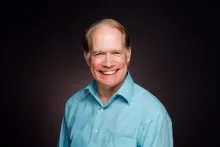
Greg Thomas is the former Pastor of the Cleveland, Ohio congregation. He retired as pastor in January 2025 and still attends there. Ordained in 1981, he has served in the ministry for 44-years. As a certified leadership consultant, Greg is the founder and president of weLEAD, Inc. Chartered in 2001, weLEAD is a 501(3)(c) non-profit organization and a major respected resource for free leadership development information reaching a worldwide audience. Greg also founded Leadership Excellence, Ltd in 2009 offering leadership training and coaching. He has an undergraduate degree from Ambassador College, and a master’s degree in leadership from Bellevue University. Greg has served on various Boards during his career. He is the author of two leadership development books, and is a certified life coach, and business coach.
Greg and his wife, B.J., live in Litchfield, Ohio. They first met in church as teenagers and were married in 1974. They enjoy spending time with family— especially their eight grandchildren.
