

David Mills
This transcript was generated by AI and may contain errors. It is provided to assist those who may not be able to listen to the message.
That was very beautiful. Wow! 18 in our choir! That's wonderful! Thank you, Gary, as the choir director, and all the time, and ever thank you for everyone. It's a beautiful, very inspiring, and he is gonna, and he does bear us on Eagle's wings, and as Howard mentioned in his first message, and for eternity, we're going to have God keep us with those Eagle wings, the way he is just gonna give us power and life eternal. Just think, on this little planet, he's starting out this great plan of salvation, of which we have a chance to participate.
If we lived at 2,000 years ago, we would be keeping the first day of Unleavened Bread, just like the Book of Acts. We will be part of that congregation. Can you imagine meeting people like Peter and Paul, and having all of these men at that time? Well, we're continuing. We're still the disciples of Jesus Christ in the 21st century, and what a privilege it is!
Of course, as we finish these seven days of Unleavened Bread, which are mentioned by God, there are a lot of lessons that we can gather and reap from what we have done, but one of those lessons is very important, and that is that God always does everything on time. He's never beyond or before. It's always at the right time, especially when you look at this last day of Unleavened Bread. How many great events have happened in the Bible with this last day of Unleavened Bread?
First of all, God does fulfill His promises, His prophecies. Let's turn to Isaiah 46 verse 10. I'd like to read it from the Good News Bible. It's a bit clearer than the New King James. Isaiah 46 verse 10. This is what God says, from the beginning I predicted the outcome. Long ago I foretold what would happen. I said that my plans would never fail, that I would do everything I intended to do.
So nobody can change God's plans, His chronology for everything, and these feast days actually started back in Genesis chapter 1 in verse 14. I'd like to read it again from the Good News Bible. It's a bit clear. Genesis 1.14. It says, then God commanded, let lights appear in the sky to separate day from night and to show the time when days, years, and religious festivals begin. Can you imagine God already before even the creation of Adam and Eve? That takes place in verse 26. He created human beings, but here in verse 14, God is shaping this solar system.
He is putting all the stars in its place, and it is this giant master clock that God is setting up so that we can keep the feasts on the days that He has established. And so we have the blessings of the Hebrew calendar, which is the most precise, humanly devised calendar from all the different calendars that you have. We do have, of course, the astronomical NASA's calendar to get all the spaceships going.
Guess what's as close as one of those is the calendar we have in the Bible. I'll plan to give you a seminar on the calendar and show you how God set it up. Do you know that every 19 years that God's the whole planetary and the whole system goes back to the same frame?
So you have 19 years cycle, and so then everything returns back to what you begin counting again. So it's a 19 year cycle. For instance, Shaylee, you're 17? Yes. You haven't reached your 19 year cycle yet, but you know what? You're getting close, and if your birth was at the beginning of the sun and the moon that you looked and you saw all these different stars and planets, you go 19 years and it's back to zero. And it has such precision that it's just every—and I've got to look it up carefully—but every 2,000 years it's off by like 20 minutes or so.
And so it is so precise. It is amazing. And God said that He would set up to separate day from night and to show the time when years and religious festivals begin.
And so this is what we have in the system, and when Christ comes back, people are going to learn. They're going to go by this same calendar because they're going to be keeping God's holy days. Notice in Zechariah chapter 14, here Christ has come back to the earth.
This is a prophecy of what is going to happen, Zechariah 14. Notice in verse 9, it says, And the Lord shall be king over all the earth. In that day it shall be, the Lord is one, and his name one. You know what that means? One religion. We're not going to have Buddha. We're not going to have Mohammed with his ideas and others. God is going to be the only one. All of these false gods are going to be shed. They're going to be destroyed. And so the Lord will be one, and his name one. That'll end the religious confusion that we have today. And notice what Christ is going to establish in Zechariah verse 16. It says, And it shall come to pass, that everyone who is left of all the nations which came against Jerusalem shall go up from year to year. They'll have a calendar, a yearly calendar like we have, to worship the King, the Lord of hosts, and to keep the Feast of Tabernacles. So that's the seventh month of the calendar, and it's on the fifteenth day. And it says all the nations will come, and this will be the time when they will meet Jesus Christ. And he will explain all of these falsehoods, all of these false calendars. For instance, the calendar that people use now, the Easter, and all of this, that's from the Roman Catholic Church. They established a rival and a false calendar because they rejected God's ways, and they wanted to keep their own pagan converted to Christianity type of days. So all of that lies and deceit are going to be removed, and people are going to keep the Feast of Tabernacles. Now that is the one religious annual, just like we go out for the Feast of Tabernacles. We leave our homes, and we meet in other places. Well, this will be where everybody gets to meet in Jerusalem. And what happens if people say, well, I don't want to do this because there's still going to be carnal minded people. Satan will be removed, but people will have their habits. And you know, there are many religious systems that people are fanatical about. They are willing to kill for their faith. And so now Jesus Christ imposes, says, these are the feast days that you're to keep. Notice what it says in verse 19. And it says, this shall be the punishment of Egypt and the punishment of all the nations that do not come to keep the Feast of Tabernacles. It says, they shall receive a plague. In verse 18, they will not have any rain. So you talk about humbling. You quit having water. People have thirst. And pretty soon, they're going to be on their knees because there's nothing worse than dying of thirst.
And this is Christ now. He means it. People are not going to have choices in the matter. You either obey or you're going to die. Notice how the... This is the word translation.
Verse 19, this will be the punishment for Egypt's sin and for the sin of all nations that won't go to celebrate the festival of Tabernacles. So it is a sin to not do it. It's a violation of God's laws. Today, people could care less about God's laws, but they are just reaping the consequences.
One day, they are going to have to either obey or they're going to suffer terrible punishment for it.
And so, why do we do it? Why are we here on this last day of unleavened bread?
It's a commandment. It is part of God's laws and spiritual truths. In other words, this is something given by God, and this lasts through time. It wasn't given by some religious leader somewhere. This is what God instructed, and he says it's going to be forever, too. Notice in 2 Thessalonians chapter 2. 2 Thessalonians chapter 2 and verse 9.
There are a lot of ways to divide society. There are people that eat meat. There are others that don't eat meat. The vegetarians are all kinds of different separations. There are people that are rich. People that are poor. But actually, in the Bible, there's just one separation that really matters. And it's explained in 2 Thessalonians chapter 2 verses 9 and 10. It says, the coming of the lawless one. And this is going to be a leader that is going to be charismatic, that is going to surprise the world, dominate the world. If you've ever seen some of these history in the History Channel or other... it talks about Hitler and how charismatic. And he controlled the German people. And he did his will. And nobody really resisted him. He was so powerful of a speaker, of persuader, and everything else. Well, here's another one that's going to make Hitler look like a little boy scout in comparison. The coming of the lawless one is according to the working of Satan with all power, sins, and lying wonders. And with all unrighteous deception among those who perish. It was Homer this morning who talked about the penalty of sin is death. People are perishing. They are being sentenced to death through their sins. He says, because they did not receive the love of the truth that they might be saved. So actually, in God's eyes, people are divided now, not by race, not by riches, or by whether they eat meat or not. They're divided into who loves the truth and keeps the truth and those who do not. So right now, outside, how many people are keeping this day? Very few. Here in Orange County, we have several million people, and just very few are keeping this last day of Unleavened Bread. And so we do it because God's word is truth. John 1717, it says, your word is truth. And so, because we love God's word more than we love people and everything else, we are here to show God we love Him first. The rest is secondary. And so, God wanted the Israelites to remember these days for the rest of time, for all their generations, as it has been brought out by Howard. He wanted them to observe and remember His great works that He did there in Israel and that He does in our lives today.
God gave four symbols during these eight days, Passover and the seven days of Unleavened Bread. Give us four symbols to remember. The first was the Passover symbol that today we partake of the bread and the wine and we do the foot washing ceremony. That covers the first of the requirements that God says we should do if we love the truth, because truth comes from God. It doesn't come from man. And so, I don't care what the Pope says or what the Buddha or the Buddhist monks or leaders or Muhammad. No, I'm interested in what God tells us to do in His Word, which is to keep this New Testament Passover. The second symbol is the following day, the night to be much observed. He says that is something that we are to keep. That symbolizes Israel leaving Egypt. And we celebrated it too, didn't we? We kept God's Word at that time. And we started eating unleavened bread, which is the symbol of that evening. We started with the matzos and other type of food, and we've done it now for seven days. The third symbol had to do with the Sabbath of the Wave Chief offering. There's always, during the eight days of the Passover and the days of Unleavened Bread, there is at least one Sabbath where you begin counting seven weeks, seven Sabbaths, and then the next day is Pentecost. So that's very important as a symbol. And, of course, Jesus Christ was resurrected on that Sabbath of the Wave Chief offering at the very beginning here of the end of the seventh day and right before the beginning of the first day of the week. Remember, the women arrived and he was already resurrected. And the fourth symbol is the one we're celebrating today, the last day of Unleavened Bread, which represents when we finish the seven days of eating Unleavened Bread and when we actually leave Egypt completely, just like the Israelites. They started, but it took them all of this time to leave Egypt and to be able to cross over through the Red Sea and begin their trek to the Promised Land. And, of course, we begin after baptism and receiving the Holy Spirit, we begin our trek across that wilderness of trials to make it finally to that Promised Land.
So let's look real quickly at the chronology of these amazing eight days.
We know the Passover was on the 14th of Abib, or later on it would be called Nisan. The first day of Unleavened Bread, the night to be much observed, was on the 15th of Abib.
And then on that Sabbath, that was the wave sheaf offering that would be established, not at that time, but once they were ready to begin with entering the Promised Land, the last day of Unleavened Bread would be on the 21st. And according to Jewish and Christian tradition, they crossed the Red Sea on this very day. I'd like to just go through real quickly Numbers chapter 13. Numbers chapter 33, rather, Numbers 33. It talks about the different places that they camped as they left Egypt. This is very important chronology, because it marks their different camps that they set up. Numbers chapter 33, in verse 1, it says, These are the journeys of the children of Israel who went out of the land of Egypt by their armies under the hand of Moses and Aaron. Now, they all had formations. They all went in an orderly way out of Egypt, according to the different tribes. Now, Moses wrote down the starting points of their journeys at the command of the Lord. So he didn't do this on his own. God instructed him. Make sure you put this down in what would be scripture.
And these are the journeys according to their starting points. Verse 3, They departed from Rameses in the first month on the fifteenth day of the month, not on the fourteenth, but on the fifteenth day of the month. On the day after the Passover, the children of Israel went out with boldness in the sight of all the Egyptians. So that would be the first day of unleavened bread.
And then it says, verse 5, Then the children of Israel moved from Rameses and camped at Sukkoth.
This was their first stop that they did. This would be the place where they camped out after a day's journey.
And then they departed from Sukkoth and camped at Ethem. So this would be on a Friday. This would be the... according to the same sequence that we have, they took the Passover on Tuesday.
Then on Tuesday night, on Wednesday night, they departed. And so they went from Wednesday night to Thursday night. That was their first trip to Sukkoth. And then they went to Ethem, which would be on a Friday, which is on the edge of the wilderness.
And it tells us that on Exodus 14 too, it says that Moses addressed them on the Sabbath. They rested on the Sabbath of that day. Notice what it says here in Exodus 14 too.
It says, then the Lord spoke to Moses, saying, Speak to the children of Israel, that they turn and camp before Pichahiroth between Migdol and the sea opposite Beel-Sifon. You shall camp before by the sea. And so Moses on that Sabbath day gave them the instructions, what they would do the next day, which would have been on a Monday. In verse 9 of this Exodus 14, it says, So the Egyptians pursued them all the horses and chariots of Pharaoh, his horsemen and his army, and overtook them camping by the sea besides Pichahiroth before Beel-Sifon. And so this would be on Tuesday when the Pharaoh overtakes them. Again, this is the best we understand, at least from the same type of sequence. And then on Abib the 21st, that's the seventh day, the last day of unleavened bread, that evening God leads Israel through the Red Sea to safety before daylight. Notice Exodus 14 in verse 21.
It says, Then Moses stretched out his hand over the sea, and the Lord caused the sea to go back by a strong east wind all that night, and made the sea into dry land, and the waters were divided. So the children of Israel went into the midst of the sea on the dry ground, and the waters were a wall to them on the right hand and on the left. This wasn't some little stream.
This was a wall that they could see. And all the Egyptians pursued and went after them into the midst of the sea, all Pharaoh's horses, his chariots, his horsemen. Now he came to pass in the morning, watched that the Lord looked down upon the army of the Egyptians through the pillar of fire and cloud, and he troubled the army of the Egyptians, and he took off their chariot wheels, so that they drove them with difficulty. And the Egyptians said, Let us flee from the face of Israel, for the Lord fights for them against the Egyptians. Then the Lord said to Moses, Stretch out your hand over the sea, that the waters may come back upon the Egyptians, on their chariots and on their horsemen. And Moses stretched out his hand over the sea. When the morning appeared, the sea returned to its full depth, while the Egyptians were fleeing into it. So the Lord overthrew the Egyptians in the midst of the sea. And the waters returned and covered the chariots, the horsemen, and all the army of Pharaoh that came into the sea after them. Not so much as one of them remained. I was talking about nobody remained alive. But the children of Israel had walked on dry land in the midst of the sea, and the waters were a wall to them on their right hand and on their left. So the Lord saved Israel that day out of the hand of the Egyptians, and Israel saw the Egyptians dead on the seashore. Thus Israel saw the great work which the Lord had done in Egypt, so the people feared the Lord and believed the Lord and his servant Moses. That was the great feat. And 40 years later, when the Israelites arrived to the area of Jericho, before they were going to cross into the Promised Land, the people of Jericho still remembered that tremendous feat, and they shivered, and they trembled because of what it had done. Now, if it would have been this shallow body of water, and of course Pharaoh and his men could have easily gone around the thing. But no, there was no way they could have avoided to go after the Israelites. And so this was a huge body of water, and we believe that was one of the branches, which is called the Gulf of Zuez, which is there next to the Egyptian land, and it has the area called the Red Sea. If anybody really wants to examine a bit more about that material, I would recommend this article, Where Did the Red Sea Crossing Take Place?
by Christopher Eams, E-A-M-E-S, May 12, 2021. And I know that there are others that speculate it could have been on the other side, the Gulf of Aqaba, but really the way it shows here, it wasn't that long before they were closed in. And the traditional explanation is that it took place in this last day of Unleavened Bread. Notice now in Joshua chapter 2, 40 years later, I think this is a good proof of how powerful, how it couldn't be explained away. How many people remember something that happened 40 years ago?
We're in 2023. That better been 1983. Usually it's kind of hard. I know Ronald Reagan was president, but here 40 years later, these people had nothing to do with Egyptians, and they had heard, and they trembled. Notice in Joshua chapter 2 when the spies entered the city of Jericho on the frontier of the Promised Land. It says in Joshua chapter 2 verse 8 through 11, it says, now before they lay down, talking about these spies, talking about Rahab, who was there. She was a Canaanite. She was a citizen of Jericho. She came up to them on the roof and said to them, men, I know that the Lord has given you the land, that the terror of you has fallen on us, that all the inhabitants of the land are faint-hearted because of you. For we have heard how the Lord dried up the water of the Red Sea for you when you came out of Egypt, and what you did to the two kings of the Amorites who were on the other side of the Jordan, see on an og whom you utterly destroyed. And as soon as we heard these things, our hearts melted. Neither did there remain any more courage in anyone because of you, for the Lord your God, he is God in heaven above and on earth beneath. Rahab, who had sold her body as a sex worker at that time, actually repented and accepted the true God. And she was spared along with her whole family. They were the only ones that survived because she recognized where God was and was willing to repent and change her life. And guess what? Rahab is one of the ancestors of Jesus Christ. And so it doesn't matter where you come from. If you have the faith in God, if you are willing to step out and say, yes, I know God lives. I know He is working His plan here below, and I want to be part of that plan. I don't want to be left out like the Canaanites and all the rest of the people. And so this is a great lesson that God does things on time, just like He started with the Passover in the Old Testament, and now we have the New Testament Passover. Just like on that night to be much observed, they were able to keep what is the first day of Unleavened Bread. And during the Sabbath, they had the wave sheaf offering, which would symbolize the resurrection of Jesus Christ. And then on this last day of Unleavened Bread, where, as far as we know, that's when Israel crossed the Red Sea, broke the yoke of slavery, and now they were free. They were completely on the other side of the Egyptians, and God led them to the Promised Land. Just like God is also working in our lives, where we have to break that slavery of sin, we have to become Unleavened Bread. People that are going to keep God's ways, that are going to be committed to leaving sin out of their lives. And of course, it's going to be a fight. Satan does not want to let us go. The world doesn't want to let us go. And our human nature is against God's way. So we got good adversaries, but guess what? That's a test, because the reward is so immense that if we're able to overcome, God says we will inherit all things. So it's worthwhile. We only have one life. This is the time to be able to use it properly. Notice what it says in Romans, as I finish Romans chapter 8 verse 7. Romans chapter 8 verse 7. It says, Because the carnal mine is enmity against God, for it is not subject to the law of God, nor indeed can be. So it tells us that human nature doesn't like God's laws.
It's rebellious. It's always there saying, well, I can do it better. I can get away with it. And you can't. It says in verse 8, So then those who are in the flesh that are with that type of carnal mine cannot please God. But you are not in the flesh, but in the Spirit. You've received God's Spirit. You're walking according to God's Spirit. If indeed the Spirit of God dwells in you. Now, if anyone does not have the Spirit of Christ, he is not his. And if Christ is in you, the body is dead because of sin. But the Spirit is life because of righteousness. So we are not living that worldly type of life.
But if the Spirit of him who raised Jesus from the dead dwells in you, he who raised Christ from the dead will also give life to your mortal bodies through his Spirit, which dwells in you. So, brethren, this is an example for us of these days of Unleavened Bread.
This last day reminds us of the victory over sin through Christ, of overcoming to the end, and not to touch the unclean thing or participating in the worldly and sinful desires of this society. Now, I'll tell you, that only comes through prayer, meditation, studying God's Word, and occasional fasting. We still got these exercises to do. The closer we are to God, the stronger we are, and the world is weaker. The weaker we are, the stronger is the pull of the world. The world is always going to be there, and he says, though, God is greater than he who is in the world. But it takes effort. It takes discipline. It takes courage. So, this day symbolizes God's victory over his enemies and sins, just like he defeated Pharaoh. He defeated the Egyptian sinful way of life. He is now doing it through Jesus Christ. So, let us continue to walk forward this year in faith and obedience.
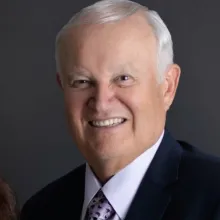
Mr. Seiglie was born in Havana, Cuba, and came to the United States when he was a child. He found out about the Church when he was 17 from a Church member in high school. He went to Ambassador College in Big Sandy, Texas, and in Pasadena, California, graduating with degrees in theology and Spanish. He serves as the pastor of the Garden Grove, CA UCG congregation and serves in the Spanish speaking areas of South America. He also writes for the Beyond Today magazine and currently serves on the UCG Council of Elders. He and his wife, Caty, have four grown daughters, and grandchildren.

