
Don Ward
This transcript was generated by AI and may contain errors. It is provided to assist those who may not be able to listen to the message.
The title of the message today is Faith and Healing. I've been acquainted with this subject basically all of my life. When I was four years old, I could hear the screams of my great-grandmother. As my grandmother changed the bandages on her breast, she had breast cancer. And I remember the hearths and the model T's and the model A's passing by the old shotgun house that we lived in as they went to the church to have her funeral. And then about a year and a half later, we moved next door to another great-grandfather, and he was dying of prostate cancer. And then when my mother was in the bloom of life, she came down with thyroid cancer. And I remember lying on my bed night after night. I was 13 years old, praying that God would heal. My mother would not take her away from us. My dad, if we were left, just my dad, that would be pretty sad, because he was a wonderful person, intelligent and all that, but he only had a third-grade education at best. And so, about that time, just shortly after my mother was diagnosed with thyroid cancer, which she lived many years after that, a tornado ripped through our community and killed my grandmother and grandfather. And my dad and I was the first down in the field where they were blown that night. And my grandmother didn't have a mark on her body. And my grandfather had had a piece of timber, evidently, that hit him in the head, but they were both dead. When I became the pastor of the Big Sandy Church back in the 70s, in short order, we had several deaths. Two young mothers were killed in car accidents, one of the leading members of YOU, committed suicide, several people died of cancer, and on and on it goes. So I'm familiar with dying and death and besieging God for healing. Today I want to lay a biblical foundation for what faith really is and relate it to healing. The principal thrust will be on what faith really is and what the outcome or result or product of faith is. The outcome or product of faith, what it is supposed to be. Of course, the ultimate goal for God in Christ is to bring all peoples into the Israel of God, into a relationship with God and Christ and each member of the body of Christ, the Church of God, the Israel of God.
Though some have a tendency to tune out what is said about faith and concentrate on some aspect of healing that strikes some kind of emotional chord, everything is really a package and should be viewed in totality. After giving a version of this sermon many years ago, a lady came up to me and said, I am so thankful and relieved after hearing this sermon. She went on to say that basically she had lived her life in fear that even though she had striven and struggled to obey God all of her life, she might have to face a terrible sickness and then not have the faith to be healed and in a weakened state go to the doctor. The implication being, of course, that she would lose out on salvation. She would not be in God's kingdom. Is that the way God is dealing with us? And are you going to miss out on God's kingdom if you go to the doctor? Of course, basically everybody in this room would be going to the bad place if that were the case. And is it always a lack of faith when a believer is not healed? It is obvious that some have believed that the answer to all of the questions is yes. I remember when, not long after we had moved to Big Sandy in the late 60s, that my oldest daughter came down with strep throat and there was a doctor residing in Big Sandy or at least he held office here in clinic from sometimes during the week. And my wife took her there and the doctor said, this child needs antibiotics and she needs it now. And my wife said, well, my husband and I have already discussed that we're not going to go the prescription route. And the doctor in essence said, well, you ought to be locked up. Of course, it turned out that I ran across some things and my daughter lived until she died with breast cancer a few years ago. But the church has gone through several different stages with regard to healing and many other things. It has led some to make sincere and honest misjudgments, that is, various positions that people have taken on healing. They did the best they could before God with the knowledge they had. And I don't believe that they should feel guilty. And I surely don't believe that God holds them responsible. It has caused some to put on a show of self-righteousness. Perhaps they take pride in saying, I never took a prescription drug in my life. Now, I've taken coffee enemas and I've done a lot of other things, but I've never taken a prescription drug. Or I've never been to a doctor, as if that was some kind of mark of righteousness. It has caused others to dabble in various healing modalities, many persons believing if they did not seek professional help. It was all right to seek out other help, usually in the name or in the realm of what is called natural. However, in all of our doings, we must never deny God. And there are surely a lot of natural remedies that do work. And medicine has been on the call it medicine call, whatever you want to, the quest to take care of people who are sick, the quest to take care of people who are injured dates way back almost to the Garden of Eden. Of course, Adam and Eve had a great sickness which was spiritual first and foremost. And God is first and foremost about our spiritual condition, not to say that he's not concerned about our physical condition because it says that the hairs on our head are numbered, his thoughts are ever toward us, not even a sparrow falls to the ground unless God is aware of it.
We are instructed in Revelation 12, 11 that we overcome Satan by the word of our testimony, the blood of Jesus Christ, and we love not our lives unto the death. Those are the three principal ways of overcoming. That is to trust in the blood of Jesus Christ and to not love our lives unto the death and the word of our testimony. We've had many persons who have read a few books or taught with various people who come to believe that they are experts on health. Some of these people have prayed on the fear of others. As a result, they lose sight of God and faith and their religion becomes their help. Oh, I'm so worried about my health. In Hebrews 10 verse 38, it says, the just shall live by faith. Do we really understand what that means? The just shall live by faith. That phrase occurs three times in the Bible. The just shall live by faith.
Faith is the springboard to all things spiritual. Not all things physical as some teach in the world. All the prosperity gospel, I mean the prosperity preachers, are having a field day in today's world. Just so if you see it here and believe and you're going to be rich from Joyce Meyer to Joel Osteen to whomever it might be, the prosperity gospel is really prospering and people are gullible enough to believe what they teach. So do we really understand what it means to live by faith? There are spiritual dimensions of faith that are what I would call activities of the mind. It's something that you believe and you believe it to the depth of your being. You know it and you trust in it. And then there are dimensions of obedience to show that you really trust and believe God. That you claim the promises, you believe the promises, you act on the promises. And faith, according to Hebrews 11.6, is the springboard to all things spiritual. So let's quote Hebrews 11 and verse 6. I would be, of course, going to several scriptures today and there's no way that you can keep up and get the full intent of everything in a sermon. You would have to write the scripture down and then later go back and review it. In Hebrews 11.6, those who would come to God must, first of all, believe that he is. In other words, you're not going anywhere spiritually until you believe that God exists. And back in the late 50s and early 60s, the church spent a lot of time with booklets on evolution and proving that evolution was false and that God was who he says he is and he is the great creator God, the ever-existing one from everlasting to everlasting.
So Hebrews 11.6, continuing, those who would come to God must, first of all, believe that he is and that he is a rewarder of those who diligently seek him. So believe that he is, or in other words, how faith that he exists. There are three abiding things that we must understand and live by.
And of course, this threesome thing is very often found in the scripture where their testimony is about the blood of Jesus Christ and love not their lives unto the death. And the springboard to all things, his faith, as we've just quoted Hebrews 11 and verse 6. Now I want us to turn to 1 Corinthians 13 and verse 13. 1 Corinthians 13 and verse 13. Now these abide. Before this, Paul has prefaced this with several things, but he says that these three things abide. Faith, hope, and charity. These three, but the greatest of these is charity. Now these things do work in sequence. They are sequential. Why do I have hope? Because I have faith. Why do I have hope? Because I have faith and hope. And the product of faith and hope, according to the scripture, in the spiritual sense, is love to become as God is. So faith is a basis of hope. We have hope because we know through faith that God will deliver. The Bible is filled with those promises of God delivering. Love is the greatest. Faith and hope are the precursors. Faith through the word and spirit are the enablers.
So love is the greatest. It is the outcome. It is the product of faith. So let's look at 1 Timothy 1 and verse 5. 1 Timothy 1 and verse 5.
1 Timothy 1 verse 5. Now the end of the commandment, and the word end here in the Greek is telos. Telos means the result or outcomes. So a better translation would be now the result or outcome of the commandment is agape or agape, agape, it is spiritual love. The end or the result or the outcome of the commandment is charity, agape, love. Out of a pure heart and of a good conscience and of faith unfeigned. Faith unfeigned. Unfained means there's no pretense, there's no put on. It is the real thing. Faith unfeigned.
According to Romans 10 verse 17, and I'm going to quote this, Romans 10 verse 17 says, faith comes by hearing and hearing by the word of God. So faith comes by hearing. Now you have to have this dimension that I mentioned earlier, Hebrews 11.6. You have to believe that God exists. He says what he means and it means what he says. Faith comes by hearing and hearing by the word of God. The Spirit draws us. The Spirit draws us, enabling us to understand, and it convicts you of the word of God. The word of God and the Spirit of God are the enablers. They are the convictors. They convict you of whatever it is, first and foremost, sin. Before one is baptized, they are convicted of sin, and they come to realize that the death penalty is on their head, and apart from the sacrifice of Christ and faith in that sacrifice, you're going to die eternally. Christ also says in John 6.63, which I've quoted dozens of times here, Jesus said that the flesh profits nothing. It is the Spirit that quickens and makes a life. The words I speak, they are spirit and they are life. So the word of God is equated with spirit and life. To a large degree, conversion is summarized in 1 Corinthians 13. So let's read the first four verses of 1 Corinthians 13. As I said to some degree, the gospel is summarized by these verses. Remember what we just read from 1 Timothy 1.5, which says, the outcome or the result of faith is charity of a pure heart and faith and fame. In 1 Corinthians 13 verse 1, though I speak with the tongues of men and of angels, have not agape, charity, love, I become a sounding brass or a tinkling cymbal. And though I have the gift of prophecy, you know, a lot of people really perk up when you talk about prophecy because they want to know what's going to happen in the future. It's like if I know what's going to happen in the future, I would really wake up. I would really do what I need to do. You know, back in the gospels, they confronted Jesus and said that, you know, about eternal life and different questions that they asked. And they said that, just show us somebody that's been dead and lived again, and maybe will believe. And Christ said, if you don't believe Moses and the prophets, how are you going to believe anything now? Because Moses and the prophets, they are part of the Word of God. So continuing here, and though I have the gift of prophecy, I understand all mysteries and all knowledge, and though I have faith that I could remove mountains and I have not charity, I am nothing. See, God is love, and if we're not becoming as God is, it profits us nothing. We could have all that knowledge, we could have the gift of prophecy, everything that goes with it. And though I bestow all my goods to feed the poor, and though I give my body to be burned and have not charity, it profits me nothing. Charismatics try to make faith into a show of signs, like speaking in tongues or the speaking in tongues or other signs that they might have. The Charismatics, in one sense, they're attempting God. Some in the church have done the same thing. The Messianics, the where phylacteries are supposed to remind them to keep the commandments. And it says in the New Testament, in the book of Hebrews, chapters 8 and also chapter 10, that the law of God is written on our inward parts. We really don't need phylacteries to remind us to keep the word of God, because if it's not burned in your consciousness, in your mind, what good is that?
So let's note the purpose of spiritual gifts. In 1 Corinthians 12, just a chapter back, verse 1, now concerning spiritual gifts, brethren, I would not have you ignorant. Verse 4, and there are differences of gifts, but the same spirit. The same spirit provides the gifts, and there are differences in administration, but the same Lord. And there are differences of operations, but it is the same God which works all in all, that the manifestation of the Spirit is given to every man to profit everybody. The gifts of the Spirit are given to profit everybody, not just one person, not to glorify the person who has the gifts, but to edify, build up everybody in the congregation. For one is given by the Spirit the word of wisdom to another the word of knowledge by the same Spirit to another faith. Faith is unique among the spiritual gifts in the sense that it is a gift to the Spirit and it's also a fruit of the Spirit. And the way that works is when we become convicted, if we begin to act on that conviction, God will increase our faith in our conviction to do the right thing when we are confronted with it. To another faith by the same Spirit, to another the gifts of healing by the same Spirit. But once again, verse 7 says, the gift is to profit everybody. Paul goes on and uses the analogy of the human body to show that the spiritual gifts is for the whole body and the little toe hurting also hurts really the whole body and especially the big toe. Now, after he goes through this analogy of spiritual gifts and how it's for everybody, look what he says. We've already mentioned this. Verse 31, 1 Corinthians 12, 31, but covet earnestly the best gifts and yet I show unto you the more excellent way. Now, the more excellent way is chapter 13. We read the first four verses, which the conclusion is you could do everything right, but if you're not becoming as God is, it profits you nothing. Then we come down to Paul talks about how different things are going to pass away, but there are three things that abide forever, and that is faith, hope, and charity. Faith, hope, and charity. When I was a senior in high school, that was our class motto. Now, by these three, faith, hope, and charity, the greatest of these is charity. The class sponsor, who was a Presbyterian, tried to talk us out of it, but we were strong Baptists, so we were able to hold forth, and she was not able to talk us out of it. I didn't know how much that would play in my life in future time, but that's what happened. Now, we look at chapter 14. So chapter 13 is the more excellent way. I show you a more excellent way, verse 31 of chapter 12. Now, we come to chapter 14. Follow after charity and desire spiritual gifts, but rather that you may prophesy. To understand and be able to share the gospel is so very important to God, and that's one of the areas that we fall down on. It's sort of ingrained into our DNA from the past. We have one person who presents the gospel around the world, and we pay and pray. I think we've learned that we have to do much more than pay and pray.
For he that speaks in an unknown language or tongue, see, one of the things in 1 Corinthians, this is in chapter 1, the Corinthians were, I use the vernacular of the day, hung up on spiritual gifts. So if you could only speak in tongues, or if you had some spiritual gift, and that was a wonderful thing. So in chapter 14, Paul is saying, you may have all of these gifts, but the greatest one is prophecy. And then he says, I didn't bring my glasses, so he that speaks in an unknown tongue speaks unto men, but unto men. But he that speaks in a tongue speaks unto men, but unto God for the man understanding him. How be it in the spirit, he speaks mysteries. So in other words, if you speak in tongues, and there's not someone there to interpret it, it is like a mystery to the ones that are standing by. But he that prophesies speaks unto men to edification, to exhortation, and comfort. See, those are the three main things that spiritual gifts are supposed to do. That is, edification, exhortation, and comfort. Now Paul goes on in this chapter to explain more and more about spiritual gifts.
In verse 22, he states, this is 1 Corinthians 14, 22, in verse 22 he states, and I've turned more than one page.
In verse 22 he states, wherefore if tongues are for a sign, not to them that believe. See, spiritual gifts and miracles and signs are generally for the unbeliever to convince them to show them through whom God is working. In Jesus' day, he did all kinds of signs, wonders, miracles, casting out demons, healing people, and it showed through whom God was working. He was working through Jesus Christ, and they should have known that no regular human being could do these things unless he was of God. So tongues are for a sign, not to them that believe, but to them that believe not. But prophesying belongs to those that believe, not for those which don't believe. I'm paraphrasing because I don't see it clearly. So signs and miracles, to a large degree, are for those who do not believe, who are coming into the faith. And we'll have more to say about that as time goes on. Babes in Christ oftentimes experience more direct intervention than those who have been in the faith for a long time. And many want to measure faith by physical signs from healing to financial blessings. Remember we read from 1 Timothy 1.5, the outcome of faith should be love, becoming as God is, as we read from 1 Corinthians 13. One of the most faithful men of all times was John the Baptist. And according to John 10 and verse 4, John did no miracle. It also is contained, stated in Luke 7.38, that John did no miracle. And it goes on to say in Luke chapter 7 verse 38, that even though there was not a greater among men that had risen than John the Baptist, he did no miracle. But even though he was the greatest among men in one sense, it says he would be considered least in the kingdom of God. In other words, if you make it into the kingdom, you would be so much higher than John the Baptist than you can imagine, though there was no one greater born of women than John the Baptist. And John the Baptist did no miracle.
We've already mentioned that faith is a gift of the Spirit and a fruit of the Spirit. Thus, it is based on the law since it is a fruit of the Spirit. You cannot bear fruit without doing. You have to do something. You have to act on what you're convicted of. So, bear the fruit of the Spirit, you have to act on the commandments. He gives the Spirit. Now, I'm quoting Acts 5.32. Acts 5.32, he gives his Spirit to those who obey him. He gives his Spirit to those who obey him. In Matthew 23, in verse 23, it says that you pay tithes of men, anis, and coming. These you ought to have done, not leave the other undone. And it also says you should have exercised judgment, mercy, and faith, and not to leave the other undone. So, judgment, mercy, and faith. See, faith, once again, is a weightier matter of the law. Judgment, mercy, and faith. The woman who was caught in the act of adultery in John 8 was told after Jesus confronted those who brought her to him in an attempt to trick him. They said, oh, under the law, it said this woman must be stoned. He wrote on the ground, and they departed. He asked the woman, where are your accusers? And she said, they're gone, my Lord. I'm paraphrasing, of course. And then he said, neither do I condemn you. Go and sin no more. Go and sin no more. See, judgment, mercy, and faith.
So, faith is inextricably linked to obedience. I could say that 50 times. Faith is inextricably linked to obedience. The simplest definition of faith is to believe God and do what he says.
So, how does one increase faith? It is the same as maintaining and increasing the Holy Spirit. You pray. You ask God to give you the gifts of the Spirit that are necessary for you to fulfill the mission he has for you and your life. You say, well, I have no mission. Yeah, you have a mission. You are a member of the body of Christ.
And, of course, he commissioned the church to go, therefore, into all the world. Disciples all nations, teach them to observe all things whatsoever I have commanded you, and lo, I am with you until the end of the age. So, everyone has a mission.
So, we pray that we have the gifts to fulfill that mission. We study the Word of God. Faith comes by hearing and hearing by the Word of God. You want to increase your faith? Open the pages of the Bible, especially Psalm 119.
We already just talked about obedience.
He gives his Spirit to those who obey him, Acts 5.32. We draw close to God through fasting. We draw close to God, and we gain strength and encouragement through fellowship. When you get together with brethren, it does something in the edification sense. At least, it should. So, obedience is the perfecter of faith. We look at James chapter 2. James chapter 2, verse 17. Remember, this is the epistle that the father of the Reformation, really, Martin Luther took to task, saying, is an epistle of strong, because James talks about you have to act on what you do. James chapter 2, verse 17. Even so faith, if it has not works, or you could substitute the word obedience, faith without obedience or faith without works is dead, being alone. Yea, a man may say that they have faith and you have works. I'll show you my faith by my works. So, you show your faith by obeying God and doing what he says. So, faith is inextricably linked to obedience.
It is very sad that faith and belief have been stripped of their life by the religions of the world. Once again, you remember what we read in 1 Timothy 1.5. In exercising faith, you obey knowing that the outcome of obeying will be the love of God, the character of God created within you. That's one of the reasons why James writes, obedience or works, our faith is perfected. Now, let's have a concrete example from the Bible with regard to faith.
Generally, we speak of Hebrews 11 being the faith chapter. So, let's read Hebrews 11 verse 1. Now, faith is the substance of things hoped for, the evidence of things not seen. Now, what happens in real life? Abraham is a great example of this inaction. Now, faith inaction. The action of Abraham provides us with a concrete example. Remember that one had appeared, evidently the one who became Jesus Christ, appeared to Abraham and Sarah and said, you're going to have a son. And Sarah laughed at such a promise because they were past the age of childbearing. But then, after the experiment, I guess you would call it, with Hagar failed, they did what they were supposed to do in the beginning, and Sarah was able to conceive, and Isaac came forth. Okay, faith is the substance of things hoped for. What were they hoping for? They were hoping for the son of promise. See, what prompted them to act on it? It was faith, believing what God has said. And so, the son of promise was born, first of all, conceived and then born. So, what was the evidence of things unseen? Of course, it was the Spirit of God working with Abraham and Sarah so that he could provide the ovum, he could provide the sperm, so that Isaac could be conceived. So, let's note this from the Bible directly, apart from the paraphrasing, in Romans 4 and verse 17.
In Romans 4 verse 17, as it is written, I have made you a father of many nations, before him whom he believed even God, see, believe God who quickens the dead, makes alive the dead, and calls those things which be as though they were not. See, even when Abraham was asked to sacrifice Isaac, he counted Isaac as good as alive in resurrection, as it says in the book of Hebrews. Who against hope believed in hope. Sounds like a contradiction. What was against hope? Well, against the hope of this world. They, first of all, tried to work it out through the flesh. With Sarah's handmade Hagar. But then they acted as they should have in the beginning. Who against hope believed in hope. What hope? The hope in the promise of God. That he might become the father of many nations according to that which was spoken, so shall your seed be. And through Jesus Christ, all nations can be blessed. And being not weak in faith, he considered not his own body now dead. Once again, the substance they're hoping for is Isaac. When he was about a hundred years old, and neither yet the deadness of Sarah's womb, he staggered not at the promise of God through unbelief.
But with strong in faith, giving glory to God. And being fully persuaded that which he had promised he was able to perform. And see, here's a product of the mind, as it were. You have to believe it with all your being. You can't ask God for something and then turn around and say, well, this, that, or the other. Of course, you must always pray. We'll probably read that scripture later about if any man asks anything according to God's will. His will has to be considered in all things. More about that later. Now, verse 22, And therefore it was imputed to him for righteousness.
Now, imputed means it was reckoned to his account. It's not like because he was faithful, then you're going to be faithful. No, it was reckoned to his account. And when you are faithful, it is reckoned to your account. But you have to act on the belief and on the faith for it to be reckoned to your account.
It's not just like if I have my shoe, if I had on loafers and I pull it off and I give it to you, it's not like that. You have to act on the belief. Now, notice this. Now, it was not written for his sake alone, but it was imputed to him, but for also to whom it shall be imputed, or reckoned to their account, if we believe on him that raised up Jesus our Lord from the dead. You see, the belief here is on God the Father who raised Jesus from the dead.
You believe on both. Who was delivered for our offenses was raised again for our justification. Now, we look at continuing in chapter 5, faith in action and the outcome or result. God wants to create within each one of us holy righteous character. The primary substance of God's love shed abroad in our hearts through the Spirit of God, which is the evidence of things unseen.
So, note this. Therefore, being justified by faith, Romans 5.1, we have peace with God through our Lord Jesus Christ, by whom also we have access by faith under this grace wherein we stand and rejoice in hope of the glory of God. Not only so, but we glory in tribulation, similar to James 1, where it says, my brethren, count it all joy when you fall into different trials. Not only so yet, but we glory in tribulation also knowing that tribulation works patience.
Patience is a rather poor translation here. It means patience has to do with with doing that thing, doing what you need to do yourself. If you're out of job, you pound the payment, you pray with all your might, you do whatever you can to get the job, or whatever the situation might be.
Not only so, but we glory in tribulation knowing that tribulation works patience and patience experience. That word experience has to do with proof, testing, proving. Once again, a poor translation. And experience hope. See, when we are in trial, we have that hope because we have faith that God will deliver. And hope makes us not ashamed because the love of God is shed abroad in our hearts by the Holy Spirit, which is given unto us the evidence of things not seen.
Now, we talk about developing character. Character, we say we're going to refrain from eating the chocolate pie so we can build character. Well, actually, that doesn't build character at all. It is helpful in one regard. Paul says that in Colossians that it is helpful in will worship kind of thing, but when it comes to holy righteous character, God as one creates that within you because you go through it with the kind of faith and patience knowing that God will deliver and that the evidence of things unseen is the holy righteous character through the Holy Spirit that God creates within us. So, there are many reasons why we're tested and tried.
One reason is to cease from sin. And I'm going to read this and I see the clock is moving quickly, is to cease from sin. Another reason is to learn obedience. It says in Hebrews that Christ, even Christ, learned obedience through the things which he suffered. How so? At any time he could call for a legion of angels to come deliver him, but he didn't.
He suffered through the agonizing whipping, the stakes, the nails being driven through his flesh, and everything that happened in his crucifixion. At any time he could have said enough, but he didn't. And he learned obedience even unto death. And that's what God has called with us, obedience even unto death. We learn to trust God. We learn the providence of God. That is, God always has our best interest at heart. He's always looking out for our best interest and to develop patience to wait on God.
Another reason is so we may be refined, come to maturity, to perfection, to be purified, to grow in grace and favor with God. Once again, to the extent that we are becoming love as God is love, you are living by faith. Let me say that again. To the extent you're becoming love as God is love, you are living by faith.
The scripture provides us with several examples of those who live by faith. Shadrach, Meshach, Abednego, and the fired furnace were not burned. Daniel and the lions then was not attacked. God has proved his faithfulness from time immemorial. He delivered Noah, Job, Abraham, Joseph, Israel. He gave us his only begotten Son. However, we oftentimes try to put a time frame on God, coupled with certain physical manifestations as a measure of faith and his faithfulness. God has proved his faithfulness. Yet at times he does not deliver some and they die. Of course, you have the examples of the men and women of Hebrews 11. They didn't choose deliverance that they might attain to a better resurrection. We know that Stephen was stoned to death. His clothes were laid down at the feet of Paul. Christ died that we might have eternal life as spirit beings. He did not die so that we could live eternally in the flesh. And that is one of the great lessons. And now we get down to the nitty-gritty of the relationship to healing. He did not give his physical body so that we could have eternal life in the flesh. We have faith that Christ forgives us of our sins. We have faith that Christ forgives us of our sins. Now listen to this. We will get down on our knees and pray, Father, forgive me of whatever X, Y, or Z sin is. Then we will get out from that and believe that he has forgiven us. Yet, when we are sick, we pray, maybe get anointed, and we wonder, well, has he forgiven us?
It seems to me that we are to go and live by faith. Now look at James chapter 5 verse 14. James 5, 14, about calling for the elders of the church. In James 5 and verse 14.
As any sick among you, let him call for the elders of the church, and let them pray over him anointed him with oil in the name of the Lord. And the prayer of faith shall save the sick, and the Lord shall raise him up. And if he have committed sin, they shall be forgiven him. See, all of this is coupled with what God's will is in everything that we do. And we'll, at times, God does deliver, and at times, he does not deliver. But whatever the situation is, we're to go and sin no more. We are to believe that God, predicated on repentance, has healed us spiritually, yet we pray that God will forgive us the sin that perhaps we committed that made us sick. And then, a lot of people have the notion that sickness and sin are equals. See, God chastens every son that he loves, and there are many causes for sickness. One is sin. You can bring about sickness through sin. It could be the sin of the fathers, the sin of the fathers that's passed on to the third and fourth generation.
It could be time and chance, when you were in the wrong place at the wrong time. It could be so the works of God could be manifest as a case of healing the person who was born blind. God allows Satan to try and test us. God chastens us himself, and God's will must be considered. Now, the verse I have talked about, referred to a few times, let's read 1 John 5, 14. 1 John 5 and verse 14.
In 1 John 5 and verse 14.
And this is the confidence we have in him. Or you could say this is the faith that we have in him. If we ask anything according to his will, he hears us. Of course, usually in any prayer that we might pray, we will say, according to your will, especially when we anoint somebody. Now, if we are violating physical principles of health, we should get in harmony with the physical principles of health. God did not give us impunity from breaking the physical principles of health. If you're an alcoholic, if you use drugs, if you're a glutton, an odd and odd it goes. God does not give you impunity for breaking the physical laws. The body is physical, not mystical, and conforms basically to the laws of physics. Biomechanics, biochemistry, and electricity. I can hold my hand out like this, and at times I can feel like an electrical pulse is going through the palm of my hand. I don't know if everybody experiences the same thing or not, but we know that the neural reaction to various stimuli is based on electrical impulse. So we want to get in harmony with the laws of physics that govern the universe. If our car is acting up, we go to a mechanic. If we want to go into outer space, we probably would want NASA's input. But if we wanted to go get well, where do we go? Do we go to a shade tree, shade tree mechanic, or do we go to the real source? And there I'm speaking both spiritually and physically. When it comes to the human body, some will consult people who offer mystical remedies, magic potions, rather than consulting the people who understand the laws that govern the human body. So is it a lack of faith to do physical things when we're sick? Most people would predicate that answer on it depends on what you do. Most people do physical things as long as it's in the so-called natural realm. Of course, that has changed in the church over the past few years. Some people will submit to drinking incredible potions, coffee enemas, or any number of things, but they would not go to a doctor or take a prescription. In either case, you're doing something physical to help your condition. Is that a lack of faith? We do not view working for food as a lack of faith, even though God is our provider. We do not neglect, usually don't, neglect locking the doors, even though God is our protector. We could ask the question, can I irrigate my lawn or garden and pray for rain? My life and yours are in God's hands in the ultimate sense all the time, even if we do physical things. God will permit us to take our lives, and we can draw the line with God with regard to our lives at any time. For example, let's say you have acute appendicitis. You could say, well God, you're going to heal me, or I'm going to die, and some have died. Some even handle snakes, as you know, to try to prove their faith. One of the most moving experiences of my life, I looked down into the pleading face of a dear little old lady with cancer who had had surgery, and she looked up at me pitifully and said, Dr. Ward, is God going to send me to the lake of fire because I let them doctors cut on me?
And I said, the God I know is the God of love and mercy. The answer is no. What if you do decide to do something? What if you do decide to do nothing and trust God completely? Make sure it is not because of vanity or because you're trying to prove some point. Hezekiah was told after he prayed to go do something physically. Others have been told the same thing.
Understanding faith as it relates to the human body with regard to the body of Christ and healing opens the door, understanding a more complete understanding of faith. Faith is a total package and way of life. It is the key to God creating his holy righteous character in us.
Some of the misunderstanding in the past stems from this application of Matthew 929. According to your belief or faith, so be it unto you.
See, God does not always work with man in the same way. In the old covenant, the healing had to do with physical blessings. In the new covenant, the healing generally has to do with spiritual blessings becoming a child of God. It is the administration of death under the old covenant, the administration of the Spirit under the new covenant. Here's an example that I experienced. We had the Pyle family here in Big Sandy. Mr. Pyle was an elder and his wife, we all know her funeral was held here in this building. Their son, 22 years old, came down with melanoma. Terrible cancer spiraled out his ear. It looked like he had almost a hornet's nest out here. The elders were asked to fast three days and three nights. And Mr. Pyle said, well, the elders are not just doing enough.
I believe God has to heal Joe. His name was Joe. I said, Mr. Pyle, I don't agree with you. I'm sorry because he has injured the covenant of sacrifice and he has said, in essence, not my will, but your will be done. So God, in his infinite wisdom, knows what he's doing with each one of us. As I've already mentioned, hairs on the head are numbered, not even as far off the ground unless he's aware of it. So I said, he has entered into the covenant of sacrifice and has said, not my will, but yours be done. And not long after that, he died in my arms. Just before he died, he said, hold me, which I did. And he died in my arms. Some misapply.
Hebrews 13.8 says that God is the same yesterday, today, and forever. Well, that is true, but God does change the way that he deals with human beings through time. And we have passed from the old covenant to the new covenant. For those who have entered into the covenant of sacrifice with God, the master potter and refiner, he may say, it is not time for your deliverance. He did not heal Paul. Many of the men and women of Hebrews 11 were not delivered. He may be teaching you lessons and developing facets of your being that are essential for the job he has called you to do in the kingdom of God. God always has our best interest at heart. It says that all things work together for good to those who love God and are called according to his purpose. Romans 28, which you can quote. So, with our children, we do what we can do for their best interest. Are we more righteous than God? Do you think God is doing any less with us? True, we must repent and seek God, but it loves us so much that he chastens us. And if we don't judge ourselves, he steps in and judges us. He would rather see you dead than to miss out on the kingdom of God. So, he chastens us to get our attention.
Remember, the outcome of faith is to become as God is. So, we must remember our commitment at baptism. Anything that I get above death is a gift. The wages of sin is death, and all of sin comes short of the glory of God. So, let's give thanks to God. Rejoice in trials, as Paul and Silas did. They started singing hymns while in jail. Let's drive away the four enemies of faith. Anxious care, fear, doubt, and human reasoning. And let's give thanks to God. Count your blessings. See what God has done. And the fiery darts will never get through. God is faithful who cannot lie. If God is a liar, then there's no hope for any of us. So, let us fight. Let us struggle. Let us earnestly contend. Just as a good soldier continues to fight, no matter how it sees the battle is going, he fights in faith to the death. If he dies, he dies in faith to await the resurrection. Now, I want to read this that I've read before, and we'll close with this. I don't know who wrote it. It's anonymous. It's titled, The Fiery Furnace of Life. When you are in the fiery furnace of life, that is the time to fight the good fight and gain the victory over self completely. To accept the buffeting and slanders and misrepresentations of good intentions and good deeds with meekness and patience. That is the time when the Spirit of God's love dwelling in us richly will manifest itself in the control not only of our words and actions, but of our innermost thoughts. If even so much as a bitter feeling against our accusers and maliners arises, it is to be fought and completely and in complete victory gained over it that every fiber our being will be in sweet accord with our Savior's instructions, love your enemies. Pray for them which despitefully use you and persecute you, bless and injure not. Are you tempted to repine to feel sorry for yourself? To feel disappointed as your lot in life and along the way changes and as you experience it. That is the time to remember that all repining discontent and disappointments indicate that self-willing you is not as dead as you had hoped, for he who has buried his own will completely in the will of God can know no disappointment. But in every affair of his life he sees by faith divine appointment and hears the word of God, in all of life's affairs assuring him all things work together to good for those that love God to them who are called according to his purpose. It is one of the evidences of reaching the maturity of Jesus Christ when he when when we are able to take oppositions of Satan and the world and of our own flesh patiently uncomplainingly, unmermeringly, joyfully as part of the disciplinary action given to us by our all-wise and all-loving Father. Such is the good fight. From the first battle to the last, we must gain the victory and will. Each victory, the new will, the Father's will, will help us grow stronger and hope the helmet of salvation, the sight of things the Father has reserved for the faithful, grow keener and more urgent, and faith strengthens and faith strengths and enhances greater. And with the very first victory comes blessings which are able after every victory which are added to every victory. Blessings of rest, peace, joy, and the Holy Spirit and full assurance of faith as our Father promised.
Blessed are you when all men shall persecute and say all manner of false things against you for my sake. Rejoice and be exceedingly glad. From this point and no other, it is possible to accept with fortitude and resignation whatever test of patience, perseverance, faith, hope, and love that your Father may see fit to come upon you. In this condition, all of our experiences will result in blessings. However unjust or difficult they may appear at the time on the surface, it is from this standpoint a victory over self-will under sanctification of the Spirit through the obedience of the truth that all the blessings and promises of our Father are ours in the fullest sense. All things are yours, whether things present or things to come, for you are Christ, and Christ is the Father's. This is the degree in Christ that we seek to be approved. We must pray that God will unite our hearts and prayers and above all our new mind with His will that we may be holy, completely sanctified, and the very God of peace shall bruise Satan under your feet shortly.
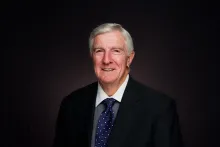
Before his retirement in 2021, Dr. Donald Ward pastored churches in Texas and Louisiana, and taught at Ambassador Bible College in Cincinnati, Ohio. He has also served as chairman of the Council of Elders of the United Church of God. He holds a BS degree; a BA in theology; a MS degree; a doctor’s degree in education from East Texas State University; and has completed 18 hours of graduate theology from SMU.
