

Gary Antion
Three important virtues to develop in our lives on the way to eternal life in God's Kingdom.
[Antion] Testing, one, two, three. Is it on? Thank you.
Good afternoon, everyone. Nice to be with you on this Sabbath day. It’s the first time for a little while, as we’ve been a little bit out of pocket. I did help out with the Toronto Ministerial Conference by Zoom, and I have done some Zoom on Pentecost, but I’ve been Zooming at home and not been able to be in here. So I’m happy to Zoom in here and be with you.
You don’t realize how much you love the people and how much you miss them when you aren’t in their presence. And you can hear all the messages at home on the webcast. But what you can’t get are the brethren. You might hear them singing some, but most of the time you’re not getting their feedback to you and your feedback to them. So it’s really nice to be with you.
Also want to thank Shaveed for that presentation. You sang very beautifully. I don’t understand how you multiplied your voice so many different times in there. That was amazing. You’ve got to be a ventriloquist. You did such a good job. Thank you. You have feeling in your singing, and it comes through. Thank you.
So it’s good to be with you all. We’ve had some interaction with my home office, or my regional area in Northeast, and we’re planning to have an All Elders meeting in September. I waited. I wanted to do it sometime sooner, but everybody’s on vacation, or they’re going to summer camps, or they’re going here, they’re going there—hither, thither, and yon. And so it’s nice to be able to get with them and just to thank them for all the wonderful service they do to the church.
And I’ll remind them about Mr. Myers is going to close with that. And we have three speakers who are already elders who’ve become pastors. So I want to tantalize some of the elders that maybe they can step up a little bit when they’re ready and become pastors too, to help in the area. So several of them are. I have three of them doing so, and just doing a brief 10-minute presentation on how their journey’s been and how they are. So we’ll be doing that. And then plus I start opening and welcome them, give a few comments about eldership, and then Mr. Myers will close it with prayer and whatever.
So it’ll be a nice, it’ll really be a nice time for all the elders, about an hour and a half. We’re doing it on a Sunday night so it doesn’t take away from their week at work or anything else. So we’re trying. Hopefully that will work for them.
On the road to eternal life, there are three great virtues that we as Christians absolutely need to build into our lives, which are brought to our attention by the Apostle Paul in his letter to the Corinthians. It’s found in the same chapter that you all know—1 Corinthians 13.
1 Corinthians 13 we all know is the love chapter. And at the end of that chapter, verse 13, the Apostle Paul states this: “And now abide faith, hope, and love, these three; but the greatest of these is love” (1 Corinthians 13:13).
Faith, hope, and love. You know what they’re called? The divine sisters. They’re called the theological virtues. Now there are other virtues too. 2 Peter 1:5 goes through a list of virtues. Philippians 4:8 actually talks about we should think on those things which are virtuous. Think about things that are virtuous.
What does that mean? What does it mean to have a virtue? It means you’ve reached for moral excellence. Moral excellence. The faith, hope, and love—if they’re the right faith, hope, and love—come from God. That’s why they’re called the theological virtues. Whereas cardinal virtues are ones that you can actually develop yourself. Some are the fruits of the Holy Spirit too, but they are ones that you can develop yourself. These three you need to have from God: faith, hope, and love.
So it’s my aim to help us all look more deeply into these three, the meaning of each, so that we may grow close to each other, grow in each one of them abundantly. So I want us to understand them more thoroughly and more completely. In the Greek it’s pistis, it’s elpis, and it’s agape. That’s in the Greek.
Let’s talk about faith to start with. The word faith is number 4102 in Strong’s, if you want to look it up. Two hundred forty-three times it’s used in the New Testament. Two hundred forty-three times. It means belief. It means evidence of what is not seen. Belief. But you see, belief has two sides. Two sides to belief.
Let’s read, first of all, Hebrews 11, verses 1, 3, and 6 to get this sense. And I’ve got it typed down—all this is the New King James—but I do it in 14 font because it’s easier for me to read, and I can go through it more rapidly, and I can leave out certain sections if I need to.
But Hebrews 11:1 we read this: “Now faith is the substance of things hoped for, the evidence of things not seen.”
Things hoped for. So faith has a dynamism which is attached to it of hope. Another virtue is part of faith. You can’t have faith—God’s faith, godly faith—without hope too.
So what is faith is the substance of things hoped for? So if I’m hoping for something, it’s not here yet, what do I have to have any assurance I’m going to receive it? Faith and hope.
I can’t see it. I pray for better knees, that I can walk around better without a cane. I walk around the house a lot because I can hold on to things that I need to. But my knees have bothered me for a long time, so I keep hoping God and having faith that He can heal, because God can do anything, right? He can do anything He wants. Nothing’s too hard for the Eternal. But when He decides to do it, it’s up to Him, not me. I wish I could decide the time too. But I can’t. That’s all in His hands, and that’s where faith comes in.
So the faith is “the substance of things hoped for, the evidence of things not seen” (Hebrews 11:1). I haven’t seen Him do it yet, but I know He can do it. I haven’t seen Him do it, I know He can do it. That’s faith.
Verse 3: “By faith we understand that the worlds were framed by the word of God, so that the things which are seen were not made of things which are visible” (Hebrews 11:3).
God’s word framed the worlds. He made the universe, and He made the earth the gem of the universe because He wanted to put humans on the earth. He made it a gem. He framed it. He formed it. Notice what we read: “So that the things which are seen were not made of things which are visible.” The things that we can see out there in the world, they weren’t made from something we could see.
God didn’t take, let me take a few sticks, put them together, and make a bush. Put some leaves on it. It came into existence out of nothing we can see. So I don’t know what that spiritual material was, but it sure has made a beautiful world. I don’t know what that spiritual material was that made birds, that made animals, that made loving animals that we have—pets.
We used to have a little bird. My aunt bequeathed it to my mother, and it was in my mother’s, at our home, and we looked at it, and I forget what we called it. Lady Bird, Lady Bird, Lady Bird. Guess what? It wasn’t a lady. No wonder it didn’t respond to us. We kept calling the wrong sex.
But it loved my brother Wayne. It loved my brother Wayne. And it would even start tweeting when he walked around the corner to come into the house. And when he’d go up to it, he would whistle to it, and it would come over to that cage, inside the cage, as close as it could get to his face, and be cooing beside him. It loved him that much. How did they get like that? How did they do that?
And I’m also fascinated by what God has transmitted to some of the animals.
Little kangaroo. I just saw one on Facebook or whatever that a little kangaroo was born, and there wasn't enough room in the pouch. The ones that were bigger than it would jump in, more recently born, not so recently born, would jump in. It wouldn't leave any room for him. Kicked him out. And so this little tiny, all-white kangaroo is just flopping around out there, and this keeper at the zoo, he took it home. He fed it out of the bottle. He wrapped it in blankets, and they kept it, and they looked after it, and they played with it, and they nurtured it, and they brought it up. Wouldn't you know that little kangaroo hopped around in the house, hopped around outside, played with all the animals, nusseled up to all the other pets they have, and to the people. And in the house, the mother would hop around, the woman would hop around the house, and right behind her was this little kangaroo hopping behind her. It was amazing! And how it would sleep beside them?
Why can they do that? Because humans have interest, and because God created us to love and care. All types of animals can do that. Why? Because God made them.
Verse 6, “But without faith it is impossible to please Him, for he who comes to God must believe that He is, and that He is a rewarder of those who diligently seek Him” (Hebrews 11:6). Why do we need faith? Why do we need to understand it and exercise it and have it? Because without faith, it’s impossible to please Him, God.
You know, when I kneel down and pray, if I start thinking about it, why, there’s a ceiling up there. Look, I can see all those spots. Or am I praying to God? He’s way beyond that. Do I see Him? I don’t always try to picture Him sitting on a throne with angels and cherubim and seraphim coming and going—and millions of them, by the way, giving Him information back and forth as Watchers or whatever else He has out there going around, the thunders or whoever that is. I don’t try to picture that. I can’t. But I do picture a Father. I picture my dad, or I picture someone—not my dad, but someone like my dad—that I could go to and talk to. And I’m not just talking to the ceiling. He’s there.
We must believe that He is, and that He is a rewarder of those who diligently seek Him (Hebrews 11:6). People don’t naturally seek God. He has to be called. You have to be called. You have to have your mind open. A lot of people out there, they could care less about God. And He’s becoming less and less important to people in various countries—Canada, England, Germany. Some of those countries, they don’t really think much about God. They don’t care to think much about God.
In the United States, true religion has fallen way down. True belief has fallen. Of course, it always was way down, the way we understand it, but even just in the Christian world, it’s gone down. And you know what’s risen most? Unbelief. Unbelievers. That’s what’s risen most. Not just Muslims, not just other religions. They’ve grown, but not as much. But the non-belief, secular belief—belief in your belief in yourself. You make your own truths. You follow your own way. You follow your own path. “I don’t want anybody to tell me what to do. I can follow my own truth.”
Can you? Is truth slipping and sliding? “You can be whatever you want to.” Is that truth? If you’re that way, you have no truth. “Truth is fallen in the street” (Isaiah 59:14). People don’t want truth. They want to be their own truth. That’s the state of the world we live in now, and it’s only getting worse. And it’s sad.
Because there are many religions out there that would like to treat people and help have them understand God better—as much as they know about God. But they aren’t doing it either. They’re filling the bench as well. Churches are closing down. Clergy are dropping by the wayside. That’s the state of affairs because people don’t believe in God.
Now, there are two types of faith. I’ll just briefly touch on those. Two types of faith. One is called intellectual faith, and the other is called active faith. And we had two booklets that Mr. Armstrong wrote years ago—I cut my teeth on them. One is What Is Faith? and that’s more, what do you believe, what is your belief. That’s intellectual faith. And the second one is What Kind of Faith Is Required for Salvation? Two booklets. Why? Because you have to believe, first of all, which is in your head. You’ve got to see it. I see it. That makes sense. That sounds true. That’s belief. Intellectual belief.
But following it is another one. Jesus Christ said to a group of Jewish people who followed Him antagonistically, by the way, and He was preaching, and it said, “As He spoke these words, many believed in Him” (John 8:30). And you know what Jesus said? That’s a good first step. I’m glad you believe. But “If you abide in My word, you are My disciples indeed. And you shall know the truth, and the truth shall make you free” (John 8:31–32). If you want to be My disciples, you have to follow what you believe. It’s not enough.
So there’s intellectual faith. And remember, many believed, but He said, show Me.
And then you have those who believed in Him (John 8:30–32). The active faith is, I know and I do. Jesus Christ said, “Not everyone who says to Me, ‘Lord, Lord,’ shall enter the Kingdom of heaven, but he who does the will of My Father in heaven” (Matthew 7:21). Why do you call Me Lord, Lord, and do not the things that I say? How dare you call Me your Lord? If I’m your Lord, you need to obey Me.
So you have to—it has to be—I believe, and I do. Not, I just believe. That’s intellectual. That’s in your head. Oh, I believe that. What do you do with it? If you believe it fervently, you’ll do something with it. You’ll follow it. You won’t excuse yourself. You’ll do it. So again, in Romans it talks about not the hearers of the law are just before God, but the doers of the law will be justified (Romans 2:13).
Mark 16:15. Why is faith so important? “And He said to them, ‘Go into all the world and preach the gospel to every creature. He who believes and is baptized will be saved, but he who does not believe will be condemned’” (Mark 16:15–16). Faith is absolutely a requisite to be in God’s Kingdom.
James 2:14–26. I’m not going to read them all, just quote a few of them. “What does it profit, my brethren, if someone says he has faith but does not have works? Can faith save him?” (James 2:14). They both have to go together. You can’t just say, “I believe something” and do nothing with it. If you believe it, you ought to do it.
I always tell my class when I teach, whatever I teach, I believe—or I wouldn’t teach it to you. And if I’m wrong, I want to be right. Please tell me. And if I don’t agree with you, you could take it above my head.
I want to be right. I don't want to be wrong in what I teach. But if I believe it, I'm going to teach it fervently with all my heart. And I believe it, not just in my head, but down to my toes. And it affects how I walk. Because we need to walk with God.
And remember, what kind of faith are we talking about? "Have faith in God" (Mark 11:22). Look it up in the Greek: Have the faith of God. Have the faith that comes from God, not just faith in God. We can't have our own faith. Of course, one of the fruits of the Holy Spirit is faith—called faithfulness—which is the same Greek word. It means you're not only faithful, you're true with what you believe. You're firm in what you believe. You're solid in what you believe.
James ends with this: "For as the body without the spirit is dead, so faith without works is dead also" (James 2:26). Read all of James 2:14–26 yourself. That's faith—why we need faith and how important it is in our lives.
Let's talk about hope. Hope. It's the next one: faith, hope, and love. The word there is elpis, and it's number 1680 in Strong’s, and it's used 53 times. And believe it or not, the reason you can have hope is because God is a God of hope. We'll read that. God gives us hope.
And God can be counted on because God is love, and love never fails. Remember? "Love never fails" (1 Corinthians 13:8). Not only true love, but also the God who is love. He won't fail. He'll never forsake you.
So what is hope anyway? It's the expectation of something in the future. Usually you don't hope for evil. You don't hope for bad. As Mr. Holliday mentioned in his sermonette, you don't hope for correction, but it can come, and sometimes we need it. And as he pointed out, we also need encouragement. You don't always need correction to grow. You sometimes need encouragement that you're doing the right thing when you are. You need both, as he pointed out.
But an essential part of faith is hope. It's looking to the future with joy. I don't hope for trouble. I don't hope for difficulties. They'll come. You'll get them. They'll come whether you hope for them or not. But I hope for goodness. When you hope, most of the time, you hope for what is good. You hope for some joy. There's something joy in it, and it's an essential part of faith.
"In hope of eternal life which God, who cannot lie, promised before time began" (Titus 1:2). That is the great, grand hope we all have: eternal life in the Kingdom of God. And without that hope, you will fail. Even in any trauma, difficulty, disease, sickness, affliction, or trouble you have, if you don't have hope, you will fail.
I've talked to several people, some of them really down in the dumps. I say, please don't lose hope. When you lose hope, you give up. You always hope. Always hope. But see, even hope is something man can have. But hope is something that comes from God too.
"These all died in faith, not having received the promises, but having seen them afar off were assured of them, embraced them and confessed that they were strangers and pilgrims on the earth. For those who say such things declare plainly that they seek a homeland … But now they desire a better, that is, a heavenly country" (Hebrews 11:13–16).
Well, you hear part-time what I'm looking for and hoping for is the Kingdom of God. What I'm hoping for is eternal life. Living forever. And I still try—I’m older now—I have to think about what it will be like when He says you have eternal life, ever existing. What does that mean? How do you feel when you're that way? I don't know. I don't know. But I think about it from time to time. I think a lot of us older people do.
He said, "For those who say such things declare plainly that they seek a homeland" (Hebrews 11:14). They're looking for something better than what this world has to offer. Looking for something better. It's a hope.
Brethren, that's what we all have to have: that hope. What do we say our goal is? "But seek first the Kingdom of God and His righteousness" (Matthew 6:33). The righteousness that He'll put on us, the righteousness that He gives us strength to achieve, not our own. Seek first the Kingdom of God. That's a hope.
A hope when things are going to be better for all peoples—instead of starving to death, instead of facing tsunamis, instead of facing all the troubles they have, facing starvation, looking for a place to live, looking for food to eat. There's a better world coming whose builder and maker is God (Hebrews 11:10). Not man, not some group of men, not some ideology or system, in which system of the world has totally achieved anything. They're all lacking in something. I think we're in the best system in the world here, but it's not the Kingdom of God.
Some people think communism is the best system in the world. "We'll give you everything you want, but we'll give you as much as we want to give you." We spent five weeks in Israel, and we heard a lot about the kibbutzim, how everybody can be there, everybody comes together, everybody gets the same portion of food, and your kids get watched by somebody else because you've got to go out and work. Hey, that's not for me.
Or when we went to China, literally into China from Hong Kong, when Hong Kong was still owned by the British, as soon as we crossed into China, there was a tour. We had a communist tour guide, and they tried to tell us how good things were. Of course, families could only have one child. If they had a girl, they killed it. They wanted a boy to pass on their name, help them in the fields, and all this. So a lot of them, if they wanted to keep their girl, they loved their girl that was born, they had to hide her. Is that some way to live? That's communism. They tried to convince us all these things are so good because "we all get the same amount." "We all get this, you're going to—oh, we'll give it to you." Yeah, you're going to get it. "We'll give you as much as we think you should have." Thanks, but no thanks.
So thank God there's a new Kingdom coming. Thank God that Jesus Christ is going to bring it. Man can't do it. God can and will. That's hope.
"And truly if they had called to mind that country from which they had come out, they would have had opportunity to return. But now they desire a better, that is, a heavenly country" (Hebrews 11:15–16).
Heavenly country. "Therefore God is not ashamed to be called their God, for He has prepared a city for them" (Hebrews 11:16)—whose builder and maker is God. That's what they looked forward to. That's what our hope has to be.
And of course, "For the earnest expectation of the creation eagerly waits for the revealing of the children of God" (Romans 8:19). Do you know what the world's waiting on? It's not only waiting on God, it's waiting on people who've gone through it already, who've been changed to be the children of God in the Kingdom of God. It's waiting for you and me to help them.
Earnest expectation. Why? Because "the creation was subjected to futility" (Romans 8:20). Yeah, a lot of things we do, we do. There's no end to it. There's no ultimate end. There's no final end. You eat a really great meal, and sometimes you get hungry years, months later, weeks later—whatever. You're hungry for something like that. It didn't last, did it? It didn't last. It could be a great meal, tasty, wonderful, nutritious. It didn't last.
Nothing we do lasts. I wish I could get a haircut, and it would last. I don't have to get haircuts as often anymore at my age, but I do still have to get one now and then. I wish it could last, but it doesn't last. I wish some beautiful scene would last, but it doesn't last. I could have a picture of it, yes, to remind me, but it's not the scene. Nothing lasts.
You could have a grand moment—that doesn't last. You can be guffawing about something and laughing and laughing until your belly hurts, and somehow you can't stop laughing. And when you think about it again, you start laughing again. Now, when I think of the same thing that I laughed about then, I can't get in the same mood. You can't keep them. It's called vanity. That's what Solomon, who could have anything he wanted in the world—and did—said: "Vanity of vanities, all is vanity" (Ecclesiastes 1:2). Nothing lasts.
But we hope for something that will last, and that's an everlasting Kingdom. That's what we hope for. And again, we need to hope. You have to have hope.
"For we were saved in this hope, but hope that is seen is not hope; for why does one still hope for what he sees?" (Romans 8:24). So I hope I could have my Bible here. Oh, there is a Bible here. I hope for my Bible to be here. Well, there is a Bible. I don't have to hope anymore. It's here. But the Kingdom isn't here yet, and we hope for it, and we long for it, and we try to live like it. It's not here yet, but we try to live like it is in our own personal lives.
"For whatever things were written before were written for our learning, that we through the patience and comfort of the Scriptures might have hope" (Romans 15:4). Read the Scriptures. Read about the Kingdom to come. Read about the beautiful time there is. Isaiah 35 is a wonderful section. Micah 4, Isaiah 2, Ezekiel 36, 37, 38—all describe the time when all people are going to have God's Spirit, when their heart is going to be changed from stoniness to flesh, so it can be changed. Not a heart of stone, but a heart of flesh, with God's Spirit overseeing it. That's how it'll start in the Millennium when people come to, and they'll have to come to repentance.
Do you think God's just going to pour out His Spirit on people who are unrepentant, could care less, not even want it? No. They'll have to do their part too. He'll pour it out when they're ready—just like He pours it out to you.
"Now may the God of hope fill you with all joy and peace in believing, that you may abound in hope by the power of the Holy Spirit" (Romans 15:13).
But you know what is significant now? Faith and hope are both awesome virtues. They're morally excellent issues to have in our lives. They come from God. But both of those will be swallowed up in love.
The love of God—that's why it says, "Now abide faith, hope, love, these three; but the greatest of these is love" (1 Corinthians 13:13). Because they all lead you to the love of God. And agape is the word, number 26 in Strong’s, used 116 times in the New Testament. And it means love, goodwill, and benevolence. Love, goodwill, and benevolence. Sometimes it's human love, but most of the time it's godly love. It's an outgoing concern. It's thinking about others.
Most of us don't think about others. We think about ourselves. And God never requires you to think about others and forget yourself, does He?
"You shall love the Lord your God with all your heart, with all your soul, and with all your mind. This is the first and great commandment. And the second is like it: You shall love your neighbor as yourself" (Matthew 22:37–39).
And I find most people say, "Love your neighbor, hate yourself. Love others, hate yourself." That isn't what God says. Love God, and love your neighbor as yourself.
If you don't have love… I remember teaching at Big Sandy, Texas in 1986. I was teaching them about love. And Whitney Houston was popular at that time, and she sang, "The greatest love of all is the love you have for yourself." I said, well, it's not quite true. But if you don't have enough love for you—and if the greatest thing you can do for you is to get high on drugs, or the greatest thing you can do for you is to go out and get drunk every weekend, which they used to do at the college I went to before Ambassador—that's the greatest thing you can do? Then what are you going to advise someone else?
If I'm going to teach them how to love as I love, what do I love? If I love getting drunk, then that's the perspective I'll pass on.
If you don't love yourself enough, how can you love others? So you have to care for yourself too. That doesn't mean you put you first, but it doesn't mean you put yourself down.
And I find many people in the church, because we have so many things we're responsible for—we're having a baby, responsible for this, and our children, we raise them. Usually the first one's the prototype. We're really hard on them. The second one, well, ease off a little bit. Maybe the third one, we baby them. All of them need to be shown love and care, treated with respect and dignity, and honored. People don't. We need to encourage young people.
And by the way, we've got some awesome young people in this church. Awesome. And I just pray that that awesomeness will take them to baptism, that awesomeness will take them to be part of the family of God now, in order to be a part of the family of God in the Kingdom. But they're well on their way. They're nice young people. And we're blessed to have such nice young people in our congregation. Not all congregations even have young people. I feel sorry for them.
At the Feast in Cincinnati, we have some who come—some teens. We have two, maybe three. But they're there, and they're helping. They're doing what they can, their part. But when I look out at the Feast in Cincinnati, and I've been here the last several years, because I'm one of them too, I see a lot of gray hair. I like to call it a designated "senior citizen site"—SSS.
But we have fun too. Seniors are okay. Seniors are nice people. They still breathe. They still eat. They still dream—a lot of dreams, by the way. They still think. They still have wisdom and knowledge and understanding, and they have Christianity and have had it for a long time. I'm proud of our young people here, and I can say that I know Mr. Welch loves those young people, and he tries to do what he can to encourage them, because they are the future of the church.
So when you have a new baby, please bring them along—but quickly bring them to teenage, so they can start being treated like teenagers.
Now we really appreciate, I just want to let you know, we appreciate you.
All right, Romans 5:5, the love of God—we need that. Can I generate that? No. Can I generate that? No. I can't generate the love of God. But "the love of God has been poured out in our hearts by the Holy Spirit who was given to us" (Romans 5:5). That Holy Spirit that comes from God enables all of these. The power of God, but love comes from God, and love is of God.
1 John—the whole book—writes of love so many times, and it is gospel too. You want to read about love? Read John. Read 1, 2, 3 John. You'll find all things about the love of God—how much He cares, how much He loves, how much He does, how much He will do, how much you can do. "For this is the love of God, that we keep His commandments. And His commandments are not burdensome" (1 John 5:3).
The love of God drives you to walk in a right path, the path of righteousness. Why can you walk there? That's where Jesus walks. "If we say that we have fellowship with Him, and walk in darkness, we lie and do not practice the truth. But if we walk in the light as He is in the light, we have fellowship with one another, and the blood of Jesus Christ His Son cleanses us from all sin" (1 John 1:6–7). That's where, if our fellowship is with the Father and Jesus Christ—in the path of righteousness—where are they walking? And that's where I need to be walking. That's where you need to be walking.
Galatians 5:22 talks about the fruits of the Holy Spirit. Listed number one is love, secondly joy (Galatians 5:22).
1 Corinthians 13—you can read the whole chapter. It's a wonderful chapter to peruse and read. It talks about what love is. Love is kind. Love is not rude. Love does not parade itself. Love does not hold grudges. "Love never fails" (1 Corinthians 13:4–8). It's always there. Friends can fail. Humans can fail. God never fails.
"He who does not love does not know God, for God is love" (1 John 4:8). "God is love, and he who abides in love abides in God, and God in him" (1 John 4:16). That's what God is. And if God is that and gives me some of Him, and Jesus Christ is living His life in you through the Holy Spirit, guess what you have in you? The love of God. But we have to exercise it. We have to let it go, let it come out, and use it.
Matthew 22:37—it’s so necessary. "You shall love the Lord your God with all your heart, with all your soul, and with all your mind" (Matthew 22:37). You have to love Him totally, completely, fully. Sometimes I don't do this enough. I don't tell God how much I love Him. Sometimes I don't tell Jesus Christ how much I love Him and how much I appreciate what He did for me.
You say, "Well, He'll get a big head if you tell Him that." God will never get a big head, because you could never tell Him enough how grateful you are for Him that will account for all the good deeds and things He does for us day in and day out. That we have one clue of how many angels He's sent to help us. We're in a dangerous area—how many He's sent to ward it off?
As the lady said, who was in the church, working in one of the high rises when that plane flew into the building, and everybody was trying to flee. She was older. She was talking about the 84th floor, whatever floor she was on, and she was trying to make it down and she couldn't. Everybody was running past her to get out of that building. And some man walked—some gray-haired, handsome-looking, strong man—walked beside her and didn't say much. Just escorted her right downstairs. And when he had her out of the building, she turned to look. He was gone. She wanted to thank him. He was gone. She thinks that was an angel.
She thinks that was an angel that just showed up. Other people have been driving their car. For some reason, they were going to turn into this lane and somehow the steering wheel was locked. They couldn't do it. And when they went to look to turn—maybe they were going to turn before they looked—when they looked, there was a truck or a car right beside them. Couldn't turn.
I don't know how much the angels do for us. I just know "they are all ministering spirits sent forth to minister for those who will inherit salvation" (Hebrews 1:14). God commands them. God sends them. We have no idea how much God does for us.
I look up at the birds on my deck, the little ones that come in after everything else is gone. I put out these little thistles. The big birds can't eat the thistles. They can't find them. But the little ones, their eyes are really sharp. They come after the others have chased them away, and they come landing in there, three or four of them all at the same time. And they're all pecking away. They're wonderful.
And the one dove, I think, that I helped save when it was a baby—I’m not sure it recognizes me. But it's a lonesome dove, literally a lonesome dove, and it lands. And the other ones don't come. The others go by themselves. And usually they come in pairs. This one only comes by itself. And it always comes back to that table where it was eating. And I put food out for them after the others have come there. I think it's the same one. I couldn't tell. They all looked alike to me.
God loves people. God loves animals. And if you treat animals right, they love you. And they respond to you. Horses. The girl was crying because she knew she was going to have to give up this horse because the parents couldn't keep her. She was there saying goodbye to the horse and hugging it and saying goodbye to it. You know what that horse did? It got down on its knees and put its big head right by her face and nestled with her as long as she was out there with it.
How did they get like that? Because God's love is pervasive. He didn't just hold it onto Himself. And He wants us to share—to love others, to care for others, in good words, in good deeds, in a letter, in a drop-in, in a call. You can do it. I can do it.
I call some people from time to time, just to ask how they’re doing. And they chat. One man, I recommended that he get some relaxation because of all he is going through as kind of a caregiver. You know what he said to me after we were done talking, because I reminisced with him—I knew him for many years? He said, “You are my relaxation today.” I didn’t know that. I just called him to see how he was doing.
Brethren, when you show the love of God to others and you love others because you’re thinking of them first—not only putting them up, preferring the other person—He said, “You shall love your neighbor as yourself. On these two commandments hang all the Law and the Prophets” (Matthew 22:39–40). That’s what the Law and the Prophets are about. They’re trying to teach you to come to love God. That’s what they’re about.
When you yield the fruits of the Holy Spirit, there’s no law against it (Galatians 5:22–23). That’s what God wants you to be. He wants you to have that love.
"By this we know love, because He laid down His life for us. And we also ought to lay down our lives for the brethren" (1 John 3:16). But not only the brethren—we’re supposed to love other people too. But you can only do that limitedly in our age we’re in now. You can’t see some stranger coming into town and say, “Come on in, have dinner with me.” He might be a pervert. He might be a criminal. You can’t do that anymore because it’s not safe.
But when Abraham saw these angels come into town with the Lord God, he invited them in. Why could he do that? Because it wasn’t the problem we have today. “Because lawlessness will abound, the love of many will grow cold” (Matthew 24:12). There isn’t that love anymore because of all the iniquities around us, the sins of mankind.
But he goes on to say we ought to lay down our lives. And you know how you lay down your life? You don’t just sacrifice it all at once, but you give up some of it. Those of you who visit others—you could have been watching a movie on TV, you could have been taking your family out—but you visited somebody. You cared. You took time out to write a letter or call somebody. You just laid down your life.
In the early years, we had brethren who would drive miles out of the way to pick up somebody to bring them to church, and miles out of the way to take them home, week after week after week, because they loved the brethren. And they gave up their lives for them. Every time you do something nice for somebody, that’s time you could have spent on you. Lay down your life. Love God’s flock. Serve them. Help them.
He said, “My little children, let us not love in word or in tongue, but in deed and in truth” (1 John 3:18). That’s one of my favorite verses. It’s cheap to just say, “I love you.” That’s cheap. But love in action and in truth. Make it truly, not some put-on. Mr. Holiday spoke about flattering. Flattery is cheap. Don’t flatter. I will not flatter people. When I give them praise and appreciation, I mean it—or I wouldn’t say it. And so should you.
"For this is the love of God, that we keep His commandments. And His commandments are not burdensome" (1 John 5:3). God is love—several times we read this (1 John 4:8, 16).
And I’m going to close. I have another section I could have used, but I’m not going to bring it in. It’s more about the love of God. So these three—faith, hope, and love—three great virtues to cultivate in our lives from God to utilize on the way to eternal life. May you be more successful, hopefully because of the sermon I’ve given to you today, and with the help of God’s Holy Spirit, to be able to have faith, hope, and love.
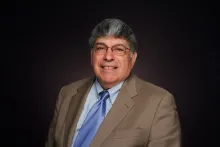
Gary Antion is a long-time minister, having served as a pastor in both the United States and Canada. He is also a certified counselor. Before his retirement in 2015, he was an instructor at Ambassador Bible College, where he had most recently also served as Coordinator.

