
In a Faithless World We Can Be Encouraged by the Faithfulness of God!
Given on
Given in
Downloads
Downloads
To download a file, right-click (or long press) a link above and choose Save As.
This sermon discusses the faithfulness of God, some of the fruits of God's faithfulness toward mankind, and how we should be faithful as well.
Transcript
This transcript was generated by AI and may contain errors. It is provided to assist those who may not be able to listen to the message.
You know, brethren, as I have been watching world news, watching national and local news, and wondering, you know, from week to week, what to to give you, what to present to you. And as I've been talking to various ones of you here locally and different people around the country that I kept in contact with, or you keep in, they've kept in contact with me, it is so easy for us to be discouraged as we see what's happening around the country and the world. And so today, what I want to do is hopefully give a message that you'll find encouraging. It was interesting as I was listening to Mr. Bradford's Bible study, some of the themes, some of the commentary that came out in that study, as well as some of the things Mr. Duran said in his first split sermon. Some of those same things and some of those same scriptures we're going to touch on in the sermon today. So I feel that God very much has put together material this Sabbath day, both for the Bible study, including the Bible study and his first split. And now my sermon that all talk about some very encouraging things. Our God is a great encourager, and he wants us to be encouraged. On the other side, the reason we need a sermon like this, comments like we've heard all day today, is because we're witnessing the mindless violence in this society. We're witnessing arson and rioting and looting and beating. We're witnessing even killings at the hands of the mob. The burning of the corner store, the destroying of lives and livelihoods of immigrants and minority-owned businesses, gutting and scaring communities, they honor no good cause. These actions are nothing more than domestic terrorism. The mayhem we are observing is intolerable, but we are asked to tolerate it. If you think I'm overstressing the point, take a look at what's happening in Portland, Oregon or downtown Seattle. Or think about what's happening in our own beloved town of Chicago. I'm not a, you know, I was not born here. I was born in bread in Detroit, Michigan, which for years was the murder capital of this country. So I've got nothing to crow about from my hometown. Here in Chicago, we see so many senseless killings, especially even of little children. In addition to all of that, we have this thing called the cancel culture, where we've got boycotts and firings and public shamings by special interest groups who declare an individual or a group of individuals as evil, and those same people need to be disavowed. Even the rewriting of history to suit special interest groups. We see where the statue of Teddy Roosevelt outside the New York Museum of Natural History is going to be coming down. Boston's mayor says it's time to remove the statue of Abraham Lincoln. In Oregon, Thomas Jefferson and Washington, uh, Thomas Jefferson and George Washington statues of them were torn down. Excuse me. In San Francisco, the Ma Demala statues of Ulysses S. Grant and Francis Scott Key. Now you're thinking to yourself, where is the, uh, where is the encouragement, Mr. D? Well, hold on, we'll get to it.
Brother in society is being turned upside down. It is not because of the majority of people in this country. It's because there is a small minority who's gained the ear of the nation through the media, both print and broadcast media. Chaos is the order of the day. And no wonder. A few months ago, I gave a sermon regarding Satan and the demons, and I gave some of the names and talked about some of the strategies of Satan based upon his names. Satan the devil, also known as the superhuman adversary, also known as the slander, the accuser, the god of hopeless ruin. Are we seeing any of that in our society today? Adversity, slander, accusations, hopeless ruin. We're seeing too much of that in society today. Brother, in times like these, when so many of the institutions we regard so highly in the past have come into question as to their faithfully being able to protect us and the freedoms we prize, the values that made this country great, we don't see these institutions doing their job faithfully. And here's where the encouragement comes in. In these troubled and unstable times, the Bible proclaims the faithfulness of God, the faithfulness of God. Let's turn to Deuteronomy chapter 7 verse 9.
Excuse me. Deuteronomy chapter 7 and verse 9.
You're in Deuteronomy chapter 7 verse 9. We read, Therefore, know that the Lord your God, he is God, the faithful God who keeps covenant and mercy for a thousand generations with those who love him and keep his commandments. This is good news. Our God is a faithful God. In a world of unfaithfulness, we can rely upon our faithful God, and we can rely upon the covenants he makes with us. We can be assured on those. We can rely upon those. We can depend on those because they're backed by the faithful God. So today, if you're taking notes and you want to write something across the top of your paper, here's my theme statement for the sermon. In a faithless world, we can be encouraged by the faithfulness of our God. In a faithless world, we can be encouraged by the faithfulness of our God. Now, let's have, as we start the sermon today, let's have a definition of terms. In Deuteronomy chapter 7 and verse 9, we see what says, the faithful God. What is that word in the original tongue, in the original Hebrew? It's Strongs number 539. Strongs number 539. It means to be firm, to endure, to be faithful, to be true, to stand fast, to trust, to have belief. Now, let's think about some of those portions of the definition here. God is a God, it says here, the Strong's word here, the Hebrew word, excuse me, means to endure. Our God is a faithful God. He's been faithful for all eternity. He will continue to be faithful for all eternity. Not like some of the institutions of man, they may be faithful for a short time and fulfilling their duties. God is continually, eternally, faithful. It says, the word means to be true. In a world of falsehood, in a world of accusations, in a world of slander, in a world of lies, in a world of disinformation, we've got a God who is true.
We've got a God, according to the definition, who stands fast. Not a God who is one who espouses situation ethics. Our God stands fast, morally, all eternity, or all eternity. It says, in terms of the definition, He is a God we can believe in. Something solid, something to hold on to. So when we say that God is a faithful God, it means all of the above. How encouraging in a faithless world is that? Let's take a look at my first point as we look at the faithfulness of God. Number one, God's faithfulness is an aspect of His nature. His faithfulness is a foundational aspect, a foundational aspect of His nature. God's faithful. It's who He is. It's what He is. He's faithful. Let's take a look at 2 Timothy 2 and verse 13. 2 Timothy 2 and verse 13. Okay, in 2 Timothy chapter 2 and verse 13, we read, if we are faithless, and human beings are, if we, society is, if we are faithless, He remains faithful. He cannot deny Himself because that's what He is. He is faithful. And that's a beautiful thing as we progress through the sermon, brethren, and we see the various aspects of God's faithfulness to His covenant with you and I. It's something for us to be so very encouraged about. So very encouraged. Let's turn now to Galatians chapter 5. And you know this section of Scripture well. Galatians chapter 5 verses 22 and 23. Galatians 5 verses 22 and 23. We see the fruits of God's Spirit. Or another way of saying this, the faithfulness is the fruit of God's nature. The fruit of God's nature. Galatians chapter 5 verse 22. But the fruit of the Spirit is love and joy and peace and long suffering, kindness, gentleness, faithfulness, gentleness and self-control. Against such there is no law. One of the cardinal, foundational aspects of God's nature is that He is faithful and He will continue to be faithful as He always has been and always will be. Brethren, as I was thinking about this, the thought occurred to me. You know, all of God's attributes, it might be said that all of God's attributes are uniquely dependent upon His faithfulness. Think on that for a second. Think on that for a moment. If God's holiness, for example, is not faithful, He could become the God of Situation Others. If God's mercy was not faithful, He can reinstate your sins to heaven forgiven. If God's omnipotence is not faithful, He can find Himself in a position where He's powerless. But God is faithful. He is faithful. His values, His laws are eternal in scope. His mercy is forever. His omnipotence is forever. It's always there. The attribute of God's faithfulness keeps all the attributes in perfect harmony. In perfect harmony. So say that God is faithful means that He is true to His nature. Let's read 2 Timothy 2.13 again. I'll read it for you.
If we are faithless, He remains faithful, He cannot deny Himself. So God is faithful. He is true to His nature. God is also faithful in His Word to us. Let's turn to the Hebrew, to the faith chapter, Hebrews 11. I had a sandwich for lunch today. I think some of those little particles are causing me to cough more than normal. Don't worry, I don't have COVID. Hebrews 11. By faith, Sarah herself also received strength to conceive seed, and she bore a child when she was past the age because she judged Him faithful who had promised. Here we are in the faith chapter. We're looking at one of the people of faith in the faith chapter. They rest upon the faithfulness of their God, our God, our Heavenly Father. Because God is faithful, brethren. God will always do what He says He will do. Are we seeing that in society? People stand in long lines to vote for their congressmen or their U.S. Senator or state officials or the President of the United States. They vote for these individuals because they say, I'm going to do this for you. Are they faithful in doing those things? So many times they want maybe to do the right thing or the thing they say they're going to do, but because of the polls and society, many times they're blocked from doing what their intentions are. Yet nobody blocks God. God is going to do whatever He says He's going to do. He is faithful to us in that regard. In that regard, He is dependable. We can always be encouraged by the dependability of our God. We can always rely upon Him. What else in society can you and I rely on? We can rely on God. He is faithful to us no matter what the circumstance in our life.
As you and I walk closely with our God, as we spend our time with Him in conversation and prayer, as we examine His mind that we see in the Holy Scriptures, as we meditate upon what we read in the Scriptures, as we fast, we understand that God, no matter what our circumstances, is going to be faithful to us. We can rely on Him. We can depend on Him. Whether we're suffering, whether we're experiencing great happiness, whether we're in the process of dying. We're going to talk about that in a moment. There's an individual we're going to read from who, as he was dying, talked about the faithfulness of God.
So, point number one is that faithfulness is a foundational aspect of God's nature. It's who and what He is. And to us, that's encouraging in a world of faithlessness. Point number two. We witness the faithfulness of God through the fruits. We witness the faithfulness of God through the fruits. Let's take a look at Titus chapter 1 and verse 2. I'm going to kind of set the stage here for a discussion we're going to have as this particular point unfolds.
Titus chapter 1 and verse 2, where it says, In hope of eternal life, which God who cannot lie promised before time began. God who cannot lie, all the promises in Scripture He can be depended upon to fulfill.
We can rely upon Him. We can have faith in Him. He does not lie. I said a moment ago that we're going to look at somebody who, maybe it might be a little dramatic to say they're under death, but this person is a dying individual.
Let's go to the book of Joshua chapter 23. Joshua chapter 23. Joshua is in the process of dying. And notice what Joshua, the great soldier, the great national leader, notice what this man, faithful man, said about the faithful God, our faithful God. Joshua 23 verse 14. Behold, this day I'm going the way of all the earth. He knew he was dying. And you know in all your hearts and in all your souls that not one thing has failed us of all the good things which the Lord your God spoke to you concerning it.
All have come to pass for you. Not one word of them has failed. Here's a God that can be dependent upon. And this man, this great soldier, general, national leader could depend upon, rely upon the faithfulness of our God. He had to rely upon the faithfulness of our God as he performed the duties God called him to do. And just as you are to do various duties God has asked you to perform, you as a Christian, you as one who are praying about the coming kingdom of God and being a part of the work, you and I also, as Joshua relied upon the faithfulness of God, so can we.
But let's take a little more of an in-depth look at one individual. We're going to turn now to Genesis 12. And you know who we're going to get there. A man who at this point in his life is about 75 years old. His name is Abram. Genesis 12, we're going to look at the first three verses. You know, there's a lot of material I can cover just on this one section, but I want to kind of give a little bit of an overview so that we can bear with me.
There's so much that could be brought out here. A number of sermons could be made talking about this individual, but we're just going to take a look at an overview. Let's look at Genesis 12 verses 1 through 3. Now the Lord said to Abram, Get out of your country, from your family and your father's house, to the land I will show you. I will make you a great nation.
I will bless you and make your name great, and you shall be a blessing. I will bless those who bless you, and I'll curse him who curses you, and in you all the families of the earth shall be blessed. In you all the families on the earth shall be blessed. So we notice twofold nature of this particular section of Scripture, that Abram's descendants would become a great nation, and that the Messiah will be born from his lineage and be a blessing to all mankind.
Of course, that's referring to Jesus Christ. Abraham obeyed God the next 24 years. He obeyed him prior to this, but he continued to obey God the next 24 years. When God appeared to him at age 99, the promises to him were enlarged and expanded by our faithful God to a faithful man.
Genesis 17, verses 1-6. Let's take a look at that. Genesis 17, verses 1-6. Verse 1. When Abram was 99 years old, the Lord appeared to Abram and said to him, I am Almighty God. Walk before me and be blameless, and I will make a covenant between me and you. Now remember, this is the God who does not lie. This is the faithful God. This is the God we can depend upon. I will make a covenant between me and you, and will multiply you exceedingly.
Then Abram fell on his face, and God talked to him, saying, Ask for me, behold, my covenant is with you. You shall be a father of many nations. So not just one great nation, is also a father of many nations, a nation and a company of nations, as we would see later on. No longer shall your name be called Abram, but your name shall be called Abraham, for I have made you a father of many nations. I will make you exceedingly fruitful, and I will make nations of you, and kings shall come from you.
You know, the brethren, and I'm going to pause there in the life story of Abraham, I could go on and on and on as you're well aware, we've got a tremendous booklet on that subject. We've had information on this for generations. You know the story. But the thing to me, brethren, and for us, is that we are enjoying the faithfulness of the promises God made to Abraham, then to Isaac, then to Jacob, and so forth. David, we're enjoying those blessings from a faithful God. I want to read you a quotation here. This is from James Morse and his Pax Britannica, Britannia, the climax of an empire, which says, The 1800s were certainly Britain's century. To their own astonishment, the people of this relatively tiny British isle found themselves ruling over a mighty empire. As a 19th century drew to a close, the British Empire was the largest empire in the history of the world, comprising nearly a quarter of the landmass of the earth and a quarter of its population.
Is God faithful to his promises? Can we rely and depend on our great God? Brethren, we can be so encouraged that you and I are blessed as a result of our God being faithful. And God is no respecter of persons. As God was respectful of Abraham, he'll be a respecter of you. If you walk with God, as Abraham walked with God, and we have that covenant, we made a covenant with God in this very real sense when we were baptized. We took our vows this last Wednesday when we baptized Susan. She took her vows that day to be faithful to God. She made a covenant, just as you and I have made covenants and years gone by, with our Father gone. And God will stand fast for those promises he made to us. Continuing on with this quotation from Pax Britannica, the world empire would continue, this empire would continue to expand. It continued to grow until 1933 when its area was 13.9 million square miles and its population 493 million people.
In comparison, the mighty Roman Empire, in its prime, 120 million people in an area two and a half square two and a half million square miles. So let's put this distinctly. British Empire, almost 14 million square miles. Roman Empire, not even 3 million square miles. British Empire, 493 million people. Roman Empire, 120 million people. The British Empire spanned five and a half times the territory of the Roman Empire with more than four times the subjects. This is our great God being faithful, being dependable, being reliable, honoring the covenant he made with Abraham. Just as God is going to be faithful and dependable and reliable with the covenants he makes with you, with me, with all of us, we can depend upon that. We can rely upon that. We can be encouraged, brethren, by what God is doing here. And as I may mention today, you and I as Americans are enjoying the promises that God made, our faithful God made, so many years ago. Now, unfortunately, we have in our nation, not the majority of people, we have had a vocal minority. We've got what some people call the mob. The mob, they remind me of Esau. They don't respect the birthright God has given to us. They say we want to tear everything down and start again. Well, what makes them think that they tear everything down? We can start again. You think Russia or China are just going to stand idly by as we burn ourselves down to the ground and not walk in here? Take over? You know, who knows, brother? Maybe this is one of the things we all have wondered and times gone by. We know the prophecies about this country going down. We think, how in the world can this mighty empire go down? Well, obviously because God says so, but just from looking at it from a human stance, our vaunted military, our economic might, and yet is it possible that what we're seeing right now is the rotting of our country from within? Not only the burning down of buildings, but the burning down of valuable character, pride in who we are, what we stand for. The mob wants to bring down every statue that they possibly can. Let's erase our our poor history as though the history of nations all around the world are better. Boy, there are times I like to give some of these people a ticket. They can go to some other part of the world, and if they are allowed to come back to this country, they would get off the plane and kiss the tarmac.
Let's take a look. You know, we saw the faithfulness God had for Abraham. Let's zero down the scope of this message and take a look a little more closely at the faithfulness God has for you and I. Let's turn our attention to 1 Corinthians chapter 1. 1 Corinthians chapter 1.
In verse 9, 1 Corinthians 1.9, where it says, God is faithful by whom you were called into the fellowship of his Son, Jesus Christ our Lord. Interesting thought here. Notice the connection between God's faithfulness and our calling. What is the relationship there? You and I, we're attending services here by Zoom meeting or by a webcast because we've been called. We're not out doing various things on Saturday. No, this is God's Sabbath, God's Holy Day, God's holy time, and we have been called together to worship God. And there's something about God's faithfulness that's connected with our calling. Let's take a look and explore that a little bit more. Let's go to 1 Thessalonians chapter 5 verses 23 and 24. 1 Thessalonians chapter 5 verses 23 and 24. 1 Thessalonians chapter 5 verses 24. Verse 23, Now may the God of peace himself sanctify you, set you apart, completely, and may your whole spirit, soul, and body be preserved, blameless at the coming of our Lord Jesus Christ. Verse 24, He who calls you is faithful, who also will do it.
The faithfulness of God's calling us touches on the fact that God is going to call us at the right time for us when you and I can be successful. 2 He sets us apart, as we see in verse 23. He's going to keep us, preserve us, blameless. He does that through the sacrifice of Jesus Christ, as our sins are being forgiven because of that covenant we have made with God. He's faithful in this regard. And it says here in verse 24, He who has called us is faithful, who will do it. We can depend upon Him. We can rely upon Him. We know that what He's doing is truth and faithful, that He's called you and I at a time when it's best for us. Doesn't mean it's easy for us now, but it's best for us now. Let's go to 1 John chapter 1 and verse 9. 1 John chapter 1 and verse 9.
How many times have all of us read this scripture? We read it every year at Passover time. We read it many times through the course of the year. It's an encouraging scripture. 1 John chapter 1 and verse 9. If we confess our sins, He is faithful and just to forgive us our sins and to cleanse us from all unrighteousness. Now, obviously, in there is the idea of true repentance. But as you and I repent and we confess our sins that were deeply sorry and broken up over our sins, it says, God is faithful. He is faithful. He's faithful in dealing with our sins, He's faithful in forgiving us our sins, He's faithful in preserving us, so we would be successful. And we can't be in God's kingdom if sin is still a part of our being. No, God is going to forgive us of those sins. Continue on here in Philippians chapter 1 and verse 6.
Philippians chapter 1 and verse 6.
Being confident. Why can you and I be confident? Because our God is faithful. Because our God can be relied upon. Because our God can be depended upon. Because our God is a God of truth who does not lie. Being confident of this very thing, that He who has begun a good work in you will complete it until the day of Jesus Christ. So if we are faithful, we know God's going to be. If we're faithful, God certainly is going to be faithful, and He will complete the task. We will be in God's kingdom.
He will complete the work. We can be encouraged by that fact. We can be encouraged. Now, you and I can walk away from the truth. You know, Hebrews chapter 6, Hebrews chapter 10 talks about that. The people have once tasted of the heavenly gift, once people have understood the Word of God. If they turn away from that, if they despise the sacrifice of Christ, then there's nothing more for them but a fearful looking for the day of judgment. But, brethren, we don't want to talk about that. Because we want to look at the encouraging scriptures we have been focusing on today. We want to focus on the faithfulness of our God, and as we are faithful to Him, we know He's going to be faithful to us, and He'll complete the test. Let's take a look at this in Revelation chapter 21. A prophecy that involves all of us, that our faithful God promises to us as we are faithful. Revelation 21, verses 1 through 5.
Revelation 21, verses 1 through 5.
Verse 1. Now I saw a new heaven and a new earth, for the first heaven and the first earth had passed away, and there was no more sea. Why does God do this? Because Satan's fingerprints have been all over this planet. So, God's going to purify the entirety of the, not just this planet, the whole universe, with the war that He had with God. So, God is going to purify all of this. Then I, John, saw the holy city, New Jerusalem, coming down out of heaven from God, prepared as a bride adorned for her husband. God's government. Now, of course, God's government is going to begin with the second coming of Jesus Christ. But here we see an amplification of this, after all that we know as the plan of God has been fulfilled. We've gone through the millennium, we've gone through the right-right-front judgment period, we've gone through the lake of fire incident, and now we're moving forward for us to be sure that we've got God's government for all time. Verse 3, And I heard a loud voice from heaven, saying, Behold, the tabernacle of God is with men, and He will dwell with them. Our heavenly Father will dwell with us, along with Jesus Christ, and they shall be His people. God Himself will be with them and be their God. Can there be any more encouraging note for us to appreciate how many times have we wanted? And we can go to God in prayer any time, but to have a real face-to-face, spirit-to-spirit discussion with the Father. I mean, we discuss things through our prayer, yes, and through our study, but this is raised to a whole different plane, a whole different level. Verse 4, And God will wipe away every tear from their eyes, there shall be no more death or sorrow or crying, there shall be no more pain, for the former things have passed away. Brethren, I read this scripture every time I do a funeral. Every time I do a funeral. And notice, the former things have passed away. When people die, we say they've passed away. Well, there's coming a time when death itself will pass away. How beautiful a time is that! Verse 5, That he who sat on the throne said, Behold, I make all things new. And he said to me, Write, For these words are true and faithful. The words are true and faithful, because they come from our true and faithful Father, our Father who is in heaven. So, point number two is, the faithfulness of God is witnessed through his fruits. That brings me to my last point. Point number three.
Point number three.
God's servants must be faithful. God's servants must be faithful. God is faithful. Jesus Christ is faithful. We're God's kids. We're brothers and sisters to our elder brother, Jesus Christ. We pray our Father who is in heaven, and because we're God's kids, Christ's brothers and sisters, we've got a family way of living to measure up to. And that's seen in the scriptures. Let's take a look, and we're not going to spend a lot of time on this. Again, multiple sermons could be given on this point alone. You know, we're painting broad brush here today. Let's take a look at some of the fruits that God's wanting for us to show in terms of faithfulness. How can you and I be faithful to our Father and our elder brother, Jesus Christ? Let's turn to Mark 12.
Mark 12.
We'll start with verses 29 and 30. Mark 12, verses 29 and 30.
Jesus was asked, what does it take to be a part of God's kingdom? Verse 29. Jesus answered the man and said, the first of all the commandments is here, O Israel, the Lord our God, the Lord is one. You shall love the Lord your God with all of your heart, with all of your soul, with all of your mind, with all of your strength. This is the first commandment. So if we want to be faithful people, faithful men and women of God, children of God, brothers and sisters of Jesus Christ, then our first order of business and being faithful is loving God without reservation, loving God without qualification, totally dedicated in our love for Him.
Verse 31. Mark 12, 31. And the second, like it is this, you shall love your neighbor as yourself. There is no other commandment greater than these. So another aspect of being faithful, we are to be faithful in loving our God without reservation and qualification. We're also to be faithful in loving our fellow man as God instructs.
Years ago, I forget where this was, but years ago, I gave a sermon at the Feast of Tabernacles, and I asked the question, do you love the world? And I'm sure people in their minds were thinking along certain lines, but I wasn't finished with my question. I asked, do you love the world? I paused. Then I finished the question. Do you love the world like God loves the world? God does not love the world. Sin. But God loves the people on this planet. For God so loved the world that He gave His only begotten Son, correct? John 3, 16. And as we heard in the split sermon earlier today, it's easy to, somewhat easy, to love those who love us. But what about our enemies? What did Jesus Christ say on the cross? Father, forgive them. They don't know what they're doing. What did Stephen say after he was stoned to death, or as he was dying from being stoned? Do not lay this to their sin. The same concept. The Apostle Paul was willing to offer his eternal life for his countrymen. We see in the book of Romans. Now, this is tremendous love. And for us to have this tremendous love, then we need to be faithful to the things of God. As you and I are faithful to God, he'll be faithful to us and supply us the spirit we need to do what is necessary to fulfill this loving relationship with God with our fellow man. Two more scriptures, and we'll be done for the day. Romans 12. Again, I'm sure you know where I'm going. We're talking about being faithful as God's servants, as his kids. Romans 12, verses 1 and 2. Romans 12, verses 1 and 2. I beseech you therefore, brethren, by the mercies of God, that you present your bodies a living sacrifice. A living sacrifice. Holy, acceptable God, which is your reasonable service. And do not be conformed to this world, but be transformed by the renewing of your mind that you may prove what is a good and acceptable and perfect will of God.
We see the world around us devolving into chaos. And yet, brethren, in that atmosphere, in this society, God doesn't want us to devolve. God wants us to transform our carnal nature with his help. Transform our hearts and our minds with his help, and that can only be done with his help. Do not be conformed to this world that's devolving, but be transformed by the renewing of your mind, God says, through the Apostle Paul.
So, faithfulness should be seen in our dedication to become more like our elder brother, Jesus Christ. And lastly, Matthew 28, verses 19 and 20. Matthew 28, verses 19 and 20.
Go therefore and make disciples of all the nations, baptizing them into the name of the Father and the Son and the Holy Spirit, teaching them to observe all things I've commanded you, for lo, I am with you always, even to the end of the age. Amen. Jesus Christ was faithful in doing the work. He talked about how he came to do the work. He must be about his father's business. He said that when he was 12 years old. To a group of very learned people. And at the end of his life, he said, I finished the work God's called me to do. Brethren, we must be faithful in the work God has called us to do. Not just in our own personal relationship, as we're allowing God to transform us. But we must also be faithful in getting out the good news of the Gospel of the Kingdom of God. It's an encouraging message. It's a message that shows the world that there's a better future out there that's available through our faithful God. At a time when society is wanting to get behind this movement or that movement, there's not a better cause in the world to get behind than the cause of what you and I are doing with our tithes, with our audience, with our lives. With our tithes, with our offerings, with our prayers, with our fastings, getting behind doing the work of God. So, brethren, it is true. We are living in a time like you and I have not witnessed in our lifetimes. Society is being turned upside down. Chaos is the order of the day. Institutions that should be faithful are not faithful. But you and I can be encouraged, deeply encouraged, because we worship a God that is faithful. In these troubled times, the Bible boldly proclaims the faithfulness of God. Today, we've taken just a cursory look at His nature. We've taken just a brief look at the fruits of God's faithfulness, and we've taken a brief look at how you and I need to be faithful members of the family. So, brethren, let's be about our Father's business. Let's be faithful as our Father is faithful.
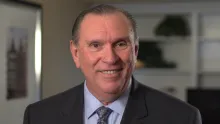
Randy D’Alessandro served as pastor for the United Church of God congregations in Chicago, Illinois, and Beloit, Wisconsin, from 2016-2021. Randy previously served in Raleigh, North Carolina (1984-1989); Cookeville, Tennessee (1989-1993); Parkersburg, West Virginia (1993-1997); Ann Arbor and Detroit, Michigan (1997-2016).
Randy first heard of the church when he was 15 years old and wanted to attend services immediately but was not allowed to by his parents. He quit the high school football and basketball teams in order to properly keep the Sabbath. From the time that Randy first learned of the Holy Days, he kept them at home until he was accepted to Ambassador College in Pasadena, California in 1970.
Randy and his wife, Mary, graduated from Ambassador College with BA degrees in Theology. Randy was ordained an elder in September 1979.
playlist
