

Don Ward
This transcript was generated by AI and may contain errors. It is provided to assist those who may not be able to listen to the message.
The title today is Feast of the First Fruits. The Passover and Feast of Unleavened Bread introduces the significance and symbolism of the firstborn in God's great plan of salvation, His great Master Plan. God placed great importance on the rites and privileges of the firstborn. God's emphasis on the firstborn is rich in symbolism. The patriarchs and the nation of Israel were well-burst in the importance of the firstborn. One of the most important covenants ever made was the one that God made with Abraham, in which He promised that through Abraham's seed all of the nations of the earth would be blessed. We can read that in Genesis 12 and verse 3. At times, I think we have emphasized the physical more than the spiritual. Both are important, but the most important to all nations, of course, is the covenant that God made with Abraham regarding through His seed. All the nations of the earth will be blessed. Genesis 12 and verse 3. And I will make you a great nation, and I will bless you, and make your name great, and you shall be a blessing. And I will bless them that bless you, and curse them that curse you. And in you shall all, not just Israel, all the families of the earth be blessed. We turn to Galatians chapter 3 and verse 15, and we see here how that promise is fulfilled, that great covenant, through Jesus Christ. Galatians 3 and verse 15.
Brother and I speak after the manner of men, though it be but a man's covenant, yet if it is confirmed, no man, no man, disannuls or adds to it. Now to Abraham and his seed were the promises made. He said, not as to seeds as of many, but as of one, and to your seed, which is Christ. So it is through Christ that all of the nations of the earth be blessed. And he is the firstborn, as we shall see, of many brethren. And then we read later in this chapter in Galatians, in verse 24, wherefore the law was our schoolmaster to bring us to Christ, but after that faith has come, we are no longer under a schoolmaster, for we are all the children of God by faith in Christ Jesus.
For as many of us have been baptized into Christ, have put on Christ, there is neither Jew or Greek, there is neither bond or free, there is neither male or free male, for you are all one in Christ Jesus. One of the greatest verses in the whole Bible, sort of a summary verse, the last verse of this chapter, and if you be in Christ, then are you Abraham's seed and heirs according to the promise. The promises were passed on to Isaac and to Jacob.
In Genesis chapter 26, we see the promises passed on to Isaac. Genesis 26, we have heard that story through the years in the Church of God, Abraham, Isaac, and Jacob. It's called the patriarchal age in which the promises of all the nations of the earth being blessed through Christ were passed on.
In Genesis 26, there was a famine in the land beside the first famine that was in the days of Abraham, and Isaac went onto a bimillah king of the Philistines unto Gomorrah, and the Lord appeared unto him and said, Go not down into Egypt, as later on Israel was saved by going down to Egypt, as we'll get to when Jacob and the family went down. Dwell in the land which I shall tell you of. Sojourn in this land, and I will be with you, and with, and bless you. For unto you and unto your seed I will give all these countries, and I will perform the oath which I swore unto Abraham, your father, and I will make your seed to multiply as the stars of heaven.
And I will give unto your seed all these countries, and in your seed, and in your seed shall all the nations of the earth be blessed. And that promise was later passed on to Jacob in Genesis 35 verses 10 through 15. The reading there is somewhat similar to this, so we won't read that. But the promise, the great promises of the patriarchal age, Abraham, Isaac, and Jacob, through your seed.
And we have read from Galatians, making it very clear that if you be in Christ, then are you Abraham's seed and heirs according to the promise. And Jesus Christ is the firstborn among many brethren. We're familiar with the story of how Jacob and his family came to live in the land of Egypt. Joseph sold into captivity by his brothers. Joseph winds up, number one, in the land under Pharaoh.
And Pharaoh has the dream. Joseph interprets the dream of the lean and fat cows symbolizing famine. And so when things were so tough because of the famine, Jacob sent some of the brothers of Joseph down into Egypt to buy grain. And eventually, Joseph tells the brothers that he should convey to my father that all of you, the family of Jacob, should move to Egypt. So let's note that in Genesis 46. If you haven't really focused on Genesis 46, 47, those last to the end, through 49 there, I would encourage you to do so.
We don't have time to go into that story to take us off the main focus today, the whole thing. But in Genesis 46, we see this move of Jacob down into Egypt. And notice here it is called Israel. If you'll recall that Jacob wrestled with the great angel, and before he would let him go, he asked that great angel to bless him. And his name was changed. He said, No longer shall your name be called Jacob, which means supplanter.
Your name shall be called Israel. Any Hebrew word that ends in E-L, E-L is one of the primary names of God. So that name means prince with God or ruling with God. And generally in scriptures, when you see Jacob, it is speaking of the physical attributes of Jacob and his actions.
And when you see, Israel is generally speaking of the spiritual actions and attributes of Israel. And Jacob took his journey with all that he had and came to Beersheba and offered sacrifices unto the God of his father Isaac. The same God that was the father of Isaac was the God of Abraham. So the father, the God of the fathers, Abraham, Isaac, and Jacob.
And notice here he offered sacrifices. One of the responsibilities of the firstborn was to serve as a priest. Of course, after the Levitical priesthood was established, then no longer was this action that a priest be from the firstborn of any certain family of the tribes. But until that was the case, that is, the Levitical priesthood was established, then they served as priests, they being firstborn.
So you see here that Jacob offered sacrifices unto the God of his father Isaac. And God spoke unto Israel in the visions of the night and said, Jacob, Jacob! And he said, Here am I. That is the correct response. Moses said, Here am I, eventually. Isaiah, of course Moses protested, first of all, said he couldn't do it. Then, in the case of Isaiah, God spoke to Isaiah and said, I need you to go do something.
The people of the land. And Isaiah protested and said, I am a man of unclean lips. And he said, I have cleaned your lips, you go. And so Isaac said, Here am I, send me. So Jacob says, Here am I. In essence, this is saying, Here am I. What do you want me to do? And he said, I am God, the God of your father. Fear not to go down into Egypt, for I will make of you a great nation.
I will go down with you into Egypt, and I will go surely, and I will surely bring you up again. Of course, that land had been promised. One of the other covenants to Abraham was the promise of the land from the Mediterranean all the way to the Tiger's Euphrates. So it would bring them back into the land eventually. So I'll bring you back up again, and Joseph shall put his hand upon your eyes. Now let's pick it up again about verse 26. It lists in the interceding verses there the various children of the tribes that went down to Egypt. And he sent Judah before him unto Joseph to direct his face unto Goshen, and they came into the land of Goshen.
Goshen was the ideal place, the best place in all of Egypt.
And Joseph made ready his chariot and went up to meet Israel his father to Goshen and presented himself unto him. And he fell on his neck. See, this is the first time Joseph has seen his father since he was sold to the Ishmaelites by his brother.
You can only imagine the emotion that was involved in this meeting when they came together and wept on his neck a good while.
And Israel said, Now let me die since I have seen your face because you are yet alive. So about 70 souls counting Joseph and his two sons, Ephraim and Manasseh, and Joseph's wife, 70 people of the family of Jacob were in Egypt.
One of the things, this is sort of a side issue, but I think you'll find it very interesting, what happened after Jacob and his family came into Egypt. The famine was still on. And of course the famine greatly affected the Egyptians, so the Egyptians would come to buy the grain.
So eventually they ran out of money. Joseph was not only the dispenser, he was also the treasurer. And so he collected essentially all of the money, silver and gold, of Egypt.
So then the Egyptians ran out of gold and silver. And so Joseph said, okay, give me your cattle, your donkeys, all the livestock. And so they did that. Eventually they didn't have any more cattle to give.
And so Joseph, with his great plan, he redistributed the people and to a large degree the wealth.
Pharaoh winds up one-fifth of the land. The Egyptians were settled throughout the land, and they became farmers, shepherds. Up to that time a shepherd was an abomination to the Egyptians.
Fascinating story. Just sort of a sidelight there about what happened. You read that in chapter 47, especially.
So the birthright was to go to the firstborn, and so Jacob and his family are now in Egypt.
But however we shall see, due to certain circumstances, sometimes the circumstances are at the discretion of God.
And sometimes the circumstances have to do with the actions of the firstborn.
But the birthright was not always passed to the firstborn. We note this in the case of Ephraim and Manasseh. So if you turn forward a few pages to Genesis 48 and verse 16. And the angel which redeemed us from evil blessed the lads, and let my name be named upon them, in the name of my fathers, Abraham and Isaac, this is Jacob speaking, and let them grow into a multitude in the midst of the earth.
And when Joseph saw that his father laid his right hand upon the head of Ephraim, it displeased him, and he held up his father's hand to remove it from Ephraim's head unto Manasseh's head.
And Joseph said unto his father, Not so, my father, for this is the firstborn. Put your right hand upon his head.
And his father refused and said, I know it, my son, I know it. He also shall become a people, and he also shall be great. But truly the younger brother shall be greater than he, and his seed shall become a multitude of nations.
And he blessed them that day, saying, In you shall Israel bless, saying, God make you as Ephraim and as Manasseh.
And he set Ephraim before Manasseh. So we see here that the birthright is not always passed on to the firstborn. In this case, it was at God's discretion. The birthright provided for a double portion of the inheritance from the father to the firstborn.
You'll note Deuteronomy 21 verse 15. Firstborn wants to get a double portion of the birthright.
In some ways you might say, well, this is stated rather awkwardly here, but in Deuteronomy 21 and verse 15, if a man have two wives, one beloved and another hated, and they have borne him children, both the beloved and the hated, and if the firstborn son be hers that was hated, then it shall be when he makes his sons inherit the land, which he hath, that he may not make the son of the beloved firstborn before the son of the hated, which is indeed the firstborn, truly the firstborn, but he shall acknowledge the son of the hated for the firstborn by giving him a double portion of all that he has, for he is the beginning of his strength. The right of the firstborn is his. Whether it's the wife that he favors or the wife that he hates, whomever, male, female, and went to the male firstborn would get the birthright. As you know, Esau forfeited his birthright to Jacob, so even though they were twins, and even though Esau came first in the birth process, Esau lost his birthright to Jacob. We won't go into the story of Jacob and Rebecca and what they did, but Jacob received the birthright. The firstborn received a double portion of the inheritance, and he also became the priest of the family, as we've already noted. We've noted that Jacob, in Genesis 46.1, offered sacrifice. Also in Genesis 31.54, you can read where Jacob offers sacrifice. As Jacob was about to leave Egypt, we read that he offered sacrifice, Genesis 46.1.
The firstborn also inherited the authority and whatever rights or privileges that the father had.
Let's notice this in 2 Chronicles 21. 2 Chronicles 21. So the firstborn also became, in essence, the judge of the weightiest matters in the land. In 2 Chronicles 21, verse 3, 1 And their father gave them great gifts of silver and of gold and of precious things, and fenced cities in Judah. But the kingdom gave he to Jehoram, because he was the firstborn.
So the rights and privileges that the father had went to that firstborn, Jehoram. Jacob's firstborn was Reuben. So after Jacob's death, the priesthood of the tribes and the blessings of the firstborn would ordinarily, generally go to Reuben. But it didn't. Why? Let's notice why it didn't. In Genesis 35 and verse 22, we'll see why Reuben, in our old literature we used to talk about, we would try to give the modern identity of all of the tribes, and we would usually say that Reuben was France, modern France.
The characteristics of Reuben sort of fits the French, but don't tell them we said it.
Okay. In Genesis now, chapter 35 and verse 22. And it came to pass when Israel dwelt in that land that Reuben went in and lay with Bill Ha. His father's concubine in Israel heard it.
Now the sons of Jacob were 12. So Reuben committed this great sin, and we'll notice the result of that in Genesis 49.
Genesis 49. This sermon today is not for the lazy-minded.
In Genesis 49 and verse 4, here Jacob, before he dies, gives sort of a prophetic overview of the future of the tribes. And so when it comes to Reuben, we'll start in verse 3.
Reuben, you are my firstborn, my might and the beginning of my strength, the excellency of dignity and the excellency of power, unstable as water, unstable as water, you shall not excel because you went up to your father's bed, then defile you it, he went up to my couch. So the birthright did not go to Reuben.
The birthright did not go to Simeon and Levi. Look at verse 5. Simeon and Levi are brethren.
Instruments of cruelty are in their habitations. So they didn't get the birthright either.
Ephraim and Manasseh got the birthright from Jacob. Look at 1 Chronicles chapter 5. 1 Chronicles chapter 5 and verse 1.
When it's names it chronicles, it means what it says. It chronicles lots of people and lots of places. You get bogged down in reading the names.
1 Chronicles 5 and verse 1. Now the sons of Reuben, the firstborn of Israel, or he was the firstborn, but for as much as he defiled his father's bed, his birthright was given unto the sons of Joseph, the son of Israel. And the genealogy is not to be reckoned after the birthright. For Judah prevailed above his brethren, and of him came the chief ruler. But the birthright was Joseph. So the sons of Reuben, the firstborn, and so on, it lives. But the birthright went to Ephraim. So we see that the firstborn did not always receive the birthright. But notice that in the eyes of God, that the entire nation of Israel is his firstborn. We'll look at two places here. Exodus 4.21. What did I just say? That God also viewed Israel as his firstborn, but then that also is going to shift. And some people say, well, I just like to go to the Protestant Church. All they do is say, you believe in Jesus? You don't have to worry about all this Old Testament stuff. It doesn't mean a thing. If you really want to understand the Bible and all the elements that's going into where we are today, you need to know this, because this is a shadow, a figure of what is to come and is in place today to a large degree.
So what did I say? Exodus 4 and verse 21. In Exodus 4.21, the Lord said unto Moses, when you go into Egypt, see that you do all these wonders before Pharaoh, which I put in your hand, but I will burden his heart, or harden his heart, and he shall not let the people go. And you shall say unto Pharaoh, Thus says the Lord, Israel is my son and my first born. Now we go to Exodus 12, and Exodus 12, where the Passover instructions are given of that initial Passover, a Passover that freed Israel from the Egyptian bondage, at least temporarily. Of course, Pharaoh pursued, but was later drowned in the Red Sea. In Exodus 12 and verse 29, And it came to pass that at midnight the Eternal smote all the firstborn in the land of Egypt from the firstborn of Pharaoh that set on the throne unto the firstborn of the captive that were in the dungeon, and all the firstborn of cattle, and Pharaoh rose up in the night, and he said to all his servants and all the Egyptians, There was a great cry in Egypt, for there was not a house where there were not one dead. And he called for Moses and Aaron by night, and said, Rise up, and get you from among my people, both you and your children of Israel, and go serve the Lord, as you have said. Also take your flocks, your herds, as you have said, and be gone, and bless us also.
And the Egyptians were urging upon the people that they might send them out of the land in haste, for they said, We be all dead men. And so they took what they had, the dough, and so on, and they left.
So that freed them temporarily, as we said, they followed them.
But God saved them, delivered them, as you heard in the sermonette, in the offatory.
So Israel was viewed as God's firstborn as well. Now we want to notice further in in we want to notice further in Exodus 13. In Exodus 13 in verse 2, Sanctify unto me all the firstborn, whatsoever opens the womb, among the children of Israel, both of men and a beast is mine.
Then we drop down to verse 13.
And every firstling of an ass that you shall redeem with a lamb, and if you will not redeem it, then you shall break his neck, and all the firstborn of man among your children shall you redeem. And it shall be when your son asks you in time to come saying, What is this that you shall say unto him my strength of hand? The Lord brought me out of from Egypt, from the house of bondage, and it came to pass when Pharaoh would hardly let us go, that the Lord slew all the firstborn in the land of Egypt, both the firstborn of men, the firstborn of beasts. Therefore I sacrifice to the Lord all that opens the matrix, being males, but all the firstborn of my children I redeem. And it shall be for a token upon your hand, and the frontless between your eyes, for by strength of hand the Lord brought you forth out of the land of Egypt.
So God claimed Israel as the firstborn to replace that which had died in Egypt, the firstborn there.
But he, as we shall see, later God chose the tribe of Levi. Now all of this background that we've done, the promises to Abraham, Isaac, and Jacob, how it's fulfilled in Christ of various types, the birthright to Ephraim, the birthright to the firstborn, Israel as the firstborn as a nation.
Z, today, according to Galatians 6 16, we are the Israel of God. Now we have not replaced physical Israel in the ultimate sense. Israel will be restored in the millennium. God's restoration of Israel, not the geopolitical restoration that you will see now, but which restoration is necessary for some of the prophecies to be fulfilled.
Let's go now to Numbers. Very interesting here. Probably haven't heard this read today.
Let's go to Numbers chapter 3.
Remember the types and the anti-types, the symbolism that is involved in much of this.
In Numbers chapter 3.
We'll begin in verse 5. Numbers 3 and verse 5.
And the Lord spoke unto Moses, saying, Bring the tribe of Levi near me, and present them before Aaron the priest that they may minister unto me. And they shall keep his charge, and the charge of the whole congregation before the tabernacle of the congregation to do the service of the tabernacle.
Now we drop down from verse 7 to verse 9. And you shall give the Levites unto Aaron and to his sons.
They are wholly given unto him out of the children of Israel. And you shall appoint Aaron and his sons, and they shall wait on their office, and the stranger that comes nigh shall he put to death.
I mean, anyone who tried to usurp the office of priest was put to death.
And the Lord spoke unto Moses, saying, And I, behold, I have taken the Levites from among the children of Israel, instead of all the children that opened the matrix. Did you get it? I have taken the Levites, instead of all the children, instead of all the firstborn that opened the matrix among the children of Israel.
Therefore, the Levites shall be mine, because all the firstborn are mine, for on that day I smote all the firstborn in the land of Egypt. I hallowed unto me all the firstborn in Israel, both sons and beasts. Mine shall they be. I am the Eternal.
Of course, we are going to be the firstborn of many brethren, the firstborn, the firstfruits in the resurrection. Now we go to Numbers 8 and verse 8. Numbers 8 and verse 8. Then let them take a young bullock with his meat offering and fine-flower Mingo with oil, and another young bullock shall you take for his sin offering, and you shall bring the Levites before the tabernacle of the congregation, and you shall gather the whole assembly of the children of Israel, and you shall bring the Levites before the Lord, and the children of Israel shall put their hands upon the Levites. It's like the whole congregation. The whole nation sets them apart, and Aaron shall offer the Levites before the Eternal for an offering of the children of Israel, that they may execute the service of the Lord, and the Levites shall lay their hands upon the heads of the bullocks, and you shall offer the one for a sin offering and the other for a burn offering unto the Lord to make an atonement for the Levites. And you shall set the Levites before Aaron and before his sons, and offer them for an offering unto the Eternal, and you shall separate the Levites from among the children of Israel, and the Levites shall be mine. I mean, you don't read this every day. You don't hear it every day. It's sort of maybe in the background of your mind, say, all priests are Levites, but not all Levites are priests, because many of them worked in the service of the Tabernacle. They were not literally priests, but they served in the physical sense.
And like today, the many things that we enjoy with our Sabbath services and holy days and so many other things, the minister is not the one who does so much of the work.
It is those who labor in God's vineyard as well all the time.
So, thus shall you separate the Levites from among the children of Israel, and the Levites shall be mine. And after that shall the Levites go to do the service of the Tabernacle of the congregation, and you shall cleanse you and offer them for an offering. For they are wholly given unto me from among the children of Israel, instead of such as open every womb, even instead of the firstborn of all the children of Israel, I have taken you unto me. You get it? For all the firstborn of the children of Israel are mine, both man and beast, on the day that I smote every firstborn in the land of Egypt, I sanctified you for myself, and I have taken the Levites for all the firstborn of the children of Israel. And I have given the Levites as a gift to Aaron and his sons.
See, they are the priestly family, and the priesthood initially was an inherited office.
Then when you get later into the last days of the kingdom of Israel and how the priests were chosen, it becomes a lot fussier, and especially in the days of the New Testament and the days of Christ.
I have given the Levites as a gift to Aaron and to his sons from among the children of Israel to do the service of the children of Israel in the tabernacle of the congregation and to mark an atonement for the children of Israel that there be no plague among the children of Israel when the children of Israel come nigh unto the sanctuary. And Moses and Aaron and all of the congregation of the children of Israel did to the Levites, according all that the Lord commanded Moses concerning the Levites, so all the children of Israel unto them. They did unto the Levites.
This is quite a sobering.
As we shall see, we are typical Levites today.
At this juncture, the responsibility of redemption that had been given to the firstborn was now given to the tribe of Levi. We just read them several verses. The Levites replaced the administration of sacred things that were previously committed to the firstborn.
This transfer of responsibility for sacred affairs paved the way for the organization and administration of the Old Covenant from the days of Moses forward. Now, how did God choose Levi? Why choose them?
They were the smallest of all the tribes. Let's go to Exodus 32. In Exodus 32, beginning in verse 8, I hope this reference is correct. In Exodus 32 and verse 8, they have burned aside quickly, or they turned aside quickly, out of the way which I commanded them. They have made a molten calf and have worshipped it and have sacrificed thereunto, and said, These be your gods, O Israel, which you brought you up out of the land of Egypt.
And the Lord said unto Moses, I have seen this people, and behold, it is a stiff-necked people.
Therefore, let me alone in my wrath may wax hot against them, that I may commune or consume them, and I will make of you a great nation. And Moses besought the Lord his God. See, this is the second time he's interceded in this sense. And said, Why does your wrath wax against your people, which you have brought forth out of the land of Egypt with great power and a mighty hand?
Wherefore should the Egyptians speak and say, For mischief, for a wrong motive, did he bring them out to slay them in the mountains and to consume them from the face of the earth?
Turn from your fierce wrath and repent of this evil against your people. I mean, here's Moses speaking to God. You know, in prayers in the past week or so, I'd lie there and say, You know, how bold can you be in prayer? How much can you reason with God? Of course, none of us are Moses, or none of us is Moses. And sometimes you wonder about these things, but what a bold intercession for the people. And the Lord repented. Repented here means changed his mind of the evil, which he thought to do unto his people. And Moses turned and went down from the mount, and the two tables of the testimony were in his hand, and the tables were written on both sides on the one side and on the other side. They were written, and the tables were the work of God. And the writing was the writing of God, the raven upon the tablets. And when Joshua heard noise of the people as they shouted, he said unto Moses, there's a noise of war in the camp.
And he says, it is not the voice of them that shout for mastery, neither is it the voice of them that cry for being overcome, but the noise of them that sing do I hear. And it came to pass as soon as he came nigh unto the camp, that he saw the calf and the dancing, and Moses's anger waxed hot. And he cast the tables out of his hands, and broke it beneath the mount. And he took the calf which they had made, and burnt it in the fire, and ground it to powder upon the waters, and made the children of Israel to drink a bit. Now you look at verse 28, and the children of Levi did according to the word of Moses, and there fell of the Egyptian of the people that day three thousand men. See, the Leibites were the ones who carried out the judgment that God wrought against Israel for that great sin. So God appointed the smallest tribe to do the most important duty of all the tribes. They were to be responsible for teaching the people the law of God, administering justice, and helping the people remain, helping them remain in a justified position with God through their administration of offerings and sacrifices. The duty really of the ministry today is not to condemn, per se. Sometimes judgment has to be made, but it is that you may be justified before God. What are the motives unless someone had revenge in their hearts? The Feast of Unleavened Bread has great significance regarding the plan of redemption for humanity. Look at Malachi 2.7.
Sort of a summary of what the Leibites were to do. I think I said I'm not sure what I said. I want Malachi 2.7.
Malachi 2.7.
For the priests' lips should keep knowledge, and they should seek the law at the mouth, for he is the Malach, the messenger of the Lord of hosts. But you are departed out of the way you have caused many to stumble at that day. You have corrupted the covenant of Levi, says the eternal host. So a tremendous weighty responsibility is upon the ministry.
There's a great weighty responsibility upon all of us as typical Leibites.
So let's look at Malachi 3.
Behold, I will send my messenger, and he shall prepare the way before me. That's John the Baptist.
Read about that in Mark chapter 1, several verses.
And the Lord whom you seek, Jesus Christ, suddenly shall come to his temple, the Lord Atonai, even the messenger of the covenant, whom you delight on. Behold, he shall come, says the eternal host. But who may abide the day of his coming, and who shall stand when he appears? For he is like a refiner's fire, and the children of the church. I'm sorry, my glasses. I tried to get new glasses yesterday, but the optometrist was gone. And like fuller soap, he shall sit as a refiner and purifier of silver.
He shall purify the sons of Levi. See, in 1 Peter chapter 1, verses 6 and 7, talks about us in our fiery trials, and knowing that the trial of your faith is more precious than that of gold. Rejoice in your trials, James writes.
He shall sit as a refiner and purifier of silver. He shall purify the sons of Levi, and purge them as gold and silver, that they may offer unto the Lord an offering in righteousness.
Then shall the offering of Judah and Jerusalem be pleasant unto the Lord, as in the days of old, and as in the former years. See, there's like a dupl entendre, a double meaning to this. Of course, the time is coming in which Israel is going to be restored in the millennium.
Right now, we are typical sons of Levi, and we are being purified, and we're being judged now. Judgment is now on the house of God. Now, come near to you to judgment, I will be a swift witness against the sorcerers, against the adulterers, against vaults of swarers, against those that opposed the hireling of his wages, the widow of the fatherless, and they that turn aside the stranger from his right, and fear not me, says the eternal host, for I am the Lord, I change not. Therefore, you sons of Jacob are not consumed. Of course, if any of us were to get absolute justice, we would all be consumed. It is only because of God's grace and mercy that our sins can be remitted through repentance and faith in Christ.
So, once again, the Feast of Unleavened Bread has great significance regarding the plan of redemption for humanity to a large degree. It centers on the privileges of the firstborn and as typical sons of Levi, a change in the priesthood and the means of redemption.
The wave-sheaf that was offered during the days of Unleavened Bread typified Jesus Christ, then accepted my God as the first of the firstfruits, the first born from the dead, the first to have lived in the flesh, and to be resurrected as a glorious, radiant spirit being, a life-giving spirit being. So, let's notice God's instructions to Israel for the wave-sheaf offering. We go now to Leviticus 23.
A lot of people have misunderstood what was literally waved before God.
These instructions here, Leviticus 23 and verse 9, They shall therefore keep mine ordinance, lest they bear sin for it.
I don't know what that says. Therefore, if they profane it, I the Lord do sanctify them. There shall be no stranger eat of the holy thing, a sojourner of the priest, or a hard servant shall not eat of the holy thing. But if the priest by any soul and his money, so shall eat of it, and he that is born of the house, they shall eat of the meat. If this priest's daughter also be... I'm reading a wrong chapter. Why didn't somebody say something?
Man, these glasses have been the worst they've... and they are new, relatively new.
Exodus 23.9, And the Lord spoke unto Moses, saying, Speaking to the children of Israel, and said of them, When you are come into the land which I give unto you, you shall reap the harvest thereof. You shall bring a sheaf of first fruits of your harvest unto the priest.
He shall wave the sheaf before the Lord, to be accepted for you on the morrow after the Sabbath, the priest shall wave it. And you shall offer that day when you wave the sheaf and the Helam without blemish of the first year for a burnt offering under the eternal.
And the meat offering thereof shall be two tenths of fine flower, a mingle with oil, and offering made by fire under the eternal for a sweet saver. And the drink offering thereof shall be a wine and a fourth part of a hen. And you shall eat neither bread nor parched corn, nor green ears, until the selfsame day that ye are brought and offering under your God. It shall be a statue forever in your generations.
Jesus Christ was or is the fulfillment of the wave sheaf offering.
God does not require the literal wave sheaf offering today. Some might say, well, it can remind you of what was offered. The Bible reveals that its symbolism was fulfilled by the resurrected Christ as we shall see from Scripture. Christ is the firstborn and the first of the firstfruits, and thus he was waved before the Father after his resurrection on the same day that the wave sheaf was waved. He did not allow anyone to touch him. Look at John 20 verse 17. He did not allow anyone to touch him after he was resurrected because, as we shall read here, it says that he said, do not touch me, for I must ascend to my Father.
And John chapter 20 verse 17. John chapter 20 verse 17. Jesus said unto her, touch me, Mary Magdalene, touch me not, for I am not yet ascended to my Father, but go to my brethren and say unto them, I ascend unto my Father and your Father to my God and your God. Notice those words. So in Hebrews chapter 9 and verse 22, we see that the offering of Jesus Christ, the fulfillment, the spiritual fulfillment of the wave sheep was off, was accepted by the Father in Hebrews 9 and verse 22. And almost all things are by the law purged with blood. Without the shedding of the blood, there is no remission. It was therefore necessary that the pattern of the things in the heavens should be purified with these, but the heavenly themselves with better sacrifices than those. The blood of bulls and goats for the things that were the pattern of the heavenlies, but the actual heavenly itself required the sacrifice of the only begotten Son of God, Jesus the Christ. For Christ is not entered into the holy place, made with hands, which are the figure of the true. See, that which is made of the hands is a figure of that which is true. The true is not made by hands, and Jesus Christ is that true wave sheep, as it were. But Christ is entered into the holy place, which are figures of the true.
But unto heaven now to appear in the presence of God for us.
So Jesus Christ says, don't touch me, I'm not yet ascended to my Father all that morning after he was resurrected. Now you go to Matthew 28 verse 9. Matthew 28 verse 9, you'll see that later that day, of course, he had told her to go tell the disciples to meet me at a certain place, which she did in Matthew 28 verse 9. And as they went to tell his disciples, behold, Jesus met them, saying, all hail, and they came and held him by the feet and worshipped him. Yet Mary couldn't touch him that morning because he said, I'm not yet ascended to the Father, to my God and to your God.
So Jesus Christ is the firstborn of many brethren. He was resurrected, he lived in the flesh, but then he was resurrected as a firstborn among many brethren.
Let's look at some scriptures that verify what I just said, the firstborn among many brethren.
You see the ultimate fulfillment, tracing it back from the days in which the firstborn in the patriarchal age had certain rights and privileges, and the firstborn right and privileges continued on. But now the ultimate fulfillment of the rights of the firstborn is to Christ. Christ, see there's no longer a Levitical priesthood. The priesthood has been changed to that of Melchizedek. And Jesus Christ is the firstborn among many brethren. He is our high priest. It says in Hebrews 7.25 that he ever lives to make intercession for us. In Revelation 1.5, and from Jesus Christ, who is the faithful witness, the prototichos, the firstborn of the dead and the prince and the princes of the kings of the earth, he has washed us from our sins by his own hand.
Now we look at Romans chapter 1. Romans chapter 1 verse 3. Romans 1 and verse 3.
Jesus Christ completely without sin, crucified, resurrected, and as we shall see, the firstborn among many brethren. Now in Romans 1 and verse 3. In Romans 1 and verse 3, concerning his son Jesus Christ our Lord, which was made of the seed of David according to the flesh. David was a type of Christ. But the prophecies say that I will give him, that is Christ, the throne of his father David, and declare to be the son of God with power according to the spirit of holiness by the resurrection from the dead. Firstborn among many brethren, who was waved before the father, and his sacrifice was accepted so that through him now we all can be among the first fruits.
In Romans 8 and verse 29. In Romans 8 and verse 29.
For whom he did foreknow, he also did predestinate to be conformed to the image of his son, that he might be the firstborn among many brethren. In Hebrews chapter 1 it talks about, notice Hebrews chapter 2, that Jesus Christ is not ashamed to call them brethren. Romans 8 and verse 17 says we are heirs of God and joint heirs with Jesus Christ. So we are of the Israel of God.
We are of the church of the firstborn. Look at Hebrews chapter 12. Hebrews chapter 12.
Remember what Hebrews does? It compares and contrasts elements of the old covenant with elements of the new covenant. In Hebrews chapter 12 there's a contrast between Mount Sinai and Mount Zion. In Hebrews chapter 12 and verse 20. For they could not endure that which was commanded. This is God thundering the Ten Commandments from Mount Sinai. And if so much as a beast touched the mountain, it should be stoned or thrust through with a dart, because God's presence was there.
And so terrible was the sight that Moses said, I exceedingly fear and quake. But you are come unto Mount Zion, unto the city of the living God, the heavenly Jerusalem, to the innumerable company of angels, to the general assembly and church of the firstborn, which are written in heaven, and to God the judge of all, and to the spirits of just men made perfect.
So it is fitting that we focus on the resurrected living Christ, our high priest, the firstborn from the dead, whoever lives to make intercession for us. We are the Israel of God, Galatians 6 16. So brethren, we ought to have a clearer picture of who we are and who we shall be.
Don't let anyone steal your spiritual identity. Of course, identity theft is one of the great things that is happening in our society today, and wrecking so many lives.
And so many lives have been wrecked with people stealing their spiritual identity.
You are a member of the church of the firstborn, not literally yet we are in the begotten stage, but at the resurrection we will be joined Jesus Christ, who's not ashamed to call us brethren.
We are heirs of God and joint heirs of Jesus Christ. You're going to rule and reign as kings and priests because our wave sheaf, Jesus Christ, the righteous, the firstborn, was accepted by the Father. So let us come boldly before the throne of God with full assurance that we can live in the holies right now. See, look at 1 John chapter 3, and this will tell you that we are in the begotten stage at this time, but upon the resurrection we shall be born as Jesus Christ was at the resurrection. Verse 1, verse 3, verse 1, Behold, what manner of love the Father hath bestowed on us, that we should be called the sons of God. Therefore the world knows us not because it knew him not. Beloved, now we are the sons of God, and it does not yet appear what we shall be, but we know that when he shall appear, see Jesus Christ is coming with a shout, the voice of the archangel, and the dead in Christ shall rise first, then we which are alive and remain shall be caught up in the air and meet him, and so shall we ever be with the Lord. When he shall appear we shall be like him, for we shall see him as he is. Revelation 22.4 says we shall look on the face of God.
So now look at Hebrews chapter 10. I said we can live in the holy of holies. In Hebrews 4, it talks about us coming boldly before the throne of God to make our wants and petitions known, because Jesus Christ has paved the way. We now have access to the holy of holies, whereas under the terms of the old covenant only the priests should go into the holy of holies once a year on the day of atonement. Now we can come boldly before the throne of God at any time. Hebrews 10.19.
Having therefore, brethren, boldest to enter into the holiest by the blood of Jesus, by a new and living way, which he hath consecrated for us through the veil, that is to say, his flesh, and having in high priests over the house of God, let us draw near with a true heart in full assurance of faith, having our hearts sprinkle from an evil conscience, and our bodies washed with pure water. Pure water, the word of God. And let us hold fast profession of our faith without wavering, for he is faithful who is promised. So, brethren, here we are. We can live in the holy of holies 24, 7, 365 days of the year. The rest of our lives, in fact, we can live forever in eternity.
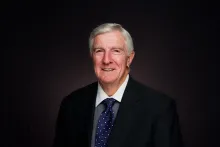
Before his retirement in 2021, Dr. Donald Ward pastored churches in Texas and Louisiana, and taught at Ambassador Bible College in Cincinnati, Ohio. He has also served as chairman of the Council of Elders of the United Church of God. He holds a BS degree; a BA in theology; a MS degree; a doctor’s degree in education from East Texas State University; and has completed 18 hours of graduate theology from SMU.
