

Don Ward
This transcript was generated by AI and may contain errors. It is provided to assist those who may not be able to listen to the message.
There are so many great themes in the Bible, and one of the things that the world tends to neglect in their rush to so-called saved souls—of course, you don't have a soul, you are a soul—you are a living being with life potentially eternal.
But that gap between our physio-chemical existence and eternal life can only be bridged through the Spirit of God, the great plan of salvation, the plan of eternal redemption.
God has ordained that great plan, and we are privileged to be partakers in that plan and hopefully understand that plan. So much of the evangelism of the day is just out there, except Jesus today. And they know nothing really about the background of how we have come to the point that we have and how Jesus Christ came to be the Savior of all humankind.
So today we are going to focus on the firstborn and the unchangeable priesthood, the firstborn and the unchangeable priesthood, which ties in intimately with the Feast of Unleavened Bread.
The Passover and the Feast of Unleavened Bread introduces the significance and symbolism of the firstborn in God's great plan of salvation. The firstborn, the symbolism that is contained in especially the wave-sheaf offering, symbolizes much of what takes place in God's great plan of salvation.
God and thus ancient Israel attach this sacred importance to the rank of the firstborn. The birthright went to the firstborn. If you'll turn to Genesis 12, one of the most important covenants ever made was the one that God made with Abraham, in which He promised him that through His seed all the nations of the earth would be blessed. This is a great covenant, and of course we are the church of the firstborn, which we will read toward the conclusion of the sermon today. And here this great promise over the years in the church, we have perhaps emphasized too much the physical side as opposed to the spiritual side. It is the spiritual side of things that really matter.
In Genesis 12, verse 3, I will bless them that bless you and curse them that curses you, and in you shall all the families of the earth be blessed. How would all the families of the earth be blessed?
Well, the answer to that is given in Galatians. Some people want to talk about, well, through the nation of Israel only, or through the Jews only. And a lot of the charismatic evangelicals of the day talk about it in terms of physical terms.
If you look at Galatians, you'll see that this promise made to Abraham fulfilled in Jesus Christ, who is the firstborn among many brethren. And we'll be talking about a lot of that history and how it all comes together.
Hopefully you will be able to gain a deeper understanding of the Scriptures from Genesis to Revelation and know and know that you know God's great plan of salvation. In Galatians 3, this is verse 14, Galatians 3, 14. That the blessing of Abraham might come on the nations through Jesus Christ, that we might receive the promise of the Spirit through faith, notice the blessings of Abraham might come on the nations through Jesus Christ.
Brethren, I speak after the manner of men, though it be but a man's covenant, yet if it be confirmed, no man disannuls or adds thereto. Now to Abraham and his seed were the promises made. He said, not, and as to seeds, as of many, but as of one, and to your seed, which is Christ. It is through Jesus Christ that all the nations of the earth will be blessed. In the ultimate sense, it is through Jesus Christ that you are a son of Abraham and heirs according to the promise.
We have groups in the U.S. called the identity groups, in which they claim that the only people that can be recipients of salvation are those who are physical heirs of Abraham. That is not what the Bible teaches at all. We have had some even in this area, some that I can name the names and you would know, used to write for our publications and so on. You look at the last few verses here in Galatians chapter 3, it is so plain in verse 26, for you are all the children of God by faith in Christ Jesus. For as many of you as have been baptized into Christ, have put on Christ, there is neither Jew nor Greek, so it is not limited to ethnic origin or to national origin, whether you are Chinese, Burmese, or Germanic, or any other ethnic or national group you want to name.
There is neither Jew nor Greek, there is neither bond nor free, there is neither male nor female, for you are all one in Christ Jesus, and if you be Christ, then are you Abraham's seed, and heirs according to the promise. The promises were passed on to Isaac and to Jacob. It was what was called the patriarchal age, the patriarchs, when the Bible speaks of the fathers. It is speaking of Abraham, Isaac, and Jacob.
In Genesis chapter 26, you see the promise that was made to Abraham was passed on to Isaac. Genesis chapter 26. In Genesis 26 and verse 1, there was a famine in the land beside the first famine that was in the days of Abraham, and Isaac went into a bimillac king of the Philistines into Girar. The Lord appeared unto him and said, Go down into Egypt, dwell in the land which I shall tell you of. Of course, here's Isaac going down into Egypt during a famine way before Jacob, his son went down into Egypt and the nation of Israel really took root in Egypt and became a great nation.
And God delivered them during the days of Unleavened Bread. Sojourn in this land I will be with you and will bless you for unto you and to your seed I will give all these countries and I will perform the oath which I swore unto Abraham your father. And I will make your seed to multiply as the stars of heaven, will give unto your seed all these countries, and in your seed shall all the nations of the earth be blessed. And we just read from Galatians how that is fulfilled in Christ.
Now, you turn to Genesis chapter 28, verse 10. In Genesis 28 and verse 10, And Jacob went out from Beersheba and went toward Haran, And he lighted upon a certain place and tarried there all night, Because the sun was set and took off the stones of that place, And put them for his pillows, and lay down in that place to sleep. And he dreamed, and behold a ladder set upon the earth, And the top of the breach to heaven, And behold the angels of God ascending and descending on it. And behold, the Lord stood above and said, I am the Lord God of Abraham, your father, the God of Isaac, And the land whereupon you lie, to you will I give it unto your seed.
And your seed shall be as the dust of the earth, And your seed shall spread abroad to the west, to the east, to the north, to the south, And in you and in your seed shall all the families of the earth be blessed. And finally, in Genesis 35, see how these promises have passed from the patriarch Abraham to the patriarch Isaac, and then to Jacob. In Genesis 35 and verse 10, Genesis 35, 10, And God said unto him, Your name is Jacob, your name shall not be called any more Jacob. Jacob means supplanter, and you know the story of Jacob supplanting his brother Esau.
Esau was the firstborn. So there's a case there in which God did not choose the firstborn Esau, but He chose Jacob. And of course, Rebekah and Jacob cooked up this scheme to deceive Isaac, and the birthright was given to Jacob, even though he was not the firstborn, but he was given the birthright instead of Esau. And Esau, of course, he treated the fact that he was the firstborn and the legal heir to the birthright. He treated it as profane, and he gave it away. How many people have been called into God's church, given the wonderful opportunity to be members of the church of the firstborn, and they for some reason forfeit that right?
Brethren, as we go through this sermon today, I think we hope we'll be sobered by the Word of God. It's not my word. It is the Word of God with regard to the matters of life and death. If life and death doesn't matter, then why are we here? If life and death doesn't matter, why did God create humans in the first place?
Your name shall no longer be Jacob. Your name shall be called Israel. Israel means literally, prints with God or ruling with God. Your name shall be called Israel. C-E-L is one of the primary names of God. As you read through the Old Testament, one of the clues you can look to when you're reading there, when generally the name Jacob is used, it applies to Abraham and to Israel in the flesh.
When the name Israel is used, it oftentimes applies to the spiritual aspect of what God is doing with Israel. As we have already mentioned, those promises made to the patriarch that in your seed shall all nations of the earth be blessed. Now that is not to discount the physical blessings that were passed on through the birthright and the physical blessings that Israel has enjoyed as being sons of Abraham and all that goes with that.
But when it really gets down to it, what matters is whether or not we are going to be in the kingdom of God and the family of God. It doesn't matter whether you are a physical descendant of Abraham or not, as we have read from Galatians, what matters is whether or not you are in Christ and heirs according to the promise because you are in Christ.
In Genesis 46, we are for the most part familiar with the story of how Jacob and his family came to live in the land of Egypt. We've already noted that for a short while, his father Isaac was in Egypt for a while during the famine. You know the story well of Joseph, one of the sons of Jacob, one of the twelve sons who was sold into slavery by his brothers. He wives up in the court of Pharaoh and eventually second in the land because he was able to interpret Pharaoh's dream of the lean and fat cows. And he said there will be seven years of famine and seven years of plenty, seven years of plenty first, store up the grain because the famine is coming. Things got so bad for Jacob and his family that the boys go down into Egypt to buy grain and guess who they deal with. Of course, the identity is revealed in all of that. And Joseph implores his brothers and eventually his father to come live in Egypt in Genesis 46 and verse 1.
And Israel took his journey with all that he had. See, that's Jacob. Here he's called Israel. And came to Beersheba and offered sacrifices unto the God of his father Isaac. And God spoke unto Israel in the vision of the night and said, Jacob, and he said, Here am I. Of course, that is the correct response. When God calls you, that is the correct response to say, Here am I. What do you want me to do? You know, Isaiah was called and he said, Oh, I can't do it. I'm a man of unclean lips. And God said, I will clean up your lips. And so he did. And then he said, Here am I. Verse 3, and he said, I am God, Eloh, all caps G.O.D., the God, Elohim, of your father. Fear not to go down into Egypt, for I will make of you a great nation. I will go down with you into Egypt, and I will also surely bring you up again. And Joseph shall put his hand upon your eyes. That's when the birthright, we can read that a guess in a moment, was passed on to Ephraim and Manasseh. And Jacob rose up from Beersheba, and the sons of Israel carried Jacob, their father, and their little ones, and their wives in the wagons, which Pharaoh had sent to carry him. And they took their animals and so on, and Jacob and all his seed with him. His sons and his sons with him, his daughters and daughters, and all his seed brought him into Egypt. So there were about 70 people that went down into Egypt. Of course, Jacob was already there. He had taken a wife in Egypt and had two sons, Ephraim and Manasseh. In chapter 48, verse 16. Forward a few pages there. 48 verse 16. The angel of which redeemed me from all evil, blessed the lads, this is Jacob speaking. He's blind now at the end of his years. And let your name be named on them, and the name of my fathers, Abraham and Isaac, and let them grow into a multitude in the midst of the earth. And when Joseph saw that his father laid his right hand upon the head of Ephraim, it displeased him, and he held up his father's hand to remove it from Ephraim's head unto Manasseh's head. And Joseph said unto his father, No, not so, my father, for this is the firstborn. Put your right hand upon his head. And the father refused and said, I know it, my son, I know it. He shall become a people and shall be great, but truly the younger brother shall be greater than he and his siege shall become a multitude of nations. And he blessed them that day, saying, In you shall Israel bless, saying, God make you as Ephraim in Manasseh, and he said, Ephraim before Manasseh. So once again, the one that was born second was deemed to be the firstborn, and the birthright went to them, to him. You notice in verse 21, in Israel, notice the alternation of the names between Israel and Jacob. They have some significance with regard to that. In Israel said unto Joseph, Behold, I die, but God shall be with you and bring you again into the land of your fathers. And so, eventually, Israel is delivered from Egypt and brought back into the land of the fathers, the land promised to Abraham, Isaac, and Jacob.
The firstborn son had allotted to him a double portion of the paternal inheritance, in other words, inheritance from the parents. If you would turn to Deuteronomy now, chapter 21. This background about the firstborn, I think you'll find it very interesting and enlightening in the total sense.
We've already said many of the things. We are members of the church of the firstborn. In Deuteronomy 21, in verse 15, If a man have two wives, one beloved and another hated, this has to do with the firstborn. If you have two wives and you don't care about one as much as you do the other, of course Jacob had a situation with Leah and Rachel, both the beloved and the hated, and if the firstborn son be hers that was hated, then it shall be when he makes his sons to inherit that which he has, that he may not make the son of the beloved firstborn before the son of the hated. So as we shall see, Reuben was the firstborn, his mother was Leah, and he received the birthright initially. He was the firstborn.
So let me read this again. That he may not make the son of the beloved firstborn before the son of the hated, which is indeed the firstborn, but he shall acknowledge the son of the hated for the firstborn, even though he didn't like that wife as much. And you notice this, by giving him a double portion of all that he has, for he is the beginning of his strength. The right of the firstborn is his, whether it's the child of the favorite wife or not. And as we've already mentioned, of course, Esau treated his right and privilege as firstborn as profane. And to anyone that is acquainted with the truth of God, that has been called to at least understand the plan of God, to know something about it.
We have so many people who dabble in religion, who dabble in the Church of God. Rather than, I don't know if we really realize the seriousness of what we're involved in. Now, if life and death don't matter, then it doesn't matter. Just eat, drink, be merry, live your life, and that's it.
But I choose not to view life that way. Proverbs 14.1 says something like this, The fool has said in his heart, There is no God. Now, if there be a God, then what? What are you going to do? We look at Genesis 29, verse 32. I've already said this, but we'll read it from the Bible. Genesis 29, verse 32. The reason Jacob winds up with Laban, his uncle, Rebecca's brother, was because he saw after Jacob had deceived him and received the birthright, he saw a sought to kill him. And he saw hatred toward Jacob continued. But he saw it also married into the family of Ishmael, the father of the Arabs. Of the people on the face of the earth that God has, his anger kindled toward, and it has to do with the Edomites. And he saw to a large degree was the father of the Edomites. That's sort of off the track. But in Genesis 29, verse 32, And Leah conceived and bare a son, and she called his name Reuben. For she said, Surely the Lord has looked upon my affliction. Now therefore my husband will love me. So to have a child meant so much. And if you were barren, that was just like having a curse upon you at that time. In your memory, even Sarah, she was barren until God made the promises that he made to her. And then Jacob, he wanted Rachel, worked seven years, but he got Leah. And then he had to work seven more years before Rachel, and Rachel was able to give him two sons. So Reuben was the firstborn of Jacob, and so the priesthood of the tribes belonged to him. This is a very important thing. Remember, I talked about the firstborn and the unchangeable priesthood.
There has been a progression of the priesthood. The firstborn served as the priest of the family. The firstborn served as a priest of the family. So Reuben, being the firstborn, received the birthright, and also was to be the priest of the family.
But because of Reuben's grievous sin, the birthright was taken away from him. So you look at Genesis 35.22, and we'll just read this quickly, what Reuben did, why he lost his right as firstborn and the birthright.
Genesis 35 and verse 22.
And it came to pass when Israel dwelt in the land that Reuben went in and lay with Bilhah his father's concubine, so Jacob's concubine, and Israel heard it. Now the sons of Jacob were 12, and it names Reuben as firstborn in that next verse, which we've already noted.
And so because of this grievous sin, then the birthright was removed from Reuben. You look at 1 Chronicles chapter 5 and verse 1, 1 Chronicles chapter 5 and verse 1, and we'll see this stated here about the birthright, the firstborn, 1 Chronicles 5 and verse 1.
Now the sons of Reuben, the firstborn of Israel, where he was the firstborn, but for as much as he defiled his father's bed, we read from Genesis 35, 22, his birthright was given unto the sons of Joseph, that's Ephraim and Manasseh, the son of Israel, and the genealogy is not to be reckoned after the birthright. For Judah prevailed above the brethren, and of him came the chief ruler, but the birthright was Joseph's. So Jesus Christ, the chief ruler, came from Judah. It is evident our Lord sprang out of Judah. That's what it says in Hebrews chapter 7.
The sons, I say, of Reuben, the firstborn, and so on, are named there. So God took the responsibility of being the firstborn from Reuben because of his sin, and he gave it to Levi. Okay, this is a very important transition here. Historically, up to this time, the firstborn was the one that really served as the priest for the family. He was the one that they would take matters to with regard to decision and a number of things.
But here there is a transfer, but let's notice first, Exodus chapter 4. In one sense, we're going to lead up to this change in the priesthood with this. In Exodus chapter 4 and verse 21, the firstborn and the unchangeable priesthood, we will come to the unchangeable priesthood at the end. In Exodus chapter 4, there are two or three chapters of Exodus taken up with Moses being born, being hidden, adopted by the daughter of Pharaoh, growing up in Pharaoh's house, Moses killing the Egyptian, fleeing to the wilderness, 40 years there. God speaks to him out of the burning bush, go lead my people out of Israel, out of Egypt. And in Genesis chapter 4, note what he says about Israel. The Lord said unto Moses, Exodus 4.21, the Lord said unto Moses, When you go to return into Egypt, see that you do all those wonders before Pharaoh, which I will put in your hand, but I will harden his heart, that he shall not let the people go. And you shall say unto Pharaoh, Thus says the Lord, Israel is my son, even my firstborn. And I say unto you, Let my son go, that he may serve me. And if you refuse to let him go, behold, I will slay your son, even your firstborn. And so it did come to pass in Exodus chapter 12, Exodus chapter 12 and verse 29. Hopefully, brethren, you're beginning to see as we go through these scriptures, there is a thread, there is a theme, there is a story here. You don't just jump in and say, all you've got to do is this or that or the other. You need to come to really understand the totality as much as we can, even though we see through a glass dimly darkly. Now at the present time, the plan and purpose of God, the intricacies that are involved in it, and how this Bible can come alive, and you can learn so much more about it. But you have to get in there and dig. In Exodus 12, 29, and it came to pass at midnight. See, God had told Moses, tell Pharaoh, let my people go if you don't, because my people, that's my firstborn, and if you don't let them go, I'm going to kill your firstborn. He didn't let them go. So, 12, 29, and it came to pass that at midnight, the Lord smote all the firstborn in the land of Egypt, from the firstborn of Pharaoh that sat on his throne, unto the firstborn of the captive that was in the dungeon, and all the firstborn of cattle. And Pharaoh rose up at night, he and his servants, and all the Egyptians, and there was a great cry in Egypt, where there was not a house wherein there was not one dead, and the firstborn of Egypt, man and beast, died. Now, in Exodus 13, God claims, once again, all the firstborn of Israel for himself. Exodus 13, verse 2. In Exodus 13, verse 2, sanctify unto me all the firstborn, whatsoever opens the womb among the children of Israel, both men and of beasts is mine. So God says, the firstborn belongs to me. And in verse 13, And every firstling of an ass you shall redeem with a lamb, and if you will not redeem it, then you shall break his neck in all the firstborn of man among any children shall you redeem.
And it shall be when your son asks you in time to come, what is this, that you say unto him, By strength of hand the eternal brought us out of Egypt from the house of bondage. And this is transpiring during the days of Passover and Unleavened Bread. Now in Numbers chapter 3, we said that the firstborn duty was taken from Reuben because of his sin, and now there is a transfer of the duty of being the priest for the family.
God establishes a priesthood, and this priesthood is also called his firstborn.
So look at Numbers chapter 3, I believe I said, Numbers chapter 3 and verse 5.
Numbers chapter 3 verse 5.
And the eternal spoken to Moses, saying, Bring the tribe of Levi near, and present them before Aaron the priest, that they may minister unto him.
And they shall keep his charge, and the charge of the whole congregation before the tabernacle of the congregation, to do the service of the tabernacle.
And they shall keep all the instruments of the tabernacle, and of the congregation, the charge of the children of Israel, to do the service of the tabernacle. And you shall give the Levites unto Aaron and to his sons. They are wholly given unto him out of the children of Israel.
See, the tribe of Levi was the smallest tribe, and in that sense you might say the most insignificant tribe, but they were set apart by God to administer the religious service.
And you shall give the Levites unto Aaron and to his sons. They are wholly given unto him out of the children of Israel. And you shall appoint Aaron and his sons, and they shall wait on their priest's office. And the stranger that comes nigh shall be put to death. No man takes this office to himself, only those who are set apart and called of God, as in Hebrews 5. And the Lord spoken to Moses, saying, Behold, I have taken the Levites from among the children of Israel, instead of all the firstborn that opens the matrix among the children of Israel. Therefore the Levites shall be mine.
So now there is a formal priesthood and order of worship being established. No longer the firstborn of a family, but a whole tribe of Israel. Because all the firstborn of mine, it doesn't mean that Israel is still not considered part of the firstborn, but this is the firstborn of the firstborn, as it were. Because all the firstborn of mine, for on the day that I smote all the firstborn in the land of Egypt, I hallowed unto me all the firstborn in Israel, both man and beast, mine shall there be, I am the eternal.
So the Levites, the tribe of Levi, was charged with this duty of being the priest. So at this juncture, the responsibility of redemption that had been given to the firstborn was now given to the tribe of Levi. Now, more about this in Numbers 8. Hopefully you're already beginning to see some of the parallels that are extant in the New Testament as well. And what it has to do with you being a member of the church of the firstborn. In Numbers 8, verse 8, Then let them take a young bullock with the meat offering, even fine flour, Minga with oil, And another young bullock shall you take for a sin offering.
And you shall bring the Levites before the tabernacle of the congregation, And you shall gather the whole assembly of the children of Israel together, And you shall bring the Levites before the eternal, And the children of Israel shall put their hands upon the Levites. This is like the whole congregation now ordains. They recognize the Levites as the ones who will handle the religious service. They're the ones who will administer the offerings and those rights that have to do RITES with religion service. You shall bring the Levites before the Lord, And the children of Israel shall put their hands upon the Levites, And Aaron shall offer the Levites before the eternal, For an offering of the children of Israel, That they may execute the service of the Lord.
And the Levites shall lay their hands upon the heads of the bullocks, And you shall offer the one for a sin offering, The other for a burnt offering under the eternal, To make an atonement for the Levites. As they begin this service, they are cleaned up, And they are viewed as ceremonially clean. And you shall set the Levites before Aaron, before the sons, And offer them for an offering under the eternal. Thus shall you separate the Levites from among the children of Israel, And the Levites shall be mine. And after that shall the Levites go into the do the service Of the tabernacle of the congregation, And you shall cleanse them and offer them for an offering.
For they are wholly given unto me from among the children of Israel, Instead of such as open every womb, Even instead of the firstborn of all the children of Israel, How have I taken them unto me? For all the firstborn of the children of Israel, And mine, both man and beast, On the day that I smote every firstborn in the land of Egypt, Sanctified them for myself. And I have taken the Levites for all the firstborn of the children of Israel, And I have given the Levites as a gift to Aaron, To his sons from among the children of Israel, And to the service of the children of Israel, And the tabernacle of the congregation, To make an atonement for the children of Israel, That there be no plague among the children of Israel, When the children of Israel come nigh unto the sanctuary.
And Moses and Aaron, and all the congregation of the children of Israel, Did to the Levites, according to all that the Lord commanded Moses, Concerning the Levites, so did the children of Israel unto them. What a story! So we have this transfer, then, from the firstborn in a family as the priest, And the one who would be responsible for religion service in that family. It's now a formal priesthood, a whole tribe. Now, all priests are Levites, but not all Levites are priests, But all Levites ministered in the service of the tabernacle.
And they helped the priests do whatever service was to be performed. The firstborn inherited the judicial authority of his father. Now this judicial authority is really the responsibility of the Levites. So God appointed the smallest tribe to the most important duty of all the tribes. They were responsible for teaching the people the law of God and ministering judgment, And helping the people remain in a justified position as they brought their offerings to the tabernacle. The Feast of Unleavened Bread has great significance regarding the plan of redemption for humanity.
To a large degree, it centers on the privileges of the firstborn, A change in the priesthood and the means of redemption. The wave-sheaf that was offered during the days of Unleavened Bread Tiffified Jesus Christ being accepted of God as the first of the firstfruits, The firstborn from the dead, The first one to have lived in the flesh and to be resurrected to life eternal as a glorious, radiant, life-giving spirit being.
So let's notice God's instructions regarding the wave-sheaf offering in Leviticus 23. In Leviticus 23 and verse 9. Leviticus 23 and verse 9. Leviticus 23 and verse 9. The Lord spoke unto Moses, saying, Speaking to the children of Israel, and said to them, When you come into the land which I give unto you, and shall reap the harvest thereof, Then you shall bring a sheaf of the firstfruits. Now, this word sheaf really is an omer of your harvest unto the priest.
And we'll talk about what omer really means. And he shall wave the omer before the eternal to be accepted for you on the morrow after the Sabbath, The priest shall wave it. And you shall offer that day when you wave the sheaf, And he lamb without blemish of the first year for a burnt offering unto the eternal. And the meat offering thereof shall be two tenths deal of fine flour mingled with the oil, And offering made by fire unto the eternal for a sweet savor. And the drink offering thereof shall be of wine, and forth part, and hen. And you shall eat neither bread, nor parched corn, nor green ears, Until the south same day that you brought an offering unto your God, Shall be a statute for you throughout your generations.
And then you shall count from the morrow after the Sabbath toward Pentecost. So let's notice how the offering of the wave sheaf reportedly was offered during the time of Christ. Of course, this was the first harvest. It was the barley harvest. The barley harvest, the barley grain, was the corsets of grains. It was generally the harvest of the poor people, more than those who had the better fields and the better orchards and all of that.
The barley grain was picked out as the best in a certain plot of the land. And on the end of the weekly Sabbath, during the days of Unleavened Bread, we just had a double Sabbath, the heads of grain were separated from the stalks and removed after they cut it.
According to the tradition, the Sanhedrin, the council, members of that would go out and cut the barley. Then they would thresh the grain from it, then they would grind the grain, sift it several times, make it into flour, and then make bread. So the barley grain was cut by members of the Sanhedrin. The heads of the grain were separated from the stalks. They removed the grain and they parsed it with fire and then ground it into flour in the courtyard of the temple that evening. The flour was then sifted until it was pure of a very fine texture. According to the Mishnah, they added oil and frankincense.
From that, an omer was taken from this flour that they had produced through cutting the stalk, threshing the grain, parcing the grain, grinding the grain, sifting it. Now they come to this flour and they take an omer from that, which is about a quart. I mean two quarts. It's about two quarts.
The omer was then offered early the next morning at about 9 a.m. about the time of the morning sacrifice. And it was waved before the Lord. Now I used to think when the sheaf was offered, they literally cut, which they literally did, they cut the sheaf of grain, the plant itself, and waved the plant. But that's not what happened. You can look at Strong's and look at the word sheath here and you'll see this. So then they would wave this omer before the eternal.
The Hebrew word that is translated sheath was a measure, about two quarts, and actually means a measure of things dry. The Jewish Encyclopedia states the following under the article title omer declares that a handful of it was burned on the altar and the rest was eaten by the priest in accord with the traditional wave offerings previously. The ceremony was obviously of great importance in ancient Israel and was a commandment. Now God doesn't require that offering today. The Bible reveals that its symbolism was fulfilled by the resurrected Christ, as we shall see from the Scripture in just a moment, the resurrected Christ, the first-born among many brethren. Christ is the first-born, and hence He is the first of the firstfruits. And He was waved in the symbolic sense before the Father upon His resurrection on the same day that the wave sheath was waved.
We notice in John chapter 20, in John chapter 20, Jesus Christ was raised from the dead at the end of the Sabbath. He was crucified on a Wednesday evening, afternoon, placed in the tomb at about sunset, three days and three nights later, around sunset. He was resurrected from the grave. Now, early on a Sunday morning, the women came to anoint a body, and when they came to the gravesite, there was no one in the tomb. You've heard that story rehearsed many times. Look at verse 17, John 20, and verse 17. Maybe we should back up and get a little bit of the context. In verse 11, you see, Mary stood without the sepulcher weeping, and as she wept, she stooped down and looked into the sepulcher. She saw two angels in white sitting, the one at the head and the other at the feet, where the body of Jesus had lain. And they say unto her, Woman, why weep you? She said unto them, Because they have taken away my Lord, and I don't know where they took him. And when she had thus said, she turned herself back and saw Jesus standing, and knew not that it was Jesus. Jesus said unto her, Woman, why are you weeping? Who do you seek? Whom do you seek? She supposing him to be the gardener, said unto him, Sir, if you have borne him from here, tell me where you have laid him, and I will take him away. And Jesus said unto her, Mary, She turned herself and said unto him, Rabboni, which is to say, Master. And Jesus said unto her, Touch me not, for I am not yet ascended to my Father. But go to my brethren and say unto them, I ascend unto my Father, and your Father, and to my God, and your God. Now, in the great discussions and debates that we had in the mid-90s with regard to the nature of God, some wanted to argue, Oh, well, are you telling me that Jesus made some kind of trip to the throne of God and came back the same day? Well, according to the Scripture, he did.
I am not yet ascended. Don't touch me. Now, we'll read later in just a moment, we'll read that they touched his feet. Now, something happened in the interim. Mary Magdalene came and told the disciples that she had seen the Lord, and that he had spoken these things unto her. Now, we go to Hebrews 9, verse 22. In Hebrews 9, verse 22, Hebrews compares and contrasts elements of the Old Covenant with elements of the New Covenant, and in the superiority of the New Covenant. In Hebrews 9, verse 22, And almost all things are by the law of purge with blood, and without shedding of blood is no remission.
It was therefore necessary that the pattern of the things in the heavens should be purified with these. In other words, the tabernacle in the wilderness, the tabernacle was made after the pattern of the heavenlies, and when that was offered, and when that was dedicated, there was the shedding of blood, and when they entered into the terms of the Old Covenant, they killed animals, separated their parts, and walked between them.
But the heavenly things with better sacrifices than these, what was the sacrifice that was necessary to cleanse the heavenly things? And some people say, well, why did the heavenly things need to be cleansed? And the best answer, the only answer I can come up with is that all the sins of the world were laid upon Jesus Christ, and those sins of people in the world had come before the face of God, and it was Him who would forgive based on the sacrifice of Jesus Christ, and Jesus Christ fulfilled the mission for whence He came into the world, the Lamb of God, to pay for the sins of the world.
And you notice verse 24, For Christ has not entered into the holy places made with hands, which are the figures of the true, but into heaven itself, now to appear in the presence of God for us. So His sacrifice, His wave-sheaf symbolically, was accepted by God, and He became the Savior of the world. Nor yet did He offer Himself often, as a high priest entered into the holy place every year, with blood of others, the day of atonement.
So now we go back to Matthew, and we take it up again with the resurrected Christ in Matthew 28 and verse 9. We had read from John where Jesus told Mary Magdalene, Don't touch me, for I am not yet ascended to my Father. Jesus Christ has appeared in the heavenlies.
The heavenlies have been cleansed with the greatest sacrifice of all, the blood of Christ. Matthew 28 and 9, and as they went to tell the disciples, Behold, Jesus met them, saying, All hail, and they came and held Him by the feet and worshipped Him. And so, by deduction, it seems to be clear that He had ascended, and now they held Him by the feet.
Jesus Christ was the first resurrected Son of God, the first resurrected being who lived in the flesh and was born by the resurrection in the family of God, the first born among many brethren in God's master plan. And you can trace the history of the firstborn all the way through as we have traced some. Now in Romans 8, we shall see these verses about Him being the first born.
That is, Jesus Christ, the first born. Romans 8, verse 29. Romans 8, 29. For whom He did foreknow, He also did predestinate to be conformed to the image of His Son, that He might be the first born among many brethren. Now we look at Hebrews chapter 1. Hebrews chapter 1. In Hebrews chapter 1 and verse 4, Jesus Christ has such a greater calling and office than any of the angels, and anybody who would even dare claim that Jesus Christ was a created being and one of the chiefest of the angels.
In Hebrews 1.4, being made so much better than the angels, as He has by Himself obtained a more excellent name than they, for under which of the angels said He at any time said to you, that you are my Son. This day have I begotten you, and again I will be to Him a Father, and He shall be to me a Son. And again, when He brings the first born into the world, first of all the first begotten in the world, He says, and let the angels of God worship Him.
Angels of God worship Him. Angels do not receive worship. But the Son of God can receive worship. Now we look at Revelation 1.5. It's one of the greatest scriptures in the whole Bible. Revelation 1.5, it shows that resurrection is equated with birth. Resurrection is equated with birth. There are so many things. It seems it's well more that maybe later. In Revelation 1.5, And from Jesus Christ, who is the faithful witness and the first born, Protodecos, the first born of the dead, and the prince of the kings of the earth, and to Him that loved us and washed us from our sins, in His own blood, and have made us kings and priests unto God and His Father, to whom be glory and dominion forever and ever.
See, we are part of the church of the first born. Jesus Christ, in the spiritual sense, is a spiritual wave sheep. He's now seated at the right hand of the Father, making intercessions for us. So as we observe Unleavened Bread, in addition to continually parroting that the Feast of Unleavened Bread pictures putting sin out of our lives, we come to understand the symbolism of the wave sheep and what it really represents.
The priesthood of Levi has now been transferred back to the eternal priesthood, the Unchangeable Priesthood of Melchizedek. So we went to the first born of the family, Reuben. Of course, there were other first borns and other families. And then we went to the organized priesthood of Levi, half of the flesh. And now it's back to the Unchangeable Priesthood of Melchizedek.
And we look at Hebrews, Chapter 7. Hebrews, Chapter 7. For this Melchizedek, King of Salem, priest of the Most High God, met Abraham, returning from the slaughter of the kings and blessed them, to whom also Abraham gave a tenth part of all, first being by interpretation King of Righteousness. We know human beings, and a lot of the commentators, and historicals, and textual critics try to make this into just a human being who lived in the area. No, this is the Unchangeable Priesthood representative, the priest after the Order of Melchizedek, by interpretation King of Righteousness, and after that also King of Salem, which is King of Peace.
Have you ever seen a human being who is the King of Peace? Without father, without mother, without descent. He's an uncreated being, but humbled himself and took on the form of a man, having neither beginning of days nor end of life, made like unto the Son of God, abides a priest continually. Now consider how great this one was, unto whom even Abraham, the patriarch, gave a tenth part of his spoils.
And verily they are of the sons of Levi, who received the office of the priesthood, have a commandment to take tithes of the people according to the law, that is, of their brethren, though they come out of the loins of Abraham. But he whose descent is not counted from them, received tithes of Abraham and blessed him that had made the promises. Continuing now in verse 11, If therefore perfection were by the Levitical priesthood, for under it were the people received the law, that what further need was there that another priest should arise after the order of Melchizedek, and not be called after the order of Aaron.
For the priesthood being changed, there is made of necessity a change also of the law. Now, it wasn't just tithing, it was a law of sacrifice as well, because now the law of sacrifice, Jesus Christ, is our Passover. And he is the one who fulfills that. Verse 19, For the law made nothing perfect, but the bringing in of a better hope, by the which we draw nigh unto God, inasmuch as not without an oath he was made a priest.
For those priests were made without an oath, but this was an oath by him that said unto him, The Lord swear, and will not repent, that you are a priest. As it says in chapter 5, no man takes this honor to himself. God is the one who made the Son of God an eternal priest after the order of Melchizedek. God is the one who calls you into the Church of God, the Church of the Firstborn. We are, as we shall see, typical sons of Levi.
We are a royal priesthood. The Lord swear, and will not repent, that you are a priest forever, after the order of Melchizedek, by so much which Jesus made a surety of a better covenant.
And they truly were made priests because they were not suffered to continue by reason of death. They died. This one is without father, mother, descent, beginning, or end of days, to abide to priests continually.
But this one, because he continues ever, hath an unchangeable priesthood. Firstborn, unchangeable priesthood. Wherefore, he is able also to save them to the uttermost that come unto God by him, seeing he ever lives, to make intercession for them. For such an high priest became us who is wholly harmless, undefiled, separate from sinners, made higher than the heavens, who needs not daily as those high priests to offer up sacrifice, first for his own sins, and then for the peoples. For this he did once, when he offered up himself. He was waved before the Father, his sacrifice accepted for all time.
For the law makes men high priests which have infirmity. But the word of the oath which was, since the law, makes the Son, who is consecrated forevermore. We are typical sons of Levi. In that sense, we have replaced the tribe of Levi, and we are now royal priests under Jesus Christ in Malachi. Of course, I don't want to get into some who want to make the argument that everybody is a priest now and everybody is a minister.
And once again, I say, all priests were Levites, but all Levites were not priests. All who have been called into God's marvelous light are of the priesthood, and that doesn't make them ministers in the sense of ordained ministers in the Church of God.
But we notice here in Malachi chapter 3, I am the Eternal. This is verse 6, Malachi 3.6. I am the Eternal, I change not. Therefore you, sons of Jacob, are not consumed. Even from the days of your fathers, you have gone away from me. I started reading a verse too soon.
I want to go back now to the beginning of the chapter. The beginning of verse 1. Behold, I will send my messenger, Angelos, in this case, it's Hebrew, it's Malak. Malachi was one of the messengers, or five messengers in Malachi. Behold, I will send my messenger, this is John the Baptist. And he shall prepare the way before me, says the Eternal, and you can read that in Mark 1.
And the Eternal, whom you seek, shall suddenly come to his temple, even the messenger of the covenant, whom you delight in. Behold, he shall come, says the Lord of Hosts. But who may abide the day of his coming, and who shall stand when he appears? For he is like a refiner's fire, and like fuller soap. And he shall set his refiner and purifier of silver.
And he shall purify the sons of Levi, and purge them as gold and silver, that they may offer unto the Eternal an offering of righteousness.
Then shall the offering of Judah and Jerusalem be pleasant unto the Eternal, as in the days of old, and in the former years.
Now, you look at 1 Peter 1.
In 1 Peter 1, those who have been called into God's marvelous light, as typical sons of Levi, that fulfill this office now in the spiritual sense, as Jesus Christ fulfills the office of the Eternal priesthood, an unchangeable priesthood.
In 1 Peter 1, what is happening to us now?
In 1 Peter 1, verse 6, Wherefore you greatly rejoice, though now for a season, if you need be, you are in heaviness through manifold trials, that the trying of your faith, being much more precious than of gold, that perishes, though it be tried with fire, might be found unto praise, and honor, and glory, at the appearing of Jesus Christ. Now you look at chapter 2, verse 9.
Chapter 2, verse 9, But you are a chosen generation, a royal priesthood, a holy nation, a purchased people, that you should show forth the praises of him who has called you out of darkness into his marvelous light.
Just consider the thread of the Bible, this theme, First Born, the Unchangeable Priesthood, that we have been called into this Unchangeable Priesthood.
Look at Hebrews now, back a few pages. Chapter 12, I've said this four or five times already, but now we'll read it. Consider where we are. Consider who you are.
Revelation 5.10 says that he has made us kings and priests, and we shall reign on the earth.
We've already read Revelation 1.6 where it says that he has made us kings and priests.
Now we read Hebrews 12.22. In Hebrews 12.22, But you are common to Mount Zion, under the city of the living God, Mount Zion in the spiritual sense, the heavenly Jerusalem, to innumerable company of angels, to the general assembly and church of the first born, which are written in heaven, and to God, the judge of all, and to the spirits of just men made perfect.
Now turn to Galatians 6.16.
Remember, we read several times that Israel is my first born, and that the tribe of Levi was taken in this place. We are typical sons of Levi, and now we see in Galatians 6 and verse 16, And as many as walk according to this rule, peace beyond them, and mercy upon the Israel of God, the church of the first born, the general assembly, and church of the first born.
So, brethren, I hope we now have a much clearer picture of who we are and what we shall be.
Don't let anyone steal your spiritual identity from you.
Identity theft, they talk about in the physical terms today, and get life lock.
I say unto you, yes, get life lock, but make it the word of God. You see, the world's identity has been stolen.
Satan the devil stole the identity. People don't know who they are today. We have been able to see somewhat of this thread from the creation of humankind, Genesis to Revelation, what our real identity should be and can be, and hopefully will be. So, don't let anyone steal your spiritual identity. If you are a member of the Church of the Firstborn, you are a royal priesthood. You're going to rule and reign as kings and priests because our wave-sheaf Jesus Christ the righteous was accepted by the Father.
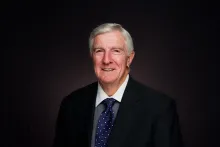
Before his retirement in 2021, Dr. Donald Ward pastored churches in Texas and Louisiana, and taught at Ambassador Bible College in Cincinnati, Ohio. He has also served as chairman of the Council of Elders of the United Church of God. He holds a BS degree; a BA in theology; a MS degree; a doctor’s degree in education from East Texas State University; and has completed 18 hours of graduate theology from SMU.
