
Paul Moody
This transcript was generated by AI and may contain errors. It is provided to assist those who may not be able to listen to the message.
I stepped out this morning, a little bit after sunrise, and out in the shadows there was frost on the grass. I hadn't quite melted off yet. I figured the tomatoes in the garden were done. I got into the car and took off, and the thermometer said 37 degrees. So it's a sure sign of the season when the weather takes a turn. Kind of in the region of the country where we live, you start to feel the feast in the air. I would say I stepped out this morning and it smelled like the Holy Days. There's just a certain feel and a certain smell in the air when fall is in the air. For me, just as I mentioned this spring, when spring is in the air, it just triggers for me instantaneously the thought of the Holy Days. They're right around the corner, and they're rapidly approaching. The fall Holy Days, which are right before us, are an important part of our spiritual focus as we focus on what it is that God is doing. God's plan of salvation, His plan for all of mankind, are tied up into these Holy Days, and as we walk through them and observe them, we gain a deeper understanding as to exactly what God is doing and the place that He's given us to participate in that process as well. Less than a week from today, we'll be observing the Feast of Trumpets, a Holy Day which symbolizes the putting down of the governments of man and the establishment of the Kingdom of God. The kingdoms of this world will become the kingdoms of our Lord and of His Christ. And the fact is, that will be a kingdom that will be established and endure forever. The seventh trumpet on the Day of Trumpets, as we understand, points to, in part, the resurrection of the saints at the return of Jesus Christ in order to reign alongside Him as King of Kings. As He has that title, we will reign with Him on the earth. Following the Feast of Trumpets, then, is the Day of Atonement. And the Day of Atonement symbolizes reconciliation. It will take place between mankind and God, living in that day and age. We've been extended by God's calling through the atoning sacrifice of Jesus Christ, that reconciliation today.
Those yet to come will come to understand that relationship that God desires to have directly with them as well. Of course, we also know it points to the binding of Satan the Devil, the enemy of God and His people, the instigator of sin. He'll be bound for a thousand years. Now, as we roll past the Day of Atonement, we come into the Feast of Tabernacles, and I'd say that's a big part of our focus, probably now in the lead-up to it, because we pack the car up or the suitcases and get on a plane. And it's kind of a big event that moves us out of our regular daily routine as we go to observe that before God. Feast of Tabernacles, we will observe it for seven days. And it's a very joyous time, a time that we very much look forward to coming together as God's people. And it portrays the thousand-year millennial reign of Jesus Christ and the saints on the earth. It's a time when we'll come to see and understand the restoration of all things as God intended from the beginning. When the kingdom of God reigns and the laws and the standards that govern that kingdom will be in place on this earth, and man will submit themselves to it, and abundance and peace and blessing will be the result of those things.
Feast of Tabernacles also points us to a time where we can serve, essentially roll up our sleeves and get in there directly, being able to serve, assist God, assist Jesus Christ, and bringing many sons to glory. And finally, there's the eighth day. And the eighth day is essentially the beginning of the rest of eternity. Sometimes I think we process the Holy Days as we keep the eighth day. We get wrapped up and we go home, and that's the end of God's plan. But hopefully we understand God's plan is open-ended on into forever and ever. Isaiah prophesied of Jesus Christ, saying, of the increase of His government and peace, there would be no end.
Of course, we understand the government of Christ is the kingdom of God as Father. They are one and the same. But the point is, well, God as purpose and plan will continue on all through eternity. That kingdom, ever-growing and ever-expanding, ever-producing. So we look forward to that. We understand through these Holy Days that no one will be forgotten. All of mankind will have the opportunity to stand before their Creator, to know their God, understand what their place and their purpose is, and each in their own time and in their order.
This is a very brief overview of the fall Holy Days that yet lie before us. And again, they provide a very exciting framework by which we can catch a glimpse into what God has in store. What it is that He's doing and what He's called us to. And as those called of God in this day and age, it's our desire, again, as they said, not only to be there, but to be active participants in the process.
That being said, brethren, I want to focus today specifically on the upcoming Feast of Tabernacles and the eighth day. I don't want to focus necessarily on the meaning or the purpose of those days, because we will walk through those as we observe the days. But, you know, I would like to discuss how we keep those days. What is the expectation that God has for us?
And that, again, is somewhat wrapped up as well in the purpose for those days. But how do we keep them in a way and according to a manner that God desires? We're going to look at those things today. First, I want to begin in Leviticus 23. Leviticus 23, here we have a listing of God's holy days. It begins with the Sabbath and walks on through. But let's go to Leviticus 23 and begin in verse 1. Leviticus 23.1 It says, When the Lord spoke to Moses, saying, Speak to the children of Israel and say to them, The feast of the Lord, which you shall proclaim to be holy convocations, These are my feasts.
And so what we'll notice right off the bat is the proclamation by God, not just, there's these days to be kept, but God says, These are my feasts. They're His feasts. And as such, God is the central focus to these days, what He is doing, the plan He has set into motion, the fact that, as we go back to the spring holy days, He sent His Son Jesus Christ to be the sacrifice for our sins. These are all tied up in what it is that God is doing and revealing to us through His feasts.
But again, they're His, which means it's about what God is doing. He is the center and the reason for observing these days in the first place. He is the one who extends to this command. And so our relationship with God, brethren, is very much at the center of these days and needs to be at the center of our focus as we observe them. Now, the chapter goes on to describe the command for keeping the Sabbath, the Passover, other feast days as well. I want to jump forward to verse 33 and come into the Feast of Tabernacles. Again, Leviticus 23, verse 33. It says, Then the Lord spoke to Moses, saying, He says, He says, You shall do no customary work on it.
For seven days you shall offer an offering made by fire to the Lord. On the eighth day you shall have a holy convocation, and you shall offer an offering made by fire to the Lord. As a sacred assembly, you shall do no customary work.
And so the first day of the Feast of Tabernacles is a commanded assembly, holy convocation. The eighth day as well is a commanded assembly, and a holy convocation. But as we assemble before God, we come together the other six days as well to be taught and to learn during the Feast of Tabernacles.
Going down to verse 39, it says, On the first day there shall be a Sabbath rest, and on the eighth day a Sabbath rest. You shall take for yourselves on the first day the fruit of beautiful trees, branches of palm trees, the boughs of leafy trees, and willows of the brook, and you shall rejoice before the Lord your God for seven days. It says, It says, Verse 42, All who are in the native Israelites shall dwell in booze. That your generations may know that I made the children of Israel dwell in booze, when I brought them out of the land of Egypt, I am the Lord your God. And so Moses declared to the children of Israel the feasts of the Lord.
So, brethren, we're going to go up to the Feast of Tabernacles, and go up actually is a term. It goes back to Jerusalem. It was sat up on elevation. No matter really what direction you came to Jerusalem, you ascended. You went up to Jerusalem for the feast. But you and I are going to go and assemble before God. The Feast of Tabernacles. We're going to dwell in little nicer booths than what they dwelt in. But again, it's temporary housing by which we will assemble before Him. And it's reflective of the fact in many ways that this world is temporary.
That this physical life is temporary. The fact that what God is doing is permanent. What these days portray is permanent. Abraham, Isaac, and Jacob were described as pilgrims, essentially, who wandered about living in tents. Jesus Christ said, birds of the air have nests, foxes have holes, but the Son of Man has nowhere to lay His head. And if you're going to follow Me and be My disciple, that will be your life as well. And so it's very much a pilgrimage life as you and I journey through this physical life. This is temporary. We learn many valuable lessons in this temporary existence. But again, what God is doing in the kingdom of God and our role in it is eternal.
Also, what we find described here is the instruction that we are to rejoice before God during the Feast. I want to come back in a little while and address the concept of rejoicing before God and what that means. But first, let's go to Deuteronomy chapter 14. Deuteronomy 14. Here this describes, again, the expectation of assembling where God puts His name, but also the provision by which we would do so. Deuteronomy chapter 14, beginning in verse 22, says, "...you shall truly tithe of all the increase of your grain that the field produces year by year." Understand that there's a 10% tithe, what we call the first tithe, the increase of the field.
And in our cases, as it's not agricultural, but our increase through our labors and what's produced by our job, we tithe on that. But also there's provision in addition to that by which we attend the Feast, what we would traditionally call the second tithe. Verse 23, it says, "...and you shall eat before the Lord your God and the place where He chooses to make His name abide. The tithe of your grain and your new wine and your oil are the first-born of your herds and your flocks, that you may learn to fear the Lord your God always." Remember that point as well, fearing God.
Verse 24, it says, "...but if the journey is too long for you so that you're not able to carry the tithe, or if the place where the Lord your God chooses to put His name is too far from you, when the Lord your God has blessed you, then you shall exchange it for money, take the money in your hand, and go up to the place which the Lord your God chooses." He says, "...and you shall spend the money on whatever your heart desires, for oxen or sheep, for wine or similar drink, for whatever your heart desires, you shall eat there before the Lord your God, and you shall rejoice you in your household.
You shall not forsake the Levite who is within your gates, for he has no part nor inheritance with you." And so, major focus, brethren, in assembling before God and observing His feasts as He commanded us, is so that we would learn to rejoice before Him and learn to fear Him always. That is the point. That is the focus. We keep these feast days, which are Gods, in order to strengthen our personal relationship with Him.
He says, "...you come out from what you're doing, here for seven days," specifically the Feast of Tabernacles, and then the eighth day at the end of that, but He says, "...you come out from what you're doing, you assemble before Me, you remember Me, you learn to fear Me, and you rejoice in My presence." These aren't simply vacation days that we're running off to enjoy, because now we have a pocket full of cash. It is nice that we can travel, and it's a blessing we can travel.
And, frankly, we should rejoice. We should enjoy fun things. We should enjoy good meals. We should enjoy various things that we maybe don't necessarily have the funds to do other times of the year. But the point isn't what we're going to do, or even where we're going to stay, apart from the fact that it is where God places His presence.
The point is learning to fear God, building that relationship with Him, and rejoicing before Him in a proper way. We go forward just a page of my Bible, Deuteronomy 16, carrying on in verse 13.
It says, And so it wasn't like God called them out of being right in the middle of the harvest and said, You assembled before me. Sometimes we struggle. We have difficulties getting away from our jobs. And those things have to be dealt with in school as well, the young people. But just think of what it would have been like for the nation of Israel had they truly obeyed God, had they put Him first. Many blessings were promised to them if they did so, much like the millennial blessings we see of the plowmen overtaking the reaper and various abundance in those ways. So if they put God first, you think about this, God who sends rain in due season, God who would control the weather, God who would bring the crop to fruition to be harvested so that the work can be done, and then they would have their tithes and their rests, and they could go up and rejoice before Him. It was perfect timing and a wonderful opportunity which God provided to them if they would obey. Again, verse 13 says, when you have gathered from your threshing floor and from your winepress. Carrying on verse 14, and you shall rejoice in your feast, you and your son and your daughter, your male servant, your female servant, Levite, the stranger, the fatherless and the widow who are within your gates. Seven days you shall keep a sacred feast to the Lord your God in the place which the Lord chooses, because the Lord your God will bless you in all your produce and all the work of your hands so that you surely rejoice. Verse 16, three times in a year, all your males shall appear before the Lord your God in the place which He chooses, at the feast of unleavened bread, at the feast of weeks, and at the feast of tabernacles, and they shall not appear before the Lord empty-handed. Every man shall give as he is able according to the blessing of the Lord your God which he has given you. So we have the three festival seasons of the year, and they were times in which God expected His people to assemble before Him. Those in that region went up to Jerusalem three times in a year, the pilgrimage feast, to assemble before God. The males were all to appear before Him in this way. And you and I seek to fulfill this as well as we assemble before God throughout the Holy Day seasons as they come before us as well. Let's go to Deuteronomy 12. Deuteronomy 12 continues with this thread, verse 4.
It says, You shall not worship the Lord your God with such things. The run-up to this is the God of the pagans around them in the way that they worship their gods and offered offerings and sacrifices to their God. And God says, I am your God, and you shall not worship me in that way. I'm declaring to you the manner in which I will be worshipped. Verse 5, He says, So where God placed His name, ultimately Jerusalem there among His people, is where the people assembled to worship before Him. Again, three times in a year at the pilgrimage feast, they assembled before God.
Verse 6, And there you shall eat before the Lord your God, and you shall rejoice in all to which you have put your hand, you and your households in which the Lord your God has blessed you. Let's go to verse 17.
It says, Now, we heard in the announcements, we have a number who aren't able to assemble for health reasons, and that is understandable, and God understands. And I would say, let us not forget those who are not able to assemble with us. But the command God gives is, if you are able to assemble, you assemble before me. I've called this meeting.
And so, brethren, yes, we do come before God. We do rejoice. We do have fun at the feast. But if fun is our focus, if food is our focus, if the attractions of the region is our focus, and the purpose of why we're doing those things, and I say we are missing the point, we come before God to rejoice before Him, to worship Him, to offer praise to the King, and we do so in a way that we learn to fear Him always. So whatever we do at the feast, we need to do it from the perspective of putting God first and not allowing our focus to become distracted in that way.
Every day at the feast, we've been given opportunity now to assemble for services. So the messages that we hear, I say the worship and the praise that we offer, the activities that we participate in, the meals that we enjoy together as brethren, and the fellowship we conduct, they all need to be for the purpose of worshiping God in a way that is pleasing to Him, the way that puts Him first.
I say one of the blessings that we have by the fact that we live in a time and a place in which we do is that we have options. We have options to go to various places to observe the feast, and that's a wonderful opportunity. The Church of God is where God has placed His name, and there are sites which are scattered around the world. I'll be going up to or over to Nigeria for the feast. I'll be there for the Day of Atonement and for the feast and the Sabbath following. My wife and my children and extended family will be up in Victoria, British Columbia, in Canada.
There are feasts all between there, north, south, east, and west. Pick your spot on the globe. Where would you like to worship before God with His people? We have options, and that's wonderful. Because we have options, we like to explore new places, and that can be a good opportunity as well. There's nothing wrong with having a good time in an exotic place.
But again, the focus of our feast, let's remember, isn't about a specific location, apart from the fact that it's where God's placed His name. The focus of the feast is on what God is doing, about building that relationship with Him, and learning to fear Him first. I've attended... I'd have to go back and do the math.
I'd say probably 36, 37 feasts of tabernacles in my life. I started attending when I was a child. I think back in all the places that I have been, in places that I've gone with my family, and kind of the different options and the different atmospheres. And I'd have to say there's two feast sites that really stand out in my mind in contrast to one another.
As if, if I could lay them out on a graph, one would sort of be at this end, and one would be at this end, and the one on this end would be perhaps the one I would not recommend.
Okay? If I can be that bold. The one on this end, in my opinion, was wonderful in terms of bringing about the atmosphere for rejoicing before God at the feast. So I'm not going to necessarily name them by name, but again, as I think about back on the one that I would consider to be an unfavorable feast site, you know what I would say about that location?
I would say it was a wonderful vacation destination. It's a place where people from all over the world would converge to enjoy themselves. And frankly, I've been back there for vacation since, outside of the feast, but we went there for the feast one year. And as I recall, and this may be dramatized more than it was in my mind, but you have the closing prayer, and at the Amen, it almost seemed there was a stampede of feet heading for the door, because, you know, there's only so much daylight. Daylight's burning, and there's places to see, activities to do, every direction you could go. And I remember being disappointed, because 15 minutes after services, it didn't seem like there was hardly anyone left, hardly to even fellowship with.
And I have to admit that we were tied up in that buzz of activity as well, okay? But I just remember thinking, you know, this just doesn't really feel like a feast. It feels like a great vacation. And I'd just say that feast site didn't remain a feast site for very many years, and I don't know why it was changed, but I suspect perhaps that was part of the purpose for it.
But again, it wasn't a site that I felt was conducive for rejoicing before God, and learning to fear Him always. Now, on the other side of the coin, I consider a feast site, sort of on the other extreme, that my family and I attended a few years ago, and basically it was an all-inclusive site, and it was one of those kind of places where you go, you check in, and everything's covered.
And to me it was wonderful. And my circumstances that year, I remember it was just trying to get work done, trying to line everything out so you can leave for the feast. It was exceptionally crazy that year. I recall we went to bed like 45 minutes before we got back up to go catch our flight the night before. And I just remember stepping off the plane, going through customs, and arriving at this site, and it was just sort of like, you know, I've arrived. And sort of that lotus dress just sort of bled away. But for me, what made it special was the fact that it was all-inclusive, and everybody was there.
We were there together. And everybody at the facility was keeping the feast. So you got on the elevator, you walked down the hall, you went to the pool. Anyone you turned and said hello to outside of the hotel staff was brethren.
And it was absolutely conducive in my mind for fellowship, for discussing the Bible, for talking about the sermons, for breaking bread with one another, you know, across the table from each other. I remember standing in line at a restaurant and just visiting with the person in the line behind us, and the table opens up, and it's, well, how many seats do you have at the table? Well, we can fit them, too. Join us. And you just kind of pick up whoever you did along the way, and to me, it fulfilled the ability to fellowship and to rejoice before God and to keep him first in my mind in those ways. And what didn't mean there was nothing to do off-site, but what it meant was many of the activities we did were together.
Things on-site, and when we went off-site, we took charter buses and other things and did those things together as well. And again, I'm speaking from my own perspective. I know some people would like a little more independence than that, okay? But it just stands out as this was a wonderful atmosphere. It's what I experienced when I go to Africa. We're all there together in one place, rejoicing together before God. And I would just encourage us, again, to remember what it is that God has called us to do and the purpose that we're there, and to keep that in front of our focus continually.
There was a time in Judah's history where the people were cut off from Jerusalem, the place where God had put his name. So I kind of want you to consider maybe what it would be like if suddenly you could not have access to go up and attend the feast in a way in which we do today.
The time is coming, I would say, as we near the time of the end, where conditions would be such that my expectation is the scope of how we keep the feast today would look quite different. But just consider if you were, perhaps, displaced and you couldn't get to the place where God had placed his name. You were removed from that, and then you were given access again.
Again, the people of Judah were cut off from Jerusalem. They were carried off into captivity into Babylon for 70 years, where God had placed his name in that location that was very prominent in their focus and in their mind was destroyed, temples destroyed, Jerusalem was burned. Ultimately, they were allowed, a remnant was allowed to return. The temple was rebuilt under Zrebebel's direction. Eventually, there was a wall that was built around Jerusalem as well. Ezra came on the scene in 457 BC, and he was a priest of God. He was a scribe. And although the temple had been rebuilt and certain amount of reconstruction had gone on around Jerusalem, the people of God, that remnant, needed a spiritual rebuilding as well.
They needed a reconnection with God and his word, and what it is that he expected. They had come up out of Babylon. They had brought some of their wives that they've married from the region that were of God's people. They had families, their children, and a number of them have forgotten exactly what it was that God expected. So that's sort of the background. I want to turn to Nehemiah chapter 8.
Nehemiah chapter 8. Look at one of the observances here, the Feast of God. Again, with the background of having been cut off, now restored.
What would your mindset be? What would be the important things in terms of your focus in rejoicing and fearing before God? Nehemiah chapter 8. Sorry, I'm in Ezra.
Nehemiah 8, beginning in verse 1. He says, Now all the people were gathered together as one man in the open square that was in front of the Watergate, and they told Ezra the scribe to bring the book of the law of Moses, which the Lord had commanded Israel. And so Ezra the priest brought the law before the assembly of men and women, all who could hear with understanding on the first day of the seventh month.
What's the first day of the seventh month? It's the Feast of Trumpets. So here we're assembled on God's Holy Day.
Verse 3, then he read from it on the open square that was in front of the Watergate, from mourning until midday before the men and women, and those who could understand, and the ears of all the people were attentive to the book of the law. Again, I want us to recognize the desire and the appreciation for God's Word as they heard it, and as they expressed it in their response.
Verse 4, so Ezra the scribe stood on the platform of wood, which they had made for the purpose, and beside him at his right hand, and you have the, I would assume these are probably elders and leaders of Judah.
Verse 5, and Ezra opened the book in the sight of all the people, for he was standing above all the people, and when he opened it, all the people stood up. They stood up out of respect, out of recognition of the fact that these were God's words that were being opened, God's instructions that were being read, and they took the fact that they're on the Holy Day before God's Word. They took that as being understanding now they are standing in the presence of God.
And they stood up out of reverence and respect for the words that they were about to hear.
Verse 6, and Ezra blessed the Lord, the great God, and all the people answered, Amen, Amen, while lifting up their hands, and they bowed their heads and worshiped the Lord with their faces to the ground.
And you have now these men who, as verse 7 says, helped the people to understand the law, and the people stood in their place.
Verse 8, and so they read distinctly from the book of the law of God, and they gave the sense and helped them to understand the reading.
So this wasn't simply a reading of the Word only. This was a reading and an explanation of what it meant.
How it was that God expected them to apply it in their life.
How it is that they were to understand these things.
This is essentially the basis for how we conduct our Sabbath services today.
You know, we don't fill our service time with a lot of singing and dancing and music and various things. Those are good in their right order.
But the point is, we come before God in order to open His Word and see what He says.
And here the ministry expressed to us the understanding of these things.
And that is what is taking place here.
Verse 9 says, It says, It says, This is the time for rejoicing. God's words are being expressed.
Verse 10, So the Levites quieted all the people, saying, And all the people went their way to eat and drink, And to send portions, and to rejoice greatly, Because they understood the words that were declared to them.
Notice it doesn't say they rejoiced greatly because they had the Disney 4-day park opera pass.
They rejoiced greatly because God's words were read, they understood, and they could live it.
This was the rejoicing before God here on this Holy Day. Verse 13, it says, The open square of the water gate, and the open square of the gate of Ephraim, If you could have a drone fly over and get a visual of what that would have looked like, It would have just been all over the place as these people rejoiced before God.
Verse 17, The whole assembly of those who had returned from the captivity, made booths, and sat under the booths.
For since the days of Joshua the son of Nun, until that day the children of Israel had not done so, And there was very great gladness.
Also day by day, from the first day until the last day, he read from the book of the law of God, And they kept the feast seven days, and on the eighth day there was a sacred assembly according to the prescribed manner.
So we see the people of God were assembled together, they were rejoicing in the words of God, They were worshipping before him, excited because of the things that they had learned.
They learned, in part, was how to fear the Lord their God, again rejoicing before them.
Brethren, this is an attitude of joy and appreciation that we need to have for God's words, As we assemble at the feast this year.
We need to come with a heart that is desirous to hear and to learn, And desire to deepen and build that relationship with God.
And he brings us through this process year after year after year, it's never old hat, It should be a deepening and a growth that takes place year after year after year.
We're God's modern day people, called to assemble before him as he's commanded.
Let's not let God's intended purpose for the assembly pass us by.
I think back on my feast experiences, there's another one that comes to mind quite directly.
Like the Feast of Ezra in Nehemiah's day, it was a feast that I personally rejoiced greatly in, And hearing the truth of God expressed. That was the Feast of 1995.
Probably a number of you were there. A feast in 1995 was the first feast we held as the United Church of God. And I remember it vividly. I was 21 years old at the time. My wife and I had been married for about a year and a half. We had a six-month-old child. She remembers the feast vividly, Because it was our first feast with baby in arms. That was a very special opportunity there. But I remember vividly the circumstances that led up to that time.
I remember the fact that, in attendance of the World Wide Church of God, Which was our home, the doctrines that we held to believe, The things we saw in God's Word that we held as true were no longer taught. There was going to be a feast, but we said, You know what? We need to assemble where the feast is and the truth of God's Word is taught.
And we walked out of the door of the World Wide Church of God To the first service of the United Church of God, as many of you did right here in Spokane. And I can still remember walking into the door to the first church service here of United, And there was a whiteboard near the entrance, and Rod Hall was there writing, Welcome to the United Church of God. And I thought, Oh, is that what we're called now? But it was home, and we never looked back.
So I remember walking in at the first feast of tabernacles, And it sort of felt like you were maybe threatened with exile into Babylon. You know, the fact that suddenly what you held as the place where God's truth was being taught And the place that you wanted to assemble, maybe that wasn't available anymore, and yet now it was.
And I can remember that feeling of just rejoicing that we are here before God. We attended in Tucson, Arizona, and I remember many people were very happy to see us. They were people we'd never met. But they were happy to see us simply because we were there. You know, like fellow survivors or something. And I remember seeing people that I hadn't seen in a number of years, Friends that I'd met from different parts of the country, and they were there. And I just remember the rejoicing because we're here. And our desire is to hold fast to the truth of God and to do these things.
And in many ways, I've always kept that feeling with me. I've remembered that every time I walk up to the feast, and I sort of imagine it was like Ezra and Nehemiah's time, where the books were open and the people were just so grateful to have those things taught to them. I remember the first Good News magazine that the church produced was handed out by hand at that feast site. And I remember just kind of holding onto that and thinking, you know, what a treasure.
Because not many months earlier, it seemed that so much of that was suddenly lost. And what would the results of these things be? So again, to almost lose something makes you appreciate it that much more. And I try to remember as I approach the feast, just never to take for granted what it is that God's provided in terms of the ability to assemble before Him and to worship Him as His people.
To wrap up the message today, I'd like to conclude with four points, and I'm going to keep them brief. But four brief points that will help to make the Feast of Tabernacles memorable and fulfilling this year as God intended. And these points will help us to rejoice before Him and to learn to fear Him and to worship as He desires. So first point is remember your daily prayer and Bible study. Remember your daily prayer and Bible study.
And I know that might sound a little silly. I mean, we're going to church every day, aren't we? But the fact is we've been brought out of our regular routine away from the job, away from the other distractions of home life, and we've brought to a place where we do have opportunity now to spend more time in these things. Take extra time studying God's Word. Take the time to go back and review your sermon notes from that day or the previous day. Look up the Scriptures and meditate and consider these things. After a minute, there have been times at the Feast where we've gotten most of the way through the Feast before really certain Scriptures that I would consider to be Feast Scriptures we even read in terms of Millennial Scriptures.
So I say don't just leave it to the messages that you might hear. Continue in your own study. Read through the prophecies of what yet lies ahead. Again, fill your mind with those things. Meditate on them. Use the opportunity for the Feast as well to spend additional time on your knees before God's throne. Because again, this is about what He is doing, what He's working out in our lives. Deepen that relationship. Take the opportunity to grow and draw closer to Him. Some things we could pray for.
I would say pray for inspiration on the messages. The men right now, you could begin that prayer. The men now are making preparations for the messages they'll deliver at the Feast. Pray for God's inspiration to be upon them. Pray for your own receptiveness to hear and to practice what it is that you've heard. Pray for one another. For the health of one another. Pray for those who are not able to attend. Remember them. Take the labels. Send them the cards. Remember one another. Pray for safety. Pray for a spirit of unity among God's people as we come together to worship before Him.
I would say pray for God to help you see how you can be a blessing to others at the Feast. Again, this is a big part of the reason we are there. Second point, I would say take time to fellowship. Take time to fellowship. As I've already mentioned, fellowship is an essential element to our worship before God. That iron sharpening iron factor is important.
As scriptures I read last week about being the body of Jesus Christ and contributing to one another, that doesn't just mean right within the congregation of these four walls. It means the body of Christ. Meet as many people as you can. Learn about them. Fellowship with them. Expand your connections outside of just your circle. It's God's people we are assembled with. Fellowship gives us the opportunity as well to discuss biblical principles that we've learned throughout the day. Kind of like when you have the night to be much observed.
We ought to talk about the night to be much observed. When we're at the Feast, the symbol of God's people, we ought to talk about what those days portray. So use that opportunity. Share a meal together. Some of the best fellowship that we can have is across the table from one another, breaking bread. If the blood sugar is low, I tend to maybe get a little grumpy.
So share a meal together. That's certainly a wonderful way to rejoice in fellowship. In that process, brethren, look out for those who are alone. Include them. Look out for the widows, the fatherless. Look out for those who are new people. It's amazing. You could be in a room of a thousand people and still be alone.
If you don't know anybody, and it seems like everybody else knows somebody, so if they look around you and seek out those people who you can include in your dinner plans and your activity plans and kind of put your arm around them, take them under your wing during the Feast. Third point is look for opportunities to serve.
Look for opportunities to serve. Do you want to have the best Feast ever? Strive to help others have the best Feast ever. I was in Lewiston this morning, and something I mentioned to them was the fact that whenever I've been to Bend for the Feast, half the congregation of Lewiston is serving in the handicap section. That's a wonderful thing. That's a blessing. Look for ways to help serve. Make your focus outward. Feast isn't all about what I get to do, what I can fit in the slots in the schedule of what I want to do exactly.
Again, I don't want to put down doing things that we would like to do, okay? But the point is make our focus outward. Include others in those things. Consider the sick and the infirmed. Consider the disabled. Those who maybe need special accommodation to do activities, look out for them. Help them any way you can. Consider those who are financially struggling. If you have an ability to assist or to pay their entry into family day or whatever it might be, look for opportunities to serve in that way.
We won't go back there and read it again. I'll just quote it for you. But Deuteronomy 16.14 said, Rejoice in your feast, you and your son and your daughter. It didn't stop there, though, with the immediate family.
It says, Also your male servant, your female servant, the Levite, the stranger, the fatherless, and the widow are within your gates. Again, look out for opportunities to serve others as well. Finally, the fourth point, make the feast a family event. Make the feast a family event. You might say, well, I don't have physical family at the feast. Okay, you have many spiritual brothers and sisters there.
Because this is about the family that God is building, and you and I are a part of it. So make the feast a family event spiritually and physically. I would say husbands and wives take time for each other. Parents and children take time for each other. Grandparents, grandchildren, as you do the activities, do as many activities as you can as a family, whenever you serve, serve if you can as a family.
I think it's important to mention as well that there has to be a balance in all these things. You know, you can serve the feast away. You could fellowship the feast away and not pay attention to your children. So we have to have a right and proper balance in all of these things as we walk through those days.
Brethren, God has called us before Him to rejoice and to fear Him in these ways. So let's put these points into practice, and there's many others you could come up with. Think about these things as we approach the Feast of Tabernacles this year. God established His Holy Days for the benefit of His people. The tribes of Israel kept God's feasts long ago. Jesus Christ kept the feasts of God.
There's a number of scriptures you could go to to confirm that. The early New Testament Church kept the feasts of God. And you and I keep the feasts of God as His called-out people today. I'd like to conclude today with a scripture showing God's intent that these feasts would be kept in the future as well. You go up to the Feast of Tabernacles and portrays the millennium. When the millennium arrives, it's not like it's the conclusion of all things.
These feasts will be kept in that time as well. Let's conclude at Zechariah chapter 14. Zechariah chapter 14 verse 16 says, And it shall come to pass that everyone who is left of all the nations which came against Jerusalem, so we're talking right after the day of the Lord, after the return of Jesus Christ, that remnant that's left, you shall go up from year to year to worship the King, the Lord of Hosts, and to keep the Feast of Tabernacles.
And it shall be that whichever the families of the earth does not come up to Jerusalem to worship the King, the Lord of Hosts, on them there will be no rain. Now, as I understand this, it's not like every family of the earth can come up to Jerusalem, okay? They will be keeping the feasts in their regions, but there will be representatives sent up by every nation up to appear before the King and appear before God into worship at the Feast of Tabernacles. It says, It says, Clearly, brethren, God places high priority on His people assembling before Him, keeping His feasts.
Brethren, wherever you may go for the feasts this year, I know we're scattering to different regions, but wherever you may go to assemble before God, let us rejoice before God as He intends. Let us also make sure we take the time and apply the focus to learn the lessons that are presented to us so that we learn to fear the Lord our God always. Rejoice before Him, learn to fear Him, it is the reason we're keeping these days.
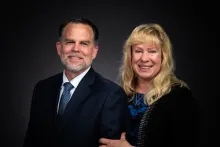
Paul serves as Pastor for the United Church of God congregations in Spokane, Kennewick and Kettle Falls, Washington, and Lewiston, Idaho.
Paul grew up in the Church of God from a young age. He attended Ambassador College in Big Sandy, Texas from 1991-93. He and his wife, Darla, were married in 1994 and have two children, all residing in Spokane.
After college, Paul started a landscape maintenance business, which he and Darla ran for 22 years. He served as the Assistant Pastor of his current congregations for six years before becoming the Pastor in January of 2018.
Paul’s hobbies include backpacking, camping and social events with his family and friends. He assists Darla in her business of raising and training Icelandic horses at their ranch. Mowing the field on his tractor is a favorite pastime.
Paul also serves as Senior Pastor for the English-speaking congregations in West Africa, making 3-4 trips a year to visit brethren in Nigeria and Ghana.
