

Paul Moody
This transcript was generated by AI and may contain errors. It is provided to assist those who may not be able to listen to the message.
I had a good friend of mine this week reach out to me in an email, and she said, I have feast fever. She was talking about where she and her husband would be going and the travels that were upcoming, the preparations that they were making, and going to visit across the border in another country. And as the feast has been the last couple of years a little uncertain in various areas because of the virus, she's pretty excited to get out this year and have hopefully a full feast with God's people. And so she said, I have feast fever. And Mr. Neff was talking about being out today and you're starting to see, I noticed as I drove in some of the trees in the neighborhoods, the leaves are just beginning to change.
I got up this morning and looked out and every blade of grass was covered with dew.
If you've been paying attention, we're losing sunlight rapidly. These are all pointing to the time of the year we're in, the fall, and for me I could just say, I can smell the feast in the air. And it doesn't smell like smoke anymore. We've had that beautiful rain this week and I can taste the feast.
Feast of Tabernacles I'm referring to. Specifically, I hope you can as well. But we are, as has been mentioned already, in the midst of the fall feast season. We've come through the Feast of Trumpets, which was just a few days ago. We're looking forward to the Day of Atonement, Feast of Tabernacles, in the eighth day. And there's so much rich meaning that's packed into this festival season that God has ordained. It's a very important part of our spiritual focus, again, this time of the year, brethren, to walk through these Holy Days because they reveal to us what God's doing.
Through the process, we come to understand who is God, what is God, what is His purpose, and who is man, what is man, and what is His purpose. Why are we here? And what is it that God's fulfilling? And we're reminded year after year as we walk through these, again, God-ordained Holy Days that remind us of so much. Less than a week ago, again, we observed the Feast of Trumpets, which symbolized the putting down of the governments of man and the establishment of the kingdom of God. God the Father will send Jesus Christ with power and authority to subdue the nations, to establish the kingdom on this earth.
At the blast of the seventh trumpet, the dead will be raised, the firstfruits, those faithful saints, all who sleep awaiting that return, they'll be raised. They'll be part of that spiritual living family as part of the family of God. And we will reign alongside Jesus Christ as He establishes, again, that rule as King of Kings and Lord of Lords. So it's a very exciting time we look forward to. And again, these Holy Days remind us not just of what will happen, but also the part that we will be permitted to play in this.
Because we will, as the Scripture shall be, alongside Jesus Christ, actually sitting upon the throne of David, helping to order and establish with justice and judgment the righteous kingdom of God. So that is the Feast of Trumpets, and in part the remainder of those Holy Days as it portrays as well. The Day of Atonement, we're coming up to a little later this week as well, symbolize the reconciliation that will be available now to all of mankind. Jesus Christ's sacrifice, which we symbolize on Passover, isn't just for the firstfruits, but ultimately all of mankind.
And we recognize that the obstacle to that reconciliation as well, by and large, in the world is Satan the double. The adversary of God, the adversary of all of mankind, he will be bound, as portrayed by the Day of Atonement, and the way will be made open, again through that veil, for all of mankind to approach the throne of God and have that direct and reconciled relationship. So what a wonderful time that will be! And then following the Day of Atonement is the Feast of Tabernacles.
And, you know, our mind is already there because, I would say, of the preparation that it takes. Some of you will be driving to the feast. You probably checked out the car and had the oil changed and the tires rotated. I've got my suitcases opened up on the floor in our bedroom, and I decided I should unpack from my last trip to Africa before I pack to this one.
So I was doing a little bit of that this week, kind of sorting what I would need to take. Our mind is there. Our focus is there. And it's a very exciting event that lays before us. The Feast of Tabernacles is a joyous time that portrays the thousand-year millennial reign of Jesus Christ on the earth and the saints by His side.
It's a time that will see the restoration of all things as God intended from the beginning. The knowledge of the Lord will cover the earth as the waters cover the sea. Understanding of God and His purpose made available to all mankind in the benefits of living under that righteous system will flow. And that's what we symbolize. That's what we in part live for a temporary period of seven days as we go to the feast. Finally, there is the eighth day, a final feast day. We've traditionally as well called it the last great day, in which is essentially, if I could use this phrase, the beginning of the rest of eternity.
And I realize that's probably an oxymoron or a contradiction in terms, but it's just from this point forward on into eternity, that holy day points to the government of God that will always be increasing and expanding and filling all in all as God will. As Isaiah 9 says, of the increase of the government and in His peace, there will be no end. Speaking of the reign of Jesus Christ, but that is not distinct or separate from the reign of the Father and the kingdom of God. And that will continue unabated, growing and expanding throughout eternity.
And what a wonderful, wonderful time that will be. So that's an overview just very briefly of these holy days, and they provide for us a framework again by which we catch a glimpse into what God is doing in our life, in the lives of all mankind, and frankly the part we get to play in the process as well. God is bringing many sons to glory. Right? That's His active plan.
That's the the end result. The goal of why God is doing all of this is to bring many sons to glory in His eternal family. And as His people today, we rejoice together in keeping God's commanded feast days. And we look forward to Him through the whole year. It seems like it's just beginning Passover, first days of 11 bread. We're getting announcements for the feast, and you're having to register and make your plans.
And the feast wraps up, and it's the dark months of winter, but we're looking forward to the light of the spring holy days. And so these things are always on our mind, as should they be. With that being said, though, I do want to focus specifically today on the upcoming Feast of Tabernacles that we'll be going to attend along with the eighth day.
And I want to focus on them not so much from the perspective of their meaning, but more so from the perspective of how we approach them, how we keep them, how we walk through those days. Because, you know, God's called us together for a purpose. We want to get the most out of those days.
We want to glean the richest of meanings such as God would intend for us. And how we do that very much is dependent on how we keep these days. So the title for today is, Feasting with the Right Focus. Feasting with the Right Focus. I just thought, you know, I know it's not the Day of Atonement yet, and the Feast is beyond, but we're preparing now, and our focus is already there. So let's make sure we have the right focus as we head out for the Feast of Tabernacles.
Leviticus chapter 23, I do want to begin there today in verse 1. Leviticus chapter 23 verse 1 will start by seeing God's command to keep these days. Certainly a foundational principle for all of us. Leviticus chapter 23 and verse 1 says, The Lord spoke to Moses, saying, Speak to the children of Israel, and say to them, The feasts of the Lord which you shall proclaim to be holy convocations, these are my feasts. The my here is God, saying, These are my feasts. I've established them.
I've commanded them. And as the fact that they're God's feasts, He is the one who has the authority to set the parameters by which we will assemble before Him in the manner in which we will keep them. He says, These are my feasts. And they're about His plan of salvation. Verse 33, if we jump down, I want to look specifically at the Feast of Tabernacles. Verse 33 of Leviticus chapter 23 says, The Lord spoke to Moses, saying, Speak to the children of Israel, saying, The fifteenth day of the seventh month shall be the Feast of Tabernacles for seven days to the Lord.
On the first day there shall be a holy convocation. You shall do no customary work on it. For seven days you shall offer an offering made by fire to the Lord. On the eighth day you shall have as well a holy convocation, and you shall offer an offering made by fire to the Lord. It is a sacred assembly, and you shall do no customary work on it. And so we have the parameter set here that from the first day of the Feast of Tabernacles all the way through the eighth day, this is all holy time. This is all time. We have the high days of the first and the eighth day, but God has said, You come and assemble before me and worship before me each and every day. And so that's a part of our focus very direct. We need to understand that is a complete package, and each day is important. Each day is essential. We want to make the most of each of those, because you see, these days are about our relationship with God. Commonly I'll say, you know, the feasts are God's plan of salvation for all of mankind. That ultimately involves a relationship. It's our relationship with our Father in heaven. So He is at the center of these days in terms of the purpose, the importance, the outcome, and it's about this relationship. And so we must use each and every day to build the relationship as God has intended. And that's our focus at the feast. Verse 39, dropping down to verse 39, it says, Also on the fifteenth day of the seventh month when you have gathered in the fruit of the land, you shall keep the feasts of the Lord for seven days. On the first day there shall be a Sabbath rest. On the eighth day a Sabbath rest, and you shall take for yourselves on the first day the fruit of beautiful trees, branches of palm trees, the boughs of leafy trees, and willow trees of the brook. And you shall, notice this word, rejoice before the Lord your God for seven days. Rejoice is a very important word, and it does not just exactly mean party, as some sometimes can be misconstrued. This, though, does mean rejoice, and I would say party in a proper way before God. But there is a focus for these seven days. Verse 41, You shall keep it as a feast to the Lord, notice for seven days in the year. Each day is important. It shall be a statute forever in your generations. You shall celebrate it in the seventh month. Verse 42, You shall dwell in booths for seven days. All who are native Israelites shall dwell in booths, that your generation may know that I made the children of Israel dwell in booths when I brought them out of the land of Egypt, I am the Lord your God.
And so Moses declared to the children of Israel the feasts of the Lord. Again, they're God's feasts, and they were pivotal to the covenant relationship Israel had with God. It was a command, and it was a necessary factor of that agreement, of that relationship. And as people under the New Covenant today, the Holy Days are still a pivotal... that's a tongue twister, isn't it? A pivotal... go ahead and laugh. It's okay. You get as much dental work done as I have, it starts to create a little trouble. It's important. We'll say that. It's essential. We'll pivot off that word. It's an essential part of God's Holy Days. And so we notice again, right off the bat, that we do keep these feasts before God. We do dwell in temporary dwellings, right? And they have a purpose. They have a focus. They remind us that this whole world is temporary. The ways of man are temporary. The kingdom of God is what is eternal. And we're just passing through. Go back and look at the patriarchs. Read Hebrews 11 that talks about them. Abraham, Isaac, and Jacob were soldier-in-nurs. They dwelled in tents, wandered about, and the fact is that's essentially our calling today. Jesus Christ said, birds of the air have nests, foxes have holes, but the Son of Man has nowhere to lay his head. And he says, if you're gonna follow me as my people, that's gonna be your life as well. It's gonna be a pilgrimage life through this territory of the world because the kingdom of God is the destination. And so we dwell in booths to remember that God brought Israel out, and they dwell in booths, and again, their purpose was to be focused in the temporary nature of the journey as well. That's what these days and these symbols that we immerse ourselves in are pointing to. Now, if we go to Deuteronomy chapter 14, we see the expectation then. That is what God desires of our participation, our assembly before him at the feast.
Deuteronomy chapter 14 and verse 22, we're also going to see the fact that God gives us provision by which we may do these things because this is a big move, isn't it?
It'd take ten days or so off of work for the feast and travel to put out the expense, to put out the time. This is a big and a bold move, but God doesn't say to do it without backup. Deuteronomy chapter 14 and verse 22 says, you shall truly tithe all the increase of your grain that the field produces year by year. We understand the principle of the first tithe, which is a 10% of our income, but also there is what is the second tithe that goes to our ability to keep the feast. Verse 23, you shall eat before the Lord your God and the place where he chooses to make his name abide, the tithe of your grain, of your new wine, of your oil, of the firstborn of your herds, of your flocks, that you may learn to fear the Lord your God always to fear him. Okay, so we read the word rejoice, right? We're to go to the feast to rejoice, and now we're reading the word fear. We're to go to the feast to fear God. Well, that sounds like two opposite things, doesn't it? Well, not if you listen to Mr. Oliver's sermon on the Feast of Trumpets. We're talking about an appropriate awe and reverence for God, and indeed we rejoice in that when we understand that relationship clearly.
Verse 24, he says, but if the journey is too long for you so that you're not able to carry the tithe, or if the place where the Lord your God chooses to put his name is too far from you, and the Lord your God has blessed you, then you shall exchange it for money, take the money in your hand, and go to the place where the Lord your God chooses. Verse 26, you shall spend that money in whatever your heart desires, for oxen or sheep or for wine or similar drink. Again, sounds like rejoicing, but with fear and reverence. Okay. Whatever your heart desires, eat and drink there before the Lord your God. You shall rejoice you and your household. You shall not forsake the Levite who is within your gates, for he has no part or inheritance with you. So again, it's a major focus of our assembling at the feast to come before God, one to rejoice, also to fear him. They go together, and if we do that properly and in the manner that he is laid out, the results will be wonderful because we will do it for each of those seven days and the eighth day, side by side, as his people. Again, when we keep the feast days, we do it in order to strengthen our relationship with God. And that's the point of these days, to build that relationship. We do it day by day, but he says, I'm gonna take you out of your routine. I'm gonna remove all these distractions from the world. Let's put the job aside, put the bills aside, let's step out of your zone that you're used to, and you immerse yourself in me and among my people. You fear me, you rejoice, and build that relationship that I have established in covenant with you.
That is God's desire for us through the keeping of this feast. It's not a vacation, as we would maybe label a vacation, but it is a time to, again, within proper bounds, enjoy ourselves, and so there will be activities that many of us do. A time that we can spend with the family that maybe we don't have each and every day of the rest of the year. So don't discard that. But this isn't a vacation plain and simple. This is rejoicing, and a covenant relationship with God, and an assembly he has called us to. Deuteronomy chapter 12, if we go back, just a couple of chapters. Deuteronomy chapter 12 and verse 4, it says, "'You shall not worship the Lord your God with such things.'" Previous verses, we're talking about idolatry and how the nations around them would worship God, and he says, you know what? What you're gonna do to worship me is actually gonna be quite different than the rest of the world around you. Have you ever had to explain to your co-workers or your employer the feast, and you say, well, we do this to worship God, and you kind of just get a quizzical look. You know, that's different. Indeed, it is. But God says, you're not gonna do it like everybody else around you. Verse 5, "'But you shall seek the place where the Lord your God chooses out of your tribes to put his name for his dwelling place.' And there, he says, "'You shall go.'" God placed his name in Jerusalem and Israel, and we had what was called, at that time, right, the pilgrimage feast, where the people in three times in a year went up to Jerusalem before the Lord. And God says that, "'You will keep it where my name is.' Today, his name by covenant is in his church." And the church has determined certain sites to keep, where people can conveniently get there and assemble, and the command is, we must. If we're physically able to, and we have the ability, we must do those things, again, where God has put his name. Verse 6, he says, "'There you shall take your burnt offerings, your sacrifices, your tithe, the heave offerings of your hand, your vowed offerings, your freewill offerings, and the firstborn of your herds and flocks.'" We're not so agrarian as they were, but it's, again, whatever it is you're putting your hand to, that is increased. "'Take the tithe of that,' verse 7, "'There you shall eat before the Lord your God, and you shall rejoice.'" There's that word again, rejoice. "'And all to which you have put your hands, you and your household, in which the Lord your God has blessed you.'" Verse 8, he says, "'You shall not at..." Actually, let's drop down to verse 17. I just want to stick with this one thread. Verse 17, Deuteronomy 12, he says, "'You may not eat within your gates the tithe of your grain, or your new wine, or your oil, the firstborn of the flock of your herd, or your any of those offerings that you had brought together now to bring.'" He says, "'You're not to stay home and just consume those as now I can live fat at home. If you're able to go, you will go,' God says, and you use that as the means, and then you'll come and rejoice before me.'" Again, where I've placed my name, and you've come into my presence. Verse 18, he says, "'But you must eat them before the Lord your God, and the place where the Lord your God chooses you, and your son, and your daughter, your male servant, your female servant, the Levite who is within your gates, you shall rejoice before the Lord your God, and all to which you put your hands.'" And then again we see that word.
Rejoice. So we do have fun. We do do things that we enjoy at the feast. I'm not saying this is all, you know, you go there in a straitjacket and you sit in a chair for eight days solid, but the fact is there's a difference between a vacation and rejoicing before God with fear. And in the latter is what we've been called to do in his service, called to build that relationship, which means that the daily services that we attend, the activities that we have, the opportunity to participate in, the meals that we enjoy with one another, the fellowship that we have day by day with our brethren, they're all for the purpose of worshiping before God in the way that is pleasing in his sight. And it creates an atmosphere by which we may rejoice and we may fear and we may receive then the benefit and the blessing of these days.
Now one of the blessings of, I would say, our time and specifically the place that we live, as in this country, is frankly a majority of us have options, don't we?
Where do you want to attend the feast? The feast brochure comes out and you can go north, south, east, west, different countries. We have options and that is a huge blessing, honestly, to have such options. And again, the Church of God, which is where God has placed his name as feast sites scattered all around the globe. This year I'll be in Nigeria for the feast. My wife and children will be in Puerto Vallarta, Mexico for the feast. And many of you will be many other places.
And so it's a blessing to have that opportunity of travel. And we like to explore, but again, hopefully each and every place that we go, the focus is maintained not so much on where we are in terms of the atmosphere, but where we are in terms of this is where God has placed his name. And this is where his people are assembled. And this is where we've come to build our relationship with him. That's the focus. And in the backdrop, then, if that's kept, we can enjoy the surroundings and the environments in which we find ourselves.
But again, options are nice and they can be indeed a part of our worship. If I go back in my mind, I've been keeping the Feast of Tabernacles since a young child.
And I think of all the different places I've been for the Feast for decades now.
And I would say out of that whole listing of feasts, one stands out as a wonderful location to keep the Feast, and the other stands out as a lousy location to keep the Feast, to be honest. And it wasn't lousy, the one I'm thinking of, because it was a lousy place to be. It was awesome. It was a vacation destination with, let me just say, a multitude of theme parks. You know, you could get a four-day park-oper pass and go place to place to place to place and really have a good time. And we've been back since, not during the Feast. But the Feast, for a very brief time, was held in a location such as that. And again, it was a wonderful vacation destination, but in my mind it wasn't the best Feast atmosphere. Because I just remember you would go to church service offices, you would have the closing prayer, and at the Amen you would look up and, like, everybody's gone. You know, because I got the four-day park-oper pass and I got to get down the road, you know, this is burning a hole in my pocket. And I remember there was disappointment because, honestly, the fellowship wasn't there. The interaction wasn't there. And I will be honest, we participated in that process to a degree. Okay, this is, I would say, the kids were very small, early, early years of United, and I was grateful when the time came and they decided within just a couple years that, you know, maybe this isn't the best spot for a feast site, and it was moved down the beach aways. And I think that was a good call to make.
But it wasn't necessarily one that was, I would say, conducive for rejoicing in the way that the biblical standard gives us in learning to fear God. Again, fun things are great, but if that's the focus of the feast, I think we've then lost perspective. The feast that comes to my mind as just really a wonderful family feast was also a very nice spot, and honestly, it's considered, I would say, vacation destination as well, but the way the feast was organized, it is all inclusive. You know, you show up at the resort and everyone else that's staying there is keeping the feast as well. And outside of the hotel staff, the people you meet at the restaurant, down by the pool, going up and down in the elevator, those are God's people. And I thought, wow, this is incredible. And it was at a year that I was still running my landscape business, and I remember that year was just exhausting to get out the door of the feast. I mean, we're just running right up to the edge. Our flight, I think we had to be at the airport at 4.30 in the morning, and Darla and I went to bed at like 3.45 and set the alarm for 4.15.
So, I mean, it's like you're just crashing into the feast, unfortunately. And we got there, and I just remember I walked out to the beach, and they had this grill out there on the beach, and you could get a drink, and you get a plate of food, and I just sat down in a chair and just... and this dress just bled away. And the entire feast, like I said, was spent among God's people. And you could be standing in line at one of the restaurants that were there at the resort. There's three or four of them, and you could be picking up a conversation with the person in line behind you, and it comes up to your turn to be seated, and you say, well, how many seats are there? Well, join us! Come on! You know, sit down, and the person at the table next to you and behind you, you're talking about the sermon. You're, you know, rejoicing in the opportunity to be there, and I just remember it being such an incredible feast as a family. Very, very encouraging.
I'm going to an all-inclusive feast site, and it's a little different in Nigeria than maybe it is in some other places, but it's God's people, and we're together, we're at the same place, and you have the opportunity just to spend the time in growing in that relationship. So it's very wonderful to consider, wherever you're going, it's going to be well. You have the opportunity to make it a wonderful feast.
Again, let's just keep in mind what God has given to us for principles and why we are there, and keep that in the forefront as we consider the backdrop as well. Studying God's Word at the feast, thinking about the wonderful future He has in store for all of mankind, dwelling on those things as we learn to rejoice and learn to fear Him is the point of our feast assembly. I was texting back and forth with Mike Imms yesterday. Mike's on the hookup, and he had expressed the fact that he didn't think he'd be quite well enough today to come and give the sermon, and so we were communicating, and he was given a little feedback as to what it is.
He was thinking about addressing, and I was giving him some thoughts of what were on my mind, and he said, you know, I was thinking about talking about muscle memory, and if I understood correctly, you know, he's referring to the fact that there are things that we can do repetitively, right?
Over and over and over, and you develop muscle memory to the point that it's literally like a reflex. You don't even have to think about it anymore, and it's just a simple movement. You could do it in your sleep, and when I think of my years in my landscape business, there were certain things that I did that were like that. Certain motions, and I actually have certain repetitive motion injuries from certain things, but again, it's like you could do this in your sleep.
It's muscle memory now, and I believe his warning was like, okay, the fee should be muscle memory in terms of the fact that we've kept this for so many years. It is part of us. It is what we do, but we have to be careful on the flip side that it just doesn't become a reflex without thinking.
Right? When we walk into the door of the feasts, and it's, you know, feasts 35 or feasts 55 or feasts maybe 75 for some, it's not just rote or routine, that each year it is something that we say, this is God's house. These are His people, and I'm here rejoicing according to His call.
Let's never allow it to become rote or just a routine for us. There was a time in Judah's history where the people were cut off from Jerusalem. I referred to that in my sermon on the Feast of Trumpets and the throne of David, but the people as a whole were cut off from Jerusalem. The Babylonians came in and waves over a period of a number of years hauled them out of captivity, sacked the city, burned it, destroyed the temple, and they're cut off from their home, from that holy place where the presence of God would be, and I could imagine they were desperate to go back.
70 years in Babylon, 70 years in captivity, and maybe, you know, the parents, I would say the majority, if not all that generation, then died off and told their children, perhaps someday God will allow you to go back. And indeed a remnant did. And they came back then at the time of Zerubbabel. They began to rebuild that temple under Zerubbabel's leadership. The wall around the city was constructed under Nehemiah's direction, and also Ezra, who was a priest, was on the scene around the time of 457 BC.
Ezra was a scribe. Ezra was someone who God used in an important way, because even though the temple had been rebuilt and the people themselves had at least in part come back to the land, they needed rebuilt. They just spent 70 years of captivity in Babylon, and certain things that they had had become lost, and they're separated from the land.
They're separated from the things that grounded them to God in certain ways. And now the temple's up, the spiritual focus of their worship is up, but the people needed rebuilt spiritually as well. And Ezra was there by God's direction to help to supply that. With that in the background, let's go to Nehemiah chapter 8.
Nehemiah chapter 8. I want us to maybe read through this from the perspective of, these are people that had something, and then it was gone. They were taken out of the land, they were cut off, but now they're restored. And just imagine the excitement and zeal of being restored to the keeping of God's days. Nehemiah chapter 8 and verse 1 says, Now all the people gathered together as one man in the open square that was in front of the water gate.
And they told Ezra the scribe to bring the book of the law of Moses, which the Lord had commanded Israel. So Ezra the priest brought the law before the assembly of men and women, and all who could hear with understanding on the first day of the seventh month. What's the first day of the seventh month? It's the Feast of Trumpets. Okay, so this gives us our our time stamp. Verse 3, Then he, Ezra, read from it in the open square that was in front of the water gate from morning until midday before the men and the women and those who could understand, and the ears of all the people were attentive to the book of the law.
Again, I want us to, as we go through this, recognize their desire for these words, number one, but also their appreciation, their response. They're going to be introduced again to something that they had lost. And just think in our mind if we were cut off. We went through the COVID years, right? We had a period of time we were cut off from an ability to assemble. And yet when the door opened back up and we could assemble, it's like we have back that which we lost for a period of time.
And there was great rejoicing at the opportunity to be together. So this is, I would say, you're back in the land now with the temple of God after 70 years. This is multiply it by a thousand of their zeal. Verse 6, continuing on, Nehemiah 8 and verse 6, and Ezra blessed the Lord.
Let me back up, actually. Verse 4, Ezra described and says, "'He stood on the platform of wood which they had made for the purpose, and beside him at his right hand stood these then leaders of Judah.'" Verse 5, "'Ezra opened the book in the sight of all the people, for he was standing above all the people, and when he opened it all the people stood up.'" So he's up there, elevated, and they said, you know, here's the book of the law, read to us from the book of law, and Ezra opens it, and everybody stands on their feet.
It's out of awe, out of a reverence for the fact they're coming before God's Word. They're going to hear it expressed. They haven't heard it perhaps for so long, even some of these maybe not read in this formal fashion in their lifetime, and they stood up in reverence of the fact we are now in the presence of God, and His Word will be expressed to us. Just great awe.
Verse 6, "'And Ezra blessed the Lord, the great God, and all the people answered, Amen, Amen, while lifting up their hands, and they bowed their heads and worshiped the Lord with their faces to the ground.'" And also, again, we have these men with very good names of the tribes of Judah. I will not pronounce for you, but these people standing alongside Ezra, and it says, "'They helped the people to understand the law, and the people stood in their place.'" So it wasn't simply just a reading that was taking place.
Mr. Nelson talked today about what it means to hear, and it's not just you hear the words or the syllables, you're listening to understand. You're listening to grow and to be that productive ground in your life where God's seed can flourish. And so Ezra read the law, but these leaders as well, it said, gave the people the understanding.
They took the time to explain it, to take a deep dive, we would say, into God's Word. And frankly, it's how we conduct our Sabbath services today, isn't it? You know, the format of how we conduct services, we do sing praises to God, we do rejoice, we do have music that's a part of our service, but the main focus of our service is not that. The main focus of our service is studying God's Word and gaining the understanding of these things.
And we do it at the feast day by day. Verse 9 says, Nehemiah, who was the governor and Ezra the priest and the scribe and the Levites, taught the people and said to all the people, this day is holy to the Lord your God, do not mourn nor weep, for all the people wept when they heard the words of the law. I suppose they were cut to the heart when they considered this is what God's Word says, and yet this is what we have done. This is why we're dragged out of the land in the first place, and now we are back.
It was a repentance and a broken heart and a desire, at least at this point, to reconcile and carry on. Verse 10, and he said to them, Go your way, eat the fat, drink the sweet, and send portions to those for whom nothing is prepared, for this day is holy to our Lord. Do not sorrow, for the joy of the Lord is your strength. So he's saying, as we would read about in terms of feast observance, rejoice!
But not, you know, go have a drunken party. He's saying, rejoice, though. Eat, drink, speak of these things together, fellowship, and be glad of the fact that what was once lost has now been restored. And you and God's people can meditate on these things. Verse 11, carrying on, he says, So the Levites quieted all the people, saying, Be still, for the day is holy.
Do not be grieved. And all the people went their way to eat, to drink, and to send portions, and rejoice greatly, because they understood the words that were declared to them. That was the purpose of the rejoicing, not the four-day Park Opera Pass. It was the understanding of the words of God. That which was lost was restored. And I would say, for us, that which we have, hang on to it. Never allow it to be taken away from you, and let it be the source of your rejoicing. They rejoiced greatly because they understood the words that were declared to them. That's a part of our feast observance. As we go and learn about God's Word, as we learn to fear Him always, it should be a great rejoicing to say, yes, indeed, my relationship with my Father in heaven has deepened through these days.
And my relationship with my family, who are at my side, has deepened. And my relationship with my fellow brethren, who are here doing the same thing, has deepened. And that should bring a great rejoicing, indeed, to our lives. Verse 13, it says, now on the second day, the heads of the fathers' houses of all the people with the priests and the Levites were gathered to Ezra the scribe in order to understand the words of the law.
So we're going to continue on here. And they found written in the law, which the Lord had commanded Moses, that the children of Israel should dwell in booths during the feast of the seventh month, and that they should announce and proclaim in all their cities, and in Jerusalem, saying, go out to the mountain and bring olive branches, branches of oiled trees, myrtle branches, palm branches, and branches of leafy trees, and make booths as it is written.
Then the people went out, and they brought them, and they made themselves booths, each one on the roof of his house or in their courtyards or the courts of the house of God, in the open square of the Watergate, and in the open square of the gate of Ephraim.
You know, if you could have just flown a drone over there, you would have looked down and just seen booths covering everything. And I think it's pretty remarkable, because the way it's written, it's like, oh, that's in God's Word. They heard it, and they said, we have to do it! We have to do it now! And they did it. And again, this was a part of their fearing before God and obedience and rejoicing. The city was just covered with these booths.
Verse 17, it says, So the whole assembly of those who had returned from the captivity, made booths, sat under the booths, for since the days of Joshua, the son of none, until that day the children of Israel had not done so, and there was very great gladness.
Also, day by day, notice, from the first day until the last day, he read from the book of the law of God, and they keep the feast there seven days. On the eighth day there was a sacred assembly, according to the prescribed manner. And so they kept this feast day by day by day.
People were excited, they assembled together, they rejoiced together. This look on my face is debating on saying something. Years ago at the feast, I sat in a service and the minister got up and he said, yeah, sorry I missed being with you all yesterday, but I had a scuba diving appointment and I went scuba diving. And I thought, if I had a button on the arm of my chair that took out the trap drawer, I was a young minister at the time, barely ordained, but I had a message the next day, and I got up the next day at the feast and proclaimed why we should rejoice, and I read the verse to be there day by day by day.
It is the command, and the individual is not with us anymore, which is interesting to me, but again the fact is this isn't a game. This isn't something that we're going somewhere just to ditch the Sabbath service and go have some fun. The service is the focus, and the fun can be a part of the rejoicing, but we have to keep the proper perspective, brethren, and we do this because we fear God.
So again, they covered the place with the booths, and their attitude of joy and appreciation for God's words were evident. They'd had it, but they lost it because of their rebellion, and now it was restored, and at least this generation and this attitude says, we want to hold on to this, and we want to glean what it is that God would offer. I've kept a feast like that before.
It was in the year of 1995. Probably a number of you were around in 1995.
Darla and I, at that time, walked out the door of our former organization because the doctrinal teachings we held to were changed, done away, and we walked into the door here in Spokane, the first service of the United Church of God. And some of you were there. You would remember that. We were up at the school up at Moran Prairie Elementary, and Rod Hall was in the entry, writing on the whiteboard, Welcome to the United Church of God. And I thought, huh, is that what we're called now? Sounds good. But I remember going to the feast then in 1995 and walking in the door of Tucson, Arizona. I was 21 years old. My wife and I had been married for about a year and a half, and we had a six-month-old son, so she remembers that very vividly, baben arms. But I remember walking into the door to that feast, and people were just ecstatic to see one another, and they'd give you a hug, and you didn't even know them, because they were peop- it was like fellow survivors, and these were people that were just glad you were there because we were living under the risk and threat of it's being taken away, but now it's restored.
And as God's people, we were just rejoicing at the opportunity to be there and observe the feast together. I remember how much joy there was, and at that feast specifically, I remember the first Good News magazine for the United Church of God was passed out. They had them in boxes, and we all stood in row in lines, and they went through the line, and they handed out the Good News, and I remember I was holding that magazine in my hands, and the cover was about the Holy Days, and the essential nature of the Holy Days as God's covenant people. And I remember thinking, this is a treasure, you know, never allow it to be ripped out of your hands. To me, I would equate that feast with this time of Nehemiah and Ezra and those who had lost everything, but now they came back, and they found God's words of what they should do and how they keep it, and they rejoiced greatly.
Again, we come before God at the feast to learn to fear Him, to rejoice, and I would say, even if I had to go camp out in the field somewhere in the pouring rain, in the hurricane, maybe not. Whatever the conditions, though, if it was there, and I could be there, I would be there, because these things are precious, and I would warn us, brethren, we are facing times where our ability to keep it will be compromised, because of the end of the age and the world around us. Let's not lose it today. Let us use this time God has given us well. Let's have an appreciation for what He's given us through His feast. Let's appreciate it's our spiritual home among our fellow brethren. Let's appreciate the services that are conducted, the effort that the ministry has put into the messages that are going to be delivered, and let's never take those things for granted. It is more precious, I think, than we even realize. It is our covenant with God. So that said, I want to wrap up today with four very brief points that will help us hopefully make the feast memorable and fulfilling for us as God intended. And you could add greatly to this list, and I encourage you to think about it, but here's four that I came up with for, again, helping the feast to be such as we've described today. Point number one, remember your daily prayer and Bible study at the feast. Remember your daily prayer and Bible study. You know, it might seem a little odd. I mean, we're at church services each and every day, but again, God has removed us from our normal routine. He's cleared away the clutter, turned down the static, turned off Netflix. Let's take the time and use it well in our worship of Him. Let's study His Word. Let's grow. Let's take that extra time. Take the sermon notes from the day. Take those back. Review those. Look up the Scriptures. Do your own personal study and look up the prophecies that pertain to the Millennium, to the desert blossoming like a rose, and the showers of blessings coming down, and the living waters flowing out. You know, sadly, I've been in places before for the feast where it seems like it was halfway through the feast before you got to that point, hearing some of those verses.
But in defense as well, I'll say the ministry has done better, I believe, with communication up front before the feast with our online meetings, because I think a lot of times the ministers say, well, they're gonna go here and they're gonna go here, so I'm gonna go here and there, and suddenly everyone's giving everyone else room for these scriptures. So it's like, hey, trample these scriptures. Okay, let's read them over and over, but I would say for you as well, study them.
Have them in your mind as you walk through those days. Meditate on them. Use the opportunity of the feast to spend additional time on your knees before God's throne as well. Again, we're coming in response to the covenant, and God says, I will be there, and this is time to spend with him. So spend it on your knees and increase in that relationship. Pray for the inspiration of the messages.
That's something we can start right now, because people are putting the final touches on what they'll speak about at the feast. So pray for those messages today and the inspiration of the ministry. Pray for your own receptiveness to, again, hear what is being taught, to listen properly. Pray for your willingness to put these things in action, and pray for one another. Pray for the health of one another. Pray for those who aren't able to make it for health and other reasons. You know, pray for the safety of each other in our travels. Pray for the unity of the people of God as we assemble as a church. And I'm not talking just the United Church of God, I'm talking the Church of God, because there will be feast sites all over the world. Pray for the unity of the people of God as we assemble and worship before him. Pray for God to help you see how you can be a blessing to others at the feast. Find those opportunities. Grab hold.
Point number two, take time for fellowship. Take time for fellowship.
Again, it can be easy to fill our schedule with the things we want to do, and at the closing prayer you're off because there's a time schedule here, but please, I encourage you take the time for fellowship. It's an essential element to worshiping before God. Iron sharpening iron is critical. Taking the time to hear what somebody else got out of the sermon and how it applies to their experiences actually can add growth to us, and we can do the same in return as you share back and forth. Take the time to make new friends at the feast. Expand your circle of people. When the closing prayer happens, don't just look for that person across the room. Talk to the person in the row in front of you. Talk to the person in the row behind you. Where are they from? How long have they been coming to church? Get to know them. Fellowship gives us an opportunity to discuss the biblical principles of the day. Share a meal together. Go out to dinner together.
Some of my fondest memories of the feast are the 12-13 years we spent in Bend, Oregon over the years, and many times we stayed out of a house at Sun River.
Other times we stayed at Eagle Crest, but the opportunity was to go from house to house to house to house because there's only so many activities you did there.
The activity was the people in the meals and the sharing that we had together.
To me, that is such a vital part of the feast. Look out for those who are alone in part of your fellowship. Look around. You can be in a room of a thousand people and still be alone if you don't know anybody. Seek out those who are alone. Seek out those who have no one else with them, no family. Maybe they're widows. Maybe they're orphans. Include them in your activities. Make a point to put an arm around them and bring them in. Make a point to include them as you know that they have need, maybe even financially. Family Day is happening. Maybe there's an activity somewhere that actually has an admission price, and you know not everybody can afford that, but if you can help, donate at the information booth. Say, I want to cover two, three, four people in this activity so we can observe it together. It's all part of our fellowship at the feast. Point number three, look for opportunities to serve others. Look for opportunities to serve others. If you want to have the best feast ever, then strive to help others have the best feast ever. You know, this is about not just what I can get out of it, but what can I help someone else to get out of this? And they need people for ushering in parking and stage crew and frankly just going around and making sure that things are in order. Jumping in where you see that there is a need. It's easy to go to the feast with the expectations of the things we want to do and see, and that's fine, but again consider who is there and what do they need. And consider the sick and the infirmed. Consider the disabled. Again, consider those who might be struggling financially. How can you serve them? We read in Deuteronomy chapter 16 and verse 14. I won't turn back there, but I'll quote it for you. It says, Rejoice in your feast, you and your son and your daughter. But you see it didn't stop there. It also said, And your male servant and your female servant and the Levite and the stranger and the fatherless and the widow who are within your gates. It says, Look out for the others as well. Help those whom you can help. Rejoice together. Worship God together.
Make this the best feast ever, not just for you, but those within your gates wherever they may be. And finally, point number four, make the feast a family event. Make the feast a family event. Like I said, I'm going to be going to my Nigeria. My family is going to be in a different feast site this year where vaccinations are not required. Just kind of that difference. But I'm still with family. I'm with spiritual family. And whether we have physical family together or we have spiritual family, this feast is a family event. Grow the bonds of family as you are together. Focus on the fact that God is building his family. And we are that family. So our relationship with one another is part of our relationship with him as well. Husbands and wives take time for each other. Because life's busy, we're working, we have households we manage, we have families we take care of, and it's like God says, that's why I bring you here. I take you out of the normal environment before me so you can grow in these ways. Spend time in your relationships. You know, husbands and wives don't get so tied up in something that you leave your spouse behind to go serve. Serve together if it is possible. Serve together as a family. Brethren, God has called us before him to rejoice and to fear him in all of these ways. So put these points into practice. The best of your ability this year, add to that list of points as well. God has established his holy days for the benefit of his people. The tribes of ancient Israel kept the feasts of the Lord and the feast of tabernacles. Jesus Christ kept the feast of tabernacles. Scripture after Scripture show that. The early New Testament Church kept the feast of tabernacles. The Covenant Church of God today keeps the feast of tabernacles. And you know what? Even when the age of those days is fulfilled. During the millennium, the people will still keep God's feasts. Let's conclude in Zechariah chapter 14.
Zechariah chapter 14. Again, brethren, the keeping of these days are central to our covenant with God, and we need to glean what he would have us to glean from them.
Today and in the future. Zechariah chapter 14 and verse 16. It says, And it shall come to pass that everyone who is left of all the nations which came against Jerusalem shall go up from year to year to worship the king, the Lord of hosts, and to keep the feast of tabernacles. And it shall be verse 17, that whichever the families of the earth do not come up to Jerusalem to worship.
My understanding of this is honestly not that every single individual and family across the whole face of the earth comes to Jerusalem for the feast. That's a bit difficult, but the nations of the families of the earth are sending family. They're sending representatives up to the feast to represent their nations and their people before God at the feast. And so it shall be that whichever the families of the earth do not come up to Jerusalem to worship the king, the Lord of hosts, on them will be no rain. If the family of Egypt will not come up and enter in, they shall have no rain. They shall receive the plague which the Lord strikes the nations who do not come up to keep the feast of tabernacles. Clearly God places, brethren, a very high priority on his people assembling year by year by year before him at the feast. Wherever we may be assembled this year, let us rejoice before God as he intends. Let us learn the lessons. Let us slow down from our speedy pace and take the time to enjoy, to fellowship, to worship, to rejoice, to fear, to grow, to love, to share. It is why these days are there.
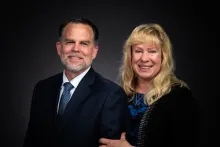
Paul serves as Pastor for the United Church of God congregations in Spokane, Kennewick and Kettle Falls, Washington, and Lewiston, Idaho.
Paul grew up in the Church of God from a young age. He attended Ambassador College in Big Sandy, Texas from 1991-93. He and his wife, Darla, were married in 1994 and have two children, all residing in Spokane.
After college, Paul started a landscape maintenance business, which he and Darla ran for 22 years. He served as the Assistant Pastor of his current congregations for six years before becoming the Pastor in January of 2018.
Paul’s hobbies include backpacking, camping and social events with his family and friends. He assists Darla in her business of raising and training Icelandic horses at their ranch. Mowing the field on his tractor is a favorite pastime.
Paul also serves as Senior Pastor for the English-speaking congregations in West Africa, making 3-4 trips a year to visit brethren in Nigeria and Ghana.
