
Roy Holladay
This transcript was generated by AI and may contain errors. It is provided to assist those who may not be able to listen to the message.
Now we're ready for the main message for today. And as it has been mentioned, the Feast of Tabernacles is just around the corner. We are headed out, God willing, next Thursday. Many are flying out different parts of the world, over 80 feast sites that we have. And so God has put place's name in different places, given us grace before men to be able to go. And even the weather, thankfully, we're not going to have hurricanes on the east coast. As far as it's been planned, it's already gone through, and all the brethren are fine. And as I mentioned, many are going to be traveling, either by car, by plane, by train. And they are going to be doing so to keep God's command, to keep this feast. They are annual Sabbaths and extensions of the fourth commandment. So if we want to keep the commandments of God, the fourth commandment isn't just about the weekly Sabbath. It actually extends out, although the fourth does focus on the fourth commandment. Later on, God connects the fourth commandment to the annual feasts. Notice this in Leviticus chapter 23, Leviticus chapter 23 verses two through four. It says, Speak to the children of Israel, God speaking here, and say to them, the feasts of the Lord, which you shall proclaim to be holy convocations, these are my feasts. And which is the first one? Six days shall work be done, but the seventh day is a Sabbath of solemn rest, a holy convocation, you shall do no work on it. It is the Sabbath of the Lord in all your dwellings. These are the feasts of the Lord, holy convocations. But he already mentioned the Sabbath as one of God's feasts, and then come the seven annual feasts that we observe.
These feasts are so important that God had them in mind when he rearranged the earth, when he calibrated the earth's orbit, and also the moon's orbit around the earth. Notice in Genesis chapter one in verse 14, Genesis chapter one in verse 14.
I'm going to read it to you in the Good News Bible version. It says, So the term here in the Hebrew, Moed, M-O-E-D, means an appointed time, a separate time, and especially in regard to religious feasts. So here at the beginning, even before God created human beings, he rearranged the orbits so that you would have these lunar months, and then you'd have these annual orbits around the sun calibrated to be able to, as it says here, to show the time when days, years, and religious festivals begin. And all of these are essential elements of God's calendar. Days, the 24-hour day, years, the solar year, and the Moeds, which have to do with the moons as the moon orbits around the earth. So why did God bother to set them up? Most people don't even keep them. Why are they so important?
The more I study about them, the more I am convinced that God had two great purposes for these Moeds. Number one, to set time to worship Him privately and in a congregational setting. That's what we do on the Sabbaths and on these Holy Days. We have holy time, there's private time to be with Him and also to come and meet together to worship Him when He has appointed. Now, what has been done? They have changed the appointed times. So now they meet on the following day, on the first day of the week. They set that up as holy time. That's basically kept by Christianity throughout the world the first day of the week, whereas God set up the seventh day as holy time. So it doesn't matter how many popes or how many religious leaders set up their own appointed times. They do not have the legitimacy. They do not have the authority to do so, and they should not be taken into account. God's authority and legitimacy is the one that counts here. And the second reason is to be together, to learn to serve each other, and if necessary, to be willing to die for each other. That is a tall order. But both of these purposes have the aim to lead us from self-centeredness to other-centeredness. So God set this up, in a sense, as testing grounds. What are God's people going to do? Are they going to be self-centered or are they going to be other-centered? Are they going to be thinking about the others first? So He set these religious holidays with the Sabbath and the Holy Days as opportunities to see what His people are going to do during that time. And people serve in different ways. Some bring flowers every Sabbath. Others are helping out, giving kind words of encouragement, doing what they can, one for another. So God had this in mind when He set up the orbits, when He set up the whole solar system, as He has with these two huge, gaseous planets that act as shields with Jupiter over a thousand times as large as the Earth. And the gravitational pull of Jupiter brings any of these potentially deadly asteroids. They are like vacuum cleaners. Saturn and Jupiter vacuum just about 99% of all of these asteroids that could come this way. They are the shields that protect the Earth overall.
And so God set these up for these special purposes. And we're going to be going to, now, two feasts that He sets up. One, the Day of Atonement is especially for private prayer, for humbling ourselves, for getting ourselves in the right attitude to be able to go to the feast. He has a day of fasting so that people can be spiritually fine-tuned for the feast. So we don't have people with bad attitudes that have drifted from God and are going to have ungodly behavior during the feast. That is at least one of the purposes. The Day of Atonement is to prepare us for the right attitude of Mine. And Christ, of course, is the outstanding example of service, how He did it throughout His entire life. Notice in Philippians 2, verse 5. Philippians 2. Again, these are the major themes in the Bible. I'm not talking about little details. I'm talking about the overall scheme of things. God set this whole solar system up with the religious holidays meant to be kept by God's people so they can learn to serve Him at the right times of the year. That's what He had in mind. And when Christ comes back, the Feast of Tabernacles is going to be kept by the entire world. Those are festivals that are going to continue on and woe be to those people that disregard those feasts at that time. God right now, in His love and patience and long-suffering, is overlooking all of these transgressions. But when Christ comes back, they're not going to be tolerated. It says there's going to be a plague. It's going to be a complete drought condition. There's going to be hunger and thirst until people come to keep the feasts of God. So He means business. Notice in Philippians 2, verse 4. The Christ attitude, which, of course, if He sets up these festivals for us, He's giving us the great example of service. Verse 4, it says, Let each of you look out not only for his own interests, but also for the interests of others. That's the key. Not being self-centered, being other-centered.
Let this mind be in you, which was also in Christ Jesus, who, being in the form of God, did not consider it robbery to be equal with God as something which could be grasped. He did not retain it, continuing on, but made Himself of no reputation, taking the form of a bondservant, and coming in the likeness of men. And being found in appearance as a man, He humbled Himself and became obedient to the point of death, even the death of the cross. And so you talk about an attitude of service. Of course, God the Father and Jesus Christ set up this earth with religious observances to be kept. That's because they know these are opportunities for service. He's not interested in people serving on the first day or the second day of the week or whatever day the Muslims keep the sixth day of the week. And of course, you have an attitude of service, but when you should come to worship Him and serve each other are on these Sabbaths and the annual Sabbaths in particular.
Jesus Christ spoke to His disciples about this very attitude of service. Matthew 20, verse 24.
It says here, And when the ten, talking about the disciples, heard it because two of them wanted to sit on the right and on the left-hand side of Christ in His kingdom, see, they were already jockeying for a position. See, this is all the politics going on, worldly politics. And the worldly politics is going on today as never before. So nice to have a refreshing attitude of not having to be involved in all the mudslinging and all the things going on. It's depressing to hear all of this, but it's how society has degenerated. It was never too clean. But boy, now it's gotten to be mud wrestling, basically. Continuing on, He says in verse 25, But Jesus called them to Himself and said, You know that the rulers of the Gentiles lord it over them and those who are great exercise authority over them. They get all the perks. They get all the limousines. They get all the best possible luxuries available. None of them are living in a little shack serving people. It's all this power of politics. And now, millions of dollars come into the coffers of special interest groups. And it's the same around the world and in the religious areas as well. Churches have big incomes, and they're involved in politics. 99% of them were one of the few that doesn't take any government handouts or corporate handouts as such. Continuing on, He says, Yet, verse 26, it shall not be so among you. That's not the way you're going to rule power politics and trying to win influence and get to the first and stepping over other people. He says, But whoever desires to become great among you, let him be your servant. Doleus in the Greek, which means a bond servant, a slave. You become a person with no ego, no vanity. You just roll up your sleeves and say, what needs to be done? That's the attitude of service.
Just as the Son of Man did not come to be served, but to serve and to give His life a ransom for many. So He gave us the perfect example of what service is about. And these fees are wonderful opportunities to show that spirit of service. Notice in 1 John chapter 3, because we know what Jesus Christ is like. We know how much He served. But notice what we are going to be one day. Isaiah 1 John chapter 3 verse 1. John speaking here says, Behold, what manner of love the Father has bestowed on us that we should be called children of God. See, what manner of love, what honor, what a privilege it is to be called children of God. Nobody deserves that. Therefore, the world does not know us because it did not know Him. They don't even know that their purpose is to be part of the God family one day, to be children of God. Verse 2, Beloved, now we are children of God. We have God's Spirit, and it has not yet been revealed what we shall be. Talk about in the future when people are glorified. But we know that when He is revealed, that's when the resurrection takes place, we shall be like Him. Wow! Did you ever catch that?
We shall be like Him. That's not talking some poetic, you know, flowery language. No, it means we're going to have the same character. We are going to have the same spiritual perfection that He has. We are going to be like Him, He says, for we shall see Him as He is. We're going to be younger children, younger brothers and sisters of Jesus Christ. But when you get together your brothers, you identify them. You can hang around them. Well, He's our elder brother, and we're going to be His younger brothers and sisters. And He's going to love us, and He's going to accept us, because we're going to be glorified. We shall be like Him.
We're not going to be like angels. We're going to have the God plane. We're going to be in that level. It's very important to understand what this is saying. Now, we will be like Him, not in personality, because we all have different personalities. He has His own personality. God the Father has His own personality. And they have made us with unique personalities. There's not one person on this earth that has the same personality as someone else. Even identical twins have different personalities, because God doesn't want to create just yellow pencils, everybody the same. So we all have a unique personality.
It doesn't mean that we're going to have the same preferences that Jesus Christ has. He has preferences for Himself. While He was here on earth, I don't know what kind of fish He liked the most. But that doesn't mean we're all going to have to like the same fish, and we're going to have to eat the same food that He prefers. Understand? We all have different tastes and preferences, and so that's reserved. But what we will have, similar to Him, is that godly character. We are going to inherit that from Him, and all that are resurrected in that first resurrection will produce the fruits of God's Spirit—love, joy, peace, patience, gentleness, goodness, faith, and self-control.
We will produce the fruits of God's Spirit in our own personal way. And so you can't get a greater goal than that. Do we want to have the godly character of Jesus Christ? I want that more than anything else. I don't care about money and fame and all that. I just want to have the character that Jesus Christ had, because that way I would be happy for an eternity.
Not being selfish or self-centered. That's what we are focusing on. That is the goal to participate in His sanctity, His godliness. And believe me, Jesus Christ knows how to have a great time and have fun, and He's loving, and we're going to have fun in the coming kingdom of God. You think Disneyland is okay? That's nothing in comparison to what the fun that we're going to have, because joy is one of those fruits of God's Spirit, which means a joy, a certain happiness, internal happiness we're all going to have.
We're not going to be depressed. We're not going to be negative in any way. And Jesus Christ is serving even today. Notice a scripture that always blows my mind when I read it, Luke 12, verse 35, because it's unimaginable that Jesus Christ would be doing this when He comes back. He's going to be having crowns, and He's coming in majesty and glory. But what's He going to do? Notice what it says in Luke 12, verse 35. It says, Let your waste be girded and your lamps burning.
Be spiritually ready for Christ's coming, and you yourselves be like men who wait for their master when He will return from the wedding, that when He comes and knocks, they may open to Him immediately. Blessed are those servants whom the master, when He comes, will find watching those faithful that are continually serving God to the last breath of air. Assuredly, I say to you, that He will gird Himself and have them sit down to eat, and will come and serve them.
And here it is. He never quit serving, even in His kingdom. You come? What's He going to be doing? Oh, yes, Bill. We've been waiting for you. Come here, come here, Bill. Come here. We got this place for you. And, Brenda, here, we have this place. And please, let me give you the napkin. How are you going to feel?
Aren't you going to want to weep, realizing how unworthy we are of that? But He's not going to quit serving, ever. And God the Father is the same way.
They're not stiff. They are not Spartan-type or Puritanical-types. Not at all. They're the most loving and joyful and fun-filled, but they just hate sin, because sin is what damages and dampens everything. And they want us to learn we shouldn't go that way.
So God's feast is an opportunity to serve, to share among brethren, and to grow spiritually.
Let's take full advantage of this opportunity, as God intended.
God had such great hopes for the nation of Israel. He offered them to be the nation that served other nations, that would teach other nations how to change their ways to conform to God's way. God had high hopes for them. Notice in Exodus chapter 19. Exodus chapter 19, starting in verse 5.
Here they're at Mount Sinai. He's about ready to give them the law. And He explains to them His hope. Verse 5, it says, I'm offering you the opportunity to serve others, to show them my ways. You are going to be the intercessors. You're going to be the priests who are going to teach other nations how to obey me, how to come to know me. Of course, that's going to happen in the millennium. That's exactly what's going to happen when Christ comes back. We're going to teach the nations. And that's why it talks about being priests and kings in His kingdom.
Notice He offered them to be a kingdom of priests. He did not offer them to be a kingdom of kings because they're not ready for that. They're not ready for that responsibility. They can't even serve in a religious way. What are they going to do trying to become these public servants and having all these resources to hand out? So He didn't say you'd be a kingdom of kings. You'd be a kingdom of priests. Notice in 1 Peter chapter 2 in verse 9.
1 Peter chapter 2 in verse 9.
It says, But you are a chosen generation, a royal priesthood, a holy nation, his own special people, that you may proclaim the praises of him who called you out of darkness into his marvelous light, who once were not a people, but are now the people of God, who had not obtained mercy, but now have obtained mercy. So again, in the New Testament, those that are in the church are supposed to be preparing for this, that we are to teach the nations God's way of life. We know that's going to happen mostly in the millennium, but we should prepare for that. Again, He doesn't tell you, you're a nation of kings because we're not ready for that. But we should begin with the part of the priesthood. And what does a priest do?
He serves God's people and helps them follow His ways of life.
He serves God's people and helps them follow His way of life. Notice in Ezekiel 22, this explains what a priest should do.
They weren't doing it at the time, so God reprimanded them for it. In Ezekiel 22, in verse 26, it says, Her priests have violated my law and profane my holy things. They have not distinguished between the holy and unholy, nor have they made known the difference between the unclean and the clean. And they have hidden their eyes from my Sabbath, so that I am profaned among them. So a priest has to be keeping the Sabbath. And notice it's plural, Sabbath, because it has to do with the holy days as well. They have to understand it. They have to have lived it, to be able to explain it and teach it to others. That's what we're in the process of doing. We know the difference between what is holy and what is unholy. And we teach them about God's law, that it is holy, good, and just, based on the Ten Commandments and what is unholy, which are the sins that we see society multiplying today. Nor have they made known the difference between the unclean and the clean, what you should eat and what you shouldn't eat. Because God's concern for our own health and also for our obedience toward him. Of course, he made some of those different creatures taste good. People can eat different things, pork or shrimp or whatever. They're not poisonous. Why? Because he made it for other fish to eat. Because if they were poisonous, all of these animals that eat them would die. And same thing with pork. Pork is good for many different animals. Basically, those that are predators that don't have to do with human beings. They can eat pork, but he didn't make him for our digestion, for our system. And yet it's by faith that we do it. We know God knows best.
Now, the best description of what a priest should be like is found in Hebrews 7, verses 23-28. Because, yes, we have to teach him about what God's law is all about. What is holy. This is a holy convocation. Why? Because God has selected this day, and it is holy. It is something that he has set apart for worship. But at the same time, a priest has to behave in a certain way. Hebrews chapter 7, verse 23, it says, by so much more, Jesus has become a surety, or a guarantee, of a better covenant. Also, there were many priests because they were prevented by death from continuing. Notice the description now of the type of priest that God wants us to eventually become. But he, because he continues forever, has an unchangeable priesthood. Therefore, he is also able to save to the utmost those who come to God through him. So he's able to save. He is our Savior. I'm sure that Christ is willing to gird up and serve when his kingdom comes. He's willing to serve us. So what do you think he's doing now? As his role of a high priest, he wants to save us. And so I'm sure he and God the Father have many conversations about each one of us. And they have 24 angelic elders that they like to toss things out for them to grow and understanding because it's not just about them. And he'll focus on this one and say, what do you think we should do here to help this person overcome? What can we do? What's the best situation? And sometimes they have to make very tough decisions because we're all physical and we will have the day of our death, which they have to decide upon. And they know that in the future we will look back and say they knew what they were doing. But here we have a priest who is there to save to the uttermost, which means to the highest degree, he just wants to help and save us, make us be able to make it into the kingdom.
It says, since he always lives to make intercession for them. So he's not only a mediator, but he's an intercessor, which means that he's there just like a lawyer, a good lawyer, a lawyer that loves you, that's willing to help you out. In Spanish, the term lawyer is even more descriptive, abogado, because he's an advocate. He's there on our best behalf. He's always there. And that's why as a priest, in a sense, as God's people, we take on, we're learning this role, how to intercess with others, how to help others be able to make it through the day, through their difficulties.
He always lives to make intercession for them, for such a high priest was fitting for us, who is holy, harmless, undefiled, separate from sinners, and has become higher than the heavens. So that's where we're headed. Of course, it's a difference between an ant and a human being right now. We're the little ants, but that's where we are developing this godly character. And these feasts are wonderful opportunities to show God what we're made of.
And of course, service has to be done in an intelligent manner, because sometimes when you serve in the wrong way, it's just like a mother spoiling a kid. That service should be done in the appropriate way, with a person doing their part. We don't want to just go overboard, and the person becomes this delinquent and dependent person that just doesn't do anything. So service has to be done as Christ Himself does it. He doesn't just serve someone, no matter what they do. Sometimes, as God the Father did with Jesus Christ, if the person fills themselves with sins and they leave God's way of life, Christ is not going to be able to do much for them until they return. He's always willing. The door is always open, but you have to go through there. He's not going to invalidate a person's free will. If they want to go back, as it says, the sow, to go in the muck and just pollute themselves, people can do so. But certainly that's not what God wants. So how can we apply this to this coming feast? God gives us some guidelines in this regard. Let's go to Deuteronomy 16. Deuteronomy 16 in verse 13. Talking about going to the feast. It says in verse 13, You shall observe the feast of tabernacles seven days when you have gathered from your threshing floor and from your winepress. So it always has to be at the end of the harvest season. That's why you have to make adjustments in the calendar sometimes, because they have to always be in accordance to the seasons. They can't go beyond a season or you can't be harvesting. If you go to the feast too early, you're not going to be able to harvest your crop. So that's why the calendar is adjusted. Continuing on, it says, And you shall rejoice in your feast, you and your son and your daughter, your male servant and your female servant, and the Levite, the stranger and the fatherless and the widow who are within your gates.
So here we have some good guidelines about serving at the feast. Number one, it says, Serve your family. You're supposed to be there, serve your wife, serve your children. Make sure that they rejoice at the feast. I guess that's one of my number one priorities. I want to make sure that my family is going to be able to keep the feast with joy together as much as we can, wherever they're at, because it says, You and your son and your daughter and all the family. So we should serve the family, rejoicing at that time, for it's a positive and happy occasion. It says about your servant. Well, not too many people have employees that work in their homes, but we did. And we had a person that was converted that helped my wife with the four kids, and she was a member of the church, and we would take her to the feast. We paid for the feast. We made sure she enjoyed the feast with us. She's going to be there at Puerto Vallarta. She's in her 70s now, but she's still part of the family. And that's part of the principles. If you have employees that are converted, don't leave them out, because it talks about your servant. And then it talks about the Levite, which is the equivalent of the ministers today. Take time to know them. Pray for them. They're going to be around. Don't forget the Levite. There are people that just take off with their family. Yes, they meet the first requirement, and then they forget about everybody else. It shouldn't be that way. So take time to know the ministers there. Be close to them. Encourage them. Help them. They've got a very tough job to do. And then comes number three, the stranger. That's the person you don't know. You shouldn't leave them out.
They come from different parts. Get to know their names. A bit about them. To be able to build a friendship. That's why God set up the orbits of the earth and the moon so we can get together at feast times, because he wants to see that fellowship at that time.
The feast is far more than just the physical aspects of it. So remember that stranger, that person that might seem shy, that doesn't know too many people. Let's be inclusive, not exclusive. I don't care what gender, color, whether they are with one leg and handicap. Those we should care about even more. But they're there, they're visiting, and we should be aware of them.
Number four talks about the fatherless and widows. Those are the lonely persons.
Make them feel at home.
Give them a warm smile.
If possible, take them out to eat. Give them a gift.
Fatherless and widows, God set them up in the church to see, are we going to serve them or are we going to forget about them?
And we have what is called spiritual widows. Maybe the husbands didn't die. But the husbands abandoned them, left them. They're on their own. They come to the feast on their own.
And they have a hard time. So what do we do about it? Can we show concern and care? And so in the fifth point here, I'm going to repeat them because sometimes they tell me I don't make clear. First point, serve the family. Two, be with the Levites. Number three, take care of the stranger. Number four, be concerned about the fatherless and widows. Number six, I mean that's number four. Number five, look for opportunities to serve in whatever way is necessary. Because now you know God set this whole system up before humans even existed. He had the feasts in mind as wonderful serving opportunities because he and his sons are servers par excellence. Unequal, unmatched. And they want to have children that are that way, not egotistical children or egocentric. And number six, remember to pray for protection. A lot of people are going to be traveling. We need all angels that can be mustered to protect, pray for good weather. You always have to give God a couple of days for him to set up the weather pattern. Don't, you know, when the storm is crashing and everything's getting worse. That's not the time to, oh, I forgot to pray about this. Let's give him a day so he can set things up. I remember that hurricane that came through Portova Yarta the first year. And Rike Vidal will remember that and how it was headed right to the fisight. Everybody in the hotel was panicking. They were bringing all the furniture from the bottom floor because they just, and that thing just went around like there was this spiritual bubble, invisible bubble around that Portova Yarta site. And it went crashing way north of us. And God continually protects his people. And also, remember to pray about your home. In Exodus 34 verse 23, in 24 it says, three times in the year, those three festival seasons, all your men shall appear before the Lord. That's the minimum requirement. If a person was poor, he couldn't bring his family, but at least the head of the family should represent them. Hopefully it's more than just a man, but his whole family shall appear before the Lord, the Lord God of Israel, for I will cast out the nations before you and enlarge your borders. Neither will any man covet your land when you go up to appear before the Lord your God three times in the year. So no man will covet what you possess. And boy, I'll tell you, nowadays you've got to be careful constantly because robbery is on the rise, petty theft, all of these, a lot of drug addicts, a lot of people that are desperate, like never before. So we need prayers about that.
And the seventh point, be generous in your offerings. In 2 Corinthians 9, 7, it says, So let each one give as he purposes in his heart, not grudgingly or of necessity, for God loves a cheerful giver. Why? Because he's the greatest cheerful giver that there is. It says, All good gifts descend from the Father of lights. And he wants his children to be generous, to open up their hearts and their pocketbooks when it's possible.
So God created these Sabbaths and feasts as opportunities to serve him and to serve the brethren. We should take advantage of this coming feast to do it. I'm looking forward to it. Never had a challenge of having 720 people in a resort that shouldn't have over 600, so we're looking forward to serving more people. Please pray for us. We're going to need all the help we can get. In Revelation 22, as we finish now, let's go to the last chapter of the Bible. What does it tell us?
Revelation 22, verses 3 and 4, it says, And then there shall be no more curse, but the throne of God and of the Lamb shall be in it. Notice no third person, no one God. No, they're both individuals, but of the same family and they have the same unity of spirit.
And it says, The throne of God and of the Lamb shall be in it, and his servants shall serve him. So we're never going to quit serving. We might as well get used to it. But God's people have been called to serve, to imitate the tremendous example of Jesus Christ. Verse 4, this has to do with intimacy and familiarity. And they shall see his face, and his name shall be on their foreheads. I like what the Bible Knowledge Commentary mentions about this verse. It says, The implication is that they are under the Lord's good favor and in his inner circle.
This intimacy is also indicated by the fact that his name will be on their foreheads. Their freedom to be in the presence of God indicates that they will then be in their glorified bodies. There's not going to be any guards closing the access. It's going to be more like a family. When I go before family members, I don't have to give them a special call. They can come. There's no guards. There's no special. We're all family. We all meet and greet and love each other. That's the same intimacy that God says he's going to have one day. We're going to see him face to face. We're not going to need any intercessors or intermediators. That's the goal. And, brethren, time is running out on us. God wants us to learn. While we still have the strength and the ability to serve him, let's get ready to get the maximum benefit from the coming feast, because it is a great opportunity to serve before God and toward the brethren.
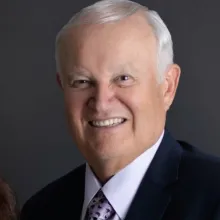
Mr. Seiglie was born in Havana, Cuba, and came to the United States when he was a child. He found out about the Church when he was 17 from a Church member in high school. He went to Ambassador College in Big Sandy, Texas, and in Pasadena, California, graduating with degrees in theology and Spanish. He serves as the pastor of the Garden Grove, CA UCG congregation and serves in the Spanish speaking areas of South America. He also writes for the Beyond Today magazine and currently serves on the UCG Council of Elders. He and his wife, Caty, have four grown daughters, and grandchildren.
