
Jorge de Campos
This transcript was generated by AI and may contain errors. It is provided to assist those who may not be able to listen to the message.
Brethren, what is the center of your life?
The focus in this world always seems to be on the wrong values. People focus on wealth, they focus on power, they focus on prestige, they focus, when it comes to religion, on form, over substance. They go along with ceremony, traditions, and things of this nature. Our focal point, what we should be looking at like a laser beam, is what God focuses on.
What is it that God has in his mind? What is he doing? What is God concentrating on?
What is his purpose? What is his plan? What does he look at? That's something we want to take a look at today. If you really want to know what God is focused on, let's go back to the book of Hebrews, chapter 2 and verse 10. Hebrews 2.10 says, For it was fitting for him, for whom are all things, and by whom are all things, in bringing many sons to glory. God's focus is to add members to his family, to bring many sons to glory, and to make the captain of their salvation perfect through suffering. Is that our supreme focus and motivation? Do we understand that in this age today, we truly are the focus of God's attention? We are his sons and daughters. We know that God is not trying to convert everybody today. It's not his plan or purpose to offer salvation to everyone, yet he will eventually, as we know. But in this age, he's working with the firstfruits. You and I are the firstfruits, the first to truly understand God's plan, purpose, and why man was created.
We are his focus right now. Do we concentrate on the plan of God, as we should? Do we concentrate on what God is concentrating on? Is this something that drives us, that motivates us? Are we singly-minded pursuing our goal? Somewhere in eternity, God thought out and planned how to add sons and daughters to his family, to bring members into his family, to bring many sons to glory. Nothing else is more important to God than that. That's what he is striving for and working for. God has given us a gift every year that helps to remind us of that plan and that purpose. That gift is his holy days. God has given us the annual holy days to constantly rivet our attention on how he is expanding his family and bringing us to his kingdom. When you and I sit down and plan our yearly activities, what do you plan around?
It should be God's holy days. Somewhere after the feast, Norm and I always get a day planner.
We buy one for the next year. We mark those. You start with the holy days. When are the holy days going to be kept? I have to confess, my wife marks mine as well as hers. She fills it out. Not only does she do that, but she puts all of our children in there. When they were born, what their anniversaries are, any pertinent information. We keep that. We open it up and say, aha, this month. Two children, three grandchildren. Doing something. You at least are reminded of it. I think on a physical level, our lives should revolve around our families and around God's church. When it comes to our lives and planning, our yearly activities should revolve around God's holy days.
Our week revolves around the Sabbath day. The Sabbath is the seventh day of the week. Today is over. Tomorrow, I'll begin to think about what am I going to speak on next week, because generally I speak. What am I going to cover? You begin to plan and think about so that you can study and begin to prepare.
That's what I am supposed to be doing. It doesn't always work that way, but you work and plan. You want to plan your week around the Sabbath. When the Sabbath day comes, you've got the car gassed, you've got food ready, your clothes are ready, you're ready to go as far as the Sabbath is concerned. The earth operates on a 19-year time cycle, and this ties in directly with God's holy day calendar. Let's go back to Genesis 1, verse 14. I want you to notice a scripture here. It may be something you haven't really thought of before.
Genesis 1, verse 14. God said, Let there be light in the firmament of the heavens to divide the day from the night. So God created, actually, He cleared the atmosphere so that the sun and repositioned the sun and the moon, put them in their proper orbits and let them be for what? For signs, for seasons, for days, and for years. So God has placed the sun there, the moon, and it helps us to know the sign, season, days, and year. Why have a calendar except to know when the holy days occur and be able to observe them?
Otherwise, it's just every seventh day is the Sabbath. That's all you need to know. So if you kept up with that, you'd be okay. But the calendar basically points this out. The word for seasons here is an interesting word. In the Hebrew, it is the Hebrew word moad. Ever hear the word moad of Tishri?
Well, moad is a Hebrew word that is translated in various ways. It's translated as congregations in the Old Testament 150 times, translated as feast 23 times, season 13 times, appointed 12 times, time 12 times, and on and on. I mean, there are various other ways that it's translated.
Its basic definition for this word is an appointed time or place, appointed meeting. I remember in the Old Testament they had the congregation. They were called the congregation of Israel, but they had the tent of meeting it was called. In other words, it's where God would keep appointments. He would come reveal Himself and talk to Moses or talk to the high priest. When we go to the Feast of Tabernacles, brethren, we are keeping an appointment with God.
You are here today because God has an appointment, and He wants you to be here to keep it. So when it comes to the annual Holy Days, we keep those appointments. They are appointed seasons, appointed times, and this is why we keep them. A day, you find, is one revolution of the earth. Seven of them make a week.
A year is one revolution of the earth around the sun. There is a 19-year time cycle where the sun, the earth, and the moon all come back into the same alignment. God has given us a calendar to help us to plan, to focus our lives. The Holy Days ought to be a highlight of the year for us, and the Feast of Tabernacles generally is a highlight of the Holy Days season because it's a time that we can get away for seven days, followed by the eighth day, or the last great day. The fall season highlights four festivals, and before you know it, they will be here.
Those festivals. We'll have the Feast of Trumpets. We will have the Day of Atonement. The Feast of Tabernacles. Last great day. So, brethren, the Feast of Tabernacles coming up in the last great day are highlights of the year for most families.
It's an opportunity, as I said, to get away, to really be able to rejoice, spend time with your family in a situation where you don't have to go to work. You're there. You can do things together. The key for our success in observing the Holy Days is proper planning, proper preparation, and our proper attitude toward the Feast.
God has a lot to say about what our attitude should be. What does God teach us about observing the Holy Days? The Holy Days have been given to us by God to keep us focused on His plan of salvation and our calling in it. Let's go over to the book of Deuteronomy, chapter 14. Deuteronomy 14, we'll begin to read here in verse 22. Deuteronomy 14, 22 says, You shall truly tithe all the increase of your grain that the field produces year by year.
And you shall eat before the Lord your God in the place where He chooses to make His name abide, the tithe of your grain, of your new wine, of your oil, of the first-born of your herds, of your flocks, that you may learn to fear the Lord your God always. And if the journey is too long for you so that you're not able to carry the tithe, whereas if they were basically an agrarian society living right there in Palestine, so they'd go up to the feast, maybe have a wagon, and they'd carry their beans and their corn and their potatoes and their wheat, their new wine that they'd grown, half of a lamb, maybe some meat, and they would go.
But if it were too far, too hard, too difficult, they could sell all of that, turn it into money, go to the feast, and keep the feasts, buy things with the money they had. Now we start out with money, don't we? That's how we're paid. And so we take our money, we go to the feast, and it pays for us, for our housing, for our food, and for our expenses.
And so verse 25 says, you can exchange it for money, take the money in your hand, go to the place which the Lord your God chooses. So, brethren, we began preparing for the feast all year long. How? Number one, by saving our second tithe, our festival tithe. If we don't, we're stealing. We're neglecting to do what God says to do.
Now you might notice it says to eat this tithe, now you can't eat your first tithe. In Leviticus 27, in verse 30, notice the instructions that God gives concerning tithes. It says, all the tithes of the land, whether the seed of the land or the fruit of the tree, is of the Lord's. It is holy to the Lord. The tithe belongs to God. Then God has the right to say who it should go to. In the Old Testament, it went to the Levites. Those were God's ministers.
In the New Testament, it's the Melchizedek priesthood. The New Testament ministry and the tithes go to the ministry. If a man wants it all to redeem any of his tithes, he shall add one-fifth to it. There were certain things that you could redeem, such as maybe wheat. Maybe you had a great crop. You wanted to use some of the wheat. Or maybe all of the wheat to sell a seed or keep it. Well, you would have to pay the going price for it and add one-fifth to it to be able to do that, to redeem it or to buy it back.
Concerning the tithe of the herd or the flock, or whatever passes under the rod, the tenth one shall be holy to the Lord. He shall not inquire whether it's good or bad, nor shall he exchange it. For if he exchanges it at all, then both it and the one exchanged for shall be holy.
It shall not be redeemed. These are the commandments that God gave them concerning tithing. What that meant in ancient Israel, all the newborn calves were putting a lot. They'd run them out of chute. Every tenth one that would come by, they would mark it.
That was the tithe, whether it was good or bad. Now somebody could have maybe one of the calves in there and it's a bull. He'd think, this is a wonderful bull. It'll help my herd. And sure enough, the tenth one to run down the chute is the bull. He can't exchange it. Neither can he look at his herd and say, I'm going to save this old scruffy little runt out and I'll make sure it's the tenth one to run down. No, you don't do that. You just herd them down the chute. Whenever the tenth one comes through, that was the tithe. But the point is, they could not use their first tithe for their own personal belongings, their own personal use. Therefore, when God says you can eat the tithe, and you can take it to the feast, he's talking about an additional tithe, a second tithe, what we call the festival tithe, in order to be able to keep and observe the feast. When we save our tithe, then we know that we're doing what God says. We're obeying God. When we don't, then our focus wavers are not able to fully participate as God wants us to. Notice Deuteronomy 12 and verse 17.
Deuteronomy 12.17 says, "'You may not eat within your gates.'" In other words, where you're living in your city, "'the tithe of your grain or of your new wine or your oil of the firstborn of your herd or of your flock, or any of your offerings which you vow, or your freewill offerings, or of the heave offering of your hands. But you must eat them before the Lord your God, in the place which the Lord your God chooses you, your son, your daughter, your male servant, your female servant, and the Levite that is within your gate. And you shall rejoice before the Lord your God in all which you put your hands.'" God says. So what he's saying is that you cannot use this second tithe for your own paying your own personal bills. You can't say, well, I've got a $500 second tithe saved over here. I'm going to make my mortgage payment this month, or I'm going to pay my electric bill, or I'm going to make my car payment. No, there's only one specific purpose for that. That is to observe God's holy days. And so God says that we should do that. If you do, then you're able to rejoice in the physical things in proportion to your faithfulness in saving your second tithe. Now, even if you save your second tithe, not everybody is just going to be running over a lot of money. We understand that.
But if you save your second tithe, then your ability to be able to observe the feast is much more heightened. We know that there are those in the congregation who do not have an income.
There are those who are out of work and don't have an income. We also realize that there are those on a fixed income, such as Social Security and are not tithing on that. And there are those who are out of work and need special consideration. Well, the United Church of God for years now, since our conception, has been distributing thousands of dollars to the needy in the Church.
Last year, I'm talking about 2011, I don't think we turned anybody down. We helped everybody who requested help. Now, that's not necessarily that they got everything that they might want, but we try to help those who find themselves in these situations. And that's where you're giving, if you find you have extra tithe and you're able to share with others, that's where that comes in and really truly does help. What is a feast picture for us, brethren? It's a time of service. It's a time of giving. Some of us might be able to help the needy get to the feast, or once they're there, be able to help them by buying them with some food, taking them out to dinner, a nice bottle of wine, whatever it might be. Health does not permit everybody to attend the feast, and we understand that. My father-in-law, Mr. Cowan, has not been able to go to the feast for a number of years because of his health, and there are those who are not able to attend because of this. Now, this year, as we have in the past, we'll have live services from several feast sites. That'll be webcast, so if you have a computer, you can tune into Gatlinburg, you can tune into Ben, and I think it's Calgary. There are a number of areas where they have webcasting going on, and you can watch those. If that doesn't work, you can always go to the feast website. Every sermon gave it every feast site last year is on there. You can listen to every one of them if you want to. There are a lot of sermons that are available. We need to plan ahead as members of God's church to serve others. Remember this. God is the greatest servant in the universe. He looks after his family, he looks after us, and we are his focus. So we need to have the same focus of trying to help and look after one another. What is the job of a king or a priest in the world tomorrow? If we're going to be kings and priests, we're going to have the responsibility of teaching and serving God's people. Now, what attitude must we bring to the plate if we're going to be servants in the world tomorrow? Let's go back to Matthew 20, verse 20. Notice the principle here about how the kingdom of God functions and how you and I should function. It says, The mother of Zebedee's sons, James and John, came to him with her sons, kneeling down and asking something from him. He said to her, What do you wish? And she said, Grant that these two sons of mine may sit, one on your right hand, the other on your left, in your kingdom. And Jesus answered and said, You do not know what you ask. Are you able to drink the cup that I'm about to drink or be baptized with the baptism that I'm about to be baptized with? And they said to him, We are. So even though Mom spoke up, they're there. They go, Mom. She's putting in a plug for them. So he said to them, You will indeed drink my cup, be baptized with the baptism that I'm baptized with. But to sit on my right hand and on my left is not mine to give, for it is for those whom it is prepared by my Father. It is the Father who's going to be handing out positions in the world tomorrow, who's going to say how many cities and where you're going to rule, what your responsibilities and what your duties might be.
Now you and I are being prepared for that today, are we not? Now notice what Christ went on to say to his disciples. Now notice she asked the question about sit on your left hand or your right hand, where, in the kingdom. So we're talking about the kingdom of God here. And when the ten heard it, they were greatly displeased with the two brothers, because the two brothers got to Christ before they did.
So you know, they were displeased. But Jesus called them to himself and said, You know that the rulers of the Gentiles lorded over them and those who are great exercise authority over them. Yet it shall not be so among you. Now he's talking to his disciples and brethren, yet it shall not be so among us. Likewise, but whoever desires to become great among you, let him be your servant.
Learn to be a servant. And whoever desires to be first among you, let him be your slave. Just as the son of man did not come to be served, but to serve and to give his life a ransom for many. So we discovered that the kingdom of God is going to be ruled by those who have developed in this life an attitude of service. And if we want to be great, we will serve and we will help others.
Greatness is just the opposite of what the world thinks. Greatness comes through humility, not through vanity, not through pride. So we're preparing today to serve in the world tomorrow. We're learning that way of life today. The Feast of Tabernacles gives us ample opportunity to put into practice that way of life, does it not? God's very nature is one of giving, of serving. It should be the main focus of ours. We need to share the blessings that God has given to us with other people.
Turn back again to Deuteronomy 14 and verse 26. Deuteronomy chapter 14 and verse 26. You read here that you shall spend that money for whatsoever your heart desires, as we read earlier. And you shall rejoice you in your household. And verse 27, you shall not forsake the Levite who is within your gate.
So it's showing that we need to share what we have. And the emphasis is on the family. We have a physical family, we have a spiritual family. We need to make sure, and our first responsibility is to try to get our whole family to the feast. Sometimes we may not be able to do that, and God lays the responsibility on the husband to make sure that he goes, or whoever is the head of household at that time. Then if you're able to take the rest, the rest should go also. What about those who stay behind? I think one of the loneliest times of the year is when a person is not able to go to the feast, and they have to stay there by themselves.
And they know that everybody else has gone off to the feast. They have these fond memories of the feast, and they wish that they could be there. Well, all of us need to think about that and write and call. You'll be able to help those who are not able to come. And those who come and need help, we should be there to help them likewise. Chapter 16 here in verse 13 also shows that we should rejoice, and rejoicing includes more than just ourselves.
It certainly includes all those that we are responsible for. It says, you shall observe the Feast of Tabernacles seven days, verse 13, when you have gathered from your threshing floor and from your winepress, and you shall rejoice in your feast, you and your sons, your daughters, your male servants, your female servants, the Levites, strangers, fatherless widows who are within your gates. So notice the fatherless or the orphans are mentioned, the widows are mentioned. Strangers, seven days shall you keep a sacred feast to the Lord your God in the place that God chooses.
And so God doesn't choose every place. We have regional sites where the feast, especially the Feast of Tabernacles, is kept. It would truly be a miserable feast if our only goal is to have a good time for ourselves.
I'm going to go and really have a blast. That's the only reason you're going to the feast. That's not the reason. We won't enjoy the Feast of the Fool if we don't want to help others. Likewise, have a wonderful feast and truly enjoy the Feast of Tabernacles. You'll notice here those that were responsible for our children, servants, strangers, orphans. We need to make sure that they're taken care of. Notice back in the book of Nehemiah chapter 8 beginning in verse... well, let's back up.
Nehemiah chapter 7 and verse 73. First of all, it says, so the priests of Levites, the gatekeepers, singers, some of the people, the nethanim, and all Israel dwelt in their cities. When the seventh month came, the children of Israel were in their cities. Chapter 8 verse 1. All the people gathered together as one man in the open square that was in front of the water gate. And they told Ezra, the scribe, to bring the book of the law, Moses. And so he read about the feast. And I want you to notice, as he read and he expounded and they explained, the people understood and were very sorry for not keeping these days. They began to mourn. They began to repent. Verse 9 here says, And Nehemiah, who was the governor, and Ezra the priest, and scribe, and the Levites who taught the people, said to all the people, This day is holy to the Lord your God. Do not mourn or weep.
The holy days, the feast days, are not the time to mourn and weep.
For all the people wept when they heard the words of the law, and he said to them, Go your way. Eat the fat. Drink the sweet. Send portions to those who have nothing, or for whom nothing is prepared. For that day is holy to our Lord. Do not sorrow, for the joy of the Lord is your strength. So the Levites quieted all the people, saying, Be still, for the day is holy. Do not be grieved. And all the people went their ways to eat and drink and to send portions and to rejoice greatly. I want you to focus on the fact that they sent portions to those who were not prepared. We would say today we take a widow out to dinner in a restaurant, maybe who's not able to afford very much, or a family that we know that doesn't have much second tithe. So we try to help, and we try to assist those.
And if you know somebody's at the feast, they don't have a vehicle, and they're not able to get around to occasionally have them join you or your group and go do something, will be a tremendous help. In Romans 12, beginning in verse 4, we read a scripture here that talks about the gifts. That God has given us all different gifts. We have different talents and abilities and skills.
We need to use our gifts, our talents, that God has given us in service to others. Gifts are given by God to help others, not to aggrandize ourselves, not to pat ourselves on the back.
In verse 4, it says, where we have many members in one body, but all the members do not have the same function. Just like your hand has a different function than the foot and the eye than the ear and the nose, they all have different functions. So it is with the body of Christ. So we, being many, are one body in Christ and individually members one of another. Having gifts differing according to the grace that is given to us, let us use them. So if God has given us gifts, and I'll guarantee you every one of us has at least one gift, we have gifts that God has given us. Then he says, if it's prophesying, inspired preaching, let us prophesy in proportion to our faith.
Our ministry, that service, let us use our ministry. He who teaches and teaching, he who exhorts and exhortation, he who gives with liberality, he who leads with diligence, he who shows mercy, with cheerfulness. Let love be without hypocrisy and pour what is evil, cling to what is good. Be kindly affectionate to one another, with brotherly love and honor, giving preference to one another. Not lagging in diligent, fervent in spirit, serving the Lord, rejoicing in hope, patient in tribulation. And notice verse 13, distributing to the needs of the saints and given to hospitality. Very clearly that we ought to serve one another. The Feast of Tabernacles pictures the Millennium, which is going to be a time of love and giving in service. We have many opportunities at the Feast to put into practice what will happen.
Remember, when we go to the Feast of Tabernacles, it is a foretaste of the world tomorrow.
You can call it a miniature millennium. It's an opportunity that we have for seven days, perhaps, to live a little higher caliber of life than we normally do, to stay in a nice place, to eat nice restaurants, have nice food, serve. We're not encumbered by a job, so we have opportunity to mingle, fellowship with God's people, and spend time with our families.
There are many ways to serve at the Feast. There are many service opportunities.
We need to use our gifts. If you can sing, sing in the choir. What about crews such as ushering, parking, information? I'll emphasize information again. Any way that we can serve, these are all opportunities. It seems that those who have families, men and women, are the ones that seem to always serve. But our young adults and our singles, a lot of times you don't have as many responsibilities. You need to jump in, focus on serving at the Feast. Think of it from this point of view. You're going to go to the Feast. Why? To give a good Feast to others, to help others, not to get a good Feast. There's a difference in philosophy. One is to give, the other is to get.
Remember, God is giving us the Feast, the Holy Days. His presence is there. He wants to see if we're concerned. We have love for others. Teenagers, even pre-teens, can serve in many different ways.
If you're a teenager and mom has dad and you have younger children, to perhaps babysit that evening or take the children out somewhere so that they can have a special night out. It's always nice for our family to be able to get out at the Feast and just dad and mom have a little time together.
Remember that God is the greatest servant in the universe, and so we all need to find some way that we can contribute to the Feast.
We're told to eat and rejoice before God. So why does God tell us that? What's the purpose behind that commandment? Well, most nations today, when you stop and think about it, live, drab lives, subhuman existence, have little joy and happiness. You might remember the description here recently where I think the good works, maybe life nets dug another well in Africa.
These women were carrying these five-gallon jugs on their head. They had to go wherever the water was, a stream, fill it up, bring it back to their house, use that for drinking, washing, everything that they did. Now there's a well in the village. How much time does that save?
If you spend an hour once or twice a day, or you had children running to and fro getting water, they don't have time to enrich themselves and to do other things. With second tie, we can provide housing, food, and some luxuries. This is the way God wants the world to be in the world tomorrow.
We just get a small foretaste of that. In the millennium, one of the first things that we will do when God begins to bring the nations back and resettle them in their countries is we'll have to take care of the physical needs, will we not? They will need food, they'll need clothing, they'll need shelter, they'll need healing, they will need direction, and we will be there to guide them, to direct them, and to help them. Many societies today don't progress because their whole energy of life is wrapped up in survival, just making enough daily to try to get by and to survive.
There's no time for the arts, there's no time for culture, no time for development, no time for higher education. They don't have restaurants to go to, even if they did, they don't have the money to be able to afford it. And so there's coming a time when they will. So our attending the feast is just a sample of what the world tomorrow will be like. Isaiah 35, verse 3.
Nothing wrong with us reading the scriptures dealing with a millennium. Chapter 35, beginning in verse 3, strengthen the weak hands, make firm the feeble knees. Say to those who are fearful-hearted, Be strong, do not be afraid, or do not fear.
Behold, your God will come with vengeance. In verse 5, then the eyes of the blind will be opened, the ears of the deaf shall be unstopped, then the lame shall leap like a deer, and the tongue of the dumb sing, and water shall break forth in the wilderness, and streams in the desert, and parts of the ground shall become a pool, and the thirsty land springs up water.
What about the great southwest desert here in the United States? Sahara Desert, 3,000 by 1,000 miles, just sand. What will happen when that blossoms like the Garden of Eden? The Gobi Desert.
What about Australia? You go to Australia, it's a ring around the periphery. What about when the whole country becomes arid and can grow crops? God is going to take care of people at that time, and they will be blessed. Verse 10 says, The ransom of the Lord shall return, and they shall come to Zion with singing, with everlasting joy on their heads, and they shall obtain joy and gladness, and sorrow and sighing shall flee away. Brethren, we need to also plan on having a spiritual feast.
You will hear ten sermons given in eight days. You will have Bible studies that are given, and we need to make sure that we don't neglect our prayer. I realize you have sermons, and really maybe one good way of studying your Bible during that time is to take the sermons, maybe review some of them, look at a few scriptures, discuss them, think about how they apply to you, because we want to make sure that the spiritual man is renewed.
2 Corinthians 4, 16 tells us that we are to be renewed daily, so spiritually we should be renewed.
So we need to have a spiritual fesite, need to pray and study. We need to have wholesome fellowship.
We have a wonderful opportunity. Now, by fellowshiping, sometimes we haven't seen people for years, and so I've known individuals who've stayed up to two and three o'clock.
Fellowshiping. Next morning, services are at 10 or 10 30, about nine. They're trying to wake up, and they're trying to make it. Don't do that. Use the day for fellowshiping. You'll have people over.
Make sure you get your sleep and your rest, because if you don't, you're not going to be able to concentrate and hear what's said, and you're probably going to become sick while you're at the feast. Make sure you attend all the services. Why are we attending the feast? Well, we're there to learn and grow spiritually, so we need to use the feast as a motivator for the next year to truly be turned on. I've had people in the past tell me, I remember in St. Pete, a man said, well, I'm going to go fishing today, and so he was going to use all day to go fishing.
Then he told me he was going to take two days and go to Disney World. So he missed three days of the feast. You come to the feast to attend the services and to be there. Now, you can do things afterwards, before, in the afternoon. You shouldn't be missing services to do those type of things.
Try to concentrate on why we're there. In Deuteronomy 16 and verse 16, we see a scripture we're all familiar with. Deuteronomy 16.16 Three times a year all your mail shall appear before the Lord your God in the place which he chooses at the feast of Unleavened bread, feast of weeks, feast of Unleavened or the feast of Tabernacles. And they shall not appear before the Lord empty or empty-handed. Every man shall give as he is able according to the blessing of the Lord your God which he has given you. So, on the annual Holy Days, we do take up a Holy Day offering.
Now, I don't know how you plan those, but we're told not to come empty.
This is something that you could plan for throughout the whole year. You come up in the fall and there are four Holy Day offerings. Boom, boom, boom, boom. One right after another.
And they can hit the pocketbook fairly heavy. So, what about planning for it every week?
Set aside five dollars, a dollar. Some people take all their loose change, put it in a jug, and that they save up. Now, my wife and I do something. It's not for that, but it's for something else. We save all of our one dollar bills, put them in a box. And once a year or so, when we try to observe our anniversary, we may have a few hundred dollars saved up already toward that event. It's the same type of principle that you begin to save for what's important, very important, for the sake of the church. About a quarter of our income comes from the Holy Day offerings. And so, these annual Holy Day offerings are extremely important.
We should plan to have a healthy feast also. Don't overeat, overindulge. Let's notice 1 Corinthians chapter 9 verse 25. Admonition given to us by Paul here. 1 Corinthians chapter 9 verse 25.
And everyone who competes for the prize is temperate in all things. Now, they do it to obtain a perishable crown, but we an imperishable. Therefore, I run not with uncertainty, then I fight not as one who beats the air. But I discipline my body and bring it in subjection, lest when I preach to others, I myself should be disqualified. So, brethren, when we go, we should be able to, if we have sufficient second tie, to be able to buy a better quality wine, as an example.
You may buy dago red throughout the year. Now you can buy something that's a little better. Perhaps you're used to eating just beans and hamburger. Now, maybe you can occasionally eat a chateaubriand or a porterhouse steak or a leg of lamb, something of this nature that will make the feast that much more exciting. It's not overindulging. It's the fact that you're able to buy a better quality. Avoid burnout also. Don't go to the feast and get yourself burned out.
Many times we work like crazy and we're packing, we're doing everything, and then it's time to leave for the feast. And we're just absolutely worn out. We go there and we just collapse. And it takes a few days for us to revive. We shouldn't do that.
We need to watch our conduct at the feast, make sure that we're a good light. There are always going to be inconveniences. There are going to be things that happen that will test us.
We have to realize when we come there that it's not just us that we're setting a good example.
It is the fact that we as a whole are a good example or a bad example when it comes to the feast. So watch your conduct in the restaurants. Watch your conduct wherever you go. This is true of all of us. You need to prepare your children for the feast. The lessons are out, the little handbooks, it'll be out. You need to discuss with them why they're coming to the feast, the purpose of it. If you need an excuse absence for school, you need to get those ahead of time. Same thing for work. Make sure you take care of that. Plan your family activities so that you can do some nice things. Norm and I learned a long time ago when we had our children that the first year or two when they were old enough, we'd go into a store and you would hear, I want that. Can you buy this? Give me that. And everything. They thought we were made out of money and they were always asking for something. Finally, we wised up. We gave each one of them money, $50, $25, whatever it was. We said, that's it. That's your money. Spend it wisely.
And it was amazing how tight-walled they became with their money. They just wouldn't spend it on anything. Maybe I'd want that. No, I'm not going to get that. They were looking just for the perfect feast gift. Now, that teaches them to budget and that teaches them priorities.
Also teaches them if they spend it, it's gone. So, some of our children would boom, go out, spend it, and it was gone. They spent their money. So, make the feast a family affair.
Remember, one of the reasons we go to the feast is to learn to fear God. So, brethren, we are here to learn to fear God, to serve God, to worship God. So, let's make sure that this truly is one of the best feasts ever this year. That we go for the right reasons to give and serve, to give to our family, to give to the needy, to serve the family, the spiritual family. That we need to use our talents and abilities as we can to help be balanced, plan your feasts. Remember why God wants you to focus on the Holy Days. God has given us the Holy Days so that we are constantly reminded of His plan. We never forget these days' picture of the plan of salvation. So, brethren, let's make sure that we go to the feast and we truly rejoice with one another and learn to fear God.
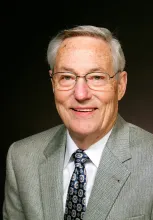
At the time of his retirement in 2016, Roy Holladay was serving the Operation Manager for Ministerial and Member Services of the United Church of God. Mr. and Mrs. Holladay have served in Pittsburgh, Akron, Toledo, Wheeling, Charleston, Uniontown, San Antonio, Austin, Corpus Christi, Uvalde, the Rio Grand Valley, Richmond, Norfolk, Arlington, Hinsdale, Chicago North, St. Petersburg, New Port Richey, Fort Myers, Miami, West Palm Beach, Big Sandy, Texarkana, Chattanooga and Rome congregations.
Roy Holladay was instrumental in the founding of the United Church of God, serving on the transitional board and later on the Council of Elders for nine years (acting as chairman for four-plus years). Mr. Holladay was the United Church of God president for three years (May 2002-July 2005). Over the years he was an instructor at Ambassador Bible College and was a festival coordinator for nine years.
