
Dan Dowd
In ancient times, men have written their version of a progressive society such as Plato (Republic), Aristotle (Politics}, and in the Middle Ages,Thomas More (Utopia). As science advanced during the 1800s, authors like Jules Verne, H.G. Wells and others developed science fiction. More recently, science fiction became visualized in television and film with the likes of Star Trek and Star Wars. Much of this displays false utopias (dystopia). The future ideal society is yet to come when God's Kingdom is proclaimed on earth with the coming of Jesus Christ as King celebrated on this day.
I want to share with you that this is my 55th feast of trumpets that I have kept.
And I actually attended the church for the first time at the Feast of Trumpets in 1970.
As a 17-year-old, and what a contrast to what I had heard the years before in the Catholic Church, where I had been an altar boy, and basically the priests have what they call a lectionary, which means that during the whole year they have a written explanation outline, and they just go through the Gospels. And of all the years, I don't remember one of those messages because it just goes the same year after year, kind of a repetitive type of pattern. And I'll never forget the first message I ever heard in the church. It was in Chattanooga, Tennessee. We had all met next to a beautiful lake, all the greenery around, and had a big plate-class window that I could see the lake there in the background. And here comes this gentleman, gives the sermon at, and of all things, it sounds to me like science fiction. It was so exciting! He's talking about world events. At that time, the world was threatened because they were still having experimental explosions in the atmosphere with atomic bombs. And then when they understood the electromagnetic pulse that was doing that can fry electronics, they had to put a stop to it. But this gentleman mentioned that, look, this is the world we are living in, but there's a much better world that's coming. And he described that world. And to me, I had never heard that. I thought I was just going to go to heaven and be on a cloud forever and staring at the face of God. And even if he has a wonderful face, I think after 100 years, you get kind of tired of it, right? At least I'd like to have a conversation with him and not just stare blindly into somebody's face that's called the beatific vision, which is part of the Catholic Church doctrine. And so, of course, to be able to combine what's going on in the world with what the Bible is saying to me, I realized I had found that pearl of great price. And I love science fiction. I used to read the novels by Jules Verne or H.G. Wells. And then I found out the Bible has much better science fiction than anything man has ever written. It's God's explanation of that coming world. And, of course, I got so excited about it because, after all, with science fiction, it always ends up that human nature ruins everything. And those that are Star Trek fanatics or Star Wars fanatics or all of these space-type movies that are coming out all the time because people never get tired. Because it's something in us. We desire that better world. And many writers can use their imagination about these imaginary worlds, but it seems they never are able to get something that is lasting. And God put in us that desire to live forever in a better world. It's part of our DNA. Notice what it tells us in Ecclesiastes chapter 3 verse 11. Ecclesiastes chapter 3 verse 11. I'd like to read it to you from the voice translation.
Solomon speaking here, he says, and I know God has made everything beautiful for its time. God has also placed in our minds a sense of eternity. We look back on the past and ponder over the future, yet we cannot understand the doings of God. And that's how we are.
And although science fiction was exciting and how science was discovering so much and about space travel, man got to the moon in 1969. One year before I came into the church, it was exciting times. But despite man's desire for living eternally and living in a better world, we see that science fiction, which the definition by the Encyclopedia Britannica says, it's a form of fiction or fantasy that deals principally with the impact of actual or imagined science upon society or individuals. And some of the brightest minds throughout history have pondered what is the ideal society going to be like? And one of the first ones who wrote about it was back in the fourth century BC, the philosopher Plato in his book Republic, described what he thought was the ideal society. They would be ruled by philosopher kings, but it had serious flaws. For example, he advocated that these philosopher kings were to rule with absolute power, so they weren't elected officials. And it would make their governance inflexible and dangerous.
He taught that the abolition of private property and a family structure, those go against the 10th Commandments. The 10th Commandment talks about you're not too lust after your neighbor's property. You're supposed to respect your neighbor's property.
And also the family structure. This is what he wrote in the Republic, Section 119. He says, all these women shall be wives in common to all the men. And not one of them shall live privately with any man. So again, you know, just everybody living together. The children too should be held in common so that no parent shall know which is his own offspring, and no child shall know his parent. So it's definitely breaking also the 5th Commandment. Honor your father and mother. You can't do that if you don't know who they are. Or the 7th Commandment, where it says you shall not commit adultery. Not supposed to take somebody else's wife. And so even somebody as bright as Plato in his science fiction world becomes a nightmare. And then some decades later, the other philosopher that had the different view than Plato, Aristotle, took a stab at science fiction world as well in his book, Politics, about the ideal society. Yet there are glaring errors as well. He defended slavery in this ideal world, saying that some individuals, quote, are slaves by nature. They can't help them. So they should be submitted to others, possessing a limited capacity for reason that makes them fit only to be ruled by others. He held a low opinion of women, saying they aren't fit to have any participation in politics. He excluded the working class, saying he didn't believe the artisans or laborers should be citizens. In other words, voting for the government, arguing they lacked the time and moral character to participate fully in politics.
He believed political rights should be restricted to the rich upper classes or aristocracy, which today would go over like a lead balloon. Yet these are two of the men that they always have talked about, the smartest philosophers. Then in the Middle Ages, we come across the British official Thomas More with his book, Utopia. It also has serious flaws. Would you like to live in Thomas More's Utopia? There is no private property. It's a communal system. And also, there's slavery there, where slaves wear gold chains. None of these ideas have ever succeeded. And the problem always is the untameable human nature. Just like God said in Jeremiah 17 in verse 9. Jeremiah 17 in verse 9.
He describes the true nature of our human nature. He said, the heart is deceitful above all things and desperately wicked. Who can know it?
Then God answers, I, the Lord, search the heart. I test the mind. I know what human nature is like. Human beings are deceived, thinking, oh, you're a very nice person and people are very nice, but there's another side to them, too.
Even to give every man according to his ways, according to the fruit of his doing. So people are going to be rewarded according to their works, according to what they do. Then, as science advanced into the 1800s, we had the novels by the French Jules Verne that many of these novels were turned into films such as 20,000 Leagues, Under the Sea. How many have seen that one? Yeah, most people. The Disney.
Movie. And Captain Nemo as the one with the submarine.
Around the world in 80 days. How many have watched that one? Most of people. Yeah, that's another one of the Jules Verne. Science fiction. Journey to the seventh center of the earth. How many have seen that one? Yeah, some of these we all look fondly. And from the earth to the moon. Anybody remember that one? You know, where the guy invented this potion that could explode and got into this rocket ship and they landed in the moon and they had these ant-like men. Remember the people with antennas and everything else? And they were eventually, when they finally landed, the astronauts, they found the moon and everything had crumbled. Why? Because the guy who was left there from this previous time had a cold and the cold killed all of the ants, ant-men, because they didn't have any resistance to it. See, I see the eyes opening up despite lunch. You're all awakened. That's good. And then you have the second great sci-fi writer, H.G. Wells. He continued with the science fiction novels such as War of the Worlds. How many have seen that one? How about The Time Machine? It has to be one of my favorite ones when I saw it. And then he wrote a novel which isn't very popular. It's called Men Like Gods, where he built his ideal society.
It's another failed attempt to describe a successful utopia, ideal society. It had such flaws as that people were genetically engineered for their class. So they had alpha, beta, delta, epsilon. The last ones were the ones that did all the collecting the garbage, but they had small brains. They couldn't think much. So everybody was developed. And then, of course, the alpha. They're the brainy guys who manage everything.
But they had to conform. Nobody could rebel. And upper managers controlled everything. Now, Aldous Huxley later wrote a novel countering this other novel about men as like gods. It was called Brave New World. How many have read that book or seen? Okay. Oh, that's a classic. That starts out with people in test tubes, that everybody is designed in this way, and that society is just completely structured. Now, of course, they only made a couple of alphas. But, you know, at the end, epsilons, thousands of them, because, you know, you need a lot of people picking up the garbage, fixing your pipes and your toilets and everything. But it was a nightmare. And so Aldous Huxley was able to write this novel, in a sense ridiculing what Wells had written about.
And then we come to our century, where we have novels and movies like Star Trek. How many like Star Trek? A lot of people. Okay. How about Star Wars? How many like Star Wars? Okay. So, you see, all of this is in our heart. We just can't help looking at the future and looking at it with optimism and society is able to populate different places. Yet, again, did you ever see a series in Star Trek where they ended up with a good result at the end? Their ideal society's always had the flaws.
Human nature, even in space, in different parts, they still attacked each other or there was just people that controlled others. They'd use you as a puppet and pit you against somebody else from another planet. Remember all of these? And one of the great truths that you learn in the church is that man is incapable of governing himself properly. Look at the mess we have today.
So, today we are celebrating not man's version, but God's version of the ideal society, the only one that will truly work. Let's go to Matthew chapter 6, what Jesus Christ said. What is the first thing that we should focus on after giving honor and glory to God? It says in Matthew 6 verse 9, He says, in this manner therefore pray, our Father in heaven hallowed be your name. We give God due honor. And the first thing is your kingdom come, because that's the only solution to man's problems. Your kingdom come.
It's a coming ideal society made by God, not man's imagination. And if you look at what happened today, again, I don't want to get into any type of opinions, but what happened when Donald Trump, president, spoke in the United Nations, he got there and he said, guess what? They told me the teleprompter is not working. So he had to start ab-living. Here you are with all the people, probably a billion people on earth watching it, and the United Nations is so incompetent, it can't even have a teleprompter working for the person who, by the way, pays most of their bills, right? Because this is in New York City. And then he said, and before I got here, I was going up the escalator and the thing broke down. And so he says, you know, this is kind of an example of why this system doesn't work.
But God is the one who has the true answer, a solution. That is one of the reasons we are here, because we do believe in that coming kingdom. And today, the sounding of the trumpets is the symbol of Christ coming back and rescuing mankind from himself. Notice in 1 Corinthians chapter 2, 1 Corinthians chapter 2, in verse 6, it says, However, we speak wisdom among those who are mature, talking about spiritual maturity, yet not the wisdom of this age, not what the philosophers are. And anybody who's ever taken a philosophy class, you know how much of that is speculation. Nobody goes to a philosophy church that I know of, right? Oh, they tell you about all these lofty things, but it doesn't look at people pay much attention. I've never seen the church of philosophers. And then it goes on to say, but we speak the wisdom of God in a mystery. It means revelation, the hidden wisdom, which God ordained before the ages for our glory, which none of the rulers of this age knew. All of these people, they were so smart. For had they known, they would not have crucified the Lord of glory. They would have recognized wrong philosophy leads to wrong conclusions. But as it is written, I has not seen nor ear heard nor have entered into the heart of man the things which God has prepared for those who love Him. So that's the first day that I came into this church at 17. I said, wow, look at the panorama that God is showing me. The spiritual panorama, not only of the future, but the present and the past. Because the Bible is a type of time machine that you can go in the past and God will describe what has happened. He's describing society today and He's describing that future kingdom that is coming, which brings us so much hope and joy. He goes on to say, but God has revealed them to us through His Spirit. For the Spirit searches all things, yes, the deep things of God. And so God has given us a glimpse of that coming kingdom. And on this day of the Feast of Trumpets, He wants us to look at that, the coming of Christ. And it's coming closer and closer. Every day it's a little worse in the earth. We just see more evil because now with the internet age, kids that are five, six, seven years old are exposed to things that nobody would have wanted to in their days when you were five or six. You wanted to retain that innocence. And a child who loses their innocence is a child who has lost the way and no longer can see life with the same innocence and hopefulness. And so they have a battle to fight and no parent can totally block it off. It's just the world that we're living in. And it's so easy to corrupt people nowadays. It's like Satan says, well, I've got Heinz 57 sauces. Which one do you like?
And he'll hook you into some wrong habit in life. And so it is unimaginable to the world what is the solution, but not to us. God has given us the answer. So I'd like to ask a question. What is a kingdom? We talk about the kingdom of God.
And it was Herbert Armstrong who said it many times over. A kingdom consists of four different parts. The king, the people, the laws that govern them, and the territory where they live. That, in essence, is what a kingdom is about.
So let's look at those four characteristics of the coming kingdom. Okay, we know, is there any human being that can govern righteously and ideally with no flaws? No? No such person? All the rulers have eventually failed. Some were much better than others. We have had some very good presidents over time. We've had some bad ones. And everybody has their opinions about that. But we do have our list of who you consider are some of the best because they were very close to what the Bible principles meant like Washington and Lincoln. So in God's kingdom, there is a ruler in charge that doesn't have human nature, but God's divine and perfect nature in him. That's Jesus Christ. Notice what he says in John chapter 8 and verse 23. John chapter 8 verse 23. I'd like to read it in the basic Bible edition.
Christ said, you are of the earth. In other words, you are born here on the earth. You're a human. He says, I am from heaven. You are of this world. I am not of this world.
So we have a supremely better being in charge. And that I can trust. Notice in Zechariah chapter 14 in verse 1. Here we have a glimpse of when Jesus Christ returns to the earth. God has programmed it. It's just a matter of when it's going to happen. But even the spot where his feet land has already been programmed. In Zechariah chapter 14 in verse 1, it says, behold, the day of the Lord is coming. And we've heard that from Howard and other messages today. And your spoil will be divided in your midst, for I will gather all nations to battle against Jerusalem.
And then continuing on, verse 3, then the Lord will go forth and fight against those nations. That's when Christ comes back as he fights in the day of battle. And in that day, his feet will stand on the Mount of Olives, which faces Jerusalem on the east. So here we have the first requirement of the ideal kingdom, which is the king coming back and ruling the earth.
Nobody can compare to him. He died for all of us. He paid the price. And now he can straighten things out forever. And then we see the headquarters. It's in Jerusalem. It says, this Mount of Olives faces Jerusalem. It says in verse 9, And the Lord shall be king over all the earth. In that day it shall be, the Lord is one, and his name one. So we're not going to have competition. We're not going to have other kings.
It's going to be one. It's going to take time, but people are going to have to accept him sooner or later. It also tells us in verse 8, it says, And in that day it shall be that living water shall flow from Jerusalem, half of them toward the eastern sea and half of them toward the western sea.
So it's Jerusalem, the place for it. Then let's go to Micah chapter 4, verse 1. Micah chapter 4, verse 1. Howard mentioned Isaiah. This is the quote, basically the same quote, but in Micah chapter 4, verse 1, it says, Now it shall come to pass in the latter days, that the mountain of the Lord's house shall be established on the top of the mountains, talking about God's government, and he shall be exalted above the hills, and people shall flow to it.
So here we have the king, we have the people, they're coming now to be submission, submitted to Christ. Many nations shall come and say, Come and let us go up to the mountain of the Lord, to the house of the God of Jacob. He will teach us his ways, and we shall walk in his paths, for out of Zion, which is the mountain there in Jerusalem, the law shall go forth, and the word of the Lord from Jerusalem.
So here we have then the people, and we have the laws of this kingdom as well. And goes on to say, He shall judge between many peoples, and rebuke strong nations afar off. They shall beat their swords into plowshares, and their spears into pruning hooks.
Nations shall not lift up sword against nation, neither shall they learn war anymore. But everyone shall be under his vine and under his fig tree, and no one shall make them afraid. So this is a peaceful kingdom. No more wars. Instead of using all of the earth's metals to create these huge armaments, and tanks, and weapons of war, all of that is going to be used for food, manufacture, and distribution.
So this is the dream that God has in the Bible, which is going to happen one day. But even though we have the right king, the right territory, the right laws, and the right people, when Christ comes back, will people accept Christ? Will they welcome Him back? No. People still have that carnal human nature. Notice in Matthew 24, Matthew 24 verse 29. Here it shows us that first encounter before Jesus Christ, or between Jesus Christ and the people of the earth.
So what kind of frame of mind will people be in when Christ comes back? In verse 29 of Matthew 24 it says, immediately after the tribulation of those days, the sun will be darkened and the moon will not give its light, the stars will fall from heaven, and the powers of heavens will be shaken. Then the sign of the Son of Man will appear in heaven. The sign is that shining like a lightning from one part of the earth to the other, people are going to see Christ descending. And all the tribes of the earth will mourn, and they will see the Son of Man coming on the clouds of heaven with power and great glory.
So the term here, mourn, in the Greek is the term kapto, k-o-p-t-o. And it means to beat your breasts with a loud expression of grief. And so they will try to resist. They will make war. They don't want to give up their power and wealth and territories, and they know there will be a coming judgment for them. So the Bible is very candid about this. Notice in Revelation chapter 1 and verse 7.
Revelation 1 verse 7, it fills in a little more detail about that encounter between Jesus Christ and the nations of the world. It says in verse 7, it says, Behold, he is coming with clouds, and every eye will see him, even they who pierced him, because we have all pierced Christ with our sins. We have made him give his life. And so it's describing Jesus Christ's sacrifice. They who pierced him, and all the tribes of the earth will mourn because of him. Yeah, nobody's going to give up their power automatically. Or recognize, here we have the ideal ruler. No, the world thinks we're just doing just fine now.
Despite all the mismanagement that we see all the way into the United Nations, which is really the disunited nations, is more honest. Notice in Revelation 19 verse 11, another time where we see the encounter between Christ and the kingdoms of this world. Revelation 19 in verse 11, it says, Now I saw heaven open, and behold a white horse, and he who sat on him was called faithful and true. No, no human being can be called that. Let's talk about Jesus Christ. And in righteousness he judges and makes war. His eyes were like a flame of fire, and on his head were many crowns. He had a name written that no one knew except himself. He was clothed with a robe dipped in blood because of the sacrifice that symbolized here, and his name is called the Word of God. That's Jesus Christ. And the armies in heaven, clothed in fine linen, white and clean, followed him on white horses. Now out of his mouth goes a sharp sword, that with it he should strike the nations, and he himself will rule them with a rod of iron. Unfortunately, it could be the shepherd's crook, right, of his sheep. But no, these are all predators. They're attacking him. They're attacking his people. And so he has to strike them. He himself treads the winepress of the fierceness and wrath of Almighty God. And then it goes on to say, in verse 19, And I saw the beast, the kings of the earth, and their armies gathered together. And this was explained in the first message by Howard Marchbanks, Armageddon, the place of gathering. And then they come to make war against Christ, as his feet are going to land on the Mount of Olives. And it says, gathered together to make war against him who sat on the horse and against his army. And so Christ has to take charge. And it talks about there in Zechariah and other places the death that they will be disintegrated before Christ's presence. Notice, let's look in Zechariah 14.
Go back there for a moment.
Zechariah 14. It says, verse 12, And this shall be the plague with which the Lord will strike all the people who fought against Jerusalem. Their flesh shall dissolve while they stand on their feet. Their eyes shall dissolve in their sockets, and their tongues shall dissolve in their mouths. Shall come to pass in that day that a great panic from the Lord will be among them. Everyone will seize the hand of his neighbor and raises hand against his neighbor's hand. Judah also will fight at Jerusalem, and the wealth of all the nations surrounding shall be gathered together, gold, silver, and apparel, and great abundance. Such also shall be the plague. And it goes on to talk about that. But, you know, Christ is the Lamb of God, but he's also the Lion of Judah. And so this time around, he's coming to rule and not going to put up with any of this terrible system of government that human beings have designed on their own. So we have so many false utopias, and there's a word for that. It's called dystopia. Wrong. Rule. We have dystopias, and we're still living in one now, where there's violence, hate, lust, corruption, and nations are armed to the teeth.
But we have the right elements that are coming. The right king with no human nature, with eternal life and absolute power, with subjects who will have their human nature and bodies changed. We will have a territory where the curse of sin will be lifted, and of righteous laws that will be written on our hearts. Yes, today we are celebrating the coming of the ideal king and the kingdom, and God willing of being part of the firstfruits of that kingdom. The firstfruits are meeting today. As it says in Revelation 2, 20, verse 6, Blessed and holy is he who has part in the first resurrection.
Over such the second death has no power, but they shall be priests of God and of Christ, and shall reign with him a thousand years. Yes, there's something infinitely better than man's flawed science fiction, and that true kingdom is coming. God's true and perfect reign on the earth. And that, brethren, is one of the reasons we are here.
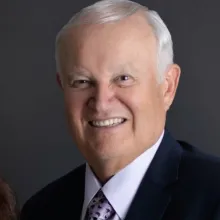
Mr. Seiglie was born in Havana, Cuba, and came to the United States when he was a child. He found out about the Church when he was 17 from a Church member in high school. He went to Ambassador College in Big Sandy, Texas, and in Pasadena, California, graduating with degrees in theology and Spanish. He serves as the pastor of the Garden Grove, CA UCG congregation and serves in the Spanish speaking areas of South America. He also writes for the Beyond Today magazine and currently serves on the UCG Council of Elders. He and his wife, Caty, have four grown daughters, and grandchildren.

